Search This Blog

CCE in brief

My photo
Recovering backpacker, Cornwallite at heart, political enthusiast, catalyst, writer, husband, father, community volunteer, unabashedly proud Canadian. Every hyperlink connects to something related directly or thematically to that which is highlighted.
Showing posts with label social evolution. Show all posts

Thursday, 7 August 2014

The NBCs of Closing: From Transaction to Relationship


Remember Always Be Closing?  Make the deal, focus on the transaction, get them to sign on the line which is dotted, period?

That's so yesterday.  We're moving on from that.  

Traditionalists and tough sales folk will scoff, brush off what they see as a fad and go on being Don Draper or Wolves of Wall Street.  Everyone else, though, is paying attention to this bit of wisdom:

Never Be Closing.  NBC.

Why, you ask?  Isn't the whole point to make a sale and move on?

Nope.  Making one sale is about pushing for an end-game; the pressure is on to do business, whatever the cost.  You will cheat, lie, bully, beg, whatever it takes to cross that line - but what then?

Especially in the days of social media, your reputation precedes you.  If you're a bridge-burning ass, people will know.  They will care, too - because, by association, working with you will leave a taint on their brand.

That means the day of Gordon Gecko is coming to a close.  What comes next, well - read the other half of that famous Art of War quote to see.


Noah's Infrastructure


Am I smiling?  Yes I am.  We've had such relative stability in Canada for so long that we've become complacent.  The each man for himself/Jedem das Seine message has appealed, because enough Canadians have not had to worry about basic things like food, shelter and security.  Instead, they had the luxury of focusing on things like earning and keeping more money to do whatever they wanted with it.


This is the frame that many governments, best embodied by the current crop of federal Conservatives have presented to us.  We'll keep the threats at bay and open doors - you guys earn, produce, sell, spend.  Tax has become a dirty word, as though politicians are sifting through the pockets of the nation strictly so as to line their own.


Of course this isn't true.  Taxes pay for public infrastructure and public services.  These are essential things in any community - you can't privatize everything, because who would pay for it?  Would one BIA pay to maintain the roads in its community, or the water pipes, or hydro lines?  Of course not, they'd demand that others who use that space chip in.  How about highways?  Should the people who ride it be the only ones that pay?  What about companies that ship goods?  They would invariably include the cost of transit infrastructure into the price of their goods.  It goes on and on.

While public consultation, planning, implementation and maintenance is far from a perfected science, it is necessary.  Yet public infrastructure has been neglected, both in terms of maintenance and in terms of upgrades.  Why?


In other words - infrastructure projects aren't the low-hanging fruit we're looking for (though they are the heroes we need right now).

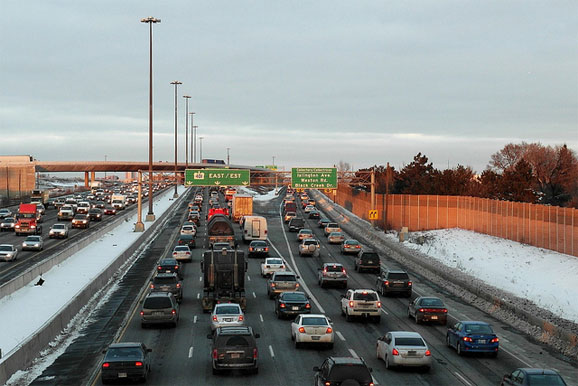
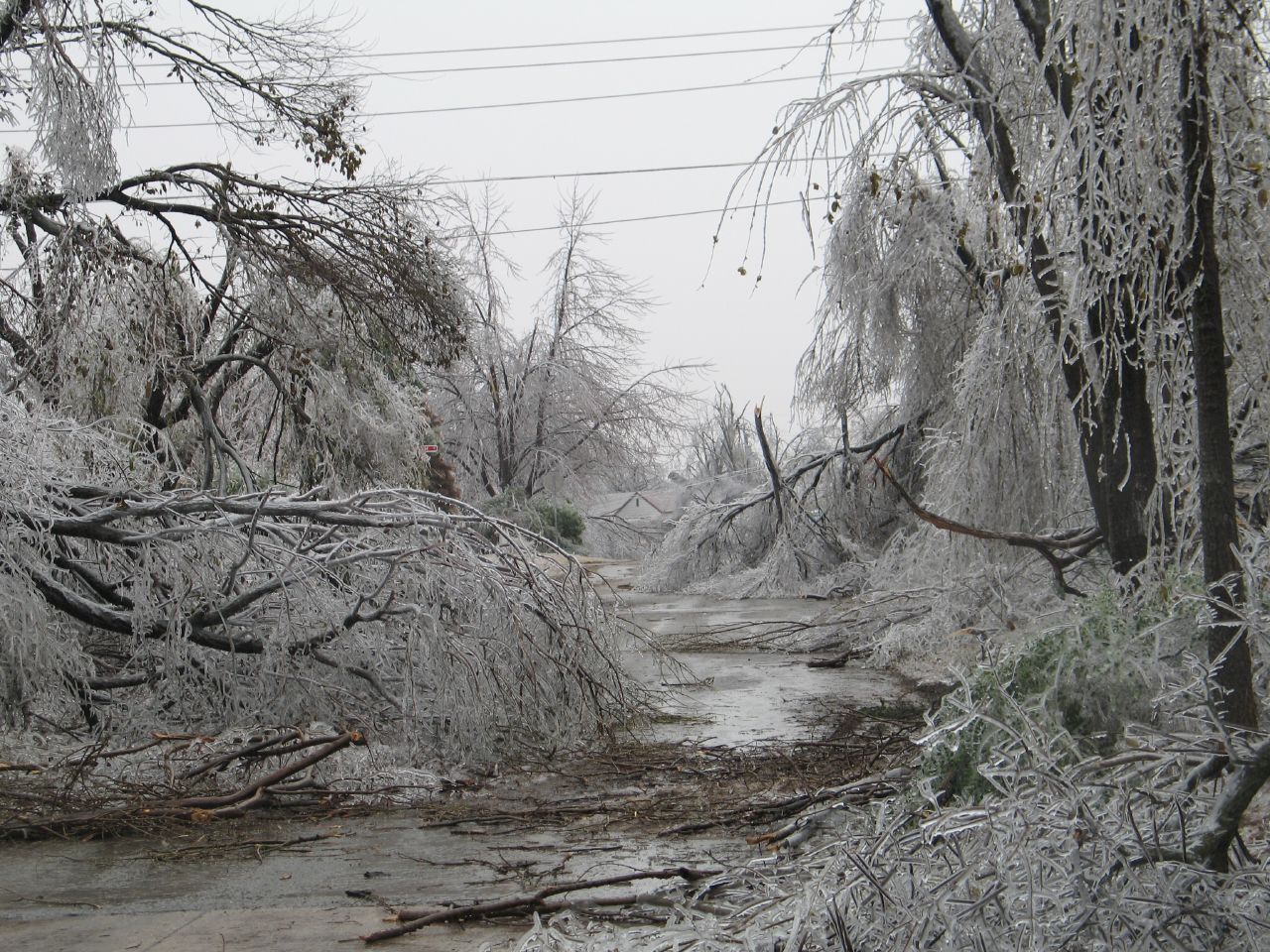
Burlington floods.  Toronto floods.  Manitoba floods.  See a pattern emerging?


The scale has shifted, folks.  The signs are there, but far too many of us aren't seeing them; far too many of our decision-makers are opting to ignore them.  Those that are tasked with solving the problem are overwhelmed; there is no way for a tiny group of planners to weather the storm, if you'll pardon the pun.

And they are afraid to be crucified if they get it wrong.

So here we stand, folks - 

- We want things to stay static, or revert to how they were when the world was a different place.
- We want more for ourselves and are more resentful about sharing.
- Governments are telling us the only threats we need to worry about are foreign terrorists, fraudster immigrants and lazy and/or leftist Canadians.
- There's no money, we're told - though there's a ton of it, just not in the reach of the general public or being spent to the public's structural benefit.
- and the waters continue to rise.


I've written about all this before, of course, much as I wrote about the resurgence of mental health, the rise of government digital platforms, a shift in public engagement, etc.  It's kind of my thing.


I have also written about what we need to be doing to prepare for the severe weather ahead of us, starting with a massive culture change from "me first" to "go the distance together."

Emergency preparedness needs to be promoted and facilitated everywhere, from marginalized communities to Bay Street towers to the rural north and east and west.  Community action plans on what to do when severe weather crises hit need to be devised and supported, but those require engaged communities.  


Behavioural Economics tells us what we can do to nudge that kind of capacity building which, at the same time, can build more resilient, adaptable people and populations that will also be better positioned for economic success and civic engagement.  A bit of sociology-committing can ensure we have proper communication tools for emergency management coordination and hand-offs between citizens and public servants.


It's a challenge, to be sure.  It's not as selfishly sexy as most politicians would want, as it implies that we, not they are the answer.

But make no mistake, it is what's coming.  The time to start preparing for this storm of change is now.

Are you onboard?


Friday, 30 May 2014

Tim Hudak and Darwin


It's true - Hudak has a long track record of being obstinate.  He's very consistent that way.

Clearly, for him, the strong survive - the strong hit hard, never waver, maintain traditions unbending.

Too bad Hudak's an economist, not a sociologist - were that the case, he might realize that in evolution, intransigence is a weakness.  It's the ability to adapt that leads to survival.  

Wednesday, 30 April 2014

Corporate Canada to the Rescue


Just yesterday, I posted that Stephen Harper is no strategic genius; I stand by that.  There's genius in this, but I don't think it was all Harper, or even all intentional.  And as with everything the Harper Conservatives do, there will be unintended consequences that bite them in the ass.

First - Bronwen Evans is right.  Corporate Canada should be out there supporting our military.  The reason it's safe for them to do business other than munitions is because we have a semi-thriving democracy - that's in no small part due to the sacrifices of our men and women in uniform.

It's in the Private Sector's best strategic interests to support our military.  A bit of advertizing on the side makes them feel good, like they're getting their money's worth.  I have no problem with that, so long as there are no pushy sales tactics being deployed against the vets and their families at the same time.

If I were to hear that Air Canada or VIA followed up with sales letters to these families ("we looked after you, now you should be using us exclusively") I'd be pretty pissed and hope you'd be, too.


Canada's a bit behind on the Corporate Social Responsibility (CSR) game, so that's not impossible.  If you look beyond our borders, though, you'll see that smart companies are recognizing that doing good for good's sake is strong enough advertizing in and of itself.


Two of my favourite:

Companies like Apple have recognized that supporting Gay Marriage actually helps build brand loyalty  
NASCAR Nation has recognized the community-building value of supporting a social cause, like environmental sustainability.

We're seeing more of this kind of thing in fits and spurts across the board - Open Data initiatives that are designed to inform and engage the public, changes to labour practices that empower and better support employees, angel investment of money but, even more importantly, time and expertise to help boost good-concept Not For Profits that lack the resources to organize or outreach properly.


In short, we're seeing the Private Sector step up in fits and spurts at a time when Government funding for Not For Profits is dwindling.


This is Score 1 for the Conservatives - they dislike government and prefer the private sector anyway.  

They'd love to see a minimalist government strictly focused on policy, with implementation being done by other parties.

But here's where it gets interesting.

While the Harper Tories are all about promoting traditional Conservative values (tough competition at the front-end of labour, with would-be employees needing to aggressively market themselves to employees, no social services so people are forced to up their game, minimal environmental protections so as no to impede maximum profit through maximum extraction), the Private Sector is moving in the other direction.


And NASCAR Nation is all about climate change and how to green our communities.  The Corporate Sector is picking up where government leaves off, but not in the way I think the political right intended.


Outside of the industries the Harper Government prefers, like the Alberta Oil machine, we're seeing, dare I say it, more centrist and even socialist approaches to engagement from the very people the Conservatives hope will carry forth their message.

There's no surprise in this - a changing economy requires a new approach and businesses that are looking past the four-year election cycle really have no choice but to consider the impacts of less oil, poverty or climate change on their operations.

So in a way, Team Harper are getting what they want - government does less, the Private Sector does more, even if it comes with sponsorship opportunities attached.

Should the Private Sector start looking more to the Centre for their own best practices, however, I can only say this - Team Harper shoulda seen that coming.

Thursday, 3 April 2014

Why Government Can't Function Like a Business, Continued


Not every solution involves a hammer, but the Intelligencer hit the nail on the head here.

Laissez-faire capitalism relies on everyone serving their own selfish interests.  That means those without power, wealth or access tot he levers of government have to push even harder to raise their concerns with those who hold actual clout.

That would be fine if everyone was a sales-oriented predator, but they're not.  Society couldn't function if everyone was an alpha - if we're all selfishly taking and selling, who's providing and developing?  


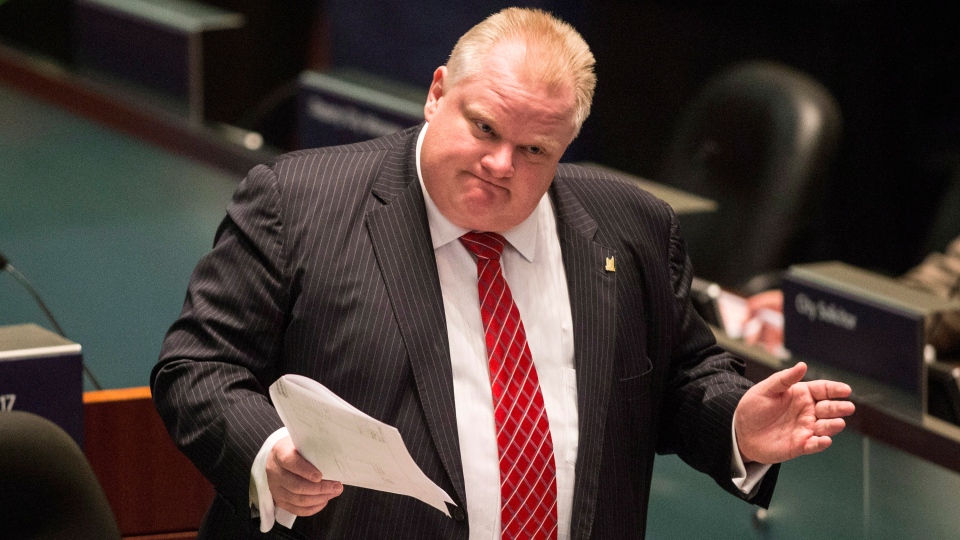
Rob Ford wants two-stop subways and an island airport expansion, full stop.  He doesn't care about facts that challenge his positions and sees everyone who points out the flaws and gaps of his logic as an opponent.  Push to get ahead, step on those in your way - that's how business works, right? 


The same is true from the opposite direction in the case of John Tory's golf gaffe.  As a boss, Tory expects the people working for him to dedicate some of their precious, paid-for work time pushing him for raises and spending even more scarce personal time sucking up to him on the golf course.  

Instead of, you know, actually visiting them from time to time and seeing what and how they're doing himself.

Tory's version is how our system works, which is why that system is failing.

Leadership isn't about sitting at the top of the hill and fighting off all challengers until someone beats you; it's about building a platform that raises everyone to their maximum potential in a coordinated, efficient way.


Evolution isn't and never has been about survival of the strongest - that's a myth society's aggressive people feel is true and clearly have a stake in perpetuating.  Missing from their equation is the concept of symbiosis - a pretty important feature of any ecosystem that you can miss if you keep your blinders on.

In an ever-changing world, it's that which is best able to adapt (and integrate) which survives.  Where does adaptation come from?  From diversity, including of skills, abilities and perspectives.

Society doesn't and can't work if everyone is competing with each other all the time.  That's why the larger any society grows, the more specialized and collaborative it's people become.

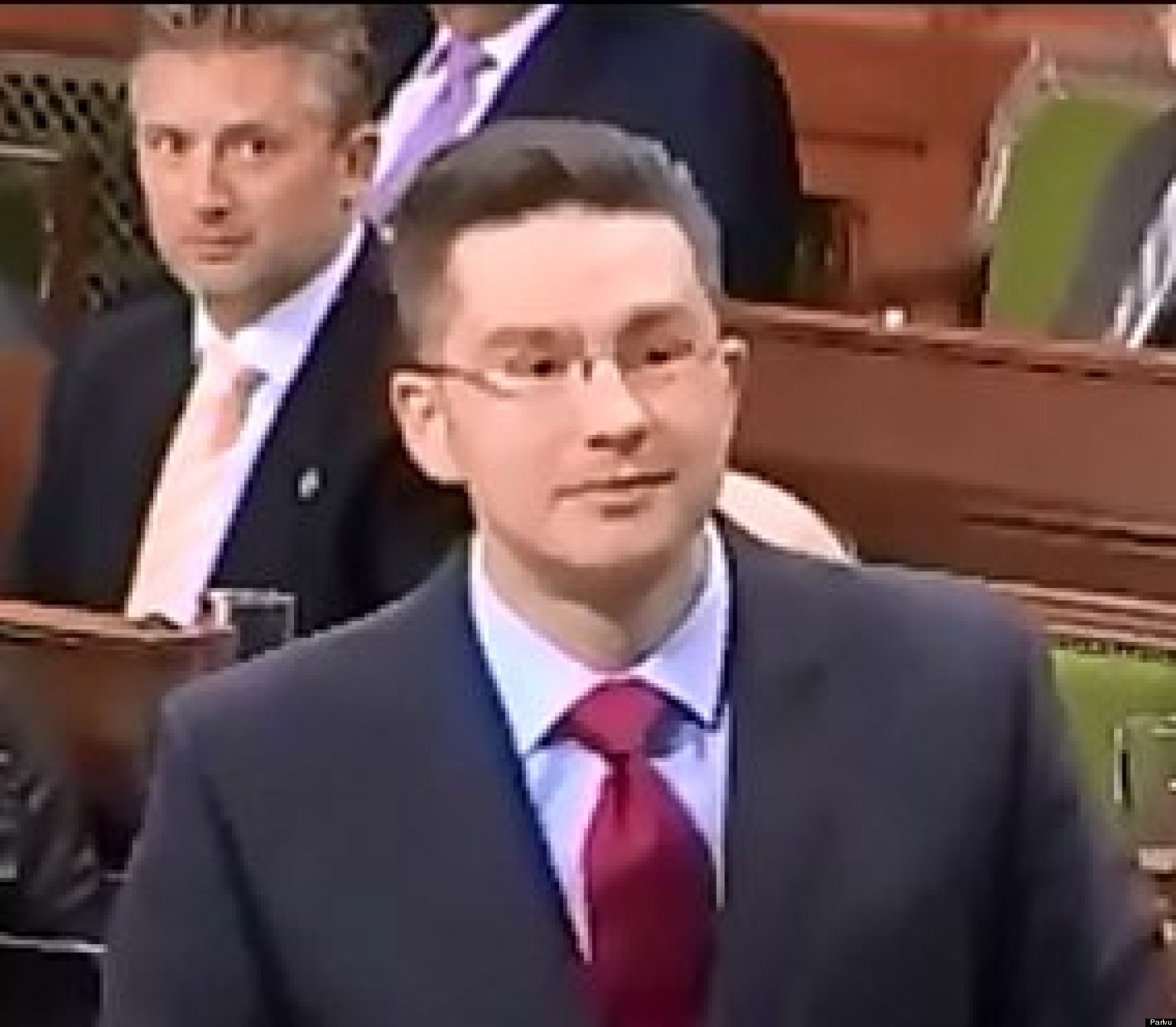
Can the functionally fixed pseudo tough-guys like Rob Ford or Pierre Poilievre get that notion into their beans?  Probably not - they don't appear to be cognitively flexible enough to change their views.

Which is why they will ultimately be left behind.  

It's a social evolutionary thing.

Tuesday, 25 February 2014

The Arrogance of Man


Man against himself - not an issue when that man is delusionally confident, right?

Man against man - it's about what gets taken away from you, or who you can vilify as justification for taking more.

But it's man vs. nature that reminds us what real power truly is.  Twitter trolls, empire-builders, Wall Street narcissists and psychopathic dictators can rise to the top of the social heap, but no amount of money or bluster can save you when the storm hits.

You can't spin it, deny it or gain from it - all that does is create panic.

The temerity of thinking otherwise will always, always be man's downfall.

One of the reasons it's a good thing it's increasingly not up to just us.

There's really only one way to prepare for apocalyptic disasters, don't you know...


Monday, 10 February 2014

Whatever Happened to Peace, Order and Good Government?


Stephen Harper's Conservatives are planning to target Justin Trudeau at the upcoming Liberal convention with a carefully orchestrated campaign to disrupt Liberal communications, highlight disunity in the ranks and question his leadership abilities.


What is the job of Political Opposition?  One would think it was to oppose, giving the title and all.

But oppose what?  Everything, unquestionably?

Pretty much.  This Socratic method is how our democracy tends to function; Parties will attack each other's positions, even the ones they later adopt themselves; to take matters a step further, they will tear strips off their individual opponents themselves so as to undermine their legitimacy.

Why?  Because the goal is to make the sitting government look weak, unable to function and therefore, unworthy of power.

A seasoned political operative once told me that the best thing Opposition strategists could do would be to throw monkeys into the Legislature and completely disrupt proceedings.  They could do this in good conscience, of course, because they were simply filling the role they had, right?

It was a Liberal strategist who told me this - one who, funny enough, has since become disillusioned about the system and is no longer deeply involved.  The partisan brand doesn't matter, though, because the tough-minded fixers in all Parties think the same way.

To a man, they relish the opportunity to be agents of chaos.  Politics is a blood sport after all, and what fun is a boxing match without a little blood?

But what happens when this pugilistic mentality seeps into government?  What happens when it's the people in power that are doing the opposing and disruption?

Team Harper opposes government.  They have always opposed government.  With all it's systems and social services and focus on peace and order, they have always seen government as a road-block to competitive success through dominance of the strong.

Even as government, they have never stopped opposing.  They have always felt they were the strongest.  
The longer they hold the reigns of power, the more ground they feel comfortable taking.


The Fair Elections Act has taken away the power of government to equitably promote voting.  It has made it harder for those least able to make it to the polling booth - including the impoverished, the disabled and those with mental illness - to vote.  


The Tories' electoral reform has also put more emphasis on partisan fundraising and spending, which critically takes the form of robocalls and attack ad campaigns like the one they're proposing here.

The problem they're trying to solve?  Participation.  The solution they're bringing forward?  An increased focus on resource-intensive competition with stiff penalties for the loser.

Attack ads are like a deer's antlers, or a massive military complex - the more you attack, the more you need to defend, meaning the less resources you have for anything else, ranging from healthcare to infrastructure.


Political Parties are perpetually at war with each other.  Harper's cabinet is at war with government.  

Embedded image permalink
Unless things change, we're going to see a country that's at war with its leaders.  


On the plus side, when the smoke clears, what'll be left are the people that saw this coming and planned ahead and those who were able to endure this political drought by working together.

It's never the strongest who survive - it's always those best able to adapt.  It's an evolution thing.


Isaiah 11:6


Sunday, 19 January 2014

Joseph Dreams of the Canadian Economy


I don't buy Mclean's.  In fact, I don't buy any newspaper.  I rarely even pick up the freebies at the subway.  

There's no need for me to - I can and do get all the news I want online.  I pick headlines from Twitter, browse my favourite news aggregates, check out bloggers and listen to the televized scuttlebutt that counts as broadcast news.  To an increasing degree, that's where legitimate news-presenters are pulling their stories from anyway.


What I see through my samplings is a world of people who are increasingly retreating into comfortable perspectives, blinding themselves willingly to the realities that disagree with them.  It's happening on the political right and left; it's happening at the top of the economic food chain, where the "upper class" carry on as though nothing has changed, because for them it hasn't.

But everyone else feels this growing sense of foreboding, like the present is unsustainable, that there's a fall coming.  Political fundraising is up, and much of the money raised will be translated into ad blasts both for and against.  Putting their hope in slogans or hedging their bets against what they feel are barbarians at the gate, donors are placing more than their money in the hands of partisans; partisan donations have become a form of indulgences.


How many of these people are buying Mcleans?  How many of them are buying any newspapers? 

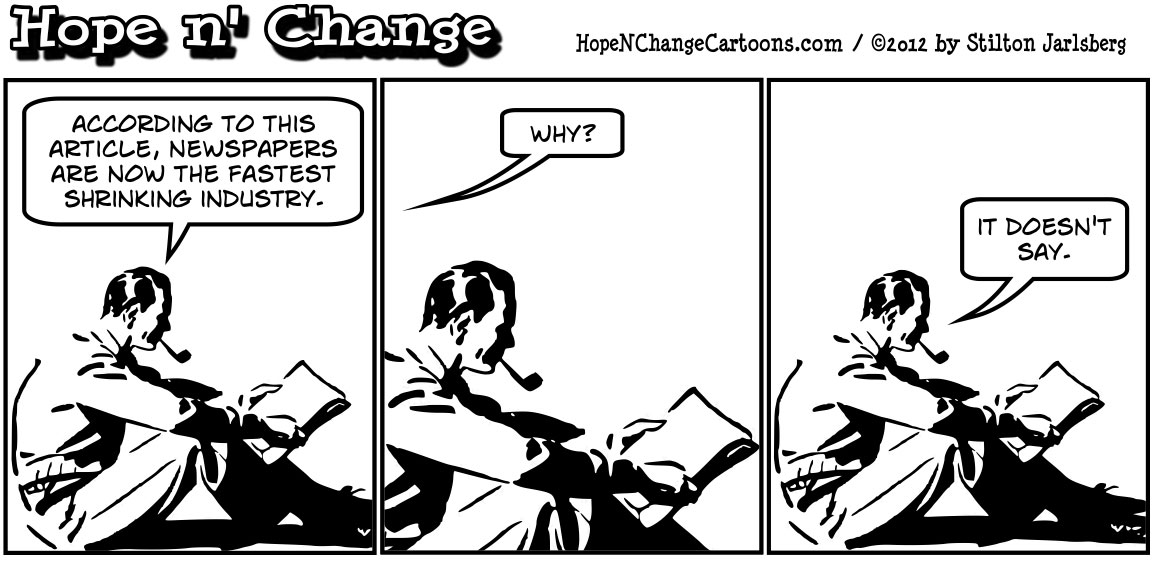
Clearly, not many, because the whole print industry is tanking.

Traditional manufacturing is taking a hit all across the country, but particularly in places where it has been the life-blood of local economies, like Eastern  Ontario and South Western Ontario.  It just happens that the traditional manufacturing sector has played a key role in propping up the national economy, too.

That, and natural resources.  Canada has always relied on natural resources - we've got lots of 'em, they are the base requirement for making pretty much everything else.  It's a key reason why Canada has never been an innovative country - we've never felt the need to be.  


So, the economic battle rages between productivity and profitability of our existing industries - the resource sector, which is proving not to be the Gold Calf it makes itself out to be, and traditional manufacturing, which as the quote at the top suggests, will be strengthened by making sure more gets built with less while also seeking to open new markets. 


Cull employees and reduce regulation, some on the right say; trim the fat and squeeze more out of your existing stock of workers.  Get rid of unions, for all they do is reduce the competitiveness of a workforce.  Wrong, the other side will say - workers are being pushed to the max, are seeing benefits shrink and are increasingly unable to plan for the future or buy new big things, which is in no small party why traditional manufacturing is taking a hit.  Both sides are increasingly ready to revolt against each other, and not just at the polls.

Both left and right dig in their heels and build up their walls, countering any cherry-picked data that disagrees with their positions with attacks.  At the very top, we have the same politicians who decried investments in green energy putting all their eggs in the Oil Sands cart.


Canada cannot win on the widget-making score.  The quality-of-life that has become expected from the middle and the top simply doesn't allow this to happen.  The middle-class who were used to movies on the weekends and annual vacations to Florida aren't going to be content to live the life of a factory worker, with vacations time off work rather than time away.  

No, they're going to feel slighted, like someone has taken something away from them and look for someone else to blame.  It's what they're doing right now, and the sort of stand-against positioning we're seeing supported to an increasing degree at the political level.  It's social kindling that leads nations down dark paths.

Meanwhile, Canada doesn't need to be fighting the widget-making battle.  There are new opportunities emerging in advanced manufacturing, new tech, innovative products and services and all kinds of new fields.  There's no reason we couldn't be leaders in emerging fields, other than our own entrenched, laissez-faire mentality.

But to get ahead in the Knowledge Economy, we need to think differently:

- about how we understand healthcare, justice and issues of poverty
- and, hardest of all, about how we define leadership.


Despite warning and entreaties, Canada has done a poor job preparing for this winter.  But Spring is yet to come, as are the torrential rains that come with it.  It's not too late to plant the seeds for a better adapted, more innovative economic matrix and start consciously planning to adapt to the needs of the future.


This is no small feat, though, as it means disrupting many of the comforts Canadians have clung to; the sanctity of the individual and a laissez-faire comfort with the status quo that always puts the burden of action and change on others.

It takes guts to go out into the unknown, to pioneer new avenues.  It's a risky business, stepping out your door, even when you know your roof's coming down.  But adventures are always fraught with peril, largely due to the fact that they involve learning to trust the people you share the journey with.


   - Joseph Campbell

A transformation of consciousness is what is waiting for us, if we choose to pursue it.  

If we choose not to, however, the risk of the outdated model we've relied on thus far being entirely washed way only worsens.  

Don't say you weren't warned.


Tuesday, 7 January 2014

Investing In People: The Social Paradox


I found this post fascinating, because it reflects the transactional attitude I see reflected to an increasing degree across the social spectrum.

Life, the message seems to go, is a series of investments; we, in turn, are consumers.  

Investment:  The action or process of investing money for profit or material result.

If I get into a relationship, I want best value for my investment.  That means I'm only going to invest in you if I see the potential for return on that investment (ROI).  This can play out as "I will enter a relationship with you if I see it as a solid long-term investment, i.e. you will maintain a sufficient balance of looks, health, wealth, power, status and chemistry throughout my life span."  

It can also mean that if I buy you dinner, I better get something in return.  Conversely, it can mean that if I can't immediately see the ROI, I'm not going to invest in you, period.  Which results in this kind of thinking:


Think about this for a second; social housing, employment insurance, public services in general are about ensuring all people, but especially those without the means to provide for themselves, have access to the basic necessities of life.  Where's my ROI for my taxes?  I'm not getting profit or material result from subsidizing housing, education or vaccines for poor people, am I?   


Think about this transactional perspective in business, as many bosses do - they are loath to make any investments above and beyond salary, because they expect their employees to bring everything else to the table.  If you provide value, you get a bonus; if you don't, you're fired.  Risk-taking is fine, so long as it doesn't fail; small wonder there's so little of it in Canada.

Should employees cease to offer proper value-for-investment because they're distracted by pregnancies or illnesses or what have you, they cease to be a solid investment.  In fact, it's better to hire people only on a contractual basis, so as not to lock myself in to investments that may not be sustainable.

Canada's middle class is shrinking - there's still lots of money at the top, it's just not being invested in the middle.  Government is theoretically responsible for putting a floor underneath the lowest class, but we're shrinking public services, too - as mentioned before, they aren't seen to provide a decent ROI.  Instead, the Harper government is pursuing more tax-cuts for businesses; after all, they're successful, so an investment in them is money well spent - right?

When successful people stick to investing their time and money only in others they deem successful, then less is invested in those who aren't successful.  That's how they ensure their ROI.

This has been a big part of Stephen Harper's political brand - he's good at winning politically, so that naturally makes him the safest investment, right?  You want to invest in a winner.  It's also the argument provided by governments on why they pay top dollar for top public servants - if you want the best, you have to be willing to invest in them.

Meanwhile, fiscal conservatives are saying the middle-class' problem is that they're setting their expectations too high; they need to be realistic.  This means backing away from post-secondary education (it's not landing people jobs and therefore is a poor investment) and focus on taking existing jobs in, say, the natural resources sector

Cammi equates success and power with intelligence.  I guess it depends on how one defines smarts; one of the most successful, powerful people I've worked with directly once shared this bit of wisdom with me: 


Very successful, guy, this - he's founded companies and led others to success.  He's also written off anyone in his life who he didn't see as enhancing his success, including staff, friends and family members.  Oddly enough, this fella built his name in politics; he was smart enough to know who to ally himself with, who to stab in the back and how to present himself as confident enough to be successful.


This is not uncommon.  Aggressive, success-oriented people tend to be really good at applying pressure, be it in sales (Always Be Closing) or in work (find 10% in savings or you're fired) or home - and failing that, out of the home.  The difference between white collar criminals and  

These folk make a lot of money, find power, earn confidence by the sheer force of their will.  In turn, they maintain a narrow focus on that which builds their brand and fuels their success.  Mike Duffy was a great fundraiser.  Nigel Wright was a loyal, strategic operator.  Doug Ford could still be a good investment.

It's good business to invest in these sorts of people; they're known commodities that get their specific tasks done - what else matters?  This transactional approach work, until it doesn't.  Canada has been relying on natural resources, because it's tried-and-true, just as we still have business-minded leaders who insist traditional manufacturing will be the basis of future success - we just need to lower related costs, like they did on Easter Island.

The story of society is a move in the opposite direction, from transactional investments into more long-term, strategic ones.  Wealth redistribution, public medicine and education, infrastructure, government and the innovation that results from collaboration are all examples of this.  

Therein lies the great social paradox; the more we focus on individual success and transactional benefit, the less stable (and valuable) society becomes.  It's when we start investing in each other, looking towards what we can give rather than gain, that we create true sustainability.

Altruism is selfishness that plans ahead - a lesson we are doomed to repeat every time we lose sight of the big picture.

Tuesday, 3 December 2013

Social Entrepreneurs or Change Catalysts?


I think Mitchell Kutney is missing something.

He's bang on with most of his commentary, though.  All sorts of players have latched on to the notion of social enterprise: to put a fresh coat of paint on outdated brands, justify a reduction in charitable investments (there's people who do that for money now) and where government is concerned as justification to reduce crippling levels of social service spending.

Then again, it's becoming increasingly clear that there is a lot of duplication, gaps and overlaps within existing NFPs and fewer metrics to prove what is and isn't working than you'd think.  We're not moving forward, we're treading water.  Government, meanwhile, is looking down the road at fiscal deficits, infrastructure deficits and a rising tide of health and social service costs and realizing it is in no way up to the challenges that lay before us.

The system we have now isn't working.  Continuing to do things the same way is not a viable option.

So what do we do now? 

It's all very daunting.  Perhaps counter-intuitively, the recognition of this reality is partly behind the growth of the Open Government movement.  Stated or not, the theory is that if you create more opportunity for common folk to get engaged and have their say - broaden the conversation, if you will - there will be new ideas, yes, but more people on the hook when things go wrong.

The people in charge, however, either feel confident or realize they need to look confident so as not rattle investors/voters; after all that's in no small part how they got to be leaders.  These folk aren't going to come out and say "I have no idea what to do next" even if they realize that's the case - and far too many of them don't.  They figure what worked before will work again, we just need to return to a romanticized, simpler past.


The concept of social enterprise as it's understood now might have led to a moving of the accountability deck chairs, but the problem is fundamentally the same as it was prior to 2008 - our societal model is completely inadequate to manage today's realities in sustainable fashion.  


We live on a burning platform; some of us are even adding fuel to the flames.


Enter the people I think of when my minds turn towards social entrepreneurship.  

These folk are more than just the why - there are lots of people in various fields who actually do care about the public good in one aspect or another.  Money's not a motivator for them, but a necessity to be managed, like food or sleep.

What gets these people up in the morning is the burning desire to fix the structural problems they see in the world.  It drives them nuts seeing should-be leaders constantly driving society into the ditch, not planning ahead and not employing practices like behavioural economics or design thinking to make the system work better.  These entrepreneurs aren't disillusioned with today's institutions so much as they're disappointed more people aren't proactively trying to reconfigure them.

The folk I have in mind are literally frightening in their cognitive capacity; they're the trained athletes at a charity run, processing information and aligning different fields and churning out meta-solutions at a super-human rate.  To talk with them is exhausting; they think in maps, not symbols - they're outside The Cave.

They are this generations Polymaths or Renaissance Men (and women) - call them Multi-Disciplinary Specialists, because they are experts in several fields all at once.  Increasingly, they're realizing that today's leaders simply aren't up to the structural challenges we face; as such, they're organizing to tackle the solutions themselves.  

According to the accepted definition, these people are social entrepreneurs, though the ones I know don't really care about the label.  Sorting out who should be responsible for fixing the system is a waste of time; they're just going to do it.

As is the case with any organism, external challenges don't spark adaptation - they cull those who don't fit an evolving world.  

It takes something else to catalyze change.

We have to stop looking for some kind of external cure-all, a panacea; it doesn't exist.  We also need to take a fresh look at the lateral thinkers, the social disrupters in our midst.  To paraphrase one change agent - we keep trying to cure them, but perhaps they are the cure.

Monday, 18 November 2013

Mapping Out Human Resources and the Knowledge Economy


I cannot belabour this point (pun intended) enough.  By and large, we suck at doing HR.  

This is painfully true for policy-making bodies; as both staff and bosses (elected officials) are transitory in nature, no central body has ever seen value in creating a proper, value-added support structure.

As we enter the Knowledge Economy, smart business leaders are recognizing that the model of employee management that worked well enough during the Industrial Age isn't going to work now - different approaches are needed to maximize the potential of our cognitive labour.  These leaders are starting to think differently, basing their new approaches on new understandings of how to motivate knowledge-based productivity.

And here's the real kicker - as our social model is fraying due to its inadequacy for modern demographic needs, frustrated people seeing their savings and opportunities shrink are increasingly supporting populist leaders.  Those leaders are sticking to typical populist fare - tough-on-crime, best social program is a job, cutting is better than integrating and a laissez-faire approach to economic growth puts most of our eggs in the natural resource basket.

Don't try and tell the confident, competitive people leading the charge backwards that they're missing the trend-lines.  As far as they're concerned, they have all the answers that matter; if an idea doesn't make sense to them or isn't being communicated in a form they don't need to strain to understand, it wasn't worth their time in the first place.

There is an increased amount of pressure being put on human resources, particularly youth entering the workplace, to be leaders (craft the vision, make the pitch, manage the project).  This pressure is counter-intuitive, making it that much harder for the disruptive talent who can break a company's functional fixedness and help it adapt to current realities to get a toe-hold.

Meanwhile, how many comfortable, well-heeled folk see the social change that's remodelling everything as an economic storm, not cultural climate change?  How many capital holders are choosing not to take risks on untested but creative talent or invest in R&D?  Enough, apparently, that federal and provincial governments (plus a think tank or two) are trying to find ways to shake that capital loose.

There are moves to break the silos and build a system, with lots of focus on open data, user-friendly one-stop-shop portals and engaging the public in conversations, which is important.  Similarly, there are steps being taken in the direction of social service delivery reform, with an emphasis on building programs that put the person first, rather than relying on a bucket-funding model that puts end users at the bottom.

This is huge.  People are co-morbid; we're not just a doctor's visit or a school curriculum or a traffic ticket, we're connected.  Our services need to be connected, too.  They need to be mapped out and that map needs to be placed in our hand, via smart-phone Apps - this way we can navigate the path to sustainability that works for our individual needs.

Which brings us back to Human Resources.  We've gotten into the habit of putting The Economy first; that's putting the cart before the horse.  It's people that must come first, for if they aren't in good shape, how can the economy possibly be healthy?

We suck at doing human resources, primarily because we've forgotten the human part.  That sort of thinking can't last, because society has evolved beyond it.

If our labours are to produce sustainable results, we have to become conscious of this oversight and catalyze change.

Let's get passed fearing seas of troubles lapping at our shores - there's an ocean of opportunity and beyond, undiscovered countries waiting for us to explore.

Sunday, 17 November 2013

Politics is NOT Left Vs Right (Update)


We like to frame politics as a left-right struggle between  capitalists and socialists, libertarians and communists, with each brand containing a set box of positions and approaches.  But politics isn't so cut-and-try, is it?

The reality is that Political Parties swerve back and forth all over the map, trading spaces over who is the champion for the little rural guy or the Bay Street investor.  The core values these Parties are supposed to cling to seem not, in the long-run, to be that core after all. 

There's also the less-recognized reality that in many cases, Parties represent the same core concepts from different angles; conservatives will say they're all about individuals, because they want to remove quotas and regulations to create a level playing field, while socialists will say the field isn't equitable and through regulations and support programs, are ensuring everyone has equal opportunity.

Lastly, there are the pieces that every Government-In-Waiting says they will champion; increased accountability, transparency, so on and so forth.  It doesn't matter which Party wins - the longer they're in power, the further they'll move away from these values.

So what gives?

Having spent a fair bit of cognitive capital on all things political, this is where I'm at in my understanding.

Politics is a series of intersecting axis that create a multi-dimensional space that political operators and Parties navigate within:

- reactive policy vs. proactive policy
      (tough on crime vs. build more schools)

- simple solutions vs complex solutions
      (natural resources as economic staple vs investing in innovation)

- long-term structural solutions vs quick-fix one-offs
      (invest in training/resources for emergency preparedness, cutting same funding to save money)

- supporting individuals vs supporting institutions
      (mass-individualization supporting maximum potential of individuals vs. one-size-fits-all policies that push people to conform)

When you look at politics through this frame, you end up with some surprising results.  As an example - Conservatives who profess liberty as a key social condition are pretty insistent on traditional models of parenting, education, employer/employee roles, etc.

The hidden intent is that to them, freedom means to be like them, and the ability to criticize through free speech is to allow conservatives to shout down anyone who's approach they don't like.

Socialists who firmly believe in standing up against Corporate Canada nurture equally functionally fixed unions that serve as mirror entities, butting heads with business while aping their practices.

The Parties that are all about cutting spending tend to be the ones who spend the most on advertisements.

There are countless examples of cognitive dissonance in politics, but that's the point - Parties and players are focused on the win and, as a result, don't really know what their purpose is.  It's not that these folk lose their moral compass, they don't know where they should be pointing it to.


Here's what I think it comes down to.  

Politics isn't about left vs right - it's about limbic vs. prefrontal cognitive function, the reactive and proactive angels on our shoulders debating what should matter more, selfish, reactive instinct or more altruistic, proactive consideration.

Through a behavioural economics/neurochemistry lens, all the positions, strategies and tactics feed a complete picture of what kind of society a series of choice would create and, therefore, where the real motivations of the people behind the wheel lie.


When they are no longer your enemy, your enemy has been destroyed.

So long as the Political Right refused to commit sociology and think beyond their black-hat/white-hat view of the world, they will fail to understand why tough on crime does not produce sustainable justice and a safer society.  In fact, it does quite the opposite.  They will, therefore, fail to achieve their objective and have to live with the consequences.

That'd only be fair, right?

UPDATE:  Presumably, the Fords are implying that only socialists and lefties object to guzzling liquor at the wheel, bellowing racist slurs, smoking crack with criminals and talking on live TV about performing oral sex.

It's not a left-right thing, nor is it a rich-poor thing; we like to frame things this way because white hat/black hat is so much easier.  What it really breaks down to, I would argue, is entirely internal - selfish vs. altruistic behaviour, discipline vs. consequence-freedom, planning vs. reacting.  In other words, Social Evolution vs. Natural Selection.

Remember - Adam and Eve didn't know to be modest about their nakedness until they became conscious of it.