Search This Blog

CCE in brief

My photo
Recovering backpacker, Cornwallite at heart, political enthusiast, catalyst, writer, husband, father, community volunteer, unabashedly proud Canadian. Every hyperlink connects to something related directly or thematically to that which is highlighted.
Showing posts with label design thinking. Show all posts

Thursday, 11 December 2014

What the TTC should learn from Ferguson


 * Does not reflect TTC Fare inspectors.


Should these situations escalate.  Hopefully they won't and all, but hey - it never hurts to be on the safe side.  Carrying a baton is like carrying an umbrella, right?
 
Wrong.  So wrong.  To plan for violent eventualities - to tell your recruits that hey, is a fight breaks out and if you get attacked, you've got this baton handy - is to frame the fare inspector's thought process in that they're looking for that situation to materialize. 
 
When you go looking for trouble, etc.

Police officers keep watch while demonstrators (not pictured) protest the death of black teenager Michael Brown in Ferguson, Missouri August 12, 2014. (Reuters)
Just look at Ferguson.
 
 
Why, indeed?  Why do local police need to be armed with the equipment used by soldiers in fields of combat? 
 
Of course they don't.  In fact, if public service is equitable and justice is blind, the role of the town policeman should be an easy, even friendly one.
To put such weapons in the hands of police, or transit "fare inspectors" is to beg for their usage.  It's the ultimate marshmallow test - tempting a child with something fun or tasty, telling them not to use it and then walking away.
 
And there's more.
 
The TTC's concern is not enough fares are getting collected.  They need more money and the pressure is to find it internally, but it's hard to keep hiking fares when service keeps faltering.  So how about paying money for fare inspectors to help the cause?
How much of this will be about TTC riders vs existing TTC fare collectors?  Anyone who's ridden the TTC knows that collectors aren't always 100% tuned in to the people passing through their turnstyles.  Sometimes, there's no person there at all.  In some cases, good customer service gets in the way of watching every set of the tens of thousands of hands that pass over deposit boxes, especially over open gates.
 
It's not too hard to picture armed fare inspectors getting it into their head that they are superior to fare collectors and waving their baton around (figuratively speaking, of course) over fare-related matters, even customer service. 
 
All this at an agency that is struggling with service disruptions, delays, etc. 
 
The citizens aren't the problem.  The employees aren't the problem.  People are people - they will react to their environment, whatever it may be.  A poorly designed environment results in poor results.
 
Batons are a terrible addition to an already poorly designed environment.
 
I would suggest Brad Ross stop his Michael Hayden act and start recognizing that if people have concerns, it's probably there's a reason for it.
 
Instead of adding weapons to a volatilte mix, how about better management practices, better training, better service?  You could even use open data and digital tools to empower TTC riders to be part of the structural solution.  Heck, you could use civic fundraising to help address specific transit issues.
 
Let's sort this out before the TTC's baton business gets out of hand, and ends up in the media.

Wednesday, 24 September 2014

Lego my City! A Great Idea for Co-Design


Smart.  Lego is something accessible - you don't need to have a masters in engineering or city planning to see how blocks fit together to make a complex whole, and what that whole will look like.
 
As a citizen, you can more readily see how a given framework will impact you and offer comment based on that, not on dense reports full of jargon.
 
You can also test out more things in advance - is a space wheelchair accessible?  Is a layout too confusing for easy navigation, requiring additional signage?
 
Empower people to be part of the process and you get better results. 
 
Then everyone gets to say, we did build that.


Wednesday, 6 August 2014

The Best Ideas Don't Have to Cost a Fortune


  1. It would be great if there was a readable source for us dealing with financial things for the first time


"I don't think about anything unless I'm paid to."

That gem was once uttered to me by a successful, respected, wealthy government relations consultant.  He meant it, too - this guy, like most government relations or public affairs or management consultant folk bill by the hour, or even by the 15 minute time increment.  

They're consultants - they are experts and their expertise costs money.  If you want some of their time, you have to pay for it.  

Since they are paid for their advice, advising is their focus.  They may offer added value to keep a contract - a bit of writing here, a few words in political friends' ears there - but by and large they are financially fixed on the idea of offering advice and moving on.

The problem is, their commitment is to the activities that bring them money.  They have no reason to stay engaged with a topic before or after they get paid to care about it.

Traditional high-priced consultants come at problems from the outside, offer their wisdom, write a report, collect their paycheque and move on.  Nowhere in this transaction is a need to map their consultation to reality; behavioural economics, design thinking, iterative process and community relationship-building aren't in their mandate.

So how many super-smart (or at least, super-successful) consultants have been paid top-dollar for reports or advice that goes into reports that are subsequently shelved?  How often do ideas implemented not stick, because they weren't grown from the ground-up?

We spend a lot of money - tax payer dollars, which are supposedly valuable - on advice that sounds nice but doesn't reflect the real word and won't be acted upon anyway.  The theory of transactional politics is that the advice offered is a consumable product that one stakeholder or another may decide to carry forward, while others may oppose it.  

Such was the case for the Drummond Report - lots of ideas were presented, with interest groups picking the ones that mattered to them and pushing for action/insisting that action not be taken.  Politicians were the ultimate recipients of all this lobbying activity and based their go-forward options on what they felt was in their best political fortunes, which theoretically maps to the biggest voices from the public.

That's how democracy works, right?  Everyone pursues their own interests and majority rules.

But we all know that isn't how it works - the loudest voice can come from the smallest groups, if they are well-funded.  I remember once sitting around a board-room table with a bunch of political organizers who talked about how they wanted a commission created and who they wanted to have on it, but how they would shape the recommendations regardless.  Their clients would then be well-positioned to get what they want, whether it was in the broader public interest or not.

That's not democracy - that's transactional politics.  Which is what we get when the smart people only care about what they're paid to care about.

This is why we have so many boring, unsexy or complex structural issues that never get addressed or, at best, get token solutions so that a government can't be accused of not caring.  In the worst possible scenario, transactional players actively want problems to persist so that they can keep getting paid to address them.  

Why on earth would I try to solve lead poisoning when I make my money curing it?  That'd be like putting myself out of business - or forcing myself to adapt.

This is why the best consultants aren't the people paid to think, but the people who live a given problem every day.  They have insight into how the problem impacts them on multiple levels, can walk policy-makers through their challenges and offer ideas that are grounded in their world, rather than imposed from above.

Far too often, public consultations is a PR exercise - something to keep the plebes happy, rather than an actual attempt to gain insight and ideas.  It's too bad, this, because there are a lot of great ideas brewing among the people policies are being designed to help.

Why?  It's easy - solving their problems isn't a think they get paid for, it's their life.  This is why the best, most passionate and most dedicated advocates for any cause are people with lived experience.  Think Clara Hughes.  Heck, go bigger and think Helen Keller, or the likes of Martin Luther King Jr.  They weren't motivated by money to change the world - they wanted to change the world so that they might equitably live in it.

As is often the case, what helps the most disenfranchised helps the rest of us.  The Labour Revolution was about sustainable living for hard-pressed employees; it ended up improving productivity, quality of life and spun off whole new industries.  Emancipation in all its forms has done the same thing - reduced poverty and crime, expanded the workforce, created new markets and brought new ideas to the table.

My favourite example, one we continually seem to forget - the more rights and equitable opportunity women get, the more peaceful, stable and successful our societies become.  You don't get that when the Alpha Males just focus on what they think matters, do you?

Society is becoming increasingly stratified into haves in competition and have-nots that serve as collateral damage.  The former tell the latter to suck it up, try harder, do something more to earn a spot at the big boy's table.  

Meanwhile, those without access, sophisticated training or a familiarity with jargon are telling us what they need to succeed.  Deemed inferior by the Alphas, these voices are too-often ignored, dismissed or ridiculed, which is an opportunity lost.

While the consultants independently mull what to do about youth disengagement, financial literacy, youth employment, declining voter turn-out and sluggish economic growth/a lack of innovation, we have people like @gofango, hinting at shared solutions for all these problems - solutions rooted in modern tools that she will understand far better than the seasoned vets who grew up with type-writers and see excessive ink as a way to demonstrate wealth and success.

It's time we flip our consultant model on its head and rethink how we define expertise.  We need fewer consultants who only think about what they're paid to and more who believe that the people have the answer and serve as conduits/translators for them.

Best part - the people who do something because they believe in it don't want a ton of money.  They need sustainable living, tools and the opportunity to own what they do.

Is this the way things work?  No.  It would be a new way for government to engage, bypassing the usual suspects they have relied on for so long.

Governments needn't worry, though - there are plenty of people on the front lines of society who would happily walk politicians through this process for the first time.


Monday, 16 June 2014

Moving Ontario Forward Together


Ha ha, Toronto Star!  I beat you to the punch.

The message rings true whoever brings it forward - the absolutely wrong thing for the Wynne Liberals to do would be get cocky and bulldoze their way forward in a Harper-like manner.

I sincerely hope the Opposition does get their act together, but it doesn't have to take an external Party to ensure government discusses before they decide and do; the best leaders catalyze collaboration all on their own.

Were I the governing Liberals, the first think I would do is reach out to the Opposition with a couple pieces of common policy that all Parties agree matters and can build common solutions around - mental health, particularly as it applies to growth in the Knowledge Economy/justice and healthcare costs and Open Government, essential for avoiding future process scandals.

Then, I would take a look internally and wonder if the machine of the Party is as modernized as it needs to be.  Beating peers in a shrinking water hole does  not mean you're well-adapted for bigger changes in the world around you.  With four years to work at it, now's the perfect time to reflect on where you're weaknesses lie and what best practices exist out there to learn from.  


It's unclear who's going to be wearing which hat within the Liberal Party, but you can guarantee there are more than a few folk who feel entitled to position or comfortable with where they are.  Comfort breeds complacency, a terrible state of mind to have in a dynamic landscape.

Fortunately, we have a Premier that gets the importance of engagement and knows a thing or two about unpacking assumptions.

Wynne isn't know for being cocky; she's know for her commitment to engagement.

Well, here's an unprecedented opportunity to show what it looks like when we've got a woman in charge who believes that moving forward together means leaving no one behind.

Thursday, 3 April 2014

Disney Bold and Open: Something to Marvel At


Do I fully believe that Marvel has a mapped-out plan for movie into 2028?  Absolutely.  Do I think it's fully populated with detailed content down to the characters to be highlighted and Easter Eggs to be embedded?  Not in the slightest.


But that isn't the point - that's no the genius of this announcement.  By creating even a framework that lets them credibly encourage fans to imagine a temporal journey into an expanding universe with them, Marvel has given them cause to voice their thoughts on who and what they'd like to see on the big screen.

This, folks, is what's known as co-designing.  It's a bit like parenting - do parents ever get bored of watching their kids grow up?  Nope.  When you invest so much of your time and energy into a product, a brand or an individual, it becomes an extension of you - literally, you live through it.

I've been watching Disney with a suspicious eye ever since they cancelled The Clone Wars, but as it is emerging that they've thought their actions through, taken into account various fan bases and are really interested in sustained profit through an ongoing relationship instead of a series of bombastic one-offs, they're starting to win my trust.

Bob Iger was wise to reference Pixar, because that's a firm audiences have come to trust, too.  We know the folk at Pixar are as invested in their creations as we are, meaning they will always, always focus on the little value-added pieces that turn products into experiences.


Disney has Star Wars, too - and is bringing it back to life in a massive, carefully-orchestrated way.  


Marvel and Star Wars?  Frozen and Pixar?  

Theme parks, toys, teacher resources, Corporate Social Responsibility?

Re-read that last one.  Disney, along with firms like Microsoft, is a world-leader in social support and sustainability.

Disney is providing massive amounts of content through various platforms, each honest to their own unique brand and loyal to their own customer bases, yet integrated into one seamless, efficient, powerful whole.  It's like a random bunch of blocks put together through collaboration to create something greater than the sum of its parts.

Their partners trust them.  Partners who produce content that countless fans around the world love and believe in.  By empowering their team members, Disney is giving their new end-users cause to trust them, too.  It's funny how that happens.

Just imagine that government worked that way.  Heck, Disney could even help support the movement that will get us there.


"You've become part of a bigger universe, you just don't know it yet."

Monday, 24 March 2014

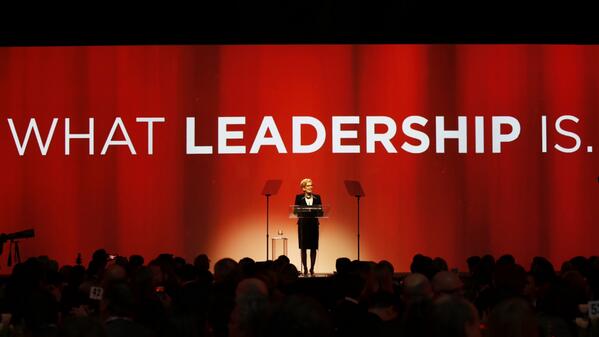
Socratic Governance and the Truth of #WhatLeadershipIs


The Budget, like all policy positions, messaging campaigns and various political chicanery are all designed (to varying degrees of efficacy) with one goal in mind - winning elections.  Sometimes a Party will think a couple elections out as they aim for their Big Win.  

Until recently, the NDP both federally and provincially has often mirrored the disenfranchised Canadians they claim to be the voice of - never aiming too high because they knew there was no hope in hell they could get close numbers sufficient enough to form government.


But in all of this, all scenarios, all permutations, what isn't being put first is the well-being of the province entire.  A focus on winning urban seats results in a focus on urban policy; ambitions to secure senior votes will target issues that matter to them.  Opposition Parties will look for whatever faults they can find and hammer those, with a focus on what will turn off government's base and help mobilize their own.


I get that this is how politics works - but it's also how governance fails.

I get that these political operators are telling themselves this is how the game is played and that it's their job to take down their opponents, blasting their positions to smithereens and undermining their intentions in the eyes of voters - you know, in Socratic fashion.

Socrates - yes, that one - introduced the philosophical method we now call Socratic, which involved systematic doubt and questioning of another to elicit a clear expression of a truth supposed to be knowable by all rational beings.

In theory, this is what politics does - poke at the actions both publicized and obfuscated of opponents, holding them to account and revealing the truth.  In theory, the constant, over-the-top attacks are about forcing accountability.  Socractic debate isn't about undermining people or blowing up positions, though - it's about collectively finding the truth by challenging each other to rationally, objectively explore all facets of a given issue in a way we simply couldn't do on our own.


But let's be serious - people aren't rational actors, nor are we objective in the sense that we put a non-partisan truth first.  If anything, the more competitive become, the less rational we are.  


Think about it for a second - let's say you're driving a car down the highway, lots of other cars all around you, and unexpectedly a truck on your left veers into your lane.  There's no time to contemplate a course of action, you have to act now.  What do you do?

Odds are pretty good you'd instinctively veer right, not looking to see what's there until you're already in motion, if at all.  Knee-jerk, instinctive reaction; anyone could do it without thinking.  People do do it, which is why we have so many traffic accidents.

The number one cause of all our social problems ranging from car accidents to poor healthcare to poor healthcare systems and yes, up to poorly-conceived policy is human behaviour.  We don't look far enough ahead, we don't take the time to grasp the entirety of a given context and we focus on the notion of us being in the driver's seat rather than being just one more car on the road.


It's great to say politics is Socratic and political operators are poking and probing to land on the truth, but that isn't what they're doing.  They're poking and probing for selfish opportunity or antagonistic attacks.  All this talk of finding coalitions of voters?  That's not about identifying structural challenges and shared solutions, it's about picking fights and deferring consequences.


The goal of politics isn't sound policy, it's political wins.  Winning is as much about helping your opponent lose as it is about seeking out just the people who will help you succeed.  When individual wins come first, the well-being of the whole comes second, if at all.  This is why we have such massive, structural challenges in the first place.

Look, the goal here isn't to shame and blame anyone - in a tragedy of the commons, everyone is to blame.  The politicians who've put self-interest first, the political operatives who've elevated the aspirations of their Parties over the well-being of their province, the media who've put selling copy over serving as aspirationally impartial communicators to voters who've opted not to invest time and energy into understanding the political landscape are all at fault.

Noted, great, let's move on.  

None of us is going anywhere so unless we want a perpetual swing of the pendulum until the cord breaks entirely, we have to get over ourselves and who's in the wrong and start focusing on how do we make things right.


There are good, even great models of consultation out there that could, if implemented in the political arena, completely change the dynamic of our system and start developing real, honest-to-god shared solutions.  Design Thinking is one such practice that needs to be incorporated into bureaucratic operations and civic engagement from the top down and the bottom up.  Swerhun's Discuss, Decide, Do is another great primer for how to create better, more representative policy.

We'll never get there, though, so long as we keep looking at the world from an inside-out perspective.  Individual politicians need to care less about whether they get a Minister's job and more about serving as conduits for their constituents.  Call it public service.  

Political Parties (which are a key part of our system by convention only) need to back off entirely or reclaim their original purpose, which was to ensure shared value sets and aspirations got a public airing - not fighting over slices of the pie.

The best we could hope for is real Socratic debate, where Elected Officials focus on bringing the realities of their constituents to the conversation and partisans employ a "yes, and" model for weighing the merits and disadvantages of given positions.


Of course, if the consultation process was done correctly, there'd be no need for Political Parties at all; instead, true leaders and real representatives would go the distance themselves, bringing their stakeholders together to co-design the best (but not perfect, 'cause that's not possible) and most sustainable solutions for all.

I've been told I'm dumb, idealistic and naive for thinking this way, but I've also been told I'm a thought leader with an uncanny ability to see social trends before they become trendy.  What matters most to me is that I've seen the right kind of framing work in practice; I have seen implacable enemies find common ground to stand on and share tools to build with. 

It works.  It's hard work, it demands a certain level of delayed gratification, discipline and empathy, but that's the whole point.

Far too many "progressives" are aping their conservative brethren, focusing on lateral, oppositional combat instead of figuring out where we go from here and how.  They will find all kinds of creative ways to justify this cognitive dissonance and change the channel so as to redirect focus on the faults of others, but again, that only proves the point.


If we want to talk about #whatleadershipis, let's start with what it isn't.  Leaders don't place blame.  They don't incite fear.  Leaders aren't interested in wins, they're interested in results.  For true leaders, moving forward together means leaving no one behind, no matter their partisan brand or what "coalition" they belong to.  

Leaders don't put others down to reaffirm their position; they actively seek to make themselves obsolete by growing other leaders to take their place.

Governance isn't about picking fights - it's about understanding the truth of challenges and developing shared solutions to address them.  

When the Masters work is done the people say "amazing, we did it all by ourselves."

And that's the truth.

Wednesday, 11 December 2013

Why Star Wars is Following Marvel and Why Politicians Should Pay Attention


One-offs are easier to pull off, and are easier to distribute.  That was the premise behind the serial - have a theme, some common characters and put them in zany situations that are resolved within a half hour/hour.  You can play any episode in any order, grab an in-the-moment audience and laugh your way to the bank.

The model works, and continues to work - in a horses-and-bayonets kind of way.  Where the problem lies is that not everyone is sticking to the tried-and-true serial model and are instead building narrative arcs.  It started with the two-parter and has carried on into more complex plots, arcs-within-arcs and as a necessary result more layered, more interesting characters.

There have been risks along the way and some losses, too, but the trend is away from siloed one-offs and moving more and more towards the arc.  Complex shows with complex characters like LOST and Battlestar Galactica may not have had as massive an audience as others, but that audience was loyal, served as an excellent (and free) marketing partner and readily ate up viral marketing, soundtrack purchases and all kinds of other value-add that went along with the product.  


Committing to complex stories and character development hasn't hurt the careers of the developers of these shows, any more than it's hurt Joss Whedon, he of complex stories and teased narratives.  He's now the creative director of Marvel's film/tv franchise.  J.J. Abrams has done a bunch of cool projects since LOST, up to and including Star Wars.

The cross-pollination and value-add model is working wonders for Marvel across the board; they have tv shows and movies and comics, their actors are tweeting and instagraming away while producers tease hints at conferences and media avails.  It's a complex strategy that must have taken (and must continue to take) a great deal of fore-thought and planning to execute, adapt and persevere.  But again, it's working.  Audience are tuning in and even better, they're participating.

There is some secret sauce to the Marvel model (that Star Wars seeks to replicate); they have gotten pretty good at striking a balance between giving each film, series and character it's own space to function and breathe and grow, resulting in some pretty original (and different) directions for the franchise to grow in.  As a result, they have more creative stories, penetrate more markets and build their core constituency by providing a community of experience.

This is a model that's worked pretty well for Apple, too, as it has for many leaders.

It can and will work just as well for politicians, when they get around to thinking different.  We're seeing that start to happen now - Obama's campaign definitely broke new ground and Justin Trudeau's greater team involvement and communication format has been more engaging.


What's lacking, though, is the narrative.  There's no plot development in politics, no Big Idea for people to identify, discover and then explore as it unfolds and marches towards completion.  Instead we have message points, variations on the same theme and vague talk of values and such, but there's no hook, no transition, no real payoffs.  We don't really get to know our politicians as both individuals and participants in a team; there's no sense of trajectory to their stories or that of their Parties.  Policies are provided in serial format, with accomplishments being ticked off like boxes on a page.

It's great that more students are graduating - good for them.  It's lovely seniors are getting more surgical procedures done, and faster.  Love that roads are being paved and digital government strategies are being pursued.  But how do these things connect?  What sustained, building evidence do I have that I want to invest my time, money and votes into what you're going to do next?  Audiences want to know they're in good hands and they don't want you to tell them so - they want to discover it for themselves.  

And when they do, they'll want to participate.

Tuesday, 3 December 2013

Social Entrepreneurs or Change Catalysts?


I think Mitchell Kutney is missing something.

He's bang on with most of his commentary, though.  All sorts of players have latched on to the notion of social enterprise: to put a fresh coat of paint on outdated brands, justify a reduction in charitable investments (there's people who do that for money now) and where government is concerned as justification to reduce crippling levels of social service spending.

Then again, it's becoming increasingly clear that there is a lot of duplication, gaps and overlaps within existing NFPs and fewer metrics to prove what is and isn't working than you'd think.  We're not moving forward, we're treading water.  Government, meanwhile, is looking down the road at fiscal deficits, infrastructure deficits and a rising tide of health and social service costs and realizing it is in no way up to the challenges that lay before us.

The system we have now isn't working.  Continuing to do things the same way is not a viable option.

So what do we do now? 

It's all very daunting.  Perhaps counter-intuitively, the recognition of this reality is partly behind the growth of the Open Government movement.  Stated or not, the theory is that if you create more opportunity for common folk to get engaged and have their say - broaden the conversation, if you will - there will be new ideas, yes, but more people on the hook when things go wrong.

The people in charge, however, either feel confident or realize they need to look confident so as not rattle investors/voters; after all that's in no small part how they got to be leaders.  These folk aren't going to come out and say "I have no idea what to do next" even if they realize that's the case - and far too many of them don't.  They figure what worked before will work again, we just need to return to a romanticized, simpler past.


The concept of social enterprise as it's understood now might have led to a moving of the accountability deck chairs, but the problem is fundamentally the same as it was prior to 2008 - our societal model is completely inadequate to manage today's realities in sustainable fashion.  


We live on a burning platform; some of us are even adding fuel to the flames.


Enter the people I think of when my minds turn towards social entrepreneurship.  

These folk are more than just the why - there are lots of people in various fields who actually do care about the public good in one aspect or another.  Money's not a motivator for them, but a necessity to be managed, like food or sleep.

What gets these people up in the morning is the burning desire to fix the structural problems they see in the world.  It drives them nuts seeing should-be leaders constantly driving society into the ditch, not planning ahead and not employing practices like behavioural economics or design thinking to make the system work better.  These entrepreneurs aren't disillusioned with today's institutions so much as they're disappointed more people aren't proactively trying to reconfigure them.

The folk I have in mind are literally frightening in their cognitive capacity; they're the trained athletes at a charity run, processing information and aligning different fields and churning out meta-solutions at a super-human rate.  To talk with them is exhausting; they think in maps, not symbols - they're outside The Cave.

They are this generations Polymaths or Renaissance Men (and women) - call them Multi-Disciplinary Specialists, because they are experts in several fields all at once.  Increasingly, they're realizing that today's leaders simply aren't up to the structural challenges we face; as such, they're organizing to tackle the solutions themselves.  

According to the accepted definition, these people are social entrepreneurs, though the ones I know don't really care about the label.  Sorting out who should be responsible for fixing the system is a waste of time; they're just going to do it.

As is the case with any organism, external challenges don't spark adaptation - they cull those who don't fit an evolving world.  

It takes something else to catalyze change.

We have to stop looking for some kind of external cure-all, a panacea; it doesn't exist.  We also need to take a fresh look at the lateral thinkers, the social disrupters in our midst.  To paraphrase one change agent - we keep trying to cure them, but perhaps they are the cure.

Tuesday, 12 November 2013

Government Services: Systems, not Silos


Nor cost-effective.  Duplication, gaps and overlaps are easy to miss when you don't have a service map - but we tend not to think in maps.  We demand simple, straight-forward bullets and picture-perfect clarity of message.

There's a lot of amazing work being done by governments around the world on social/human service integration. but the information I've seen to date is still being presented in old-school formats; boxy flow charts or spectrums.

Thinking about this led me to recall a couple of infographics I did a couple of years ago, first on a scrap of paper while sitting in a food court, then later on a computer with my amateur skills - the system today (silos) and the system tomorrow (an actual system).  

My entry-point into this world of service design was mental health, particularly socio-cultural impacts on individual states of mental fitness and the actual process that lead us to make (or not make) the choices we do.  Both trains have since come to the station; now everyone is getting on board.


That was two years ago.  We've all come a long way since then, and the journey's just beginning.


Tuesday, 1 October 2013

The Sun Sucks at Economics


The Sun clearly sucks at economics. Behavioural Economics, that is.

There's no small irony in this; the folks on the political right are hopping mad at young folk who clearly don't know how the world works.  You get out of school, you start at the bottom wage rung and slowly work your way up.   It's a waste of time teaching kids art and group therapy - they need to focus on math and the practical skills our society needs - you know, like woodworking.

And all these people with radical faiths and unusual names committing acts of terror/crime? They need to get over themselves, too - or get out.

Take this Ali Mohamed Dirie, for instance.  We don't need to know a thing about how his little personality and motivations were formed - did his parents vent frustrations with him, did he experience stigmatization at school, how he was treated in our sterling correctional system.

Dude got woodworking, for Chrissakes - what more does he want?  By acting irresponsibly overseas he embarrassed our well-respected country.

That's a bit like telling someone suffering from repetitive stress injury "we changed your workspace for a day - now get over it."

There's a clear profile that leads to this kind of thinking.   It's a great one to have in certain specific contexts - just not ours.

By putting "the country" and "the economy" first, the authors of this editorial are getting mad at lead poisoning without looking upstream for the problem.  We can try to apply yesterday's social/economic model to today's reality, but that's a bit like fighting a modern war with horses and bayonets.

Fewer Baby Boomers got post-secondary education than Millennials do today.  At the time, the social contract looked like this - if you get a job at, say, a manufacturing plant right after school, you'd expect to start at basic wage and work your 8.5 hours a day.  The harder you worked and the more value you added, the greater your chance at slowly working your way up the ladder until The Peter Principle kicked in.  On the otherhand, if you spent the coin and time on post-secondary education, that would pay off with better-paying jobs and more meaningful work.  The hours would probably be longer, but the work would be satisfying so that'd be okay.

Now we're telling kids they have to work as hard as and spend more than the Baby Boomers in getting post-secondary education and even harder through volunteering, internships and sales skills - but expect to start at the same place as a high school dropout would have back in the day.

Is it any wonder why youth are disillusioned?

Back to those sales skills - what are employers looking for? How do you figure that out?  Hell, how are they figuring that out?  How do you demonstrate your ability to play well with others and add value for a company?  Name the math course that teaches those skills (certainly not Algebra - that's a product of radical Islam, after all).

 The fact is, it's the anthropology courses, the Social-Emotional Learning and the value-add and design insight you get though art that instills in kids the skills that will help them land satisfying jobs in the Knowledge Economy.  They aren't trying to live out their parents' fading memories of the Manufactured Economy - they're planning for the world they see emerging now.

Which brings us back to math.  Math is about structure, about understanding how concepts fit together.   Math is engineering, math financial planning, is navigation, problem solving.  Just ask Jacob Barnett - he knows a thing or two about math, despite his failure to play by the rules.

But we don't sell it as such.  Instead, we sell it as tough medicine, something you need to do for your own good whether you see it or not - like eating veggies, or voting, or wearing seatbelts or not talking on the cell phone while driving.  Life isn't supposed to be enjoyable - you're supposed to suffer through for the good of the economy, which will in turn provide wealth (not satisfaction) for everyone.

There are just oodles of great role models at the top tier of society who demonstrate this in practice, aren't there?

Back to what math is - playing pool, Angry Birds and Bad Piggies.  Math is making things work - like building a bridge out of paper, or determining the angles required to make a flat drawing look three-dimensional.

See the connection, here?  Let's take it even further.

If I take two trains and have them leave opposing stations at different speeds, where and when would they intersect?

If I take the child of disenfranchised, under-employed parents who suffer from discrimination in forms both subtle and gross, expressing these frustrations at home; if that child expresses the same discrimination at school, sees the same marginalization and stigmatization of people like him across society, what are the odds that this kid will see the existing social order as a problem he needs to solve with the tools available to him?

Root numbers = root causes.
Committing sociology = problem identification

The Sun's right on one thing - we do need to start using every tool at our disposal, and to their maximum potential.  We need to develop new tools, too.

Just like you use calculus to solve different problems than you would with algebra, there are only so many social problems you can successfully address with a hammer.
 
PostScript - I wrote this on the subway, couresty of smartphone tech.  Wireless allowed me to add the hyperlinks, post to the blog and upload to the world.  The other tools I used were all cognitive.  :o)

Monday, 30 September 2013

Jacob's Ladder: Maximizing Our Human Potential


Let's be honest - Jacob Barnett is an exceptionality.  Not everyone's kid is going to change the world, nor are they blessed (or cursed) with gifts so incredible as to remove them from normal human communication.  Nor is every person destined to reach self-actualization.

But we aren't really trying to seek out the exceptional, are we?  If anything, we're pretty set on standardization.  Sure, we think we want creativity, but in practice, it makes us uncomfortable.  There's a rationale behind this that is explained by the fact that so many of us (perhaps especially those aggressive, competitive folk who reach the top of the food chain) don't see the value in reaching for something greater than personal success.  For them, personal fulfillment is simply a marketing term for selling self-help books.

If we're honest, Kristine Barnett is an exceptional person, too.  She risked personal stigma and the perceived risk of ruining her son's life by rejecting the standard methodology society wanted her to follow.  She did, overcoming even her own self-doubt in the process.  Because she loved her son too much not to try, the status quo was never an option.  

There's a valuable lesson in this, one that will only grow in resonance as issues like youth unemployment, democratic malaise, innovation deficits and mental health in the work place start to connect for us consciously.

We keep trying to force round people to fit the square civic holes designed to keep the economy chugging along, causing friction for the individual and for society as a whole.  It's the way we've done things thus far.  Fortunately, the next iteration is always present at the ends of the old one.  Design thinking for products, spaces and services is going to provide imagined solutions - and with them, new challenges to be solved.

After all, that's how evolution works - the exceptions eventually become the rule.