Search This Blog

CCE in brief

My photo
Recovering backpacker, Cornwallite at heart, political enthusiast, catalyst, writer, husband, father, community volunteer, unabashedly proud Canadian. Every hyperlink connects to something related directly or thematically to that which is highlighted.
Showing posts with label innovation. Show all posts

Wednesday, 9 December 2015

Horses, Bayonets and Toronto's Taxi Barons


If ever a case was to be made of the desperate need for taxi companies to get with the times, this is it.

Uber is increasingly popular, especially among younger travellers.  Individuals and companies have started to play with Uber's potential value-add - everything from pizza delivery and mail service to increasing mobility for people with mobility issues.  Yes, it's a new model and yes, it requires new regulatory frameworks to support it - but with initiatives like Tim Hudak's Private Member's Bill aim to do just that.

Apart from providing supplementary income, part of the big reason Uber is so increasingly popular is because it is the anti-taxi.  The taxi racket has a bad name in town; drivers rushing corners or cutting off pedestrians, taxi barons gouging their own drivers, etc.  

In the free market, customers are the evolutionary forces that determines what survives, and they tend to favour what is seen to work in their best interests.  Increasingly, the traditional taxi model is becoming the horse and bayonet of commuting options.  It represents a bygone era of service dictators who fought government with the assumption that the public was really a passive third party.

Uber, on the other hand, represents where society is at now - civic engagement, expansion of option, governments looking to support entrepreneurship and co-design services and regulatory environments with the public as well as the usual organizational suspects.  They've hired some smart young policy minds and communicators from Queen's Park (the amazing Susie Heath comes to mind) who know how to engage, not just message, and who better reflect Uber's end-user than old-school taxi company owners.


Which brings us to this inane protest which will disrupt traffic, piss off commuters and reinforce all the things people dislike about taxis and the entire taxi industry.  

Why on earth would taxis schedule their own funeral procession?  What can they possibly hope to gain by frustrating the people who ultimately pay their bills - citizens?

Simply, because the taxi industry lives in the past and haven't figured out why they need to change their tactics from what worked a century ago.

The theory here is dominance - flex your muscle, remind people what power you have and then force the powers that be to turn their backs on your competition, leaving you with a non-competitive market.  It's what Steven Harper tried to do as a politician, which ultimately led to his downfall.

Sorry, Taxi barons, but that just isn't the way it works any more.  

Moves like this don't strengthen your cause - they alienate your "base."  And the more young commuters have their experience of taxis tainted with negatives, the less likely they will be to use them - especially when they can turn to friends or try new experiences through organizations like Uber.

By all means, proceed as you feel is right - get your horses and bayonets out and show those politicians who's boss.

It's your funeral.  I just hope you can afford the fare.


Monday, 8 December 2014

Investment and Social Impact: The Garden of Innovation


"Founder Henry Chong started the company Revelo Electric which specializes in electric bikes for urban settings. His idea, which started as an undergraduate thesis project has come a long way."

Technically speaking, an undergraduate thesis isn't R&D.  It isn't market research. Yet how many start-ups are emerging from ideas or needs first explored in academic settings?

Then there's Figure 1, which is a brilliant idea that bridges the gap between professional peers communicating relevant information and end-user privacy/info security.  I won't go into the massive growth potential of this App here.

How many innovative, problem-solving and potentially massively profitable enterprises have emerged from non-product oriented processes?  A ton.  Meanwhile, the money governments are pouring into financial incentives to nudge traditional private-sector players to be innovative isn't having much impact.

Also, the increased pressure on what used to be Not-For-Profits to be financially stable on their own (through sales, not grants) isn't making organizations more lean, it's denigrating services.  Pure science as a profit-focused tool?  All we're ending up with is less science and fewer idea opportunities.

 This is a good thing for the survival-of-the-fittest mentality of our current government - they feel that this shrinking of the pool increases the financial viability of what actually emerges.  But where beyond talking-points is the evidence to support this?  Where are the metrics?

There are none.  It's an ideological perspective as removed from reality as the idea of communism.

You can't motivate innovation with financial pressure.  It doesn't work; neurobiology and evidence from countless studies prove it doesn't work.  Instead, what financial carrots and sticks do is encourage more "fake it 'til you make" it hustlers who talk the talk, but tend not to provide metrics of distance covered for it.

So why do we have a government with access to massive amounts of data and professional support actually impeding the sort of innovative success that any economy should want?  Why, instead of heeding the data, is this government stifling its collection and undermining it's presentation?

It's not particularly rational, is it?

And that's the point.  When you know you're right and endlessly confident in your righteousness, anything that disagrees with you feels wrong.   When you're impatient for wins, the objective becomes the removal from your path of that which feels like an impediment to victory.

Even knowledge.

There is a world of difference between wanting economic success and wanting power.   If you see money and wealth as the conduit to personal power, then getting lots of money fast becomes the objective.  Iterative development, learning, exploration, etc. become frills, time wasters.  All that matters is the low-hanging fruit.

Innovation isn't about the low-hanging fruit; it's about figuring out how to reach the higher-up fruit.  Or teaching yourself to garden.

We're trying to solve the wrong problem.  And so long as we KEEP trying to solve the wrong problem, we're going to keep falling short of the mark.

But not the guys like Henry Chong.  They're not in it for them; they're in it for what they can do.  What we can do.
 
See, you don't buy innovation, you nurture it.  Supporting innovation is more like growing a garden than building a tower.

 And the people really interested in strengthening our economy are ignoring the Stephen Harpers of the world and spending time with the Henry Chongs.  Some are even funding them, turning Corporate Social Responsibility into R&D, merging social innovation and user-generate content.

 Something to think about.


Thursday, 25 September 2014

Community-Based Accelerators


I like it.  I believe in it.  In fact, I chat regularly with folk at the Centre for Social Innovation, MaRS, and various public servants/social innovators about how we can support and expand this model.
 
One thing that I think is missing, though - with a strict focus on supporting the best and commercializing world-class ideas and innovations, we're creating an exclusionary field that's neglecting some broader opportunities.
 
While yes, we want to support the next Google, the reality is that most entrepreneurs are never going to hit that scale.  There's nothing wrong with this; SMEs (small to medium enterprises) contribute massively to our economy and provide valuable services.  They can even be creative; it's not uncommon for great innovations like left-handed scissors or hush-ups get developed this way. 
 
I'm going to reiterate that point for a second so that it really sinks in - entrepreneurs with purpose can often innovate solutions that policy changes can't. 

Here's another example - a hip-hop artist from Lawrence Heights has an idea for a youth entrepreneurship centre that would offer safe space, resource access, admin assistance, business forms, a library and some training/mentorship for local folk who want to start a business. 
 
This could be a bicycle shop or a cleaning service or an App for a smartphone - there are various ways to make the model work.
 
Jaydahmann came up with this idea out of conversations he's had with youth in the community - they don't need another basketball camp or barbeque and are disenfranchised with one-off summer jobs that don't provide the experience that supports career growth.
 
It's not "world class" stuff, perhaps, but ideas like this can make a big difference on the ground, when properly supported.
 
So why don't we do that?  If we can have Campus-Linked-Accelerators, why can't we have Community-Based Accelerators as well?

In fact, that's not far off ideas being discussed by Toronto City Council candidates like Andray Domise and Terri Chu.  It's an idea that's been raised by Toronto Youth Council as well.
The obvious first question is, "how will this thing make money?"
 
Accelerators tend to have rigorous processes designed to weed out those who aren't properly prepared.  I have never been comfortable with this idea; it's a bit like telling kids who's grades aren't perfect that they're not allowed to attend school.
 
If we can provide additional support for youth in school so that they too might succeed, we can do the same for business or community organization ideas.  In fact, that's a bit of what My SoJo aims to do and what RaiseAnAim is working on as well - helping people get their ducks in a row, line up funding and support the necessary admin stuff through government to result in successes.
 
Will all of them succeed?  No - but that's no different than where we are now.  Particularly in marginalized communities (or Neighbourhood Improvement Areas) people are being left behind - they're less employed, at greater risk for poverty, crime and illness and ultimately, cost the social system more.  Whoever participates would at the very least walk away with skills, contacts and practical experience they wouldn't have otherwise.

We need to change the view of entrepreneurship as just being a way to generate big revenue, but also being a tool for raising the social floor.  There are existing funding streams at all levels of government that could get behind this; there are existing champions at the community and political level; heck, there are even private-sector partners who would probably jump at the chance to support initatives like this with either dollars or in-kind service donation (speakers, mentors, etc).
 
It's Corporate Social Responsibility for them, brand-building, employee engagement and can even be R&D.  If a local kid comes up with a good idea on a small scale, it's kind of what big businesses do to figure out how to make that idea explode.
I for one would love to see Community-Based Accelerators happen; the potential benefits are enormous while the costs aren't really anything we're not pay for already in one form or another.
 
If only there was an accelerator I could bring this idea to, eh?
 

Thursday, 7 August 2014

We're Going to MaRS


Query - what is the ROI of going to Mars?  

What was the Return On Investment of going to the moon?  There were no new markets to be found nestled in the craters, nor viable resources to extract, nor even disease-beating drugs that could be brought home and patented.

There was really no point in going to the moon itself; what mattered was the journey.

Here's what JFK had to say:

But if I were to say, my fellow citizens, that we shall send to the moon, 240,000 miles away from the control station in Houston, a giant rocket more than 300 feet tall, the length of this football field, made of new metal alloys, some of which have not yet been invented, capable of standing heat and stresses several times more than have ever been experienced, fitted together with a precision better than the finest watch, carrying all the equipment needed for propulsion, guidance, control, communications, food and survival, on an untried mission, to an unknown celestial body, and return it safely to the earth, re-entering the atmosphere at speeds of over 25,000 miles per hour, causing heat about half that of the temperature of the sun - almost as hot as it is here today - and do all this, and do it right, and do it first before this decade is out - then we must be bold.

MaRS is in the news right now - the centre, not the planet - because of how much gets spent on it and what Return we're getting On that Investment.

I don't know how many businesses owe their success to MaRS, in whatever measure.  I've rarely dealt with people there in that capacity.  What I know more of MaRS is how it brings people together, pushes boundaries, takes the long view on structural problems like education access and healthcare.

While most of government is trapped by the four year political cycle and most private-sector players, financiers especially, are focused on the low-hanging fruit/quick return, MaRS is a place of people that look to the horizon and ask: how might we get there together?

No doubt MaRS could be better organized and better positioned.  I for one think it's a shame that they feel the need to trump big start-up wins instead of working away at structural solutions, with some entrepreneurial wins as part of the mix.

When even the folk who are supposed to take the long view start focusing on short-term ROI, we aren't going anywhere.  

And we need to move.  The world is shifting around us and we are, frankly, not prepared for what's coming. Canada is like the Shire, inwards-focused and oblivious to how what's happening beyond our boarders can't but change our world forever.

That's the point of MaRS - that's the point of any grand vision or venture.  We didn't go to the moon because of what it could provide us any more than we're aiming for MaRS to get something in return.  

The journey, the challenge is what matters.  It brings us together, empowers us to collaborate and pushes us to be bold.  

That's how problems are solved; that's how winning is done.

If you can't see the ROI on that, then quite frankly - you're not a leader.  

Does Canada want to lead again?  I think we do.

Let's aim high, people - let's go to MaRS.

Friday, 6 June 2014

The Secret Sauce for Success


To sum up all of what follows if you don't have time to read - the next evolution in healthy people and a healthy society is going to be redefining mental health from being about managing illness to fostering fitness.

Angela Lee Duckworth is an amazing speaker.  She has executive presence; from the moment she opens her mouth, you're hooked.  She gesticulates just enough to be engaging, she speaks in a confident tone at a solid pace and above all, she makes it abundantly clear that she knows her stuff.

This last one is what interests me the most.  Lee Duckworth talks about bouncing between careers, studying completely dissimilar groups - all the kinds of scattered, unfocused activity that is generally seen as traits of failures.  

What do we tell youth or job-seekers today?  Pick one subject, narrow in on it and do just that.  Find your "critical path" and pursue it, accepting no deviation.

The same mentality is increasingly true for politics, as best exemplified by the Political Right (Stephen Harper, Tim Hudak and Rob Ford come to mind) with their one-point plans and dismissal of everything else.  We want simplicity, sound-bites, one-dimensional narratives and quick wins.

It makes sense, right?  Simple sells.  Functional fixedness and message repetition sell.  We intuitively recognize that people don't want to have their brains stretched, they don't have the time to study complexity, so we continuously aim for "the low hanging fruit."

When it comes to failure, it's three strikes and you're out - if you're lucky.  If you can't get it right in a very narrow timespan, you're clearly never going to win and are therefore not a good investment.

Imagine if this was the approach we encouraged in our students.  "Look, you're clearly not a math whiz, so give up on it.  Science?  You're not bright enough, so move on.  The only think you'll amount to is manual labour, so forget all this learning and develop on your critical path to getting your foot in that door."

Education is about challenging our kids to expand their minds.  Learning to read, write, do math, think critically - these are all tough activities to undertake, like training for a marathon.  They're not easy; they take effort.  They are meant to take effort.

At some point along the way, though, we give up on this concept of a growth mindset and switch to functional fixedness.  "Don't confuse me with facts," our policy makers will tell us, "I know my plan is the only one to get the job done."

Bosses work the same way - "I have the answers, your job is to implement them.  Do what you're paid to and leave the rest to me."

Cognitive development, myelination of neuropathways has something to do with this, but again, that's complexity.  We don't want complexity, because we're too important or too busy to have to actually learn any more.

Sales, not growth, becomes the fixation.  How we feel shapes our behaviour, without us exploring the reason why.

We ask "what's in it for me?" or "what's my ROI?" or "why should I care?" putting our selfish best-interest first.  We focus on pushing content and taking what we can get, not on what we can contribute or what we have to learn.

Go back, watch Angela Lee Duckworth again.  Listen to what she says and how she says it.  She makes sense, she provokes thought, she engages - and she does it all in the span of six minutes.

Chuck Berry once said that it should take a long time to craft a great song - but only two minutes to sing it.  Songs are sourced from experience, from listening to music, from thinking about life - all activities that provide no immediate ROI, but that you can't innovate without.

It's really hard to write a great song for money, on the fly - songs are art, an expression of complex thoughts and feelings in digestible formats.

Like Lee Duckworth's presentation.  She's up there on stage, captivating an audience and inspiring people like me to share her story not because her primary objective is to make a buck or sell a book, but because she's twigged on to something that, in her mind, is so critical for people to understand that it would be wrong not to share.

Angela Lee Duckworth is an amazing speaker because she believes what she's telling.  She has dug deep and searched far, doing all the things we're told not to do in pursuit of answers to the questions that challenged her.

She has grown, she has come to see how her exploration has facilitated her cognitive growth and, through multiple iterations, she has excelled.

In short, Angela Lee Duckworth has done what all successful people do, throughout history - she has put the Why before the What or the How.  Her question has become her mission and that mission keeps driving her to greater heights.

Had she stopped at some point along the line, no one would have heard about her.  She'd be considered an abject failure.

The same holds true for people like Abraham Lincoln, Winston Churchill and Steve Jobs.  

It's interest to note that these three men, like most successful, world-changing leaders, spent more than a little time exploring their own minds and their own motivations, as well.  They were driven to push past themselves and truly become agents of change.

What, then, is the secret?

It's the exact opposite of what we are taught, what we are told and what the marginally successful people we are told we should emulate represent.

Don't focus on selfish interest, a simple path over a short distance and get there as fast as possible. That may bring you wealth, it can even bring you fame, but these are passing things.  

The people that change the world think broadly, see failure as a teachable moment rather than an endgame and look far down the road to where we can and need to go.

They're not interested in scoring wins or beating opponents - history's actors are committed to understanding the world and making it a better place.  They are perpetual students, constantly learning, constantly iterating, constantly honing their message, drawing new connections and filling in the dark spaces of their understanding.

And every single last one of them circles back to cognition.

Angela Lee Duckworth is fascinated with how motivation works, how the mind functions and how we might develop grit through the educational process.  This is the same challenge CEOs, policy makers, managers, mentors, parents, health care providers, everyone is butting against.  Tried-and-true methods aren't working, but few know why.  They should work - carrot and stick financial motivation has been successful throughout the age of the Manufactured Economy, so it should work now, right? 

But it doesn't.  Why?

We generally come to understand a given process, but not the underlying mechanics.  Attack ads work because they do; bonuses work because they have; people that don't succeed are failures and are therefore not worth investing time or money in.  That's just how we think things work.

The way we used to think the world was flat, or the earth was the centre of the universe.  The way we think sales determines success now.  Or the way we think it's bluster that leads to success, or that success is an individual achievement.

Cognitive science is proving all of our assumptions wrong.  It's doing this by going beyond what we know and accept as true and asking why it might be the case.  People like Angela Lee Duckworth no longer accept the notion that some kids are failures, some people are just bad seeds and that people have personal plateaus that they reach and cannot surpass.

The way we understand the world is changing.  With this growing knowledge of why, new tools, technologies and processes are being developed that are fundamentally going to change our world.  

Open Government, Social-Emotional Learning, work culture, employee engagement programs, changes in metrics, new economic sectors, nudge theory, it goes on and on.

The successful people who will shape tomorrow are active today.  Many are flying under the radar, others are being dismissed entirely.  That doesn't bother them, because recognition isn't their motivation.

They are driven to know and as they learn, they see an emerging picture of where we are going next.  It's daunting, but very cool.  They want to be part of that world.  

This is the secret to success, which is the exact opposite of what we are taught.  

Understanding, not messaging.

Communication, not sales.

Be what we can contribute to, not take what we can.

Altruism is selfishness that plans ahead.

The only barriers between what we are and what we can be are in our mind.

When we are conscious of these barriers, we can tear them down.

When that happens, everything is possible.

You just have to believe it.

Angela Duckworth does - it's working pretty well for her so far.


Tuesday, 1 April 2014

It's Just Good Business: Caring Promotes Sharing


The best boss I ever had was never a boss - he was a mentor, a collaborator, an inspiration.  His name was Jim Brownell, and he had a bar night named after him.  With Jim's encouragement and support, those of us on his team made the impossible, unrealistic happen. 
 
A man I will always have a great deal of respect for is Dalton McGuinty.  I don't agree with everything he did as Premier, but I never once questioned that his commitment was pure and his heart was in the right place.  The reason for this is because I continuously saw him make time to connect with staff, to recognize and support completely non-political activities of team members and 9 times out 10 you could count on him to be the adult in the room in any situation that got messy.
 
The worst kinds of bosses I have seen are those who staff dread to see making rounds, because it's sure to come with criticism, rebukes and undermining challenges.  A close second are those bosses who can't be bothered to connect with their staff at all.  When it takes two years for a boss of a small business to sit down for a chat with an employee, that employee knows they and their ideas don't matter.
 
We like to talk about "different leadership styles" and how people need to adjust to them.  To me, that's a bit like saying every problem has to reshape itself as a nail if the tool that's hitting it is a hammer.
 
Leadership is a tool, a method of catalyzing action.  It's a completely different function than management, which itself is a completely different model than micro-management.
 
Yes, there are certain jobs where adverse pressure can improve results - traditional manufacturing fit this bill.  Offer bigger carrots and drive your donkeys hard, they'll move faster for you.
 
When it comes to cognitive labour, though, it's not necessarily speed your after.  Measure twice, cut once, etc.  Because we don't look at work culture this way, we focus on speed and who's getting to market faster. 
 
Is it better to have a crap product (or policy) out the door before the other guy finishes designing their quality product?  We tell ourselves yes, but really it's marketing and oppositional undermining that most detracts from another brand.  Regardless, if people don't like the product they're buying and have no confidence in any other products on the market, they're perfectly capable of keeping their money (and votes) at home.
 
I don't think even Stephen Harper would consider that smart business, and he's an economist after all.
 
Where innovation, or participation, or brand loyalty are the goal, hammers don't work.  Shrinking the platform doesn't work.
 
If you don't need people or creativity for your business, knock yourself out.  But if you want to grow in the modern economy or in modern politics, you gotta commit sociology.
 
It's just good business.
 

Sunday, 2 March 2014

Be the Source to Be the Change


Will Ann Makosinski make money from her invention?  Probably.  She's already gaining fame for an idea that could have a significant impact in the world - not just in poorer countries without strong electricity grids but also ones like ours that are suffering increasingly from power-outages related to weather and other issues.

But it wasn't wealth or fame that motivated her, was it?  


Monday, 3 February 2014

John Tory: Competition vs Accomplishment

Patrick Swayze - Nobody Puts baby in a corner


If you're maybe kinda sorta contemplating a bid for higher office, this was about as clever as thing to say as that time Mitt Romney talked about having binders full of women.

From a behavioural perspective, however, there's something really interesting to be mined in this.


Tory makes a point; men do tend to be more selfishly aggressive than women (in that the average man is more aggressive than the average woman, not that selfish aggressiveness or passiveness are unique to each gender).


It's not a uniquely human thing; across mammalian species, males tend to be flashier in their appearance and more likely to fight with each other for status and dominance (which largely reads as increased access to women).  

Physical features like the peacock's tail and the deer's antlers are biological testament to this. 

Now think about this in a social context for a second.  We automatically assume that aggressively standing up for one's interests is a good thing, be it the better cut of meat or the corner office.   Competitive men are more likely to get what they want, therefore making them better investments.  

Right?

In nature, the more competitive male gets the resources, gets the female and passes on its genes.  In theory, the socially more aggressive male will make more sales and be of greater value to their employer; this aggression gets rewarded through higher wages and corner offices.  Eventually, they and the companies that employ them become too big to fail, right? 

Not really, no.  Aggressive, alpha salesmen are selling brand more than they are product, ignoring or downloading risk to people less important or competitive than they are.  They fail all the time - the higher up they get, the more people there are carrying the risk for them.


Aggressive sales isn't always a good thing, especially when the product or service isn't that great.  The focus shifts from being about the quality of a product and more about tearing down competitors - kinda like political attack ads. 


The other thing about an aggressive focus on winning is that, by the very nature of competition, success of one comes at the expense of someone else.  What happens when your competitors don't cave so easily?  Syria provides a great example of how badly this approach can turn out.

War has traditionally been the province of men not because they're tough enough to fight, but because on the whole, fighting comes more naturally to them. 

The ability to sell products/services of lower quality, the drive to push down competitors and aggression as a default - these might be great skills to have in a sales environment, but they're also a recipe for stagnation and failure.  Feudalism, Wall Street collapses and the hollowing out of democratic politics are all examples of where elbows-up aggression gets us.  

How many brutal women dictators can you name?  Exactly.


History is the story of humankind moving in the opposite direction, towards increased social-emotional fluency, collaboration and a focus on results rather than sales pitches.  It should come as no surprise that, as women have become more fully empowered and integrated into society, we've become less violent, more sophisticated, more balanced and even more innovative.

The last is key, especially in fields like politics.  If you think that policy development is a social equivalent to natural selection, with the best ideas already in existence needing only tough salesmen to ensure the best policy genes are carried on, fine.  But what if the solutions at hand aren't up to the challenges of the day?

Reproduction isn't about carrying one person's genes forward - it's about getting the best blend of each. 

Smart policy (admittedly, a rare commodity) works the same way.  It blends perspectives and approaches to create the best adapted and flexible end product.


If you're so focused on winning and selling what you have that you can't view alternative perspectives as anything but competition, you're losing the ability to incorporate, grow and build partnerships.  You may grow big and strong, but as a result you lose the ability to adapt and, as the world change, you become as irrelevant as horses and bayonets (or for that matter, coal plants).

Smart companies have recognized that it pays to be adaptable and to work with employees to ensure they have the tools, accommodation and compensation they need to succeed rather than wait for their workers to come to them.  

That way it's the best talent, not the most aggressive negotiators, who rise up the ranks and keep the organization competitive in an evolving landscape.

It doesn't sound to me like John Tory spent much time seeking out, understanding and supporting the best talent in his teams.  Like far too many bosses, he played the laissez-faire game, hoarding his money until someone came and aggressively convinced him to part with it.

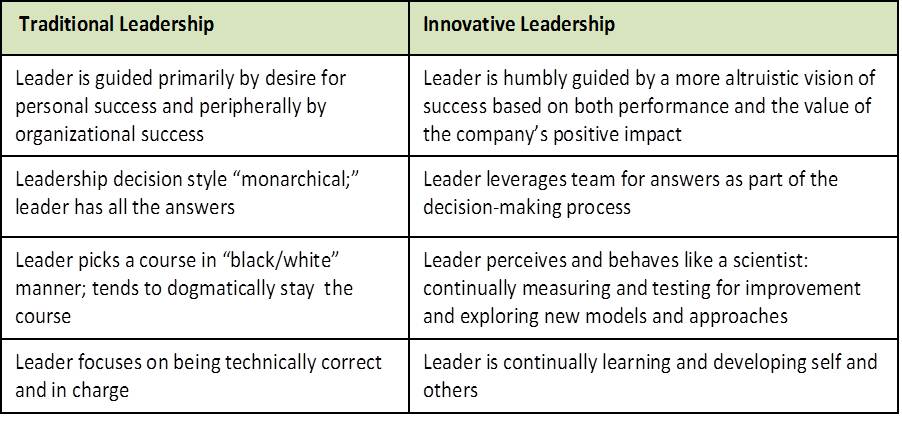
As such, he represents traditional models of leadership that are proven less effective, especially in economies that are heavily dependent on innovation.  It's a shame, really, because he understands how destructive a winner-take-all approach can be to sound decisions getting made.


It's probably true that women are less likely to spend their time demanding more from their bosses; by the same token, it's equally likely that women leaders are more likely to do the right thing and empower their employees so they can spend more time working than negotiating.


Something I think John Tory should be familiar with.

Monday, 13 January 2014

Tim Hudak and the The Tragedy of the Innovation Commons


There's more to the picture than this, though.

Not only are there managers afraid to try something innovative in case it doesn't work and hurts their brand; there are leaders who actively want to retreat from the emerging Knowledge Economy.  They either aren't interested in pursuing the risk and opportunity innovation presents and want to go back to what seemed to work last century, or see the populist value in saying so.

Tim Hudak's Million Jobs Act seeks to shrink government, remove regulation and put more emphasis on skilled trades positions.  No need to travel West to take on natural resource jobs - we can and should have more here at home.  He has also come out swinging against unions, saying that it's in the best interests of individuals to create one-off deals with their employers rather than collective bargaining, which in his mind is really just code for collective restrictions.


Hudak wants Ontario to compete with China and Bangladesh for basic manufacturing jobs - the skills trades positions of which he speaks.  In a global marketplace, companies don't really care where the labour comes from, what matters is how cheap it is.

How can one person competitively position their ability to fix widgets as being of greater value than a fellow living in poverty willing to do the same job for mere dollars a day and no vacation time?

They can't.  When it comes to basic skills for basic manufacturing, there's no way to compete other than through reducing the cost of labour through lower wages and reducing employee support obligations, which result from a relaxing of labour laws.  The only way to really get ahead in a global economy through traditional manufacturing positions is to take away the onerous costs to employers like workplace safety, employee benefits and higher wages.

Is that the Ontario we want?  Do we want our kids to be assuming greater workplace risk for less compensation and a lower quality-of-life than our parents enjoyed?  As countries like Bangladesh and companies like Wal-Mart face civic unrest and global pressure to do better for their employees, we don't want to reduce our quality-of-life by replacing them on the bottom rung.  But what's the alternative?

If you can't go backwards and stagnation isn't an option, you do what everyone else is doing - moving forwards.  Even places like Dubai are expanding their economic portfolio and embracing the value-add opportunities of the Knowledge Economy.

Companies like MSL Group are even creating and posting for positions with titles like "Creative Strategist."

The trick is not to do less; it's to do more, better.

We need to be innovative, ahead-of-the-curve and willing to embrace iterative failure on the path to success if we are to be sustainable, let alone competitive.  That's the nature of the free-market; that's the basic principle of all evolution, be it biological, social or economic:


Canada sucks at change; given our natural resource wealth, we've never needed to.  That's a reality that's rapidly changing, even as political leaders like Tim Hudak and Stephen Harper rush to embrace the horses and bayonets of economic success.

How do we avoid this spiral-down tragedy of the innovation commons that increasingly appears to be a Canadian inevitability?

It's really not that hard.  Canada has a host of structural challenges that cannot be solved through business-as-usual; there's our democratic deficit, youth un- and under-employment, issues of social justice, workplace productivity, unsustainable healthcare costs and a mental health crisis that underlies all of the above.  

That's where you begin.  You create a vision of what Ontario could look like, laying out a narrative of how we get from here to there and do what all leaders are supposed to do - inspire people to commit to something more than the sum of its parts.

But Canadians are sick and tired of hearing big talk from leaders unwilling to walk the walk.  We're tired of being told to live within our means, yet seeing an unending barrage of political folk getting caught living beyond their means with our dollars.  We're frustrated, angry, and scared.  Same for the private sector - there's little impetus to do things different, even in the face of tax cuts; they aren't taking risk because they have no motivation to do so.

Any Party that wants the people to embrace a vision of a better world needs to lead by example.  That means changing their internal HR practices to reflect what they would like to see in the Private Sector; it means full and open transparency; it means making business cases that aren't demographic-focused but solution-focused, not ideologically-based but evidence-based.

This is where Open Government and Open Data are heading, but we have a long way yet to go.

Some people may buy into Hudak's million job promise, but most will look at it with the same skepticism that greets Senate Reform or the Green Energy Act.  Why?  Because there's no proof it will work, only rhetoric and vague references to trendy frustrations.

Wynne has demonstrated a willingness to take risks - she's pushing the Open Government movement and has done some risky things in her response to the ice storm (for Toronto, at least).  People are very tolerant of mistakes, if they don't feel they rest solely on their backs.

If Team Wynne were to publicly demonstrate how they are ensuring their own practices (that means Party and Public Service) are reflective of their message to the province, they'd get a lot more respect.

The same goes for Team Hudak.  If they really believe what they say, I would expect them to demonstrate to the public how they are doing internally what they are pitching externally.  If success is based on independent gumption, then there will be no top-down messaging or enforced discipline between the Leader's Office and the rest of the Party.  His chosen critics will be 100 per cent in charge of their own files, not reciting lines handed down from his inner team.  If not, then there's really no difference between how he operates his Party and how a union functions.

Whether it's Wynne or Hudak, a Public Sector Manager or a Private Sector CEO, innovative success through iterative failure and team support comes down to one thing - leadership.

Without that, we're going nowhere.  And that's not sustainable.