Search This Blog

CCE in brief

My photo
Recovering backpacker, Cornwallite at heart, political enthusiast, catalyst, writer, husband, father, community volunteer, unabashedly proud Canadian. Every hyperlink connects to something related directly or thematically to that which is highlighted.
Showing posts with label Cognitive Labour. Show all posts

Friday, 3 July 2015

Trudeau and the Manufactured Economy


He probably knows better than I do.  Me, I think the expectation is increasingly that people want low-cost products that do the job.  Even items that tend to be as much about image as function - cars, for instance - people are increasingly looking for opportunities to spend less, not more.

Quality, yes, but much like government procurement, it's often the lowest-cost option that's going to be the winner.

Canada cannot and shouldn't want to compete where it comes to cheaper and less safe labour.  In fact, I'm pretty sure we'd have to change some laws if we wanted to be competitive that way.

Manufacturing isn't about working creatively - not traditional manufacturing, at any rate.  It's about accuracy, repetition and speed.  

If we want to harness creativity and high levels of education, we need a strategy that focuses on markets that demand those skills - advanced manufacturing, perhaps, but also coding, tech, innovative services and products, etc.

I'd love to see a strategy that does that.

Friday, 7 November 2014

Ghomeshi Comes to Queen's Park: Harassment, HR and Leading By Example


Premier Kathleen Wynne is a woman of unquestionable integrity.  She's a strong leader in every sense of the word - she's mission-focused, but understands the importance of morale.  She's empathic, a strong communicator and a natural facilitator.
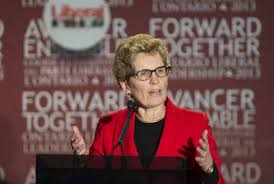
 
Ask anyone who works (or has worked) with her - Premier Wynne creates strong workplace cultures that empower employees to do well and find fulfilment in their work.  The why behind this is easy - Wynne realizes people aren't office infrastructure; they're the architects for her and her party's success.
 
Such is not the case for all employers, at Queen's Park or otherwise.  All too often, staff are viewed as tools, not individuals.  Workplace culture is not seen as a consideration, any more than you might care about how much dust collects on your computer; you can always get another one.
 
This heavy-handed, boss-centred approach to HR has proven to have a negative impact on bottom lines, on productivity, on innovation; demoralized staff aren't scared into doing better work, they're instead focused on not messing up or redirecting blame. 
 
Which, of course, is a self-fulfilling prophecy; when tough bosses practice the mantra "we are smart, they are dumb" - they in reference to staff - talent isn't nurtured, it's suppressed.  Those who rise to the top may be good at what they do, but it's the ability to curry favour with the boss that determines career growth.
 
But is a business - especially when it's government - supposed to be structured in a way that places ultimate power in the hands of bosses who, often as not, don't know and don't care about professional HR practices or basic leadership skills?  Do we want workplace cultures where it's the ability to curry favour with bosses that determines success, especially in light of the emerging conversation around bosses that abuse their positions of power in relation to their staff?
 
What are the consequences of poor leadership and a lack of training for employees and employers on morale, productivity, innovation and that other emerging biggie, mental wellness?


So it's interesting to hear Premier Wynne discuss harassment and HR concerns within her party.
 
The Liberal Caucus Service Bureau (Leg-funded internal support organization for the Ontario Liberal Party) has a Policy for a Harassment/Violence-Free Workplace that is to be made available to all employers and staff and posted in prominent locations in each workspace.  This document is intended to serve as a framework to prevent the sorts of entitled boss behaviour that can happen in situations where accountabilities aren't clear, training isn't provided and power imbalance is prominent.
 
Some highlights from this policy:
 
Members of the Ontario Liberal Caucus (“Member(s)”) are committed to providing a work environment which is conducive to both positive morale and productivity - a work environment free of harassment and violence to both women and men.  Behaviour, comments, or display of materials that could reasonably be perceived to be offensive, humiliating or demeaning are not acceptable in the workplace. 
 
-- one would assume the whip that is, for historical reasons, displayed on the wall of the Whip's office is an exception to this "display of materials" rule.  In fact, the very notion of a Whip is contrary to the intention of this policy and empowered workforces in general, but the outdated conventions of our centuries-old model Westminster Parliamentary system is a whole other topic.
 
Members, as employers, have an important role to play in promoting awareness and setting standards.  Harassment, in any form, undermines an employee’s work performance and the goals of the office.  All concerns of harassment will be taken seriously and handled in a professional, impartial and confidential manner in accordance with the provisions set out in this Policy. 
 
-- In other words, it's the responsibility of Members to lead by example when it comes to a harassment-free and empowering work culture.  The corporate structure at Queen's Park is a somewhat unique one, where MPP staff are the employees of Members, paid by the Legislature, but are equally answerable to their political party, who has no legal authority over said staff, but again, politics isn't a "normal" working environment.
 
It might seem counter-intuitive to have those with the most power and freedom to exercise it be responsible for self-regulation and empowering of staff to question their authority, but there's an answer to that, too.
 
Under the Liberal policy, it's not the party's HR person (paid through the Legislature) that is responsible for addressing harassment issues, but the party Whip, who is another elected official and therefore a peer to Members..  As such, it's to the Whip (or designate), a party-determined role, who is responsible for ensuring MPPs and staff are familiar with the contents of the policy and administering it when issues of harassment arise:
 
1) Responsibilities of the Whip 
The Whip is responsible for informing the Members and employees of the Policy and its contents.  Where employees bring forward concerns of harassment against Members, the Whip will take immediate and appropriate action as follows: 

a) respond promptly to all enquiries regarding harassment concerns involving Members; 
b) advise the Member that a concern of harassment has been brought forward against him or her; 
c) provide assistance, clarification and guidance with respect to situations involving harassment; 
d) work with all parties involved to try to resolve the situation fairly, and in a manner that preserves the dignity of the parties concerned; 
e) resolve situations of harassment through dispute resolution methods, in a non-adversarial, rehabilitative manner, and take the necessary steps to achieve a resolution.  If the Whip determines that an investigation is necessary, the investigation will be handled promptly in an impartial and confidential manner with due respect for the rights of the parties concerned
 
One would assume there is an internal training session for all Members and new staff that makes the contents and intent of this policy clear so that there is no confusion about responsibilities and processes that lead to resolution.
 
Key to this process, as we are learning through #ghomeshi, are the great obstacles employees can face in bringing forward allegations of harassment.  In politics, Members are all-powerful; they are the elected voice of the people, after all.  If they answer to anyone, it's the Premier and designated party officials who, naturally, are tasked with winning elections, not fostering strong workplace cultures.  It's just the nature of the beast.
 
It can be career suicide to bring forward allegations against an abusive boss, whether the abuse is sexual harassment, aggressive behaviour, passive-aggressive behaviour, etc.  Much as we have seen through #ghomeshi, under circumstances like this staff will often "suck it up", complain about bad bosses with other staff and suffer silently with the consequences of poor leadership. 
 
Or, they will raise concerns and be marginalized or discover that they have "burned bridges" by trying to defend themselves, and end up unemployed and shut out. 
 
This sort of toxic environment can lead to accrued depression and anxiety, kill workplace morale and ultimately result in poor functionality, which leads to unhappy constituents, poor decisions made, etc.  There's a reason why occupational mental health is becoming a thing these days.
 
To avoid unjust consequences to what would essentially be whistleblowers, the Liberals have included a NO REPRISAL clause in their policy:
 
a) Employees who bring forward harassment concerns shall not be subjected to any form of reprisal. 
b) For the purposes fop this policy, retaliation against an individual i) for making a complaint under this policy (whether on behalf of oneself or another individual); or ii) for having participated or co-operated in any investigation under this policy; or iii) for having been associated with a person who has made a complaint under this policy or participated in these procedures, will be treated as harassment
 
So, there would be no tolerance for cultures of fear within the liberal family at Queen's Park.  No person of authority would ever say something like "He's never going to change, you're a malleable person, let's talk about how you can make this a less toxic work environment for you" to staff who bring forward concerns about abusive employers.
 
Staff would never be re-victimized for bringing forward concerns; that would go directly against the beliefs of the party and the content of their policy.  Moving forward together, after all, doesn't involve dumping those who raise valid concerns by the wayside, or publicly shaming them, etc.
 
As harassment without definitions is largely in the eye of the beholder, it helps to provide some clarification on what, exactly, constitutes harassment in this context.  Again, the Liberal's harassment policy provides a framework to help Members and staff alike, when they're trained on the contents of the policy, to know what to look for:
 
To assist in ensuring that our workplace is harassment-free, the following are examples of harassment.  Please note that this is not a complete list and that each situation will have to be considered individually. 

- Jokes causing embarrassment or offence, told or carried out after the joker has been advised that they are embarrassing or offensive or that they are by nature clearly embarrassing or offensive
Example: Telling sexually explicit jokes or suggestive stories may be offensive to some and not to others.  They can have the effect of making someone feel uncomfortable and interfere with their ability to participate in work-related group activities. 
- The display of offensive material
Example: Posters placed on the office bulletin board depicting members of a particular racial minority group in a derogatory manner.  Even though an employee belonging to that racial minority group complains, the Manager says there is nothing he/she can do 
- Verbal and physical abuse or threats
Example: a supervisor constantly asks a subordinate out and is continually rebuffed.  The supervisor subsequently begins to criticize the subordinate’s work in front of co-workers and eventually threatens to fire the employee. 
- Degrading or derogatory remarks
Example: A developmentally disabled employee is called names such as “dummy” by co-workers.  
 
Not an exhaustive list, but a helpful starting point and again this policy, which is to be provided to all MPPs and staff and posted in prominent locations, gives some guidance on what constitutes harassment and where to go for furtuer clarification in less-clear circumstances.
 
I would assume that party HR is fully aware of this process and actively re-directs concerns raised to the party Whip/Whip's designate, who will be fully trained on how to mediate with empathy and an eye towards resolution for all parties.
 
Hopefully, they will borrow from the approach recently taken by federal Liberal leader Justin Trudeau:
 
 
Kathleen Wynne is the best kind of leader - one who recognizes that the people she leads are the architects of her vision, not infrastructure for her success.  She is a skilled facilitator who genuinely cares about people and their well-being.  She understands the importance of morale, empowering workplace culture and respecting the dignity of the people on the front lines.
 
A big part of why people don't trust politicians and feel their policy decisions aren't in the public's interest is because of our perception of internal political culture as corrupt, self-serving, feudal in nature.  Abuse of the public purse, abuse of position and abuse of human resources go hand-in-hand.
 
As #ghomeshi is forcing us to discuss such uncomfortable matters publicly, we're admitting publicly that this isn't something unique to politics - in all sectors, labour is done in a top-down, hierarchical way that empowers the aggressive, cunning and sales-oriented folk who also tend to be the ones most likely to abuse power in aggressive, cunning and team-harassing ways.
 
I think it would be great for the Liberals to provide a bit of inside-the-sausage Open Government of labour for the public on how they conduct their internal HR practices, especially as it comes to harassment/sensitivity training for MPPs and staff. 
 
It would set the right tone in a proactive fashion, provide some best-practices for others to learn from and make it clear that unlike some other employers out there, they have nothing to hide.
 
'Cause if there's one thing Premier Wynne excels at, it's leading by example.  We desperately need more of that kind of example right now.

Friday, 4 July 2014

A Fiscal Truth for #cdnpoli


From Warren Kinsella's non-blog.  His piece is all about why the Conservatives should be worried and why Stephen Harper may be thinking about retirement - a bit of nudging, as War Rooms do. 
 
That's not what interested me.  The millions spent on ads that haven't worked did.
 
Think about this for a second.  Stephen Harper and Canadian Conservatives in general are all about efficient use of the tax dollar.  If a public program failed as miserably as the CPC attack ads have done, they'd axe it.
 
The same holds true in the private sector - that which doesn't perform gets culled.  It's as simple as that - except when it comes to advertising and the boss' pet projects.  If anything, we can expect the Harper Tories to up their ad spending as they try to take Trudeau down.
 
What's wrong with this picture?
 
How can fiscal conservatives so wantonly waste their donors' dollars on failing initiatives?  How can they similarly waste taxpayer dollars on massive ad campaigns for things like Canada's Action Plan that produce no demonstrable value for their cost?  How can the Private Sector drop $200 K on consultants with nothing more than brand and bluster in their corner, yet refuse to give raises to hard-working front-line staff or invest in Corporate Social Responsibility programs like youth training?
 
The answer is an easy one.  We're not rational.  Even the fiscal conservatives are hypocrites, when you scratch the surface just a little.  We waste, because we have no clue what we're doing; we just try to sound confident while we're doing it.
 
I never trust tough-talking sales folk who stick to their "I am the best at what I do" messaging and invest heavily in their brand.  I know from experience that the more gets invested in image, the less is invested in substance.
 
It's too bad the people with actual capital and influence don't see this.  Society could be so much less wasteful and business so much more productive if they could just get out of their Cave and see the light a bit.
 

Thursday, 3 July 2014

Experience Ontario from the Grassroots Up


That's great - truly.  We can do so much more than that, though.  What about empowering youth with leadership skills, business management, project management finance, etc. - and doing it through NFPs like SoJo or through youth job subsidies to employer that require certain training components attached?
 
There are so many innovative, cost-effective and community-empowering ways this stuff can be done, if the consultation and planning process behind these initiatives is done right. 
 
Two things not yet addressed that I hope to see - you can't do labour and hiring better unless you include things like management training and cognitive labour, which has to include some emphasis on mental health.  This is simply what the evolving nature of work requires.  It'd be great for government to take the lead.
 
And - Open Government.  That one has to happen.


Wednesday, 2 July 2014

Kevin, Christine and the Way Forward in Ontario


That report called for a comprehensive mental health and addictions strategy.  Phase I of this strategy was targeted towards children and youth - it made sense that, to start addressing the problem in a sustainable way, you begin by providing youth the best support and education available.  That way, you could hopefully inoculate them against future mental health challenges, or at least help them identify and find the supports they needed not to fall through the cracks.
 
Phase II was to look at occupational mental health; this got stalled during the last term for many reasons, not the least of which was the reality of competitive politics in a minority parliament.
 
Oakville MPP Kevin Flynn never expected that he would become a mental health champion.
I would like to think that Kevin Flynn's appointment as Minister of Labour is an indication that Team Wynne is serious about addressing all things mental health in the workplace, including reducing the stigma, preventing accrued psychological injury and maybe rejigging notions of labour to positively impact customer service, productivity and even innovation.
 
It's all possible.  It's also something Flynn is very much familiar with.  I remember sitting down with him and Christine Pelletier, currently working comms with Children's Mental Health Ontario to talk about what a comprehensive "cognitive labour" strategy would look like.  It was one of many conversations I've had over the years with countless stakeholders in mental health, health, labour, justice, so on and so forth about how that common thread that weaves between sectors - people, behaviour, the minds that shape our activity - must be at the root of any structural solutions.
 
This conversation dove-tails nicely with that of Open Government - the process by which we can fix our structural governance problems and re-engage the electorate in our democratic process in meaningful, dynamic ways.
 
You simply can't have one without the other - what we need is a culture change, and the only way that can happen is by a majority of people inside and outside the system changing their view.  It's where mental fitness and behavioural insights overlap.
 
There's a good chance that a colleague and friend of Kevin's - Progressive Conservative MPP Christine Elliott - will be the next Leader of the Opposition.   There are few people in the Legislature as committed to fixing Ontario's mental health challenges as these two.  There are strong voices in the NDP Party, too - including France Gelinas and Cheri DiNovo.
 
I'm hopeful about what can be done - that collaborative change that starts on the common ground of mental health - can be achieved.
 
Time will tell, I suppose, but I'll say this - who'd have thought we'd be where we are now even three years ago?
 

Monday, 16 June 2014

The Return of Don Drummond


Drummond's not the only one who's suggested that clear-cutting the public service isn't the best way to nurture sustainable growth and efficient service delivery.


Through his Open By Default report on Open Government, Don Lenihan did the same thing.

The truth is that we have a oxymoronic silo-based system riddled with duplication, gaps, overlaps where title, process, position and information hoarding takes precedence over efficiency or results. Mid-managers are downloading the innovation imperative to staff, expecting them to include metrics on how they're going to think outside the box in their self-written performance reviews.

Clearly, they haven't heard of the candle problem.  You can't pressure people into being innovative. You can't force innovation through competition.  

Worse, a complete lack of communication flow leaves our public servants in the daily equivalent of shoveling water - they don't know what they're doing, why they're doing it or what result it's expected to have.

It should come as no surprise how heavily medicated our OPS is, but doing anything about that would mean a whole lotta culture change and a great number of entitled folk recognizing they're part of the problem.  

That's not gonna happen overnight, but it won't happen at all until someone takes ownership of the problem.  That ownership doesn't necessarily have to come from government.


There is plenty of money out there.  More than this, there's as ridiculous an amount of inefficiency in the private sector as their is in the public sector (we won't even get started on the NFP sector).  Like lighting a fire when all you want is light, a great deal of energy is being wasted to create new wealth without sufficient effort being spent on internal management.

This is particularly true where it comes to HR.  

Precious little time is spent on the "onboarding" process and few employers have the slightest grasp of environmental/work design impact on productivity, presenteeism, innovation and customer experience.  They just want things to work, damn it, without having to put thought into how to get the results they want.

Fortunately, there are best practices out there - people and organizations in the private sector that are adapting to the Knowledge Economy by improving how they do HR, how they consult and how they engage with their clients and the community at large.

Just imagine if there was a coalition of the willing that banded together and told government "we want to partner with you on these big, structural solutions - but we want your help, and we want to see you setting the example.

How likely is this to happen?  Not overly, but you might be surprised how many willing parties there are already.

It's a good kind of problem to work on, and to gain brand from being part of.


Moving Ontario Forward Together


Ha ha, Toronto Star!  I beat you to the punch.

The message rings true whoever brings it forward - the absolutely wrong thing for the Wynne Liberals to do would be get cocky and bulldoze their way forward in a Harper-like manner.

I sincerely hope the Opposition does get their act together, but it doesn't have to take an external Party to ensure government discusses before they decide and do; the best leaders catalyze collaboration all on their own.

Were I the governing Liberals, the first think I would do is reach out to the Opposition with a couple pieces of common policy that all Parties agree matters and can build common solutions around - mental health, particularly as it applies to growth in the Knowledge Economy/justice and healthcare costs and Open Government, essential for avoiding future process scandals.

Then, I would take a look internally and wonder if the machine of the Party is as modernized as it needs to be.  Beating peers in a shrinking water hole does  not mean you're well-adapted for bigger changes in the world around you.  With four years to work at it, now's the perfect time to reflect on where you're weaknesses lie and what best practices exist out there to learn from.  


It's unclear who's going to be wearing which hat within the Liberal Party, but you can guarantee there are more than a few folk who feel entitled to position or comfortable with where they are.  Comfort breeds complacency, a terrible state of mind to have in a dynamic landscape.

Fortunately, we have a Premier that gets the importance of engagement and knows a thing or two about unpacking assumptions.

Wynne isn't know for being cocky; she's know for her commitment to engagement.

Well, here's an unprecedented opportunity to show what it looks like when we've got a woman in charge who believes that moving forward together means leaving no one behind.

Monday, 2 June 2014

Why Rob Ford Isn't Getting Any Better


Note the framing here.  Rob Ford, who has repeatedly denied and repeatedly apologized for substance abuse and out-of-control behaviour is talking about his recovery in terms of losing fat and building muscle.

While it is vital to be in good physical shape both in terms of energy levels and discipline, you can be in marathon-running shape and still be an addict and still be manic.  

I've never been consumed by addiction problems, nor had to face the re-evaluation of self that comes with it.  For a great read on that process (and the one Ford needed to go through) read Jim Coyle's brave depiction of the process, here.

What I can relate to, however, is the need to recognize that behaviour isn't just a matter of choice; it's got deeper underpinnings than that.  More on this in a bit.


Rob Ford makes bad choices.  He makes them all the time.  He lies or diminishes his actions, but invariably gets caught and is forced to apologize.  These apologies are followed up with a promise to never again do all the bad things he does.

Then the cycle resets, and he ends up a bit deeper in the hole than he had been previously.  This is how he ended up in treatment in the first place - not out of a "come to Jesus" moment that he needed help, but because he/his brother thought it was necessary for PR.

It's great that Rob Ford has apparently taken ownership of his choices (It's a cop-out to blame it on others.  No one has enabled me) but he still hasn't identified the right problem.  By figuring some exercise and time in the rehab penalty box counts as paying his dues and lets him back into the game, Ford is missing the whole point.

Back to me.

In elementary school, I was a terrible student - bad at taking notes off the board, regularly late for class, distracted, so on and so forth.  Despite this, I was gifted, a natural problem-solver and developed solid critical thinking skills early on (which, alas, landed me in detention more than once).

It wasn't until highschool that I was diagnosed as ADHD - a controversial label, to be sure, but one that gave new perspective on the challenges I'd faced as a youth.  This diagnosis wasn't a convenient excuse to forgive my dis tractability or diminish my social responsibility - quite the opposite.  By realizing I faced a different suite of challenges than my peers, I was better able to develop the internal tools and external accommodations I needed to excel.
Rob Ford - mayors are like goalies, see; the puck stops here.

The great thing is, with these accommodations and such, I'm able to waste less time lost in a distracted fog and am better able to harness the massive bandwidth my lateral thinking process affords me to addressing big-picture problems.  

Recognizing the challenges I faced wasn't an excuse or an admission of weakness; it was a crucial step in overcoming barriers and maximizing my personal potential.

I don't know if Rob Ford has ADHD - his behaviours suggest a number of potential diagnoses, best left to professionals - but he's clearly got some internal influences that guide him towards making poor choices.  Lifting weights and eating less fried chicken isn't going to change this reality; thinking so is only ensuring the cycle gets repeated, again.

Just as you wouldn't tell a diabetic to "just produce more insulin" independently, it makes no sense to tell someone with a "mental health" issue to just make better choices and be done with it.  Better choices are possible, but not in isolation.  Internal tools and external accommodations are necessary to facilitate those outcomes.

Who knows - maybe Ford is developing these tools at rehab and maybe his family has turned over a new leaf and will be proactively empowering Ford to make better choices going forward.  The "it's all on me and by willpower alone I'm going to do better" narrative might be PR, as the Fords are afraid of losing face or appearing weak, as they have accused so many others of being.

But I doubt it.

What we have all seen, time and again, is a family that insists Robbie is a good boy who just needs to clean up his act a bit instead of an individual with more pervasive but equally-manageable challenges that needs some help to be at his best.

In the real world, there's no shame in that - even Stephen Harper has sung that he gets by with a little help from his friends.  When you believe in survival of the fittest, however, you will refuse to admit anything that could be misconstrued as weakness out of fear an opponent will seize on that weakness to tear you down.

The Fords have reason to harbour such concerns, of course.  While Ford has been particularly egregious in attacking his foes and deflecting all criticisms, he's really just a caricature of what we see across the board in War Room politics.


"Defining your opponents" has become a more palatable way of saying "tear their character to shreds."  "Message discipline" is the modern-day equivalent of omerta.  Actually taking responsibility is impossible in this scenario, because to accept ownership of any mistake is to open yourself up to remorseless, vicious attack.

Just watch the remainder of the Ontario election for evidence of how this plays out.

By refusing to recognize that he's got additional challenges, Rob Ford is fixating on and attempting to address the wrong problem.  As such, he won't be getting any better - if anything, his next fall is likely to be even harder.

At least he's in good company.

Until we collectively get past the stigma and taboos we've placed around cognitive functioning, the witchcraft or left-handedness of our age, we will continue to whack the wrong mole and apply band-aid solutions to structural problems.

It's a frame the political right, by all regards, should already be comfortable with; you have to recognize that salvation isn't something that rests in your hands alone.

Only by accepting our own limitations and recognizing our place as parts of a greater whole can we empower a responsible society, rather than enable individual selfishness.


Monday, 26 May 2014

Autism Genes and IDIC


I suppose we could go the GATACA route with this information, but hopefully we take the other route.  
When we recognize cognitive conditions like bipolar disorder or autism or even ADHD as genetics, not some sort of infection, maybe we'll realize we're trying to solve the wrong problem.

The goal isn't to "normalize" the sinistra out there by making them dextra - it's to empower everyone to be the best unique contributors they can be in collaboration.

Just imagine the possibilities.

Wednesday, 14 May 2014

Hudak's Tragic Mental Health Irony


I really think Hudak's heart is in the right place, but it's his head that needs to step up a bit here.  

I'm hoping he's familiar with the federal workplace standards for mental health; a great initiative supported by the federal Conservatives, I might add.  The reason this is such an important undertaking at this point in time is that mental health is a growing cause for disability claims, absenteeism and lost productivity

If you want to talk about cost savings - mental health-related concerns cost the Canadian economy some $50 billion annually.  That's a lot.

The elephant in the room around mental health, though, is that it doesn't work the way we think it does.

For one, conditions like bipolar disorder or schizophrenia are genetic, which means they aren't actually illnesses, but inherited traits, like pigmentation or height.  You can be pale and prone to sunburn or too tall to fit in small cars - they're not considered illnesses, but conditions to be accommodated.  They're also manifested physically and therefore clearly discernible by the general public.  

Life can be harder for left-handed people, but society has become far more accommodating.  When society isn't understanding or accommodating, however, we tend to react to behaviour rather than explore the causes beneath that behaviour.  ADHD kids and adults have greater trouble landing and retaining jobs; some autistic folk will have amazing, never-harnessed skills because of communications challenges that some teachers and employers feel no need to come half-way on.

For people like this, accrued mental illness becomes much more likely.  Common examples of these are forms of anxiety and depression, which are increasingly related with family and work stress.  With the right supports and accommodations, workplaces don't need to be illness-inducing; families can have the supports they need to cope with mental illnesses at home.

You don't need to have extra-normal cognitive function to accrue a mental illness, though, any more than you need to be an albino to get a skin burn.  Every day, people are developing accumulated mental injuries at work in the same way repetitive psychical stresses-related ailments like carpal tunnel syndrome develop.

It makes no sense to tell someone with carpal tunnel to suck it up and exacerbate their injury more; it really makes no sense to pressure mentally injured people to push themselves to the breaking point.  That's in no small part why we've got a mental health crisis in the first place.

Here's where the irony part comes in.

By focusing on economic competitiveness, Hudak is envisioning more sales-focused workers, more laissez-faire employers and more carrot-and-stick discipline for workplace behaviour.  These sorts of conditions have helped foster the rise in occupational mental illness claims we're witnessing.

Are these people faking it?  Are they slacking off, not working hard enough, whatever?  Do they need to get tough to get ahead?  Where does Hudak draw the line between workplace behaviour and mental health? 

There is precedence for this sort of conundrum; unions, oddly enough, arose in response to poor workplace conditions related to physical well-being.  It was due to union engagement that workplace safety standards and things like reasonable work hours and washroom breaks were implemented.  It's because of unions that these things continue to this day.

While there are some smart employers taking behavioural economics to heart and properly designing work, workplaces and management techniques to foster greater productivity and innovation from mentally health (and supported) employees, this is far from the norm.  

Most employers still think the tough-boss model works best.  They also oppose unions who "coddle" employers and reduce a company's ability to cull less-able staff or find efficiencies by getting more for less.  

But this is what unions do.  They're as behind the times on mental fitness as anyone, but they're still best positioned to champion the causes of their members in much the same way a political caucus does.
So here's Hudak's conundrum; it's great that he wants to afford more mental health support for those who need it, but by cutting into the existing, proactive support structures, he's guaranteeing worse mental health outcomes and an increased cost.  

You can't treat mental health supports like a Jenga game, but that's what Hudak is doing.

I applaud his commitment; it's absolutely the right priority for the times.  But his plan not only won't work, it'll make the situation worse.


If not, I know someone else who could be.


Friday, 9 May 2014

How Stephen Harper is Making Canada Sick


The strength and quality of Canada's governance is diminishing under Stephen Harper's iron-fisted rule.

Any challengers to his agenda are ignored, attacked or, where possible, fired.

Evidence that demonstrates there may be a problem with the way he governs is dismissed, buried or where possible, starved out of existence.

This presents a tough challenge for bureaucrats whose job isn't to serve Harper's partisan ideology, but the well-being of Canada.  When they have facts that prove Harper's policies are detrimental to our national interests, it's their job to raise concerns with the government.  

When that government, in turn, bullies the civil service into doing as they're told, the combination of stresses (doing what you know to be wrong, micro-managed to death by ideologues with no respect for the facts) takes a toll on individual health.  And through aggregate, collective health.

Which is why Canada's bureaucracy is growing sick, too.  They're not alone, though - tough-minded, top-down managers are fostering the same kind of illness across the board.  

There's consequence to this laissez-faire approach.

Here's the thing, though; when you have an individual who refuses to listen to advice, makes decisions they should know to be unsound and gets mad at those who challenge their destructive behaviour - behaviour like Stephen Harper's - well, there's a precedent for that, too.

Not long ago, people had trouble following me when I connected labour reform to mental health.  Now that it's a legitimate thing, they're not seeing how occupational mental health connect to Open Government.

Give it time, folks - you will.

UPDATE: Need any further proof that our PM is functionally fixed and likely addicted to power - to the detriment of us all?  Voila.  What's needed at this stage of the game is an intervention.

Friday, 25 April 2014

Consciously Succeeding: Open, Responsible and Empowered


KPI being "key performance indicator."

To be brief:

- This is what smart business are exploring now
- This is what successful political parties/government are going to start doing, too

It's all about maximizing personal potentials - strong individuals for a strong society.

How do we get there?

- Understand behavioural economics and the science of empowerment/resiliency 
- Redesign work and workspaces with a focus on cognitive labour
- Open Data, Open Government, Responsible society.

It's about empowerment.  Leadership always is.

Looking forward to meeting the leaders out there ready to pave the way forward; we've got a lot of work ahead of us.

It's gonna be fun.


Thursday, 17 April 2014

Can You Vaccinate Against Fear?


There's a fascinating psychology behind this.  Yes, it's true that Big Pharma is interested in making money and yes, it is in their interest to have more of their product bought.


It's also true that incidences of fatalities from communicable diseases like measles, mumps and rubella have gone down thanks to the introduction of inoculations.  In fact, the increase in healthcare, social infrastructure and social services demonstrably improves quality of life across the board.  


There have been complaints, however, about inoculations causing autism.  This has been refuted; there has also been evidence that an increase in autism diagnoses has nothing to do with vaccination changes, but diagnosis changes.  Recently Aspergers was rolled up into the Autism spectrum, giving a whole group of people a new label.


It doesn't matter how much evidence is brought forward against this complaint, however, because all this evidence is trying to solve the wrong problem.  The issue was never specifically that inoculations cause autism, but that some people were fundamentally uncomfortable with the concept of inoculation itself.  Irrifutably demonstrate that there is no causal correlation between autism and inoculation and you'll still have doubters; others will simply find another straw illness to tilt at.


The problem isn't the risk - it's the fear of risk.  It's the same with wind farms - having recently come back from Germany, I met and talked with a number of youth who grew up next to wind farms and are no physically worse off than someone who grew up next to a subway, or a freeway, or a road, period.  


In the past, each of these innovations and environmental changes have provoked fear and, in each case, those fears have been associated with health risks.  

In truth, people are right in all cases, not just in the way they think they are; the health issue is not one of what we traditionally identify as physical illness, but one of anxiety.  All these things are out of the individual's control and change the individual's physical and mental landscape.  Change is an uncomfortable process that we are inclined to fear, because on some level, we're not sure if we are able to adapt.  

Therefore, we resist.


Phobias are most often irrational; fear of open spaces, fear of spiders whether they're harmful of not, fear of gay people, of black people, fear of all kinds of things that aren't actual threats.  Phobias are like allergies - overreactions to physical stiumlus that really aren't trying to hurt us.

This doesn't make them any less real or crippling - as is the case with any mental illness, phobia can get in the way of normal individual functioning and social cohesion.

Which takes us back to vaccinations - a densely packed society like ours can't function without vaccinations.  That's a ticket to plague, exacerbated by a lack of coordinated (and enforced) social rules around cleanliness, transit, dispute resolution, etc.  We aren't physically designed to live in such crowded environments; society can't function without collaboration and a certain amount of central coordination.  That's why we invented government.

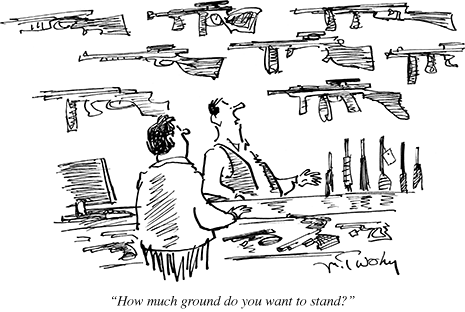
What does being anti-vaccine have to do with being pro-gun?  The gun industry is massively wealthy and spends a large amount of coin promoting gun culture, why aren't they traditionally lumped in with Big Pharma?


It's because a gun in the hand is, theoretically, about giving you power over others.  A vaccine, however, is about defending your immune system as well as that of your neighbours'.  A gun is aggressive, reactive and individual; a vaccine is strategic, passive and collective.

By and large people are reactive and individual; what pushes us to be aggressive, is we're not sales-oriented hunters, is a response to fear.

This is why the politics of fear is so widely practiced and why it allows for otherwise sane people to do pretty insane things.  It's not logical, it's emotional - when you appeal to emotions first, an individual can find all sorts of ways to validate their opinion, including through the use of micro-targeted arguments and full-on attacks.


Sadly, we're seeing an increased use of fear, isolation and idolatry in our political systems these days, catalyzing a solidifying oppositional movement.  Hate, we're told, is a purifying force - and hate is on the rise.  This is not a good thing.  There's precedent and current examples of where hate leads us.

Fear and hatred aren't the solution - they catalyze immediate, reactive action against something, but to the detriment of broader social sustainability.  If you're not killing your opponent off, you have to live with them, something hate and fear don't allow.

Hate is a purifying force, after all - it allows for no diversity, no debate.  Like fear, hate is a mind-killer.

Society is at a tipping point with a new revolution required to help us break through to a more sustainable model.  As the old system fractures, people are becoming increasingly anxious, a fact being exploited by populists doing far more long-term harm than they probably care to realize.  We are looking for names to blame for our anxiety, subconsciously trying to isolate ourselves from an increasingly invasive world.  

This isolation from the global picture and rejection of everything from inoculations to fluoride in the water to social services to immigration aren't the fire-walling solution, they're part of the structural problem.

So, what do we do?  How do address the deep-rooted reality of strong, reactive emotions like fear and hate?


There's a fascinating article on the rational choices of crack addicts that offers an interesting window into the nature of behaviour; it throws the assumption that an addict is an addict by demonstrating how crack addicts, removed from negative environments, can make more rational, sustainable choices.

This suggests that even the most negative of behaviours can change, which we should already know.  It also implies that perception isn't as functionally fixed as we like to think it is.

I recently met a 90 year-old Holocaust survivor who tells an amazing story about laughing in the face of an SS firing squad.  Chat Bowen made them deeply uncomfortable - it didn't matter that they were in complete control of the situation, they had no ability to influence Chat.  He had no fear, no anger; he simply accepted that death had arrived and their was no point fretting it.


For 70 years, Chat has lived his life with an acceptance of death and a rejection of fear and hatred. He's healthy, happy and deeply in love with his wife, his life, and at peace with the world.

The lesson here is that, even under the worst conditions imaginable, it's possible to control one's responses to external stimulus with the right perspective.  This is incredibly difficult and, like running a marathon, not an option for everyone, but it's still one option on the table.


It's important not to make the mistake of assuming fear is not real and merely a product of the thoughts you create - that's not the case.  Fear is an emotion; it precedes and informs thought, just as hatred, hopefulness and love do.

Like all emotions - like most physical processes, really - fear can be controlled.  People with anxiety disorders control fear through the use of medications and practices like Cognitive Behavioural Therapy.  Activities like yoga or simple breathing exercises also help to re-balance a body's neurochemistry (out with the bad, in with the good, oxygenate the blood).


The growing field of Positive Psychology as well as fields like Social Emotional Learning and Self Regulation are increasingly looking at fear, depression, hatred, excitement and all of our emotions as things that can be regulated.  


These regulatory processes are being introduced to our school systems, empowering our youth with the ability to recognize and up/down regulate their emotions as necessary.  Encouraged in this process is critical thinking; the ability to look beyond one's own emotions and view a situation, a person or an object in a more objective capacity (something that, despite what Ayn Rand may have thought, doesn't just happen naturally).

As with any exercise, the more you do it, the stronger you become.  Athletes train, writers write, innovators never stop iterating.  When it comes to emotional regulation, practice is a constant but the result is an increasing amount of conscious awareness and control of both one's own emotional state, but of those around you as well. 

It's impossible to really understand somebody, what they want, what they believe, and not love them the way they love themselves.