Search This Blog

CCE in brief

My photo
Recovering backpacker, Cornwallite at heart, political enthusiast, catalyst, writer, husband, father, community volunteer, unabashedly proud Canadian. Every hyperlink connects to something related directly or thematically to that which is highlighted.
Showing posts with label Shared Solutions. Show all posts

Thursday, 27 August 2015

It's Time for a CSI Queen's Park (Co-written with Diana Thai)


“I’d love to see a CSI Queen’s Park!”


Sounds like a great idea, right?  What better marriage could there be than a partnership between the world-acclaimed social innovations of CSI and the Government of Ontario?  It’s a fun idea to think about when you hear it.  When the person saying it is the Premier of Ontario, it’s not just a dream - it’s a mandate.


It’s hard not to share Kathleen Wynne’s enthusiasm.


Far more than just a co-working space, the Centre for Social Innovation is a community, an incubator, a movement of like-minded-people inspired and challenged to do nothing less than change the world for the better.  

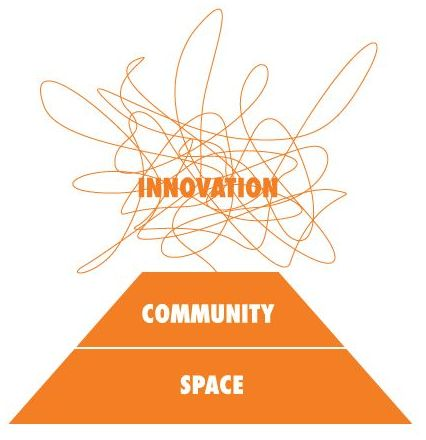
If CSI were a Maslow pyramid, the physical space - the buildings, kitchens, desks, printers and wall space would be the bottom tier.  Moving upwards, the next tier would be the people - staff, DECAs (Desk Exchange Community Animators - more on this later), members and everyone who interacts with and in CSI space.  


Bridging the community, catapaulting new ideas and catalyzing new ones is all CSI’s programming.  The DECA program is a great example of how CSI is finding new ways to both enhance their members’ experience and support emerging entrepreneurs and ideas all at the same time.


DECAs are community animators who tackle the administrative details that allow CSI’s members to focus on what they do best - change-making.  More importantly, however, is the role of animation; understanding both members and the broader community and providing support and connectivity to help members reach higher and accomplish more together.


This is the secret sauce of CSI - the space, the programming, the amazing community animation and the consistent sense of play have resulted in a place where silos don’t form and cross-pollination is hard-wired into the system.  It’s a format that is being copied by organizations across the city and around the world and is commonly referred to as “the CSI model.”


In 2013, the X-ray Inspection Services Branch at the Ministry of Health and Long Term Care  launched its first survey ever to be conducted to its 7,000 facility owners operating 60,000 machines. The survey uncovered areas where owners were unsure of how to comply with the appropriate Acts and Regulations and a system that required more accountability. This sparked a change for database requirements  and systematic reviews, modelling solutions inspired by other branches, while working within its limitations.


Embedded image permalink
It’s worth saying again - government wants to change and is trying to change, but change is hard - especially for an organization of the size and scope of government.


To look at it through a #howmightwe lens, the question governments, including Ontario’s, are asking is “how might we support the culture change we recognize we need to provide the programs Ontarians need from us?”


Well, you know - it starts with the creation of shared space, a place where people from different Ministries and agencies can co-work together.  It moves on to the animation piece - curating this community, looking for and addressing the duplication, gaps, overlaps and opportunities we know are there.  It continues with creating a culture where public servants feel empowered to discuss, collaborate, innovate and test new policy and program ideas.


As it happens, these are all things CSI excels at.  These are the attributes Ontario’s Premier Kathleen Wynne was talking about reproducing when she said “I’d love to see a CSI Queen’s Park!


Governments across the globe are looking for ways to update our centuries-old model to be reflective of and responsive to the challenges and opportunities of our age.  Ontario has the good fortune of being home to one of the most innovative change-making organizations on the planet.


What else are Virtuous Schemers if not Agents of Change?

CSI Queen’s Park - it’s an idea who’s time has come.

Friday, 14 November 2014

Child Poverty: Why Youth Must Lead


Two headlines from today.  If you commit just a bit of sociology, you might even sense a connection between them:
 
 
Crippling child poverty.  That's a whole generation growing up in tense climates, without proper nutrition, without proper supports.  But clearly, this is someone else's problem, right?  Those parents should be doing more, working harder, hustling for cash, or something.  It's their own fault, right?  Nothing to do with us.
 
So long as governments keep taxes low and especially provide tax breaks to businesses, that'll create jobs - then people just need to hustle to get them and everything else will be fine.
 
On to story number two:
 
 
Guns.  In our schools.  What's behind this?  Are backwoods bigots from Pakistan invading our schools and using their mind control powers to make our kids bring weapons to class instead of pens? Is this a reflection of the erosion of Canadian values, or the Americanization of our culture?
 
Here's an idea:
 
 
There is plenty of money in Canada right now; there are 118,000 millionaires in Toronto alone.  There are plenty of services - public, not-for-profit, corporate social responsibility - that exist, offering an alphabet soup of services.
 
And of course, there's the prevailing wisdom of our laissez-faire model of capitalism; in Canada, it doesn't matter where you come from, what hurdles are in your way, if you push hard enough you too can be one of the 118,000.  You gotta work hard, be willing to start simple, but above all you gotta hustle.
 
The implication, of course, is that if you don't succeed, it's your own damned fault.
 
Here's a term that will be familiar to pretty much anyone in town with responsibility for managing finances - ROI, Return On Investment.  If you can't see a clear, short-term return on whatever your investment might be, you don't do it.  Low-hanging fruit are therefore preferable; the least effort required for decent gains in short time frames.
 
Let's reframe that a little bit so that we're all on the same page:
 
- If you don't have resources - if you're poor, young, accessibility-challenged, whatever, the pressure is on for you to hustle hard over the long-run if you want to get anywhere in life.
 
- on the other hand, if you've had some success in life, long-term investments aren't worth your time; it's all about the quick-wins, the best bang for your buck, the low-hanging fruit.
 
For the haves, it all makes perfect sense - you spend half your life working really hard to gain success, but when you're there, you put the pressure on everyone else and focus on quick wins.
 
Now, picture you're a child who lives in a marginalized neighbourhood.  Maybe your parents were born somewhere else; maybe they grew up marginalized themselves, but in either case, they've invested time and energy - time away from their kids - and have nothing to show for it.  If anything, the amount of energy they've put into trying to get ahead and the frustration they've faced in not succeeding has bled into home life, which isn't great.
 
This is the lesson a youth can easily take away from this - the people with resources will tell you to hustle, but the truth is it won't get you anywhere.  In fact, this whole "you gotta come to me" approach to success is pretty much an excuse for those with power to stick to their low-hanging fruit and not share their millions.
 
What happens when you feel the people who are supposed to be the movers and shakers in town are making excuses to exclude you and our peers?  How much effort are you willing to put into getting an education, working crap jobs if you can find them, if you are never going to get where they are because society's designed to keep you marginalized?
 
 
This is worth pausing on. 
 
Our society is anti-leadership, from the top down.  We have governments cutting programs, cutting taxes and cutting cheques on things like child care and mental health supports for veterans rather than making long-term investments.  We have bosses that are increasingly pressuring employees to be functionaries, content-producers, client-managers and business developers, yet training is not being provided and salaries aren't matching up. 
 
Even in our education system, teachers are being told it's their job to be educator, mediator, psychologist and content-creator to massive classrooms that include children with learning challenges.  Parents are being told to do more, but do they have the resources, time, or cognitive/emotional bandwidth?  Are they too absorbed with work, or too depressed and frustrated from a lack of work to give their kids what they need?
 
help me help you - help me help you  Pleading Tom CruiseWe can look to previous generations and say "they did it, so quit making excuses" - but without asking if it was a good process for them, or how the changing nature of work (who really has a 9 to 5 job anymore?), the rise of mobile comms devices and the soul-sucking challenges of gridlock play a role.
 
There is next to no leadership out there right now.  The people with power and responsibility don't want to be leaders - they don't care about their people's problems.  Sometimes they don't even care about their organizational programs, because they plan to be gone before they blow up (low-hanging fruit, remember)?
 
Or, they don't feel empowered themselves.  This can be justified in many ways (blame being a common one) but the basic fact is that they aren't, in their current condition, up to the challenge of leadership.
 
Some of them actually believe throwing the kids in the deep end is a good strategy, because that's how you identify the strong swimmers.  What happens to everyone else is one of those "not my problem" things.
 
Yet we desperately need leadership right now. 
 
We're hearing the same things from every echelon of society; government is broken.  Infrastructure is screwed.  Organizations are a mess.  Yet those within those institutions will step up to the mic and tell us "everything's fine, we have a bold plan, just trust us and don't mind the man behind the curtain."
 
Back-of-napkin plans are being sold for their commercial value, not because they make sound structural sense.  Marginalized voices are being drowned out with top-down messaging.  Rabble rousers are being silenced through defunding, firing or even eviction.
 
Is it any wonder that youth are taking their cues from the world around them and realizing that if they want to be safe, if they want to have power, they have to be willing to take it through whatever means are available?
 
A kid not investing in schoolwork, being a bully and carrying a weapon aren't defying social rules of engagement - they're picking up on the socio-cultural cues around them responding in kind.
 
This is it; this is where laissez-faire capitalism meets behavioural economics.  In a game of competitive escalation and a reduction in personal investment, it's who's got the biggest stick who wins power and privilege.
 
And as of right now, there is no way, no one who can do anything to stop this trend. 
 
Why?  It's the culture, stupid. 
 
We have a silo-based culture, full stop.  Even those who talk about disrupting silos are really just trying to stuff more stuff into their silos.  Funding is there, but getting it is so competitive that an increasing amount of investment is going into competition, not solutions.  Lost opportunities, duplication, gaps and overlaps are resulting.  There are communities in this city that are glutted with programs and players, and yet the structural issues remain.  Why aren't we learning from this?
 
I question whether the people leading the charge right now are prepared to wrap their heads around the enormity of the challenge.  Even if they do care, the reality they grew up in and are living now is fundamentally different than the one being faced by marginalized youth today.
 
The best champions of any problem are those with lived experience.
 
Which comes to the crux of the matter, the core component of culture change, the disruption that is most difficult but most necessary.
 
The way forward isn't for more downtown adults to impose solutions on youth; if those youth aren't themselves leading the way forward, whatever gets built isn't going to work.
 
This requires a fundamental shift in the way we look at society, at ourselves, and at the role of power.
 
We always look for the best-in-show to invest in; they're most likely to provide the best ROI.  We then take them from wherever they are and put them in environments considered to be good for growth.
 
All of this is backwards.
 
We have to start focusing on those least likely to succeed with minimal effort and put them in the driver's seat.  That means going to their communities, learning to speak their language, taking them serious and treating them seriously.
 
We have to create the best environments where these youth are - in other words, don't bring youth to MaRS, bring MaRS to the youth.  That means more investment of time and interest - which, but its nature, requires motivation to want to make things better, not for a quick ROI, but because it needs done.
 
Which comes to the last, most challenging, most fundamentally important component of our needed culture change.  Right now, we see power as a form of wealth to be accumulated; power is something we want because, when we have it, we can get more through giving less.
 
That stops right now.
 
From this point forward, power isn't something to be obtained; it's blood to be circulated.  The same goes for money.
 
Here is John Tory's challenge - he needs to be the anti-Doug Ford.  He needs to step away from the practices that have brought him success in life, because it's not about him right now.
 
After years of seeking high office of some kind, of being the guy at the top, now is the moment for John Tory to show true leadership by stepping back and becoming a conduit rather than a capstone.
 
The same holds true for every person of influence in this city; councilors, Executive Directors, CEOs and talking heads.  We need to be empowering leaders, not giving orders.  We have to be cultivating solutions from the grassroots rather than imposing infrastructure on top of.
 
This is not a lofty vision, nice words on a page.  It's a fundamental necessity. 
 
Our society is crumbling and the solutions we're coming up with aren't good enough.  We are failing the next generation, and they know it.
 
If we aren't prepared to empower youth to lead, there will come a day not too far from now when they will simply take what they want by force.  That is, after all, the lesson we're teaching them.
 
The choice is ours.  The consequences will be ours.
 
Either way, it will be youth that lead.

Wednesday, 13 August 2014

Stephen Taylor Thinks Blue Berets Are Ludircrous


Adam Goldenberg (A Liberal) and Stephen Taylor (a Conservative) are presently duking it out over the war in Israel.  You can find the threat pretty easily.

Goldenberg is suggestion that Israel bears some responsibility for civilian deaths.  Taylor was doing what political folk do - defending one side and demonizing the other, period.

I'm not the kind of guy who relishes conflict, particularly martial conflict - not because I'm squeamish, but because I hate waste.  Wasted lives, wasted resources, lost time, damaged generations.

So, as is my tendency, I spoke up.

  1. every time we tut-tut, wring our hands, or call Israel to answer for Hamas' barbarism, we extend Hamas' campaign.
  2. Remember the days Canada innovated problems to such crises rather than choosing sides? Anyone?
  3. going to guess that Adam thinks this statement is as ludicrous as I do. I side with the democracy, not terror.


I'm not entirely sure what Taylor means with the ludicrous suggestion - perhaps he didn't get the fact that I was referring to Peacekeeping, as in blue berets, the UN, Lester B Pearson's Nobel prize, etc.

Or, it could be he knew, and doesn't see the connection, or that he knew and thinks the notion of Peacekeeping was ludicrous from the beginning.

I won't judge him either way - I don't know him well enough to know his motivations.  Beating him, you see, isn't mine, nor is building my narrative by picking a fight with him.

Hamas is bad - cheap politics and Alpha male aggression taken to extremes.  Israel is necessary, for countless reasons.  I don't disagree with him that Hamas consists of terrorists, nor that democracy is good.  

Perhaps he would agree with me that the dead recognize no borders, nor intentions; a dead Israeli and a dead Palestinian are both equally dead.

I don't want to see anyone dead, especially if the death of a guilty few can only be achieved through the deaths of countless innocents.  That's baby, bathwater stuff.  

Surely we are more sophisticated than that?

The first step to any conflict resolution is a cessation of hostilities.  That requires the participation of both sides.  If those sides have allies that are validating the violence and encouraging more of it, backing down becomes much harder to do.

There was a time, as referenced above, when Canada was really good at being a broker; condemning violence, not people; seeking resolution, not one-sided victories.  We didn't feel the need to define ourselves by picking sides; we were world-renowned for our ability to find common ground and catalyze solutions.

Is that ludicrous?  Maybe, though history would suggest otherwise.  Either way, I'd be very interested to know how Taylor defines common sense.


Thursday, 7 August 2014

Noah's Infrastructure


Am I smiling?  Yes I am.  We've had such relative stability in Canada for so long that we've become complacent.  The each man for himself/Jedem das Seine message has appealed, because enough Canadians have not had to worry about basic things like food, shelter and security.  Instead, they had the luxury of focusing on things like earning and keeping more money to do whatever they wanted with it.


This is the frame that many governments, best embodied by the current crop of federal Conservatives have presented to us.  We'll keep the threats at bay and open doors - you guys earn, produce, sell, spend.  Tax has become a dirty word, as though politicians are sifting through the pockets of the nation strictly so as to line their own.


Of course this isn't true.  Taxes pay for public infrastructure and public services.  These are essential things in any community - you can't privatize everything, because who would pay for it?  Would one BIA pay to maintain the roads in its community, or the water pipes, or hydro lines?  Of course not, they'd demand that others who use that space chip in.  How about highways?  Should the people who ride it be the only ones that pay?  What about companies that ship goods?  They would invariably include the cost of transit infrastructure into the price of their goods.  It goes on and on.

While public consultation, planning, implementation and maintenance is far from a perfected science, it is necessary.  Yet public infrastructure has been neglected, both in terms of maintenance and in terms of upgrades.  Why?


In other words - infrastructure projects aren't the low-hanging fruit we're looking for (though they are the heroes we need right now).

Burlington floods.  Toronto floods.  Manitoba floods.  See a pattern emerging?


The scale has shifted, folks.  The signs are there, but far too many of us aren't seeing them; far too many of our decision-makers are opting to ignore them.  Those that are tasked with solving the problem are overwhelmed; there is no way for a tiny group of planners to weather the storm, if you'll pardon the pun.

And they are afraid to be crucified if they get it wrong.

So here we stand, folks - 

- We want things to stay static, or revert to how they were when the world was a different place.
- We want more for ourselves and are more resentful about sharing.
- Governments are telling us the only threats we need to worry about are foreign terrorists, fraudster immigrants and lazy and/or leftist Canadians.
- There's no money, we're told - though there's a ton of it, just not in the reach of the general public or being spent to the public's structural benefit.
- and the waters continue to rise.


I've written about all this before, of course, much as I wrote about the resurgence of mental health, the rise of government digital platforms, a shift in public engagement, etc.  It's kind of my thing.


I have also written about what we need to be doing to prepare for the severe weather ahead of us, starting with a massive culture change from "me first" to "go the distance together."

Emergency preparedness needs to be promoted and facilitated everywhere, from marginalized communities to Bay Street towers to the rural north and east and west.  Community action plans on what to do when severe weather crises hit need to be devised and supported, but those require engaged communities.  


Behavioural Economics tells us what we can do to nudge that kind of capacity building which, at the same time, can build more resilient, adaptable people and populations that will also be better positioned for economic success and civic engagement.  A bit of sociology-committing can ensure we have proper communication tools for emergency management coordination and hand-offs between citizens and public servants.


It's a challenge, to be sure.  It's not as selfishly sexy as most politicians would want, as it implies that we, not they are the answer.

But make no mistake, it is what's coming.  The time to start preparing for this storm of change is now.

Are you onboard?


Tuesday, 22 July 2014

Why Not Both?


Fair enough.  You can't reduce a deficit if you keep spending more than you earn.  If you can earn more, though, then revenue starts to close the gap with expenses.

So why not do both?

I may be no economist, but I like to think I know a thing or two about behaviour.  Whatever the bean counters like to think, it's behavioural economics - in another words, sociology - that determines spending habits and realized earnings.

There's a slow creep of behavioural economics and nudge into policy making, taking a look at the why behind spending behaviour, hiring, investment, so on and so forth.

It's a bit of an embarrassing process, really, as it's proving that a lot of people who've spent their careers touting their competency and savvy haven't been as clever as they thought they were.  Management practices, HR, work/innovation incentivization, poverty reduction, everything is coming under the radar of behavioural economics and fields like industrial psychology to determine how we can do the whole lot better.

As data becomes open, we're finding a great deal of avoidable duplication, gaps and overlaps within public services; money going to services that aren't proven to be effective or provided in formats/timeframes not helpful to their target market, usual suspects getting funds that could and should go to more innovative players (along with some in-kind organizational assistance), so on and so forth.

In both the public and private sectors, presenteeism is a real problem that has very little to do with employees, as is generally assumed, so much as it has to do with the nature of work design, hiring, etc. Interns or summer students are brought in to do menial work, instead of harness their modern market insights to assist with redesign of services, marketing, etc.  Marginalized communities are ignored, seen as burdens or threats, when they present a clear opportunity for innovative growth.

We fixate on big wins and the most clearly defined investment potentials and look at money as the only thing we have to offer, when there are so many better options out there.

I've written a bunch of posts on how to do work differently, how to outsource R&D, foster employee engagement/value add/new service and product development, CSR, UGC, etc.  All are ways to innovate more solutions, more new products and services and engage new markets.

They also focus on social good through a realistic, behaviour-oriented frame; how might we get people to serve the public good through the realization of their own interests?

If anyone wants to hear more about these ideas and who's working in the space, they can feel free to browse my blog, if they've got the time, or contact me directly.

I'm sure we can work out a reasonable fee by which I can help you solve society's problems and score some wins along the way.