Search This Blog

CCE in brief

My photo
Recovering backpacker, Cornwallite at heart, political enthusiast, catalyst, writer, husband, father, community volunteer, unabashedly proud Canadian. Every hyperlink connects to something related directly or thematically to that which is highlighted.
Showing posts with label leadership. Show all posts

Thursday, 15 October 2015

Leadership: Alpha vs Omega


Anyone who's been following Canada's 42nd general election has been exposed to some pretty dispiriting stuff from people presenting themselves as the best leaders for our communities and our country.  

We've seen corruption, brutal personal attacks, refusals to accept responsibility, the throwing under the bus of loyalists and the intentional marginalization of minority groups for partisan gain.  

A common theme among all this mess - only one can keep the country safe, on track, strong, etc. The future of the country hangs on the shoulders of only one individual.

Which, plainly, isn't true. If anything, the increased consolidation of power in the person of the Prime Minister and their team of privy operatives has led to the hollowing out of Canada's democracy and increasingly short-sighted policy and action. 

This all got me thinking about leadership - about the kind that's effective in building strong societies and the kind that ‎is really about control.  

Alpha Leaders - the earliest form of leadership, more accurately defined as dominance. The alpha male in a grouping of apes, the chief in a tribal community or the king in a feudal society all get the best of everything and the subservience of their people, provided they keep the community safe and solve internal justice issues. 

The same theory that drives Free Market Capitalism drives Alpha Leadership - the strongest will best all competitors to end up on top, meaning whoever ends up on top is the strongest boss.  

Equally as important to note - in an Alpha-dominated society, the only way to gain the riches and power that comes from being The Boss is to challenge and replace that boss. The corollary of this is that to stay on top, the Alpha Boss has to continuously be proving their dominance and necessity and quickly knock down any and all challengers to their position. 

This means swatting down anyone who challenges their ‎authority or ideas - which also means shooting down any ideas that don't originate with them. To do otherwise is to allow the impression that survival and success isn't entirely dependent on them, which is another form of challenge. 

Feudal societies aren't known for being particularly innovative for good reason.  

This campaign has been dominated by Alpha-style leadership - the partisan pugulism of the leaders, the tight scripting of the ‎candidates, the attacks, the narrow policy focus, the emphasis on threats, etc.  

That's one type of leadership, and as mentioned, not a particularly effective one. Where it has appeal is that it ideally provides a certain level of social security, while also minimizing the active participation of the people. 

If you believe people are sheeple, or simply don't care to be part of community-building, this is the leadership style you want. 

On the other hand, if you believe in the core principles of democracy, you may believe that collective decisions or majority-supported decisions are better. You don't get this without community participation, however - so the question becomes "how do we turn 'sheeple' into societal sheppherds?" 

This is where Omega-style leadership comes in.  

Omega is the opposite of Alpha - instead if doing everything to  get to the top, Omega leaders always ensure the people come first.   Their job isn't to cower or control any more than it is to single-handedly solve every problem or stop every foe.  

Omega leaders are visionaries, inspiration-providers and cheer-leaders who trust and empower the people to be the agents of change in society. They encourage engagement, innovation, collaboration and emphasize societal ownership.  

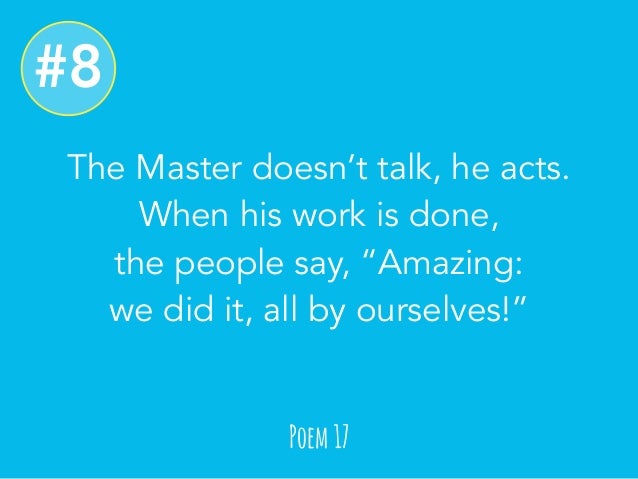
When the Omega Leader's work is done, the people say "amazing! Look what we ourselves accomplished!"

Under the guidance of an Omega Leader, the people see themselves as powerful and carry the same spirit of empowerment to others. In this way, the whole of society is sustained, engaged and active in community-building. When threats come, people are willing to step up and even make sacrifices, because they feel both powerful and responsible. 

Omega-led societies are agile, solution-based, innovative and internally supportive.  

Of course, Omega Leaders place the well-being of the people above all else - even their own well-being. The theory is that the people around the Omega will be inspired to help them be their best for the return their leadership provides for all. 

There aren't many Omega Leaders out there  ‎these days; we're in this odd place where a growing number of organizations and communities are seeking that kind of leadership but expect it to come in the self-promoting, hustle-based packages typical of Alpha Leadership.  

The implications in this are clear - we aren't really ready for Omega leadership, or at least don't feel that we are. We favour giving power to bosses rather than promoting Omegas who serve as conduits for power, leaving a high level of societal responsibility with us, the people. 

When we're ready, though, there's no shortage of Omegas out there making a difference right now, and having fun doing so.  

And when we all start moving in their direction, you just know good things are going to happen.

Monday, 21 September 2015

#OwnIt: Special K for the Win


My belly is from my kids.  My legs are from my trainer.


Have you seen the new Special K ad?  You can check it out right here.

When you're done, come back and I'll tell you why I think it's so awesome - and reflective of a broader trend in marketing (we'll get back to the changing face of marketing later).

There is absolutely nothing about cereal in this ad.  The ad's not about selling food - it's about selling the sensation of empowerment.  Instead of the traditional "I'm a hot model getting checked out by (other gender), eat this cereal and you can be just like me", what this ad says is "don't try to be some artificial Hollywood standard - be the best you you can be."  


Which involves more than cereal.  Look at the women in this video - are they leisurely eating a bowl of Special K while wearing white Lulu Lemon gear, looking like they haven't a card or rush in the world?  Nope - but then, how realistic is that, anyway?  Most people are hustling in the morning - to get to work, to get the kids ready for school, to do all these things simultaneously.  


In this way, most ads present false standards that people living real lives can't ever hope to realize - eat this cereal, turn into a model!  Buy this fitness video, be buff and turn heads in 20 days or your money back!

The intent of those more traditional ads is to project an image of perfection and tantalize the viewer with the notion that they can be just like that if they simply buy the product.  Which is of course isn't the case - health is a combination of factors, including diet and fitness, and it differs from person to person, lifestyle to lifestyle.

Instead of minimizing this truth and focusing strictly on their product and its values, what Special K's #OwnIt campaign does is present a more realistic view of women's health within their normal life context - starting with the relatable (97% of women have an "I hate my body" moment) and then throwing that inter voice of insecurity that so many ads speak to directly under the bus (tell that voice to shut up!).

What do we see then?  Not a series of women munching down on Special K, but embracing their lives, pursuing fitness activities and clearly feeling good about themselves doing so.  Larger woman dances, has a ball!  One-armed lady doing push-ups - how inspiring is that?  Then, women looking in the mirror and embracing who they are and what they can be.

There are only two images of people eating Special K in the whole ad:

- a woman in what looks like a gym, crunching on a bar after a workout 
- a admittedly idealized version of a middle-aged couple in a very comfortable house at what looks like the end of the day, with the woman sitting on a counter having a happy bowl of cereal (might want to close that fridge door, though - you're wasting energy)


The ad isn't about cereal - it's about a sense of empowerment.  


In real life, the less-than-model-perfect people will be drawn to what they see as perfect people subconsciously for the potential benefits (does perfection rub off through osmosis? If they get the hottest girl/guy in the room, maybe I can get the runner up?).  This isn't about empowerment - it's about relying on the power of others.

We're all drawn to things like humour and charm because they act like chocolate, or a hug - they make us feel good.  This isn't about empowerment - it's about externalizing happiness, the same way binge-eating or excessive drinking can be about externalizing the relief of depression or anxiety.


That's the kind of selling traditional ads capitalize on; they're not really trying to change our lives, they're trying to position their product as the life-changer.  Essentially, we're being told to become product wingmen, because proximity to or consumption of that product/service will make everything better.  We're shown a lifestyle, a look, and then told that product X is our ticket to that world.


Which of course isn't the way the real world works.

The #OwnIt campaign, however, isn't suggesting or even hinting that Special K is a world-changer, a ticket to the perfect body or perfect life.  In fact, the ad isn't about the cereal at all.  It's about perspective - and how when we change our perspective, we open up doors all on our own, without need of a magic key.


Very specifically, the ad targets women - a demographic that is still marginalized in the workplace, public life, on the street and especially in media, where the standard to which they are held is literally artificial.  It says to women - "We recognize that the standards out there - standards perpetuated by companies like us - are false, and harmful to you.  We want to change that.  We encourage you to challenge the status quo to disrupt what defines beauty.  We're on your side; we just happen to sell healthy cereal."

I'm not a woman, and I still felt good after watching that ad.  Like most people, I like seeing people overcome odds, build confidence and find success in their own way.  I get swept up in movements that empower change, just like a growing number of people.  I want to be part of that change.


I once designed a whole campaign called "What's Your Healthy?" around the idea of individual definitions of health and the notion of maximizing one's own potential rather than meeting false standardized expectations.  This concept ties in to a growing number of campaigns and initiatives that are tackling the status quo - redefining what it means to be mentally healthy, redefining what is socially acceptable in turns of ethnicity, sexuality, etc.


It's even happening in politics - while we still see old-school leaders positioning themselves as Alpha dogs and telling us to leave them in charge and just get out of the way, there is a growing movement towards citizen-engagement, social co-design and access to information and tools that empower everyone to have equal skin in the game.


Done?  How do you feel?

Do you feel the same way you did after watching the #OwnIt ad?  Do you feel a tinge of excitement, a sense of opportunity and idealism?  If you're the target of an ad like this, what sensation does it leave you with?

What the marketers behind ads like this hope is that you are left feeling empowered, optimistic and inspired.  They want to make you feel like you - no matter who you are or where you come from - can stand on mountains.  You don't need them to do these things, any more than you needed your favourite teacher or coach to inspire you to be your best.

Just like that coach, or teacher, or mentor - you're going to remember them, aren't you?  


If the psychological imprinting intended by these ads work the way they're supposed to, you will begin to associate that sense of empowerment and optimism with the cereal (or the service, or the candidate).  


You will know that eating Special K is good for you, in that it provides good nutrients without detrimental sugar and whatnot, but you'll feel like you're getting a boost when you look a the box, like remembering the inspirational quote of that person who made a difference in your life.

In short, you're not buying the cereal for what it does for you - but what it reminds you is within your realm of possible, all on your own.

Here it is - the kicker, how marketing is changing and reflecting social change as a whole.

What business do companies like Apple have in supporting gay marriage?  They're supposed to be focused on selling products, right?  Sales is all about focusing on how your product is the best, most capable, the only one that can get the job done for a client, right?  That's what laissez-faire capitalism is all about; hard sales through self-promotion and then ABC closing the deal.  

There's no place in business for wading into social issues.


Just like there's nothing wrong with the polling industry's methodology - it's the people who are the problem.

People seem to be forgetting the way the world works - top-down, assimilate-to-succeed, conservative family values, mass-standardization, sales through self-promotion, etc.  People need to succeed on society's terms and they need to find it within themselves to succeed - not count on external parties to hold their hand.  Right?

Yet more and more companies, parties, organizations and even movements are emphasizing empowerment of the individual, personalized definitions of beauty/success and diversity as a strength.  It's cool to be supportive; it's trendy to hack the system and its standards in favour of the individual.

Hence, companies supporting gay marriage, campaigns like black lives matter and MMIW, etc. Products essentially advertising for their target market, not to them.

And their markets - seniors, women, the LGBTQ community, millennials, etc. rewarding them for it.


See, the smart companies are applying new understanding of behavioural economics and societal trends to tweak their messaging and outreach to be less "push" and more "raise up", empowering their audiences to be co-creators of their brand through UGC.

Smart organizations are, in effect, empowering individuals to reach their maximum potential so as to contribute their maximum to the tranformative social change rocking our world.  

They've adapted to the times, evolved with their markets and are winning as a result.

What's the lesson in here for comms people and marketers?

People don't want to be sold to - they want to be engaged.

It's not about you, nor your product - it's about them.  Position yourself as part of their journey.

To succeed, help them succeed on their own terms - be part cheerleader, part teacher, and be clearly seen to embrace the social issues that matter to them.

The same lesson applies to business, HR and absolutely politics.

If you want to win, put your people first.  Don't focus on the hard-sell; focus on ownership.  It's not about you - it's about them.  

It's as simple as that.

And they will thank you for it in ways you can't begin to imagine.


Thursday, 3 September 2015

The Motivation of Ashley Burnham


If you're running for political office and have any experienced advisers on your team, they will always ask you to answer one basic question - why are you running?  

There's no one right answer - it can be to ensure a specific issue gets addressed, or because you feel the representation your riding/ward/community has had is inadequate, or because you want to be part of a party that does good stuff for a broader constituency.  The key thing is knowing why you feel voters should entrust you as their voice rather than someone else, which means knowing why you believe you are the best person to be that voice.

It's not as easy a question as one might first think.  Not everyone runs because they have a burning cause, after all.  Some like the idea of being in power, some feel it's just a natural option for them.  I've known a couple of ex-political staff to who ran for office because they couldn't seem to get work anywhere else - it's what they knew, and it worked out for them.

Ideally, the reason your running isn't you and your personal interests, but something that is beyond you.  It's a bit like throwing a punch; the goal isn't to be the one hitting, nor to hit the target - to land a solid, earth-shaking punch you need to aim past your target and see yourself as a conduit for the kinetic energy of the punch itself.  Whether you're a politician, a fighter, a singer or an advocate, that's the kind of power that propels people to do great things.

Which is why I love Ashley Burnham.  Like the best advocates for anything, she has taken her life experience and decided "I want to create better conditions so that those who follow me won't have to go through the same hardships I did."

She didn't want to be Mrs Universe; that was simply a platform for her to achieve her goals.  With this motivation, she brought things unique to her - her culture, her life story - and infused her Miss Universe activity through that lens.  This allowed her to excel, bring forward something unique and interesting to broader audiences.  It also allowed her to tell a powerful story to an audience that hadn't heard it before.

Now, as Mrs. Universe, she is carving out a role for herself as more than just a pretty face, but as an ambassador and as a public figure.  When she speaks, her voice resonates.  


She's no partisan spewing over-blown rhetoric for strategic political gain.  She's a real aboriginal women expressing real concerns based on her own experience, using her platform to channel the voices of countless others, including Canada's missing/murdered indigenous women.

Hers is a voice not so easily dismissed by a government that likes to frame everyone as either unloyal employees or enemies of the state.


Tuesday, 25 August 2015

CSI Takeover Day 2: Building Community One Potluck at a Time


Displaying junepotluck.jpg


The man's eyes spoke of a deep frustration, almost a fear - the kind that sets in when hope seems lost, like the cold on a wet winter morning.

"Tell me - what is this place?  What will I find here?"

The man was a first-time visitor to CSI Regent Park.  Without going into too much detail, his personal story was heartbreaking; he had spent most of his life seeking to right social wrongs and fight against inequity, often against a system that punished him for his efforts.  He'd heard from a friend about this special place where things were different, where courageous conversations were encouraged and where change-making was a common bond of fellowship.

This man had come to CSI looking to find something.  It wasn't a career boost or a new model of workspace. It wasn't even the excellent customer service and "getting to yes" attitude for which CSI has become famous.  He had come looking for something far more basic, something far more essential than any of this.

At the edge of hope, the man had come to CSI looking for community.

No pressure, right?

I am a big believer in not setting false expectations; I've seen too many politicians fall as the towers of lofty promises they've built crumble to play that game.  Having said that, I feel pretty confident about the culture that CSI has built (and, as we'll explore tomorrow, others are also nurturing) and what it has to offer individuals and society both.


The gentleman and I had a chat out on the balcony; we discussed his life and his frustrations; we talked about the why behind CSI, the secret sauce that makes the CSI culture one organizations around the world are looking to capture and bring back to their own countries, like Social Innovation Prometheuses.  At the end of it all and after a walk around the building, I left him not with a promise, but with an invitation.

"To really see what CSI is about", I said, "come to salad club.  To see what makes CSI Regent Park a model of how to do big-C community right, come to the Potluck."

No lofty promises, no sneaky sales pitch.  Just an invitation.  I knew, from experience, it was enough.

What's the secret ingredient that makes the CSI Regent Park potluck an event so meaningful, so inclusive and inspiring that I would have faith enough to believe it might provide this man with what his soul clearly craved?

I'll share that with you in a moment - but first, here's how CSI RP Manager Shilbee Kim describes the potluck: 

We believe that a great community is like a potluck - it only works when everyone brings something to the table.
Displaying IMG_7500.jpg
But we all know that potlucks don’t just happen. Someone needs to convene, there needs to be space and probably the most common question we hear is, “what should I bring?” For the last decade, our work in Community Animation has been to convene, create collaborative spaces and find creative ways to surface that last question. In the potluck analogy, asking what you should bring is commonplace, but in the real world we rarely ask. 

Imagine if we did! What would happen if we brought intentionality to connecting the needs and assets of the community?

The Centre for Social Innovation is collaborating with the Daniels Corporation and the Toronto Community Housing on a community building initiative for new, returning, displaced and existing residents of the Regent Park neighbourhood. Our vision is to convene a monthly evening potluck in the CSI space during which we share information about the neighbourhood and facilitate connections through our most popular Community Animation activities. 

Displaying IMG_2326.jpg
The activities intend to surface the names, common interests, needs​ and assets of everyone in the room and are casual, fun and positive. The core objective is to build new connections and reinforce existing ones, ultimately to build social cohesion in the community.

All sounds great - but does it work?  

For me, the answer is a yes, plain and simple.  

This is the only reason I could, in good faith, look my new friend in the eye and encourage him to come and see the fullness of what CSI has to offer.  

I base my answer on personal experience - something I can describe to you, but is best experienced first hand. When you're that confident in what you belong to, it's not about sales - it's simply about extending the invitation to take a seat at the table.


But I promised to share with you the secret to community-building that is so deeply sought by people and corporations around the world, but seems so hard to find.

In truth, it's not as mystical as you might think.

Are you ready?

Don't look up.  Don't look down.  Look inwards.

Yes, I'm talking about you.  And you, and you, and that person next to you, and especially my new friend who walked into CSI looking for community.


There is no secret ingredient; there is no spoon.  There is only us, and what we bring to the table, and what we build together - much like a potluck, or an organization, or an ecosystem.  The whole is more than the sum of its parts, but its parts are what allow it to becoming something greater.

The stone in the soup that makes CSI a magical place of collaboration, innovation and change-making is the same seed that's being planted in government agencies by virtuous schemers (more on them tomorrow), in the private and not-for-profit sectors by a growing movement of people who believe that strong, engaged individuals create strong, dynamic societies.

It's not about the thing they bring that no one else can replicate; it's about empowerment.

Think about it for a second; the emphasis on animation.  The Do It Yourself culture.  The space design that fosters happy collisions.  The events, the "bring a penny, share a penny" approach to facilitation.

CSI has been intentionally designed as a place where people can grow into themselves, cross-pollinate with peers and have the resources, encouragement and confidence they need to catalyze great things together.

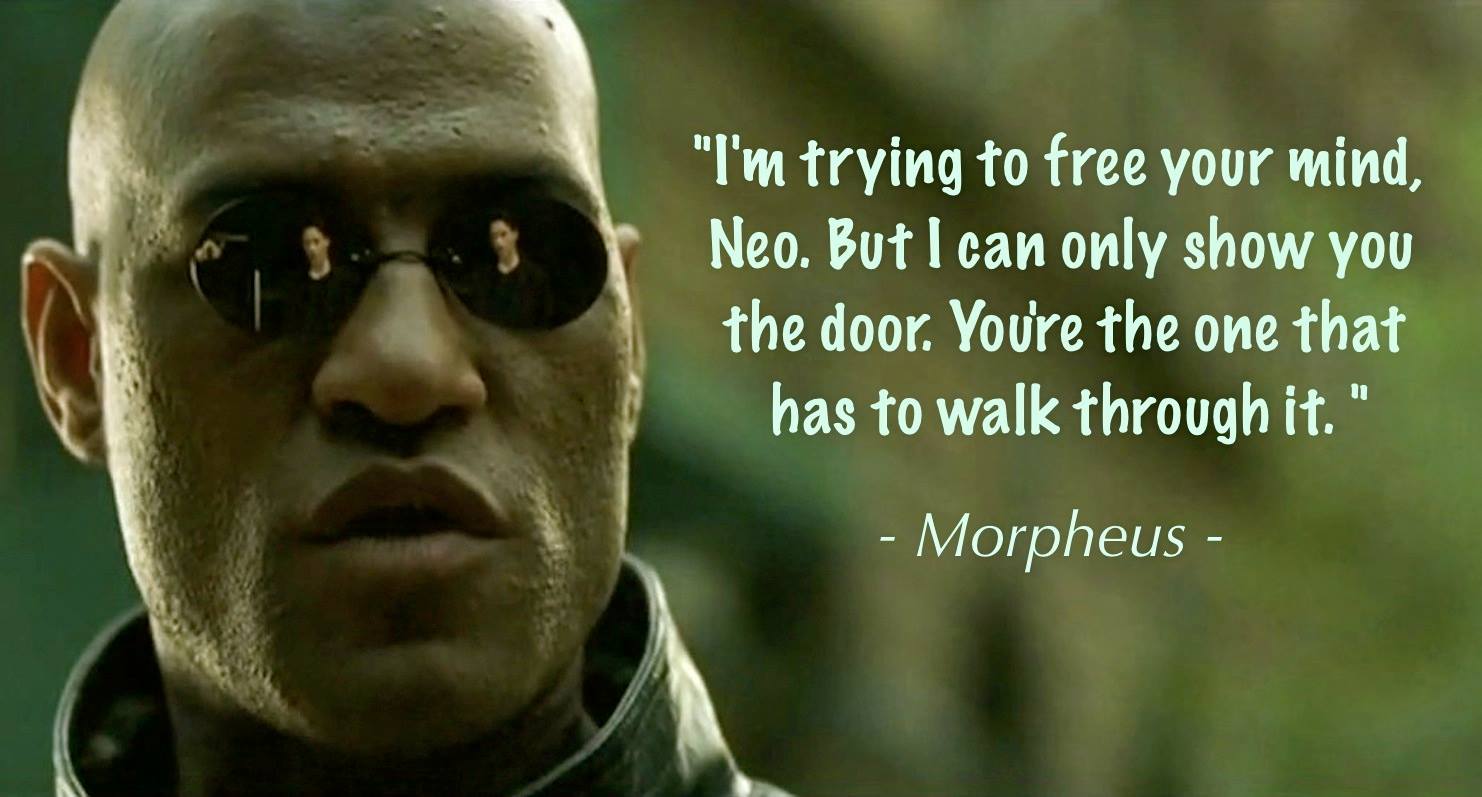
This is the big difference between the boss who says "follow me" and the leader who says "how might we make this even better together?"

That's what CSI is about.

I look forward to seeing my new friend out for the potluck - maybe not the next one, but I bet the one after that.

Who knows - maybe I'll see you there, too.  I hope I do; that would be awesome.


With special thanks to social gardener Shilbee Kim; she is a constant inspiration and the embodiment of leadership.


Displaying grouppic.jpg

Thursday, 28 May 2015

Andre Marin and the Role of Ombudsman


Please, keep in your thoughts and prayers at this most difficult time.
12 retweets3 favorites


Choose language/Choisir langue
Most people have no clue who Andre Marin is, nor what the role of the Ombudsman is.  Of the public, those who recognize his name and his post view him as a hard-hitting government watchdog, protecting the realm from government misanthropes.  


Like them or not, under Marin's watch the Office of the Ombudsman has produced hard-hitting reports presented with the flair of an advocacy group; he knows how to work a headline, he knows how to get attention.  You can see some of these reports here.

Of course, his performance has not been without criticism.  Some of it has stemmed from the content of his reports; that's expected.  When people are attacked, especially if there's justification, the instinct tends to be "fight back"  Kill or be killed, etc.  No one wants to lose face, or privilege, or face consequences.

It makes sense that the Ombudsman has to be someone ready and willing to be tough - but also fair. Especially when the person filling that role is responsible for surfacing misconduct, their own actions must be beyond reproach.  


There have been a whole host of complaints over the years that put Marin well within the realm of reproach.  It's certainly possible to dismiss all the complaints filed and the high rates of staff turnover as sour grapes or team members who "didn't make the cut", but this raises questions about HR practice, expectations set, etc.  It's certainly not common for an office to develop a support group (CADOO Coalition Against Discrimination at Ombudsman Ontario).  

There are expense questions as well, though it must be said this is a bit of a political culture thing we're noticing at all levels rather than a story unique to one office.

Which is why the Open Movement is so promising - public servants working to put the public good first, promoting transparency in government, collaboration on policy with citizens (like the Open Data Directive), etc.  There's a slow culture shift away from the old-school frame of power broker or information gate keeper.  

It's a difficult transition, especially in a work culture where employees are often afraid of being "public servant zero" - the epicentre for a scandal, whether of their making or not.  Outreach is sometimes discouraged, innovation stifled - the silo effect is a big part of government's structural problem.  The Virtuous Schemers working quietly behind the scenes to open the silos of government are courageous and inspiring.

These Virtuous Schemers strike a careful balance between respecting the constraints of their position and their commitment to public, rather than partisan, service.  Not a one of them puts self before service.

Which, to me, is the most troubling part of Marin's active and aggressive campaign for the job.  That kind of hard-sell might be how sales works - it might be the kind of approach politicians take in "reapplying" for their job (seeking a new mandate from their constituents).

Yet the office of Ombudsman is an appointment.  More than that, it's one that comes with a great deal of power.  To be appointed is an honour that comes with a duty.  It's not, by design, a gig you mount public campaigns for.  

In so doing, Marin has created a constituency and seeded with information that takes liberties with the facts.

3/3 Yep. In less than 48 hours, u have no Ombudsman. Time to make ur voice heard. Unfortunately it's come to this. MAKE SOME NOISE PLEASE!
136 retweets42 favorites


Consider - should Marin be reappointed, he could very well point to his "Marin Nation" of constituent support as justification and validation for his business-as-usual.  He could continue to block out voices he doesn't care to hear from (happened to me tonight - not from Marin's personal account, but the office's account).  What impact will that have on his capacity to shed light where it's most needed?

Consider - he's been in the role for a decade; that's about a good time for anyone in positions of power to step down, before they confuse their position with themselves.  

The Office of the Ombudsman is not facing a "difficult time" - it's in the middle of a defined administrative process that will carry on long after Marin is gone.  I doubt Marin himself is facing a "difficult time;" he's a man with a long career and  list of accomplishments he can point to.  Plus, he's that bulldog, right?  That's the sort of ABC mentality that's doing well in sales these days.

I think that, after ten years and some questions raised over his tenure, now's a great opportunity for Andre Marin to try out some new opportunities and for Ontario to have a new, hard-hitting Ombudsman who brings new energy and is a little less comfortable with the massive leeway and power that comes with the role.

If anything, it was his partisan-esque Twitter campaign that solidified that.  A leadership quote to end with I hope Marin takes to heart:


Most people will never know who Marin is, but it would be a shame if they come to view the office of the ombudsman itself with suspicion or derision.  Let's avoid that.