Search This Blog

CCE in brief

My photo
Recovering backpacker, Cornwallite at heart, political enthusiast, catalyst, writer, husband, father, community volunteer, unabashedly proud Canadian. Every hyperlink connects to something related directly or thematically to that which is highlighted.
Showing posts with label #VoteOn. Show all posts

Thursday, 12 June 2014

Why #VoteON Isn't Over Yet


I've said it before and I'll say it again: the word Liberal is not just letters on a lawn sign.  It is the generosity of spirit that defines us at our best.  And so do you.
 
 
The results are coming in as I write this and it's looking like another Liberal government.  That being the case, Tim Hudak's political career will come to an end and Andrea Horwath might be existing the stage as well.
 
For a moment, all the hard-working Liberal candidates, volunteers and paid staff deserve to high-five each other, do toasts and the like.  Frankly, for the blood, sweat, tears, dollars and conviction all people who've helped on this campaign have put in, they all deserve some appreciation.
 
Don't think for a second, however, that a Liberal win is a cleansing of past concerns or a complete repudiation of the PCs or NDP or even the Greens. 
 
When the dust settles, it'll become clear that far fewer voters engaged than could have.  Divisions between Parties will largely exist along geographic lines, with urban centres divides from rural ones and the North.
 
There will be a lot of hard feelings, ill will on one side and on the other, a nearly irresistible urge to gloat and get cocky.
 
This would be a mistake.
 
Ontario is increasingly a fractured, disenfranchised place.  People are tuning in to what matters to them, not the whole picture; patience for shared solutions is weak.  Increasingly, they're not voting - especially young Ontarians, who could very well stay non-voters moving forward.  It's not a good picture.
 
Now comes Kathleen Wynne's true test of leadership.
 
Her job now is to do what she has always done best - to engage, to listen and to build common ground.  Nowhere will this be more important than within her own Party.
 
It's time for the Ontario Liberal Party to really dig deep and reconnect themselves with what liberalism really means to them.
 
Is it just about being better than the other guys?  Or is it more than that?
 
 
Four years is a lot of time to get things done.  Starting off with some policy pieces that really unite the Parties and the province would set the right tone for the term to come.
 
It's time for Liberals to be at their best - not for their benefit, but for all of Ontario's.
 

Wednesday, 11 June 2014

Who's Going to Win #VoteON? These Pollsters Have the Answer


And how can @forum have the at 19% and have them at 30%? Someone's gonna have some splainin' to do.


Of course they do.  Don't they always?

It must be so.  After all, they do billions of dollars annually, those pollsters.  If their methodology was broken, no one would be using it.

We're rational actors, after all.  Focused on facts, so on and so forth - not succumbing to what's simple, confidently and repetitively articulated.  This is especially true of the people at the top; they all get to where they are because of skill, not bluster.  Right?

It's them sociology-committing behavioural economists you need to worry about.  They do things like ask questions, test assumptions and focus on the mechanics, not the sales.

Forget them, focus on the people at the top.  Only they have the answers - not us, collectively.


Smokey the Bear - only smokey can prevent forest fires donate $25 to smokey's campaign here

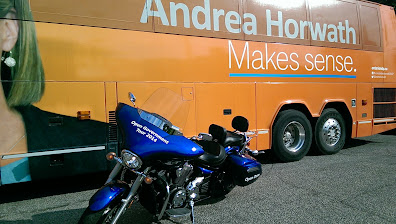
@AndreaHorwath and @TimHudak: Open By Default


We haven't heard a lot about Open Government this campaign.  It could be that the NDP and PCs see it as a Liberal thing - which is odd, seeing how OpenGov is being championed by the Conservatives federally.


PhotoOpen Gov and Open Data aren't a Liberal thing - it's being spearheaded by the bureaucracy.  It's also not limited to Canada, Ontario and Toronto; literally, Open Gov is a global movement, which is very cool.

There's more than a passing chance that they really have no idea what Open Government is about, though, or why it's both common sense and a job creator.

They can't be blamed; as of now, there are really passionate, smart, engaged people speaking in complex technical terminology at events called hackathons.  

While the concept is about engaging, the message still needs refined and designed to become a conversation.  That is, however, the goal.  Makes for a great, already-built opportunity that political communications pros could capitalize on, don't you think?

Photo
I wouldn't want to think that either the NDP or PCs are shy about embracing Open Government because, well, it's open; after all their smack talk about the Ontario Liberals, they could be extra cautious about creating opportunities for their own selfish plays or examples of mismanagement getting out.

Thing is, this is a genie that's out of the bottle.  

People are more disaffected than ever with government and politics.  Those who've been inside the system for a while are assuming the disaffection is the same as it always is and are therefore continuing to play by outdated rules of engagement.

They don't realize the game has changed and that there's a new player at the table.

In the very big picture, it doesn't matter who forms the next government - the challenges faced are the same and the solutions are all variants on the same theme; open, authentic engagement, from top to bottom.  Nothing less has the capacity to deliver the shared solutions we need, nor empower people from every walk of life to be part of their implementation.

People are sharing their lives online.  Leaks and FOIs are revealing the inner lives of politics.

It's simply good planning to get out in front and be open first.  

As every pol knows, it's better to define yourself than let someone else do that defining for you.

Photo

Just Imagine, Ontario


Lord knows how the election will shake out.  None of us are precognitive, after all.  If the above scenario proves to be true, though, Hudak will be gone and it's possible Horwath might not last, either.  
That means new leaders and directions for Opposition Parties, a definite good thing for the Liberals - in the short term.  If this happens and a minority Liberal government follows the proper political playbook, we'd end up with a snap election while the Opposition is in disarray.

Just imagine how much fun that campaign would be.

There is an alternative, however - unlikely, even fanciful, but worth considering.

If our Political Parties decided to build their brands by acting like governments, not partisans, they could do this crazy thing called collaboration; find some common ground, key issues that they can agree upon and focus on doing the heavy lifting that is vital for the recovery of our economy and the strengthening of our weakening social fabric.

Of course, it'd be hard to see that happen if we weren't prepared to support the process, proactivley.

Are we ready for collaborative change?  Are we ready to be part of the solution rather than prognosticators of the problems?

If hope is on the way, it won't land upon us from without - it will be nurtured from within.

Tuesday, 10 June 2014

#VoteON: The Day After E-Day


It's entirely possible that, when what ballots get cast are counted, we'll end up with either a Liberal or Conservative majority government.  In that scenario at least one, but likely both Opposition leaders will be gone and their Parties will focus on laying track and getting fighting ready for the next election. The new Premier, meanwhile, would have the power to pretty much do as they please.

A more likely scenario is that we'll have either a Conservative or Liberal minority government.  In this case, Opposition Parties will have to decide if they want to risk new leaders that could find themselves facing a snap election rather quickly.  The goal of politics, remember, isn't to govern, but to gain and hold power - that's how the system works.


Those with power (the government in theory, the Leader and Office of the Premier of Ontario in practice) will have to decide if they focus on rapidly building towards a next election by picking the right fights quickly or take the minority route for a while, trying to undermine their opponents, score wins and build some credibility with their likely slice of the electorate.  Both scenarios, again, are about building towards a majority.


No matter how this second, more likely scenario shakes out, the reality is that leaders, Parties and stakeholder groups that have essentially vilified each other as corrupt, despotic and incompetent will find themselves back in the same sandbox together facing the same structural problems.  Elections, you see, aren't armistices.

Added to this picture, of course, will be an even more disaffected, frustrated population that will still be agitating for change, but increasingly believing none of the above can solve it.

To paraphrase Colin Powell:


Let's get the blame game out of the way immediately, so we can move on.

It's not the fault of politicians that citizens are tuning out, any more than they can really be blamed for putting partisan wins before shared solutions.  That is, after all, the way our system functions these days - winner takes all and if you don't win, you can't contribute.  For their part, businesses can't really be blamed for trying to maximize their profit - if they weren't doing so, they'd be not-for-profits, and who'd fund those?  

Unions can't be blamed for trying to maximize wins and reduce competition for their members, either - that's the role they are supposed to be playing.


Across the board, we have siloed sectors and organizations doing exactly what they are supposed to do.  That's not the issue.  It's the play, not the players, that's the problem here.


We don't talk with each other - we talk at each other or even worse, we're doing monologues to an audience, ignoring each other entirely.

Which brings us back to politics.  You're not supposed to commit sociology in politics; it tends to conflict with message discipline.  Politics is like a sport this way, which is why we have so many "blood sport" similes - focused teams are supposed to play defined roles, deliver wins and take the cup, i.e. form government.

Where politics varies from sports is that the winning thing is only a prelude to the actual work of governance which, done well, involves listening to and incorporating ideas from other Parties and stakeholders, consultations and a focus on finding efficient, shared solutions by building bridges rather than picking fights.

You see where the challenge lies.  


To the best of my knowledge, politics is the only field where players go out of their way to demonize the very same people they are mandated to work with day in and day out.  Let's say Wynne is returned as Premier - would Horwath or anyone on her team be able to work with someone they've tarred as corrupt without losing their credibility?  

Let's say Hudak wins - is he capable of gaining the confidence of the House?  For her part, could Wynne support any element of Hudak's plan as a trade-off without losing credibility?

This is where the sports analogies wear thin.  Competitive athletes are entertainers, beating each other for the amusement of an audience.  They aren't policy makers.  


In politics, as "the stakes" grow bigger (tougher competition), the more vitriolic partisans become. This creates an escalation of personalized animosity that it's hard to scale down from, especially in a minority situation - and even moreso when the street theatre is the only thing that really seems to get us citizens to pay attention.


Let's reiterate this; when politicians stop bringing the issues in all their complexity to citizens, it's because they've concluded you're not capable of understanding them or simply don't care to bother. Either case is a failure of civic responsibility.

Which is a failure on our part.

Here's one fact I think we can all agree on; the day after E-Day, the world will still be spinning and the challenges we face will be exactly the same as they were before.  No solution brought forward by any Party or stakeholder has a hope in hell of working in complete isolation, because the world isn't top-down; it's integrated.

It's time we quit looking at each other as the enemy and expecting the solutions to our problems to come from someone else.  

There is no one else.  There's no them, either - there's only us.  Like it or not, we do like on common ground - in the same cities, the same province, relying on the same transit, hospitals, schools, etc.  We rely on each other.

And none of us is going anywhere.  The Other Parties aren't going to fall off the map.  Poor people, rich people, urban or rural folk aren't going to pick up and leave, nor should we want them to.

We can't keep doing this; living each man for himself like the world's going to end tomorrow isn't going to work.  

Portraying ourselves as the only ones with a simplistic, back-of-napkin plan to win power isn't going to work.

Wrapping all our woes up and hanging them around the neck of one group or another isn't going to work.

Minority or majority, this E-Day or the next, the inescapable fact is that the only way we can get past these continuous loggerheads we face is to start moving forward together.

And nobody can make us do this; we have to want to do it ourselves.

Thursday, 5 June 2014

Hudak's Virtue: At Least He's Consistent


By Wednesday morning, he was speaking with theological certainty: "I stand by my numbers.  It's going to create the jobs that I say."  "I know I am right."


Of course he knows he's right - he feels right.  People who disagree with him make him feel frustrated, angry, agitated.

In the back of his brain, Hudak is certainly wondering why these people don't get it - but doesn't much care, because he feels like a steam-roller, like one of history's actors.

There's no surprise in this - Hudak has always displayed the same functional fixedness, the same animosity towards opposing viewpoints and the same urge to punish those who challenge him.

He's like Rob Ford this way - we know exactly how he'll govern, because he'll govern in the same way he's always operated.  Like a boss.

For this, he is to commended - he's being who he is rather than trying to present himself as something he's not.  Which means, if he's elected Premier and voters have buyer's remorse, they'll have no one to blame but themselves.

Caveat Emptor, folks - be careful what you wish for.


Wednesday, 4 June 2014

Partisan Problems: Hudak's Latest Hypocrisy


I don't imagine many pundits noticed this (and fewer probably care) but it piqued my interests, so here goes.

Then-Minister Kathleen Wynne, along with the whole of former Premier Dalton McGuinty's Liberal Cabinet, signed off on his decision to relocate the gas plants.

Frankly, we have no idea how the discussion around the table went - what we have exposure to is the end product, not the discussion that led up to it.  Maybe Wynne did say no, maybe she didn't - at the end of the day, though, majority ruled on the Premier's decision and the deal was done.

Hudak seems to be suggesting Wynne should have refused, resigned, broke Party ranks and stood by her ethics - or, framed a different way, she should have broken ranks and ignored Party discipline.


Like, say, Dave Brister did.

Dave Brister was the guy who publicly spoke up against Hudak's right-to-work policy as wrong-headed.  For publicly disagreeing with the Party line, Brister was unceremoniously dumped by Hudak.


Brister's comments were unacceptable solely because they broke ranks with Hudak's message.  What he was saying clearly wasn't the problem - after all, the PCs backed down on Right-To-Work in response to the same kind of message Brister brought forward - it was the fact that he, one of their people had said it that was the issue.

That wasn't the first time Hudak has put Party interests above public interests.  When Peter Shurman decided he wanted to run where he now lives - not in his former riding of Thornhill but in Niagara Falls - Hudak explicitly told him he couldn't.  

Why not?  Shurman had a lock on Thornhill that Hudak didn't want to lose.  It didn't matter that his Shurman no longer lived there and was willing to run where he did - it was the seat, not the constituents, that Hudak considered first.

That didn't work out so well for the PC's public image - instead of accepting responsibility for his choices, as leaders do, Hudak fired Shurman, too.


Hudak has played the same sort of game over his on/off dance with Doug Ford.  He doesn't want to alienate Ford's massive base, but he doesn't want to be seen as too close to the toxic politician himself.  
In these matters, it's not Hudak's conscience that drives him - it's that numbers game he's so fond of.

If Hudak had been Premier and made the gas plant call - which, by his own admission, he would have - and one of his Ministers spoke up publicly against the move, he would have turfed them.  More to the point - seeing how focused he has consistently been on his Party's interests, we can pretty much expect similar scenarios to crop up should he become Premier.

Think infrastructure developments like hospitals, schools or roads in friendly ridings when they're needed elsewhere - say, the North.  Think outsourced contracts to Party-friendly consultants without open competition.  Think fights picked with stakeholder groups he knows will never vote for him, because he knows it will mobilize his base.

Hudak has made it clear that, when he's the boss, dissension is not tolerated.

Which is exactly the attitude Ontarian s (and even partisans) are fed up with.


This is no passing thing - look at what's happening with the Federal Parties, or any Party for that matter. Elected Officials that exercise their judgement are punished.

They have no hope of becoming Ministers, Leaders or Premier - that door is only open for those who toe the Party line, no matter how wacky that line is.

Nobody cares about this, of course, and it's impossible for the Liberals to make this argument without being branded as weak or whiners.

But it's true none the less.


Sporting Fun Vs. Engaged Democracy: The #ONDebate


If you're bothering to read this, you're probably someone with some skin in the game.

I'm not talking about governance, or even democracy - I'm talking about politics.

Whatever we might tell ourselves, politics is not about governance.  It's about competition, scoring hits, winning and above all, ideology.

Not one of the leaders on the stage last night has a fully comprehensive plan to address Ontario's myriad challenges.  In reality, they can't - our challenges aren't fully home-grown.  Even those that are can't be solved by one policy regimen or another without behaviour change from the top down in every sector private or public.  And that's before even getting to every day citizens and their role.

But back to the debate.

On Twitter last night, in columns this morning and at select water coolers throughout the day, pundits are handicapping the race, discussing knock-out punches and essentially dissecting last night's Leaders Debate like a sporting event. 


Since the game's not over yet, the opinions are fairly easy to predict.


If you were a Libs fan, Wynne clearly held her ground and took Hudak to task.  If you're a Con fan, Hudak was the clear winner, and Wynne the loser.  For the NDP fanbase, Horwath looked like a leader and the other two clearly showed contempt for the system and the people.

From each side, we saw attempts to nudge swing voters: "I'm a liberal," says one fella who donates money to the PCs, "but I gotta say Hudak won this one."  "I'm sensing momentum," says a Horwath supporter, basing their opinion on no poll yet commissioned.  "Wynne showed strong leadership," wrote people on Team Wynne.

It seemed pretty clear the teams prepping their leaders cribbed from sporting event methodology, too. Candidates had their game plans, their key moves and lines to pull out when the opportunity arose.  For avid politics followers, you got a few fun Easter Egg moments: "You had an option," said Horwath, channelling Brian Mulroney.


But what if you aren't a die-hard political enthusiast, or a vested stakeholder group, or a rabid partisan?

I was in downtown Toronto near Union station a few hours before the debate.  The Hudak bus was parked nearby and a Hudakmobile was driving up and down the streets, playing video of Hudak saying something - his words were drowned out by the hopeful music on the soundtrack.  

As the debate was approaching, Twitter was exploding and there was even a partisan ad circling, I started to ask local commuters if they were going to watch the debate and who they thought might win.

The most common answer: "What debate?"

I asked my small sample of busy commuters a range of questions; what Party do you support, which leader to you like best, what plan do you think has the best chance of succeeding.  

The answers made it pretty clear most people didn't know much about the leaders (if they knew of them at all) and even those that had picked their horse couldn't really articulate their plans.  

There were refrains of "cut taxes" and "don't cut services" mixed with "punish for gas plants" and "I'm still mad about Harris' teacher strikes", but that was it.


Oh - and nobody was really going to go out of their way to watch the debate or follow the convo on Twitter.  Only a few people I bugged even knew the name Steve Paikin.


When I prodded a couple folk about issues - "come on, there's got to be some issue you care about" - the tone changed immediately.  People are worried about healthcare, about opportunities for their children (or about jobs, if they were teens or twenty-somethings) and, not surprisingly where I was at the time, traffic congestion.

For the most part, though, people seem not to connect the challenges they face with the policy makers who have the capacity to do something and work with others to do even more to address those challenges.

This really got me thinking, as I headed home.  To what degree to Ontarians in general view politics as a sport they don't watch rather than an unavoidable component of our system of governance and, therefore, critical to their everyday lives?

Or to reverse the question - how much do the political bubble people feel the whole world (that matters) is already in the stadium and closely following the game?

I didn't watch the debate.  As many debate-prep coaches have suggested they find the best way to analyze a debate is to watch it with the volume off, I decided to try deciphering the debate from Twitter alone.

The results were not surprising - there were four distinct interpretations of how the debate was going and who won, neatly aligning with the three political parties represented on the stage and the disaffected/disenchanted/trolls that were dismissive of the whole process.

Even more interesting was the degree of sarcasm dripping from the tweets of journalists.  They really have seen this movie before - again, and again, and again - and seemed to have reach their saturation point for spin.  They were hoping for authenticity, maybe, but didn't get it.


And of course, most of Ontario's voters didn't know there was a debate and wouldn't have bothered to tune in if they did.  We all know what to expect - messaging and attempts to score clear hits.  If we want to watch a boxing match, we prefer to go for the real thing.


The Political Parties know this; most of their efforts have been off-the-radar, through direct emails, phone calls and polling surveys.  With the rise of micro-targeting, but now the Parties have a good understanding of where there vote is and are amping up their GOTV (Get Out The Vote) efforts.  

Particularly given the decrease in volunteers (disaffection, people having too many jobs to work, a cultural shift from civic engagement to laissez-faire capitalist thinking?), these Parties and local campaigns want to push out as many of their identified vote over the Advanced Polling period so they have less to worry about on actual Election Day.

While Parties (but mostly pundits) do care about performance in a debate, there's a deeper understanding that it doesn't really matter - with such low audience engagement, it's less about persuading voters than it is about maintaining brand over the duration of the campaign.

Smokey the Bear - only smokey can prevent forest fires donate $25 to smokey's campaign here
Which is what Question Period has become, too.


That's the rub - there really isn't debate in our politics any more - just messaging, positioning and attempts to undermine opponents.  Winning by defeating is the goal, not policy.  Not structural solutions.


Think about that for a second - the partisan advisers shaping the direction our province will take are designing policy in a way that mobilizes vote in their support, not to structurally strengthen our province.  

It's a more efficient use of time and resources for them - if the majority of Ontarians don't care and aren't tuning in, there's really no incentive to develop plans that appeal to them, is there?

This is why we should care.  This is why we need more, not less debates and formats that promote discussion rather than encourage sound-bite expression.

We have a system that focuses on political sports teams winning the pennant rather than elected officials serving as conduits for their constituents.  

Last night's performance was not a debate - it was an alarm bell.

Word on the street is that Ontario is ready for a change - but are we open to collaborative change?

If the system and the people can't find ways to engage each other more effectively, more transparently and with a focus on solutions over spin, bad math is going to be the least of our problems.


If you  

Friday, 30 May 2014

Tim Hudak and Darwin


It's true - Hudak has a long track record of being obstinate.  He's very consistent that way.

Clearly, for him, the strong survive - the strong hit hard, never waver, maintain traditions unbending.

Too bad Hudak's an economist, not a sociologist - were that the case, he might realize that in evolution, intransigence is a weakness.  It's the ability to adapt that leads to survival.  

Life on MaRS 1 - Cheap-Seat Politics


A couple easy questions for Tim Hudak, which he'll be no-doubt happy to answer:

1) Which seat would this save?  I'm pretty sure Glen Murray's riding won't be saved (or lost) by whatever happens with MaRS

2) Is the implication that any cabinet-level transaction should either not happen or happen in real-time transparency in the lead-in to an election (that was triggered by the NDP?) - or is Hudak suggesting that the business of Cabinet should always be real-time transparent?

We haven't heard about #OpenGov yet this campaign - Hudak's opened the door to that.

While both the gas plants and MaRS involve real estate, none of the other details match up.  Hudak is counting on people ignoring this fact and only paying attention to his argument.  It's kinda like how he's still solidly behind his discredited Million Jobs Plan.

Nuance doesn't matter where he's concerned - only messaging does.  Messaging he thinks will help him win.

Whoever he tars and feathers along the way is simply collateral damage.

We can break this down into two sections - one, real estate and two, the "bailout."

BAILOUT

I myself am not opposed to an entity with more resources helping one that's falling through the cracks, be it a school and a student or a province and a community.

When I was working for MPP Jim Brownell, the major city in his riding of Stormont, Dundas and South Glengarry, Cornwall, had lost much of its manufacturing base to emerging economies.  The City itself was suddenly lost significant tax revenue and was in a bit of an identity crisis.  They came to Jim Brownell for help.

Jim arranged for a loan the City had received from the province to be forgiven - but to do that, he had to ensure that the same loan package (for downtown revitalization, issued in 1976) was forgiven for every municipality still owing.


It was a big deal - the Premier came down to announce it himself.  Cornwall breathed a sigh of relief - they had a bit of wiggle-room to help them get back on their feet.  That and the Eastern Ontario Development Fund (EODF, also one of Jim's good deeds) have helped bring some measure of stability and even vitality back to Eastern Ontario.

I'm sure Tim Hudak would call that a seat-saving bailout.  He could even hint at the manipulative back-room dealings of people like Jim and I, working our asses off to advocate on behalf of his constituents.

At the same time, if we take a look at the consulting firms that got contracts - or, should he somehow eke out a win, get contracts while he's in office, it would be unfathomable to suggest that he's favouring partisan stooges with massive contracts.

REAL ESTATE

It's casually hilarious what a big deal the Political Right makes about government owning land.  They seem to feel government should go back to its original size - as in, existing solely in the Legislative Building itself.

That's how it started off - Members didn't have offices, they had closets.  Ministries had minute staffs that filled the elegant but small rooms that are now Member offices at Queen's Park.  The reason for this is that Ontario has grown, as have public expectations.  

Could you imagine the Ministry of Health consisting of ten people squished into a small room with poor heating doing analysis on the potential of new drugs or coordinating service delivery across the province?

As it stands right now, a lot of Ministry offices are located in buildings away from the downtown core of Toronto - primarily because of the effort to find cheaper real estate.  Of course, this means that for meetings, presentations and the like, public servants spend oodles of time in transit on Toronto's clogged roads - using taxi chits, by the way, because it's their job to commute back and forth.  The chits are a necessary tool for them to perform their function.

MaRS is walking distance from Maconald Block, where most Ministries are located, and Queen's Park proper.  If you take the subway, you can even get there underground.

If you can consolidate government offices in one, accessible space, reducing the need to pay rent elsewhere and get rid of all the chit-problems, there could very well be value in this.  I don't know one way or the other what the fine print of the deal or the cost offsets are, because I haven't looked at it.

Neither has Hudak, but that's not stopping him.  He has proven, time and again, that the facts don't matter - only his argument does.


This isn't the first time - not even in this election - that Hudak has jumped on a talking point he feels serves his partisan interests without stopping to check the facts.  When he's proven to be wrong, as happens a lot, he doesn't stop, consider, apologize and adapt - he bristles and attacks.


With so many contentious, even volatile issues emerging in Ontario right now, it doesn't take much to guess what kind of public response his my-way-or-the-highway leadership would have. 

Hudak can keep on tilting at windmills and raging against MaRS - when he comes to his sense, we'll be waiting for him back here on planet earth where real problems still require real solutions and leaders with the common sense to think solutions through.

Thursday, 29 May 2014

Kathleen Wynne: Leadership is Resilience


Campaigns are races - they have ends in sight.  Competitive campaigners are often as much committed to tripping up their foes as they are about being faster themselves.  After all, what matters when the race is over except victory?

Politics, however much it gets treated as such, is not a race.  Unless a leader has some avoidable losses under their belt (like, say, Tim Hudak), not forming government doesn't eliminate you from the playing field.

That means the people you're running against now will be the same ones you need to work with later.

When you get your back up, when you cast the Other as evil, or stupid, or in any shape and form as impossible to reason and work with, you're not putting them in a corner - you're putting yourself in a corner.

As a couple prominent political operatives have discovered of late.

It's awfully hard to lead when you're being left behind.  Leadership isn't about leaving behind, or moving on without - it's about moving forward together.

That has always been Wynne's objective.

I first met Kathleen Wynne prior to the 2003 election - I've had the pleasure of bumping in to her a number of times since then, and have always found her the same authentic, committed, results-focused person she was when she started at Queen's Park.  That's a rare thing.

The reason why Wynne has avoided becoming cynical, mean-spirited or intransigent isn't because she's "weak" - quite the opposite.  Kathleen Wynne is resilient.  She knows she's resilient.

Whereas her opponents will dehumanize her to justify harsh treatment in their attempt to win - essentially, poisoning themselves and hoping she'll keel over first - she tends to focus on achievement. That means collaboration, shared solutions and facilitation.  How might we achieve systematic best outcomes with an eye towards sustainability?

It's common sense, really - it's that which adapts that survives.

What Tim Hudak has in Common with Steve Jobs


Steve Jobs was really good at getting his teams to drink his Kool-Aid.  Whatever the market reality was didn't matter - through charisma, condescension, sheer force of will and whatever other trick he could muster, Jobs got his way.  

It didn't always work in Apple's best interests, which is why he lost the company in 1985.  The devastation of this experience would teach Jobs a valuable lesson, enabling his future return to grace.

Tim Hudak is faced with an interesting challenge; once again, the facts that he's sticking to are being picked apart by professionals as not supporting the policy benefits Hudak's shilling.  

Hudak has built his entire campaign around the Million Jobs Plan - which demonstrably doesn't add up to a million jobs.  It's possible Hudak figures the market will produce that many jobs regardless of what he does, and can claim victory for gravity, but I would suggest Hudak's not quite that cynical (though some on his team definitely are).

When recently asked about the deficit left by the last Conservative government he was a part of, Hudak said it never happened.

When faced with tough questions at his campaign launch, he walked off stage rather than answer them.

What has he ever done when challenged on the veracity or feasibility of his plans?

He's stuck by his messaging, tuned out the questioner and bullied or fired the person challenging him.

For his part, though, Hudak never wavers, never questions himself, never accepts that maybe he's got it wrong.

Which, frankly, is delusional.

Hudak has a distorted view of reality that he demands those around him see, or gets frustrated with when they can't.  He refused to accept Peter Shurman's requests to run where he lives; he canned Dave Brister for criticizing the Right To Work plan, which Team Hudak ended up moving on from anyway.

Before this election, there were many in the PC Party who were waiting for the post-election opportunity to turf Hudak as a liability - much as what happened to Jobs.  Politics tends to be a bit less forgiving than business, though - once gone, it's unlikely Hudak will ever be back.

Give the tightness of the race, I would imagine even those PCs that are fed up with Hudak are holding out hope he can eke them a win - but what then?

Hudak has been dismissive of his own, elected Caucus - he is, after all, the boss.  He's made moves and taken steps that have left egg on their faces unnecessarily, like leaving a Northern candidate to defend Hudak's dismissal of the Northern debate.

What happens if he becomes Premier?  What if it's public servants with facts, experience and expertise who are challenging Hudak on his ideologically-driven policies?  What if it's a First Nations group that gets defensive because Hudak decides to crack down on cigarette smuggling without "committing sociology?"

It took a massive defeat and some damage to the Apple brand for Steve Jobs to burst his bubble of delusion, even to a small degree, and step put into this reality-based world of ours.  

The same will ultimately hold true for Hudak - the only question is how much collateral damage he inflicts before then, and if it will be just the Ontario PCs or the whole province that's on the receiving end.

Wednesday, 28 May 2014

Spin-Based Community: Tim Hudak Cribs Dick Cheney


There's this thing about being focused on the win to the exclusion of all else - the closer you get to it, the more likely you are to dismiss all else.
 
Perhaps this makes sense if you're running a race and are trying to channel your energy towards a finite point in time - but it isn't leadership.
 
Leaders realize the landscape changes and that the people you're at odds with are still going to be there when the race is over. 
 
Tim Hudak, however, is not a leader.  He sees himself as the boss.
 
When you're the boss, you make the rules and write the history books.  You're history's actor; you shoot from the lip.
 
That's how Dick Cheney did it for George W Bush and you know what?  It worked out brilliantly for all concerned, especially the GOP.  It's what Harper is doing with Canada at large, as evidenced by his attacks on facts that disagree with his view of the world.
 
At least now we know why Hudak's such a fan of the manufactured economy.

The Perfect Leader: Why Black/White Politics Doesn't Work


- Dr. Brian Goldman


There are political campaigns going on right now; federal by-elections, a provincial election and council campaigns.  Key to each narrative is corruption, poor decision making, flip-flopping, all the attack terminology political people tend to use against each other.

For each campaign, the flip-side to this "they are bad or weak" argument is "we are infallible."

Only we and our flawless leader can save the world - they will destroy everything you hold dear.  Are you willing to risk that happening?

Of course, it's not true.  Much as overworked and sleep-deprived doctors will make mistakes, so too do untrained political staff with lots of pressure not little experience, or politicians who need to communicate in sound-bite messaging and yet are drowning in policy files.

Constant pressure doesn't keep people sharp - it narrows their focus, meaning more things we can't afford to fall through the cracks do.

It's inevitable that the people in charge (or people for whom they are accountable) will make mistakes. 
Our systems are designed to penalize mistakes, punish those who make them, take the weeds out of the corporate/pubic sector lawn, leaving only the perfect seeds left.

It's a fallacy that pervades our downward spiral in civic functionality and economic success.

People are not perfect.  We are not automatons.  Those that tell you otherwise, well - guranteed they're trying to sell you something.

People are organs in a system - companies have differing roles that are inter-dependent in the same way corporations have departments or government has ministries.  Society on the whole works the same way - success isn't defined by removing the weak, but by strengthening the whole.

If you laugh at that notion, ask yourself: do you wear glasses?  Do you get sick?  Have you ever forgotten something for work because you were distracted by a family-related concern?  Do you deserve to be shot and cremated for these weaknesses?

We have placed confidence and polish over substance, meaning we're ending up with a lot of fresh paint masking internal rot.  It's not sustainable.

People aren't the problem - people are the reality.  When we have systems that, by design, mask "weakness" at the same time as it exacerbates them, we have a problem.  Sustainability comes when systems work in cohesion, not as silos.  

I guarantee you that whoever wins the next election will make mistakes.  That doesn't make them weak, it makes them human.

There are no perfect leaders; that's what makes them leaders.  It's not about them, as individuals; for leaders, it's about us, all of us.  That whole "move forward together" thing means leaving no one behind.  Leaders know they are neither infallible nor omniscient; that's why they lead - they recognize that the whole is stronger, more adaptable and more sustainable than the sum of its parts.

If we're committed to culling the weak, we'll end up with no one left.  Maybe that's in the best interests of the rest of the ecosystem, but it's not such a great plan for human animals.

It's time to rethink what our priorities are.  A bit of humility, empathy and patience will go a long way in achieving that.


Tuesday, 27 May 2014

The Problem with Competitive Politics: Why Position is not the same as Power


This isn't just Kinsella's opinion - it's common sense in political circles.  I cannot count the number of times I have been told by senior Liberal and Conservative advisers (I don't know any NDP advisers, but have seen them operate this way, too) that to be effective in politics, you need to pick fights.

Not pick your fights, but proactively go out and start fights.  It's the whole "define or be defined" thing - if you wait until foes come at you, as they inevitably will, then their line of attack will shape your public image.  On the other hand, if you go out and pick fights yourself, you will define yourself by making it clear who it is you stand against.

Mike Harris stood against teachers, nurses, First Nations groups.  Vying for a seat in Kitchener-Waterloo, the last iteration of Team McGuinty decided picking a fight against teachers would brand them the right way, too.

People who have been friends and colleagues, when they find themselves in different camps, will burn their bridges and end friendships because that's simply how they see the game being played.  You have to stab a couple people in the back to make it to the top of the heap, right?

After all, in the game of thrones, you win or you die - and there are only so many chairs at the top.

I will argue, as I have always done, that these die-hard political scrappers are mistaking power with position.  

If you want to be Premier, or a right-hand adviser, or a pundit on TV, yeah - you tend to make your name by breaking others.  Attacks make good headlines, etc.  If it's your goal to have the car and driver, the "Honourable" title before your name and access to the most exclusive events, by all means, go be a political warrior.

When you commit to defining yourself by your enemies, though, you've just handed them the keys to your brand.  They will define you in perpetuity, not your own achievements.  

That's not power - that's dependence.


During my time at Queen's Park I worked for a humble, hard-working MPP who was loved and respected by all.

Even when he frustrated people in the Premier's Office or on Opposition benches - which, rest assured, he did - Jim Brownell was always his own man, committed to one clear purpose.

That purpose wasn't power - it was empowering his constituents.

Jim was never a Minister, never had a car and driver, was never a sought-after pundit.  He never worked for those trappings of position and therefore never got them.  In traditional political terms, you could say Jim never amounted to anything.

Yet Jim's record stands head and shoulders above most of his colleagues, whatever their title or position.  His accomplishments aren't a laundry-list of things the Centre decreed for his Riding, as is the case for many pols; these were things he fought, negotiated and charmed his way into delivering for his constituents.

A couple of my favourites:

- Downtown loan forgiveness for every municipality in Ontario that had a loan to pay back

Jim wanted the Province to forgive Cornwall's loan to give them relief after some prominent mill closures; the Province replied they couldn't just do it for one community.  Therefore, Jim personally advocated on each municipality's behalf to get it done.

- Early Works development for the Cornwall Community Hospital

There was a five-year hospital development plan, and the CCH wasn't on it.  Instead of fighting or yielding, Jim found a third-way solution that created wins for everyone.  

- Eastern Ontario Development Fund

Not just Jim's accomplishment, but one he worked on with Eastern colleagues that continues to support economic growth in Eastern Ontario today

- The Premier's Gravesites Program

Jim was ridiculed for thinking history and recognizing Ontario's past leaders mattered, but he did.  Now, there's a program that ensures each burial place is recognized with a plaque and a flag.  Every future Premier of Ontario owes Jim for that.

- Riding Days at Queen's Park

Jim hosted the first Riding Day at Queen's Park by bringing community partners up from Stormont Dundas and South Glengarry for a day of meetings, attendance at Question Period and a reception at the end of the day.  It was a great hit; people at QP really got a sense for the culture and vibrancy of the region at the same time as Jim's stakeholders got to see just how much clout their MPP had at Queen's Park.

It's no surprise that many a Member have since copied Jim's model.

and finally - Brownell Night

This last might seem strange, but to me is none-the-less important.  Jim started a monthly gathering of Liberal staff, the first time such a thing had happened.  Suddenly, people who'd known each other by phone alone got to know each other as individuals.

Brownell Night became an opportunity to build community, cohesion and a sense of team within the Liberal Party of Ontario - something which, from what I hear, doesn't exist any more.  As the man who knew staff in every Ministry, he unsurprisingly became very popular.

Jim never once picked a fight, but he ended several.  My favourite also goes back to John Tory, who was accusing him of inactivity on hospital development in the riding.  Within minutes of Tory blasting Jim in the Legislature, he had a hand-written note from Jim on a picture of the development project at CCH on his desk.

People quickly learned not to misrepresent Jim's activity.  That didn't earn him enemies; it earned him respect.

Maybe Jim's name won't be recorded in the history books or ignite conversations decades hence - but he will be remembered fondly by each and every person he interacted with.  People still seek him out for advise today, and tend to regret it when they don't mind his wisdom.  Not because he attacks them, of course, but because he's got a habit of being right.

Oh - and he does have a road named after him.

This is the lesson that too many political pros don't want to hear because, truth be told, they enjoy the fight.  They see power as something to be held over others and relish bringing others down to increase their own stature.  In their minds, they're front-line soldiers, keeping the other tribe at bay.

Perhaps the most "successful" political people want to be judged by the enemies they have made. That's their choice.

Leaders, however, are judged by what they accomplish.

Note on the picture topping this post - it's taken from a Swerhun consultation.  

Haven't heard of Swerhun? That's probably because they're not big on the self-promotion thing.  They, like a growing number of virtuous schemers, are quietly working behind the scenes, building community, creating partnerships and establishing trust where none previously existed.

These people don't really care if you know who they are - they know they're changing the system regardless.