Search This Blog

CCE in brief

My photo
Recovering backpacker, Cornwallite at heart, political enthusiast, catalyst, writer, husband, father, community volunteer, unabashedly proud Canadian. Every hyperlink connects to something related directly or thematically to that which is highlighted.
Showing posts with label adaptation. Show all posts

Thursday, 7 August 2014

The NBCs of Closing: From Transaction to Relationship


Remember Always Be Closing?  Make the deal, focus on the transaction, get them to sign on the line which is dotted, period?

That's so yesterday.  We're moving on from that.  

Traditionalists and tough sales folk will scoff, brush off what they see as a fad and go on being Don Draper or Wolves of Wall Street.  Everyone else, though, is paying attention to this bit of wisdom:

Never Be Closing.  NBC.

Why, you ask?  Isn't the whole point to make a sale and move on?

Nope.  Making one sale is about pushing for an end-game; the pressure is on to do business, whatever the cost.  You will cheat, lie, bully, beg, whatever it takes to cross that line - but what then?

Especially in the days of social media, your reputation precedes you.  If you're a bridge-burning ass, people will know.  They will care, too - because, by association, working with you will leave a taint on their brand.

That means the day of Gordon Gecko is coming to a close.  What comes next, well - read the other half of that famous Art of War quote to see.


Noah's Infrastructure


Am I smiling?  Yes I am.  We've had such relative stability in Canada for so long that we've become complacent.  The each man for himself/Jedem das Seine message has appealed, because enough Canadians have not had to worry about basic things like food, shelter and security.  Instead, they had the luxury of focusing on things like earning and keeping more money to do whatever they wanted with it.


This is the frame that many governments, best embodied by the current crop of federal Conservatives have presented to us.  We'll keep the threats at bay and open doors - you guys earn, produce, sell, spend.  Tax has become a dirty word, as though politicians are sifting through the pockets of the nation strictly so as to line their own.


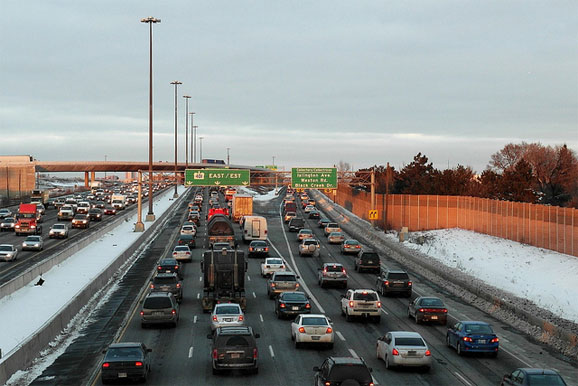
Of course this isn't true.  Taxes pay for public infrastructure and public services.  These are essential things in any community - you can't privatize everything, because who would pay for it?  Would one BIA pay to maintain the roads in its community, or the water pipes, or hydro lines?  Of course not, they'd demand that others who use that space chip in.  How about highways?  Should the people who ride it be the only ones that pay?  What about companies that ship goods?  They would invariably include the cost of transit infrastructure into the price of their goods.  It goes on and on.

While public consultation, planning, implementation and maintenance is far from a perfected science, it is necessary.  Yet public infrastructure has been neglected, both in terms of maintenance and in terms of upgrades.  Why?


In other words - infrastructure projects aren't the low-hanging fruit we're looking for (though they are the heroes we need right now).

Burlington floods.  Toronto floods.  Manitoba floods.  See a pattern emerging?


The scale has shifted, folks.  The signs are there, but far too many of us aren't seeing them; far too many of our decision-makers are opting to ignore them.  Those that are tasked with solving the problem are overwhelmed; there is no way for a tiny group of planners to weather the storm, if you'll pardon the pun.

And they are afraid to be crucified if they get it wrong.

So here we stand, folks - 

- We want things to stay static, or revert to how they were when the world was a different place.
- We want more for ourselves and are more resentful about sharing.
- Governments are telling us the only threats we need to worry about are foreign terrorists, fraudster immigrants and lazy and/or leftist Canadians.
- There's no money, we're told - though there's a ton of it, just not in the reach of the general public or being spent to the public's structural benefit.
- and the waters continue to rise.


I've written about all this before, of course, much as I wrote about the resurgence of mental health, the rise of government digital platforms, a shift in public engagement, etc.  It's kind of my thing.


I have also written about what we need to be doing to prepare for the severe weather ahead of us, starting with a massive culture change from "me first" to "go the distance together."

Emergency preparedness needs to be promoted and facilitated everywhere, from marginalized communities to Bay Street towers to the rural north and east and west.  Community action plans on what to do when severe weather crises hit need to be devised and supported, but those require engaged communities.  


Behavioural Economics tells us what we can do to nudge that kind of capacity building which, at the same time, can build more resilient, adaptable people and populations that will also be better positioned for economic success and civic engagement.  A bit of sociology-committing can ensure we have proper communication tools for emergency management coordination and hand-offs between citizens and public servants.


It's a challenge, to be sure.  It's not as selfishly sexy as most politicians would want, as it implies that we, not they are the answer.

But make no mistake, it is what's coming.  The time to start preparing for this storm of change is now.

Are you onboard?


Thursday, 3 July 2014

Teachers and the No-Fail Mission


Failure is a loaded term.
 
There are those who disdain feel-good marks and "cushioning" students from bad marks.  Failing, these people say, pushes people to work harder. 
 
Sometimes this is true - but sometimes, it encourages people to think different.
 
Standardized tests aren't about teaching students, but about rating students.  Standardized education is, likewise, about turning out a few narrow streams of workers - applied vs advanced, arts vs sciences, so on and so forth.
 
Life, however, is not so linear.  Not any more, at any rate.  It's unreasonable to expect any student to get boxed by school, shipped off to a career path and stay there until retirement.  The world doesn't operate that way, and hasn't for a long while.
 
This is why a rebranding of failure is necessary - it's not about demarcating students, any more than it should be about eliminating competitors.  Failure, pure and simple, is about adaptation.  You need to make mistakes, plenty of them, and develop intuition about how to handle failure, how to learn from failure and how to adapt for success. 
 
It's not a one-off process, this; life is a constant battle of adaptation, skill-building and communication.
 
Slowly but surely, leaders are cluing in to this new reality and adapting their own management practices to benefit from the social evolutionary wisdom of behavioural insight.
 

The smart leaders are cluing in to something similar - it's not tough bosses that students will promote of their own volition, but their educators.
 

Thursday, 14 March 2013

E-Government: Progressively Winning Canada


Consider:


Like it or not, a growing chunk of our lives are lived remotely, through keyboards and touchscreens.  Progressive thinkers like Don Tapscott look at the failings of our current service delivery models and the usage trends of youth and see opportunity.  Conservative thinkers like Andrew Keen fear an erosion of self and society. 
 
Those who see opportunity march forward to seize it.  Those who fear change put up walls and cling fast to the fading reality of yesterday.  If you were to chart this trend out, it would look like this:
 
Now, look at this trend through the lens of politics. 
 
The people on the far left - the innovators - are ahead of the curve, literally. If it's new, they're not only on it - they're trying to do one better.  Their hypomanic edge gives them the drive, the fearlessness and the sheer creative potential to build things that have never existed before.  These are the Mark Zuckerbergs, the Steve Jobs' and yes, the Chris Mazzas of the world, roman candles burning in the void, lighting the way forward.  These people chafe under restraint, rules, red tape, the yoke of consequence.  They want the freedom to do and if they vote, it's likely to be for whoever gives them space to build their legacy.
 
These are also the folk that produce dotcom bubble bursts and ORNGE.  Left completely to their own devices, they will fail the marshmellow test time and again, then use charm, deceit or threats to avoid accountability.
 
The people on the far right - the conservatives - are at the tail end of the curve, trying to wag the dog with their pleas for stasis.  They decry change as an erosion of the good world that has been and view Progress as synonymous with the Fall of Man.  There is no system to these social laggards, no evolution - just individuals in competition.  They want freedom to be, as they are, and if they vote, it'll be for whoever validates their silo-based world view and leaves them alone.
 
These are the people who fear not just change, but also difference.  Right off the bat, they will view the unfamiliar as threatening; their instinctive reaction to these perceived threats will  be to flee or fight.  If it comes to a fight, it'll be one to the finish - when you see the world as silos, you see others as alien, justifying whatever action is required to get the job done.  The marshmallow test?  Fear will almost always keep them from temptation.
 
Everyone between these poles, the so-called political mushy middle, are social consumers.  Depending on their genetics and life history, they can vacillate between the two extremes, generally looking to strike a balance between the bold, new and risky and the safe, static status quo. They won't want to be left behind, but they won't want to be first out the gate, either. They simply want the chance to participate in a meaningful, rewarding way.
 
 As they get on in life, these political centrists will become increasingly comfortable with the system they have grown up with, or fearful that change might bring uncomfortable uncertainty.  Unless, of course, that system is one prone to improvements, upgrades and a continuous series of status gold-stars that come with being an early adopter.
 
So what does this have to do with e-Government?
 
The Harper Government is emblematic of Canadian democratic institutions - it rests in the Late Majority phase of the spectrum, increasingly shifting from anything resembling bold towards shoring up its holdings.  An exanding amount of public resources are being allocated for that purpose, in fact. 
 
The same holds true of the Private Sector in Canada - hiring is decent on front-line service and widget-building positions but innovation - and as a result, productivity - is lagging.  Our social infrastructure is outdated, underfunded and unaccommodating.  Canada is becoming more conservative, which is why we are starting to fall behind other jurisdictions in terms of new potential.  As the world changes, it's becoming clear that the all-eggs-in-one-basket approach is going to fail, yet again, as it always does.
 
On the other end of the spectrum are the social entrepreneurs, the engineers of tomorrow's online infrastructure - they are pushing envelopes, diversifying, expanding, churning out new code for consumption.  When these folk get the financial traction to turn ideas into products, the people, also known as the voters, are buying it up.
 
They like the Internet.  They like new technology.  Increasingly, they want to use new technology and the Internet to access public services, with two caveats - they want it to be efficient and they want ownership of their own content.
 
At the front-end of this wave are the traditional early adapters, youth - people who aren't voting so much these days in no small part because they don't see their world reflected in the white-wig reality of our outdated political institutions.
 
How do progressives earn, entice, woo these youth votes?  How to they inspire the early and late majorities to hop on the progressive bandwagon?  Not by appealing to the laggards with the tribal approach and go-for-the-gut tactics that have fueled the conservative movement federally and in jurisdictions like Toronto - you don't win races by running backwards to the starting gate.
 
You do it by leading from the front.
 
So yeah - e-Government. 
 
Progressives need to stop seeing themselves as competing tribes and instead recognize progress itself as a movement that, when they push forward at just the right pace (but not so hard as to burn themselves out), they can lead.  This means offering competing visions of what Canada's Digital Future will look like and developing/beta-testing that future with their own internal infrastructure.  Online, map-based social service platforms are a good way to go.  So too is the Hub World model frequently found in video games.
 
These sorts of innovative approaches are fun, bold and by their very nature, require the support of innovators - who are looking to create new things, anyway.  That's the first slice of the market covered.  Then, start discussing how these online models can actually support and enhance private-sector innovation; like a garden, the role of government is to create the right infrastructure to allow sustainable growth, not to impede it.  Smart business folk understand this concept already and will be supportive of initiatives that demonstrably allow them to flourish.  Now, you're into the magic zone where a trickle of an idea becomes the tidal wave of a movement - the mushy middle will want to be part of the change, too - they'll be afraid not to. 
 
Those that are afraid of change in the first place?  Well, they're not progressives in the first place, are they?  Done correctly, e-government will benefit the laggards despite making them uncomfortable.  That's certainly better than what we have now, where the laggards lead and the majority get left behind.
 
For anyone reading the tea leaves, the emerging trend lines are clear, as are the causes behind them.  If progressives are really looking for a win, they have to get passed the queasiness they're feeling about the massive changes required of them in how they operate - not by breaking laws and spreading themselves out flat, but by breaking their self-imposed glass ceilings and reaching higher.
 
It's risky.  It's unprecedented.  It's uncomfortable.  But progress always is.
 
The question for progressive players in Canada, then, is who's content to be a RIM - and who wants to be the Apple?


Wednesday, 27 February 2013

Society: Solutions Gone Viral


There's been an historic effort in the Americas to solve "the Indian problem."  It's a paternalistic approach that undermines the value of aboriginal culture and tradition to aboriginal peoples themselves, but also to the dominant societies on the continent.  Concepts like the medicine wheel (picture above) provide a different view on healthcare and social services - two areas where it's safe to say we're in need of some changes if we want these sectors to be sustainable.  Yet we don't go looking for solutions in out-of-the-box places like this, do we?

Why is that?  Why have successive governments at all levels not actively tried to explore aboriginal culture as a way to build bridges, but also seek opportunity for policy innovation?

Coincidentally enough, as a First Nations politician is making headlines for abuse of a female partner, there are parallels between "the Indian problem" and "the feminism problem."  Traditional wisdom had it that women were too emotional to vote, therefore men shouldn't proffer them the opportunity.  However, this belief exists in tandem with the notion of the temptress - women who have such control over men that they can sway male thoughts.  This rationale has been applied to the case of South African sprinter Oscar Pistorius: Former Nigerian government minister Femi Fani Kayode suggested that Pistorius “was provoked into a murderous rage by his pretty little lover (who) played on his insecurities and inadequacies.”

 
I think it breaks down like this - the ruling society has to solve the minority question.  The ruling gender has to deal with the other one.  You could carry the trend further into politics, language, culture, religion, any sector of human society - when the people at the top are of one group, they are going to share the same perspective.  It takes the addition of diversity to mix up the thinking and provide additional viewpoints, some which will inevitably bring value to the table.

Problem is, we're not hard-wired to seek alternatives - in fact, evidence suggests we're motivated primarily by a desire to be effective.  Effectiveness implies efficiency, which requires a clear trajectory.  We're bridging the gap between points A and B as directly as possible.  You can't do that if you don't have a clearly established destination that you have confidence in.  The concepts of "truth" and "perfection" don't exist in nature any more than the notion of nothingness does - therefore, we create definitions ourselves.  The degree to which we're confident in our own perspectives determines how flexible or intransigent we are in realizing them.
 
If you're supremely confident that the destination you seek is the only valid one, then everything that distracts from your clear path is extraneous.  Like opposing views.  Like Parliaments.  Like minority perspectives.  From this perspective, there can only be two choices - your way or the highway.  Those who don't think or operate the way you can only seen as problems to solve.

Which brings us back full circle: homogeneous, unchallenged leadership results in unconsciously rigid thinking.  Of course the Indians are the problem - they aren't us.  Naturally, women are the problem - what's the alternative?  It's the socialists and the separatists that threaten a singular vision of a traditional Canada.  Multiculturalism is a non-starter.  When it's an us or them thing, though, the Other that threatens a clear trajectory most be eliminated, if possible, or at the very least isolated.  Failing these two options, you can always wall yourself off.
 
I tend to pick on the political right, but the truth is all Parties fall victim to this approach - look at the challenges progressives in Canada have had in uniting behind what should be an easily-realized common set of values.

We have lots of cyclical conflict, but resolution continues to elude us. 

Except - the long-term trend shows that diversity is creeping into the mix regardless of how we feel about change, as are alternative perspectives.  As our leadership becomes more diverse, it also becomes more receptive to differing voices and approaches.  Perspective continues to evolve - we are increasingly recognizing that the world is not just round, it's connectedEverything from heliocentrism to modern medicine to flex hours at work are reflective of this trend towards cultural adaptation and innovation. 

Individually, we can argue that alternative perspectives are like viruses that need to be fought off, but in practice, a bit of challenge absorption is a good thing, because it forces reconcilliation and adaptation to a changing world.  That world, after all, keeps on evolving - you gotta run even to stay in the same place.  Socially, it doesn't matter whether we like the changes we see or not - they continue to happen.
 
We can continue to focus on personal/micro-level symptoms and discomforts that come along with an increasingly integrated societal system and ignore the elephant in the room.  If we don't want to go the way of other civilization dodos, however, there's value in getting ahead of the curve and adapting proactively - which is what  social services like education and health promotion enable us to do.
 
Nothing comes from nothing - it's as true in policy as it is in art.  If you want to innovate, get ahead, perhaps lead the pack, you have to look for opportunity and seek to learn from, not defeat, difference. 
 
It's when you start to view the world thusly that problems start to look like solutions in waiting.

Friday, 20 January 2012

ETHICS: MORALITY, SOCIETY, URBAN ADAPTATION AND WHAT IT ALL MEANS FOR ETHICAL OIL


 “If it weren’t for Alberta’s energy sector, I wouldn’t enjoy the quality of life I do today.”

There are two things the hubbub around “ethical oil” have to tell us about society:

ONE – ETHICS MATTER

Despite what Conservatives pundits have tried to tell me (and PM Steven Harper tried to tell the world when he said Canadians “don’t care” about morality in procedure) – ethics matter.  The Defenders of the Crude would never use the term otherwise.

The importance of ethics makes sense not out of some perceived notion of the better angels of human nature, but out of simple social evolutionary adaption.  Do Unto Others as You’d Have Them Do Unto You only gains in meaning when the Other is beside you every day on the subway, or can access your whole life – and your social networks – online.  The give-a-penny, share-a-penny mentality also makes sense because it proactively builds good will, collaboration and mutual benefit.  Call it the busker model of business.  It’s not unique to humans – even chimpanzees do altruism, because it pays. 

The users of oil might just be using “ethical” to soften the appeal of their cause, but the fact that they feel it necessary to use the word at all is telling in and of itself.  Just like “clean coal”, there is recognition on the part of old-tier energy resource advocates that people ARE concerned about environmental degradation and the impact of resource-use on local communities.  It’s the same trend we saw with the advent of “humane” capital punishment, moving from public hangings to private, less painful injections.  Eventually, you get to a point where you can’t simply can’t sugar-coat the unpalatable enough and choose a third way.

The third way is renewable energy, clean/green energy.  The broad, long-term appeal here is that “renewable” will translate into “ever-lasting” and “clean” will end up meaning less degradation in one’s backyard.  In ancient Rome or even Victorian England, personal waste got dumped on the street.  That kind of self-centred, short-term focused thinking led to plagues and epidemics that impacted everyone equally.  It took a while, but we eventually learned how to collaborate on a more effective model; we have a public sewage system now, and are all a lot healthier for it.

Fossil fuel is today’s equivalent to dumping crap on our streets; yes, it’s handy, yes, it’s there, but you mess up the lawn and risk health (individual and environmental) and access to green space to get it.  If your personal gains outweigh the costs, you don’t care – which is why Albertans are more pro-oil than they are willing to adopt new technologies, but we’ll get to that in point two.

The clean/green movement is the advocate for  tomorrow, but that tomorrow comes at the expense of oil-beneficiaries’ present.  Yes, it is telling that the majority of them aren’t dependent on oil-or-coal generated income.  That just means that the short-term carrot of fossil fuel is smaller for them than the long-term carrot of consequence, while the long-term carrot of better access with less consequence is perhaps bigger than the short-term stick for “Ethical Oil” folk in adapting to a new system.  The great minds behind the Oil Industry could be redirecting their energy on building the next thing – creative destruction as the only option for perpetual success.  It’s far easier, though, to keep promoting and expandinge horse-and-buggy market rather than invest in developing cars.  Though we know how that turns out.

The weighing of long-and-short term carrots and sticks is the history of cognitive development and civilization.  As we live in increasingly dense urban environments, the long-term sticks that result from snatching short-term carrots grow in significance, as does the possibility of big carrots down the road if you perhaps skip the small carrot available at the present.  The societal whole is increasingly less tolerant of individual gain at social cost.

Hence, ethics.  And that’s why even the use of the term “ethical oil” is a great indicator of the slow demise of fossil fuel dependence.  

TWO – YOU CAN NEVER GO BACK TO BEFORE

There comes a time when any model outlives its practical usefulness.  There is never a clean cut line between models, however – there is always a period of friction.  In that way, social upheaval is the same as the shifting of tectonic plates – and equally inevitable.

As an example: Feudal Japan went out fighting – the samurai battled against the adoption of the Western model and the country against the West itself.  In the end, the result was inevitable.  You can’t stop progress.

The use of the horse and buggy was familiar and comfortable.  Just as important, it was routine.  The advent of the car brought great benefits, but new challenges.  The introduction of the train, though, was terrifying for once-isolated communities.  The train brought disruption, diversity, quantity.  It changed everything.  It is no coincidence that the concerns being raised around mass transit through a railway grid used the exact same arguments being leveled against wind turbines today.  There were concerns about the health impacts of trains on people and livestock.  Some said that the noise and commotion of locomotion lead to two-headed calves being born.  While many of the arguments presented might seem ridiculous, but they were based in a very real place – the discomfort of change.

Change, unfortunately, is the order of the day.  Just look at the impact of the Internet on print journalism, the pulp and paper industry and the communities that depended on it.  The ripple-effects of the 21st Century are shattering the conventions that have sustained us, in some cases, since the dawn of the industrial revolution.  Is it any surprise that stress-related mental illness diagnoses are on the rise, economies are contracting, national and domestic tensions increasing, and decision-makers are waffling?

I think there would be a lot of agreement with that concept.  The Tea Party and Occupy Movement would surely be on board.  But what does this have to do with oil?

Here are the pro-ethical oil and anti-oil arguments, as I understand them:

Anti-oil

Depending on your point of view, oil is all kinds of wrong – its extraction hurts the environment, it’s a limited resource so can’t be relied on forever and the sheer amount of energy, resources and innovative potential put into obtaining it are long-term wasted as again, it won’t last forever.  When there is even the remote potential of something cleaner and more sustainable, why on earth would you focus on building the better buggy when cars are the thing people are after?  When that opportunity equates to economic opportunity, isn’t it detrimental not to pursue green energy?

Pro-oil

Or, it is absolutely right.  Fossil fuels have been the source of social growth since the industrial age – you can’t expect that to change.  There’s still enough out there to last all of mankind for, well, a while; we’ll have time to figure out what next way down the road, (ie: not our problem).  Given that reality, isn’t it better that we use our own oil and make money doing so?  Fossil fuel generated income plays a huge role in our economy and besides, the way Canada does oil is far better than other countries.  We successfully and proudly advertise “ethical” Canadian diamonds to a desiring world market; “ethical oil” is the same thing.  Besides, this is a Western thing.  The elites in Central Canada have called the shots, ignoring the West, for far too long – it’s our term to lead now and if it’s at their expense, so be it.

The first argument is a proactive one; the minimal size of the carrot to be had from oil extraction and use stands in contrast to the broader implications of the long-term stick of environmental degradation and the lack of preparedness for what a world without oil would mean.  The short-term discomfort to be had from developing and building a clean/green energy infrastructure is nothing compared to the long-term benefits of stability, sustainability and a back-yard that doesn’t reek of bitumen and muddy up your carpet. 

The emerging clean/green energy industry is all about building new partnerships, information sharing, building on innovation – horizontal integration, building new energy networks, etc.  Proactive is adaptive. 

The second argument is a reactive one; we’ve got it, we’re using it, the payoff is great.  If you don’t get the payoff, too bad, but don’t try to take it away from me.  I don’t want less of what works, I want more of it – shouldn’t everyone?  Those trying to take away my carrot are themselves the stick, so I have to swat them with a club.  Hence, the whole ethical oil movement. 

Notice the focus of Ethical Oil is on the unethical nature of their opponents?  It’s less about why fossil fuel use is good, it’s why the alternative is bad.  Green energy is unproven.  Foreign oil is blood-fuel.  Those who are against us are either soft-hearted lefties or the powerful, foreign interest groups conspiring against us.  It’s not about who the partners are or could be – China, for instance – it’s about who the enemy is and how the enemy is not us.  It is no irony that the Harper Conservatives used the same “trouble lapping at our shores”/”socialists and separatists” threats to push for a majority government as they’re using to back ethical oil.  The whole ethical oil argument fits in with selectionist thinking; it’s reactive.  Reactive is combative.

When it looks like their opponent’s arguments are gaining traction, the anti-oil factions become equally reactive.  When reactive meets reactive, you inevitably end up with conflict.  Just ask Rob Ford.

This is as true in national politics as it is in personal politics.  Politics, really, is the social equivalent to fighting – the whole point of politics is to plan your success at the expense of someone else, or mitigate harm to yourself by deflecting it with criticism pointed elsewhere.

Some of my journalist friends’ would tell me segueing into why reactive vs proactive is a distraction that takes away from the main point, but I think it’s fundamental to understanding what’s really happening here.  Plus, this is a blog, not a lecture – you can read whichever pieces you like.  The industrial revolution, the horse and buggy, the collapse of print media and the rise of online social networks, the ethical oil argument and even the rise of urban living are all tied into the same paradigm. Understanding the causal factors behind social, behavioural patterns is key to making the best decisions that balance long-term interests against short-term needs.  They all tie in to the rise of the city.

URBAN, ADAPTIVE LIVING

Urban living forces people to be ever-adaptive as every facet of their daily routine is subject to countless external influencers.  In Toronto, a domestic fight can lead to a distracted driver who runs a light, hits a streetcar and grinds the whole metro system to a halt.  Even a photo in a newspaper can throw one of the most powerful politicians in the country off their routine (Rob Ford = great metaphorical fodder).  Urbanites are intensely inter-dependent in ways most people never even consider, yet there it is. 

At the same time, the diversity of intense urban living provides untold benefits – mass transit, ethnic cuisine, theatre, new business opportunities.  We are willing to take the risks, the lack of individual control over our lives, because in the cost/benefit analysis, the opportunity pros outweigh the adaptive cons, and even the adaptive needs offer room for innovation, which potentially creates new benefits.

That doesn’t mean that there are those who are adverse to change or who see the costs of change as outweighing the benefits – hence, NIMBYism.  Across the board, though, the benefits of dense urban living are enticing; this is why urban growth continues to escalate, globally.

RURAL, ESTABLISHED LIVING

By contrast, small-town anywhere tends to be less diverse and, therefore, more homogeneous – not just in terms of demographics, cuisine or social activities, but even down to routine.  This is a lifestyle that works – the benefits are there, the risks of change are minimal, life is good.  Until, that is, external change forces internal change.

I grew up in Cornwall, Ontario when it was a mill town.  Kids didn’t think it an exciting place to be, though there was some theatre, bowling, the odd festival.  Parents could be relatively assured that their jobs at plants like Domtar were secure and that positions would be there for their kids when the time came.  Routines were pretty established, from family dinners to summer bonfires.  Not much changed, because not much needed to change – until the realities of the global economy came home to roost.  Cornwall is still in the process of adapting to the forced reality of closed plants and unemployment, but it IS adapting.  Part of the process has involved, not surprisingly, diversification – there are new industries popping up and, at the same time, diverse consumption opportunities, too.  Who’d have thought Cornwall would ever have two sushi joints?

Cornwall’s change was met with resistance, yet it undeniably is happening.  The rebirth of Japan was met with fierce, ultimately futile, resistance.  Apartheid didn’t go down quietly, nor did slavery in the United States, although the Civil War was about more than just that.

What we’re witnessing with Ethical Oil is the last forceful gasps of an industry that is losing its hold over the present.  As soon as they started applying the “ethical” descriptor and started pouring vast amounts of resources into mounting an offense, they were done.  This isn’t politics, this isn’t the four-year cycle;  this is a fundamental change in the nature of the fuel that drives our economic engine. 

I don’t expect those behind ethical oil to switch horses mid-stream, no matter how tired their current horse is.  I don’t expect Albertans or Steven Harper to back away from their staunch defence of bitumen.  For their sake, for our collective sake, I hope they spare a few thoughts and a few dollars to what is coming next.  Adaptation, after all, is the key to survival.