Search This Blog

CCE in brief

My photo
Recovering backpacker, Cornwallite at heart, political enthusiast, catalyst, writer, husband, father, community volunteer, unabashedly proud Canadian. Every hyperlink connects to something related directly or thematically to that which is highlighted.
Showing posts with label Community of Engagement. Show all posts

Friday, 4 September 2015

Hero Within: The Syrian Crisis and Stories of Ours


Facts tell - stories sell.

Images have the power to move us in way words on a page do not.

When you put these two things together, we return to the ancient, pan-human tradition of oral story-telling.  

Story-telling has the power to create images, stir emotions and above all, build a bond of human recognition between story teller and audience.  It's powerful stuff.

---
I've been thinking about the Syrian refugee crisis.  I'm sure many of you have as well.  I've been thinking less about blame - who can be the culprit, who we can collectively chain our unease, anger and guilt to and throw overboard.  Righteous indignation and the resulting cognitive dissonance are just so tiring - I don't have the energy.  Besides, pointing fingers doesn't solve anything.  The question must be - and so far, isn't - what can we do to save the next Aylan Kurdi from dying needlessly?

There are all kinds of logical arguments to be made about how New Canadians have consistently bolstered the Canadian economy, or about how dead kids like Aylan Kurdi could have grown up to be the next Albert Einstein or Jonas Salk.  These are facts and potentialities, though - not stories.  

It's stories that sell.  Personal stories have power that facts and theories don't.

---

Missing/Murdered Indigenous Women.  Racialized youth blamed not only for the colour of their skin and the place of their birth, but their inability to circumvent an entire system that marginalizes them to find success.  New Canadians who find themselves living in squalid, sub-standard housing run by slum landlords who play the rules so as to avoid costly building upgrades.  Sex-trafficing, essentially slavery.  And all this is just domestically.

We know this stuff happens - at the very least, we recognize that it could happen, when we choose to think about it.  We don't want to think about it; we don't want our own lives to be negatively impacted by the tragedies or complications of others.  We love the idea that a simple, individual act can make a massive difference - like throwing a starfish back into the ocean - but the idea that we must change the pattern of our own lives, that's too much.  

At least, it's too much to do for a cause or a wicked problem - there's nothing in crises of such scale for us to relate to, to personalize, to internalize.  

---

We love heroes.  We love bravery.  We love it when individuals are brave enough to tell their personal stories, express their vulnerabilities - it's almost a cathartic experience.  We all have stories of suffering, after all - we simply fear to tell them, lest we be judged by them.  As we judge others by their perceived weaknesses, whatever their cause.

Which is why the stories we love most are come-back stories of triumph, redemption, perseverance. We can live vicariously through the bravery and resilience of others.  Sometimes we can even be inspired to acts of such bravery ourselves.

---

Erin Kang is a hero.  She's a woman with a wild mane of hair and a laugh that makes the windows shake.  Erin has an infectious energy, a fierce determination and a passion for building strength in the world around her.  This strength isn't a shield to hide her vulnerabilities, a mask to cover her own emotional scars.  Erin's strength is a product of her personal story.


Through her initiative Stories of Ours, Erin has created a forum for individuals to tell their stories, humanizing themselves to others, creating bonds of fellowship with their audience/community that transcends differences of ethnicity, gender, language or belief.  It's empowering stuff that also builds bridges of understanding between communities.

Much like the picture of little dead Aylan Kurdi presents an image any parent of any background can relate to, Stories of Ours builds common ground and lays the seeds for a community of understanding - and engagement.

---

It's great that we're all taking about the Syrian Crisis.  It's like that time we talked about Haiti, or Nepal, and acted - for a while.  Then we moved on.  We'd done our bit, like casting a vote on election day - the rest is someone else's responsibility.

It's someone else's responsibility because it's an over there problem; it's a not-in-my-backyard problem.  They aren't us - they are statistics, news images, causes, crises.  They aren't people; they're narrative.  

People aren't narrative - they're story.  We're all story.  Stories are what humanize us, what bind us together, what motivate us to be more than words on a page but part of something greater.

So - how might we humanize the Syrian crisis, humanize the people that are suffering over there in a way that we can relate to them as neighbours, as clearly as if they were over here?  How do we do this when we're a community of strangers on our own soil?

---

Stories sell.  Stories create community.  Stories have the power to humanize the dehumanizing, just as the story of Aylan Kurdi has brought home the human consequences of the Syrian crisis.

There are a lot of Canadians with direct ties to the Middle East, to Syria, to family members and friends for whom the crisis isn't a news hit, but a lived experience.  These Canadians have stories to tell - about what it was like to be there, about what it's like now to lie awake at night worrying.

These are stories any one of us can relate to.  These are the stories that can turn an over-there narrative into a human connection.

---

We will move on from the Syrian Crisis to the next big thing, eventually.  We always do.  

Image result for ashley burnham first nationUnless it isn't a big thing, a crisis, a headline, a picture.  If what was really at stake was the safety and promise of people just like us, neighbours in our global village, that might be different.

We needn't stop there, either.  When we hear powerful stories about people who have endured hardship and found the strength to step up, raise their voice, become agents of change - like Erin Kang, or like Ashley Burnham, we can find something more than despair.  We can find hope.  We can be inspired.

For when heroes tell relatable, human stories, we realize they're not so different from any of us - and that we all have the power to make a difference, if we make that choice.

How might we empower the voices that speak to our humanity about the wicked problems that plague our society, our world?  How can we create a platform where such speakers can find both their voice and the confidence to raise it - and how can we share these stories far and wide?  Who has the power to do this?

---

We all have that power.  We have the power to be in practice everything we like to believe about ourselves as Canadians in theory.  We only need the motivation to exercise it.

If we can find those stories, share those stories, build those bonds and find the inspiration to step up ourselves, then we will have a story the world desperately wants to hear.

It's not about Canada setting a standard, or failing to meet a standard.  It's about how our story can motivate others to find their own hero within.

---

Talk to your neighbours, tell your own story online or in person.  You'll be surprised how quickly the sharing can spread, once it's begun - and you'll be amazed at how much you'll find in common with others as they tell their stories as well.

For inspiration, find out more about Stories of Ours here.  

Saturday, 29 August 2015

#CCETakeover Day 6: CSI and the Spirit of Change


If you've come along for the whole #CCETakeover ride, you'll probably have noticed some consistent themes: 

- the desire to contribute more to society; 
- the search for community; 
- the emergence of a movement that is, depending on your point of view, either disrupting the status quo or in timely fashion trying to steer our civilization through a tectonic shift of cultural change.

Our journey began with the idea of DECAs as value-adding community animators, but as a counterpoint the reality that many people both members and DECAs alike have gravitated towards CSI looking for community. They are living through self-defined "periods of transition" and have come together because they feel that CSI is a place they can belong in, be part of.

This bears repeating - they're not coming to CSI looking for profit, a new market, or to get an in with a growing organization. They're not coming (at least not primarily) for the basics of space and desks and administrative assistance. These are all things that can be found elsewhere.

Entrepreneurs, Not-For-Profits, even corporations and public servants are migrating to CSI in search of something deeper than the material - something that isn't so easy to find in their normal lives and spaces of engagement.

They come to CSI looking to find themselves. They come to belong. They come to be part of something greater than themselves.

Pause on that for a second.

In Marxism, religion is labelled as the opiate of the masses - something that oppressive rulers use to keep lower classes in line. The implication in this is that the community existed first, and that religion was essentially a con created by elites that allowed them to rise to the top and ensure the common folk carried the labour burden.

Archaeological sites like Gobekli Tepe paint a different picture. They suggest that religion may have come first and became a focal point around which community could form, like the stone in the soup.

Now, think about political parties, or comic-cons, or festivals like Burning Man. What are these except places where people go to discover, share, create and belong? An individual or group of individuals, motivated by the urge to see something in the world that they feel is lacking, or find an avenue for expressing something they feel can't be expressed in their normal lives create a space for new kinds of activity to occur. They may be seen as outliers as first, but others recognize something is happening that they want to be part of. That's how any movement begins.  

Think about User Generated Content as a concept - the idea of people creating their own tweets, sharing their own ideas, investing in costumes or solutions that someone else will benefit from. Is it really a clever scheme by corporate/partisan interests to get people to do their heavy lifting for them, or is it a natural human inclination these organizations are simply harnessing, like hydro-electric power?

If it is a human instinct, it's about more than aggregating in communities - it's about personal empowerment within that community. Like DECAs who design better processes or members who plant the seeds of a community garden.

Functionalism looks at religion as sort of a manifesto for society; a standardization of values to allow for smooth societal operation, flow. We know there's a lot more to society than symmetry, though, because the world is a complex system that is constantly in flux; society also needs to be in flux, which means standardization is actually long-term detrimental to the well-being of society.

It's the core principle of Darwinism; that which survives isn't the toughest/most stubborn and inflexible, but rather that which is best able to adapt to its environment. It just so happens that consensus is growing at all levels of society and around the world that we are in the first blush of a tectonic soci-economic shift.

Besides, the implication of functionalism is that the community existed first and that religion is the thing that evolves to allow societies to function cohesively.  

If that's the sum of what religion has to offer - in essence, rules - why has religion consistently been a catalyst for the creation of entirely value-add art?

Visit any continent, inhabit any society - the material culture of humanity is illuminated with value-added art, architecture and music created for the glory of (insert deity here). Throughout history, people have been inspired to create art and add value to their community because of religious fervour. It's not the only motive (love is another one), but it's a consistent one.

I'm sure by now you can see where we're headed.

There is evidence to support the notion that some form of religious instinct serves as a centre of gravity that pulls people together - call it the spirit of community. While organized religion (much like organized politics) can lean towards an insistence on rigid hierarchies, rituals and codes of surface societal conduct, the raw spirit of religion has been known to inspire people to create, experiment - be innovative. That, and of course, to be pro-social.

It used to be the case that religious institutions did the lion's share of charitable/social service activity.
 
As our society has expanded and older religious/social models have faced challenges in adapting to our shifting societal consciousness, we've seen a diversification of charitable/public service providers and solutions offered.


Less people make weekly visits to partake in religious services. Less people identify themselves as being part of one religion or another. Heck, less and less people believe in the concept of a divinity, period.

At the same time, there are a massive number of charitable organizations, not-for-profits, community groups and corporate social responsibility initiatives out there all seeking to do what used to be the purview of the church and, to some extent, the state.

In fact, there are so many funders, service providers, etc. out there now that we lack a comprehensive system to keep up with all of them. Our current model of service provision, including government, is plagued by duplication, gaps and overlaps. Humans do silos well, but systems - that's a work that has progressed in iterative fits and spurts throughout history.

The past two days of #CCETakeover have explored some of the work being done right now to facilitate this transition from silos to systems through open government and open data initiatives. Even media organizations like the Toronto Star are getting in on the game, asking #howmightwe provide access to our resources so as to empower others with them?

If wade into the conversations being had at forums ranging from Open Data Day to the Toronto Global Forum to countless chats in coffee shops across the land, there's growing buzz around the concept that all of this is leading somewhere, that there is a common ground in the middle of activity that we just need to discover.

Over the course of #CCETakeover, we've also looked at innovative programs like Techsdale and Community Solutions Labs that aim to empower traditionally marginalized people so that they can be equal partners at the social table.  Projects like these empower individuals within target communities. And they start by creating shared spaces and cultures that nurture belonging.

Initiatives like these aren't about service provision, capitalizing on an untapped market - in fact, the revenue-generation model is often the last bit of business to be tackled.  The key motivation isn't to reel people (and their pocketbooks) in, it's about growing strong communities.


Which leads us back to CSI.

What is CSI?  Is it a co-working space?  Is it an incubator?  Is it a unique environment that places coffee-making higher up on the to-do list than turning on the printer?  It's all of that, but from its inception, CSI has aimed to be something more.

"It's a place where I think you belong", Adil Dhalla has described it, perhaps prophetically.

CSI's membership continues to grow.  Its events attract more and more people, each one looking to find something - and each one ultimately finding both a community to belong in and an encouraged opportunity to be and do more within and beyond it.  It's not just the grassroots/Not-For-Profit community that has become a pillar of the CSI community - For-Profit entrepreneurs, corporations and even government is starting to put down roots in the centre.

My favourite examples of this are the weekly salad club which happens at each location and the community potluck with which CSI Regent Park is helping to animate not only their members, the broader neighbourhood around them.

The format of these events is pretty simple - CSI provides the pot (physical space) and a stone (the event), then inspires others to bring their own ingredients into the mix.  With a bit of intentional animation, what results is not only a meal as rich as its members, but a dynamic community of engagement.

CSI members are, by and large, change-makers.  They are part of a community that believes in community.  Members reflect the Grasssroots, For Profit and, increasingly, government agencies, partners and even public servants like Diana Thai.  The same holds true for those who are becoming part of the broader CSI community through events, programs and projects.

Wherever they have arrived from, these change-makers, virtuous schemers and community animators have three things in common:

- the desire to contribute more to society; 
- the search for community; 
- the belief that a movement for social change is emerging

These needs and beliefs have driven each one of them to the Centre for social innovation.

I don't think it was intentional.  If anything, the story to date seems to suggest that the catalysts of CSI were simply the first ones to put down a pot, toss in a stone and issue an invitation.

As things often happen, CSI just ended up being conceived and executed at the right point in time when an unnamed community of people were individually looking for an aspirational community to belong to that didn't seem to exist anywhere else.

Part by design, part by luck, but to a large extent simply because there is a need, CSI has come to represent the spirit of change that defines the age we live in.  Increasingly, CSI also embodies the spirit of community that people are seeking.

That's why it is becoming a centre of gravity for the change-making movement of our time.

Is the Centre for Social Innovation a modern-day Gobekli Tepe? If so, what are the broader implications of that?

I have no answers to share with you - only perspective.

After all, this takeover is a ride we're all taking together, as a community.

And where we go from here - that choice is up to us.


#CCETakeover Day 6: Spirituality and Social Change (by Derek Alton)


I have always been fascinated by social change, the process by which we transform society.  I think social change shows humanity in our full glory, exploring our full potential where imagination and reality collide on a large scale with people, both as the painter and the paint.  As a result I have always been curious about the strange breed of people who seem to be at the center of this action.  Some are larger than life figures while others work in the shadows without ever getting the recognition they deserve.  Call them social innovators or systems changers or misfits for all I care, but “they change things, they move the human race forward.” (quoting the famous apple commercial)

Make no mistake, this is a strange breed of people who see the world differently, not for what it is but for what it could be, people who seem compelled to challenge the status quo, to say this is wrong, we can be more, we can be better.

These are my people!

So what is at the heart of this group of people, that drives us, sustains us, inspires us and defines us?  Maybe it is the one thing that we seem to struggle to talk about with each other.  That thing we all do without really realizing it whether it be at work or when we are alone in our bedroom.  The word that captures this mysterious dynamic within us is spirituality.

Now, I don’t mean spirituality as a religious thing, though for some it is.  Rather I am referring to that force, flow, energy or idea that compels social innovators like us to do things different, bigger than any sane or rational person would.  It is something that seems to be larger than us; it comes from both within and beyond us, sometimes driving us and often times dragging us forward.

Being a social innovator is a difficult road.  We are going against the main stream, against societal norms.  We are challenging power structures and making people uncomfortable.  As a result we are often the odd ball in any group.  The round pegs in a world full of square holes.  People don’t seem to get us; they don’t understand why we can’t just be satisfied and do things normally.  It is at times an incredibly lonely road. 

Often we have no idea what we are doing.  We know something is wrong but we do not know what the solution is, or we have the solution but no one seems to care, or our plan doesn’t work.  As a result we often fail way more than we succeed.  We call this “failing forward” and tell ourselves it is a normal part of innovation, but that doesn’t make it any easier, that doesn’t take the disappointment bite away or satisfy funders.  I can’t tell you how many times I have thrown up my hands in frustration and defeat, even been to the point of tears.  Being a social innovator is at times an incredibly difficult road.

Yet we do it, we pick ourselves back up and try again.  Why?  Because we are compelled by something greater then ourselves, that fuels and drives us, that keeps us moving forward when we want to do nothing more then give up and binge watch House of Cards while eating ice cream. 

Yet, we do not seem to talk to others about this.  Why? Maybe it is because it seems crazy.  Maybe it is because we are afraid we are the only ones.  Maybe it is because it sounds spiritual or even worse, religious, in a world where this is looked down upon by many.  Or maybe it is because we don’t really understand it ourselves.  Yet this force drives us, pulls us often kicking and screaming away from better paying, more stable jobs and simpler easier lives.  It pushes us to work ridiculous hours to the point of burn out.  It is what carries us through the lows and makes the highs so sweet.

If this, whatever it is, is so foundational to our success, how do we create more space for it?  What are potential spiritual practices that we can develop?

I think first and foremost we need to talk about it more with each other.  Move it out of the shadows and into the light.  Each one of us, through our experiences, has nurtured a relationship with this force that compels us and I think we can teach each other a lot.  I will get the ball started with 10 practices I have learned so far in my journey.

1.      Stillness – I am often on the go so much, cramming as many meetings and tasks as I can into my day.  In the frenetic pace of the Internet age, I have come to realize the importance of carving out space just to be still.  For me meditation is a practice that fosters this.  I also have a mindfulness app that dings periodically throughout the day reminding me to just be still.  To get out of my head and just be.  Sometimes I have too much energy so I go for a walk, or run and by the time I finish I feel more still.  I become more awake to the present moment.

2.      Listening – In systems change literature, we often talk about the importance of listening to the system before we act.  Listening for what is trying to emerge and then helping it along, or sometimes even getting out of the way.  In a world full of noise, true authentic listening has become a lost art.  Once you create the stillness, the challenge is to listen, without filling the gap yourself.  It is in this gap, this place of stillness and emptiness that something called emergence happens within us, but also within any system or organization that practices stillness and listening.  It is from this dynamic of emergence that new insights and potentialities arise. 

3.      Play – I often take life too seriously and put a lot of pressure on myself.  In contrast, it is when I am at play that I feel the most free.  Free from outcomes and expectations, free from pressure to perform.  They say that Einstein’s best ideas came when he daydreamed, unbound by the pressures and realities of life.  He let his imagination run wild and out of the void emerged insights way too crazy to be thought of anywhere else.  These insights would come to revolutionize our world.

4.      Music – Music has an incredible power on us, it can compel emotions and shift thoughts.  I have a playlist I call “epic music” made up of songs that pull me, cause me to get into a higher state of mind and foster inspiration. (Here is a link to my playlist)

5.      Role models – The walls of my bedroom are covered with posters of social innovators of the past.  People like Gandhi, Mandela and Einstein.  I study their lives, learn from them and through that I am fortified in my belief in humanity and the possibility of social change.

6.      Videos – News and video feeds are dominated by negativity, people at their worst.  To counter this, I have created a playlist of videos that show humanity at its best, embodying for me who I think we can become.  These videos fortify my belief in this vision and inspire me to push for it. (Here is a link to my playlist)

7.      Conversations – A year ago I had a month off so I traveled across the country seeking out conversations with social innovators.  These conversations allowed me to connect with their passion and vision which resonated with my own.  Their stories inspired me to be more and do more.  Finally, these conversations served as an arena for me to process ideas and possibilities with the help of others.  We often talk of spiritual practices as being a solitary endeavor but I believe they can be communal as well.

8.      Nature – For me the greatest inspiration has always been nature itself.  This is where the flow of life is at its most vivid, unbound by the structures of humanity.  Listening to the birds and the crickets I think should be a daily ritual for everyone.

9.      Physical activity – Beyond being good for my health, I find physical activity helps release pent up energy and stress that is blocking my ability to be present and to listen.  I find I am the most at peace immediately following a good intense game of soccer.

10.  Self Reflection – Socrates once said, “the unexamined life is not worth living.”   We spend so much of our life acting without thinking.  For me, building reflectiveness into my life has been very important in making sure my actions are in line with the mission and purpose that I feel compelled to live.  It allows me to bring more intentionality to what I do but also a level of awareness of what is emerging.  Journaling has been the habit I have developed to help with this.


What about you?  What are some of your spiritual practices?  What fuels and drives you as a social innovator?  Share it hear and lets get the conversation started.

Monday, 17 November 2014

Arc of Community


If you knew the Apocalypse were to land in 30 years, what would you do differently today?
 
This was an interesting question teased by Why Should Care?'s speaker tonight, Professor Franklyn Griffiths.  He was there to talk about Canada's future as an Arctic Nation, but a point raised was more existential.  It's his view that, looking at the big picture of global climate change, we could be looking at an Apocalyptic end to our world as we know it sometime in the 2030s.

Which is not to suggest fire and brimstone, the Kraken unleashed; it's more to the point of the way that we live right now will cease to be feasible.  That's access to food, sustainability of infrastructure, etc.  Think less Noah and think more The Road.  Our world - our civilization - will be consumed over time because we will no longer have the resources, skill, time or knowledge to maintain it.
 
 There will be those out there who tell us this is nonsense, the skittish dreams of self-hating lefties and eco-terrorists clamouring to punish humanity for their own weakness.  Such folk can point to history, all the times we've heard apocalyptic predictions that failed.

Of course, history has plenty of examples of failed civilizations and populations who've fallen into dark times - everything from the collapse of the Roman Empire to Easter Island fit in this category.  No fall happens over night, but its onset can come quickly.
 
Still, if Prof Griffiths is right, we still have 15-20 years between now and then.  Jonathan Nolan's got plenty of time to make his Foundation mini-series.  We'll all have to pay bills, look to our kids' financial security, etc. in the interim.  I mean, it's not like you can put your head in the sand and wait for 15 years to pass, can you?
 
Which brings up a more interesting question.  Let's say that it's a real thing, that the engine of civilization as we know it could sputter to an end in 15 years.  No more public transit, public hydro, no public anything - no highways for the transport of food, no TV, internet, schools, libraries, maintained sewers, on and on.
 
If you knew with absolute certainty that this was the case - what would you differently now?
 
I know what my answer is.

Thursday, 25 September 2014

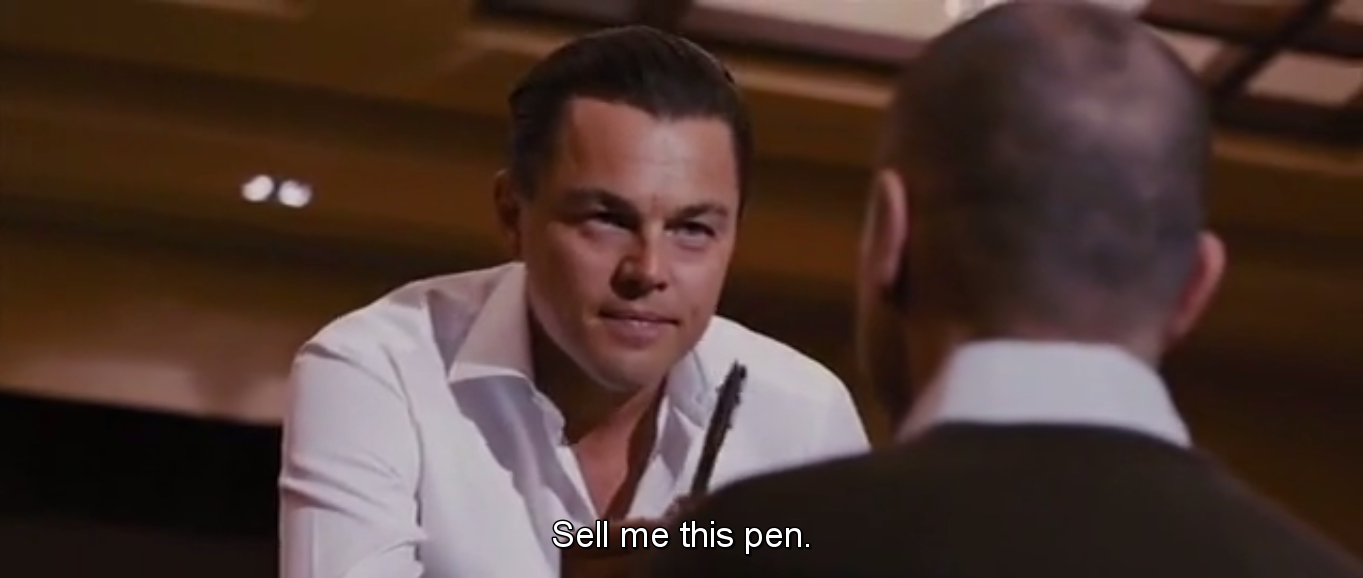
Open Data vs. OpenGov: This is Not a Pen


Cannot state how much I love this.
 
The angle here, or course, is that you are targeting what you've got to what a potential customer needs - you don't sell a pen to someone with no inclination to write.  Or who doesn't know how to write.  Or can't read.
 
I had a chat last night with Richard Pietro and Bianca Wylie about Open Government as a concept and Open Data as a focus.  We all agreed, as have many in the Open Community, that Open Data is a terrible selling point.  Nobody gets it.  It doesn't feel relevant.  If anything, it feels like an imposition.
 
Which is completely fair to say.  People aren't instinctively trying to make their lives more complex; they want to be secure, healthy, happy, have nice things and have some social relevance.  What, on the surface, does data contribute to any of these things?
 
Exactly.  Data is a tool.  Technology is a tool.  Tools are meant to help people solve problems - they aren't problem-solvers in and of themselves. 
 
Yet that's how we frame tech, or new processes, or new jargon, don't we?  This new exercise will give you flat abs (in a week - so commitment isn't that long)!  This new framework will increase employee productivity!  Cut your house-work hours in half with product X!
 
Poverty, social imbalance, crime?  There's surely an App for that.
 
That's where much of the focus of Open Gov/Open Data has gone to date - new systems for accessing data, new processes for using data, etc.  Open practitioners will get all excited about what Open Data can do and yet get frustrated when the people and media outlets don't seem to jump on the emerging opportunity.
 
How can people not want to wade in pools of open data? 
 
Well - why should they?
 
The concept isn't being communicated to the masses in a way that speaks of relevancy.  Accessing open data won't bring more cash into the house, won't speed up the commute, won't help the kids find work or solve the bedbug problem.  Those are the things that matter.  Open data can't solve any of that.
 
Data is not even a tool - it's a natural resource, like wood or oil.  It does nothing without extraction, manipulation and some packaging and transportation.  You can't drink data, nor fill your tank with it, nor bump up your kids' grades with it.
 
Open Data is a resource that, on its own, has no value for the average person.  It's the ink, without the pen.  If you can't make the pen relevant, how are you going to sell the ink?
 
Open Government isn't a pen.  It's something completely different.
 
We already have a government - it's something we all agree is necessary, whether it's for defending our shores from foreign threats or for coordinating and funding healthcare and infrastructure, we all know that a centralized system for coordination and representation is needed.
 
The problem we've all recognized, whether we've clearly articulated it or not, is that we don't believe government is working any more.  It doesn't represent us.  It isn't addressing the issues it's supposed to.  The tool is either being misused, or is completely broken.
 
We need government, but it isn't working.  That's a problem.  But what can be done about it?  Who's responsible for fixing it?
 
This is where Open Government comes in.  Open Government is about realigning the process of government so that its core purpose (strong individuals, strong society) is achieved.  That's it.
 
What does this mean, though, in practice? 
 
Open Government means representatives that listen to empowered people and co-designed policy that leaves nobody behind and moves all of us forward.
 
Open Government isn't a tool - it's a mission statement.  It's something we can aspire to - but can only be achieved when people work together. 
 
Politicians aren't Open Government.  The public service isn't Open Government.  Taxpayers aren't Open Government.
 
The people are Open Government.  You cannot have a government that is open without a society willing to use the tools of governance effectively.
 
Strong individuals = Responsible Society.  Strong Society allows for Open Government, which we need.
 
People don't buy a product, Simon Sinek tells us, nor do they buy what we're selling - a service, a tool, whatever.  They will buy a service, a product, but they won't invest in it simply for what it is.  This may have something to do with why voter turnout is going down - our democracy is not a product or service people feel offers proper return on investment.
 
 
This is why Open Government has quickly become a worldwide phenomenon.  It's more than a process change - it's a social movement, a revolution of global proportions.
 
People who have no reason to connect with each other because they're in different sectors, or on different continents are reaching out, engaging, participating, sharing and building this emerging Open Community. 

The internet is one tool for doing so - data is another.  #OGT14 was one guy, one bike and a bunch of people chatting and tweeting from venues.
 
What these are isn't particularly exciting - they aren't the substance of what people care about.  Why these things are is powerful beyond the ability of datasets to describe.

Why matters; it speaks to us all.
 
Open Data is a tool - like a pen.  We're not interested in selling you a pen.
 
Open Government is the story of tomorrow, being written right now.  We want you to be part of writing this story - in fact, we need you to be part of writing this story, because it cannot be complete without you.
 
We aren't selling you a pen.  Hopefully, we're inspiring and empowering you to write.  That's why we're doing this.
 
So - how might we help you join us?

UPDATED: Open isn't a process, it's not a data set - it's a movement, and an increasingly powerful one. 

Towards what, though?

I think we know the answer to that already...

Wednesday, 20 August 2014

Open Government: The Pen and the Stone


Having announced my speaking topic for OGT14's September 16th Ottawa closer as Open Government and Responsible Society, I've been playing around with frames and ideas of what to say.

As an example, here's something I penned on the subway today between meetings.

Still looking for a ride there, by the way.


I've brought two little items with me that I'll try to sell you on - a pen and a stone.

About the pen - it doesn't really matter where it comes from or who made it, right?  You want it because of what it allows you to do.

With this pen, you can make your mark on the world.  You can sketch out ideas, record your criticisms, share cute cat pictures.  

You can do graffiti tags or write letters to your member of Parliament.


While this pen can be yours, it doesn't come out of thin air.  
Somebody somewhere had to create the tool and make it available to you.  You can't have it for free.

How many people here have a pen on them?  Great!  You don't need this pen, you're all set.  For the rest of you, let the bidding begin.  I only have one, so, supply and demand - you want to raise your voice, it's gonna cost you.  If you don't happen to have money on you, too bad, so sad - you've lost the chance to record your voice.

Even if you had a hand in making the pen itself.

This pen is your voice - without it, what are you?  That's why you want it; that's why everyone wants it.

Now for the stone.  

You're probably thinking the pen was the easier sale; the stone, on the other hand, has little intrinsic value.  I mean, what is it, but an object in space?  You can't write with it.  You can't eat it.  It's got an awkward shape, doesn't package neatly, is a heavy thing to carry.

That's just because you don't know what this stone can do.

Though it may look plain, unexciting, this stone is incredibly valuable.  Thousands upon thousands of people around the world are dying to have this stone; it's a rare commodity.  I'd almost say it's priceless.

We'll get to what this stone does in a second, but first - let me tell you where it's from.  

This particular stone comes to you today from fabled antiquity, from the very beginnings of our Western society.  It was wrought by smiths of ancient Greece, touched by fire and created to endure.

You're curious now, aren't you?  But wait - it gets even better.

It's got magic powers, this simple stone.

No, really; it has the ability to bring people together, to solve complex problems, to resolve war, end poverty and ensure a positive quality of life for all.

I love this stone.  I love what it does.  In fact, I believe in what it can do for all of us so much that I want to share it with each and every one of you at no cost at all.

You're waiting for the catch, right?  You're a smart crowd.

The power in this here stone can only be unlocked when we use it.  

If it sits in a corner collecting dust, it's magic will never be revealed.  
If it's hoarded by a select few of you - say, those with their personal pens at the ready - then it's full potential will never be harnessed.  

We'll all be missing out.

You pen-wielders can never get full value from this stone unless each and every one of us has the ability to leave our mark on it, too, - which can't happen if we don't have a pen.

This stone is democracy.

Democracy is not like the pen, the tool for registering your voice; it's not a product that can be bought or sold, like a computer or a vote; it's not a service that can be hired, like those of a lobbyist.  

The stone doesn't market its inherent value; it has no voice of its own, except that which we record upon it through our own engagement.

Open Government often sounds like it's about tools - data sets and digital platforms, hackathons and public consultations and whatnot.  
Those matter, but what Open Government is really about is putting a pen in the hand of each and every resident of this country so that they can leave their mark on the foundation stone of democracy.  

That's how we build a strong, stable society.  It's the only way we can build that society.

When individuals are empowered we, as a community, can bring this stone to life.  Only then does the magic happen.

Democracy is, after all, just a word - like a stone, it has now power of its own.  We bring the magic.

If you don't have a pen, which not everyone does, how can you leave your mark on the stone?  It doesn't mater whether it's public property or not.  

If you have a voice - if you have wealth, network access or even are just a gifted communicator, that's great. You get to be heard.

Unless your neighbour has equal ability to raise their voice and leave their mark, our democracy is nothing but a word on a page, as empty of value as a plain and simple stone.

Open Government is about ensuring everyone has the ability to be heard.  It's about bringing our democracy to life.

Without voice, the stone is nothing.  When we put a pen in the hands of our neighbours, everything is possible.

That's it; that's my pitch.  That's all that Open Government has to offer - objects in space, unless they are used by us, together.

Whether you buy in or not is a choice you alone can make.  I guarantee, though, that it won't happen without you.

Are you in?


Thursday, 7 August 2014

What Marvel and Open Government Have in Common


In politics, information that could be shared often gets held back - and this for a number of reasons.  Marketing is key; during a campaign in particular, you want to roll out your platform in stages to keep momentum going, to throw your opponents off balance, so on and so forth. 
 
Sometimes, though, information gets withheld because the people holding it like knowing things that others don't.  The holding of information is valuable to them.
 
I love referring to film makers because when you get an amazing director with a great story - say, a Josh Whedon, a Bryan Singer or a Chris Nolan - they would love to share what they know with you.  They would love for you to be excited along with them. 
 
These folk don't hold back info for personal gain, but out of respect for the audience.  Good story tellers want you, their audience, to have the best, most fulfilling experience possible.  Sometimes that means keeping details back so that you can experience the full impact all at once.
 
Think The Sixth Sense, the first Matrix or more recently, The Lego Movie.  Not knowing those plot twists going in made the story that much more powerful.
 
And Brolin is right - we don't have a lot of surprise, of wonder any more.  We're oversaturated, we're impatient, we're disengaged.  Politics is a great example of this - or at least, good governance is.
How might we empower people to feel about democracy and civic engagement the way they do about a film franchise like Marvel's?  A great starting point would be to have leaders who respected the people as much as good directors do their audiences - and did everything, including info sharing, in a way that made their experience richer
 
Which is exactly what Open Government and Open Data are about.  Done properly, public information that has never seen the light of day will be open, accessible and easy to both navigate and use.  It'd be like citizens having the chance to be part of writing the story of society, in the way a good Twitter chat does. 

Picture everyone having the chance to be a contributing player in society - to design and be their own hero in a pantheon of civic heroes.

That's what Richard Pietro's doing - look at the fun he's having, the experience he's having, the brand he's building - and the contribution he's making.
Open Government is a powerful story just starting to be written, but with an arc that is as exciting as it is important. 
 
It's something those of us already part of the growing Open Community know, a feeling we're dying to share.
 
The best part is that it's not up to us as to when the whole story will get revealed - that's something that only you can decide by joining in.