Search This Blog

CCE in brief

My photo
Recovering backpacker, Cornwallite at heart, political enthusiast, catalyst, writer, husband, father, community volunteer, unabashedly proud Canadian. Every hyperlink connects to something related directly or thematically to that which is highlighted.
Showing posts with label Partisanship. Show all posts

Monday, 26 May 2014

Partisan Zombies: Why Rob Ford Isn't a Political Outlier


This is how partisan politics works, people - especially at campaign time when Political Parties are hell-bent on winning votes or decreasing voter confidence in their opponents.  Of course, campaign season tends not to end these days.

The other guys are incompetent, indecisive, fundamentally dishonest, dangerous.  They're reptilian kitten eaters, they want to put soldiers on your streets - they are the zombie hoard.  Only (insert leader's name here, but really mean their backroom teams) can keep the barbarian tide at bay.
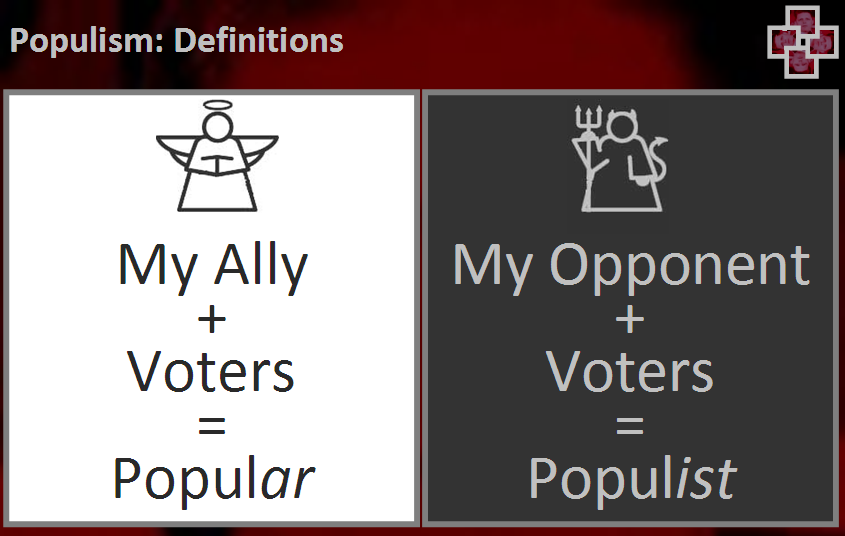

In any sphere other than politics, this would all come across as childish bullying, the kind of thing politicians purport to stand against.  So why is it unacceptable everywhere else but perfectly legitimate in politics?


Well, you know - because the stakes are so high.  The other guys will rape, pillage, salt the fields, so on and so forth.  They must be stopped at all costs, meaning whatever means are justified.

This sort of thinking is just this side of gang warfare, which is appropriate - at its core, politics has nothing to do with policy and everything to do with tribal dominance.


Imagine calling a respected journalist a liar because they brought forward an uncomfortable truth about your Machiavellian positioning.

Imagine intentionally misrepresenting numbers to suit your purposes, hoping the fabrication will score you a win without considering the long-term consequences to both the economy and public trust.


Anywhere else, this would be frowned upon; in today's politics, it's business-as-usual.


What's really sad is how this mindset, once entrenched at the top, starts to infect the Party and Party loyalists all down the chain.  

This is how populism works - stoke the fires, put enemies in your crosshairs and feed simple solutions that appeal to base instincts.  Do it loudly enough, rapidly enough and exaggerate the stakes enough, your hoard will ignore all else and become a partisan mob.

Isn't this the MO of Rob Ford and Ford Nation?  More on this later.

This morning I had a back-and-forth on Twitter with Carolyn Hudson, an NDP supporter.  I only know Carolyn through Twitter, but we've had some good debates in the past; we've disagreed on issues and agreed on issues, but always, I felt, in a respectful manner.

Which is why I found this particular interaction surprising:

. You have accused me of "disparaging others" .. I have tweeted facts; why should I engage with you? ..


You're more than welcome to go back and check out our twitteraction; I can only record my own impressions here.  

Carolyn was, as partisans do in the heat of battle, throwing down talking points like they were gospel. She was citing poll numbers as if they were scientific truths and, worst of all, implying the moral superiority of her team vs the fundamental dishonesty of the other guys.  We should be trusted, the base-line argument goes, because we're better than they are - they are evil, we can do no wrong.

Having seen numerous times how an assumption of moral superiority leads to an assumption of superiority, period, I consider it a moral duty to remind people that we all come from the same place and are capable of the same egregious behaviour.  Dehumanizing others in any shape or form allows us to rationalize doing unto them what we wouldn't do unto others of our own physical or ideological "race."  


I called her on this and tried to engage a thoughtful conversation that deconstructed messaging and spin and draw focus to the fact that it's not one party or other but the nature of the system as-is that fuels poor decision-making.  By setting themselves up as morally superior, the NDP (should they win) are really just setting themselves up for a greater fall, fueling civic mistrust of our entire political system.

Instead of counter-arguments, reflection or expansion, Carolyn tried to brand me as an Other by pointing out my career history and then, eventually, found the quickest way to disengage with me all together.

If I'm not with her, I'm clearly against her and her Party, meaning I'm not worth her time.  Whatever people like me have to say can therefore be dismissed without consideration for validity.

That kind of confabulation is dangerous.


Whatever helps us win, matters; whatever doesn't isn't relevant.  Can't have too many priorities, etc.  

We are the future, not them - they no longer matter.  We're an empire now.


Which brings us back to Rob Ford and Ford Nation.


It doesn't matter what Rob Ford does - he has a die-hard base that will not waver.  Ford validates their anger and bitterness against; that's what matters.  

Rob Ford can break the law, take drugs, verbally abuse women, physically abuse his friends, do drugs with gangsters, put the lives of others - including his own children - at risk, but none of it matters.  The facts don't matter; instead, their revelation feeds the narrative of Ford as a modern-day Jesus, a martyr being picked on by snooty elites and their spin.

If someone challenges Ford Nation's view of Ford, this is justification enough to tune them out, no matter how valid their arguments.

People who disagree with you, after all, aren't worth your time.  In fact, they are dangerous and untrustworthy and need to be ignored, contained or destroyed.

It's true that Ford is an exception in the extensiveness of his bad behaviour and complete disregard for evidence, the truth and consequence, but he's really on the same spectrum as everyone else.

How easily do any partisans ignore facts that disagree with their arguments or support the simplified talking points issued by their tribe?

The more heated the contest becomes, as it is during Ontario's current tight election race, the more extreme become the tactics people accept as reasonable.

So what happens if this election produces another minority government, which seems rather likely? How does the heightened, anything-goes mentality get toned down so as to allow Parliament to function?


If you're a partisan, the hope is that after the election, at least one of the existing leaders will step down, eliminating that iteration of your oppositional Other as a threat.  Then you simply reload your bazooka and get ready to blow off the head of the next version.  In perpetuity.


They keep coming, those inhuman Others, and how else do you kill a zombie except by cutting off its head?

The big thing that rabid partisans are missing is that, by dehumanizing opponents, they are equally dehumanizing themselves.  When we start to blindly accept partisan spin and relish the opportunity to focus solely on the faults of those we dislike we become mindless, flesh-hungry partisan zombies ourselves.

Most Canadians/Ontarians/people aren't rabid partisans; they want society to function and are increasingly frustrated with anyone they see as part of why it doesn't.

If and when they become reactive enough and fully assume that all politicians are one mindless, faceless Other, it won't be one Party's head they come for.


Sunday, 25 May 2014

Hudak's Priorities


Hudak is fond of saying "if you have 100 priorities, you have no priorities."  He's also said that it's not the role of government to pick favourites in industry through bailouts.  Hudak has also said he's the guy who will show Ontario some tough love and do what needs to be done, cutting this and that, breaking eggs to make omelets.
 
Tim Hudak is also known for being a particularly obstinate partisan.  Between doing what's in the best interest of Ontarians, scoring legislative wins for his Party or poking his finger in the eye of other Parties, 9 times out of 10 he'll choose option 3.
 
He's got it out for teachers, unions, the Working Families Coalition and all kinds of others.  These are the people he defines himself by standing against.  He will fight them, period, because he knows it's good politics, red meat for his base.
 
That's his priority, after all - that's why he wants to be Premier.  He wants to step on his foes and reward his ideological brethren/those who vote or are likely to vote his way.
 
Hudak knows he hasn't a hope in hell of winning a seat in the North and also knows he doesn't need those seats to form government.  Economist that he is, he's simply rationalizing his priorities - he doesn't need the north, so he sees no interest to court them.
 
Should Hudak win, however, he might decide that exploiting the Ring of Fire is in his (the province's) best interests.  A lot of development needs to go in there first, though, and not all of it is development that Northern Ontarians (First Nations included) are all in accordance with.
 
Just as Hudak didn't need to court this vote to win, though, he'll feel they have no business interfering in his priorities as Premier.  If those priorities include aggressive development in the Ring of Fire, well, that's his business - not that of those who live there. 
 
Hudak has been described as to the right of his former mentor and Party leader, Mike Harris.  Harris didn't cut as severely as Hudak wants to; Hudak has taken Harris a step further.
 
 
The ever-obstinate Mike Harris had a plan that was being interfered with by some people who were not part of his coalition and therefore had no business interfering with his decisions as Premier.  He showed them some tough love, too.
 
Which reminds me - has anyone asked Hudak what his team plans to do about Caledonia?
 
Hopefully, that's not one of his priorities.
 

Tuesday, 20 May 2014

Warren Kinsella, Autism and the Art of Nudge


This, from the always-insightful Warren Kinsella - a guy who gets the irrational nature of politics if anyone does.  

Partisan politics isn't designed to appeal to logic, create debate or develop shared solutions - it's about winning, period.  By it's competitive nature, partisan politics is tribal.  The focus almost inevitably shifts from what one side can do (proactive) to preventing what the other side would take away (reactive).

The problem is, even the informed get swept up in this.  More person-hours and sweat get put into things like lawn signs when there's no real evidence that they have any impact.  The same can be said for any GOTV initiative.  Yet these are the sorts of activities that get picked apart by analysts as indicative of a winning campaign.

For the pols, it's about keeping up with the Joneses - you don't want to be the one guy who doesn't play the game; it just feels too much like falling behind.  What if it really does make a difference and you cause your side to fail by dropping the ball?  That's an uncomfortable feeling to have.

The salesmen are just as good at selling themselves - often, even better.

People, whatever their knowledge base, are simply not rational creatures.  In fact, the more informed they are, the better they tend to get at justifying their existing positions.  

Where this varies in politics is when a partisan, for whatever reason, switches teams.  A floor-crosser can confabulate changes to emotional positions in ways dug-in tribal partisans can't, rebranding old friends as untrustworthy foes - which is fascinating.  It's almost like a conversion process.

What does this have to do with autism?


Do you believe this?  If you already feel autism has no correlation to inoculations, the answer is probably yes.  If, however, you're suspicious of inoculations already, the answer is probably no - instead, you'll be questioning the research.

Climate change, the effectiveness of social intervention on crime reduction, even homophobia are all similar examples - if we feel something, or if our feelings can be poked and inflamed, the facts against our position (or lack of facts for it) don't matter.

9 times out of 10 we'll go with our gut, which really means we respond to the drives of neurochemistry over external information.  This makes sense, from an evolutionary perspective - our ability to react quickly to potential threats is a big part of why our species hasn't died out.

At the same time, though, we don't live on the African plain in small herds anymore - we're socialized, specialized, technology-dependent creatures that rely on knowledge to survive in our current context. We might not feel like taking out the trash, or following the rules of the road, but we know there are consequences if we don't.  

This is the perpetual problem of public policy - how do you design systems and processes that appeal to how people actually make choices rather than how we'd like to think we make choices?

In an age where some governments are starving the public (and themselves) of facts so as to not confuse their ideological leanings, this is a huge problem the public service is trying to grapple with.

Herein, to me, lies an interesting problem - what determines success in our current political culture is to appeal to the limbic brain of the public; troubles at shores, illegal coalitions, dangerous schemes, common sense, etc.  You can win this way, but you can't effectively govern this way.

The elements of society seeking more effective governance and policy have to find a different approach; inoculations carry some risk, but far less than not getting them.  More to the point, not inoculating your own children puts other children at risk.

Autism, on the other hand, isn't leprosy or a zombie curse - it's a variation on cognitive wiring in the same way skin tones are variations on pigment.  The right understanding allows for the right accommodations.

While not every autistic person (because autism is part of the person, not some kind of virus) will become a Jacob Barnett or Temple Grandin, how many world-changers are we losing out on due to our own emphasis on avoiding a potential negative instead of supporting a potential positive? 

How might we shift gears between the growing trend towards instinctively-appealing presentation in politics, marketing and beyond and the need to promote debate, critical thinking and emotional self-regulation?  

I suspect the confabulations of floor-crossers or team-leavers will offer some insight into how this might be accomplished, but I don't have the definitive answer.  Neither do you.  

Between us, though, I know we could come up with something amazing and effective.

Your neighbours are getting on board the Open Movement - can we count on you, too?

=o)

Monday, 7 April 2014

The Social Matrix: This Will fuck With Your head


I love that there is a growing amount of research that is actively questioning itself.  I love that there are researchers who feel deeply troubled by their own findings.

At the same time, I understand why this emerging cognitive dissonance is happening at a time of increased partisan tribalism and shorter-sighted policy positions.

Of course, I've thought through all this social lekking, partisan tribalism and the evolutionary cognitive matrix behind our so-called conscious thought.  I keep doing so, because I know the rabbit hole only goes deeper.

And I would be happy to share with you, point-blank, the startling, comforting conclusions I have found.  I try to do so on this blog, regularly.

If I've learned anything, though, it's that there's purpose behind this little bit of aged wisdom:

Anyone can show you the door; you're the one that has to walk through it.

What happens when you let go of the tribe?  You become part of something infinitely more satisfying.

But don't take it from me - I'm just a messenger.


Tuesday, 25 March 2014

The Danger of Unfettered Donations in Politics


Or, power and political donations.

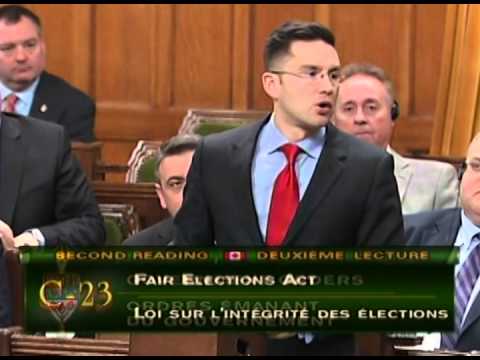
Folk like Pierre Poilevre probably think they're being fiendishly clever by jigging our electoral process to make is so that the Political Parties capable of raising the most money are the ones most likely to sway more voters and stay in power.

Really, though, they're being tragically short-sighted.

When you become addicted to donations, you become enslaved to your donors.  As is the case with any addiction, more and more of your energy gets directed towards getting your next fix to the exclusion of all else.

The Conservative brain trust probably think this is a good thing, as it means that their base and like-minded donors will come to dominate Canada's political landscape in perpetuity.  This isn't the case.

Because the addiction will start to flow the other way, too.  We see this already - Political Parties are raising more and more money while Not For Profits are withering away because of a lack of funds and fundraising capacity.  


As corporations hold their capital and public services both shrink and fail to grow to meet civic need, we're going to see a growing rift between the addicted people with power and the expanding number of disenfranchised people.

There's historical precedent for what happens when this balance teeters to far out of whack.  But Empires don't worry about history, do they?

Which is why they fall.

Requiem For Democracy


Power is a drug.  At the very least, it's addictive.  As we all know, people on power trips do crazy things.  There are no surprises here - hungry people aren't rational.

In politics, being government is the pipeline to power.  For politicians and the operators who support them, forming government is the emotional equivalent to being on TV; you're nobody if you're not there, so getting there matters.

As our politics has become increasingly hyper-partisan, there's been a growing disconnect between those on the inside (who, regardless of their proximity to power, still feel like outsiders) and The Rest of Canada.


This highly-concentrated, dangerously unbalanced power distribution is where we came from.  Our particular brand of Parliamentary Democracy, starting with Magna Carta, was intended to circulate power to the rest of society, reducing the risk of unbalanced, power-mad monarchs at the top making irrational choices that impact negatively on the rest of us.


Yet we've been cycling back to that model, with power again being concentrated in the hands of a confrontational, irrational few who put the brand before the plan.

The increasingly concentrated doses of power consumed in the backrooms of politics are having the same sort of impact on our political people as they do on any addict - the difference being that these aren't people on the streets, they're the policy makers of the nation.

They (and our system on the whole) are spiraling out of control, just as it seems so many threads of our global social fabric are coming undone.

Somewhere in here is the A and B plot for an amazing movie, which I'll be sure to write when, you know, I'm not so busy.

But Clint Mansell has to do the score.  Can you just imagine what his theme for Requiem For Democracy would sound like?

Monday, 24 March 2014

Socratic Governance and the Truth of #WhatLeadershipIs


The Budget, like all policy positions, messaging campaigns and various political chicanery are all designed (to varying degrees of efficacy) with one goal in mind - winning elections.  Sometimes a Party will think a couple elections out as they aim for their Big Win.  

Until recently, the NDP both federally and provincially has often mirrored the disenfranchised Canadians they claim to be the voice of - never aiming too high because they knew there was no hope in hell they could get close numbers sufficient enough to form government.


But in all of this, all scenarios, all permutations, what isn't being put first is the well-being of the province entire.  A focus on winning urban seats results in a focus on urban policy; ambitions to secure senior votes will target issues that matter to them.  Opposition Parties will look for whatever faults they can find and hammer those, with a focus on what will turn off government's base and help mobilize their own.


I get that this is how politics works - but it's also how governance fails.

I get that these political operators are telling themselves this is how the game is played and that it's their job to take down their opponents, blasting their positions to smithereens and undermining their intentions in the eyes of voters - you know, in Socratic fashion.

Socrates - yes, that one - introduced the philosophical method we now call Socratic, which involved systematic doubt and questioning of another to elicit a clear expression of a truth supposed to be knowable by all rational beings.

In theory, this is what politics does - poke at the actions both publicized and obfuscated of opponents, holding them to account and revealing the truth.  In theory, the constant, over-the-top attacks are about forcing accountability.  Socractic debate isn't about undermining people or blowing up positions, though - it's about collectively finding the truth by challenging each other to rationally, objectively explore all facets of a given issue in a way we simply couldn't do on our own.


But let's be serious - people aren't rational actors, nor are we objective in the sense that we put a non-partisan truth first.  If anything, the more competitive become, the less rational we are.  


Think about it for a second - let's say you're driving a car down the highway, lots of other cars all around you, and unexpectedly a truck on your left veers into your lane.  There's no time to contemplate a course of action, you have to act now.  What do you do?

Odds are pretty good you'd instinctively veer right, not looking to see what's there until you're already in motion, if at all.  Knee-jerk, instinctive reaction; anyone could do it without thinking.  People do do it, which is why we have so many traffic accidents.

The number one cause of all our social problems ranging from car accidents to poor healthcare to poor healthcare systems and yes, up to poorly-conceived policy is human behaviour.  We don't look far enough ahead, we don't take the time to grasp the entirety of a given context and we focus on the notion of us being in the driver's seat rather than being just one more car on the road.


It's great to say politics is Socratic and political operators are poking and probing to land on the truth, but that isn't what they're doing.  They're poking and probing for selfish opportunity or antagonistic attacks.  All this talk of finding coalitions of voters?  That's not about identifying structural challenges and shared solutions, it's about picking fights and deferring consequences.


The goal of politics isn't sound policy, it's political wins.  Winning is as much about helping your opponent lose as it is about seeking out just the people who will help you succeed.  When individual wins come first, the well-being of the whole comes second, if at all.  This is why we have such massive, structural challenges in the first place.

Look, the goal here isn't to shame and blame anyone - in a tragedy of the commons, everyone is to blame.  The politicians who've put self-interest first, the political operatives who've elevated the aspirations of their Parties over the well-being of their province, the media who've put selling copy over serving as aspirationally impartial communicators to voters who've opted not to invest time and energy into understanding the political landscape are all at fault.

Noted, great, let's move on.  

None of us is going anywhere so unless we want a perpetual swing of the pendulum until the cord breaks entirely, we have to get over ourselves and who's in the wrong and start focusing on how do we make things right.


There are good, even great models of consultation out there that could, if implemented in the political arena, completely change the dynamic of our system and start developing real, honest-to-god shared solutions.  Design Thinking is one such practice that needs to be incorporated into bureaucratic operations and civic engagement from the top down and the bottom up.  Swerhun's Discuss, Decide, Do is another great primer for how to create better, more representative policy.

We'll never get there, though, so long as we keep looking at the world from an inside-out perspective.  Individual politicians need to care less about whether they get a Minister's job and more about serving as conduits for their constituents.  Call it public service.  

Political Parties (which are a key part of our system by convention only) need to back off entirely or reclaim their original purpose, which was to ensure shared value sets and aspirations got a public airing - not fighting over slices of the pie.

The best we could hope for is real Socratic debate, where Elected Officials focus on bringing the realities of their constituents to the conversation and partisans employ a "yes, and" model for weighing the merits and disadvantages of given positions.


Of course, if the consultation process was done correctly, there'd be no need for Political Parties at all; instead, true leaders and real representatives would go the distance themselves, bringing their stakeholders together to co-design the best (but not perfect, 'cause that's not possible) and most sustainable solutions for all.

I've been told I'm dumb, idealistic and naive for thinking this way, but I've also been told I'm a thought leader with an uncanny ability to see social trends before they become trendy.  What matters most to me is that I've seen the right kind of framing work in practice; I have seen implacable enemies find common ground to stand on and share tools to build with. 

It works.  It's hard work, it demands a certain level of delayed gratification, discipline and empathy, but that's the whole point.

Far too many "progressives" are aping their conservative brethren, focusing on lateral, oppositional combat instead of figuring out where we go from here and how.  They will find all kinds of creative ways to justify this cognitive dissonance and change the channel so as to redirect focus on the faults of others, but again, that only proves the point.


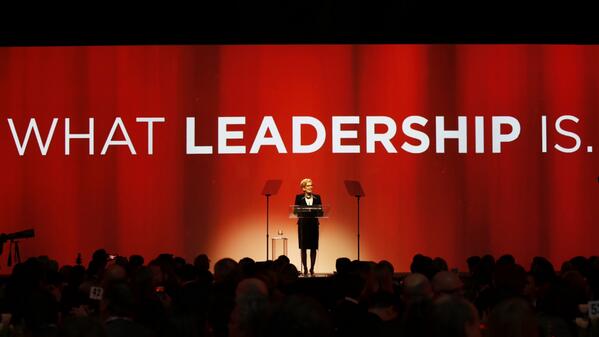
If we want to talk about #whatleadershipis, let's start with what it isn't.  Leaders don't place blame.  They don't incite fear.  Leaders aren't interested in wins, they're interested in results.  For true leaders, moving forward together means leaving no one behind, no matter their partisan brand or what "coalition" they belong to.  

Leaders don't put others down to reaffirm their position; they actively seek to make themselves obsolete by growing other leaders to take their place.

Governance isn't about picking fights - it's about understanding the truth of challenges and developing shared solutions to address them.  

When the Masters work is done the people say "amazing, we did it all by ourselves."

And that's the truth.

Friday, 21 March 2014

Political Morale and the Value of a Pivot

feedback_website


The other night I got to listen in on a fascinating conversation between the Globe and Mail's Adam Radwanski and Alison Loat, founder of Samara.  As part of the chat, Radwanski talked about how reporters/columnists get their information from politicians and staff (yes, it goes well beyond the scum).  

Some reporters read much into body language and mine the depth of every pause and every word unsaid as well.  Others are all about the phone call.  Adam said that his preferred method was actual conversations instead of just inquiries; as we're social creatures, that often means a coffee or a lunch together.

Radwanski shared a bit about his relationship with staff in former Premier Dalton McGuinty's office and how it changed over time.  At the onset, he had a more open conversations with them - not that they would leak exclusives or reveal inappropriate details, but that he could suss their mind out a bit on what they were trying to accomplish with a particular message campaign or piece of legislation.

For obvious reasons, Radwanski found this valuable - he could really get a sense of the intent and goals behind government activity that might not always turn out as intended.  This intel would inform his stories, allowing him to do a political reporter's #2 job (after making money for their outlet) - facilitate the public's awareness of why and how their tax dollars are being spent and their society being supported.

There was a shift though, Radwanski said, between McGuinty's first class of staff and the one that followed.  The second bunch, he said, were less open, less willing to have conversations and began instead to use tricks to get stories they wanted - leaking to one outlet, putting them in competition with others, supposedly making them more likely to print favourable stories so as to get the inside scoop.

What resulted was a more confrontational relationship between press and press secretaries, more like what we see at the federal level where the press are clearly considered the enemy by political staff.  Stories became less favourable and intent was read as more cynical; without some background on the thought process, there really wasn't much else for reporters to go on.

I spent a bit of time within Liberal ranks over this period.  Some of the happiest days of my career were during the end of the first term when there was a real sense of being part of something special and other staff were almost more like family than colleagues.  I attribute this sense of team primarily to two men - my former boss Jim Brownell who may have been just a backbencher but for many of us was the heart and soul of the QP Liberal family and the Premier himself, Dalton McGuinty.

As part of Team Brownell, I spent a lot of time connecting with other staff, figuring out what they were working on, what we might be able to help them with and of course, seeing how all of this tied in to the projects Jim wanted to deliver for his riding (he had a very long list over two terms and delivered every single project, save one).  It was networking, team building, capacity building, but also humanizing.  I wanted to be human to these people I might otherwise only connect with via email or phone and I wanted to understand them as people as well.

More than a couple times when I was making rounds, I would run in to the Premier himself, just popping by offices to see how people were doing.  There are worse people to have your thunder taken away from than the Premier, but most importantly to me was how obvious it was that McGuinty actually understood the importance of connectivity.  

McGuinty did more than just the odd staff visit, which was huge - he also showed personal interest in the projects and accomplishments of staff in their lives beyond Queen's Park.  I got nice, hand-written letters from him when I won a short story award from the Toronto Star and at the birth of my first son. 

The Premier made time to invite my whole family into his office on a day when I'd arranged for my grandfather, a World War II vet and Holocaust survivor, to be recognized in the Legislature.  And that was just me, staffer to a backbencher.  

I know he did similiar things for other staff.  There's a great picture of him at the wedding of two of his own staff; he's reaching into the aisle to congratulate them as they leave the church and they, so in love and focused on each other, don't even realize they're ignoring their boss/Ontario's Premier.

While I was at Queen's Park, there were directions and decisions taking that I disagreed with (and was never afraid to share my thoughts on internally).  At the same time, I felt I knew the people making those choices and respected them enough to figure out why they'd made the choices they did and maybe how better iterations could be arrived at down the road.

When I left Queen's Park, I became like anyone else - an outsider looking in, albeit with more connections and understanding of how the place operated.  Regardless, I began to feel like some humanity was slipping away from the relationships I had there.  This was in no small part due to what I'd left Queen's Park for - a job in the private sector as a Government Relations Consultant, but I didn't want that to become a barrier.  

Perhaps naively, I thought (and still think) that people from different sectors don't need to be competitive and cagey - it's much more effective when we're open, pull together and focus on shared solutions for everyone.

As partisanship has gotten worse, though at both the provincial and federal level and from what I hear, communication with the press are much more based on messaging than relationship, I can't help feel as though it's not just me.  There's been a significant culture change, a calcifying of government that has maybe been exacerbated by toughening economic times.

From the inside, I hear (and this from staff in all Parties) two main trends: 

- staff who are functionally fixed on reciting the Party lines, and not in the cheeky, fun way we used to, but either out of fear of straying, a Koolaid-drinking belief in The Word or perhaps most sadly, a lack of trust in outsiders.  It's fascinating how closely this mirrors some the approaches I find among community residents when I work in priority neighbourhoods here in Toronto.

- the second trend is that they're lost.  They don't know who's really calling the shots in their Party, can't figure out how or why the plans (if there are bigger plans) are put together and really have no clue what role they're supposed to play.

Funny enough, this is the same culture of stagnation and confusion that has been identified as a major impediment to efficiency and adaptability within the Public Sector.  We can get mad at bureaucrats who make decent wages but don't seem to produce enough work as being lazy and go on a cutting spree, but that ignores the fundamental problem with the system - 

People within the bureaucracy often don't know how decisions are made, don't know how their work fits into the big picture and get no idea what or how their work gets used, if it gets used at all.

In the military, they recognize the importance of morale - it's #2, right after the mission.  In far too many other sectors and egregiously in politics, morale isn't even considered part of the question.  It's My Party Right or Wrong, right?

This is something we have lost as we focus increasingly on numbers - funds raised, program dollars spent, votes cast, etc.  Our entire system isn't designed to support Political Parties who aren't even mentioned in our constitution, nor an invisible, insatiable beast called The Economy.

Government is meant to support the people.  The Economy is meant to be the food that sustains society, which is a support system connecting and ideally empowering people.  

We've gotten this all backwards; partisanship has taken supremacy away from Parliament and The Economy is being trumped as more important than people.  Is it any wonder so many programs are missing their target or so many people are falling through the cracks?

A big part of why we've gotten things all screwy is that we've decided that relationships - committing sociology, as it were - is a bad thing.  We've been going the transaction, laissez-faire route; as a result, we have poor communication, increased hostility and competition and vitally, less sustainable results.

We think we know where we're going, but we're not sure.  But we no longer seem to care.

We've lost our way and our tracking back in circles.  Which is why now, more than any time in at least my life time, we need leaders with vision who understand the value of people.  

Not as props, not as clients or audiences to be messaged, but as as real people.

I believe we need to pivot our perspective.  I also believe that Open Government/Open Data is the frame that will allow us to do this.  

But I also know that as it becomes harder and harder for a select, siloed few to know what to do next, we're going to see the opacity of politics get worse before it gets better.  But it will get better, one way or another - the historical turn of the wheel teaches us that much.

The Peaceable Revolution is at hand.

Thursday, 20 March 2014

The Political State


I remember a story I was told early on in my political staffing career as a sort of warning as to why it was important to be both mindful and cagey about connecting with the outside world.  The story was about a Minister in the Mike Harris government who'd gotten a bit too entitled to their entitlements and been caught with their hand in the till.
 
The story was about this Minister being hounded from the Legislature, down the tunnel between the Leg and Whitney Block and right to his office by reporters asking if he was a pig at the trough.  The fella's kids were apparently teased at school, the wife looked at with derision when out and about in town.
 
This was a story told almost with relish.  No surprise it was told by a war roomer who may or may not have played a role in pushing out the negativity of the story to the degree it was.
 
That's the thing about highly aggressive, elbows-up politics.  It is a bloodsport and if you are thinking of participating, be ready to get bruised and expect a little collateral damage.

Which is not to say politicians don't do things they should be held accountable for.  But as the case with a constantly-punished child, if you don't feel you can do anything right, what's the incentive to try?
 
Not a very welcoming environment for someone less interested in partisanship than policy, is it?  Or pols with families who want a division between personal and work lives?
 
It used to be the case that there were open and closed doors when it came to political sniping.  You could disagree with someone's actions or opinions, as it were, without demonizing their character.  As politics becomes more partisan, more focused on the win than policy, this is changing.
 
People don't matter.  Individual talent is judged only in its ability to serve The Party.  The Party -
not the constituents, not the Parliamentarians - hold the reigns. 
 
As such individuals are thrown under buses, are character assassinated, are subject to false, overblown and cherry-picked claims by opponents that long to see them bleed.
 
Nothing personal, don't you know - it's just business.
 
I understand very well that this is how politics functions and know all the argument in favour of aggressive, cut-throat partisan bickering.  I just also know that this is why politics isn't working and why we have a democratic deficit.
 
The aggressive, competitive, kill-or-be killed partisans aren't preventing a problem in their attempts to demolish their opponents - they are the problem.
 
At the very least, it's something to think about, no?


Tuesday, 18 March 2014

Government: It's Not a Race, Stupid!


For all those folk who tell me I'm too positive/need to rant more, here you go.

Politics/sports comparisons drive me up the wall, make me gnash my teeth and utter the odd profanity.
 
Seriously, people?
 
Let's think a bit about how we view actual sports.  They're like a religious ceremony, a rite of passage, something removed from yet parallel with the rest of society.  Like a doodle on a painting or a stain on our memory, we don't want to see them in any way sullied with something as mundane and dirty as politics.

That was a common refrain from Sochi, wasn't it?  And how many other international sporting events before that?  The Olympics is about national brand/the athletes; it'd be unfair to them and bad for our global standing not to be in the race.


All those poor athletes who invested so much time and energy into competing, we wouldn't want to deprive them of their opportunity, would we?  It should be about them and their competition, regardless of what's happening in the world around them.

It reminds me an awful lot of how the campaign team that worked to nudge John Tory into the race "put a lot of effort into this and will be very disappointed" if they didn't get to run.  If you look around the political landscape, you'll see organizers who get mad and turn against their team if they're left on the bench; same holds true for MPs who want a kick at the Ministerial can but aren't given the chance.

We talk about bench strength, don't we?  You want to have the best potential communicators on your team and need to make sure the nomination processes are designed to provide them - rather than people who are best able to represent their constituents.

Or how about how entire Party operations are aligned to support Leaders, like pit crews for race car drivers?  Money must be raised to support the leader.  Volunteers must be rounded up to support the leader.  Put them in the driver's seat, as it were, and then start peddling behind them.

We do use sports analogies for politics all the time - it's competition, its races, it's clocks counting down and tricky strategies to beat the other team.

Professional sports is one of those very rare fields where participants aren't allowed to have anything resembling personal lives - they're all-in if they want to win and if they aren't, they don't belong there.  For their efforts, they aren't really expected (or even welcomed) to engage in different fields - their job is to keep their heads down, perform, and entertain, not pundify on political issues.
Funny enough, the same applies to hardcore political operatives - they're all about the win, too.  They will dedicate their lives, sacrifice their relationships and hit up their family members for donations, maintaining a laser-like focus on the win. 
 
Except they aren't athletes and the choices they make/actions they take with their blinders-on functional fixedness impact real policy decisions and in turn, everything from taxation to infrastructure spending to public service delivery.

How many times have I heard war roomers talk about "picking fights" to take potential threats out of the race or mobilize their base?  It's like they're living out their failed hockey enforcer dreams, except in our Legislatures.

Leaders that think they're sports stars; political organizers that think they're sports teams.  Where does that leave everyone else in our Parliamentary democracy?

In the audience, that's where - as passive participants, cheering for the Reds or Blues, Greens or Oranges instead of proactively engaging in policy conversations around things like healthcare or foreign aid.

Maybe people want it this way - maybe they'd rather see politics as a bloodsport, something to be watched or avoided, but not engaged in.  Political operatives certainly want it this way - they constantly tell us we're not interested in the political sausage-making process and work hard to keep their training regimens out of sight.

But this isn't democracy.  Democracy isn't a spectator sport, it's civic engagement.  In democracy, leaders fuel their teams who in turn are supposed to engage with the audience in a conversation that results in the best outcomes for everyone. 

This is critical, because society is far more complex than any sport; when you choose to view politics as a simple competition between leaders and teams for market share, you're not looking for sustainable solutions.

Which is where we are now - increasingly competitive political parties that, surprise surprise, like the idea of reducing competition and adding more games per season, as that's where they flourish (and get paid).  They want more of your money so they can fight more effective campaigns, buy more ad space and put out more attack ads (of course you hate them, but they work, don't they)?
 
The focus here isn't on shared solutions, but individual or team wins.  The public are spectators, not participants.  Sustainable policy choices aren't even part of the conversation.
 
This is why I cringe at the adoption of political primaries - essentially, big game days - into our process.  The last thing we need is for citizens to have another reason to fully embody the role of side-line pundicators and jersey-wearers.
 
You want entertainment?  Watch an actual sports game.  Crave scandal?  Go watch Game of Thrones.
 
Democracy is not a fucking game.
 
When we treat it like one, we all lose.