Search This Blog

CCE in brief

My photo
Recovering backpacker, Cornwallite at heart, political enthusiast, catalyst, writer, husband, father, community volunteer, unabashedly proud Canadian. Every hyperlink connects to something related directly or thematically to that which is highlighted.
Showing posts with label Marvel. Show all posts

Thursday, 7 August 2014

What Marvel and Open Government Have in Common


In politics, information that could be shared often gets held back - and this for a number of reasons.  Marketing is key; during a campaign in particular, you want to roll out your platform in stages to keep momentum going, to throw your opponents off balance, so on and so forth. 
 
Sometimes, though, information gets withheld because the people holding it like knowing things that others don't.  The holding of information is valuable to them.
 
I love referring to film makers because when you get an amazing director with a great story - say, a Josh Whedon, a Bryan Singer or a Chris Nolan - they would love to share what they know with you.  They would love for you to be excited along with them. 
 
These folk don't hold back info for personal gain, but out of respect for the audience.  Good story tellers want you, their audience, to have the best, most fulfilling experience possible.  Sometimes that means keeping details back so that you can experience the full impact all at once.
 
Think The Sixth Sense, the first Matrix or more recently, The Lego Movie.  Not knowing those plot twists going in made the story that much more powerful.
 
And Brolin is right - we don't have a lot of surprise, of wonder any more.  We're oversaturated, we're impatient, we're disengaged.  Politics is a great example of this - or at least, good governance is.
How might we empower people to feel about democracy and civic engagement the way they do about a film franchise like Marvel's?  A great starting point would be to have leaders who respected the people as much as good directors do their audiences - and did everything, including info sharing, in a way that made their experience richer
 
Which is exactly what Open Government and Open Data are about.  Done properly, public information that has never seen the light of day will be open, accessible and easy to both navigate and use.  It'd be like citizens having the chance to be part of writing the story of society, in the way a good Twitter chat does. 

Picture everyone having the chance to be a contributing player in society - to design and be their own hero in a pantheon of civic heroes.

That's what Richard Pietro's doing - look at the fun he's having, the experience he's having, the brand he's building - and the contribution he's making.
Open Government is a powerful story just starting to be written, but with an arc that is as exciting as it is important. 
 
It's something those of us already part of the growing Open Community know, a feeling we're dying to share.
 
The best part is that it's not up to us as to when the whole story will get revealed - that's something that only you can decide by joining in.
 

Wednesday, 11 December 2013

Why Star Wars is Following Marvel and Why Politicians Should Pay Attention


One-offs are easier to pull off, and are easier to distribute.  That was the premise behind the serial - have a theme, some common characters and put them in zany situations that are resolved within a half hour/hour.  You can play any episode in any order, grab an in-the-moment audience and laugh your way to the bank.

The model works, and continues to work - in a horses-and-bayonets kind of way.  Where the problem lies is that not everyone is sticking to the tried-and-true serial model and are instead building narrative arcs.  It started with the two-parter and has carried on into more complex plots, arcs-within-arcs and as a necessary result more layered, more interesting characters.

There have been risks along the way and some losses, too, but the trend is away from siloed one-offs and moving more and more towards the arc.  Complex shows with complex characters like LOST and Battlestar Galactica may not have had as massive an audience as others, but that audience was loyal, served as an excellent (and free) marketing partner and readily ate up viral marketing, soundtrack purchases and all kinds of other value-add that went along with the product.  


Committing to complex stories and character development hasn't hurt the careers of the developers of these shows, any more than it's hurt Joss Whedon, he of complex stories and teased narratives.  He's now the creative director of Marvel's film/tv franchise.  J.J. Abrams has done a bunch of cool projects since LOST, up to and including Star Wars.

The cross-pollination and value-add model is working wonders for Marvel across the board; they have tv shows and movies and comics, their actors are tweeting and instagraming away while producers tease hints at conferences and media avails.  It's a complex strategy that must have taken (and must continue to take) a great deal of fore-thought and planning to execute, adapt and persevere.  But again, it's working.  Audience are tuning in and even better, they're participating.

There is some secret sauce to the Marvel model (that Star Wars seeks to replicate); they have gotten pretty good at striking a balance between giving each film, series and character it's own space to function and breathe and grow, resulting in some pretty original (and different) directions for the franchise to grow in.  As a result, they have more creative stories, penetrate more markets and build their core constituency by providing a community of experience.

This is a model that's worked pretty well for Apple, too, as it has for many leaders.

It can and will work just as well for politicians, when they get around to thinking different.  We're seeing that start to happen now - Obama's campaign definitely broke new ground and Justin Trudeau's greater team involvement and communication format has been more engaging.


What's lacking, though, is the narrative.  There's no plot development in politics, no Big Idea for people to identify, discover and then explore as it unfolds and marches towards completion.  Instead we have message points, variations on the same theme and vague talk of values and such, but there's no hook, no transition, no real payoffs.  We don't really get to know our politicians as both individuals and participants in a team; there's no sense of trajectory to their stories or that of their Parties.  Policies are provided in serial format, with accomplishments being ticked off like boxes on a page.

It's great that more students are graduating - good for them.  It's lovely seniors are getting more surgical procedures done, and faster.  Love that roads are being paved and digital government strategies are being pursued.  But how do these things connect?  What sustained, building evidence do I have that I want to invest my time, money and votes into what you're going to do next?  Audiences want to know they're in good hands and they don't want you to tell them so - they want to discover it for themselves.  

And when they do, they'll want to participate.

Friday, 4 October 2013

Marvel Phase 3: Tahiti is a Magical Place


So what is up with Phil Coulson?
 
He's stabbed through the heart, then he's starring in Agents of Shield, with the only explanation as to what happened in between is reference to Tahiti as "a magical place" to recover in.  
 
If you care at all about the character - and thanks to a brilliant portrayal by Greg Clarkson and some great writing (in no small part thanks to Joss Whedon), people DO care about him.  We want to know what happened.

We'll get to Phil in a second; first (and related) let's step back and look at Marvel's cinematic strategy for a bit.

Marvel has cleverly built their rollout around phases designed to slowly reel audiences into the Marvel Universe.  It's a complex place, that universe, with imaginary countries, aliens, sentient robots time travel, parallel timelines, etc.  But it also has more relatable street-heroes like The Punisher.

The phased-in strategy makes that reeling an organic process.

PHASE 1: A Realistic Entry
 
 To hook audiences, Marvel started their film odyssey off with Iron Man - a rich guy with cool toys that more-or-less makes sense in our world.  They also had Captain America, a hero whose powers are muted (there's really nothing he can do that Bruce Willis or Harrison Ford haven't done while playing John McClane or Indiana Jones); his stand-out strengths are his humility and leadership skills.  We admire the guy - we feel comfortable following him on his journey.  Let's hope Cap just doesn't jump the shark while Nuking the fridge.

 Phase 1 also introduced Thor - an alien/god who went through a very archtypical journey from Arrogant Bully to Empathetic Leader.  It's a story everyone knows and is comfortable with; given the real-world experiences Thor went through, we can relate to him, too.  Cleverly, there was a reference in Thor to magic and science being "one and the same" in his world.

Phase 1 culminated in The Avengers, which saw Captain America forced to come to terms with a strange new world in much the same way that Marvel's audiences are.  The film ended with a huge battle between Heroes and Aliens and introducing Thanos as the Big Bad, officially transitioning into Phase 2.

PHASE 2 - Going Sci-Fi

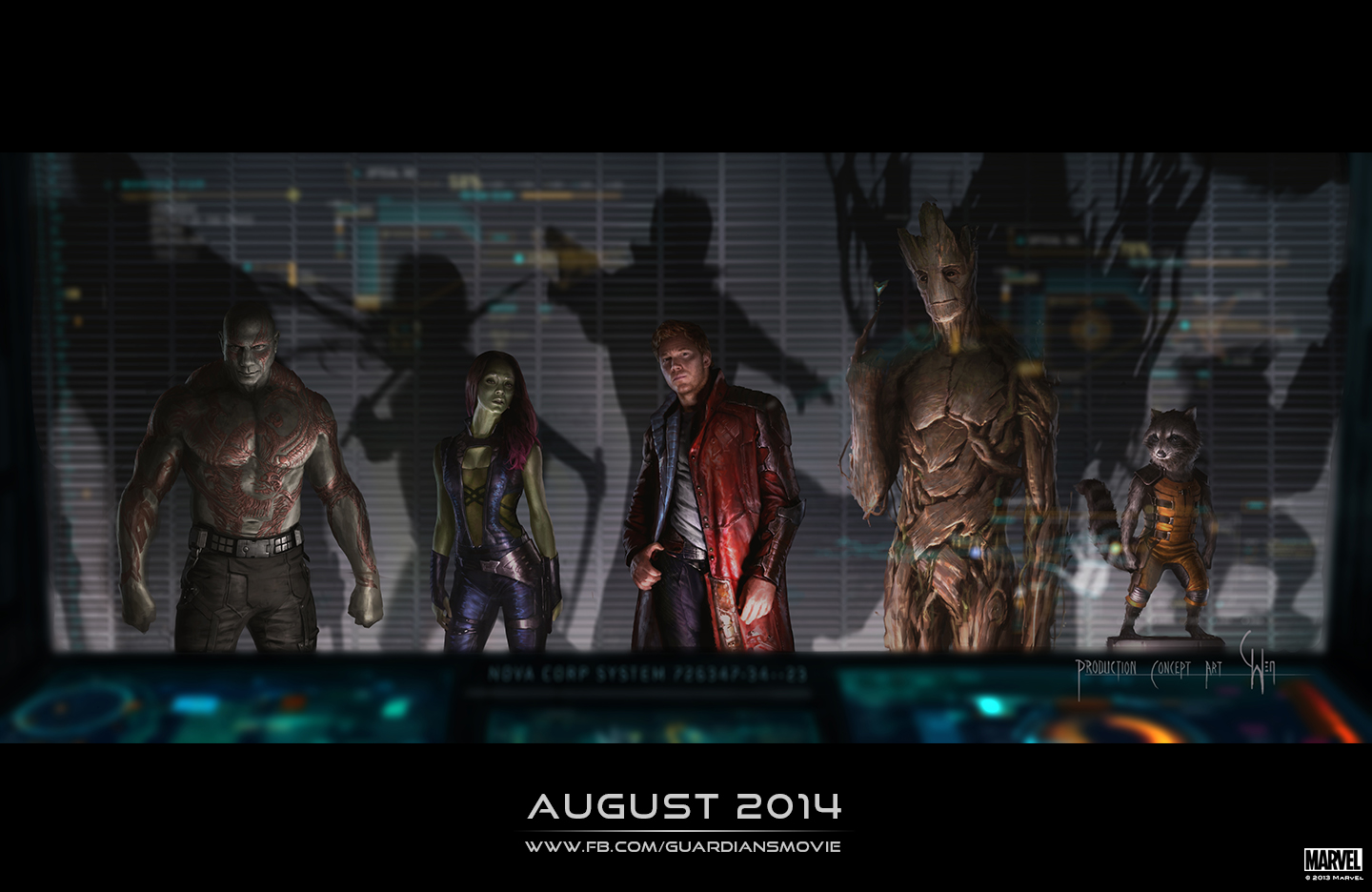
Now that the wall between our world and the sci-fi one has been broken, Marvel is starting to fill in the extra-terrestrial part of the map for us, notably with Guardians of the Galaxy which will use a Captain America-like character to organically guide us into that space, too.  Marvel's got a lot riding on GOTG, because if it isn't that successful they'll have a harder time pushing other sci-fi properties forward.
 Thor: The Dark World will also help with this, though, as it brings an even stronger sci-fi presence to earth than did his first outing.  If you're a fan of the shared universe Marvel has created, you're going to want to see how all the threads connect; more lines simply provide more hooks.

We know that Phase 2 will end with Avengers 2: The Age of Ultron, which is another sci-fi related theme; a sentient robot (possibly an evolution of Iron Man's Jarvis program) will threaten the world with The Avengers saving the day.  How Thanos will fit in to the picture leading towards an Avengers 3 confrontation remains to be seen.

But what of Phase 3?  If it's to have a unique theme and pull back the curtain on an even more fantastical Marvel realm than the last phase, what could it be?

PHASE 3: Tahiti is a Magical Place

Marvel has a whole world of magic to explore as well.  It's a bit of a stretch for American Ganster-loving audiences to go that far without a bridge, but bridging worlds in Easter-Egg like fashion has been a hallmark of Marvel's strategy.
 
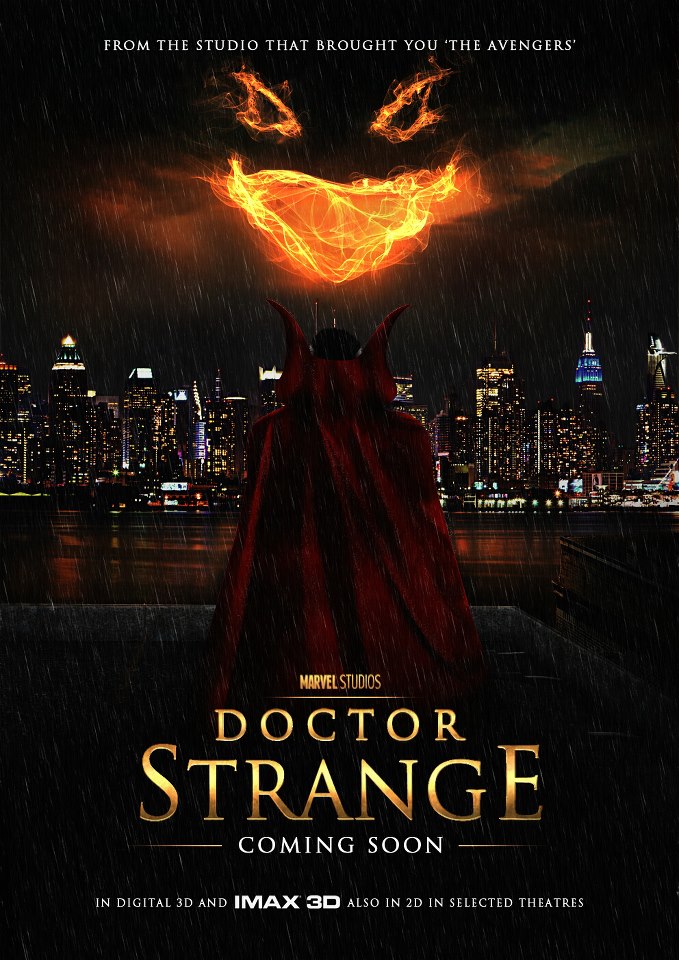
There's been lots of talk around a Dr. Strange movie - a big character in Marvel but a hard one to deliver in a way that has mass appeal.  If there's a subtle transition from sci-fi to fantasy, though, audiences will have an easier time following through.

Which brings us back to Coulson.

We already know that SHIELD has a jump on the general public when it comes to what's going on in the world - there are countless references to that fact in all of Marvel's properties.  We also know that not every SHIELD agent is in on the Big Picture - they have to get to Level 7 to see how many of the sci-fi pieces connect.

Yet when Maria Hill and Sheppard Book talk about Coulson in the Agents of Shield pilot, they refer to our hero as not knowing what happened to him and that "he can never know." If there are things Coulson isn't in on, could that imply a Level 8?

Tahiti is a magical place, indeed.  I can't wait to see what we find when Marvel takes us there.