Search This Blog

CCE in brief

My photo
Recovering backpacker, Cornwallite at heart, political enthusiast, catalyst, writer, husband, father, community volunteer, unabashedly proud Canadian. Every hyperlink connects to something related directly or thematically to that which is highlighted.
Showing posts with label Occupational Mental Health. Show all posts

Wednesday, 30 September 2015

Trudeau, Mental Health and the Public Service


Good for Trudeau (text from his letter below).

Sad reality is that a growing number of Canada's public servants don't have job stability or benefits (renewed contracts replacing permanent positions) and for those who do, the culture, accommodations and design of government work is sorely lacking.  The stress, uncertainty, low morale, unclear direction, conflict of what they're supposed to do and what partisan staff pressure them to do is taking a toll.  Presenteeism is rampant, as are prescriptions (and claims) for depression and anxiety medication.  


It's a problem the private sector is twigging on to and, in fits and spurts, taking steps to address. They have realized that saying "get over it" and punishing people with the cognitive equivalent of carpal tunnel syndrome doesn't solve the problem, it only exacerbates it.  If the bottom line dictates better employee support, so be it.

Does it not make sense for government to do the same?  Should government not be leading by example?

Were I team Trudeau, I would talk about this a lot more in the coming weeks (and to a certain Trudeau advisor: I told you this was coming!); it's an issue that impacts Canadians at all levels deeply, ties into the values Trudeau speaks to and highlights the cognitive dissonance in Harper's stance on mental health vs. occupational mental health.

Sad part is, this could and should have been a win for Harper.  That's what happens when you're functionally fixed and unable to adapt though.


Friday, 7 November 2014

Ghomeshi Comes to Queen's Park: Harassment, HR and Leading By Example


Premier Kathleen Wynne is a woman of unquestionable integrity.  She's a strong leader in every sense of the word - she's mission-focused, but understands the importance of morale.  She's empathic, a strong communicator and a natural facilitator.
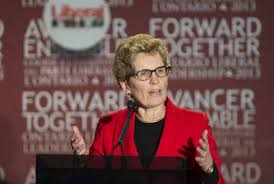
 
Ask anyone who works (or has worked) with her - Premier Wynne creates strong workplace cultures that empower employees to do well and find fulfilment in their work.  The why behind this is easy - Wynne realizes people aren't office infrastructure; they're the architects for her and her party's success.
 
Such is not the case for all employers, at Queen's Park or otherwise.  All too often, staff are viewed as tools, not individuals.  Workplace culture is not seen as a consideration, any more than you might care about how much dust collects on your computer; you can always get another one.
 
This heavy-handed, boss-centred approach to HR has proven to have a negative impact on bottom lines, on productivity, on innovation; demoralized staff aren't scared into doing better work, they're instead focused on not messing up or redirecting blame. 
 
Which, of course, is a self-fulfilling prophecy; when tough bosses practice the mantra "we are smart, they are dumb" - they in reference to staff - talent isn't nurtured, it's suppressed.  Those who rise to the top may be good at what they do, but it's the ability to curry favour with the boss that determines career growth.
 
But is a business - especially when it's government - supposed to be structured in a way that places ultimate power in the hands of bosses who, often as not, don't know and don't care about professional HR practices or basic leadership skills?  Do we want workplace cultures where it's the ability to curry favour with bosses that determines success, especially in light of the emerging conversation around bosses that abuse their positions of power in relation to their staff?
 
What are the consequences of poor leadership and a lack of training for employees and employers on morale, productivity, innovation and that other emerging biggie, mental wellness?


So it's interesting to hear Premier Wynne discuss harassment and HR concerns within her party.
 
The Liberal Caucus Service Bureau (Leg-funded internal support organization for the Ontario Liberal Party) has a Policy for a Harassment/Violence-Free Workplace that is to be made available to all employers and staff and posted in prominent locations in each workspace.  This document is intended to serve as a framework to prevent the sorts of entitled boss behaviour that can happen in situations where accountabilities aren't clear, training isn't provided and power imbalance is prominent.
 
Some highlights from this policy:
 
Members of the Ontario Liberal Caucus (“Member(s)”) are committed to providing a work environment which is conducive to both positive morale and productivity - a work environment free of harassment and violence to both women and men.  Behaviour, comments, or display of materials that could reasonably be perceived to be offensive, humiliating or demeaning are not acceptable in the workplace. 
 
-- one would assume the whip that is, for historical reasons, displayed on the wall of the Whip's office is an exception to this "display of materials" rule.  In fact, the very notion of a Whip is contrary to the intention of this policy and empowered workforces in general, but the outdated conventions of our centuries-old model Westminster Parliamentary system is a whole other topic.
 
Members, as employers, have an important role to play in promoting awareness and setting standards.  Harassment, in any form, undermines an employee’s work performance and the goals of the office.  All concerns of harassment will be taken seriously and handled in a professional, impartial and confidential manner in accordance with the provisions set out in this Policy. 
 
-- In other words, it's the responsibility of Members to lead by example when it comes to a harassment-free and empowering work culture.  The corporate structure at Queen's Park is a somewhat unique one, where MPP staff are the employees of Members, paid by the Legislature, but are equally answerable to their political party, who has no legal authority over said staff, but again, politics isn't a "normal" working environment.
 
It might seem counter-intuitive to have those with the most power and freedom to exercise it be responsible for self-regulation and empowering of staff to question their authority, but there's an answer to that, too.
 
Under the Liberal policy, it's not the party's HR person (paid through the Legislature) that is responsible for addressing harassment issues, but the party Whip, who is another elected official and therefore a peer to Members..  As such, it's to the Whip (or designate), a party-determined role, who is responsible for ensuring MPPs and staff are familiar with the contents of the policy and administering it when issues of harassment arise:
 
1) Responsibilities of the Whip 
The Whip is responsible for informing the Members and employees of the Policy and its contents.  Where employees bring forward concerns of harassment against Members, the Whip will take immediate and appropriate action as follows: 

a) respond promptly to all enquiries regarding harassment concerns involving Members; 
b) advise the Member that a concern of harassment has been brought forward against him or her; 
c) provide assistance, clarification and guidance with respect to situations involving harassment; 
d) work with all parties involved to try to resolve the situation fairly, and in a manner that preserves the dignity of the parties concerned; 
e) resolve situations of harassment through dispute resolution methods, in a non-adversarial, rehabilitative manner, and take the necessary steps to achieve a resolution.  If the Whip determines that an investigation is necessary, the investigation will be handled promptly in an impartial and confidential manner with due respect for the rights of the parties concerned
 
One would assume there is an internal training session for all Members and new staff that makes the contents and intent of this policy clear so that there is no confusion about responsibilities and processes that lead to resolution.
 
Key to this process, as we are learning through #ghomeshi, are the great obstacles employees can face in bringing forward allegations of harassment.  In politics, Members are all-powerful; they are the elected voice of the people, after all.  If they answer to anyone, it's the Premier and designated party officials who, naturally, are tasked with winning elections, not fostering strong workplace cultures.  It's just the nature of the beast.
 
It can be career suicide to bring forward allegations against an abusive boss, whether the abuse is sexual harassment, aggressive behaviour, passive-aggressive behaviour, etc.  Much as we have seen through #ghomeshi, under circumstances like this staff will often "suck it up", complain about bad bosses with other staff and suffer silently with the consequences of poor leadership. 
 
Or, they will raise concerns and be marginalized or discover that they have "burned bridges" by trying to defend themselves, and end up unemployed and shut out. 
 
This sort of toxic environment can lead to accrued depression and anxiety, kill workplace morale and ultimately result in poor functionality, which leads to unhappy constituents, poor decisions made, etc.  There's a reason why occupational mental health is becoming a thing these days.
 
To avoid unjust consequences to what would essentially be whistleblowers, the Liberals have included a NO REPRISAL clause in their policy:
 
a) Employees who bring forward harassment concerns shall not be subjected to any form of reprisal. 
b) For the purposes fop this policy, retaliation against an individual i) for making a complaint under this policy (whether on behalf of oneself or another individual); or ii) for having participated or co-operated in any investigation under this policy; or iii) for having been associated with a person who has made a complaint under this policy or participated in these procedures, will be treated as harassment
 
So, there would be no tolerance for cultures of fear within the liberal family at Queen's Park.  No person of authority would ever say something like "He's never going to change, you're a malleable person, let's talk about how you can make this a less toxic work environment for you" to staff who bring forward concerns about abusive employers.
 
Staff would never be re-victimized for bringing forward concerns; that would go directly against the beliefs of the party and the content of their policy.  Moving forward together, after all, doesn't involve dumping those who raise valid concerns by the wayside, or publicly shaming them, etc.
 
As harassment without definitions is largely in the eye of the beholder, it helps to provide some clarification on what, exactly, constitutes harassment in this context.  Again, the Liberal's harassment policy provides a framework to help Members and staff alike, when they're trained on the contents of the policy, to know what to look for:
 
To assist in ensuring that our workplace is harassment-free, the following are examples of harassment.  Please note that this is not a complete list and that each situation will have to be considered individually. 

- Jokes causing embarrassment or offence, told or carried out after the joker has been advised that they are embarrassing or offensive or that they are by nature clearly embarrassing or offensive
Example: Telling sexually explicit jokes or suggestive stories may be offensive to some and not to others.  They can have the effect of making someone feel uncomfortable and interfere with their ability to participate in work-related group activities. 
- The display of offensive material
Example: Posters placed on the office bulletin board depicting members of a particular racial minority group in a derogatory manner.  Even though an employee belonging to that racial minority group complains, the Manager says there is nothing he/she can do 
- Verbal and physical abuse or threats
Example: a supervisor constantly asks a subordinate out and is continually rebuffed.  The supervisor subsequently begins to criticize the subordinate’s work in front of co-workers and eventually threatens to fire the employee. 
- Degrading or derogatory remarks
Example: A developmentally disabled employee is called names such as “dummy” by co-workers.  
 
Not an exhaustive list, but a helpful starting point and again this policy, which is to be provided to all MPPs and staff and posted in prominent locations, gives some guidance on what constitutes harassment and where to go for furtuer clarification in less-clear circumstances.
 
I would assume that party HR is fully aware of this process and actively re-directs concerns raised to the party Whip/Whip's designate, who will be fully trained on how to mediate with empathy and an eye towards resolution for all parties.
 
Hopefully, they will borrow from the approach recently taken by federal Liberal leader Justin Trudeau:
 
 
Kathleen Wynne is the best kind of leader - one who recognizes that the people she leads are the architects of her vision, not infrastructure for her success.  She is a skilled facilitator who genuinely cares about people and their well-being.  She understands the importance of morale, empowering workplace culture and respecting the dignity of the people on the front lines.
 
A big part of why people don't trust politicians and feel their policy decisions aren't in the public's interest is because of our perception of internal political culture as corrupt, self-serving, feudal in nature.  Abuse of the public purse, abuse of position and abuse of human resources go hand-in-hand.
 
As #ghomeshi is forcing us to discuss such uncomfortable matters publicly, we're admitting publicly that this isn't something unique to politics - in all sectors, labour is done in a top-down, hierarchical way that empowers the aggressive, cunning and sales-oriented folk who also tend to be the ones most likely to abuse power in aggressive, cunning and team-harassing ways.
 
I think it would be great for the Liberals to provide a bit of inside-the-sausage Open Government of labour for the public on how they conduct their internal HR practices, especially as it comes to harassment/sensitivity training for MPPs and staff. 
 
It would set the right tone in a proactive fashion, provide some best-practices for others to learn from and make it clear that unlike some other employers out there, they have nothing to hide.
 
'Cause if there's one thing Premier Wynne excels at, it's leading by example.  We desperately need more of that kind of example right now.

Friday, 9 May 2014

Tim Hudak: The Angry Man with a Fanciful Plan


No, he's promising to burn the whole thing down.

You know what promotes job creation?  Stability.  Reliable services.  Solid infrastructure.  That kind of thing.  

Hudak's planning to fire 100,000 Public Service employees.  Which ones?  When will the decision be made, and based on what?

The entire Ontario Public Service will be walking on eggshells, waiting to find out.  Unions will be gunning fro Hudak, trying to defend their members.

Picture strikes - lots of them.  Work-to-rule a-plenty.  With that, we'll see service disruption, delayed projects and countless important projects put on hold.  

This makes for a rather unstable environment.  What's worse, Hudak will be doing to Ontario's public service what Harper is doing to the Canadian Public Service - threatening them, bullying them and making it impossible for them to do their work in an evidence-based way.

Employers aren't going to rush in to embrace Hudak's slashed tax rates - it's in their best interest to plan long-term.  Smart companies will figure Hudak won't last four years and, if he does, the province might not.  They'll stay clear away.

Meanwhile, the covered health-care costs of the OPS sores even higher (count on a ton more anxiety and depression med prescriptions) what will Hudak do, start cutting back on health benefits?

That won't work.  Meanwhile, there's not just going to be two Parties and the Ontario Families Coalition gunning for him - every "special interest" that pays attention to facts that Hudak would rather ignore (including the Canadian Mental Health Commission) will be on his case.  That's before raising unions and regional communities that are going to get pretty mad pretty quickly, too.

What's Hudak going to do when he simply tossing insults across the aisle isn't enough to stop his mounting opposition?

Or when services grind to a halt, employers get even more skittish about hiring and people start getting more and more anxious about their future?

I don't think so, Tim.

Hudak's plan is, unfortunately, a reflection of how he thinks - in sound-bites, not strategy.  He delivers a great alliterative punch line, but that's not leadership.

It's a long campaign yet, but it's pretty clear Ontarians are going to see more of what they've seen before - anger, petulance and a refusal to listen.  

Having watched Toronto go through that with Rob Ford, Ontario will realize it'll only have itself to blame for a Hudak government.

It's about time someone else took the till of the PCs.

Lucky for Hudak, there's always talk radio.  

Friday, 14 February 2014

Promoting Psychopaths In the Worksplace


You likely know a few psychopaths.  You might even have one leading you.  The funny thing is, there's this belief going around that psychopathic traits are good for business. 
 
You want aggressive, competitive people who aren't afraid to bust some heads to get things done.  Work is work and it's all about making the objective best decision for yourself, which means succeeding, which then makes you valuable to your company.  Right?
 
Watch Question Period some time.  Not everyone in the room is a psychopath or sociopath, but see how many of them are trying to be.  Because that's the culture we've told ourselves makes for a healthy democracy.
 
The first step to addressing any health issue is admitting something is wrong.  The same goes with admitting a workplace environment problem.
 
Here are some psychopathic traits to look out for:
 
 
- Be male (three times more likely)
 
- Establish tight control over their environment and others
 
- Create and enforce policies, procedures and rules to their advantage, punishing violators harshly
 
- Break the very rules they enforce upon others
 
- Think or say something such as, “Nothing personal, this is business”
 
- Prize objectivity almost exclusively
 
- Lie even when it’s obvious they are
 
- Have a bottom-line orientation, meaning relationships won’t sway them
 
- Lose no sleep in making adverse employment decisions such as terminations, demotions, etc.
 
- Surround themselves with “yes people”
 
- Create homogeneous work cultures, avoiding diverse personalities
 
- Possess average to above average intelligence
 
- Exhibit charisma especially in one-on-one and group situations
 
- Function awkwardly in small, diverse groups of three to eight people
 
- Work extended periods with little concern for impact on family and friends
 
- Spread negative news and attributes of those who threaten their power
 
- Undermine those with strong personal relationships
 
- Extend their power by “constructively criticizing” others’ ideas
 
- Focus on taking credit for the creativity of others rather than exhibit creativity themselves


Wednesday, 12 February 2014

Well Worded by Ivison


It's absolutely true, too - in much the same way as the Harper Conservatives have written checks for parents with kids and given money for the burial of veterans, they are always about the money.  They're proud of being economists, after all.
 
But affordable isn't the same as equitable, and economics isn't behavioural economics.
 
Flaherty legitimately does care about persons with disabilities for reasons both familial and family friendial.  I have no doubt that, in his heart of heart, he believes that money measures are really the only way to go.
 
But what of services?  What about social-emotional support for burned-out parents or persons with mental illness?  What about training or incentives for employers to hire persons with disabilities and understand it as good business, not charity?
 
Team Harper still has an opportunity to go big on this score before the election; one carefully-crafted plan could empower individuals, give more flexibility to the private sector, assist in reducing healthcare costs and present an issue the Opposition would be hard pressed to stand against.
 
They won't, though.  When you're focused on the money, it's almost impossible to see the innovative solution.
 

Tuesday, 11 February 2014

Canada's Veterans: Dead Or Online


At least, that's apparently how Canada's Government sees them.


Because all the remaining WWII vets are clearly online and if veterans of modern conflicts commit suicide or crimes as a result of psychological damage suffered, how's that the government's responsibility?
 
Pathetic.


Advice No One Will Listen To


True, this - and all three Parties have lots at stake going in to this budget/pre-election.

According to conventional political wisdom, this means they are less likely to work together now than ever - can't be seen to be weak and propping when the big prize is on the table now, can we?

Which is why I find it hard to believe any Party is going to look seriously into the one issue that ties all others together - jobs, innovation, healthcare, poverty, justice, even traffic.

If the voting public gets really pissed off with political shenanigans and gets no sense of forward momentum from the Legislature as a whole, however, that may change.  Under the right circumstances, you never know what politicians might be open to.

In the meantime, individual candidates looking to get ahead of the curve on an emerging issue would do well do dig a little deeper into this whole mental health thing - it'd do them all kinds of good.


Thursday, 9 January 2014

Hey Bosses, Employees Aren't Your Problem


There are presently massive changes happening in leadership practices.  It's early days yet, but the long-term prognosis is good.  As was the case with the Labour Revolution, smart employees are realizing they need to rethink their approach to Human Resources, just as HR folk are revisiting the whole purpose of their industry.

Where We've Been:

By and large, the prevalent stigma around employees is that they aren't focused on company success and are either not clever enough to see the big picture, too selfish to care or too lazy to add value without their own.  The assumption of bosses the world over is that employees are a problem that needs constant management, like weeds in a garden, if the work is to get done.

Salary and punishments are sticks and carrots to keep workers in line; all the frills they ask for are simply excuses to detract from productivity.

So, if an employee calls in sick, it's likely that they're looking for an excuse not to come in.  If they say directions weren't clear, they're stalling for time.  If they produce work that doesn't meet the expectations a boss had in mind, it's obvious the employee wasn't paying attention.

Enter micromanagement - the boss will either watch their employees like a hawk or push harder on middle managers to fill that role for them.  Sure enough, micromanagers will find employees less engaged, less productive and more likely to take every sick day available to them.  It reinforces the belief that the employees themselves are the problem.

Management, in this perspective, is about stopping truancy.

Where We're Heading

The age of the all-knowing boss is coming to an end.  Smart leaders are recognizing that being top dog doesn't make them omniscient, nor does it mean that their say-so is all that matters.  Instead, they're turning to science, behavioural economics and are willing to pilot innovative strategies to find, retain and motivate the best employees to the best results.

Google is a great example of this.  Instead of penalizing employees for being human beings that need recuperative breaks, socialization and food, they're optimizing engagement to ensure their team has their base needs met and that the process of meeting those needs feeds into the companies mandate of catalyzing innovations that will change the world (while making a profit).


There are other employers out there taking step in the same direction; great Canadian firms like Optimus SBR and Environics have started seeing their employees as the solution, not the problem, and are developing and implementing strategies that puts their team in the co-pilot's seat.

Surprisingly, there's even a movement growing within bureaucracies like the Ontario Public Service to change their working culture, though such initiatives are getting stuck in the clay layer of entrenched, comfortable middle-management.  Political Parties still lag far behind, but then, they're an industry focused on competition and wins, not achievement.  

Leadership, in this perspective, is about empowering individuals to be active participants in company success.

Nothing in this cognitive labour support movement is airy-fairy or pandering; it's evidence-based and it's effective.  The bosses that think otherwise can continue to lean hard on their employees and look to cut when they see their revenue drop, but this is the path to extinction.

The Conscious Revolution is here to stay - and the leaders that will build success in the knowledge economy are recognizing that their human resources are human first, and need to be treated as such.

Thursday, 28 November 2013

Open Doors Catching Fire


That's true.  Now, skip down the article a bit...


Everyone is moving in the same direction - we'll all get there, eventually, but the question is who are the trailblazers?  Who are the ones history (and electorates) will remember as first to the top of the mountain?  

Governments (both the elected and civil service sides) can play catch-up to where others are already going, or they can take a bit of risk, think a little different and lead the way forward.

With initiatives like OpenGov, OpenData and even workplace psychological health and safety, jurisdictions in Canada are on the right track.  With super innovative, proactive and user-friendly digital support tools and services like Guardly, RealTimeCrisis and WalkAlong, we're creating value that other jurisdictions are looking to learn from.

We can get there; we just need to pull together and keep moving forward.

Tim Hudak Apes Ozymandias


Hudak really isn't one to speak disparagingly about bosses; after all, every facet of his personal narrative is designed to portray himself as a boss, not a leader.

But then he has demonstrated willingness to work with others when the stakes are high enough, as they have been of late in Toronto.  He's also well aware that there is a much bigger threat looming over Ontario's economy, the strength of our institutions and the stability of our society.

Could that be his play?  Perhaps Hudak and his team are much more strategically altruistic than we think; that the whole hard-right, tough-on-everything approach could simply be a really a tricky gambit.

Maybe, like Ozymandias, Hudak feels that our fractured society needs a common enemy to rally against and, for the sake of the Public Good, is willing to be that foe.  If so, I tip my hat to him.

Meanwhile, as Sid Ryan brings his best Magneto rhetoric forward, I'd encourage him to take a hard look at the whole emerging cognitive labour thing.  He doesn't like being mainstream, which is his right - but instead of proselytizing from the margins, he could be leading from the front.

To each his own, right?  Or are we moving forward together again?

Time will tell.


Friday, 1 November 2013

Why I Won't Be Calling For Rob Ford To Resign


"I was taken aback," said Morris.  "It was over the top.  That is not his job."


Clearly, we're in uncharted territory here.  Under circumstances as incriminating as Ford's are, most politicians feel compelled to show at least some contrition, even if it's only to mend their reputations rather than preserve the integrity of their office.  

After initially saying "I did not have sexual relations with that woman," Bill Clinton eventually conceded he'd acted inappropriately; it didn't hurt his reputation any.  It's become trendy for politicians to admit to pot-smoking - as that's something a lot of average citizens due regardless of the legality, these confessions humanize the politicians and suggest it's the law, not the people that need adjustment.

But this isn't the case with Rob Ford, is it?  Crack cocaine smoking isn't such a common vice.  The production of cocaine is complex and tied to vast illegal operations that pose a significant threat to civil society.  Beyond that, Ford appears not to have any instinct for reputational defence; intransigence is his singular method of operation.

And there are still those who love him for it; he's a man on a mission, functionally fixed and steadfast in his position, no matter how ludicrous it becomes.  It's the same approach Stephen Harper is taking to the Senate Scandal, like so many of the scandals that have preceded it; stick to the messaging and wait for the whole thing to blow over.  

Both men still have their admirers, even among those who are completely frustrated with their approach and apparent lack of ethical compasses.  Ford and Harper have survived no-win scenarios before; you can't count either of them out yet. 

Which is a significant problem.

There's this crazy thing where we have begun to associate survival with leadership.  The ability of Ford and Harper to hold onto the reigns of power no matter how egregious the actions they themselves or the people they have hired commit isn't a sign of strong management skills, it's testament to their capacity to do wrong and get away with it.

Survival is inward-focused, selfish and all-to-often, detrimental to the well-being of the broader community.  Criminals who kill their enemies, catching civilians in the cross-fire are extreme examples of skilled survivors.

Leadership, on the other hand, is about obsolescence;  it puts the long-term interests of the community first.

Which trait do we tend to reward among our politicians?  It's the bombast, the story-telling, the heavy focus on bullet-point marketing and micro-targeted messages that win votes, not a thoughtful dedication to policy and a focus on accomplishment over sales.

Rob Ford has proven himself a political survivor, but his survival has come at the expense of the well-being of his office, his institution and the reputation of the city itself.  Reporters and Police Chiefs have been caught up in a net of "I know you are, but what am I" - completely unprecedented situations for professionals to find themselves in.

Were Ford a bureaucrat, Ford the Mayor would fire him with the full support of the public.  Ford the Mayor wouldn't care about why Ford the Civil Servant was a mess; that wouldn't be his problem.  That kind of scenario plays out all the time in the real world; people grappling with performance-impacting mental health issues, personal crises and familial challenges get fired irregardless of the added strain losing a job will place on them.

The system, in aggregate, is being given preference over the people who allow that system to operate.  Is it any wonder why we have such massive structural challenges in Canada?  Does it start to make sense why mental health is quickly becoming the civil rights issue of our time?

Rob Ford isn't an average employee who can be let go of easily; he's the Mayor of the biggest city in Canada.  There are no mechanisms to force him from his office between now and the next election - if he refuses to go on his own, it becomes the responsibility of everyone else to figure out how to deal with him.

That means it's up to us to lead the way forward.

I'm a big believer that every challenge provides an opportunity (which is why I tend to be good at problem-solving).  Toronto will unquestionably survive in the long-run; dare I say it's too big to fail.  

As we have a broader recognition that we need to do a better job at mental health comprehension and accommodation and as it's now very clear the Mayor has mental health-related concerns, let's make that our focus.  After all, if we can successfully remediate and accommodate a Mayor, supporting lower-level employees should be a cake-walk.

Project Remediate Ford needs to target his inner circle of enablers, chiefly his brother.  I'm sure Doug has Rob's best political intentions at heart and sees that as his appropriate focus, but come on - his brother is a heart attack waiting to happen.  You can't celebrate political wins from the grave.  It should be Doug's fraternal imperative to put his brother's health first.

Same goes for Ford's key Council supporters and financial backers; put the man ahead of the interests they see that man representing.  Empathize with him a little bit, help him onto a more sustainable path.  

That requires a big shift, though, from a "what can you do for me" enabling approach to a "what can I do for you" supportive approach.  That requires revisiting priorities, even putting one's own interests and relationship with Ford the Mayor at risk in support of Ford the Man.  Mark Towhey has already demonstrated it's possible; if enough people follow suit, we may actually be able to convince Rob Ford that intransigence isn't a strength and seeking help isn't a weakness.

To be fully comfortable in this approach, Ford's enablers will need the support of the community at large; they will by default have to become strong advocates in the vein of a Michael Kirby, pushing for a paradigm shift in how we look at mental health.

In other words, to fix the Ford Problem in a sustainable way requires everyone to change their view about the nature of mental health and the purpose of personal relationships.  If the people at the top communicate with the people at the bottom and create a shared vision of what an improved perspective could look like, that is absolutely doable.  It also happens to be critically necessary.

This is why I am not in favour of sweeping the social challenge that is Rob Ford under the carpet - there are too many mental health-related problems under there already.  We are actually fortunate to be in a position where we have no choice but to revist our beliefs if we want to clear the barrier before us and keep moving forward.

We've gotten into a bad habit of removing people who are symptoms of a structural illness instead of holistically and collaboratively seeking to fix the problem.  If Rob Ford is the tipping point that catalyzes a different approach, that's not a bad legacy to leave behind.

Wednesday, 9 October 2013

The Mental Elephant In The Room


Across Canada, police are bearing the brunt of broken mental health care systems and are calling for increased funding for mental health and social services.
In August, the Canadian Association of Chiefs of Police issued a press release, arguing that "police should not be on the frontline on mental health issues." In mid-September, the Vancouver Police Department noted that 21% of its calls involve individuals with mental illness.
In 2011, Toronto police officers arrested 8500 people under Ontario's Mental Health Act, which allows police to apprehend people with mental illnesses and take them to hospitals if they pose potential harm to themselves or others.
Toronto Police Service spokesperson Mark Pugash was unable to provide further information or arrange an interview, however, saying "all of these issues are under review" in the inquiry into the shooting of 18-year-old Sammy Yatim. Armed with a knife on a Toronto streetcar in July, Yatim died after being shot repeatedly by an officer.
Vancouver Police Department Chief Jim Chu says psychiatric episodes requiring a police response would be less frequent if mental health services played a more preventative role. Chu blames deinstitutionalization in the 1990s, coupled with subpar funding for community mental health services.
"We're encountering people that should be institutionalized," he says. "We deal with them and they're back on the street a day later, and then we deal with them and they're back on the street two days later."
Saskatoon Police Service Chief Clive Weighill notes that although crime has "come down steadily in Canada in the last few years, there's been an increase in this [mental health] field."
Dr. Kwame McKenzie, a medical director at the Centre for Addiction and Mental Health in Toronto, says the problem is that "none of [the mental health hospitals] are responsible for mental health in the community," and thus it's left to police to fulfill the role of connecting psychiatric patients to health services.
As Chief Weighill explains, "We see people with substance abuse issues or other issues and are willing to go for help. But then we can't get them into the system for three to four weeks."
Police training, however, has been slow to reflect the growing burden of mental health emergencies on law enforcement. Most police academies introduced mental health training in their curricula only in the last 10–15 years, according to the Mental Health Commission of Canada. On-the-job training, meanwhile, varies widely by jurisdiction, according to the commission's 2010 study.
The commission is calling for a standardized curriculum for police and for mental health services to play a larger role in the community. "We can't, nor should we, expect police to be mental health professionals," says President and CEO Louise Bradley.
According to Pat Capponi, a survivor of mental illness and cochair of the mental health subcommittee of the Toronto Police Services Board, police need to be more aware that being yelled at or getting handcuffed can be major "triggers" for people experiencing trauma.
Chief Chu stressed, however, that police are "very good at de-escalating situations," and argued that there is a public misconception about police using excessive force against mentally ill people, because only the exceptional cases are reported. "[The Vancouver Police Department is] making 2500 Mental Health Act apprehensions a year, do you hear about them?"