Search This Blog

CCE in brief

My photo
Recovering backpacker, Cornwallite at heart, political enthusiast, catalyst, writer, husband, father, community volunteer, unabashedly proud Canadian. Every hyperlink connects to something related directly or thematically to that which is highlighted.
Showing posts with label empowerment. Show all posts

Monday, 21 September 2015

#OwnIt: Special K for the Win


My belly is from my kids.  My legs are from my trainer.


Have you seen the new Special K ad?  You can check it out right here.

When you're done, come back and I'll tell you why I think it's so awesome - and reflective of a broader trend in marketing (we'll get back to the changing face of marketing later).

There is absolutely nothing about cereal in this ad.  The ad's not about selling food - it's about selling the sensation of empowerment.  Instead of the traditional "I'm a hot model getting checked out by (other gender), eat this cereal and you can be just like me", what this ad says is "don't try to be some artificial Hollywood standard - be the best you you can be."  


Which involves more than cereal.  Look at the women in this video - are they leisurely eating a bowl of Special K while wearing white Lulu Lemon gear, looking like they haven't a card or rush in the world?  Nope - but then, how realistic is that, anyway?  Most people are hustling in the morning - to get to work, to get the kids ready for school, to do all these things simultaneously.  


In this way, most ads present false standards that people living real lives can't ever hope to realize - eat this cereal, turn into a model!  Buy this fitness video, be buff and turn heads in 20 days or your money back!

The intent of those more traditional ads is to project an image of perfection and tantalize the viewer with the notion that they can be just like that if they simply buy the product.  Which is of course isn't the case - health is a combination of factors, including diet and fitness, and it differs from person to person, lifestyle to lifestyle.

Instead of minimizing this truth and focusing strictly on their product and its values, what Special K's #OwnIt campaign does is present a more realistic view of women's health within their normal life context - starting with the relatable (97% of women have an "I hate my body" moment) and then throwing that inter voice of insecurity that so many ads speak to directly under the bus (tell that voice to shut up!).

What do we see then?  Not a series of women munching down on Special K, but embracing their lives, pursuing fitness activities and clearly feeling good about themselves doing so.  Larger woman dances, has a ball!  One-armed lady doing push-ups - how inspiring is that?  Then, women looking in the mirror and embracing who they are and what they can be.

There are only two images of people eating Special K in the whole ad:

- a woman in what looks like a gym, crunching on a bar after a workout 
- a admittedly idealized version of a middle-aged couple in a very comfortable house at what looks like the end of the day, with the woman sitting on a counter having a happy bowl of cereal (might want to close that fridge door, though - you're wasting energy)


The ad isn't about cereal - it's about a sense of empowerment.  


In real life, the less-than-model-perfect people will be drawn to what they see as perfect people subconsciously for the potential benefits (does perfection rub off through osmosis? If they get the hottest girl/guy in the room, maybe I can get the runner up?).  This isn't about empowerment - it's about relying on the power of others.

We're all drawn to things like humour and charm because they act like chocolate, or a hug - they make us feel good.  This isn't about empowerment - it's about externalizing happiness, the same way binge-eating or excessive drinking can be about externalizing the relief of depression or anxiety.


That's the kind of selling traditional ads capitalize on; they're not really trying to change our lives, they're trying to position their product as the life-changer.  Essentially, we're being told to become product wingmen, because proximity to or consumption of that product/service will make everything better.  We're shown a lifestyle, a look, and then told that product X is our ticket to that world.


Which of course isn't the way the real world works.

The #OwnIt campaign, however, isn't suggesting or even hinting that Special K is a world-changer, a ticket to the perfect body or perfect life.  In fact, the ad isn't about the cereal at all.  It's about perspective - and how when we change our perspective, we open up doors all on our own, without need of a magic key.


Very specifically, the ad targets women - a demographic that is still marginalized in the workplace, public life, on the street and especially in media, where the standard to which they are held is literally artificial.  It says to women - "We recognize that the standards out there - standards perpetuated by companies like us - are false, and harmful to you.  We want to change that.  We encourage you to challenge the status quo to disrupt what defines beauty.  We're on your side; we just happen to sell healthy cereal."

I'm not a woman, and I still felt good after watching that ad.  Like most people, I like seeing people overcome odds, build confidence and find success in their own way.  I get swept up in movements that empower change, just like a growing number of people.  I want to be part of that change.


I once designed a whole campaign called "What's Your Healthy?" around the idea of individual definitions of health and the notion of maximizing one's own potential rather than meeting false standardized expectations.  This concept ties in to a growing number of campaigns and initiatives that are tackling the status quo - redefining what it means to be mentally healthy, redefining what is socially acceptable in turns of ethnicity, sexuality, etc.


It's even happening in politics - while we still see old-school leaders positioning themselves as Alpha dogs and telling us to leave them in charge and just get out of the way, there is a growing movement towards citizen-engagement, social co-design and access to information and tools that empower everyone to have equal skin in the game.


Done?  How do you feel?

Do you feel the same way you did after watching the #OwnIt ad?  Do you feel a tinge of excitement, a sense of opportunity and idealism?  If you're the target of an ad like this, what sensation does it leave you with?

What the marketers behind ads like this hope is that you are left feeling empowered, optimistic and inspired.  They want to make you feel like you - no matter who you are or where you come from - can stand on mountains.  You don't need them to do these things, any more than you needed your favourite teacher or coach to inspire you to be your best.

Just like that coach, or teacher, or mentor - you're going to remember them, aren't you?  
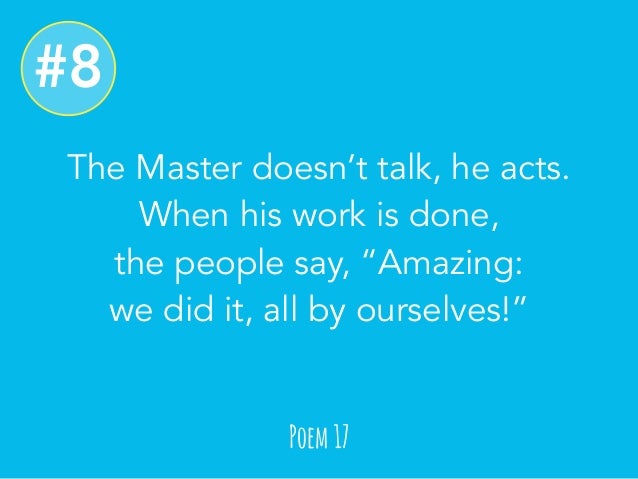


If the psychological imprinting intended by these ads work the way they're supposed to, you will begin to associate that sense of empowerment and optimism with the cereal (or the service, or the candidate).  


You will know that eating Special K is good for you, in that it provides good nutrients without detrimental sugar and whatnot, but you'll feel like you're getting a boost when you look a the box, like remembering the inspirational quote of that person who made a difference in your life.

In short, you're not buying the cereal for what it does for you - but what it reminds you is within your realm of possible, all on your own.

Here it is - the kicker, how marketing is changing and reflecting social change as a whole.

What business do companies like Apple have in supporting gay marriage?  They're supposed to be focused on selling products, right?  Sales is all about focusing on how your product is the best, most capable, the only one that can get the job done for a client, right?  That's what laissez-faire capitalism is all about; hard sales through self-promotion and then ABC closing the deal.  

There's no place in business for wading into social issues.


Just like there's nothing wrong with the polling industry's methodology - it's the people who are the problem.

People seem to be forgetting the way the world works - top-down, assimilate-to-succeed, conservative family values, mass-standardization, sales through self-promotion, etc.  People need to succeed on society's terms and they need to find it within themselves to succeed - not count on external parties to hold their hand.  Right?

Yet more and more companies, parties, organizations and even movements are emphasizing empowerment of the individual, personalized definitions of beauty/success and diversity as a strength.  It's cool to be supportive; it's trendy to hack the system and its standards in favour of the individual.

Hence, companies supporting gay marriage, campaigns like black lives matter and MMIW, etc. Products essentially advertising for their target market, not to them.

And their markets - seniors, women, the LGBTQ community, millennials, etc. rewarding them for it.


See, the smart companies are applying new understanding of behavioural economics and societal trends to tweak their messaging and outreach to be less "push" and more "raise up", empowering their audiences to be co-creators of their brand through UGC.

Smart organizations are, in effect, empowering individuals to reach their maximum potential so as to contribute their maximum to the tranformative social change rocking our world.  

They've adapted to the times, evolved with their markets and are winning as a result.

What's the lesson in here for comms people and marketers?

People don't want to be sold to - they want to be engaged.

It's not about you, nor your product - it's about them.  Position yourself as part of their journey.

To succeed, help them succeed on their own terms - be part cheerleader, part teacher, and be clearly seen to embrace the social issues that matter to them.

The same lesson applies to business, HR and absolutely politics.

If you want to win, put your people first.  Don't focus on the hard-sell; focus on ownership.  It's not about you - it's about them.  

It's as simple as that.

And they will thank you for it in ways you can't begin to imagine.


Friday, 25 April 2014

Consciously Succeeding: Open, Responsible and Empowered


KPI being "key performance indicator."

To be brief:

- This is what smart business are exploring now
- This is what successful political parties/government are going to start doing, too

It's all about maximizing personal potentials - strong individuals for a strong society.

How do we get there?

- Understand behavioural economics and the science of empowerment/resiliency 
- Redesign work and workspaces with a focus on cognitive labour
- Open Data, Open Government, Responsible society.

It's about empowerment.  Leadership always is.

Looking forward to meeting the leaders out there ready to pave the way forward; we've got a lot of work ahead of us.

It's gonna be fun.


Wednesday, 19 March 2014

Voluntelling Vs Empowerment - Are You a Boss or a Leader?


Rogers confirms its Exec. VP sent this email to "a small number of people" RE: campaign rally for John Tory.

Was this email from a person in a position of authority to staff asking them to support a Board Member inappropriate?  I would say so, yes, but I can also understand the other point of view.  

Without context, it's impossible to know if this same VP sends out emails to staff saying "Joe in Sales is putting together a team to enter a cancer run, he'd appreciate your support!)

Neither of these emails, coming from a position of power, are really clever, as the very nature of being a boss demands a certain amount of cow-towing.  

This doesn't, however, mean malicious, manipulative intent on the part of the person in charge.  I know that I've personally learned the hard way that what you say when you're in a position of power can carry more weight than you intend it to.

Which is why it's so important for people at the top of the ladder to make pains to ensure they are communicating effectively with their teams, rather than expecting the reverse to happen - which is how business tends to functions.

Where this reality is most egregious, however, is unquestionably in politics.  Youth who get hired by elected officials to work in individual offices and are paid by the taxpayer through the Legislature are held to account directly by unelected, unaccountable political party officials.

If a political staffer isn't donating to the party, isn't attending rallies, isn't knocking on doors during campaigns, they have no hope of promotion within government offices and can often find themselves discriminated against.  

Aggressive, alpha-bosses like this relish telling kids what to do and asserting their authority by demeaning others.  Worse, they feel that this is appropriate behaviour from people in charge.

The rationale goes like this - if Part X doesn't win and maintain a majority, then all the political staff lose their jobs.  If staff don't get this reality, however they feel about it, there is no place for them in politics.

Politics, of course, is a micro-targeted, sales-heavy, attack-reliant field that churns through people like a paper shredder.  Those who last start to look at the whole world through a partisan lens which shapes their every relationship and interaction.

In this model, the boss never fails, the people do.  Responsibility is never assumed, but deflected. Sadly, we end up with people at the top very good at sales and blame, but not necessarily good at actual work, coordination, collaboration or problem-solving.  It's why we've got some many structural deficits in the first place.

On the other hand, how many excellent Not For Profits with great visions and mandates struggle to get money, retain volunteers or attract skilled talent?  They focus on the work, not on sales and in this world, it's sales that defines success.

This is not how Leaders operate, but leaders aren't about building audiences, raising funds or selling memberships.  Leaders empower people and bring them together, putting them in the driver's seat.

We don't have a work culture that promotes leadership; in fact, there are a lot of great leaders out there with little chance of climbing corporate ladders because they're too busy doing rather than selling.

The people in charge have it backwards.  Instead of demanding people come to them and sell what they have, we need to see more recruitment and talent-searching, with leaders taking time to find out who's leading themselves from whatever capacity within an organization, or within society.

Across the board, I'm seeing more and more money being spent on sales, more and more people being left behind and massive structural gaps appearing that simply can't be solved by aggressive ladder-climbers with tunnel vision.

If we're ever to establish a sustainable society, we need to embrace a true leadership model.

After all, in a democracy, isn't supposed to be the people who are in charge?

Thursday, 25 July 2013

Loyalty in Business and Politics


What is loyalty?  Is it partisan - my country right or wrong? Or is it through dedication to the mission and conscious support of decision makers?  When I think about loyalty, I always come back to this quote from Crimson Tide:
 
Be careful there, Mr Hunter. It's all I've got to rely on, being a simple-minded son of a bitch. Rickover gave me my command, a checklist, a target and a button to push. All I gotta know is how to push it, they tell me when. They seem to want you to know why.  


7 Qualities Of A Truly Loyal Employee

Dharmesh ShahDharmesh Shah

Founder and CTO at HubSpot


First things first: Where employees are concerned, loyalty has nothing to do with blind obedience, or unthinking devotion, or length of tenure.
 
Surprised? Think of it this way. Which employee displays greater loyalty?
 
1. The employee who has been with you for ten years and in that time has learned to do just enough to fly, unseen, under the performance issues radar, or
 
2. The employee who has been with you for 18 months and believes in where you’re going, how you want to get there – and proves it every day by her actions
 
Of course experience is important, but given the choice I'll take the employee behind door #2 every time.
 
At HubSpot we’re fortunate to have hundreds of extremely loyal employees. We're working hard to create a culture that recognizes and rewards true loyalty. We still have a long ways to go, but you can see our "work in progress" in our Culture Code slide deck.
 
Truly loyal employees are not just committed to helping their companies succeed; their loyalty is also displayed in other ways, some of them surprising.
 
1. They display loyalty through integrity.
Many people assume loyalty is proven through obedience: Often unthinking and unquestioning, even when a request or directive falls into a gray area or, worse, is unethical or illegal.
 
An employee who consistently seeks to do the right thing is not just following a personal credo – she’s also looking out for your long-term interests. You may see her as disloyal today… but in time you’ll realize that she displayed the highest form of loyalty by helping you avoid missing the “do the right thing” forest for the “do it right now” trees.
 
2. They generate discussions others will not.
Many employees hesitate to voice their opinions or feelings in a group setting. Some even hesitate to voice their opinions in private.
 
An employee once asked me a question about a new initiative. After the meeting I pulled him aside and said, “Why did you ask about our new pricing strategy? You know what we’re doing – you were part of the planning.” He said, “I do, but a lot of other people don't, and they’re hesitant to ask since they aren’t directly affected. I thought it would help if they could hear what you’re thinking and what we’re planning.”
 
Loyal employees have a great feel for the issues and concerns of the people around them, and they ask the questions or raise the important issues when others won’t. They know, for the company to succeed, that you need to know what employees are thinking… and that employees need to know what you are thinking.
 
3. They praise their peers.
Truly loyal employees care: About the company, about its customers, about its mission… they feel they’re working for something greater than just themselves. So they appreciate when another employee does something great because that means the company is fulfilling its mission.
Employees that praise and recognize others, especially when it’s not their job to do so, don’t just display great interpersonal skills. (When you do something well, praise from your boss feels great… but it’s also, at least generally speaking, expected. At least it should be. Praise from a peer feels awesome, especially when you respect that person.)
 
By praising others, they show they care.
 
Caring forms the basis of loyalty.
 
4. They dissent and disagree
Every great company fosters debate and disagreement. Every great leader wants employees to question, to deliberate, and to push back. Weighing the positives and negatives of a decision, sharing conflicting opinions, playing devil's advocate… disagreement is healthy. It’s stimulating. It leads to better decisions.
 
Loyal employees share their opinions, even when they know you may not initially appreciate those opinions, because they want the company to be better tomorrow than it is today. And they’ll occasionally take stands against a point of view or decision.
 
5. They support in public.
After a decision is made, loyal employees get behind that decision even if they privately disagree. And they don’t just pay the decision lip service; they support the decision as if it were their own – because when you’re loyal, every decision is, ultimately, your own.
 
When they disagree, some employees (the not so loyal ones), whether passively or actively, try to show that a decision they disagreed with was in fact wrong.
 
A truly loyal employee puts aside his feelings and actively tries to make every decision the right decision – instead of willing it to fail so they can prove themselves right.
 
6. They tell you what you least want to hear.
The Inverse Rule of Candor states that the greater the difference in “rank,” the less likely an employee will be to openly take a different position: An entry-level employee is fairly likely to tell his direct supervisor that he disagrees with that supervisor’s decision, but he is almost totally unlikely to tell his boss’s boss’s boss that he disagrees with his decision.
If you’re the CEO, that means your direct reports may pull you aside for an open, forthright chat… but few other employees ever will.
 
Truly loyal employees know that what you least want to hear may be what you – and by extension your company – most need to hear: That an initiative won’t work, that a decision-making process is flawed, that a mistake has been made… truly loyal employees realize that while you may not like what you hear, ultimately you want to hear it because what matters most is doing what is best for your employees, your customers, and your company.
 
Well-intended silence can be a good sign of loyalty; speaking up, especially when it’s awkward or even painful to do so, can be the best sign.
 
7. They leave when they need to leave.
If you can’t tell by now, a truly loyal employee is almost always a sensational employee. Often, they’re your best employees – so the last thing you want is for them to leave.
Yet sometimes they do: For a different lifestyle, for a better opportunity, for a chance to move to a different industry, or simply to take what they’ve learned and start their own company.
When it’s time, they tell you it’s time to leave – and they help you prepare to fill the hole they create.
You? You’re disappointed but you wish them well. For a time, even if only for a few years, they put your company’s interests ahead of their own…
 
…and now it’s your turn to do the same for them. Of course, you can always make your most convincing arguments to encourage them to stay (hey, you’re loyal too!) – but if it doesn’t work out, the right thing to do is to return their loyalty, wish them well and help them continue to stay awesome.
 
Dharmesh Shah is founder/CTO at HubSpot and blogs somewhat regularly at OnStartups.com. You can get new updates by clicking "Follow" at the top of this page.

Tuesday, 19 March 2013

Jobs and the Economy: What Jason Kenney Can Learn From Teachers


Stephen Harper never had a real job prior to politics - he never put his fabled economics degree to the test prior to entering politics.  Jason Kenney served as a lobbyist - a role he has essentially carried over to the Immigration file, as he pretty much spends all his time lobbying ethnic communities to vote Conservative.
 
 
BUT - the Tories have done a pretty good job of stifling opposition, scaring bureaucrats into silence and demonizing those who disagree with their narrow ideology, haven't they?  Power is theirs and they aren't prepared to share it.  Alas, by choking the Census, clamping down on inconvenient evidence and knee-capping conversation, Team Harper is forcing everyone to rely on gut instinct rather than fact.  Instinct in the absence of fact, particularly in tough economic times, will always, always encourage a bunker mentality - the exact opposite of what we need to get out of our worsening economic slump.  It's a limbic thing.
 
 
What I will do is suggest the CPC folk look at some different models to find out how motivation really works and how to foster the independence, critical thinking and comfort with risk they seek.  Of course, first they must unlearn what they have learned.  What's required for them to do that?
 
 
It's not about controlling the flow of fish, folks - it's about teaching people to fish. 
 

Tuesday, 24 July 2012

Provide Alternatives to Crime


Good on Stephen Harper.  Like political minds tend to circle the wagons around issues, but this is a concern that, like mental health, is bigger than partisanship.

There are multiple fronts that need to be pursued.  Identity is one; when you feel accountable to something larger than yourself, you tend to self-regulate a bit more.  Education is another; youth need training that meets their learning styles, but also teaches them to be flexible.  At any rate, it's hard to learn when you're worried about getting shot. 

The other side to keeping kids away from crime, though, isn't just providing alternatives - it's about steering them towards success.  This is within the realm of the possible; you really can teach resiliency and practical social skills like financial literacy, networking, social emotional learning, critical thinking, planning, etc.  Not everyone will be a whiz, but with the right level of exposure and encouragement, everyone can find a niche that works for them while allowing them to be contributing parts of society.

I keep turning back to martial arts training I've received over the years.  Failure wasn't an option because failure meant quitting on the part of the student, the teacher, the family and the community (school).  Falling was inevitable, but as we all know, the reason we fall is to learn how to pick ourselves back up.  The best teachers I have ever had were the ones that were relentless, patient and consistent, making praise something to be earned rather than expected and always pushing me to crystallize my skill a little bit more.  Those lucky of us to have had teachers or mentors like that over the years love them for teaching us that excellence is a pursuit, not a benchmark.

The fundamentals of this style of training can be applied in our schools.  It starts with empowerment, flows through achievement, and keeps on giving with success and resiliency.

It's within the realm of the possible - we just need to commit ourselves fully.


Thursday, 14 June 2012

Find Success Through Empowering Your Employees


It’s petty, it’s cynical, it’s essentially feudal – I give you the privilege of working for me, you even get a salary; you owe me for that privilege.  I’ve written previously about this dominance-model mentality where the boss sees themselves as a feudal lord, entitled to do whatever with their employees, who are essentially beasts of burden.  In today’s economy, this generally takes the form of employers telling employees that their carrots and sticks will be determined not just on the quality of their work, but their ability to find new directions for a business/company to pursue.

Here’s the thing; though we tell ourselves that whoever has the gold makes the rules, the reality is there are social and motivational laws, almost like gravity, that trump any of our impositions.  We don’t motivate employees the right way, because we can’t be bothered to think of them as equals.  When one’s eye is so firmly fixed on the bottom line, you miss the opportunities you have to raise the bar.

If you want more money out of a business, don’t give your employees less and pressure them to do more.  That leads to poor service, higher turnover and lost customers.  Empower them.  Train them.  Give them skin in the game – make them feel like it’s as much their business as it is yours.

This is even truer in the creative sectors like consulting or policy.  Employers, fixed in their ways and uncertain where tomorrow’s opportunities lie are turning to employees and pressuring them through carrots and sticks to come up with new ideas and new markets.  They’re making it a competitive game between their teams to see who can be the most creative and get the perks.  This is so counterintuitive as to be comedic.

It’s also a trend that’s dying out.  Whether employers like it or not, the rules are changing further still – social media is empowering the individual in ways we’re just starting to grasp.  Knowing their personal brands are at stake through association, young folk are demanding more from their employers in terms of accountability.  Smart employers are realizing this trend now and twinning an increasing demand on employees with workspace accommodations, flex time and skin in the game.

People are spending more and more time working – as such, they want to enjoy what they do and feel that it means something.  In this world, success won’t be found by nickel and diming your employees, but by empowering them to share their two cents.