Search This Blog

CCE in brief

My photo
Recovering backpacker, Cornwallite at heart, political enthusiast, catalyst, writer, husband, father, community volunteer, unabashedly proud Canadian. Every hyperlink connects to something related directly or thematically to that which is highlighted.
Showing posts with label Canadian Politics. Show all posts

Sunday, 1 November 2015

Old Scares in New Places


From a Liberal fundraising email sent out on Halloween:

But with the Conservatives already fundraising against us -- as their latest fundraising email put it, “to build a formidable opposition to Justin Trudeau’s Liberals” -- we can’t stand still for one moment. We need to keep strengthening this movement we’ve built.
That’s why we need you to help us finish October strong with a donation right now.

This is how fundraising works - identify a threat and make it crystal clear why your donation is required so the good guys can fight that threat.  And yeah, in modern politics, you do need a lot of money for those expensive ad buys.

Two points to consider:


- it's the job of the official opposition to oppose

There are myriad reasons why the Trudeau-led Liberals won the election.  A big part was what Trudeau represented - hope, hard work, a new way of doing politics.  Another huge chunk was what Harper represented - the worst of selfish, autocratic, divide-and-conquer leadership.

Yes, the Liberals need to keep fundraising - that's part of what parties do.  They must be very cautious, however, to remember why they are in this business.  It's not about having the biggest war chest for barrages of ads between campaigns.  It's hopefully not about ensuring the next Conservative leader is DOA.  And it's not about developing a closed, efficient machine like the Tories had.

The conservatives are neighbours, remember?  It's okay for neighbours to disagree - what matters is the dialogue between them.

It would be truly frightening if the new team has forgotten these lessons learned by so many teams so recently already.


Saturday, 17 January 2015

Harper's Enemy


Enemy.  The person you want to defeat in battle, or at the very least, not be defeated by.
 
Harper has a pat approach to his enemies - silence them, attack them hard, face them with as little profile as possible.
 
You don't need to know who they are - just what roles they fill.  You certainly don't want them knowing you.  And that, truly, is the only thing they want - to take you down and replace you or see you replaced with one of their own.
 
Which works well for Harper, since he believes he's smarter than all his foes anyway.
 
Unfortunately.
 
 
They do a lot of strategy in political war rooms, but at the end of day, those rooms are overflowing with men of peace.  Every decision has a partisan motive; the end goal is narrowly tied to their fortunes and, as such, their scope remains equally limited.
 
 
As we face an increasingly conflicted world and become drawn into these conflicts - and draw them into ourselves - it is unfortunate that there are so few men of war among our leaders.
 
As Prime Minister of Canada, Stephen Harper has played the game, nudged and broken rules and done a decent job of reshaping the country into one he's more comfortable facing each morning.  Those who would seize his throne from him have each been in defeated in turn.  
 
It's long since been about more than just the ideology.
 
Harper has shorted his country in countless ways, leaving us ill-equipped, unprepared by resource or collective conscience for what is to come.  Our democracy is sick at a time when it will face it's greatest challenge.
 
Yet the PM doesn't see this - he can't see this. 
 
Because Stephen Harper has never once in his life truly understood, nor loved, his greatest enemy.
 
Himself.  

Tuesday, 6 January 2015

Of Short-Term Memories and Political Baubles


Stephen Harper is a stubborn ideologue with something of a superiority complex.  It's not for nothing that he's ended up Prime Minister.  But it's not for nothing that he's stayed Prime Minister for so long, either.
 
Harper is also politically savvy.  He knows how to play the game, whatever you think of his actual policy.
 
Which brings up an interesting point. 
 
While it's common wisdom in politics that voters have short-term memories, this isn't necessarily the case.  What's more accurate, I think, is that voters are more emotionally rooted in the present than they are in the past.
 
Can a government ignore the majority of a populace for three years, so long as they throw out some shiny baubles in the race to the finish line?  Is everything old forgiven by a few treats that are new?
 
Political operatives think so.  They always have.
 
There's a big difference, however, between fixing election odds and fixing our ailing democracy. 
 
That's not the mandate of political people, though - they're in it to win, full stop.  If we want structural solutions, we have to look to ourselves to see it done.  Which requires long-term commitment that won't show return for a while.
 
Such is the challenge of our times.


Monday, 8 September 2014

The Buring Platform: Culture Change in Canadian Politics


Very prescient statement from Den Tandt.  Does Harper think his approach is the right one for society on the whole?  Probably.  Is it?  No.  We're seeing a decline in civility, in our international reputation, in the cohesion of our union and the stability of our society as a result.

But none of that matters when you're putting the win before the big picture.

Meanwhile, how many MPs feel like they're not in control and don't even know who they work for?  The partisan culture inside our Legislatures is increasingly toxic, but that's nothing compared to the response politicians get from every-day citizens.

Which is why, from top to bottom, we have to stop looking for grievances, scapegoats or individual wins.

It's not any one man who's the problem .  It's our political culture that needs to change, and that can't happen from the inside alone.

You can't have Open Government without a Responsible Society.


Friday, 8 August 2014

Open Instant Hansard


Few people read Hansard.  By and large, they aren't missing much - it's scripted, melodramatic street-theatre.  It used to be that where the real action happened was committee, which is often going in camera these days - and even then, it's still scripted street-theatre.

Those who do pay attention to Hansard are Government Relations people, for obvious reasons, political staffers, same, and issues-managing public servants.  For some, it's a job; for some managers, the transcribing of Question Period is a value-add product they can offer their bosses.

Which is interesting, because Cabinet Office already does this; if you're on the inside, you get a rough version in relatively short time, while the polished version gets made public later.  What's the point of individual Ministries duplicating work done by Cabinet Office?  How many work hours get wasted on repetitive tasks that, because there's no time for polish, results in duplicated work of lesser quality?


This is why I was fascinated to be asked by Gnowit, a start-up looking into government issue monitoring through new tech and digital tools, what I thought about real-time speech-to-text tools as a service offering.


Of course it would be a great tool for anyone who monitors government issues to have, but taken further: imagine we could automate and make real-time available all government proceedings for everyone - stakeholders, bureaucrats, the public?

That would be an amazing step in the direction of Open Government, which is where we're supposedly heading.  As it happens, the tech to do this already exists; some of it is costly, but certainly no more so than the number of person-hours that go into transcription.  There are alternative, cheaper versions being made available for folk like teachers, too - also of use to students.

It might sound like a simple thing, but it isn't.  Instant, tech-driven Open Hansard would involve a massive culture change, a reduction of relevance in the work of many public and private employees and a loss of control and supposed "value add" on the part of many a manager or consultant.  


As such, this is the kind of change that would be resisted.  The tech could be questioned, the importance of body language nuance that escapes tech emphasized, so on and so forth.  From an economic standpoint, lots of people would be looking for new work to do if they lost this piece, many of them potentially from the street.  Municipalities that have never recorded their sessions and, therefore, never been truly open would certainly drag their feet on implementing any new policies or tools related to openness.

Still, it would be better for democracy.  It fits within the mandate of Open Government.  The tech exists and, frankly, we're starting to move that way regardless.

I'll be interested to see how this progresses moving forward, but guarantee - those too stuck in traditional methodology and the influence it gives them will find themselves left behind.


Friday, 9 May 2014

How Stephen Harper is Making Canada Sick


The strength and quality of Canada's governance is diminishing under Stephen Harper's iron-fisted rule.

Any challengers to his agenda are ignored, attacked or, where possible, fired.

Evidence that demonstrates there may be a problem with the way he governs is dismissed, buried or where possible, starved out of existence.

This presents a tough challenge for bureaucrats whose job isn't to serve Harper's partisan ideology, but the well-being of Canada.  When they have facts that prove Harper's policies are detrimental to our national interests, it's their job to raise concerns with the government.  

When that government, in turn, bullies the civil service into doing as they're told, the combination of stresses (doing what you know to be wrong, micro-managed to death by ideologues with no respect for the facts) takes a toll on individual health.  And through aggregate, collective health.

Which is why Canada's bureaucracy is growing sick, too.  They're not alone, though - tough-minded, top-down managers are fostering the same kind of illness across the board.  

There's consequence to this laissez-faire approach.

Here's the thing, though; when you have an individual who refuses to listen to advice, makes decisions they should know to be unsound and gets mad at those who challenge their destructive behaviour - behaviour like Stephen Harper's - well, there's a precedent for that, too.

Not long ago, people had trouble following me when I connected labour reform to mental health.  Now that it's a legitimate thing, they're not seeing how occupational mental health connect to Open Government.

Give it time, folks - you will.

UPDATE: Need any further proof that our PM is functionally fixed and likely addicted to power - to the detriment of us all?  Voila.  What's needed at this stage of the game is an intervention.

Tuesday, 1 April 2014

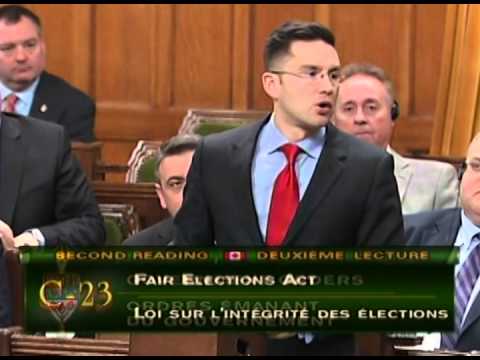
Come Outside, Pierre Poilievre - Spring Is Coming!


Rules?  What rules?  The Globe and Mail has clearly missed that the only rule that matters when a Party feels they have an empire - they act, they create their own reality... they're history's actors.  All of us, we're just left to study what they do.  We commit sociology by studying, they just do.

Which, of course, is the ideology that's fueling Stephen Harper and his point men/women (but not, I would say, his whole Party).  Poilievre is poster boy for the smug entitlement that has corroded the institution Harper inherited from Preston Manning.

But there's something else going on here, something meta that the hyper-partisan and delusionally confident mud-slingers like Poilievre are missing (when you feel like you shape creation, you do tend to miss both the nuances and the bigger picture).

First - does no one else see the irony in any Members of Parliament (which serves the sole purpose of holding Government to account) serving as Government (so, holding themselves to account?) now reshaping the laws around democracy to better suit their interests?  It's like Magna Carta in reverse.


This is a key point I don't think enough people are paying attention to.  We've gotten so used to relying on Parliamentary traditions and conventions that we forget just how much of the current operation of Parliament is not reflected in our Constitution.  In fact, our Westminster Parliamentary system wasn't actually designed to have Political Parties duking it out over which gets to form the Monarch's government.  

It's no wonder our politics have gotten so squirrely and that Party Leaders now serve as partisan lords and stand-in monarchs both.  Political Parties evolved out of the Restoration, when the Horse Drivers (Whigs, now called Liberals) and Outlaws (Tories, now called Conservatives) were at odds over the religion of the King.

These were different perspectives that formed groups within Parliament, the body meant to hold Government to account.  It's by convention only (it being easier to tweak an existing system instead of implementing a new one) that we're now at a place where the politicians elected to hold Government to account on behalf of the people are now acting as Government and holding themselves to account.

Is it any surprise we now have Governments acting like Monarchs and focused on doing whatever it takes to win majorities so they can act, essentially, like empires?  When they are accountable to themselves only, who's to stop them?

Which brings us to point number two.


Given this reality of win-focused, self-serving partisan groups (largely directed by unelected, unaccountable to the people backroom operators) it's no wonder why there has been a notable shift in how civic protest against the closed-door, unrepresentative nature of our politics is manifesting itself. 

While the tough-minded alphas at the top insist that people are sheeple and that any changes they implement are etched in stone, discontent with the system entire (and the people nudging it away from true democratic operation) is swelling. 

Occupy was a lot of noise, little action and has been easily dismissed.  Idle No More brought more action to the table, but has not been seen as a wide-spread movement.  

It's really hard for people who don't believe in committing sociology to recognize emerging social trends until it's too late.

Both Occupy and Idle No More still exist, but more importantly they have fed into a longer-gestating Open Data movement that's started within bureaucracies and aims to completely transform how our government functions.  The partisans can bark orders, micro-manage and catalyze all the scandals they want; they come and go from government all the time.  The Public service has to take a longer-term view and, as such, is becoming much more strategic in how it both plans and positions policy for their "political masters." 


That's before you take into account Samara's almost ethnographic deconstruction of our system's failings, non-partisan GOTV training for less-likely-to-vote (and therefore, be engaged by partisans) communities and of course, the broader Open Data/Open Government movement.


Make no mistake - there is a movement out there, and it's growing stronger.  

You can call it the Canadian Spring (which, as a Game of Thrones fan, I enjoy) or, for historic relevance and bodacity, the Peaceable Revolution.  However you brand it, the direction is clear - change is on the horizon.  The further this or any government tries to tighten its grip, the more public trust - including that of their own partisans - will slip through their fingers.

In trying to recreate a mythical past, folk like Poilievre aren't further entrenching their power for perpetuity - they're merely expediting their fall from grace.

Which is why it pays to commit a little sociology every now and then; it actually helps overcome blindness.

If, that is, you're open to seeing.

Tuesday, 25 March 2014

Requiem For Democracy


Power is a drug.  At the very least, it's addictive.  As we all know, people on power trips do crazy things.  There are no surprises here - hungry people aren't rational.

In politics, being government is the pipeline to power.  For politicians and the operators who support them, forming government is the emotional equivalent to being on TV; you're nobody if you're not there, so getting there matters.

As our politics has become increasingly hyper-partisan, there's been a growing disconnect between those on the inside (who, regardless of their proximity to power, still feel like outsiders) and The Rest of Canada.


This highly-concentrated, dangerously unbalanced power distribution is where we came from.  Our particular brand of Parliamentary Democracy, starting with Magna Carta, was intended to circulate power to the rest of society, reducing the risk of unbalanced, power-mad monarchs at the top making irrational choices that impact negatively on the rest of us.


Yet we've been cycling back to that model, with power again being concentrated in the hands of a confrontational, irrational few who put the brand before the plan.

The increasingly concentrated doses of power consumed in the backrooms of politics are having the same sort of impact on our political people as they do on any addict - the difference being that these aren't people on the streets, they're the policy makers of the nation.

They (and our system on the whole) are spiraling out of control, just as it seems so many threads of our global social fabric are coming undone.

Somewhere in here is the A and B plot for an amazing movie, which I'll be sure to write when, you know, I'm not so busy.

But Clint Mansell has to do the score.  Can you just imagine what his theme for Requiem For Democracy would sound like?