Search This Blog

CCE in brief

My photo
Recovering backpacker, Cornwallite at heart, political enthusiast, catalyst, writer, husband, father, community volunteer, unabashedly proud Canadian. Every hyperlink connects to something related directly or thematically to that which is highlighted.
Showing posts with label Open By Default. Show all posts

Monday, 16 June 2014

The Return of Don Drummond


Drummond's not the only one who's suggested that clear-cutting the public service isn't the best way to nurture sustainable growth and efficient service delivery.


Through his Open By Default report on Open Government, Don Lenihan did the same thing.

The truth is that we have a oxymoronic silo-based system riddled with duplication, gaps, overlaps where title, process, position and information hoarding takes precedence over efficiency or results. Mid-managers are downloading the innovation imperative to staff, expecting them to include metrics on how they're going to think outside the box in their self-written performance reviews.

Clearly, they haven't heard of the candle problem.  You can't pressure people into being innovative. You can't force innovation through competition.  

Worse, a complete lack of communication flow leaves our public servants in the daily equivalent of shoveling water - they don't know what they're doing, why they're doing it or what result it's expected to have.

It should come as no surprise how heavily medicated our OPS is, but doing anything about that would mean a whole lotta culture change and a great number of entitled folk recognizing they're part of the problem.  

That's not gonna happen overnight, but it won't happen at all until someone takes ownership of the problem.  That ownership doesn't necessarily have to come from government.


There is plenty of money out there.  More than this, there's as ridiculous an amount of inefficiency in the private sector as their is in the public sector (we won't even get started on the NFP sector).  Like lighting a fire when all you want is light, a great deal of energy is being wasted to create new wealth without sufficient effort being spent on internal management.

This is particularly true where it comes to HR.  

Precious little time is spent on the "onboarding" process and few employers have the slightest grasp of environmental/work design impact on productivity, presenteeism, innovation and customer experience.  They just want things to work, damn it, without having to put thought into how to get the results they want.

Fortunately, there are best practices out there - people and organizations in the private sector that are adapting to the Knowledge Economy by improving how they do HR, how they consult and how they engage with their clients and the community at large.

Just imagine if there was a coalition of the willing that banded together and told government "we want to partner with you on these big, structural solutions - but we want your help, and we want to see you setting the example.

How likely is this to happen?  Not overly, but you might be surprised how many willing parties there are already.

It's a good kind of problem to work on, and to gain brand from being part of.


Wednesday, 11 June 2014

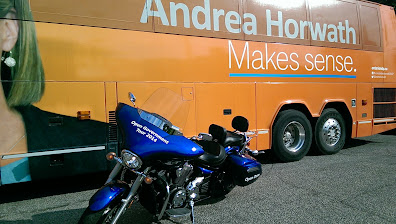
@AndreaHorwath and @TimHudak: Open By Default


We haven't heard a lot about Open Government this campaign.  It could be that the NDP and PCs see it as a Liberal thing - which is odd, seeing how OpenGov is being championed by the Conservatives federally.


PhotoOpen Gov and Open Data aren't a Liberal thing - it's being spearheaded by the bureaucracy.  It's also not limited to Canada, Ontario and Toronto; literally, Open Gov is a global movement, which is very cool.

There's more than a passing chance that they really have no idea what Open Government is about, though, or why it's both common sense and a job creator.

They can't be blamed; as of now, there are really passionate, smart, engaged people speaking in complex technical terminology at events called hackathons.  

While the concept is about engaging, the message still needs refined and designed to become a conversation.  That is, however, the goal.  Makes for a great, already-built opportunity that political communications pros could capitalize on, don't you think?

Photo
I wouldn't want to think that either the NDP or PCs are shy about embracing Open Government because, well, it's open; after all their smack talk about the Ontario Liberals, they could be extra cautious about creating opportunities for their own selfish plays or examples of mismanagement getting out.

Thing is, this is a genie that's out of the bottle.  

People are more disaffected than ever with government and politics.  Those who've been inside the system for a while are assuming the disaffection is the same as it always is and are therefore continuing to play by outdated rules of engagement.

They don't realize the game has changed and that there's a new player at the table.

In the very big picture, it doesn't matter who forms the next government - the challenges faced are the same and the solutions are all variants on the same theme; open, authentic engagement, from top to bottom.  Nothing less has the capacity to deliver the shared solutions we need, nor empower people from every walk of life to be part of their implementation.

People are sharing their lives online.  Leaks and FOIs are revealing the inner lives of politics.

It's simply good planning to get out in front and be open first.  

As every pol knows, it's better to define yourself than let someone else do that defining for you.

Photo

Monday, 31 March 2014

Is Open By Default Magna Carta 2.0?


Open By Default: A new way forward for Ontario is just a report, arranged and paid for by the Government of Ontario.  Said Government can choose to ignore the whole thing if they want to, sticking this report on a shelf to collect dust with countless others that have come before it.

And quite frankly, from both a political and clay layer bureaucratic level, there's much reason to ignore the whole thing because many of the recommendations, if implemented, would lead to some uncomfortable reveals and require some anxiety-causing culture change.

But, as Lenihan said, that's the point.

Politics as usual is letting us down.  It's letting the politicians themselves down, as has been clearly indicated by reports such as the MP Exit Interviews done by Samara.  Increasingly, the focus is shifting from anything even remotely resembling decent policy to blatant partisan positioning, rhetoric and factually challenged messaging.


And it all costs money - lots of money.  Money that could otherwise be going to actual charitable causes, to children's education funds or to support social entrepreneurs.

Political Parties have become capitalist enterprises, pushing for more and more donations for the return of a sticker or a sweater, with the end goal being to put their CEO on the throne.

The publicly paid-for staff closest to leaders are wholly partisan operatives, nudging actual public servants and elected officials away from serving the public interest and instead delivering wins and slug-lines for the Party.

Ask them why.  They don't know why.  They'll tell you it's all about getting a leader in charge who will best be able to support one class or another, but scratch at that message a bit and you'll find that immediately underneath lies nothing but more pushes for money and ambitions to entrench one Party or other into the national fabric in perpetuity.

And this makes sense - because partisan politics is all about winning, full stop.  A Party can deride an Opposition position with gusto and then assume it themselves without batting an eye, if they think it serves their purposes.  They can decry wrongdoing in one Party at the same time they employ the very same tactics themselves.

Why?  How can politics be so cynical?

Because Harper was right; Canadians fundamentally don't care about how the system works, but this is only because we can't see how it works - or fails to work.  We can't see just how much money and time is wasted by lateral departments that don't communicate, work at cross-purposes or establish programs based on narrow mandates and include embarrassing excuses for metrics.

We might know sub-consciously that by and large, any consultation processes are token exercises to foster the illusion of listening, but we don't see how that plays out in real-time, or over time.  It's not crystal clear to us how poorly the left and right hands of government fine-motor skill is missing.

But it could be.

With Open Data, every transaction, process, tidbit of information shared would be open by default.  It's not a process of micro-managing individual bureaucrats - it's a matter of illuminating the systematic flow of information to identify where the blockages are and fix them.

More than that, Open Government will fundamentally change the way information is aggregated, analyzed and acted on by ensuring the people have a collective say.  This isn't to say we get whatever we want, which should never be the case; people aren't rational actors, which is why laissez faire capitalism is such a bust.

No, the point is that we can communicate what we want, be encouraged to see how our pieces fit into a bigger picture and plan accordingly.  In this model government becomes a conduit, a facilitator, ensuring a balance of responsibility and action that best reflects the needs first, and wants second of the people.  Which is how our democracy is supposed to work.

Magna Carta was the first step taken in Britain to wrest absolute power away from the Crown and provide it for the first time (not return it) to the collective people.  It's important to remember that before William the Conqueror there really was no State to work with and people functioned much more independently.  Increasingly complex society, however, requires increasingly complex (and, to actually function, representative) governance.

Partisanship was not part of this system.  Partisanship is a political convention, not a policy law.  And increasingly, it's getting in the way of good governance.  Funding gets allocated based on a few ideological/vote-winning tricks, only to be shifted when power switches, meaning no big-picture work gets done.

As we're seeing in Ontario, the political culture has become so toxic that schoolyard taunts are now being met with threats of legal action, reducing the capacity of ideological opponents finding common ground.

They may feel they have no common ground to stand on, but they're wrong.  There is one land, we all inhabit it together, and if they can't work together, they've become part of our collective problem.

Open Data presents a real challenge, a culture change that partisans aren't open to; it implies a loss of power and a level of accountability they aren't interested in.  This is why we haven't seen as much traction for the Open Data Movement in Canada as has been the case in other jurisdictions.

But it's not about what's convenient for the partisans; it's about what's good for our country, our province, our communities.

Partisan operatives may not feel the need to consider the recommendations of reports like Open By Default and may not see value in respecting the opinions of elected officials, but those elected officials know that they will never get a Minister's position if they don't first win a seat - and that relies on votes from citizens more than it does money from the Centre.

Like weeds cracking through old cement, there are individuals and groups at all levels within the entrenched system trying to implement change.  They're leading open lives, proactively engaging on social media and trying to open up their data as best as they can.  Within politics, there are some Members and staff who are tired of the constant pressure of playing Machiavelli and would welcome a return to a properly functioning democracy.

There's not so much will, though, because there's not enough demand.  It's the political special interest groups that dominate their attention and hold their feet to the fire.

If we ever want to get out of the hole we've let partisans dig our democracy into, it's we, the public, that needs to step up.

Governments can ignore reports like Open By Default if they feel there's no pressure to act on it.  But if Open By Default were a position with a million signatures of rank-and-file citizens from every corner of the country, that would be a different story.

Especially if, courtesy of open data, you could map out those signatories and show how much demand for openness was concentrated in places that partisans need to curry favour to win government.

If we truly want change, we have to stop waiting for the powers that be to deliver it to us.  There is no power greater than that which we wield collectively, as the people.

Real change is possible, as unsettling as it may be, but it's up to us to demand it.


Friday, 28 March 2014

The Peaceable Revolution: Ontario's Ballot Question


Which example should I pull for my quote?  Breach of trust?  Contempt of Parliament?  Empty rhetoric, partisan positioning, misdeeds from staff, lies from leaders, bad behaviour, falsified behaviour, so on and so forth?


Which is what our politics has become - a melodrama that cycles endlessly, resolving nothing, going nowhere.  Why?  Because the people instigating it are so confident they know where they're going, they actually refuse to look ahead.

Save us, lord, from short-sighted people.  You know, the ones who put the win before actually accomplishing anything.  They position themselves as the only answer to our structural deficits but the truth is they're the problem.


Political operators are convinced of their righteousness and have gotten pretty damned good at confabulating rationale for moral lapses.  It always involves tight political framing of them vs us, meaning we have to do whatever it takes to stop them from taking over.  Only their leader can save us from the barbarian hoards at the gate.

These are the folk behind close doors who look at the people as pieces to be moved on a board.  

At this very moment, they are gathering their polling data, field-testing their messages and trying to find the ideal ballot question that frames the next election, every election - we have one municipally, provincially and federally in the offings.

The content of the question doesn't really matter, to them - whatever helps them win does.  That is how partisan politics works, after all.


But these aren't stupid people, nor are the entirely blind to the will of the people, when it surfaces.


That doesn't happen often, especially in these days of message-heavy advertizing and micro-targeted policies and outreach campaigns.  But it does happen, and when the people raise their voice loudly as one, the folk at the top can't but hear our thunder.

Here's what I'm hearing from the people on the street and in our Legislatures reading in the headlines and reports from organizations across the political spectrum and the few genuinely non-partisan ones.  

They don't know who's driving any more and certainly don't think anyone knows where we're going.  

We see blame, we see deflection, we hear boasts but see little action and almost no process.  We don't trust the people at the top, largely because we can see how much they have cut themselves off from the world they seek to govern.  

But the system is such that it really doesn't matter who gets in; corruption, dirty tricks and cynicism have clearly set in at all levels, among all Parties.  You don't cure lead poisoning by changing your cup - you have to get in and replace the pipe.

This is what Open Government and Open Data are doing, internationally.  They're unsexy terms for what is truly a revolutionary movement which will change the nature of government and civic engagement in ways as dramatic as Magna Carta and the English Civil War did for Responsible Government.


Federally, the Harper Conservatives are leading the charge.  Provincially in Ontario, it's Wynne's government.  In plain sight where people aren't looking, bureaucrats at all three levels are working together to make themselves accountable to the people and bridge the gap between citizens and their government.


It's real, it's happening, and it's powerful.  

But it's not where any of the Political Parties are focused.  How could they be?  There's nothing them and us about open government - open government is about everyone.  It's bad politics.

But it's good governance.  It's necessary change if we're to break through the barriers that are keeping our society from growing in the way we need to.

Which is why, this time, the people shouldn't leave it up to the partisans to establish the ballot question.

We should be doing that ourselves.

In Open By Default:  A new way forward for Ontario, the provincial government is challenged to establish themselves as a national leader on open governance and open data - to be leaders of the Peaceable Revolution for a Responsible Society.

It's the right thing to do, but it's also a hard path to take, without support - there's too much partisan risk involved.

But not if we make that the ballot question.  


If Ontarians make it clear that we're done with spin and messaging and want to see our leaders walk the walk, we could frame the ballot question like this:


Which Party is going to demonstrate their commitment to Open Government and Open Data between now and the election by becoming completely Open Themselves?

They could position all they want, frame themselves as the solution to the Opponent problem all they want, spend their money on as many attack ads all they want.  It would be resources addressed to the wrong problem, as partisan politics so often is.

We would look for the Party most able to open its doors for total transparency and direct accountability.  Every staff hire, fire, training paid or not paid for, advertising dollar, consultant dollar, fundraiser held and who attended, community consultation and which groups were invited would be open for the people to see.

The people could judge the Party not on what they say they will do, but on what they are doing right now.

If we believe a Party is open, then we'll believe they're open to advice, consultation, shared solutions - democracy.  

If, and only if, we see that they are walking the walk, they would get our support.

Here comes the sneaky part.


Should every Party see clearly, unequivocally that the people have an unshakable devotion to open government, they would all have to move in that direction.  


Win or lose, the people would reward the behaviour they want, forcing each Party to continue down this path in perpetuity until, as with any evolution, openness becomes innate.

It's not about left or right, them or us, who's at fault - it's about everyone moving forward.

Whichever Party willing to trust the people and lead by example, we would trust in return.

This may sound like a pipe dream, but it isn't.  It's a reality that's emerging right now.  And those Parties unable to adapt to this spin of the wheel are going to find themselves falling behind.

Which is how it should be, no?