Search This Blog

CCE in brief

My photo
Recovering backpacker, Cornwallite at heart, political enthusiast, catalyst, writer, husband, father, community volunteer, unabashedly proud Canadian. Every hyperlink connects to something related directly or thematically to that which is highlighted.
Showing posts with label Canada. Show all posts

Friday, 14 February 2014

The Maintenance of Morale in Politics


In politics, you hear a lot about tactics and strategy, communications and attack ads, ground wars and War Rooms.  What you don't hear a lot about is morale.

Politics is, in theory, a zero-sum game; you win power or you lost it.  Everything in between simply means the war isn't over yet.


And war is the appropriate terminology here.  Political operators are increasingly seeing themselves as generals in epic battles between good (whatever our side is) and evil (the other guys).  There can be no middle ground in these titanic contests and, as such, no focus wasted on anything that isn't growing the numbers.


Policy is designed to woo voters (or suppress support for other Parties) and entice donations, which is why Members get fundraising letters after each and every announcement.  

Attacks are the same - they focus on the bad of whatever is proposed by other Parties and seize on any gaffes, portraying them as The Worst People In The World.  Attacks are also accompanied by requests for donations; we need your money to stop them, after all.  Only we have a plan; they will eat your babies.

Political fundraising is no different than selling war bonds.  Every donation you make is a bullet in the barrel of your best guy's gun... er, a flyer in the mailbox for your best candidate.  


Who will campaign door to door for the country/province?   Why, the super-heroic leader with a plan, of course.

In political warfare, everything flows inwards and uphill; every hour volunteered, dollar donated, call made or video retweeted is meant to build the brand and capacity of the leader, like a rush of blood to the head.

For senior political operators, this is the message that needs to be communicated to the public, but especially to every paid staff, association member and volunteer - to support the cause and fend off the barbarians at the gate, you need us.

Regional members that question the Leader get chastized.  Paid staff who aren't spending their spare moments knocking on doors get fired.  Wannabes who don't go knocking on doors don't get hired.  Members who can't add to the War Chest don't make Cabinet.  Cabinet Members who disagree with the Leader don't stay in Cabinet very long.

Follow the Leader to win.

This is where political wisdom and actual military practice diverge wildly.  

In politics, the theory is that you can brow-beat, cajole, bully and pester your team as much as you want so long as you produce a win.  Do that, and all else if forgiven and forgotten.  Those who fought most aggressively (or advertized themselves most aggressively) get rewarded for what they do.  Those who didn't measure up (or, heaven forbid, complained) get ignored until the next election or dropped from databases entirely.


Morale is considered a product of victory, not a tool to achieve it.  If you can't suck it up, then you don't belong in politics.  It is a blood sport, after all.

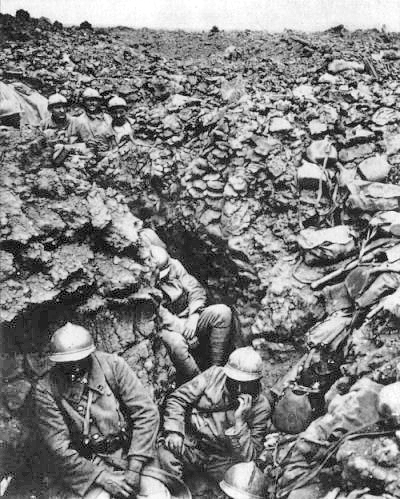
In the military, the reverse is true.  Through hard lessons and by studying previous ground wars, great generals have learned it is an absolute failure to dismiss your troops as pawns to be moved by master strategists.  If your ground commanders take issue with a set of instructions or an approach, it pays to figure out why.


Whenever I'm giving advice to political people, this is the message I try to drive home - leaders don't win wars, teams do.  Particularly in this day and age where one campaign bleeds into the next - where, essentially, the war never ends - the maintenance of morale should be the second item on the leader's must-do list.
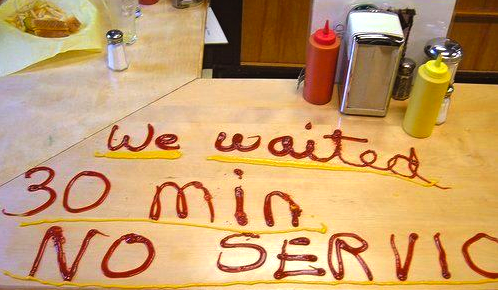

If a front-line soldier is dispirited, if their morale is low, they lose their focus and are more likely to wither at the first sign of steep resistance.  If a front-line retail worker feels underpaid and unappreciated, they're going to give customer service commiserate with what their bosses have indicated they are worth.  

Or, they're going to treat that customer in much the same way as they're treated - as someone that needs to get in line and do what they're told, rather than as a partner who's valued and respected.

The same holds true for politics.  Where morale is low, chances of success are low; chances of sustained success or growth are even more dismal.

It's wrong to assume that a local association or candidate is obstinate or lazy because they disagree with an approach or don't seem to get your message.  Odds are they have a reason for disagreeing, that your message wasn't properly communicated or they don't feel empowered and emboldened enough to act independently.

You might be surprised at the level of resistance this notion receives.  It goes against the whole "star spangled man with a plan" of traditional political wisdom.  It's the numbers - of dollars in the bank and memberships signed - that matter; everything that doesn't directly fuel these two endeavours is wasted effort, especially when you're talking about the leader's time.

There are three main reasons that contribute to this top-heavy, morale-low culture:


1) Politics isn't about winning, it's about survival of the fittest

If volunteers don't pan out, they'll wander off; if staff aren't doing what you demand, they can be replaced; if associations or candidates can't manage on their own, that's their problem.  

Which is why Partisans become so disconnected from reality, become geographically centralized and end up with a bunch of people at the top who think and act in exactly the same manner.

Evolution isn't consolidation, however - it's about adaptation.  You don't get that without diversity and expansion.

2) Politics focuses on battles, not the war

Get through this battle, worry about the next one later.  Promise whatever to win now, worry about implementation later.  

You can always spin your way out of the next problem, right?  Those who disagree with this sentiment just aren't functionally focused enough on what matters (see point 1) which is to keep winning (see point 3).

3) Partisans put the Party ahead of the People

Remember how I said that morale is the second most important thing leaders should focus on?  The first is vision.  

Without vision, politics is tribal warfare.  This is why you can see the same policies come from completely different Parties - even if that same Party has previously criticized that policy.

Tribes, by their very nature, are small and much more homogeneous than larger, more complex societies.  They don't need vision or complicated infrastructure to function and are much better at identifying who enemies are - they're those who aren't us.

Politics as we see it can't be tribal - not if it wants to succeed on the grander scale and certainly not if it hopes to build sustainability into our system.


And this is the biggest difference between politics and true warfare.  Wars haven't fought for leaders since the days of feudalism.  Today, wars are fought for the well-being of the people and they're fought together.


That's what our politics is missing.  Leadership isn't about people supporting you - it's about you supporting them.  


Leaders know where they're going and will do whatever it takes to help their people get there.  That's morale.


Sunday, 25 August 2013

Justice League Canada; Injustice Quebec


Justice League Canada!  Amazing - Superman is a Canadian creation anyway, so it's a bit of a homecoming.

It's too bad these superheroes won't be allowed in Quebec, though - headcoverings and all... 

That's the cost of social exclusion - when you isolate yourself in the name of protecting "tradition" you cut yourself off from the cool, fresh and innovative too.  That which fails to adapt, etc.


Monday, 1 October 2012

What Do Omar Khadr and Pussy Riot Have In Common?


Two governments trying to look tough and decisive are facing legal cases that are causing all kinds of political headaches.  Things are way out of hand with Pussy Riot - a political statement/publicity stunt that should have merited at most a slap on the wrist and some discouraging words has seen musicians treated like terrorists and their children left as collateral damage.  Where Omar Khadr is concerned, the jury of political opinion has largely condemned a man on hearsay; the facts don't matter when your emotions lead.
 
The broader legal ramifications are less of a concern in Putin's Russia than they are in Harper's Canada.  Although there is much in common between the political approach of these two men, we have a much stronger domestic legal system here.  Despite what polls and pundits might be telling us, Canadians are far less receptive to legal rights being trampled in the name of security.  When we are made to question the stances we have taken on Khadr - and we will be - I can guarantee there will be some displays of cognitive dissonance across the nation.
 
Which is a good thing, because there is much to question.  We Western countries like to believe we are bastions of free speech and tolerance; some pundits have, in essence, told those who took offense to The Innocence of Muslims to calm down or get a life.  Yet we are happy to vilify a child-soldier in the absence of fact and we are willing to lock up young women performers because they offended someone's religious sensibilities.  Here in Canada, we even threaten activists whose opinion we disagree with and attack officials who try to shed light on uncomfortable facts.
 
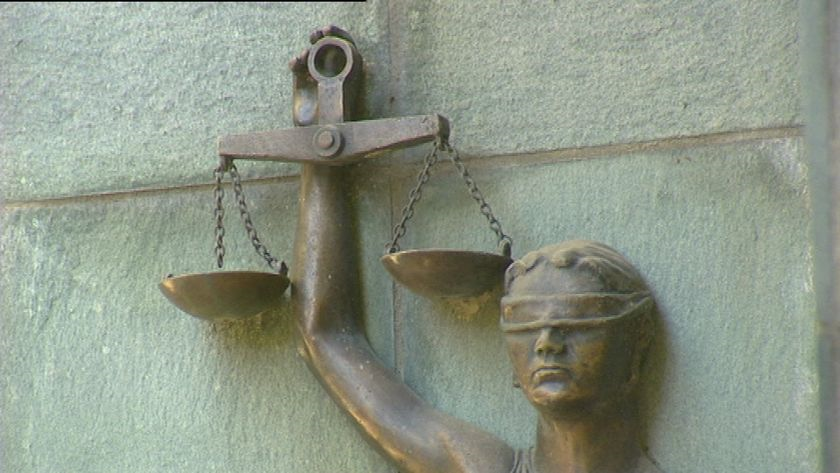
Both Harper and Putin are praying that their little legal bundles of joy will just somehow go away.  That's not going to happen.  The choices they have made or refused to make will have consequences, which is as it should be.  Justice is supposed to be blind, but it seems it's our leaders trying to block out inconvenient truths.


Wednesday, 26 September 2012

Politics Now


Speaking from my minimalist experience, I can tell you politics is a blood sport; loyalty is demanded but scarcely returned, partisan benefit regularly (and increasingly) squeezes out broadly-based good public policy and individual human value counts for nothing.
 
It's funny - for all the attention paid to developing human narratives in support of partisan ambitions, politics is ultimately a dehumanizing process.  Comparisons to warfare are spot-on except instead of your life, it's your reputation that is constantly on the line. How many front-line staff have had their names torn to shreds in the media, sometimes just for following orders?  
And that's just the external risk.  Political campaigns (which never really end, these days) are kill-or-be-killed scenarios.  When you work an election, you get to see the uglier side of our democracy under high-pressure situations with little food and sleep. Frequently, you are given ample reason to question the people and beliefs you are fighting for. In your devotion to the bigger cause, you'll sometimes even find yourself justifying lapses in your own moral standards.  Unlike war, though, you can't always count on your teammates to have your back; they're just as likely to stick a knife in it if doing so serves their interests.  Where reputations and future success are at stake, you pretty much expect to be abandoned should ever you fall.

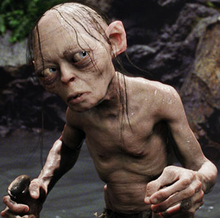
A lot of folk in politics believe that empathy is for the weak. These are the political Bill Kilgores that talk about victory but really see nothing but the battle. They will pathologically throw colleagues, staff and even leaders under the bus or download responsibility for their actions, never thinking twice about the consequence for others. It's kill or be killed, they tell themselves. We're doing what everyone else is doing, just more effectively. This probably comes as a surprise to nobody - there's a reason why we don't trust politicians. What's more of a surprise, I'd warrant, is just how many people in politics do have a conscience.
 
These aren't the folk that are in politics primarily for prestige or position, but because they (perhaps naively) actually believe in the system.  Most of them don't last long.  Those that do invariably end up with at least some innocent blood on their hands.  If you have any shred of decency, the things that you have endured and done to stay alive or support your cause will haunt you long after the election has ended.  Operators likes this wear their political sins like a chain, unseen yet chafing.

There's a reason dedicated campaign staff emerge from from the shadows of elections looking a bit like wraiths themselves, expressing PTSD-like symptoms.  Somewhere along the journey they've started to lose faith in the vision that motivated them in the first place and, therefore, are left to question just what it is they believe in and what they have sacrificed in support of that cause.
 
Why do we fall, though?  Because sometimes it takes feeling like you're in the bottom of the pit before you can really look around at the every-day people impacted by politics.  You also have to reach the bottom before you have reason to look up and see the light.  I can think of a couple high-profile people who have seen their entire lives dissected on the public stage - that kind of deconstruction invariably leads to some painful introspection as well.  One fella I recently had coffee with is in the process of re-findging himself and trying to figure out what his life should mean.  That was the key thing, though - it has to stand for something. 

Although these folk might not always have faith in themselves, it's the people who question the status quo and suffer from self-dout that give me the most hope

Why's that?

Because while things end, endings don't always mean what we expect them to.

Monday, 16 July 2012

The Fall of the House of Harper


One of my favourite personages from history is Alexander the Great - a leader, a man of passions, a visionary, but also someone who built a cult of personality around himself alone and pushed the boundaries and patience of his empire too far.  None of his generals could capture what he created; none could even think quite as big.  So, the empire Alexander built fell.


Stephen Harper is no Iskander; he has centralized control, set himself up as "Napoleon" for his Party, but all the things that have helped him rise will be the downfall of the empire he has built from the bottom up.

Truly, I feel bad for him - Harper will not be remembered by history too kindly.  In fact, a hundred years from now, nobody will talk much about him at all.  It's the problems that will follow his reign that everyone will rue.


That, however, is the fate Canadians have elected.  When you focus on firewalls and empire-building, it will always be thus.


Monday, 11 June 2012

China in Canada: Circling the Water Hole


One of those countries is China.  China’s communist regime has a lot of challenges on their plate these days – significant internal pressures that are building to the boiling point.  Their water’s running out, they have a couple bubbles waiting to burst, the middle class is feeling both duped and squeezed and there are still too many people having to get by on the equivalent of $1 a day.   

One thing in their favour, most of the time, has been a stable political process that, while stifling democracy and causing a lot of the problems they now face, at least allows for long-term planning.

Knowing the internal challenges they face, China has been playing the long game.  While Western countries get caught up in four-year political cycles and scandals ranging from election fraud to bunga bunga parties, China has been building its presence in Africa and the South Pacific, making the right friends and casting its shadow over those they can control.

China has more troops positioned in Africa than Canada has, period.  They are positioning themselves for resource access but also land access, as they’re going to need somewhere to grow food for their massive populace.  In addition to food, though, China is going to need water.  Where is the world’s largest freshwater system? 

Prime Minister Harper, determined to build a natural resource-based economy that capitalizes on Alberta oil walked off in a huff from the US and into the welcoming arms of China.  To maintain and build a stronger relationship with China, Harper has opened the doors to Canada’s telecoms sector.  He has done this against advice from his own advisors and foreign partners.  Unfortunately, Harper and his inner team are believers of the “reality based” model of politics – they think they can create reality if they are tough and shrewd enough.  Sadly for us, they’re wrong.

China sees oil as a panda foot in the door – but they aren’t going to stop there.  As they start circling Ottawa, you can bet they’ve got one eye turned towards the Great Lakes.

Far from firewalling Canada against troubles lapping at our shores, Harper has now made us vulnerable on several fronts to a player that has drawn the consternation of many allies, including our southern neighbours.  If the US sees China’s presence in Canada’s telecoms as a threat, if they start to see the potential for external competition over our shared fresh water, you can guarantee something will budge.

There’s a way to make a win of this, but not through the strategy Harper is playing.  It’s time Canadians start paying more attention to global water woes – because those are challenges that are going to come home to roost sooner rather than later.


Friday, 16 March 2012

My Idea of Canada


Today, under a glorious sun and with a fresh breeze blowing, I took a walk through the main campus of U of T.  The old, elegant stone buildings had a faintly musty smell that carried on the wind.  History brushed against each sense in turn.


The campus itself was alive, vibrant with students basking in the warm sun, tossing a ball, heading to or from class or quietly reading a book in the shade of an ancient tree.  A couple pairs of professors sat on benches, dissecting world events.  There were more than a few parents accompanying March Break Uni tour kids, eyes wide with trepidation or excitement about what the future holds for them - which is probably a bit of both.

There were youth in short shirts, tank tops or no tops,  taking the first chance to bare skin in months.  There were fashion statements galore - prep, Emo, indie, worldly.  I saw a girl in hejab riding a skate board and one fellow in formal wear.  I noticed the variety of appearance, first - the diversity of ethnicity came next.  The crowd was a rich mix of lineages; East Asian, South Asian, Middle Eastern, First Nation, African, even a few folk of decidedly Northern European descent.

What a wonderful thing it is, I thought to myself, to be able to walk around a place of learning, the shore where new ideas lap at established wisdom, freely.  What a gift to be surrounded by so much diversity and find it encouraging, not threatening.

To me, that's Canada.

I was downtown to see a friend in hospital.  The friend is a University student; it was thinking about her that led me to walk the campus.  This friend had been struck suddenly, frighteningly by an illness the doctors were still trying to decipher.


My friend was lucky to live in this country, and especially lucky to live in a city with so many hospitals.  I shudder to think what could have happened if she'd lived somewhere without an established, public health care system.   More than that, the open communication between our hospitals and professionals across the system means there is a good chance that, if her illness has been dealt with elsewhere, that knowledge will make its way to her doctors.  This friend takes comfort in knowing that her academic year is not automatically in jeopardy.  I take comfort in knowing her life is in good hands.  We have a system, and people in that system, who understand that sometimes, things like this happen.  The goal is to accommodate success, not punish misfortune.


That's my Canada, too.


During a recent election campaign, I managed a GOTV team on E-Day that consisted entirely of New Canadians from India.  I thought it fantastic that, even before they had wrapped their heads around a whole new culture and world view, these young men were excited to participate in our democracy.


One of our poll clerks was of African extraction.  It was the first real black person my team had the opportunity to interact with.  One of these fellows, a young Sikh with a turban and beard, bravely told me he felt uncomfortable dealing with the black man.  My advice was this: don't ever let fear define you.  Fear closes doors, cuts off opportunities.  I reminded this gent that he, too, looked different from others around him.  When you get down to it, we all do - the questions is whether we focus on those differences, or instead appreciate our basic human similarities.


He took the poll and ended up having some great chats with the clerk, breaking down a barrier and opening up a new opportunity to understand.  In so doing, my Sikh friend embraced the best that Canada has to offer.


Yesterday, I had the privilege to chat with Justin Trudeau; he'd just given a speech on an idea we enthusiastically share - the idea of Canada.  The same day, I had a brief message from Federal Minister Tony Clement, thanking me for sharing an idea on staff transition strategies with him.  How many places in the world can an average citizen freely engage with not just politicians, but politicians from opposing Parties?

   - Life-long learning, available to everyone.

   - Strength through diversity.

   - Universal health care that’s there when you need it.

   - An unwavering commitment to overcome differences and share opportunities.

   - Accessible, transparent, collaborative governance.

That’s what Canada means to me.

Tuesday, 21 February 2012

Canadian Identity

I first wrote this in 2009 - it still holds true today.


“There is no such thing as a model or ideal Canadian. What could be more absurd than the concept of an ‘all Canadian’ boy or girl? A society which emphasizes uniformity is one which creates intolerance and hate.”

    - Pierre Trudeau


I've spent a fair amount of time in Germany over the past few years; as such, I have developed a personal opinion of what embodies the German character.  My experiences are of friendly people, either open and fun or a bit reserved.  When I think Germany, I think of beer in the marktplatz or an almost Shire-like terrain, plus cobbled streets, colourful buildings, statuary. 


Of course, I know that my notion of Germany comes from a couple weeks travelling from the South-East to the North-West in 2001, plus my visits to the city of Weimar and the Buchenwald Memorial situated nearby. The influence of the DDR is still felt prominently in the East, and Weimar’s connection to the concentration camp has shaped its identity just as much as has its great and cultured history. My perception of what is Germany, really, is not reflective of Germany at all.  Instead, it's a collection of  impressions from my own experiences of specific people in certain places at a couple defined moments in time.


My grandfather – who spent time as an inmate of the Buchenwald Konsentrationsläger – has a definitively different opinion of Germany, as a country. For him, Germany will always be hateful men in uniforms, vicious dogs, barbed wire and the constant fear of pain and death. This is a view of Germany that still pervades many of his generation, particularly those who fought in World War II. This view no more captures a fully “German” identity than does my own.


Many whose views of Germany are shaped by WWII have a similar bias against Japan. Indeed, depending on your age or particular interest, Japan might be the nation that perpetrated the Rape of Nanking, the place where Samurai with their Bushido code of honour lived, or a place that makes great tech and produces cool manga and anime.


As human beings, we are all prone to generalizations. It’s the only way we can easily communicate experiences and circumstances to others and make narrative sense of the world we live in. This is as true with our understanding of how nature operates as it is with our perceptions of how we, as a species, function. In the modern era, we look at nations, and prescribe national identities to them. Categorizing them so allows us to put them in a context in relation to other nations, and our own. As nations, we also try to fashion a national identity for ourselves that we can proud of, that sets us as an exemplar in regards to other nations and gives us status.


These identities are not and can never be fixed in stone. When I was teaching English in Korea, the opinions of those who lived through the war were distinctly different from those of my students, most who were children or teeny-boppers.


Nor are national identities universal; for our country, what it means to be distinctly Canadian will have differences in tone and texture for people living in Moose Jaw, Saskatchewan, or Toronto, Ontario. How we are perceived by people living in other nations is determined by a number of factors, including personal experience, the public face of our leadership and culture, and our involvement on the world stage. The residents of towns in the Netherlands will view Canada differently than Spanish fishermen, or the people of Kiribati.


One of the key components in shaping our identity is, of course, our leadership. Look at the United States – it went from being a global Satan to a cool place of hope overnight, due entirely to its change in leadership. Whatever you might think of Barrack Obama’s presidency, it cannot be denied that America-bashing instantly lost a lot of its cache when he assumed the office of Commander-In-Chief. The same is true for Canada – whatever you might think of his policies, Pierre Trudeau brought a worldliness and a distinct style to the national stage as Prime Minister; this personality percolated into the global perception of Canada as a nation.


National leaders have the ability to set the tone of their country, and that tone is what, through the media, becomes synonymous with the nation as a whole. If a leader decides that their priorities are to beef up their military and be seen as strong, yet not make efforts to protect its citizens abroad, then it will be seen as a warlike and somewhat heartless country. The public policy focus of the leader will play an integral role in shaping the perceived identify of a nation.


Of course, as was the case for the blind men experiencing an elephant, there are many aspects to a nation’s identity, and the wise leader makes a point of publicly celebrating the strengths, particularly on the international stage. Unwise is the leader who acts solely on their own priorities, ignoring the profile that creates for the world.


To me, Canada’s greatest strength, from its founding as a nation onwards, has been its ability to bridge the gap and find ways to work with diversity; this is exemplified every day by the fact that, despite great differences and occasional animosity, there have been few examples of physical conflict between the diverse elements that make up our whole. When it is absolutely necessary to take a stand, however, Canada has always done so with strength, efficiency and professionalism.


This diversity, discipline and ability to dialogue has led to a strong mix of art, music, theatre, cinema, etc, Canada is recognized as having made a contribution to the global stage, though not to the degree that perhaps we could be.


The view I hold and choose to promote for Canada is simple; ours is a nation of positive diversity, of compromise, and of balance between the practical and the bold. This national identity is not a universal one and I understand this – the fact that our society encourages the acceptance of this diversity is another of our strengths.


Our identity, as a nation, might be influenced by our leaders, but in a strong democracy, our leaders take their cues from the people.  It therefore falls to us, as Canadians, to recognize this, seize the opportunity and shape that identity into one we can eternally be proud of.

Tuesday, 14 February 2012

The Politics of Indifference: Are We Repeating History?


Tightening The Screw

An article in today’s Toronto Sun boasts the headline “Bogus Refugee Claims on the Rise.  The article asks us this question: “with all the hostility and turmoil in the world, why would more than 20% of all refugee claimants to Canada last year be coming from the European Union?  Is Hitler back? Tito? Mussolini?” 

The article goes on to say that nearly “half of last year’s bogus European refugee claimants were from Hungary."  The suggestion is that these are economic migrants, seeking better job opportunities or, perhaps, are hoping to milk the Canadian system.  A disproportionate number of these claimants are Sinti-Roma, often referred to as “Gypsies.”  Canada’s Federal Immigration Minister Jason Kenney has singled out Sinti-Roma, suggesting they, as a social group, are actively attempting to abuse the system. 

Reading headlines like these, it all seems so much an over there problem.  We’re here in Canada, worried about jobs for our youth, the viability of our pensions and whether there will be a doctor available when we need one.  With debt crises and unemployment challenges, we’re already worried; we don’t need to add anyone else’s woes to our mix.  In short – we are anxious enough to be receptive to messages that validate our fears.

This is a big part of why Canada has recently elected a majority government whose key campaign theme was protecting Canada against “troubles lapping at our shores.”  In Ontario, the Conservative Party’s recent election campaign focused on pointing accusing fingers at “foreign workers” for stealing local jobs and “foreign students” for taking opportunity away from local students.

Does this sound familiar?  It should. 

What Has Happened Before…

During the lead-up to and beginning of World War II, Canada embraced a closed-door immigration policy that stigmatized foreigners and “special interest” groups specifically.  Canada’s Director of Immigration (Equivalent to today’s Immigration Minister) of the time, Frederick Charles Blair, focused in particular on Jews.  Between 1933-1939, while anti-Semitism and hate-crimes were on the rise, Blair allowed less than 5,000 Jews, mostly European, into Canada.  A shameful example of his blatant refusal to assist a persecuted people was the turning away of the MS St. Louis and its 907 Jewish emigrants.  Apparently, Blair once asked a prominent Jewish Torontonian "Why don't you people learn to live with your neighbours wherever you are?  Why are you hated?"

Canada confabulated justification for ignoring people in need with essentially the line that it wasn’t our problem; we had enough concerns of our own to worry about.  In fact, we did even worse – fearful of the enemy without, we started to look for enemies within.  Nazi Germany had its Concentration Camps and Soviet Russia had its Gulags, but Canada had Internment Camps of its own.

I can only assume that the Frederick Blairs of the world actually believed that external firewalls and internal containment were in the country’s best interests.  I would certainly question who from our populace they saw as true Canadians.  That was a different time, though, when we had less understanding of genetics and largely viewed “ethnic groups” as Others posing built-in threats because they were different.  Surely we’ve learned since then? 

… Will Happen Again

It doesn’t seem like it.  We have Kenney’s railing against Roma-Sinti immigrants, giving plenty of generalizations and half-truths to justify his position.  Internally, he’s finding palatable ways to put constraints on minorities.  His colleague Vic Toews is pursuing a new anti-terrorism strategy that will target any group of “vulnerable individuals” with issues “based on grievances – real or perceived.”  Prime Minister Stephen Harper questions the patriotism of any group or individual who disagrees with his positions.  This all sounds familiar, too.

I’m not trying to invoke Godwin’s Law, here.  My goal is never to point fingers, but to identify concerns and present solutions.  Here’s the problem I want to raise today.  Canada is cycling back to political divisiveness.  As economic uncertainty fosters social anxiety and as competing media (both old and new) fight for dramatic headlines to attract an overwhelmed audience, we are putting on blinders to what’s happening beyond our shores.  As our politicians attempt to outdo each other with feats of policy muscularity, our vision is becoming clouded with fear and anger.

What’s happening as a result of existing anxieties and political jockeying is that we are falling into a predictable, unfortunate political cycle of contracting tension and explosive release.  As we become more insular in our focus, we are confabulating reasons not to look at and address the challenges that surround us.

Hungary

The Sun asks us, has dictatorship returned to Europe?  While it poses the question sarcastically, what if that is actually the case?  There are real concerns being expressed not just by Hungarians, but by the EU and the US that Hungary, under the reign of the Fidesz Party, is on the slippery slope towards dictatorship.  Power is being increasingly consolidated in the hands of a few; the voices and opportunities for expression of opposition are being suppressed.  A noose is slowly closing around the neck of dissent.  At the same time, there are questions of state-facilitated racism, labour camps, etc.  Beyond Hungary, racism and anti-democratic sentiment is on the rise in Europe, fueled by the Eurozone crisis.  The Roma-Sinti are being targeted now just as they have been before.   


The Canadian government is not demonstrating any interest in raising concerns over the democratic processes of a foreign government.    Doing so doesn’t fit into the theme of “trouble lapping at our shores” as well as Islamic terrorists or the threat of war with Iran do.  More to the point – if Stephen Harper were to denounce the slide from democracy in Hungary, how much credibility would he have?  He has repeatedly dismissed Canada’s democratic laws and tradition to further his own ideology – he has given Canada a glass roof when it comes to commenting on respect for democracy.

 Feeding the Beast

This is where I part company from many detractors of the Harper regime.  I’ve no interest in calling Harper a dictator, nor branding his Ministers as racist.  Labels like that brand and isolate the problem without doing anything to provide a solution.  To me, the Harper team is victim of the same structural flaws that people around the world have twigged on to.  That's where our focus needs to be.

Our political system is a zero-sum game; one player’s success can only come at another’s expense.  This makes it a survival of the fittest contest.  To the victor go the spoils – therefore, the ends justify the means; all else is collateral damage.  Under this banner, I have seen Parties of all political stripes embrace wedge-issues they knew were detrimental to the interests of their constituents, eat their own young to strengthen or save the people at the top and ignore the issues that mattered in deference to the issues that had traction.

It’s an exact repetition of what’s happening on the national scale.  I don’t see this as coincidence – I believe that the polarization of politics is informing the polarization of the populace in general.  Seeking shocking headlines, the media is simply feeding the beast.  So long as the worst of the problems are “over there”, we feel we can get away with this.  In doing so, we are abdicating our social responsibility to make the world a better place than it was as we found it.

My grandfather is a Holocaust Survivor.  Through a tragic twist of fate, he was one of 168 Allied Airmen that ended up in Buchenwald Concentration Camp.  Having signed up to fight for a cause he believed in – stopping the Nazis – he ended up witnessing first-hand just what mankind is capable of when we make the choice to either ignore or give in to fear and hatred.  Another survivor of Buchenwald, Elie Wiesel, drew this lesson from his experience of the Holocaust:


I have been to Buchenwald.  I have talked to Jewish survivors of the Camp, to political prisoners who survived the Camp and to Sinti-Roma survivors of the Camp.  I don’t believe I’ve spoken to homosexual survivors of the Camp – there weren't many gay survivors.  I have also talked to the children and grandchildren of these survivors and asked them this question – “what’s it like today?”

The answer is disheartening.  Racism is on the rise.  Disenfranchisement is on the rise.  Suppression is on the rise.  There are political challenges happening not just in Hungary, but elsewhere in Europe, too.  Of course, the Eurozone is in crisis and more than a few nations (and nationalists) are pointing fingers of blame at each other.


It is wrong for us to willfully ignore the problems of our neighbours, be they across the street or across an ocean.  All the justification in the world cannot undo the damage that is done when we turn away from the suffering of others.  Sticking our heads in the sand doesn’t isolate us from the problem – instead, it brings it that much closer to home.

We have to care about the state of democracy, here and abroad.  We have to speak out with our votes and our words and our dollars against any system or group that would tell us security trumps diversity or that success comes only at the expense of others.  It’s our responsibility to let our politicians know we do care – about our political processes here in Canada and about the problems of friends, relatives and even complete strangers abroad in places like Hungary.  It means telling the world that Canada wants to be part of the solution, not a contributor to the problem.

This isn’t about tackling insurmountable problems.  It’s not about pandering to the weak or interfering in the lives of others.  Simply put, it’s about learning from past mistakes so that we don’t relive them.  My grandfather, like so many grandfathers and grandmothers, was victimized by the Holocaust, which happened because people around the world - including Canadians - decided what was happening in Nazi Germany was not our problem.  People to this very day are being slaughtered, beaten, starved and oppressed – because our inaction lets it happen.

Don’t let our grandfathers’ sacrifices be in vein; don’t force our sons and daughters to relive them.