Search This Blog

CCE in brief

My photo
Recovering backpacker, Cornwallite at heart, political enthusiast, catalyst, writer, husband, father, community volunteer, unabashedly proud Canadian. Every hyperlink connects to something related directly or thematically to that which is highlighted.
Showing posts with label strength through diversity. Show all posts

Monday, 3 March 2014

Visualizing the Future


Loren Munk, Investigating the Myth of the Avant-Garde…, 2013, oil on linen.


What does art history have to do with innovation?  There's a pretty easy link there - art is innovative, disruptive, thoughtful.  Or it can be.

But what does art have to do with governance, or civic engagement, or predicting future trend lines?
 
We're seeing a lot more visualizaitons like this emerge in classrooms, government websites and through civic engagement movements.  It fits nicely with the whole Open Government movement.

Why?  Because it's clear to the people informing and making policy decisions that the world is too complex for them to think they can develop all the answers on their own.


Trend mapping.

It's great to do statistical charts and the like, but people don't think in bullet points - we think dynamically.
It's something story tellers have known since the dawn of time; it's why, ultimately, anyone who aspires to lead (as in, guide people forward) ends up being a story-teller by default.
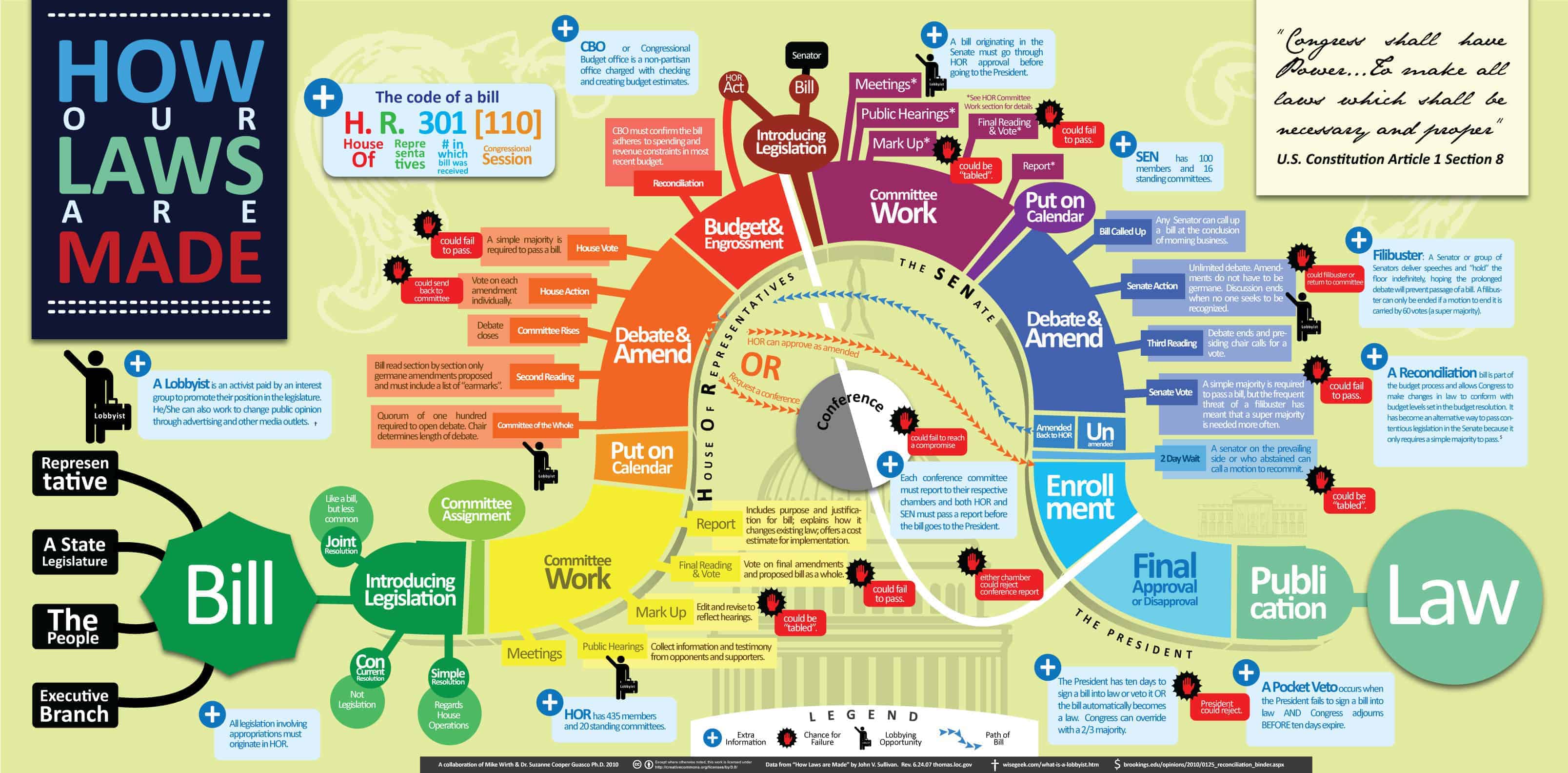


People don't get the sausage-making process.  It's complex, involves a lot of moving parts and is damned hard to keep straight in your head.  If we don't know how the process works, though, how effectively can we be involved in it?  We can't.  And when people aren't involved in the process of, say, how laws or made or government operates, all they can do is react to what they don't like, after the fact.

It's inefficient.  Open Government allows for participation, engagement, conversation and ultimately, more sustainable decision-making.  Measure twice, cut once.


I love this one.  I'd add another section to it:

- the stereotypical political far right (conservative) tends to be about conserving traditions or at extremes, scrolling back to some mythical past where the world was a garden of Eden.  They think the Armageddon lies in the future and are therefore really aren't interested in going there.  They're about control and believe nature and competitors can be bent to man's will.  These are Empire builders, resource extractors and dictators.

- the stereotypical political left (progressive) tends to be about embracing diversity and its possibilities.  Consciously or not, these folk are about adaptability - ensuring the greatest scope of genes, ideas and collaborators are in the mix.  Progressives tend to believe the Undiscovered Country of a better world lies before us, in the future, rather than behind us, in the past.  They take risks, empower others and thrive in the realm of the possible.  These are explorers, pioneers, leaders.

InfographicNBT

Which is where art comes in.  Art is about expression; it can be about emotions, ideas, even trend lines.
 
And that's all the future is - the next step in existing trend lines.  If you can map out where we are, if you can visualize how we go there, you can better predict what comes next and adapt yourself proactively to be prepared.

Or, you can poo-poo art as a frill and insist that all that matters is numbers.  Cut the frill, narrow your focus and go for the win, like in a race.


But running isn't about reaching a destination - it's about staying ahead.  If you don't know where you're running to - how will you know when you get there?

You won't.  Not own  your ownsome, through your own individual lens.  You need to put a couple of lenses together to see what lies ahead.

Which is why the truths of art and mapping are becoming so critically important to government and planning; you need multiple points of view to gain perspective.  

Without perspective, you're running blind, no matter how powerful you think you are.

And in the big picture, it doesn't matter how we feel about the future - it's already written.  It won't be the strongest and most functionally fixed that move forward.  Survival of the fittest has never been about strength - it's always been about adaptation.  

So let them frame it as a left-right thing in static competition.  If you look at the map and follow the trend lines, you'll see that's not the case.  

It's not a matter of a progressive left waging war against a conservative right.  It's about adapting to the demands of the future vs getting left behind.

Who could have seen that coming?


Wednesday, 30 October 2013

Diomedes in the Rough: Landing Bridges at the International Economic Forum of the Americas


The Forum's gathering in Toronto begins today; on the agenda are heady topics such as recalibrating the global economy, the global energy revolution and doing business with Russia.  Speakers include heads of multi-national corporations, advisers to Heads of State and former Vice Presidents.
 
While the Forum caters to senior decision makers, business leaders and world leading experts, they have also seen fit to invite a handful of folk like me
 
Count on me doing what I always do - identifying common ground, making connections between unlikely but complimentary partners and adding value to the conversation with some unique insight, always with a focus on developing shared solutions for our collective future.
 
It's going to be fun.

Wednesday, 18 September 2013

Spock Had It Right (Scott Span)


Funny enough, the last people to believe it tend to be the ones who stand to gain the most from listening.

Spock Had It Right: It’s About Infinite Diversity in Infinite Combinations

Spock-Hands
Why is creating a diverse team important? Do you know how to create diverse teams?
As the Vulcans say in Star Trek, “Infinite diversity in infinite combinations.” Diverse groups of individuals bring diverse ideas and experiences, diverse ideas and experiences contribute to increased sharing of thoughts and ideas, development of new solutions, and increased innovation.
All this contributes to maximizing people –> performance –> profit.
The workforce is changing – rapidly. About 50 years ago, offices were fairly homogenous and roles were often clearly established based on gender and race; watch early seasons of Mad Men, or the movie 9 to 5 and you’ll get the picture.
Although there we’re exceptions, it was pretty much a given that in order to truly succeed and grow in the workplace, you needed to be white and male — or a tough as nails women!
Now, that strategy may have worked once upon a time, but not anymore. In fact, it hasn’t worked in years.

Why is workplace diversity such a challenge?

Now more than ever, with increasing demographic shifts and globalization, embracing diversity is an imperative to achieving success and long-term sustainability. The face of the population is changing. The workforce is coming to reflect that.
It would seem as though nowadays most people in the workplace understand that presenting a diverse (yet strategically aligned) set of ideas, services and solutions is beneficial. Presenting customers with a homogenous view of a dozen middle-aged white guys isn’t necessarily a good thing.
In most cases your customers themselves are made of diverse groups of individuals. You should be presenting them with a diverse set of ideas and solutions reflecting such.
Workplace diversity doesn’t just refer to gender and race anymore either. As the VP of Supplier Diversity at a global Fortune 500 company recently told me, “…our database of vendors and suppliers, like our workforce, is so diverse that we ran out of boxes on our supplier registration form. We’ve recently switched to a new online portal that allows for multiple combinations of self identification. ”
Businesses must account for diversity in race, gender, sexual orientation, ethnicity, culture and various combinations of all of the above. Generational diversity has also become equally important; with aging Baby Boomers and incoming Millennials. The opportunities for embracing diversity are greater than ever.

A diverse team can lead to growth in many ways

  • A diverse workforce and supplier relationships represents the diverse population that is your customer base. Having a diverse team can help raise awareness and increase communication regarding the different ways different people think and respond, thus not only helping enhance team performance, but also helping you to shape your strategy, communication, and products and services for a diverse group of customers.
For example, a middle-aged man with lots of industry knowledge and experience might still have trouble identifying with the way an African-American teenage girl makes purchasing decisions. A twenty-something, or a twenty-something African-American woman, might have an easier time targeting the needs of that particular client base as they can better relate. Working together, the two could put together a strategy and solution that works best for both the company and the customer.
  • A diverse team – that has built trust and respect – has a wealth of creative ideasand strategies to choose from, that a homogenous team might not have. Knowing your peers and your client base is only one step to figuring out the best strategy. Sharing those creative ideas and experiences and applying them in support of the company mission is equally as important.
  • Communication is a necessity. No two people have the same history and experience. Everyone brings something different to the table. Diverse teams have a great opportunity to learn from each other. For a diverse team to truly be high performing, they must feel comfortable having open and honest communication of ideas. Open and honest communication can help diverse teams learn, grow and be successful.
  • There are some basic economic facts that make fostering team diversity appealing as well. Companies that foster diversity tend to see lower turnover rates, and are able to avoid some basic litigation. So while it’s true that companies should seek to encourage diversity because it is good corporate citizenship, there are certainly some simple financial incentives as well. Creating high performing diverse teams, embracing a diverse workforce, and working with diverse suppliers, is ultimately good for the organization’s bottom line and long-term growth.
So yes, the idea of encouraging and embracing diversity in the workforce is extremely important. In the end, companies that are able to adapt to changing demographics, embrace diversity of the individual and diversity of thought, are likely the companies that will thrive in this ever-changing competitive world of business.
This was originally published on the Tolero Think Tank blog.
Scott Span, MSOD, is president of Tolero Solutions , an organizational improvement and change management consultancy. He helps clients to facilitate sustainable growth by developing people and organizations to be more responsive, productive and profitable. He is also an author on various topics of organizational development and the creator of the Recruitment and Retention Lifecycle. You can follow him on Twitter, or contact him via email atscott.span@tolerosolutions.com.

Saturday, 14 September 2013

The Charter of Shame


People have come to Canada for various reasons; for a new beginning, a better future for their children, an improved quality of life or to escape oppression back home.
 
Wherever they've come from, whenever they arrived, we've all come to the same place. 
 
Unlike France, which can convince itself of a continuous lineage of ethnicity and culture growing in one place through history, Canada is undeniably a hodge-podge from everywhere.  To say there is a unique "Canadian culture" that others should adhere to is naĆÆve.
 
Canada isn't an ethnicity, nor is it a nationality in the traditional sense.
 
Canada is an ideal - a dream of what we can all be when we bring the best parts of ourselves together and open ourselves to each other.
 
 
It's a lesson Marois would do well to learn.

Thursday, 22 August 2013

The Folly of Pure Laine


Politics, if you haven't noticed yet, isn't about policy. 
There was a time where leaders had the stones to put forward visions and seek to inspire people to follow them, but that time isn't now.  Fearing the consequences of risking big ideas or simply lacking the creativity to devise them, Political Parties are focused on turning people against each other rather than unifying them behind a dream.
When the message is "only we can protect you from those who would harm you," people stop being introspective and start getting antsy about The Other.  Responsibility, collaborative solutions and positive actions slowly give way to bitterness, blame, recrimination and punishment.
That's what Jobbik is doing in Hungary.  It's what Golden Dawn is doing in Greece.  It is beyond disappointing that any Canadian politician would opt to play that game; yes, it works, but there are consequences to fostering divides along religious or cultural reasons.
If Sikhs are banned from wearing turbans and Muslim women are banned from wearing veils in government institutions, you have essentially banned those individuals from government institutions.  That means people who wear symbols of their faith cannot be doctors, judges, bureaucrats, politicians in Quebec.  It also means they can't use government services, either.
Well, there are Sikhs, Muslims Canadians of faith that do work for the government of Quebec - many of them would leave the province instead of giving up who they are, becoming religious refugees within Canada's very own borders.
Do you think less trained professionals in Quebec is suddenly going to empower non-religious Quebecers to fill those gaps?  Keep dreaming.  Service will decline, waiting lists will expand and the same people who are looking to take out frustrations on someone else will only get angrier.  Meanwhile, those folk in society who change will increasingly be stigmatized just as their lack of access to government services starts to take a toll on their well-being. 
If the same populist political track is kept up (or left unchallenged by other governments), the temptation to go one step further and flame the fires a bit more will consume other Parties.  The urge to force conformity upon those who hold fast to their beliefs will become stronger.
All in the name of creating a safe, secure society where everyone gets along because everyone is the same. 
There is very little I fear - difference is never a threat, always an opportunity.  The thing that does put a chill in my bones, though, is watching people blindly repeat mistakes of the past.
I hope we never see a time in Canadian history where an Orthodox Jewish man is forced to cut off his payot to fit in.  That would go against everything Canada is supposed to stand for. 
Especially at this volatile point in history where governments are persecuting citizens based on who they are, we have to be better than that.

We're Canada; if we don't lead by example - who will?

UPDATE: 


It's all over the place these days - have our leaders completely forgotten that power isn't an end, but a means?


Tuesday, 6 August 2013

If Syria was Britain Would Canada Be Doing More?


Not for a moment do I think a single Member of Canada's Parliament is ambivalent to the horrors happening every day in Syria, or for that matter any number of other places in the world.  It would be delusional to assume that Canadian involvement through force of arms would make the Syrian Civil War go away, even if we had the right - which we most certainly don't.  Unlike other nations, we have never declared ourselves the world's policemen; as such we've never had to watch our back like other nations, either.  Our more selective use of force and focus on diplomatic approaches has historically served us well.
 
Yet the Syrian Civil War has seen the death of at least 93,000 souls, 6,500 of which have been children.  Our Parliament bubbles over on issues such as abortion or providing sufficient supports for Aboriginal children on Reservations - what about the youth of Syria?  The United Nations' High Commissioner for Refugees says "we have not seen a refugee outflow escalate at such a frightening rate since the Rawandan genocide" - a black mark of inaction in our history, yet still our response in both words and actions is diluted.  How often do our Parliamentarians give voice to Syrian Canadians, worried about the fate of loved ones back home?
 
Canada has a proud history of both fighting hard when the time calls for it and serving as an international conscience when the need is dire.  One of the most inspired conflict de-escalation tools of the last century - Peacekeeping - was a Canadian innovation.  Have we lost that creative solution making ability?  Has our resolve wavered?
 
To the best of my knowledge, we don't presently have any Parliamentarians of Syrian background.  As such, none of our Parliamentarians have a direct connection to what's happening on the ground in Syria - none of them have familial skin in the game.  This isn't to suggest they are willfully indifferent to the plight of Syrians, any more than they are willfully indifferent to the plight of homeless people or persons with mental illnesses here at home.  Human beings are limited in their capacity to understand what doesn't impact them directly and for our current Parliament, Syria isn't personal.
 
It's not just Canada.  The US, who does like to see itself as the world's policemen, are on the sidelines.  Britain and France, countries that have never been squeamish about stepping in to foreign conflicts when their interests were at stake, are also sitting on their hands.  There's no Suez in Syria, after all.  History won't judge us on where we thought our best interests lay; as with the Residential Schools, history rightfully judges us on the consequences of our actions or inaction.
 
I have to wonder - if there were more Syrian Canadians, or more Members of Parliament with Syrian connections, would we be hearing about this conflict more?  Would anyone be advocating for a stronger role for Canada?  Conversely, if the Civil War were happening in France, or Britain (countries with more direct, albeit much diluted since WWII, ties to Canada) and the death toll of innocents was similarly mounting, would Canadians be demanding greater action from our government?
 
It's all well and good for our current government to so heavily promote flag and country, but what makes Canada great, what has always made Canada great, are its people - and they come from everywhere.  At our best Canada is a representation of what the world's diverse people can accomplish when they pool their resources and live, build and play together.  We create a tapestry as dynamic as it is diverse, as rich as the world itself.  It's this variance, this connection to everywhere, that has inspired us to act and given both the raw ideas and personal connection to seek resolution for conflicts wherever they arise.
 
I worry about the future for Syria, as I do for the people in Greece, in Romania, in Afghanistan and Somalia and in hotspots all over the world.  War is a life-forming event; those youth who grow up in conflict will know conflict, but not what it's like to seek compromise.  Much as engagement isn't our priority now, diplomacy may well not be theirs tomorrow.  Lots of Canadians are worrying, but worrying is not the same as taking action.
 
This is one of the reasons why I think polyculturalism is a good thing, even a necessary thing as our world grows hotter and our population swells.  We simply can't do this: every nation to itself is not going to work any more.  Our fates are too intertwined.  The simple fact of being Canadian - of living side-by-side with people from everywhere, of being represented in government by people of backgrounds different than yours forces the conversation, empowers comprehension and ideally, nurtures a better world.
 
Because of our history and our composition, Canada remains best-positioned to set the example others can follow and to come up with the creative conflict solutions that others can share.  We've done it before; we can do it again.
 
It shouldn't matter what the major demographics groups of our population are, nor where our economic interests like.  Canada should lead by example for the simple reason that it's what we do best.
 

Monday, 29 July 2013

Roads Converging on the Way Forward

 
I don't know Chrystia Freeland, nor really anything about her.  Toronto Centre isn't my riding; I have no skin in the upcoming nomination game.  I do, however, have a lot of interest in people who take the time and push their envelopes, look at the broader map of the issues of our time and place them in an historical context.
 
On that front, I am perfectly comfortable with posting her piece on this humble blog; it's the kind of thing you'd find here anyway.  All the hyperlinks below are to posts of my own with what I feel is overlapping content. 
 
I find it incredibly encouraging that more and more people are coming forward with a similar vision of where we're going.  Sooner or later, though, we most realize that there's a difference between knowing the path and walking the path.


One thread has run through my work over the past two decades – a growing conviction that we are living through a profound, global economic shift, comparable in its scale and scope with the industrial revolution. The combined impact of globalization and technological change is radically transforming the world economy, national economies, urban economies, and the economic lives of each one of us.
This reshaping of the global economy is the big story of the 21st century. No one person, and indeed no one country, can stop it – and we shouldn’t want to. But it is equally wrong to think this deep economic shift will inevitably or easily or naturally deliver the widely-shared prosperity which is the bedrock of western liberal democracy.
 
If you believe otherwise, look back two centuries to an earlier great upheaval that reshaped the world – the industrial revolution. It can be tempting to take comfort from that history. After all, for all its dark satanic mills, ultimately, the industrial revolution worked out pretty well. All of us in the western world are healthier, taller – well, there are a few exceptions! – richer, freer and live longer than our early 19th-century ancestors.
 
But here’s the rub. It took two deep depressions – the Great Depression of the 1930s and the Long Depression of the 1870s – two world wars, and Communist revolutions in Russia and in China before we figured out how to make the industrial revolution work for the vast majority of the population. And it also took the invention of a whole new set of institutions – pensions, public education, public health care, social welfare, trade unions, and even mass democracy itself.
 
When it comes to today’s economic revolution, a very small and very lucky and very smart group of people is already benefiting. I call this global community of economic winners the plutocrats, and they were the subject of my recent book.
 
But the other side of the coin is the devastating hollowing out of the middle class in the western industrial democracies. Traditional middle class jobs are being made redundant by the technology revolution or outsourced to lower-wage economies.
 
Figuring out how to make today’s vast economic transformation work for the middle class is the central political issue of our time. Without a prosperous, secure middle class, our national economy can’t flourish in the long-term. Our democratic society won’t endure, either.
 
Today’s conventional wisdom is deeply cynical about politics. We portray our elected officials as trivial buffoons at best and as scandal-ridden, self-dealing parasites at worst. What we have lost is our belief that our government represents us all, and that we, collectively, can use it to address the big challenges of our time.
 
If you believe in democracy – and who doesn’t? – that lost faith is a tragedy. We all desperately need to re-engage with our democratic system, in all its messy glory, and elect leaders whom we charge with the job of solving the 21st-century’s greatest tasks, first and foremost making our new economy work for the middle class.
 
Over the past few years, as I have been working through these issues for my book, I have felt their urgency ever more strongly. Diagnosing the problem is an important first step, but it isn’t enough. We need to do something about it.
 
The place for me to do that is at home, in Canada. As the lucky beneficiary of the Canadian public education system, Canadian health care, and Canadian scholarships, I owe our country everything.
We are good at rolling up our sleeves and getting the big things profoundly right. At a time when the rest of the world is struggling to live with one of the human consequences of globalization – mass immigration – Canada is a model for how to make a multicultural, multilingual community really work. We can do the same when it comes to ensuring middle class prosperity in the 21st century.  Indeed, we are much better at this than the United States, where income inequality has become an economically and socially devastating chasm. We can’t let that happen to us.
 
We know some of things we need to do. As University of Ottawa economist Miles Corak has shown, social mobility is one of the casualties of rising income inequality and the hollowing out of the middle class. We must do everything we can to lean against that trend, particularly investing in public education, starting in preschool. Second, we need to become the world’s most attractive destination for entrepreneurship. As traditional middle class jobs vanish, we need to build a platform that makes it easy for driven, inventive Canadians to take risks and create new ones. Third, we need to find ways to realign business incentives with public ones. Toronto is leading the way here, with initiatives like the MaRS Centre for Impact Investing, but there is a lot more to be done.
 
Toronto itself is a central part of this story. It is a vibrant, diverse, world-class city, which has not yet become a gilded, gated community for the plutocrats, with no room for the middle class, as is happening so quickly in so many of the world’s other metropolises. We need a proud, ambitious, bold, urban vision for Toronto as the world’s magnet for the creative, thriving middle class – precisely what Jane Jacobs found when she moved here nearly half a century ago.
 
To do this, we need a new vision of politics and what it can and must accomplish.
 
Chrystia Freeland is a candidate for the Liberal party nomination in Toronto Centre. She is a former senior editor at Thomson Reuters and The Globe and Mail.
 

Wednesday, 17 July 2013

Life is Like a Box of Cheerios


This is a powerful commercial that has sparked a huge swath of controversy.  Why?  Because it bursts the bubble of illusion many frightened people live in - the illusion that the world is stagnant and that traditions are inviolate.  Blame not these people for their fear - it is beyond their conscious control.  Until, that is, it isn't.
 
Meanwhile, Cheerios has done the right thing - reflecting the tone and resetting the conversation to address head-on the taboos that hold us back.  They will benefit from this, too, in the same way businesses that have taken a stand for gay marriage have.  It's a new form of conscious capitalism, with the private sector leading the way on social issues as a way to build market share, but doing the right thing at the same time.
 
Things have changed.  Diversity is slowly being viewed not as a threat to supremacy of one group over another, but as an opportunity for growth.
 
Diversity = strength.
 
Watch the video and the next generations comments on it here.


Tuesday, 26 March 2013

Barbara Amiel Reveals More Than She Cares To


Everyone has talked about how crass and callous the column is.  Not mentioned so much is this little tidbit: it's easy for Amiel to react this way because according to her column, she spent her uni years playing it safe, watching the risk-takers from the safety of her third-floor window.  It's easy to avoid harassment if you avoid the world entirely.  Would her entrepreneurial husband have spent his student days in his room, one wonders, or out seeking adventure, facing risks, imposing risks?
 
 
But it's the quote above that interests me, because I think it's bang-on.
 
 
Think politics - every Party decries behaviour in others that they'll justify among their own.  The average person will cuss ignorant drivers but get mad at pedestrians for getting in their way, legally, if they're in a rush.  We get mad at people who interrupt us, but impatient with those who get upset if we cut in.
 
 
That's why we have rule of law, rules around scientific research and complex, counter-balancing political institutions; we are emotional creatures that primarily view the world and others through the lens of our own interest.  When we are selfish, tragedies of the commons result.  Even when there's a pro-social intent, like Rob Ford and his football team, we'll still bend the rules in ways we'd get mad at others doing because it's our project.
 
 
We are contrarian as a species, meaning we all deal with our own little bit of cognitive dissonance.  It's not a sin; it's biology. 
 
 
It's when we start to question our own motivations through doubt and see ourselves as part of something larger that we self-regulation starts to develop.  Seeking to empathize with everyone, even the people you don't like, is the first step towards consciousness.


Wednesday, 27 February 2013

Society: Solutions Gone Viral


There's been an historic effort in the Americas to solve "the Indian problem."  It's a paternalistic approach that undermines the value of aboriginal culture and tradition to aboriginal peoples themselves, but also to the dominant societies on the continent.  Concepts like the medicine wheel (picture above) provide a different view on healthcare and social services - two areas where it's safe to say we're in need of some changes if we want these sectors to be sustainable.  Yet we don't go looking for solutions in out-of-the-box places like this, do we?

Why is that?  Why have successive governments at all levels not actively tried to explore aboriginal culture as a way to build bridges, but also seek opportunity for policy innovation?

Coincidentally enough, as a First Nations politician is making headlines for abuse of a female partner, there are parallels between "the Indian problem" and "the feminism problem."  Traditional wisdom had it that women were too emotional to vote, therefore men shouldn't proffer them the opportunity.  However, this belief exists in tandem with the notion of the temptress - women who have such control over men that they can sway male thoughts.  This rationale has been applied to the case of South African sprinter Oscar Pistorius: Former Nigerian government minister Femi Fani Kayode suggested that Pistorius “was provoked into a murderous rage by his pretty little lover (who) played on his insecurities and inadequacies.”

 
I think it breaks down like this - the ruling society has to solve the minority question.  The ruling gender has to deal with the other one.  You could carry the trend further into politics, language, culture, religion, any sector of human society - when the people at the top are of one group, they are going to share the same perspective.  It takes the addition of diversity to mix up the thinking and provide additional viewpoints, some which will inevitably bring value to the table.

Problem is, we're not hard-wired to seek alternatives - in fact, evidence suggests we're motivated primarily by a desire to be effective.  Effectiveness implies efficiency, which requires a clear trajectory.  We're bridging the gap between points A and B as directly as possible.  You can't do that if you don't have a clearly established destination that you have confidence in.  The concepts of "truth" and "perfection" don't exist in nature any more than the notion of nothingness does - therefore, we create definitions ourselves.  The degree to which we're confident in our own perspectives determines how flexible or intransigent we are in realizing them.
 
If you're supremely confident that the destination you seek is the only valid one, then everything that distracts from your clear path is extraneous.  Like opposing views.  Like Parliaments.  Like minority perspectives.  From this perspective, there can only be two choices - your way or the highway.  Those who don't think or operate the way you can only seen as problems to solve.

Which brings us back full circle: homogeneous, unchallenged leadership results in unconsciously rigid thinking.  Of course the Indians are the problem - they aren't us.  Naturally, women are the problem - what's the alternative?  It's the socialists and the separatists that threaten a singular vision of a traditional Canada.  Multiculturalism is a non-starter.  When it's an us or them thing, though, the Other that threatens a clear trajectory most be eliminated, if possible, or at the very least isolated.  Failing these two options, you can always wall yourself off.
 
I tend to pick on the political right, but the truth is all Parties fall victim to this approach - look at the challenges progressives in Canada have had in uniting behind what should be an easily-realized common set of values.

We have lots of cyclical conflict, but resolution continues to elude us. 

Except - the long-term trend shows that diversity is creeping into the mix regardless of how we feel about change, as are alternative perspectives.  As our leadership becomes more diverse, it also becomes more receptive to differing voices and approaches.  Perspective continues to evolve - we are increasingly recognizing that the world is not just round, it's connectedEverything from heliocentrism to modern medicine to flex hours at work are reflective of this trend towards cultural adaptation and innovation. 

Individually, we can argue that alternative perspectives are like viruses that need to be fought off, but in practice, a bit of challenge absorption is a good thing, because it forces reconcilliation and adaptation to a changing world.  That world, after all, keeps on evolving - you gotta run even to stay in the same place.  Socially, it doesn't matter whether we like the changes we see or not - they continue to happen.
 
We can continue to focus on personal/micro-level symptoms and discomforts that come along with an increasingly integrated societal system and ignore the elephant in the room.  If we don't want to go the way of other civilization dodos, however, there's value in getting ahead of the curve and adapting proactively - which is what  social services like education and health promotion enable us to do.
 
Nothing comes from nothing - it's as true in policy as it is in art.  If you want to innovate, get ahead, perhaps lead the pack, you have to look for opportunity and seek to learn from, not defeat, difference. 
 
It's when you start to view the world thusly that problems start to look like solutions in waiting.