Search This Blog

CCE in brief

My photo
Recovering backpacker, Cornwallite at heart, political enthusiast, catalyst, writer, husband, father, community volunteer, unabashedly proud Canadian. Every hyperlink connects to something related directly or thematically to that which is highlighted.
Showing posts with label Think Ahead. Show all posts

Sunday, 1 February 2015

ISIL Hypocrites


Really?  How do the folks pulling the strings at ISIL define "our women and children" - considering the fact that they're killing and raping women and children themselves?  Who's paying to house, clothe, feed and arm the militants doing such atrocious deeds?  Who's paying to recruit Westerners to move to the Middle East to rape and kill local women and children? 
 
ISIL's message to Japan isn't "leave our women and children alone."  It's "don't piss in our sandbox."
 
If you mess with their authority, after all, you pay the price.  And they've got an army of brainwashed converts who will do whatever their told and actually think it's in the name of Allah.
 
They're acting like they think they're an empire.  Who would they have picked up that idea from?
 
 
Jut a little reminder to all the Empire-builders out there.  History is not a morality play; we're not actors, nor playwrights.  To assume otherwise, well - that always ends in tragedy.


Friday, 2 January 2015

Arrogance and the ISIS Parable


ISIS is a lot of different things to a lot of different people.  It's worth noting that, for a collective apparently pursuing an Armageddon agenda, they're pretty focused on governance and infrastructure.
 
Yet what are the marketing strategies they're using for recruitment?  Are they bringing in and, once they've got 'em, training their militants for a sustained conflict and perpetual suppression of a local populace?
 
I'd say the short answer is no.  ISIS recruits aren't prepared for consequences, nor is ISIS itself.  They feel they can carve out a corner of the world, scare off outsiders and set up their own feudal enterprise.
 
They'd do well to study why feudalism fell in the first place.
 
ISIS is sloppy.  It's people are sloppy and can't but be sloppy because of their starting premise.
 
Nobody can bring about the end of the world.  But they can sure end themselves if they don't think ahead.
 
And the only way to think ahead is to think empathetically, which is exactly what ISIS-ians are trained and encouraged not to do.
 
There's a lesson in this.

Tuesday, 16 December 2014

No Joy in Oilville


This is no biggie, Stephen Harper will tell us.  The information being provided misses the mark, or doesn't cover some aspect of his plan, or something.  At the end of the day, oil is too big to fail, right?
 
Harper has been involved with oil since his very first job.  He's a pretty obstinate (sorry, determined) fellow.  He's an economist, remember?  Plus he's the smartest guy in the room (that conveniently never includes Kathleen Wynne).  People just need to do what he tells them or go away. 
 
He knows exactly what he's doing, confident fellow that he is.
 
If people can't accept that, it's because they're looking at the wrong facts, or cherry picking the right ones.  Reduce the flow of useless data and that problem starts to go away, right?  The only story left is the one you're selling.  The only facts left are the ones you're using.
 
It's easy, right?  Keep your eye on the oil, that's all that matters.  Don't commit sociology by looking laterally or thinking ahead.
 
 
Harper has been politically successful, but he has bungled a whole host of files.  It's only by exploiting the fact that Canadians focus on the low-hanging fruit that he's kept from serious challenges to his competence.
 
He's probably assuming this is another one of those situations he's gotten so good at stick-handling; trot out a couple of Ministers for comments, or offer no comment at all.  Attack Trudeau, release some ads.  Move on.
 
Right?
 
Except, when it comes to the economy he has no other eggs and no other baskets.  He also has been stifling social sustainability, so if things go really sour, the safety net will fill up fast, and then people will start spilling over.
 
And those people are going to be pretty pissed.
 
Harper's once again at bat, telling us not to worry, he's got this.
 
Now, more than ever, it's us who must be asking:
 
What if he's wrong?

 
Oh, somewhere in this favoured land the sun is shining bright,
The band is playing somewhere, and somewhere hearts are light;
And somewhere men are laughing, and somewhere children
     shout,
But there is no joy in Mudville—mighty Casey has struck out.


Monday, 17 November 2014

Arc of Community


If you knew the Apocalypse were to land in 30 years, what would you do differently today?
 
This was an interesting question teased by Why Should Care?'s speaker tonight, Professor Franklyn Griffiths.  He was there to talk about Canada's future as an Arctic Nation, but a point raised was more existential.  It's his view that, looking at the big picture of global climate change, we could be looking at an Apocalyptic end to our world as we know it sometime in the 2030s.

Which is not to suggest fire and brimstone, the Kraken unleashed; it's more to the point of the way that we live right now will cease to be feasible.  That's access to food, sustainability of infrastructure, etc.  Think less Noah and think more The Road.  Our world - our civilization - will be consumed over time because we will no longer have the resources, skill, time or knowledge to maintain it.
 
 There will be those out there who tell us this is nonsense, the skittish dreams of self-hating lefties and eco-terrorists clamouring to punish humanity for their own weakness.  Such folk can point to history, all the times we've heard apocalyptic predictions that failed.
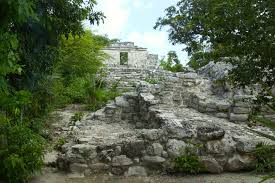
Of course, history has plenty of examples of failed civilizations and populations who've fallen into dark times - everything from the collapse of the Roman Empire to Easter Island fit in this category.  No fall happens over night, but its onset can come quickly.
 
Still, if Prof Griffiths is right, we still have 15-20 years between now and then.  Jonathan Nolan's got plenty of time to make his Foundation mini-series.  We'll all have to pay bills, look to our kids' financial security, etc. in the interim.  I mean, it's not like you can put your head in the sand and wait for 15 years to pass, can you?
 
Which brings up a more interesting question.  Let's say that it's a real thing, that the engine of civilization as we know it could sputter to an end in 15 years.  No more public transit, public hydro, no public anything - no highways for the transport of food, no TV, internet, schools, libraries, maintained sewers, on and on.
 
If you knew with absolute certainty that this was the case - what would you differently now?
 
I know what my answer is.

Monday, 8 September 2014

Fire and Water: Storm Front Coming


And in that bright October sun
We knew our childhood days were done
And I watched my friends go off to war
What do they keep on fighting for?


War is fire.

It has a voracious appetite that will consume everything in its path - land, cities, people, even children.  It doesn't matter that we didn't start the fire.

It doesn't discriminate.

War is sparked by the friction of politics, rubbing moods raw, wearing ethics down until the very fibre of our dark hearts is laid bare.

Sticks rubbed together with enough force can start the fire of war.

Sticks brought together with a lil' bit of tape and vision can create a bed, or a building, or a community. We can even keep the darkness at bay, when we learn to tame that spark for light rather than heat.

But you can built naught with ashes but tombs.


As the weather changes, there are a growing number of brushfires emerging, growing hotter, spreading.


Will the world burn?  I think not.  But our saving grace won't come at our hands.

There are other forces at work besides fire; as the weather changes, we're seeing storms of increasing ferocity dashing against aged infrastructure ill-equipped to keep the force of nature at bay.

The last man standing cannot hold back the tide; he will have no one to turn to for aid.  

It is the folly of man that we recognize our place only after we've overestimated our power.

It's the wisdom of humanity that we plan ahead.  

What gives us the grace to look beyond our immediate selves to temporal realities?

I think you know the answer.


Friday, 28 February 2014

Why Leaders Should Think Before They Speak


Cognitive science is fascinating stuff.  It bridges realms from mental health to leadership to creativity and, of course, communication.

Despite what we like to tell ourselves, human beings are not rational actors.  This is even more true when we have such utter confidence in ourselves that we never pause to consider why we come to certain conclusions.  The less you think something through, the more it's your reactive brain that's in charge.  

It's one way to live your life, certainly.  It's what we were originally designed for.  But now that we're capable of so much more, isn't it a sin not to use our cognitive tools to the furthest extent of their efficacy and actually nudge into rational-actor territory?


Roles of Intuition and Cognition in Decision Making

Monday, 17 February 2014

The Fool Who Follows: A Lesson for the CPC


I wouldn't quite say the CPC is back on its feet post Senate Scandal - it's not quite over yet, is it?
 
But that's besides the point.  The Tories have done their best to reshape Canadian politics into a game they think they can perpetually win - one that is aggressive, antagonistic, cynical and above all, costly.  They can raise more money, aren't afraid to hit below the belt, etc.; they win because they're winners, and everyone else is a loser.
 
It's not working out quite the way the boys in PMO had planned, is it?  The more successful the Party becomes, the more liberties they are taking with political tradition and conventional wisdom - moving away from their own values in pursuit of the win. 
 
The more they win, the more confident they become in their own superiority; it's not that they're intentionally taking greater liberties with ethical pursuits so much as they have started to believe that they are smart, everyone else is dumb.
 
Put it another way - losers commit sociology, winners build empires.
 
How far can you push the envelope before you feel the need to rewrite the rules in your favour?  How long can you maintain the fiction of holding the same values as even your base before the only way to stay in power is through more coercive means?  How far can you push those boundaries before someone knocks you down a peg?
 
Here's where the CPC can learn a lesson, although it means committing sociology.  In the complex, interwoven society we live in where information is becoming the modern-day sucrose, it's folly to think you can cynically bash an individual with the woes of the system and not expect to face some of your own blowback.
 
The solution is easy - instead of looking for ways to smear any and every opponent, stand for something.  Support all efforts that work in that direction, wherever they come from. 
 
And be forgiving of your neighbour - you may even want to really consider how you'd want them to treat you and respond in kind.
 
Altruism is selfishness that plans ahead.  Selfishness that doesn't think through content, context and consequences, on the other hand, looks a lot more like foolishness.


Sunday, 9 February 2014

The Uncomfortable Truth Behind Cognitive Labour


I may have posited something along these lines to various tough-minded people in charge; they may in turn have told me I think too much.

But I've got a habit of being right on this stuff, don't I?


Depressed Leaders Think Ahead


Did Dean de Mastro think ahead, or learn from his mistakes?  No he didn't.

Did Julian Fantino or Rob Ford or Vic Toews ever truly admit to responsibility, mull over their weaknesses and try to do better?  The evidence isn't promising.

Did Mike Duffy recognize guilt and try to solve his problem, or did he deny blame and try to make the problem someone else's?  Has Stephen Harper or his inner circle every accepted responsibility for mistakes, or have they blamed others and tried ever harder to obscure their actions?


We can go on forever with this list, but it comes down to this - the majority of our genetic programming encourages us to trust the people who shoot first and ask questions later.  It's a decent method in a small-band, survival-of-the-fittest scenario, but not for a complex, interdependent society.


The people we need to turn to the most in complex social times are the ones we're least likely to pay attention to until it's too late - sometimes for them, far too often for the rest of us.

While the boss asks, "what's in it for me right now?" the leaders looks ahead to what can be gained - or avoided - and acts accordingly.

We don't have a lot of leadership these days.

Which, I would imagine, is why we are constantly dogged by past mistakes.

Strategic Depression: Something to Chew On


Depression is on the rise, so it's worth taking a closer look at.  Maybe even a sustained look.

We've got this trend right now towards simplicity - we want bullet-point messaging, one-off solutions, so on and so forth.  Tough-minded leaders are taking hammers to social problems and when that fails to do anything constructive, they move on.

Of course, a focus on simplicity when dealing with complex systems is short-sighted; as a result, the middle-class is hollowing out, the economy is becoming untethered, the democratic deficit is growing and our integrated social fabric is unraveling.  Oh, yeah - and there's that persistent mental health crisis thing.

Additionally, we've seen some worsening of weather lately - ice storms, floods, so on and so forth.  It's becoming increasingly clear that the systems we have in place today aren't equipped to handle the challenges we are facing, natural, internal or systematic.

There's nothing sadder than watching tough-minded leaders stranded like starfish on the beach when reality crashes over the fire-wall of their simple plans.  "It was just good business," they'll tell us in hushed tones.

Canadians don't much trust their leaders right now; instead, they're looking inwards for direction and ruminating just a wee bit more on how to prepare for what comes next.  Maybe a few of them are even starting to wonder how we can proactively shore up our future in spite of the failings of our social bosses.  You know, like Churchill did.

Something to think about, is all.

Tuesday, 21 January 2014

Friday, 29 November 2013

Sochi! Come to Sochi!


So, Putin wants to turn Sochi into an internationally popular resort, does he?  At the same time as he's taking his entire country on a homophobic bender?  I just hope he isn't looking for sponsorship from Apple, or any of the more than 60 big companies standing against gay marriage bans in the U.S.


The fact that one of Russia's athletes just caught fire doesn't help Putin's brand much - catching fire as a metaphor is all the rage, these days.


See, people don't just want selfish entertainment any more - they want to feel like they're contributing to something with their consumption.  Smart companies are realizing what politicians are slow to do - populism secures a base, but sucks at growing your market share.  For that, you need to think laterally.

So, in the name of value-added altruism, here's a little song I wrote to help Putin with his ad campaign (to the tune of The Flinstone's theme:)


Sochi!  Come to Sochi!
You'll ski and gamble without fear
That is unless you're queer.
Rob Ford dances

Don't mind all the hiccups
With finance and construction gaffes
And don't question Putin
The man is not known to laugh.

Why do the torches die without delay?
Does Gazprom sponsor the relay?

But when you're at Sochi
You'll have a sparking time
We'll catch on fire in time

Let's have a gay old time!