Search This Blog

CCE in brief

My photo
Recovering backpacker, Cornwallite at heart, political enthusiast, catalyst, writer, husband, father, community volunteer, unabashedly proud Canadian. Every hyperlink connects to something related directly or thematically to that which is highlighted.
Showing posts with label Stigma. Show all posts

Thursday, 19 June 2014

It's the CULTURE, Stupid! Peter MacKay does a John Tory


The key word, of course, being justification.  We're not rational actors, despite what you might believe - we tend to feel our positions first, then rationalize them afterwards.

As stated at the bottom of the article, there is no statistical evidence that women or people from minority ethnic groups are applying - the fact that MacKay makes that assumption says more about him than it does the broader reality.

As a new father, MacKay is (or should be) acutely aware of the massive responsibility of parenthood, if you care to do it well.  Both parents have the capacity to prioritize the care of their child; diapers, putting baby to bed, even bottle-feeding can be done equally by both parents, if they're willing to dedicate the time.
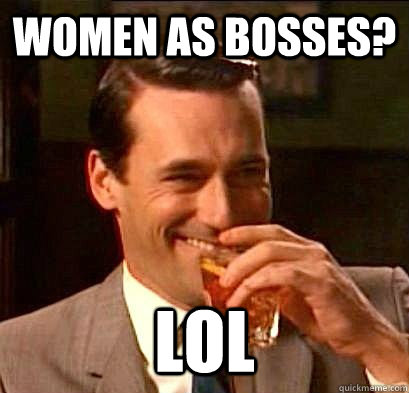
Which is, ultimately, what it comes down to.  We dedicate time to the things we prioritize.  We're never "too busy" for the things that matter to us; "busy" is an excuse not to focus on the things we see as being of lesser value.

It so happens that we live in a culture that still views men as the primary bread-winner/hunter who not only needs the free time to go out and hunt, but also the bigger portion of meat at home so that they have the energy to do so.

This is a culture that suits men well, as we can easily justify networking events or late hours at the office because we're "busy at work" rather than terrified of extended time watching over a needy, messy, loud and not very engaging baby.  

The only reason men get to do this is (warning: generalization) women pick up the slack.  

Whether this is through personal choice, a biological inclination or social pressure - this last is key - women are more likely to make sure that the important thing that a man doesn't do gets done.  

If encouraging women to stay at home with the kids is about not wanting to take something away, it's about men not wanting to have their freedom taken away.  Or maybe, they're not so sure they could handle that much actual responsibility.

This is a different cut of a common theme - slavery was about off-loading the work we didn't want to do.  Discrimination is about pushing away the people who challenge us to broaden our perspective and make an effort.  Like children who avoid cleaning their rooms or learning to read, a laissez-faire approach to anything is equal parts laziness and discomfort at tackling a challenge head-on.

Enter John Tory.  I pick on him not because I have a position on his mayoralty campaign one way or the other, but because he provided a perfect example of why it is our whole cultural approach to work and equity needs to change.


Those were John Tory's words, and they're not far off from the position MacKay takes.

The image we get is of the boss, sitting in his office, waiting for employees to come to him and make the case for why they deserve promotions.  These same employees are making sure to hobknob with the boss on the golf course or at the bar.  The squeaky wheel gets the grease; the boss sees this forceful sales job as indicative of worth and rewards it accordingly.

So - who's doing the actual work while these guys are focusing on selling themselves, or competing?


This is a global, historical phenomenon - women do the hewing of wood, hauling of water and raising of children while the men sip coffee or fight wars.  The justification men use for this model varies from "women aren't tough enough" to "staying at home is actually what they prefer" but at the end of the day, it's all confabulated justification.

Here's where it gets interesting, though.

The history of civilization is the emancipation of women - literally.  The more oppressed and less educated women are, the more disjointed and violent society becomes.  As girls and women are able to pursue education and roles other than home-maker, the more stable, innovative and sustainable societies become.

And that's a reality that is backed my statistics, even if it's an uncomfortable truth for laissez-faire or self-centered, sales-oriented men.

I empathize with Peter MacKay, I really do - I can only imagine how hard it is to absorb the reality that you are the part of the problem that needs to change.  I know all too well how hard it is to wrap your head around realities that differ from your own world-view.

In his defense, it's not about him, though - our whole culture is built on the ignorant assumptions of previous generations.  It's important for him to recognize that we aren't limited to those constraints any more than children are limited to the skills they have at birth, or women are constrained to be home-makers only.

After all, it's by overcoming our assumptions that society has progressed as far as it has.

And we wouldn't want to remove all the progress we've made, would we?  That'd be a little bit like moving backwards when what we need to do, if we want to stay competitive in the global marketplace, is move forward together.

Friday, 28 February 2014

Why Leaders Should Think Before They Speak


Cognitive science is fascinating stuff.  It bridges realms from mental health to leadership to creativity and, of course, communication.

Despite what we like to tell ourselves, human beings are not rational actors.  This is even more true when we have such utter confidence in ourselves that we never pause to consider why we come to certain conclusions.  The less you think something through, the more it's your reactive brain that's in charge.  

It's one way to live your life, certainly.  It's what we were originally designed for.  But now that we're capable of so much more, isn't it a sin not to use our cognitive tools to the furthest extent of their efficacy and actually nudge into rational-actor territory?


Roles of Intuition and Cognition in Decision Making

Friday, 21 February 2014

Political People


A good piece by Delacourt, though I'm biased:


So on and so forth.

But I think she's dead wrong on one point - a key point:


Fans celebrate Team Canada win
How many Team Canada jerseys did I see on the streets today?  How many people put on garb and makeup for athletic events in general?  Or do Cosplay, or dress like a hipster, or wear a pin for cancer awareness?  Why do we spend so much money on fashion in the first place?

Symbols matter; we see the world through the lens of symbols.  That's not something that sets us apart; that's something we have in common.  We also understand the world through identification - threat, benefit, no value.  That's basic biological hardwiring. 

The more competitive we are, the more we rely on these narrow frames; one group to belong to, another to define ourselves against.  There's nothing unique to political people about this.  It's innate to everybody.  By gender, language, ethnicity, sexuality, even music preference we're always creating "us" and "them" categorizations.

You put anyone under conditions of extreme, chronic competitive strain, they will distill the world down into zero-sum competition; with them, against them or in their way.

You see, there is fundamentally nothing different between us and political people - it's the competitive, time-sensitive and increasingly expensive pressures of political culture that makes them feel the need to differentiate from us.  It makes it easier to be manipulative of voters and vicious to their opponents - and controlling of their own teams.

We need to dehumanize people before we can treat them in inhumane fashion.  And that's exactly what politics does; this is why partisan politics is spiraling down the ethical drain and increasingly focused on micro-targeting key messages to key, targeted constituents.  It's not about growing the country equitably; it's about fighting over shrinking resources.

Which leads into the real nub of the issue here.  When "Canadians" start to see themselves as different than those "political people", it's not because they're trying to figure out why the behavioural differences; it's a subconscious way of dehumanizing them, allowing for less humane treatment back.

We can't say we weren't warned, though.

I shouted out
Who killed the Kennedys?
When after all
It was you and me

Wednesday, 19 February 2014

Mutant Pride: Ellen Page Represents


Good for Ellen Page.  I don't imagine it's an easy thing coming out, or even admitting to yourself that maybe you aren't what society expects you to be.  There's got to be some cognitive dissonance that goes along with that which must be taxing.  It reminds me of a quote from X-Men: First Class - 


The X-Men have often been used as a metaphor for people who are stigmatized for their differences; it's worth noting that gay actor Ian McKellan has said friends and colleagues told him his acting improved after he came out, as though he was suddenly better able to inhabit his roles.

Both Ellen Page and Ian McKellan play the roles of mutants in the X-Men franchise.

Accompanying Page's coming out has been the usual trolling responses anyone gets when they come out as gay, having a mental illness or anything else that makes them "extra-normal."  Straight people don't make a big deal out of their sexuality, why do gay people have to parade themselves in front of everyone?

Reading these comments got me thinking - why does it matter that people public declare themselves "extra-normal?"  

It matters internally for the reason stated above - no one should have to live in denial of themselves.  Of course, no one should have to fear reprisal for being themselves, either, but that's clearly still not the case.  

From Toronto Mayors to Russian Presidents, LGBTQ people are still heavily stigmatized by many for something other than the content of their character.

Which is why coming out matters externally, too.  Whatever we tell ourselves, gay people are still considered "extra-normal" in the same way that you don't see that many women on Bay Street or black men in politics.  It's considered a kiss of death to publicly disclose you have a mental illness - and this in spite of the grand tradition of great leaders, innovators and catalyzers all being a bit "extra-normal."


When a black man becomes President or a popular actress comes out of the closet and retains her career afterwards, a message is sent to others in society that it can be safe for them to live externally who they are internally.

In essence, the message conveyed is that mutants can co-habit successfully with their more normal (straight, white, whatever) peers.

Of course, the end goal should always be to get to a point where there's no need for people to come out, because we'll have an expanded enough understanding of what it means to be human that it really won't matter what your faith, sexuality or any of it is.  You'll be exposed to variety and encouraged to find and be true to yourself from day one.

That vision of society is still a long way off, though.  In truth, we may never get there.  

So I'm glad that people like Ellen Page are prepared to stand up and take pride in who they are, "extra-normal" or no.  If we're ever to retire the notion of "extra" from humanity, it's going to take people folk like her to lead the way.


  1. @Poynter Silly @guardian. You can't catch gay by hanging out with people. But you catch Awesome from hanging out with @SirPatStew!
MT “@Gruaig_Rua: @Poynter Silly @guardian. You can't catch gay by hanging out with people."