Search This Blog

CCE in brief

My photo
Recovering backpacker, Cornwallite at heart, political enthusiast, catalyst, writer, husband, father, community volunteer, unabashedly proud Canadian. Every hyperlink connects to something related directly or thematically to that which is highlighted.
Showing posts with label Apple. Show all posts

Monday, 21 September 2015

#OwnIt: Special K for the Win


My belly is from my kids.  My legs are from my trainer.


Have you seen the new Special K ad?  You can check it out right here.

When you're done, come back and I'll tell you why I think it's so awesome - and reflective of a broader trend in marketing (we'll get back to the changing face of marketing later).

There is absolutely nothing about cereal in this ad.  The ad's not about selling food - it's about selling the sensation of empowerment.  Instead of the traditional "I'm a hot model getting checked out by (other gender), eat this cereal and you can be just like me", what this ad says is "don't try to be some artificial Hollywood standard - be the best you you can be."  


Which involves more than cereal.  Look at the women in this video - are they leisurely eating a bowl of Special K while wearing white Lulu Lemon gear, looking like they haven't a card or rush in the world?  Nope - but then, how realistic is that, anyway?  Most people are hustling in the morning - to get to work, to get the kids ready for school, to do all these things simultaneously.  


In this way, most ads present false standards that people living real lives can't ever hope to realize - eat this cereal, turn into a model!  Buy this fitness video, be buff and turn heads in 20 days or your money back!

The intent of those more traditional ads is to project an image of perfection and tantalize the viewer with the notion that they can be just like that if they simply buy the product.  Which is of course isn't the case - health is a combination of factors, including diet and fitness, and it differs from person to person, lifestyle to lifestyle.

Instead of minimizing this truth and focusing strictly on their product and its values, what Special K's #OwnIt campaign does is present a more realistic view of women's health within their normal life context - starting with the relatable (97% of women have an "I hate my body" moment) and then throwing that inter voice of insecurity that so many ads speak to directly under the bus (tell that voice to shut up!).

What do we see then?  Not a series of women munching down on Special K, but embracing their lives, pursuing fitness activities and clearly feeling good about themselves doing so.  Larger woman dances, has a ball!  One-armed lady doing push-ups - how inspiring is that?  Then, women looking in the mirror and embracing who they are and what they can be.

There are only two images of people eating Special K in the whole ad:

- a woman in what looks like a gym, crunching on a bar after a workout 
- a admittedly idealized version of a middle-aged couple in a very comfortable house at what looks like the end of the day, with the woman sitting on a counter having a happy bowl of cereal (might want to close that fridge door, though - you're wasting energy)


The ad isn't about cereal - it's about a sense of empowerment.  


In real life, the less-than-model-perfect people will be drawn to what they see as perfect people subconsciously for the potential benefits (does perfection rub off through osmosis? If they get the hottest girl/guy in the room, maybe I can get the runner up?).  This isn't about empowerment - it's about relying on the power of others.

We're all drawn to things like humour and charm because they act like chocolate, or a hug - they make us feel good.  This isn't about empowerment - it's about externalizing happiness, the same way binge-eating or excessive drinking can be about externalizing the relief of depression or anxiety.


That's the kind of selling traditional ads capitalize on; they're not really trying to change our lives, they're trying to position their product as the life-changer.  Essentially, we're being told to become product wingmen, because proximity to or consumption of that product/service will make everything better.  We're shown a lifestyle, a look, and then told that product X is our ticket to that world.


Which of course isn't the way the real world works.

The #OwnIt campaign, however, isn't suggesting or even hinting that Special K is a world-changer, a ticket to the perfect body or perfect life.  In fact, the ad isn't about the cereal at all.  It's about perspective - and how when we change our perspective, we open up doors all on our own, without need of a magic key.


Very specifically, the ad targets women - a demographic that is still marginalized in the workplace, public life, on the street and especially in media, where the standard to which they are held is literally artificial.  It says to women - "We recognize that the standards out there - standards perpetuated by companies like us - are false, and harmful to you.  We want to change that.  We encourage you to challenge the status quo to disrupt what defines beauty.  We're on your side; we just happen to sell healthy cereal."

I'm not a woman, and I still felt good after watching that ad.  Like most people, I like seeing people overcome odds, build confidence and find success in their own way.  I get swept up in movements that empower change, just like a growing number of people.  I want to be part of that change.


I once designed a whole campaign called "What's Your Healthy?" around the idea of individual definitions of health and the notion of maximizing one's own potential rather than meeting false standardized expectations.  This concept ties in to a growing number of campaigns and initiatives that are tackling the status quo - redefining what it means to be mentally healthy, redefining what is socially acceptable in turns of ethnicity, sexuality, etc.


It's even happening in politics - while we still see old-school leaders positioning themselves as Alpha dogs and telling us to leave them in charge and just get out of the way, there is a growing movement towards citizen-engagement, social co-design and access to information and tools that empower everyone to have equal skin in the game.


Done?  How do you feel?

Do you feel the same way you did after watching the #OwnIt ad?  Do you feel a tinge of excitement, a sense of opportunity and idealism?  If you're the target of an ad like this, what sensation does it leave you with?

What the marketers behind ads like this hope is that you are left feeling empowered, optimistic and inspired.  They want to make you feel like you - no matter who you are or where you come from - can stand on mountains.  You don't need them to do these things, any more than you needed your favourite teacher or coach to inspire you to be your best.

Just like that coach, or teacher, or mentor - you're going to remember them, aren't you?  
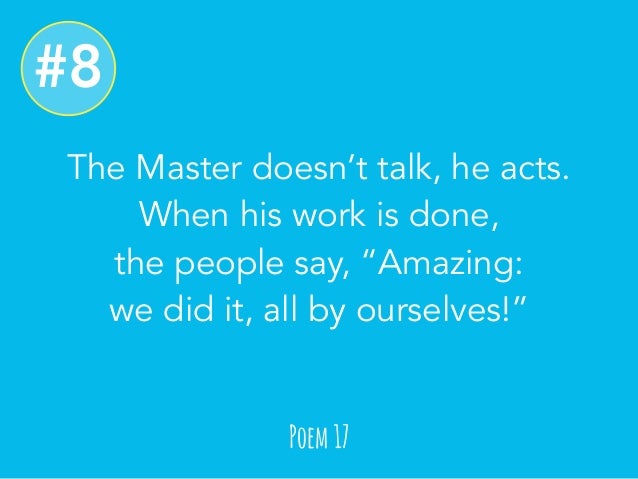


If the psychological imprinting intended by these ads work the way they're supposed to, you will begin to associate that sense of empowerment and optimism with the cereal (or the service, or the candidate).  


You will know that eating Special K is good for you, in that it provides good nutrients without detrimental sugar and whatnot, but you'll feel like you're getting a boost when you look a the box, like remembering the inspirational quote of that person who made a difference in your life.

In short, you're not buying the cereal for what it does for you - but what it reminds you is within your realm of possible, all on your own.

Here it is - the kicker, how marketing is changing and reflecting social change as a whole.

What business do companies like Apple have in supporting gay marriage?  They're supposed to be focused on selling products, right?  Sales is all about focusing on how your product is the best, most capable, the only one that can get the job done for a client, right?  That's what laissez-faire capitalism is all about; hard sales through self-promotion and then ABC closing the deal.  

There's no place in business for wading into social issues.


Just like there's nothing wrong with the polling industry's methodology - it's the people who are the problem.

People seem to be forgetting the way the world works - top-down, assimilate-to-succeed, conservative family values, mass-standardization, sales through self-promotion, etc.  People need to succeed on society's terms and they need to find it within themselves to succeed - not count on external parties to hold their hand.  Right?

Yet more and more companies, parties, organizations and even movements are emphasizing empowerment of the individual, personalized definitions of beauty/success and diversity as a strength.  It's cool to be supportive; it's trendy to hack the system and its standards in favour of the individual.

Hence, companies supporting gay marriage, campaigns like black lives matter and MMIW, etc. Products essentially advertising for their target market, not to them.

And their markets - seniors, women, the LGBTQ community, millennials, etc. rewarding them for it.


See, the smart companies are applying new understanding of behavioural economics and societal trends to tweak their messaging and outreach to be less "push" and more "raise up", empowering their audiences to be co-creators of their brand through UGC.

Smart organizations are, in effect, empowering individuals to reach their maximum potential so as to contribute their maximum to the tranformative social change rocking our world.  

They've adapted to the times, evolved with their markets and are winning as a result.

What's the lesson in here for comms people and marketers?

People don't want to be sold to - they want to be engaged.

It's not about you, nor your product - it's about them.  Position yourself as part of their journey.

To succeed, help them succeed on their own terms - be part cheerleader, part teacher, and be clearly seen to embrace the social issues that matter to them.

The same lesson applies to business, HR and absolutely politics.

If you want to win, put your people first.  Don't focus on the hard-sell; focus on ownership.  It's not about you - it's about them.  

It's as simple as that.

And they will thank you for it in ways you can't begin to imagine.


Friday, 29 November 2013

Sochi! Come to Sochi!


So, Putin wants to turn Sochi into an internationally popular resort, does he?  At the same time as he's taking his entire country on a homophobic bender?  I just hope he isn't looking for sponsorship from Apple, or any of the more than 60 big companies standing against gay marriage bans in the U.S.


The fact that one of Russia's athletes just caught fire doesn't help Putin's brand much - catching fire as a metaphor is all the rage, these days.


See, people don't just want selfish entertainment any more - they want to feel like they're contributing to something with their consumption.  Smart companies are realizing what politicians are slow to do - populism secures a base, but sucks at growing your market share.  For that, you need to think laterally.

So, in the name of value-added altruism, here's a little song I wrote to help Putin with his ad campaign (to the tune of The Flinstone's theme:)


Sochi!  Come to Sochi!
You'll ski and gamble without fear
That is unless you're queer.
Rob Ford dances

Don't mind all the hiccups
With finance and construction gaffes
And don't question Putin
The man is not known to laugh.

Why do the torches die without delay?
Does Gazprom sponsor the relay?

But when you're at Sochi
You'll have a sparking time
We'll catch on fire in time

Let's have a gay old time!


Wednesday, 27 February 2013

The Apple Bites Back: Gay Marriage, the Free Market and Social Evolution


Workplace morale, of course, impacts productivity and innovation.  So do does diversity - the more perspectives you can bring to the table, the more ideas you'll have to make magic with.  You don't attract diverse recruits by stigmatizing entire demographics - in the war for talent, brogrammers will be the losers

Of course, there will be those who argue that letting gays into the institution of marriage will reduce the morale of those who are there now.  It's the same argument, essentially, that was given to keep women from voting and to keep black folk at the back of the bus. 

There are always those who wish to conserve traditions in social stasis - on the Rogers Adoption Bell Curve, these folk are known as laggards.  They don't understand why we aren't investing in more horses and bayonets, deny the demise of the longsheet and feel a sense of nostalgia for the horse and buggy.

Of course, you can't stop the tides of time from flowing - progress is inevitable and to survive, one must adapt.  You might prefer the typewriter, but your kids are digital natives.  Similarly, you might take issue with your kid dating someone of a different ethnicity, but they won't have that problem.  I suppose you could isolate yourself and your family behind a firewall; the Ottoman Empire tried to, as did feudal Japan.  There's a lesson in that.
 
 
The best part is, the supposed bastions of traditionalists conservatives - the free market, free speech, etc - are actually speeding up the trend.  Marketing is all about turning wants into needs and endearing one's product to customers - forward-thinking companies like Target are always trying to expand into new markets. 

If you are national in your scope, you don't mind upsetting a vocally conservative minority who will boycott your iProduct because you support gays - everyone else will buy even more of your stuff in support of your noble purpose AND quality of your product

Do conservative movements precede periods of inclusive social change, increased diversity and all that hopey changey stuff?  Call it societal brushfire - or better yet, creative destruction.

If history teaches anything, perhaps it's this: once you take a bite out of the Apple, there's simply no going back - you can only move forward, together.
 
 
 UPDATE DEC 31 2013:  Rumours abound that George Clooney is gay.  He's not going to deny such rumours, coming out with false horror at the accusation - why should he?  To shout out "those are lies!" will only fuel the speculation and offend some of his audience.  Instead, he uses such rumours as opportunities to address the fallacy of homophobia.  The intrigue (and attention) keeps coming and he endears himself to a broader audience.

Social justice as brand-building.  That's smart.


Friday, 5 October 2012

Apps Opening the World


Technology catapults the world ahead into new realms of opportunity.  Without tools that serve special needs, however, too many get left behind. 
 
Apps can change that.  Apps are changing that.

Thursday, 8 March 2012

Trainingpedia: The Future of Life-Long Learning


C.D. Howe Institute


The nature of labour demand is changing.  As traditional manufacturing jobs gravitate towards emerging economic powers like China, India and Brazil, countries like Canada are being forced to diversify their options. 

Despite this global trend, the Harper government thinks it has found the golden goose in the natural resources sector; they seem determined to put all of our economic eggs in that one basket, particularly Alberta’s Tar Sands.  There are multiple reasons why this is a short-sighted approach.

While there will always be a need for natural resources, there are huge risks and lost opportunities in focusing solely on the resource export market.  Plus, as the Knowledge Economy starts to kick in to high gear, there will be an increased demand for highly trained labour that has the capacity to innovate.  Raw materials, yes, but it’s product, process and new markets that industry is focusing on now.

Labour Pains

Despite the strong evidence that Canada needs more training (and not just up-front training, but life-long learning), we are actually facing a national training deficit.  We are also failing to harness the full potential of new Canadians, immigrants bringing a wealth of knowledge and experience (but not Canadian experience) to our country.  Ontario is starting to tackle this problem head-on, but is there a broader opportunity here to reduce Canada’s training poverty and employ some of the new raw talent coming to our country to do so?


 Here’s the reality – Canada’s economic performance has fallen behind many of our major competitors.  Between 2000 and 2005, for example, the rate of Canada’s productivity growth was only 25% that of our major trading partner, the US.  One of the major reasons for this is a lack of investment in skills upgrades and training on the part of Canadian firms.


So – if we’re falling behind and there’s a correlation between this trend and training levels, why aren’t we training more?

It all comes down to the way we look at work and how we understand motivation.  Unfortunately, our views on labour have not kept pace with the changes in technology and the solidification of the global economy; until recently, they haven’t needed to.  Businesses are still largely understood through the industrial, vertically integrated top-down model; employers give money and resource access to employees, who are then responsible for turning a profit for their employers.  Training is an initial investment in labour – not a continuing one.  Once training is given, it’s up to the employees to deliver; they are incented to do so through the carrot and stick approach.

What we aren’t noticing is that the carrot-and-stick approach informs the actions of employers, too.  Training, benefits programs, etc. are seen through the lens of direct cost/benefit analysis rather than the aggregate impact on business.    As there hasn’t been much research clearly demonstrating value for money, training programs haven’t been seen as a particularly useful investment.

This is particularly true for small business owners.  For them, the negatives associated with training seem to outweigh the positives:

-          Training employees can make them more attractive to better-resourced competitors; you could very well be serving as a grooming school for other businesses.

-          Training costs money; it also takes your staff away from productive time which is, of course, where your profit comes from.

-          Employees are employees, not partners; if they are bringing in new methodologies and ideas and push for their implementation, it’s more hassle than the training is worth.

It’s a bit of a tragedy of the commons; a bigger investment would have a greater pay-off, if everyone did it.  Insufficient positive motivation makes it harder to get excited.  The stress of managing a business and the urge to be firmly in the driver’s street of one’s own enterprise leads to a focus on keeping staff in line rather than supporting them.  Salaries are seen as expenses rather than investments; lower pay equals higher profits.  The sad thing is, the reality is the exact opposite of this – employers who pay less see higher turnover and face higher costs of credit. 


If It Ain’t Broke…     

You can’t find the best solution if you haven’t identified the correct problem.  In the case of labour, the problem we have identified is motivation – managers are constantly struggling to find new ways to get employees to do their work better, more efficiently, more creatively.  Some training gets thrown at them, but to a large degree we rely on the traditional tools of the trade:

-          bonuses, promotions, project control

-          disciplinary measures, demotions, firing

In short, we employ carrots and sticks to get workers to do what we want them to.  This more-or-less worked in the past for repetitive tasks, manual labour, etc.  For the kinds of labour we rely on in the Knowledge Economy, though, the traditional approaches can actually be detrimental.   We’re solving the wrong problem.

When we make work about something gained or something lost, we disengage people from the process of work itself.  It becomes about the reward, not the procedure; according to Occam’s Razor, people will find the easiest and quickest way to achieve their goal.  The fastest, most aggressive solutions aren’t necessarily the wisest.  The ends don’t always justify the means.  Plus, when people don’t enjoy their jobs, you don’t get their best work.  They’re also more likely to face health problems. 

This is exactly the wrong approach for nurturing the creative, out-of-the-box solutions that will define success in the Knowledge Economy.


Creativity, be it in problem-solving or innovation, is not a fixed process.  While structure certainly helps channel the cognitive process, too much overt control and exerted pressure stifles it.  This point cannot be overstated; all the traditional tools in an employer’s box to make a sale, close a deal or complete a project are counterproductive to the process of innovation.  The goal of the employer in the Knowledge Economy isn’t to tighten an employee’s focus on a destination, but make sure they take in the sights along the way. 

Ontario’s Premier, Dalton McGuinty, has suggested “it doesn’t matter where you come from, but what you find along the way.”  He was referring to the diversity of Ontario’s population, but the same holds equally true for ideas.

This, then, is where we come back to training.  We need to re-brand training not as a product or a piece of paper to hang on a wall, but as a process – an ongoing process that the best employers will nurture and the best tools will facilitate.

Given the challenges employers face in justifying the skills upgrades mentioned above, how are we to convince them that such training is a worthwhile expense?  Once again, we’re identifying the wrong problem; the solution isn’t to carrot-and-stick employers into paying for training, but to build value into the process of creating and harnessing training opportunities.  The way to do this is to make training free and collaborative.


Taking Training Online

No, I’m not talking about throwing limitless sums at publicly funded post-secondary education, nor publicly-funded upgrade courses.  There’s no need for this – all the resources one could possible want, ranging from sales techniques to the latest innovations in clean energy technology to best practices in office configuration are all available online already – the trick is to coordinate these resources into an easily-accessible, open-source platform that everyone can invest in and receive benefit from.

What I envision is a new hybrid online framework that combines the best elements of existing resources like Wikipedia and Charity Village with the simple, aesthetic veneer of an Apple product.

This system (we’ll call it Trainingpedia for now, but feel free to suggest cooler names in the comments section below) would exist like a three-dimensional map online; a legend would give a user access to sub-strata more relevant to their niche area (a field of study, communications best practices, even tips on managing the work/life balance).  A search engine would help bring users directly to the topics they wanted, but with side-bar links on related material.  The whole site would be designed, like a map, to encourage exploration and, like Wikipedia, for contribution.  It could even be multi-lingual, as Wikipedia is and include a translation function.

Picture the resource power of every single employer and employee with access to a computer wired into one system.  As has been proven the case through the Wikipedia example, a broadly crowd-sourced engine like this would produce accurate, beta-tested and rapidly-updated best practices, new insights and opinions; all the benefits of paid training without the hassle of paying for it.  Think what this could do for market research.

Yes, there’s a risk that a Trainingpedia site could become an aggregate for complaints; that’s not necessarily a bad thing.  Complaints would become one section of a larger digital geography; if there was more content that was positive and engaging, it would get the focus.

For employers to truly gain the individual benefits of such a system, they would have to build in “research time” into the schedules of their employees.   Considering how many people spend part of their work day trolling the internet anyway, doing so in an encouraged fashion wouldn’t impede productivity, but increase innovation potential.

Would a Trainingpedia site take business (and profit) away from training service providers? 

This is why ardent pro-Capitalists should love the Trainingpedia model – it has creative destruction written all over it.  As generalized training services, best practices, peer-support groups, etc. get formed online, companies that get paid for training services or products will have to think outside the box, finding targeted, boutique and specialized services to sell.  Having access to Trainingpedia will make this a much easier job for them; they can even advertise themselves there by posting videos like Hill & Knowlton’s Billy Wants a Dog or contribute to various entries, like LinkedIn group discussions.  Yes, their for-sale product will eventually end up in the free system, but that’s fine; these firms will be in a continuous process of exploring new training, educating and employee-support options to offer.  Remember, it’s product, process and new markets that business is going to be looking for.

Innovative firms can even advertise competitions for new ideas and processes, imitating the success of GoldCorp.


Moving Forward Together

The traditional model of society (competing for the best grade, the highest salary, the corner office) may have gotten us this far, but to succeed in the Knowledge Economy, we need something a bit more.  Motivation must now come from within – not without.  It’s through feeling inspired by what others are doing or pieces we pick up along the way that we will come to challenge ourselves to do better.

 Success in the Knowledge Economy, then, is like building a taller pyramid; the more effort we put in collaboratively at the base, the higher we’ll all be able to reach.