Search This Blog

CCE in brief

My photo
Recovering backpacker, Cornwallite at heart, political enthusiast, catalyst, writer, husband, father, community volunteer, unabashedly proud Canadian. Every hyperlink connects to something related directly or thematically to that which is highlighted.
Showing posts with label Progress. Show all posts

Thursday, 19 June 2014

It's the CULTURE, Stupid! Peter MacKay does a John Tory


The key word, of course, being justification.  We're not rational actors, despite what you might believe - we tend to feel our positions first, then rationalize them afterwards.

As stated at the bottom of the article, there is no statistical evidence that women or people from minority ethnic groups are applying - the fact that MacKay makes that assumption says more about him than it does the broader reality.

As a new father, MacKay is (or should be) acutely aware of the massive responsibility of parenthood, if you care to do it well.  Both parents have the capacity to prioritize the care of their child; diapers, putting baby to bed, even bottle-feeding can be done equally by both parents, if they're willing to dedicate the time.
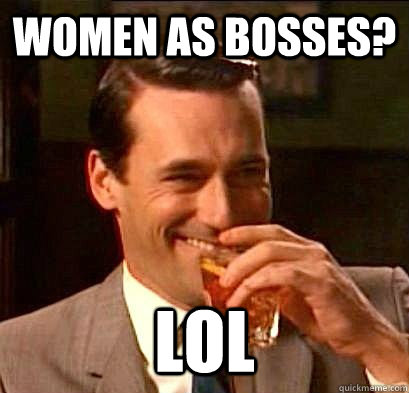
Which is, ultimately, what it comes down to.  We dedicate time to the things we prioritize.  We're never "too busy" for the things that matter to us; "busy" is an excuse not to focus on the things we see as being of lesser value.

It so happens that we live in a culture that still views men as the primary bread-winner/hunter who not only needs the free time to go out and hunt, but also the bigger portion of meat at home so that they have the energy to do so.

This is a culture that suits men well, as we can easily justify networking events or late hours at the office because we're "busy at work" rather than terrified of extended time watching over a needy, messy, loud and not very engaging baby.  

The only reason men get to do this is (warning: generalization) women pick up the slack.  

Whether this is through personal choice, a biological inclination or social pressure - this last is key - women are more likely to make sure that the important thing that a man doesn't do gets done.  

If encouraging women to stay at home with the kids is about not wanting to take something away, it's about men not wanting to have their freedom taken away.  Or maybe, they're not so sure they could handle that much actual responsibility.

This is a different cut of a common theme - slavery was about off-loading the work we didn't want to do.  Discrimination is about pushing away the people who challenge us to broaden our perspective and make an effort.  Like children who avoid cleaning their rooms or learning to read, a laissez-faire approach to anything is equal parts laziness and discomfort at tackling a challenge head-on.

Enter John Tory.  I pick on him not because I have a position on his mayoralty campaign one way or the other, but because he provided a perfect example of why it is our whole cultural approach to work and equity needs to change.


Those were John Tory's words, and they're not far off from the position MacKay takes.

The image we get is of the boss, sitting in his office, waiting for employees to come to him and make the case for why they deserve promotions.  These same employees are making sure to hobknob with the boss on the golf course or at the bar.  The squeaky wheel gets the grease; the boss sees this forceful sales job as indicative of worth and rewards it accordingly.

So - who's doing the actual work while these guys are focusing on selling themselves, or competing?


This is a global, historical phenomenon - women do the hewing of wood, hauling of water and raising of children while the men sip coffee or fight wars.  The justification men use for this model varies from "women aren't tough enough" to "staying at home is actually what they prefer" but at the end of the day, it's all confabulated justification.

Here's where it gets interesting, though.

The history of civilization is the emancipation of women - literally.  The more oppressed and less educated women are, the more disjointed and violent society becomes.  As girls and women are able to pursue education and roles other than home-maker, the more stable, innovative and sustainable societies become.

And that's a reality that is backed my statistics, even if it's an uncomfortable truth for laissez-faire or self-centered, sales-oriented men.

I empathize with Peter MacKay, I really do - I can only imagine how hard it is to absorb the reality that you are the part of the problem that needs to change.  I know all too well how hard it is to wrap your head around realities that differ from your own world-view.

In his defense, it's not about him, though - our whole culture is built on the ignorant assumptions of previous generations.  It's important for him to recognize that we aren't limited to those constraints any more than children are limited to the skills they have at birth, or women are constrained to be home-makers only.

After all, it's by overcoming our assumptions that society has progressed as far as it has.

And we wouldn't want to remove all the progress we've made, would we?  That'd be a little bit like moving backwards when what we need to do, if we want to stay competitive in the global marketplace, is move forward together.

Friday, 9 May 2014

Uniting Together Against a Common Foe


It's political wisdom that people need a kick in the ass to get engaged.  Having a common, threatening foe helps - generally, it's the opposition.  You make them the black hat, portray yourself as the white hat and fight to win.

As I have pointed out, repeatedly, this requires the dehumanization of your foe and permits less-than-ethical tactics.  Invariably, the more competitive you become, the more people fit into the enemy category and you become what you once fought against.

The only way to get past this is to think bigger, in the way we have since the dawn of history.  

The thing that we fear the most, that we feel helpless against is the unknown future and what crises lie in the darkness around us.  The only way to overcome this is by uniting together and sparking a light.

All metaphors aside, if progressives really want to prends le parole, this is the message they should be focusing on.

Thursday, 6 February 2014

Curing Creationism: The Devil is in the Details


Very true, this.  People have  a habit of believing that which validates pre-existing beliefs.  If you believe the Bible is literal truth, for instance, you're going to look for facts that prove you right and question those that don't.  

If you believe in or against global warming, it's a simple matter to cherry-pick arguments that support you and refute any criticism as bogus science.  If gay people, Jewish people or Africans make you feel uncomfortable, you can find all sorts of evidence to validate those feelings - especially when you hold doggedly to your starting premise.

Which is the thing about science; science is study, not validation.  The whole point is to develop and challenge starting premises, rejecting those that don't fit.  That's how it came to be that religious men like Charlies Darwin or Copernicus found themselves forced to question certain premises of their faith told them were unquestionable and challenge the status quo.  

They weren't intentionally being rebellious; they were simply following the evidence.


How do we know a person is sick?  There's no label that pops up on the skin with a written description of an ailment, but there are symptoms that can be readily identified and, thanks to a massive body of study, attributed with general accuracy to specific illnesses or afflictions.  This is called diagnosis.

Where does the illness come from?  Can it be cured?  Does it pose a risk to others?  Before we had scientifically researched diagnosis systems, people relied a lot on assumptions.  These assumptions were believed to be gospel for the simple reason that if it was true before, it must surely be true now.

We have historically tended to err on the side of reactive caution on this front - lepers were sent away to colonies and supposed witches were burned at the stake.  Infidels and barbarians have been kept outside the kingdom with firewalls of various compositions.

The same holds true for economic prescriptions; if an economy has lost its luster, as ours has now, use common sense - shrink government, cut taxes, reduce organized labour supports and allow companies to produce the same goods at a lower cost so as to compete with other jurisdictions that produce goods at low cost, like Bangladesh.

The same equally holds true for crime - tougher punishment, greater restrictions and longer sentences are the way to go.  In this sense, prisons serve the same purpose as leper colonies or insane asylums of old.

This sort of approach doesn't follow the evidence and revisit original assumptions - it relies on traditional wisdom and gut instinct.  If you know the Bible is the literal truth, then anything that refutes it is wrong.  If you know that the world fits into neat categories of good and evil, with tradition, the free market and individual independence firmly in the good column and progress, centrally coordinated social service and government in the evil column, your choices are pretty easy, aren't they?


Which brings us back to health.  


Really think about it for a second - traditionalists of any kind work very hard to present the threats of opposing ideologies as almost virus-like in nature, with the faith, leader or belief system the only tonic to protect against this threat.  As such, they hammer home their message as often, as loudly and as pervasively as they can.  At the same time, they try to reduce the flow of contrarian information.  


This quarantining against challenging information generally involves creating closed communities and either excommunicating or locking away challengers, as well as the removal of contradictory information.  This last, in its most extreme form looks like book burnings; in its more subtle manifestations, it looks like killing the census, closing libraries and generally staunching the flow of data to the people.

When time was, people didn't have a lot of access to information; we didn't know about germ theory, principles of physics, meteorology, metallurgy, etc.  Like other animals out there, we had nothing but instinct to go on - until we learned to be curious.

Through curiosity, we began to question, to experiment, to make mistakes and learn from them.  One can only imagine that our distant ancestors thought of fire as an uncontrollable force of nature and looked at beast and plant as things that existed in an unchanging state.  But we've learned to control fire and we've mastered the science of domestication, haven't we?

So too have we developed all the fields, specializations and organizational capacities that make human civilization possible.  


None of this would have been possible if we hadn't learned to question - or better phrased, developed the ability to question.  Which is hard to do when individual survival is your every-day focus.  

Through collaboration, we develop safe spaces and specialization.  Collaboration requires proximity and trust, however, which means some common purpose and shared rules must be established.  New challenges emerge that require further cooperation, specialization and innovation to solve.  It goes on and on.

Back to healthcare again.  Have you ever gone to the doctor's office and been given a prescription without an explanation as to what the activity or medication is actually going to accomplish?  What does the doctor tell you?

Have you ever wondered why cleansing rituals, particularly in relation to the consumption of food, are so common in religions, or do you assume it's just what God demands? 


If you accept that God has a plan and that there are mysteries that are simply beyond the ken of man, there's no need to ask questions.  Accept traditional wisdom and carry on.  It's basically the same thing as letting the doctor tell you what to do without asking why - the next time something goes wrong, you'll be back to see the doctor again.  And there's always the chance that the doctor is wrong.

When we begin with the assumption that humanity was better off before, that inquiries are heretical and spend our time defending tradition, we are trying to inoculate ourselves against the virus of knowledge through inquiry (i.e., science).  By placing absolute faith in any leader, we abdicate ourselves of the responsibility to understand the why behind the what and learn how internalize those lessons.

Before there was germ theory, public healthcare and the welfare state, there were religious ablutions and the call for charity.  "Love thy neighbour" was the first crack at diplomacy.  Depending on your starting premise, you can look at a lot of the content of the Bible or any religious text as setting ground rules for good behaviour in a social context, much like a parent will tell their children to eat their vegetables and brush their teeth before that child comes to understand the value of doing these things.


With time, children learn the reason behind the rules and in some cases, recognize how certain regulations either were poorly formed or may be past their best-before date.  

Good parents encourage their children to ask why, because for them the goal isn't to maintain constant mastery over their offspring but to provide a solid basis of personal growth and then encourage independence.  

Some day, after all, it'll be up to those kids to prepare their own children for the world they will eventually live in.

Creationists and fundamentalists of any kind can defend the literal interpretation of their holy scriptures 'til kingdom come and insist that complete submission to the word of their deity is the only path to salvation.  

I think they're starting with the wrong assumption.


If our ancestors had thought the same way, well, we'd be never have left our parents' house, as it were, nor developed all the skills, tools and innovations that have made civilization possible.  Were it not for the printing press, for instance, how far do you think Christianity or Islam could have spread?


Inquires that follow the evidence and challenge traditional thinking aren't blasphemy, undermining the written word of any divine figure.  Living a prescribed lifestyle in unwavering fashion honours no father.  The role of parents isn't to restrict their children but to empower them.


They can open the door, as it were - but it is always, always up to us to step through.


  Luke 11:9

Wednesday, 19 June 2013

Harper's Family Values


The essence of this conservatism is, according to Russell Kirk, "the preservation of the ancient moral traditions of humanity. Conservatives respect the wisdom of their ancestors: they are dubious of wholesale alteration.

 
I have a question; how does Harper define "family?"

The impression I take from his speech is that he's referring to the nuclear family of one dad, one mom and 2.5 kids.  If Harper spent a little time committing sociology, he'd come to see that the concept of the nuclear family is hardly a "traditional" one, nor is it gospel cross-culturally.

Yes, same-sex parents, unmarried parents and partners without kids but view their pet canine as part of the family are all part of the mix these days, but that's just the tip of the kinship chart.

What about grandparents? What of aunts, uncles, cousins? In the majority of the world's societies, these "extended" family members aren't considered "peripheral" to the nuclear family but fundamental parts of the family whole.  How many homes around the world, including here in Canada, have three generations and more than one "nuclear family" living under one roof, sharing domestic duties like child-rearing?
 
This is significant when it comes to the matter of preserving ancient traditions vs what Harper describes as the Conservative Agenda.  As his own Caucus has discussed, there are many places around the world where female children are seen as less desirable than male ones; that's a traditional viewpoint that many older generations still cling to.  Arranged marriage is another one of these nuggets of ancient traditional wisdom that one finds in various cultures around the world.  When parents insists that their kids must become doctors or lawyers to be deemed successful, does that foster a skills/employment opportunity gap?  How does this social conservatism jive with economic conservatism?
 
Already we see that there's cognitive dissonance in Harper's positions, but we've only begun to scratch the surface.
 
In his speech, Harper talks about  "the so-called spanking debate" and seems to suggest families should have the right to discipline their kids through smacking them.  To me, that's like saying it's okay to use the word "fuck" if you can't think of any better way to express yourself, but everyone's entitled to their own beliefs.  Here, is Harper's quandary:
 
Who, in the PM's view, constitutes family when it comes to spanking or more broadly, disciplining children?  Is it just the parents?  How about grandparents, aunts or uncles, elder siblings?  If it's just parents, do they then have the right to give permission to others to spank/discipline their kids when they're not around?  What's the accountability mechanism in this?  We've seen from experience that when kids' perspectives aren't valued, abuses can happen and go unrecognized.  That's a problem.
 
And again, we come up against cultural definitions.  In some places in the world it's perfectly acceptable for grandparents to discipline kids - even kids not of their own family.  In Korea, for instance, seniors are referred to as grandfather (harabogie) and grandmother (harmonie) by all youth.  From my time living in a small city in the south-west of the country, I saw random seniors speaking their mind to any youth they felt wasn't acting appropriately or showing appropriate respect, with the youth accepting admonishment as part of their role.  That was tradition, but it certainly doesn't fit within Harper's definition of family. 
 
Parents empower teachers and daycare providers to discipline their kids every day, though not through spanking; because of diverse needs and diverse comfort levels of parents, standardized rules have to be found that are socially acceptable and that outlier parents can be made comfortable with (this is where government comes in).  It sends mixed signals to kids if dialogue and responsibility are part of the discipline process at school, but being smacked on the bum is the totality of discipline at home.  That's another committing sociology thing, I guess.
 
So - to respect traditional wisdoms and empower families, perhaps Harper is a fan of home-schooling, removing kids from the socialization process and ensuring they have consistent training and disciplining from parents; that's a pretty standard social-conservative position, sometimes expanded to a religious group (winking at you, John Tory) where again, parents off-load responsibility for the well-being of their kids to an institution for large portions of a day.  Naturally, there's a problem with this model in the big picture, too - it supports a variety of traditional education systems, value systems and yes, kinship systems that might be close to universal in the places in which the families of practitioners originated, but are just part of a multicultural mix here in Canada.  What happens when kids with completely different appreciations of social order, kinship and even things like standards of cleanliness interact in the post-school world?  When and how do they learn to compromise those traditional values to engage meaningfully and productively with others of different systems?
 
How do parents of mixed ethnocultural background apply differing social norms to their kids except through revisiting traditions?  That's an adaptive process every immigrant in every country and the subsequent first-gen kids go through; where adaptation doesn't happen, social exclusion and all the consequences thereof come in to play.
 
If you want to have a series of cultural silos that don't interact lest traditional cultural norms come at odds with each other, fine - but how does that allow for economic growth?
 
Some ancient traditional wisdoms define the role of women as being at home, rearing children and tending the fires.  Evidence, however, shows that social problems decrease and economic/quality of life well-being increases the more women are engaged in society. 
 
It's pretty clear that when Harper talks about Conservatives respecting the wisdom of their ancestors, he's referring not to cultural or ethnic ancestors but rather ideological ones (hence all the academic/philosophical references in his speech).  I would be very curious to know the composition of the room demographics when he made his speech.
 
Of course, that speech was made in 2003 - ten years is a long time and people that are even a bit open-minded change their perspectives over time.  It's clear that Harper has moved beyond his limited scope of understanding family and culture; in fact, but looking for common elements that people of diverse backgrounds can rally around, he's been committing sociology all this time.  Jason Kenney, in fact, is the Minister of Sociology Committing - out and about connecting with ethnic communities that don't have the same view of the world that Harper 2003 did.  And that's a good thing.
 
Harper's Prime Minister of a majority government, now - he's clearly picked up a few things since his ideological fire wall/ivory tower academia days.  He's come to understand that comprise, cohesion and above all adaptation are necessary for social survival and growth.
 
In fact, I'd say that Harper's evolution as a politician has proved at least some traditional wisdom true - that which fails to adapt doesn't survive.
 
That, friends, is what progress is all about.

Thursday, 23 May 2013

What Religion and Innovation Have in Common


"Envision things ahead of what is physically possible."
 
The paleomammalian part of our brain stores information and pulls it up as necessary, like a matching game filtered through emotions.  So far as we know, we're the only species that innovates expansively; there's really no need to proactively create new stuff or explain the world.  Or at least, there wasn't; with all the sociology we've been committing over the past several thousands of years, that has changed.
 
The "new" or "neo" part of our brain makes connections between ideas and plans ahead.  This bridging process happens through a neurochemical process involving neurotransmitters like dopamine. Dopamine, like all chemicals, has an effect on the human body; it creates a euphoric feeling, a sense of expansiveness and deep connectivity with a bigger world of which we're but a part.
 
Civilization - complex social hierarchies, agriculture, manufacturing, healthcare, philosophy, language and the rest of it - are human innovations.  We have literally taken materials that had no connection (like wood, tree sap and minerals) and developed wholly original creations out of them.
 
Worth noting; history is replete with religious figures who served as the catalysts of progress, not stalwarts of conservatism.  Religious practices around "clean" food and social rules (the Golden one comes to mind, as does charity) help foster cohesive societies and point people in a shared direction.  The whole becomes more than the sum of its parts.
 
Whether chicken or egg, religion has always been the synapse that creates societies out of individuals.
 
With that in mind, check out these two events that just happen to be planned for the same two days:
 
 
and
                                                                                                                    
Discovery: Ontario Centres of Excellence                                                    @OCEInnovation
 
Thanks to Social Media platforms like Twitter, you can even follow and contribute to the conversations of both at the same time from anywhere in the world.  Pretty clever stuff.
 
Are you seeing the same connections I'm seeing?

Friday, 3 May 2013

Randy Hillier: Taking the Progressive Out of Progressifve Conservative


Others will focus on the partisan shots and hopefully, a bit of substantive talk about the content of the budget itself.
 
Me, I love Hillier's use of "fiscally progressive" as a pejorative.
 
In Hillier's world, progress is synonymous with waste and a loss of personal freedoms.  People should have their own land and be free to do whatever the hell they want with it.
 
Forget bemoaning the loss of horses and bayonets - Hillier is bemoaning the last 3,000 years of social evolutionary progress that has brought us such costly initiatives as roads, books, eye glasses, inoculations, hospitals, movie theatres and even Tim Hortons coffee (coffee originated in Ethiopia and is now a chief export of such diverse nations as Brazil and Indonesia).
 
Innovation is progress; innovation relies on creating things for which there is no practical need now, but might be, given a socially engineered change in public appetite.  That's what businesses do through marketing all the time.
 
Please tell me if there's another way to see this, but by being anti-progress, Hillier is essentially anti-society.  If Randy Hillier thinks we'd all be better off living the tribal live of independence, he's welcome to move to Northern Afghanistan.  I'm sure he'd fit in just fine.

Friday, 5 April 2013

The Wussification of American Men and What Tough REALLY Looks Like


I read these two articles in tandem yesterday:
 
 
and
 
Of course, if you're on the far political right, both authors "don't get it" - they are, to you, enablers of the wussification of men.  Screaming at kids, deriding them as "less manly" (ie, gay as a Spartanbrotherly/paternal love between men) makes them tougher, as does throwing balls at their heads.  People like Mike Rice are tough, aggressive, bombastic - what men are supposed to be.
 
If the alpha male is so tough, then, why do they seem to need so much protection?  How can they feel so put-upon if their hides are so thick?  In some subsets of Islam, women need to cover themselves to create a wall between them and men, who would otherwise be too tempted by them.  You know, like Oscar Pistorius, tough guy, masculine athlete.  Fellow tough guys like Femi Fani Kayode seem to feel the need to circle the wagons around him, too, defending him from a mean world and telling us that his girlfriend made him kill her
 
 
Canada's most infamous boxer, Senator Patrick Brazeau, is another exemplification of alpha-tough; ex-military, powerfully built, likes to trash-talk.  He got beaten by a leaner, more strategic opponent in the ring, got caught behaving unethically in his position and quite likely took to assaulting his girlfriend to subconsciously prove to himself that he could still dominate at something.  When he was recently called out for making a stupid April Fools' joke about stepping down from the Senate (where he has clearly not been working hard enough to earn the people's money), his response was "I played the media" - implying, at least to himself, that he was in control.
 
Another sporting fella with a reduced on-the-job-energy expenditure is Rob Ford - football coach, tough guy, tough Mayor.  Except that he constantly whines about media criticism and is so wounded by it that he simply refuses to engage them.  I wouldn't expect a tough guy to rely so heavily on 911; maybe he just needs a gun.
 

If you have a gun, you're to be feared.  You have control over the life and death of others.  Owning a gun makes one feel powerful.  Power and dominance, of course, play a big role in gang culture - as it does in any gun culture, including the one in the States.  What guns don't do is make their wielder tough.  Any scrawny tech-geek can learn to use a gun and with it, take down the burliest of men without getting their hands dirty.  If anything, depending on an external tool like a gun to define one's ability to dominate makes one less tough, not more. 
 
When I look at the big picture, this is what I see; alpha males like Eric Bolling want a licence to dominate the herd and aren't willing to face criticism.  They call themselves tough, but they're not very resilient.  Indeed, there's a definitive fragility to their egos that seems to require protection from verbal assailants by their fellow alpha peers.
 
It's as true of tough-minded Political Parties as it is of individuals; they want unquestioned authority to dominate the landscape and have no one challenge them on resource usage.  That's the whole point of being alpha - you swat down any challengers.  Facts don't matter - he who wields the club defines the rules.
 
There's a bigger trend here, if you look for it - the "wussification of American men" plays out as the emancipation of everyone else.  So, the real issue isn't one of declining strength, but of increased responsibility and sharing of power. 
 
So, yes - Bolling is right, in a sense.  The American Culture of the Founding Fathers is in decline.  At least according to these mortal words in the Declaration of Independence concerning the rights of men:
 
We hold these truths to be self-evident, that all men are created equal, that they are endowed by their Creator with certain unalienable Rights, that among these are Life, Liberty and the pursuit of Happiness.
 

The focus here is on the rights of men (White, Anglo-Saxon land-owning men specifically), rights endowed by God.  Mike Rice exercised his rights - smacking around kids over whom he had authority made him feel powerful, which is always a good feeling.  Oscar Pistorious defended his right as a man, removing a barrier to his unalienable right to be content.  The veiling of women (when imposed), the beating of wives, the rape of daughters can be interpreted as expressions of a masculine right to freedom and pursuit of self-gratifying endeavours.  But the implication here is that rights are the unalienable property of men, only and suggests nothing about responsibility.
 
But the Delectation of Independence has something to say about responsibilities, too:
 
But when a long train of abuses and usurpations, pursuing invariably the same Object evinces a design to reduce them under absolute Despotism, it is their right, it is their duty, to throw off such Government, and to provide new Guards for their future security.
 
The abolition of slavery, Suffrage, Civil Rights, Gay Marriage - these are all efforts to reduce the yoke of despotism that have historically denied the rights of Life, Liberty and the pursuit of Happiness to non-whites, the socially disenfranchised, religious and ethnic minorities and of course, women.
 
I attended a talk yesterday that focused on domestic abuse in Aboriginal communities.  The women who spoke told tales of horrific abuse; one had her jaw broken by her husband.  Another explained how alcohol saved her life, because during a fit of rage, her husband was too drunk to find the right bullets for the gun he planned to shoot her with.  Another talked about visiting rural communities and having to explain to 15 year old girls that no, she didn't have to submit to sex with her father or uncle.
 
There were tears during these presentations, but there was also indomitable strength.  These women had endured horrors far beyond the scope of a man-cold and yet had continued to support their children and seek opportunities for a better life.  Instead of expecting their fellow women to circle the wagons around them, these ladies had taken it upon themselves to empower other women and together, reduce the yoke of abuse that has historically denied them their unalienable rights.  They knew it was an uphill struggle that would continue for generations, but that didn't stop them - it only fueled their determination.
 
Internal strength, super-human resilience and a sense of responsibility for one's peers - that's what toughness really looks like.  As formerly oppressed groups gain increasing access to the market of personal independence, they truly are changing American culture into something that is equally strong, resilient and which balances personal freedoms with social responsibility.  American society, as it were, continues to evolve.
 
Which is the big weakness of Alpha males like Bolling or the GOP entire - they don't do evolution very well
 
I guess they're lucky to have tough, resilient and proactive progressives there to take their hands and help them move forward.