Search This Blog

CCE in brief

My photo
Recovering backpacker, Cornwallite at heart, political enthusiast, catalyst, writer, husband, father, community volunteer, unabashedly proud Canadian. Every hyperlink connects to something related directly or thematically to that which is highlighted.
Showing posts with label science. Show all posts

Thursday, 6 February 2014

Curing Creationism: The Devil is in the Details


Very true, this.  People have  a habit of believing that which validates pre-existing beliefs.  If you believe the Bible is literal truth, for instance, you're going to look for facts that prove you right and question those that don't.  

If you believe in or against global warming, it's a simple matter to cherry-pick arguments that support you and refute any criticism as bogus science.  If gay people, Jewish people or Africans make you feel uncomfortable, you can find all sorts of evidence to validate those feelings - especially when you hold doggedly to your starting premise.

Which is the thing about science; science is study, not validation.  The whole point is to develop and challenge starting premises, rejecting those that don't fit.  That's how it came to be that religious men like Charlies Darwin or Copernicus found themselves forced to question certain premises of their faith told them were unquestionable and challenge the status quo.  

They weren't intentionally being rebellious; they were simply following the evidence.


How do we know a person is sick?  There's no label that pops up on the skin with a written description of an ailment, but there are symptoms that can be readily identified and, thanks to a massive body of study, attributed with general accuracy to specific illnesses or afflictions.  This is called diagnosis.

Where does the illness come from?  Can it be cured?  Does it pose a risk to others?  Before we had scientifically researched diagnosis systems, people relied a lot on assumptions.  These assumptions were believed to be gospel for the simple reason that if it was true before, it must surely be true now.

We have historically tended to err on the side of reactive caution on this front - lepers were sent away to colonies and supposed witches were burned at the stake.  Infidels and barbarians have been kept outside the kingdom with firewalls of various compositions.

The same holds true for economic prescriptions; if an economy has lost its luster, as ours has now, use common sense - shrink government, cut taxes, reduce organized labour supports and allow companies to produce the same goods at a lower cost so as to compete with other jurisdictions that produce goods at low cost, like Bangladesh.

The same equally holds true for crime - tougher punishment, greater restrictions and longer sentences are the way to go.  In this sense, prisons serve the same purpose as leper colonies or insane asylums of old.

This sort of approach doesn't follow the evidence and revisit original assumptions - it relies on traditional wisdom and gut instinct.  If you know the Bible is the literal truth, then anything that refutes it is wrong.  If you know that the world fits into neat categories of good and evil, with tradition, the free market and individual independence firmly in the good column and progress, centrally coordinated social service and government in the evil column, your choices are pretty easy, aren't they?


Which brings us back to health.  


Really think about it for a second - traditionalists of any kind work very hard to present the threats of opposing ideologies as almost virus-like in nature, with the faith, leader or belief system the only tonic to protect against this threat.  As such, they hammer home their message as often, as loudly and as pervasively as they can.  At the same time, they try to reduce the flow of contrarian information.  


This quarantining against challenging information generally involves creating closed communities and either excommunicating or locking away challengers, as well as the removal of contradictory information.  This last, in its most extreme form looks like book burnings; in its more subtle manifestations, it looks like killing the census, closing libraries and generally staunching the flow of data to the people.

When time was, people didn't have a lot of access to information; we didn't know about germ theory, principles of physics, meteorology, metallurgy, etc.  Like other animals out there, we had nothing but instinct to go on - until we learned to be curious.

Through curiosity, we began to question, to experiment, to make mistakes and learn from them.  One can only imagine that our distant ancestors thought of fire as an uncontrollable force of nature and looked at beast and plant as things that existed in an unchanging state.  But we've learned to control fire and we've mastered the science of domestication, haven't we?

So too have we developed all the fields, specializations and organizational capacities that make human civilization possible.  
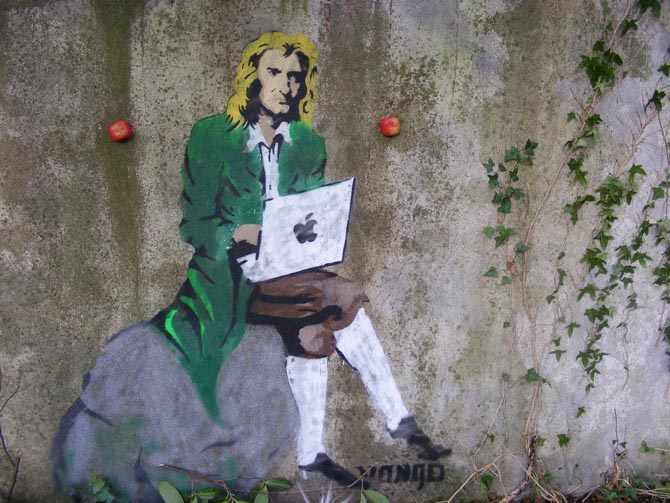

None of this would have been possible if we hadn't learned to question - or better phrased, developed the ability to question.  Which is hard to do when individual survival is your every-day focus.  

Through collaboration, we develop safe spaces and specialization.  Collaboration requires proximity and trust, however, which means some common purpose and shared rules must be established.  New challenges emerge that require further cooperation, specialization and innovation to solve.  It goes on and on.

Back to healthcare again.  Have you ever gone to the doctor's office and been given a prescription without an explanation as to what the activity or medication is actually going to accomplish?  What does the doctor tell you?

Have you ever wondered why cleansing rituals, particularly in relation to the consumption of food, are so common in religions, or do you assume it's just what God demands? 


If you accept that God has a plan and that there are mysteries that are simply beyond the ken of man, there's no need to ask questions.  Accept traditional wisdom and carry on.  It's basically the same thing as letting the doctor tell you what to do without asking why - the next time something goes wrong, you'll be back to see the doctor again.  And there's always the chance that the doctor is wrong.

When we begin with the assumption that humanity was better off before, that inquiries are heretical and spend our time defending tradition, we are trying to inoculate ourselves against the virus of knowledge through inquiry (i.e., science).  By placing absolute faith in any leader, we abdicate ourselves of the responsibility to understand the why behind the what and learn how internalize those lessons.

Before there was germ theory, public healthcare and the welfare state, there were religious ablutions and the call for charity.  "Love thy neighbour" was the first crack at diplomacy.  Depending on your starting premise, you can look at a lot of the content of the Bible or any religious text as setting ground rules for good behaviour in a social context, much like a parent will tell their children to eat their vegetables and brush their teeth before that child comes to understand the value of doing these things.


With time, children learn the reason behind the rules and in some cases, recognize how certain regulations either were poorly formed or may be past their best-before date.  

Good parents encourage their children to ask why, because for them the goal isn't to maintain constant mastery over their offspring but to provide a solid basis of personal growth and then encourage independence.  

Some day, after all, it'll be up to those kids to prepare their own children for the world they will eventually live in.

Creationists and fundamentalists of any kind can defend the literal interpretation of their holy scriptures 'til kingdom come and insist that complete submission to the word of their deity is the only path to salvation.  

I think they're starting with the wrong assumption.


If our ancestors had thought the same way, well, we'd be never have left our parents' house, as it were, nor developed all the skills, tools and innovations that have made civilization possible.  Were it not for the printing press, for instance, how far do you think Christianity or Islam could have spread?


Inquires that follow the evidence and challenge traditional thinking aren't blasphemy, undermining the written word of any divine figure.  Living a prescribed lifestyle in unwavering fashion honours no father.  The role of parents isn't to restrict their children but to empower them.


They can open the door, as it were - but it is always, always up to us to step through.


  Luke 11:9

Monday, 13 May 2013

A Quantum of Divinity


Yes, I love this kind of stuff - seeking the points of intersection between points of view gets me thinking.  After all, it's in the centre that innovation gets sparked...


If space exploded out of nothingness to create the universe we inhabit now, this begs the question–Did the universe create God? –Gail S.
 
This is a completely unanswerable question, so forgive me for attempting anyway.
 
If you believe in a personal God—the kind of God who answers prayers, performs miracles, and speaks directly to people—then science has nothing to say on the matter. Such a God exists out of space and time and does not live within the laws of physics, so cosmological discoveries are irrelevant.
 
Einstein had a different view of God, one that is widely shared in one form or another by many other scientists who study the universe. “I believe in Spinoza’s God who reveals himself in the orderly harmony of what exists, not in a God who concerns himself with fates and actions of human beings,” Einstein told Rabbi Herbert Goldstein in 1921. When George Smoot called his map of the cosmic microwave background “the face of God,” or when Leon Lederman refers to the “God particle,” they are speaking roughly in this context. Insofar as the laws of physics emerged at the time of the Big Bang, you could say that the God we know appeared then too. Then the question of “what came before the Big Bang?” becomes equivalent to the question of whether there is a deeper, more timeless form of God.
 
Recent theories about multiple universes that exist in infinite time (also described in my previous post) provide a place for God to exist before our universe—and after, if there is an after–if you choose to interpret them that way. Those theories could also explain how our universe began, and what came before the Big Bang. As yet these theories are untestable, though, so they still live in the realm of metaphysics as much as physics.

Monday, 23 July 2012

CFN - The Politics of Science

We might call it political science, but politics is really about the art of war.


Of course, politics isn’t about seeking compromise solutions that reflect the collective will of an electorate; it’s about winning majorities to implement partisan agendas. Between elections, Parties will strategically pursue issues in ways they feel enhance their support to the detriment of opponents. They will nurture allies that favour their causes, employ propaganda and wage “hearts and minds” campaigns. More like warfare then scientific debate, politics seeks to undermine confidence in adversaries through personal attacks and narrow public focus to just the issues that resonate with their themes. Understanding is entirely secondary. That’s why political operatives are so keen to define “the ballot question”; it’s less about what people care about and more about what issues give the best political traction.


The upcoming US election provides a case in point. Does it matter that Obama went to a church with a radical pastor, or is he really a Christian at all? Does Mitt Romney despise poor people and did he tie his dog to his car roof? If you undermine the character and credibility of the man, you cast doubt on anything he has to say, whether it’s factual or not. The corollary to undermining your opponent and targeting niche issues is promoting the concept that you have the definitive answers. Is the election about the economy, or income inequality? Only Obama can achieve income equality. Only Romney can fix the US economy. What about the viability of the US education system, the new Digital Government strategy, the challenges of energy security or threats from foreign countries? All are relevant to the electorate, but the Dems and GOP want you focused strictly on the issues that fit within their message frames. To issues beyond those frames, Parties will tell you “so what?” and direct you back to what they think you should know.

Canada’s current master of political positioning is Prime Minister Stephen Harper. From targeting subsidized political funding to suggesting coalitions were illegal to promoting a “tough on crime” agenda, Harper has carefully crafted every tactic to benefit his Party. Harper successfully defined his Liberal opponents as untrustworthy. The Harper Conservatives have also systematically removed information that could be detrimental to their cause from the public discourse; the media has had limited access, the Census has been gutted, government officials who challenge Conservative messaging have been silenced, Tory MPs who dare to voice independent opinions are quickly brought back in line. Opposition Members have seen their access to information significantly reduced; even Harper’s appointed Parliamentary Budget Officer is being denied the data he needs to do his job and been derided for seeking it. The Conservative government has actively lied to the public and disparaged anyone who challenged their political framing.

Thursday, 10 May 2012

Don’t Panic: Diversity Is Good For You


Charles McVety speaking out against Gay-Straight Alliances in Ontario schools

M Jordan expressing his fear of “deaf genocide”

We’ve got leaders railing against the perceived threats from foreign students and foreign workers.  In Quebec, there are language laws to protect and maintain the authenticity of an evolved dialect of Latin.  In other parts of Canada, there are staunch opponents to national bilingualism, despite the evidence suggesting that knowing more languages provides greater opportunity and can reduce risk of Alzheimer’s.
To me, these are all variations on the position of not wanting a daughter because 1) she can’t carry on a family line and b) she’s going to be taken away from you.  They imply a fear of loss, of subjugation, of losing out to another.
They are all instinctual, reactive positions.  They might feel right, but they aren’t based in fact.
Having a son-in-law is not detraction; it’s an addition, a linking of families, a provision of new opportunities for partnership, expansion and growth.  Plus, if there are grandkids, your genes get carried on anyway.
Learning more languages doesn’t steal from the richness of mother tongues – it adds to one’s capacity to think in different ways, come up with better solutions and develop competitive advantages.  In a global economy, who doesn’t want multilingual employees?
Deafness is a condition of biology that getting cochlear implants doesn’t change, only accomodates.  Having assistive technology enhances your ability and can actually facilitate cognitive development (plus, you can still turn them off when you want silence).  There aren’t separate “deaf” and “aural” worlds – there’s just one world.  The only question is how much access to it do you have?
Foreigners are the embodiment of diversity – you can feel they threaten your genetic/culture superiority, but what they really do is challenge your stagnancy.  We’re all about innovation, right?  Infinite diversity allows for infinite combinations.  We want more diversity, not less.
Gay isn’t a contagion.  Hearing about or even seeing gays kissing doesn’t impose any physical “risk” or “contagion” (even if you feel that it does).  For that matter, science isn’t a threat to religion any more than religion as a concept is inherently an impediment to science.

And we can only move forward when we do it together.

Saturday, 21 April 2012

Peering Into the Void - Where Religion and Science Meet


People of extreme faith – the kind that believe their religious texts are 100% accurate and that science is a secret ploy by the devil to corrupt mankind – feel like they know something the rest of us don’t.  After all, God’s Word is absolute.  These folk (found in all the world’s major religions) feel they are unassailable in their faith and, essentially, look down on those who don’t share their ideology.  The facts must be understood through the lens of faith to be understood at all.  Those that challenge their beliefs are threats to be contested.
The intelligencia – those who easily connect dots, have a breath of knowledge about science and theories and seek logical, verifiable explanations for natural phenomenon – feel that they have the answers to the physical questions of the world.  After all, there’s nothing else beyond science.  Meaning is irrelevant.  Those who fail to grasp their facts are harmful to society and themselves and must be challenged. 
Both groups stigmatize each other as ignorant of reality.  Both are as right as they are wrong.  They are both looking through a lens, darkly, not realizing that the lens is actually a mirror.
There is nothing but the natural world.  We don’t fully understand this system; we realize it’s something cosmically infinite that we simply don’t have the computational power to fully comprehend (yet).  But, we know we’re a part of it, just as individual cells are a part of our own anatomy.  We continually seek further answers, looking for a Theory of Everything that provides a clear, simple explanation for existence at the macro and mirco levels.  In short, science is looking for meaning, even while telling themselves meaning doesn’t matter.
There is nothing but God – an unfathomable entity of which we are part.  There is a reason certain religious concepts, like The Tree of Life and The Golden Rule, are universal; they make sense in terms of conceptualizing reality and maximizing the evolutionary benefit of social systems.  Just as there’s nothing mystical about gravity, it should come as no surprise that like minds would produce like interpretations.  Great religious leaders have a tendency to speak in parables – metaphors provide easier access points to often complex concepts.  As metaphors for the development of self-awareness,  Adam and Eve share much in common with Prometheus.
The search for meaning is encoded into our DNA; our very genetic makeup and the nature of biological/social evolution serve as their own force of gravity, pulling us together towards a shared centre.
It’s a journey we can try to resist, but will never escape.  Wherever we come from, we all end up in the same place.
Is it not better to be conscious of the journey?


Friday, 27 January 2012

Faith and Science, Church and State – and Politics


As public resentment against the failings of capitalism swells in a frustrated, embittered population, there is spillover resentment being aimed at other institutions associated with the Right – for example, the Church.  Of course, generalizations are human nature, so just as the Political Right is inextricably identified with the Church (the Christian institution in its multiple and diverse facets, again, generalized), the Church is viewed as inseparable from religion.
This is, of course, facetious.  Religions are systems of meaning, not structures or hierarchies.  Religious institutions no more encompass the entirety of a religion than grammar and syntax are the sum total of language, or for that matter, language the whole of communication.  Perhaps a better comparison would be cinema; a movie tries to get a message, a sentiment, a collective experience across through images, words, music, editing and all the tools of the trade.  This is what religion does; the institutions are simply the grammar.
While language is the single greatest tool humankind has developed – it allows us to communicate complex ideas, share information and collectively plan – it comes with its own inherent constraints.  A good example of this; we partly define a thing by expressing that which it is not.  When people see some things as beautiful, other things become ugly; when people see some things as good, other things become bad. 
The political spectrum is a perfect example of this; we define things as being “Right Wing” or “Left Wing”, though we fully recognize that a fiscal conservative isn’t necessarily a social conservative, or that a Liberal isn’t necessarily anti-capitalist.  People who self-identify as being at one end of the spectrum or the other will both claim exclusionary title to the basics of morality (things like compassion, integrity, resolve) even though that’s clearly not the case.  The oppositional definitions that we create for ourselves and our tendency to view others as being that which we are not greatly limits our capacity for dialogue.

Which is why, to be broadly successful, political parties invariably have to move towards the centre.
Religion, then, is not the antithesis of science; instead, they serve different, complimentary purposes.

The Complimentary Difference

The purpose of religion is to provide meaning: “Why am I here? What was I meant to be?"  These are esoteric questions that can’t be quantified or rationalized; therefore they are beyond the capacity of science to answer.  Religion is interpretation, not a statement of fact.
Fact is the domain of science.    The purpose of science is not to provide meaning, but to expand understanding – to know the mechanics of existence.  This is invaluable.  If we didn’t, for example, understand the properties of light, we wouldn’t have electricity, CDs, X-Rays, etc.  Knowing how the world functions allows us to interact with it more efficiently and to better harness the potential that lies in nature.
While science may provide us with the button, it can’t tell us whether it is right to push it.  The more we learn about the universe and ourselves through science, the more questions we have about our place, purpose, and responsibilities – again, questions that science has never claimed to have answers for. 
Science opens the door; it’s religion that takes us through.
Yes, as the global village goes through its current period of growth pains, polarization is natural; tension leads to agitation, which is narrow in scope and confrontational.  The solutions to our challenges, though, won’t lie in seeking to differentiate ourselves from each other by gravitating to the left or the right, but in the way the confluence of each propels us forward.
Science is not capable of giving our world meaning; despite what  some would claim, that doesn’t imply that meaning doesn’t exist.
When the doctrine of any religion was written, the writers didn’t have access to the vast amount of knowledge science has provided us with, nor do they now have all the facts we will ever know – our understanding of existence continues to expand and evolve.  This doesn’t repudiate the message or the values carried by religious beliefs – meaning and knowing aren’t the same thing.  Why not "render unto science the things which are science's?”
Religion and Science, much like the individual approach of the Right and the collective approach of the Left – the only way forward is together.


Sunday, 22 January 2012

Alchemy, Wealth and Eternal Life


“I look to heaven and I see
there's a silver dollar
in the sky shining down on me.”


-       Sitting In the Sun, Louis Armstrong
Reading “The Alchemist” by Paulo Coelho, many thoughts cross my mind.  Each stems back to the same place – the nature of perception. Or, as we refer to it in more concrete, rational, scientific terms – cognition.

I’m an anthropologist by training, a traveler by nature and a linguist by inclination.  I’m also hard-wired to be pro-social, which is why I have always been fascinated in that which connects people and that which cleaves us apart.  The pursuit of this understanding has taken me around the world, from small communities in Ecuador to hot spots in Bosnia to the Pink Palace in Ontario.  A little story cuts to the root of what I have learned so far:

When I was living in Italy, a key Other identified by many of my Italian friends were the Maroccini – the Moroccans. The epithets used against foreign Moroccan workers were the same as has been used against any Other in history, whether it be the Gauls, the Irish, the Chinese or First Nations:

- They don’t think like you and I;
- They are corrupt, immoral, dangerous;
- They are intentionally out to get us;
- They are not to be trusted, therefore:
- We must defend against them, through offense if necessary.

It’s a deep-rooted fear of the unknown which quivers beneath the surface of many a mind to this day.

During a trip from Italy to Morocco with a busload of Moroccans and over weeks spent in various parts of Morocco proper, I heard the exact same prejudice raised.  This time, it was about the Italians on the part of Moroccans. South of the Atlas, I frequently heard the same words spoken by small-towners and Tuareg, but in reference to the big-city folk from Casa.

Of all the wonderful riches of diversity that separate ethnicities, linguistic groups, religious groups and political groups, people fundamentally have one key thing in common – a mistrust of each other. That mistrust is instinctual, limbic-based and fortified by a deficit of understanding.  That lack of awareness helps leave one with the feeling of being unempowered, of not having control.

Why, though? Why does surface or anecdotal knowledge lead us to focus on differences between people, when the similarities are so pronounced?  In my experience, language is the key. We codify everything – nature, people, positions – by giving them names.  Trouble is, the naming of things applies levels of value that are not intrinsic to the subject in question. Codification allows for more complex communication, certainly, but it equally imbues whatever's being defined with significance beyond its internal fabric.  We automatically mistrust what we don't understand, because it is different.  That mistrust wedges itself into our definitions.  That cognition-level stigma restricts us from knowing a subject on its own terms; instead, we know things in terms of what they mean to us.

The Other provides a clear example of this.  When you define a person as different than you, they become foreign, unknowable, threatening. Conversely, if we used the elements we have in common to form the base of understanding, diversity becomes an opportunity for growth, difference becomes a positive, the unknown becomes a teacher.

That variance in perspective leads to the great irony of alchemy, the mystical search for immortality and immediate wealth that played a role in fostering the development of modern science and Western thought in general.  The perspective that developed alchemy has left us with individual-focused definitions of wealth and life - a perspective which leaves us searching for answers to problems that exist in our perceptions alone.

This framework and the quest for the Elixir of Life and the Philosopher’s Stone is core to Western thought; therefore, it has informed the institutions and infrastructure that form the skeleton and nervous system of Western civilization. Our health care system is designed to help us individually live longer.  We want to live longer to enjoy wealth.  At the same time, we try to get rich as quickly as possible to be able to enjoy our wealth for greater parts of our lifespans (hence the inevitability of get-rich-quick schemes). Or, we tackle the problem from a slightly different angle and seek immortality and wealth through legend. It’s the same choice Achilles grappled with – glory or immortality, only now we define this by saying it’s better to burn out than to fade away.

When you define riches as that which are rare and difficult to obtain, you automatically set yourself on a competitive trajectory. Precious metals are rare, so it’s those at the top of the food chain who get them. Money doesn’t come easy, so it is seen as important. Unless you’ve got access to financial wealth – in that case, it’s some other rare commodity you seek, with your money, that helps define you as rich. This can be an artist’s work (which gains much value once it’s clear that their output is irrevocably limited) or a pet or pelt of a nearly-extinct animal. The pursuit of wealth is a perpetually isolating one, intrinsically twinned with the fear of losing something – something you have already, or perhaps the next opportunity if you don’t move quickly enough.


WEALTH
The big secret of the Philosopher’s Stone is this – you cannot turn common stones into gold, but there’s no particular reason why gold must be exclusively valuable. In fact, you can choose to value that which is all around you, if value is not prescribed as something you can have to the exclusion of others. Hence the Satchmo quote that kicked this article off – the glory of a sunset is a wealth everyone can attain when wealth is seen not as an individual end but as a personal, connective beginning.

What of the other quest of alchemy, the Elixir of Life, which is essentially the same conceit as the Fountain of Youth? The same principle of codification applies here. When you identify things in terms of possession, you either have something or someone else does.  If there's something someone else has and you don’t, you must’re probably missing out. There’s a reason why anxiety and depression are connected to consumption. Equally, when you view life on the individual level, it is short, your time is limited, the stress is on to get what you can with the time that you have.

This is what we do – we start inward, then expand slowly outward. We worry about our own lives, then the lives of our families, our self-identified groups, our communities and somewhere way down the line, our species and the general ecosystem. Yes, we in the West understand the circle of life, ashes to ashes, etc, but we don’t really believe it. Life is a trajectory, not a cycle; when we’re done, we’re done. This is all there is.

Of course, we could dig deeper, if we wanted to - cells within our body die and are replaced all the time. The fabric of who we are changes over the course of our lives - we're literally not the same people at our deaths as we were at our births. That same perspective can be applied to society; the death of an individual does not mean the end of society, just as the end of a society doesn't imply the end of the species.  Individual deaths actually facilitate the adaptability of the whole – as true for cells as it is for political parties or business ventures.  These days, in social contexts, we refer to this adaptive process by a new name – creative destruction.

It is widely recognized that the business which proves itself incapable of innovation is destined to fail, just as the body or society that does not adapt cannot last.  Of course, that which is successful will invariably incorporate elements of that which came before, as is the nature of evolution.  Existence IS a cycle of regeneration, not a trajectory; death is a starting place, as much as an end.

Yet our society is built of individuals seeking their own survival and benefit; that is the perspective that informs everything from the way we plan cities or conduct ourselves in traffic to the way we fund health care programs (again, designed to keep us ticking for as long as possible). Going inwards, we don't see the loss of a limb as the loss of self; so long as the self is intact, the limb can be compensated for (when it comes to impacts on our cognitive abilities, however, there is a sense that with neurological challenges, a measure of the man is lost).  At the outer (governance, corporate) level, individuals are often viewed the same way, though the emergence of the knowledge-based economy is changing this.

Systems are built with focus on how to support the individual, then expanded to groups and models. Institutions - public, Not-For-Profit, Private - worry about achieving their own interests and mandates first, frequently at the expense of others in their field. This is why we are being weighed down by the burdens of duplication, gaps and overlaps; repetition and inefficiency results when you look from the ground-up, rather than from the crowd inwards.

It is no surprise that the more densely integrated global society becomes, that trend is starting to change.  It’s also no coincidence that this change is being accompanied by a deeper understanding of cognitive function and how individual perception informs crowd behaviour.


LIFE
Have we strayed from the quest for the Elixir of Life?  No – we’ve just given it some background.  The nature of existence is cyclical, but the nature of cognition is linear.  The major religions touch on the circle of life – ashes to ashes, dust to dust, etc – but they do so from a linear fashion.

Consider: Hindus believe in reincarnation. There’s comfort in knowing that, in some way, your individual existence will go on. Buddhists, on the other hand, are focused on Nirvana – the ending of one’s individual existence. Samurai in feudal Japan looked at life from a completely different perspective – they focused on death. In the Hagakure, Yamamoto Tsunetomo tell us "The way of the warrior is death." This doesn’t mean Samurai were suicidal; what it meant was, the individual acceptance of death took away the fear of ending.  By accepting an end was inevitable, they had no resistance to living life fully.  Lao-tzu put it thusly:

We hammer wood for a house,
but it is the inner space
that makes it livable.


When you perceive wealth as personal, it is fleeting.  When you view life as individual, it, too, is fleeting.

Alchemy is the pursuit of the eternal through the lens of the individual.  The eternal, though, is beyond the grasp of the individual – it is not achieved through chemistry or industry, but by shifting one’s perspective beyond the self.  Don Tapscott calls this “networked intelligence.”  That expansion of self is a proven generator of wealth.

The real magic, then, happens when we sublimate the self and allow ourselves to connect with the matrix of the eternal.  Wealth is not isolating, but shared.  Life is not personal, it is systematic.  We move forward, as they say, together.