Search This Blog

CCE in brief

My photo
Recovering backpacker, Cornwallite at heart, political enthusiast, catalyst, writer, husband, father, community volunteer, unabashedly proud Canadian. Every hyperlink connects to something related directly or thematically to that which is highlighted.
Showing posts with label Randy Hillier. Show all posts

Friday, 16 August 2013

Union on the Right: The Hudak Paradox


It's an interesting, if not surprising, predicament that Tim Hudak has gotten himself and his Party into - and one, I think, that's representative of the broader malaise we're witnessing in politics.  After all, it's the same predicament that Sam Hammond has gotten himself and ETFO into.  


Hudak has taken a strong stand against unions.  In a White Paper (not, as we are told, to be confused with an actual policy commitment) penned largely by maverick Randy Hillier, the Hudak PCs have suggested collective bargaining is harmful to the interests of individuals.  The paper promotes the notion of union leaders being held more accountable to union members.  One, solid voice impedes flexibility and innovation, the argument goes - high performers are impeded by the need to tow the Party line.


Seems to make sense to Randy Hillier and Frank Klees - after all, that's the exact same approach they're demanding for Hudak's Progressive Conservatives.  They are suggesting it is healthy for the Party to have Hudak held to account by Party members at any occasion.  To them, the likes of Jim Wilson are sending the wrong message to those members by suggesting it's damaging to undermine the leader and cause internal friction when there's an election looming on the horizon.

As I have argued before, Political Parties are exactly like unions - if you want to run for political office, you pretty much need to be a Party candidate if you have any hope of winning.  When you do get the job, though, you are beholden to Party messages, Party financial commitments and the like.  It's a trade-off; you don't get in if you're not part of a Party but if you do get in, and your Party is successful, you have a better chance of gaining position for yourself and results for your constituency, building your own brand.
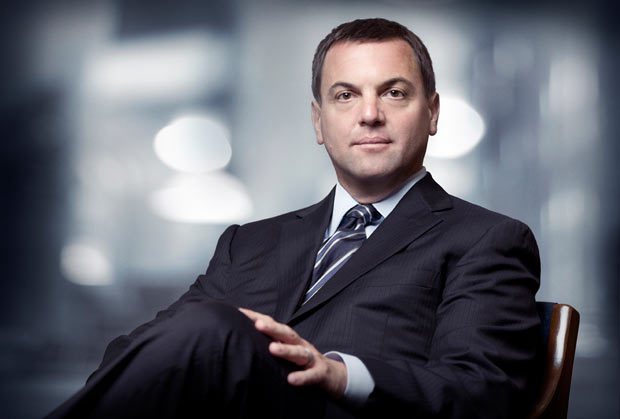

As Hudak has been a bannerman for the PC Union since his 20s, this is something he should understand pretty well.  It's his association with the Progressive Conservatives that has provided him with taxpayer-funded employment for all these years; it was that brand that gave him a shot at being Premier.  None of this would have been possible had he been an Independent.


So, here's Hudak's dilemma - he is telling Ontario that unions are bad, they impede creativity and stifle talent and prop up failures.  Yet when it comes to his Party and demands by a disgruntled few to ditch an unsuccessful leader, Hudak and his loyalists are advocating for the need to hold the line, support the Leader, show a unified front to the world lest their collective interests fall off the table.

Politics being the art of cognitive dissonance made policy, it's absolutely possible for Hudak to furl his brow and suggest that these are completely separate beasts.  But that still leaves him the challenge of calming the sea of troubles bubbling within his Party and securing enough support in urban Ontario to win a majority government.  

Not that the Leader of the Opposition has a habit of following advice, but for what it's worth, here are my two cents:

- Stop acting like Leader of the Opposition.  Quit breaking the world down into "with me" and "against me" columns and start doing the hard job of bringing people together

- Don't let go of what you believe in - but remember, you aspire to lead everyone. That means your vision needs to be bigger than your personal aspirations 

- Start seeing your opponents as opportunities, not enemies.  Just for fun, start with Sam Hammond; sit him down and pick his brain, challenge him to think outside of his box and come up with solutions that work for both sides of the equation and, ultimately, best serve students

- Get creative.  The world isn't blue-and-red, but rather, the overlay of both

Albert Einstein defined insanity as "doing the same thing over and over again and expecting different results."  The swinging pendulum of partisan politics has lead more to a fractured society than to aggregated wins.  The traditional Hudak Approach hasn't done much in his favour, either.

If he really wants to win, it's time for Hudak to think different - maybe even walk a mile in the shoes of his opponents and figure out why it is they support the positions they do.

After all, leadership isn't about holding ground; it's about moving forward.


Friday, 9 August 2013

Ontario's PCs Need To Pull Together


Everybody in provincial politics likes to use the "the best indicator of future performance is past performance" line.  So, let's look at the past performance of these two MPPs:
 
Frank Klees is an MPP with a history of looking out for Number One. He's run for leadership before and was no fan of John Tory.

Randy Hillier orchestrated the ousting of Norm Sterling, who had been one of the longest-serving and most respected MPPs in the House.  Hillier did this to get his buddy Jack Maclaren into the Legislature.  Hillier is also interested in the Party Leadership.

It's pretty clear what these gents are up to - they want Hudak gone to make space for their own perceived benefit.  They are aggressively, competitively, even opportunistically promoting any openings that serve their interests.

Of course, Hudak should really be in favour of this approach - after all, it's the one he's been promoting with his anti-Union stance; people should be free of the encumbrance of collective bargaining, which is really what Political Parties are all about.  Hillier and Klees are the epitome of what the Hudak Tories say they believe in.

This being politics and all, what the internal fighting amounts to is blood in the water for the other two established Parties, for a gaggle of stakeholder groups and, of course, for media looking for juicy stories.  When everybody gets focused on political cannibalism, what loses focus are substantial issues (of which there are many) and shared solutions (desperately needed on fronts ranging from transit infrastructure to justice).  Political planners fretting over what positions to take can focus on attacking opponents rather than the more challenging task of stretching their cognitive selves to reach the higher-hanging policy fruit.

You'd think Hudak (and folk like Hillier and Klees) would have learned their lesson from Mike Harris, who I hear tell is among the current Leader of the Opposition's advisers:


 Of course, super-confident people don't subscribe to reality-based politics, but I digress.

For one, I wish that the Hudaks, Hilliers and Kleeses of the world would listen to folk like Peter Shurman, who I most often disagree with but have a great deal of respect for and John Yakabuski, who once honoured my grandfather in the Legislature.  Every difference of opinion doesn't have to result in a pushing match; there is much to be gained through conversation, understanding and compromise.

As counter-intuitive as it may sound,  I really want the PCs to be in the strongest position possible and focused on creative policy solutions; I want a competition of ideas between all Parties with an eye towards what's best for Ontario, rather than what serves partisan interests.  Strength through diversity, etc.

I still find it hard to believe Hudak will ever be Premier; I've got my own thoughts on what I'd like to see happen at Queen's Park.  This isn't about me, though, any more than it's about Hudak or his dissenting MPPs, or phantom menaces like Nick Kouvalis.  


If Ontario's Political Parties and those who aspire to control them focus on cynically stabbing each other in the back, fostering grudges and feigning outrage at the kinds of shenanigans which have become business-as-usual across Canadian politics, then they have no place telling Private or Not-For-Profit sectors to pull together and collaborate over shared solutions.

That's a recipe for stagnation.  Which is where we've been for far too long.

If any of us are serious about progressing beyond our political deadlock, especially as we start to lag behind competitor jurisdictions in areas like The Knowledge Economy, we have to take to heart the notion that forward together means leaving no one behind.  

Including your competition.

I hope every individual PC takes this message to heart and start thinking about why they're involved in the first place.  If you can't keep your own house in order, it doesn't give people a lot of confidence about what you can do with theirs.

Friday, 3 May 2013

Randy Hillier: Taking the Progressive Out of Progressifve Conservative


Others will focus on the partisan shots and hopefully, a bit of substantive talk about the content of the budget itself.
 
Me, I love Hillier's use of "fiscally progressive" as a pejorative.
 
In Hillier's world, progress is synonymous with waste and a loss of personal freedoms.  People should have their own land and be free to do whatever the hell they want with it.
 
Forget bemoaning the loss of horses and bayonets - Hillier is bemoaning the last 3,000 years of social evolutionary progress that has brought us such costly initiatives as roads, books, eye glasses, inoculations, hospitals, movie theatres and even Tim Hortons coffee (coffee originated in Ethiopia and is now a chief export of such diverse nations as Brazil and Indonesia).
 
Innovation is progress; innovation relies on creating things for which there is no practical need now, but might be, given a socially engineered change in public appetite.  That's what businesses do through marketing all the time.
 
Please tell me if there's another way to see this, but by being anti-progress, Hillier is essentially anti-society.  If Randy Hillier thinks we'd all be better off living the tribal live of independence, he's welcome to move to Northern Afghanistan.  I'm sure he'd fit in just fine.

Monday, 9 July 2012

So long, Industrial Economy - And Thanks For All The Fish


Heather Mallick pulls no punches, as is her right - though if she intended to spread word on her concerns about the Hudak/Hillier White Paper on Unions (because that's truly all it's about), invective like that won't help her connect with the unconverted.


She makes some serious points, though. In the non-unionized world, employment is frequently a subset of serfdom - employees are expected to do market research, strategic planning, leg-work, etc. with no training, little or no direction and frequently under the thumb of negative micro-management (criticism of the non-constructive kind). Employers see their responsibility limited to the provision of payment, with turn-over being the best way to root out problems. This in spite of the mounting evidence that these rigid top-down employment models are highly inefficient.


Of course, there is an obvious model of yore that, consciously or not, the Hudaks and Hilliers are trying to copy. It's called Feudalism. Feudalism was an incredibly inefficient model that kinda sorta worked for a few back when populations were smaller and property was more rural - but it isn't a model that has any hope of survival in an urban reality.


Thing is, Ontario's an increasingly urban place - with increasingly urban voters. Hillier's micro-targeted plan might appeal to the landowner crowd, libertarians and some of the 1%, but anyone thinking about the long-term will see this is a dead-end strategy that would exacerbate the broader, structural problems we are facing.


Hudak has spent his entire adult career in politics - all he knows is wedge-issues and attack messaging. Leadership requiers a bit more than that; you need to look beyond voter blocks and think of the big picture. I would suggest Team Hudak go back to the drawing board, think a bit bigger, talk to the Christine Elliots within his Party. Ontario needs a plan that moves us forward; we can never go back to before.