Search This Blog

CCE in brief

My photo
Recovering backpacker, Cornwallite at heart, political enthusiast, catalyst, writer, husband, father, community volunteer, unabashedly proud Canadian. Every hyperlink connects to something related directly or thematically to that which is highlighted.
Showing posts with label God. Show all posts

Thursday, 6 February 2014

Curing Creationism: The Devil is in the Details


Very true, this.  People have  a habit of believing that which validates pre-existing beliefs.  If you believe the Bible is literal truth, for instance, you're going to look for facts that prove you right and question those that don't.  

If you believe in or against global warming, it's a simple matter to cherry-pick arguments that support you and refute any criticism as bogus science.  If gay people, Jewish people or Africans make you feel uncomfortable, you can find all sorts of evidence to validate those feelings - especially when you hold doggedly to your starting premise.

Which is the thing about science; science is study, not validation.  The whole point is to develop and challenge starting premises, rejecting those that don't fit.  That's how it came to be that religious men like Charlies Darwin or Copernicus found themselves forced to question certain premises of their faith told them were unquestionable and challenge the status quo.  

They weren't intentionally being rebellious; they were simply following the evidence.


How do we know a person is sick?  There's no label that pops up on the skin with a written description of an ailment, but there are symptoms that can be readily identified and, thanks to a massive body of study, attributed with general accuracy to specific illnesses or afflictions.  This is called diagnosis.

Where does the illness come from?  Can it be cured?  Does it pose a risk to others?  Before we had scientifically researched diagnosis systems, people relied a lot on assumptions.  These assumptions were believed to be gospel for the simple reason that if it was true before, it must surely be true now.

We have historically tended to err on the side of reactive caution on this front - lepers were sent away to colonies and supposed witches were burned at the stake.  Infidels and barbarians have been kept outside the kingdom with firewalls of various compositions.

The same holds true for economic prescriptions; if an economy has lost its luster, as ours has now, use common sense - shrink government, cut taxes, reduce organized labour supports and allow companies to produce the same goods at a lower cost so as to compete with other jurisdictions that produce goods at low cost, like Bangladesh.

The same equally holds true for crime - tougher punishment, greater restrictions and longer sentences are the way to go.  In this sense, prisons serve the same purpose as leper colonies or insane asylums of old.

This sort of approach doesn't follow the evidence and revisit original assumptions - it relies on traditional wisdom and gut instinct.  If you know the Bible is the literal truth, then anything that refutes it is wrong.  If you know that the world fits into neat categories of good and evil, with tradition, the free market and individual independence firmly in the good column and progress, centrally coordinated social service and government in the evil column, your choices are pretty easy, aren't they?


Which brings us back to health.  


Really think about it for a second - traditionalists of any kind work very hard to present the threats of opposing ideologies as almost virus-like in nature, with the faith, leader or belief system the only tonic to protect against this threat.  As such, they hammer home their message as often, as loudly and as pervasively as they can.  At the same time, they try to reduce the flow of contrarian information.  


This quarantining against challenging information generally involves creating closed communities and either excommunicating or locking away challengers, as well as the removal of contradictory information.  This last, in its most extreme form looks like book burnings; in its more subtle manifestations, it looks like killing the census, closing libraries and generally staunching the flow of data to the people.

When time was, people didn't have a lot of access to information; we didn't know about germ theory, principles of physics, meteorology, metallurgy, etc.  Like other animals out there, we had nothing but instinct to go on - until we learned to be curious.

Through curiosity, we began to question, to experiment, to make mistakes and learn from them.  One can only imagine that our distant ancestors thought of fire as an uncontrollable force of nature and looked at beast and plant as things that existed in an unchanging state.  But we've learned to control fire and we've mastered the science of domestication, haven't we?

So too have we developed all the fields, specializations and organizational capacities that make human civilization possible.  
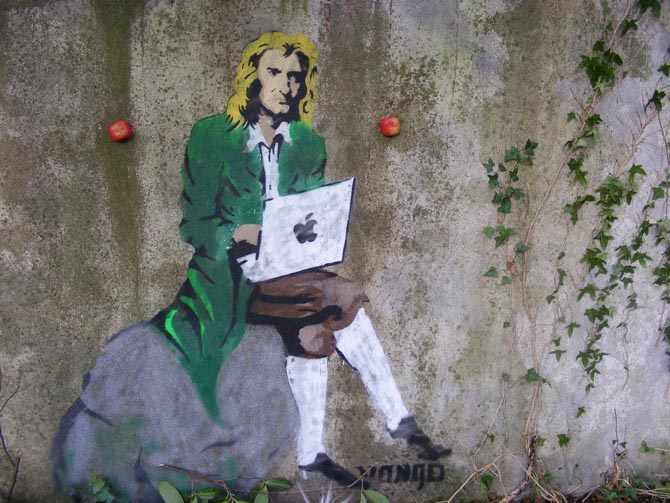

None of this would have been possible if we hadn't learned to question - or better phrased, developed the ability to question.  Which is hard to do when individual survival is your every-day focus.  

Through collaboration, we develop safe spaces and specialization.  Collaboration requires proximity and trust, however, which means some common purpose and shared rules must be established.  New challenges emerge that require further cooperation, specialization and innovation to solve.  It goes on and on.

Back to healthcare again.  Have you ever gone to the doctor's office and been given a prescription without an explanation as to what the activity or medication is actually going to accomplish?  What does the doctor tell you?

Have you ever wondered why cleansing rituals, particularly in relation to the consumption of food, are so common in religions, or do you assume it's just what God demands? 


If you accept that God has a plan and that there are mysteries that are simply beyond the ken of man, there's no need to ask questions.  Accept traditional wisdom and carry on.  It's basically the same thing as letting the doctor tell you what to do without asking why - the next time something goes wrong, you'll be back to see the doctor again.  And there's always the chance that the doctor is wrong.

When we begin with the assumption that humanity was better off before, that inquiries are heretical and spend our time defending tradition, we are trying to inoculate ourselves against the virus of knowledge through inquiry (i.e., science).  By placing absolute faith in any leader, we abdicate ourselves of the responsibility to understand the why behind the what and learn how internalize those lessons.

Before there was germ theory, public healthcare and the welfare state, there were religious ablutions and the call for charity.  "Love thy neighbour" was the first crack at diplomacy.  Depending on your starting premise, you can look at a lot of the content of the Bible or any religious text as setting ground rules for good behaviour in a social context, much like a parent will tell their children to eat their vegetables and brush their teeth before that child comes to understand the value of doing these things.


With time, children learn the reason behind the rules and in some cases, recognize how certain regulations either were poorly formed or may be past their best-before date.  

Good parents encourage their children to ask why, because for them the goal isn't to maintain constant mastery over their offspring but to provide a solid basis of personal growth and then encourage independence.  

Some day, after all, it'll be up to those kids to prepare their own children for the world they will eventually live in.

Creationists and fundamentalists of any kind can defend the literal interpretation of their holy scriptures 'til kingdom come and insist that complete submission to the word of their deity is the only path to salvation.  

I think they're starting with the wrong assumption.


If our ancestors had thought the same way, well, we'd be never have left our parents' house, as it were, nor developed all the skills, tools and innovations that have made civilization possible.  Were it not for the printing press, for instance, how far do you think Christianity or Islam could have spread?


Inquires that follow the evidence and challenge traditional thinking aren't blasphemy, undermining the written word of any divine figure.  Living a prescribed lifestyle in unwavering fashion honours no father.  The role of parents isn't to restrict their children but to empower them.


They can open the door, as it were - but it is always, always up to us to step through.


  Luke 11:9

Monday, 13 May 2013

A Quantum of Divinity


Yes, I love this kind of stuff - seeking the points of intersection between points of view gets me thinking.  After all, it's in the centre that innovation gets sparked...


If space exploded out of nothingness to create the universe we inhabit now, this begs the question–Did the universe create God? –Gail S.
 
This is a completely unanswerable question, so forgive me for attempting anyway.
 
If you believe in a personal God—the kind of God who answers prayers, performs miracles, and speaks directly to people—then science has nothing to say on the matter. Such a God exists out of space and time and does not live within the laws of physics, so cosmological discoveries are irrelevant.
 
Einstein had a different view of God, one that is widely shared in one form or another by many other scientists who study the universe. “I believe in Spinoza’s God who reveals himself in the orderly harmony of what exists, not in a God who concerns himself with fates and actions of human beings,” Einstein told Rabbi Herbert Goldstein in 1921. When George Smoot called his map of the cosmic microwave background “the face of God,” or when Leon Lederman refers to the “God particle,” they are speaking roughly in this context. Insofar as the laws of physics emerged at the time of the Big Bang, you could say that the God we know appeared then too. Then the question of “what came before the Big Bang?” becomes equivalent to the question of whether there is a deeper, more timeless form of God.
 
Recent theories about multiple universes that exist in infinite time (also described in my previous post) provide a place for God to exist before our universe—and after, if there is an after–if you choose to interpret them that way. Those theories could also explain how our universe began, and what came before the Big Bang. As yet these theories are untestable, though, so they still live in the realm of metaphysics as much as physics.

Sunday, 14 April 2013

Logic, Or the Semblance of It


Do you think the sun orbits the sun?  Likely not, but there was a time that was a common perspective. 
 
Racism (or any stigma, really) is a variant on the same theme - them Other folk aren't as human as you are and as such, not deserving of the rights and freedoms that are the sole property of mankind.  It's universal, this - we matter, you don't.  We have the moral authority to impose upon you, but the reverse would be a travesty.
 
Might makes right in business, in politics, in bullying, in rape.  At least, many of us feel that way.
 
In truth, though, there is one massively complex system that includes the furthest-flung galaxies and the most microcosmic of organisms.  We sentient humans are somewhere in the middle, unremarkable to anyone but ourselves except for one thing - we have the capacity to be conscious of the big picture
 
We don't always - often enough, we settle for shadows or cheap facsimiles.
 
At our best, though, we know that we're part of a whole that is infinitely more than the sum of its parts - and aim to offer a meaningful contribution, maybe leave a bit of a mark behind.
 
Call it social genetics.


Wednesday, 3 April 2013

Lazy Religion Tackles Gay Marriage: With Liberty and Justice for Most (Timothy Kurek)

 
I'm hardly an expert on Christian faith, but it does seem to me that much of what gets practiced by the main stream seems to cherry-pick from the message Christ tried to deliver.  In our anxiety about change and urge for expediency, have we turned to the golden calf for validation?


Lazy Religion Tackles Gay Marriage: With Liberty and Justice for Most
 
With liberty and justice for most... Wait that's not it. Some? A few? Oh no, it's liberty and justice for all.
 
I was raised in the Bible Belt, a hyper-conservative Christian who in the past few years has had his worldview crushed and rebuilt at the hands of experience. Where I once would have fought, and ardently so, against a same-sex couples right to marry, I have been blessed to meet and be live in community with the people I was always taught to shun. My beliefs changed and changed radically, and so I sit with bated breath as I wait to hear the Supreme Court's decision in the landmark court cases that have been going on the past few days.
 
Right now the United States Supreme Court is about to rule on both Proposition 8 from California and DOMA (The Defense of Marriage Act). It is a truly historical moment in our young country's life. It's the moment we decide if all really are equal, or if the only citizens allowed the unalienable rights of life, liberty and the pursuit of happiness are heterosexuals and those under the umbrella of main-stream Christendom. But what strikes me as I peruse my Facebook news feed or read the blogs of many of my friends and peers is the true lack of understanding about one crucial point. Same-sex marriage is not, in any way, shape or form a religious issue. Same-sex marriage is a matter of the state, and I am baffled by the fact that we live in a country that promotes itself as the greatest country on earth, a country founded on the principle of freedom, yet we are somehow still okay classifying "the other" as the lesser. Just how long will we allow there to be second class citizens? Did the civil rights movement of the '50s and '60s teach us nothing? These are not criminals we are persecuting, or even non-citizens. The "other" I am referring to are upstanding, tax-paying, citizens of these United States, and these citizens are suffering at the hands of one of the most toxic entities in existence, lazy religion. A few thoughts about lazy religion...
 
Lazy religion is obsessed with arm-chair activism and other such movements that don't require effort, sacrifice or calling. With the age of the Internet, the true causes of Christianity are being shelved, only to be replaced by political motivations that stem from a poor understanding of government and a poor understanding of the Bible. Several years ago I watched as Proposition 8 passed in California. I watched as my Christian brothers and sisters sang and danced in victory, having "struck a blow" in the defense of "traditional biblical marriage." The problem? In the days following I also witnessed mobs of angry gay and lesbian patriots marching in most major cities.
 
They marched in defense of their California brothers and sisters, and marched because they had to. The pain of doing nothing after Prop 8 passed would have set the cause of equality back and further entrenched the nation in an archaic and unconstitutional mindset. But more than anything I think they marched for hope. While mainstream evangelicals celebrated a victory over an issue, they never understood that they were actually celebrating the oppression of millions of flesh and blood people. People made in the image of God, possessing the inherent dignity that their humanity affords. And for what?
 
Lazy religion is addicted to empire and control. It doesn't acknowledge personhood. James 1:27 tells us that pure and undefiled religion is this: to take care of widows and orphans in their time of need and to keep oneself spotless from the world. Jesus also defined our focus, to love God and to love our neighbors (the other) as ourself. Is it right then that our mindset should be to politicize individuals and who they love, and to want to dictate those individuals lives through the manipulation of the state? A friend of mind, David, spent 40+ hours a week during this last election volunteering at a call center, dialing numbers and asking voters to look at this issue from a different point of view. When I asked him why he was spending so much time politicking, he told me that he felt he had to for a time... And then I could hear his voice crack and tears began forming in the corners of his eyes.
 
"Tim, I'm sick of being looked at as a political issue instead of as a person, an equal." I've never thought about things that way until he said that. Lazy religion doesn't think in terms of people; it thinks in terms of abstract theological concepts and issue based stereotypes. It politicizes unique and beautiful individuals made in the image of God. Lazy religion has no place in this debate...
 
So as we wait for the decisions to be made, and as we walk through the rest of this historic journey toward equal rights for everyone (not just in this country but also all over the world -- Australia, I'm looking at you) it is my prayer that the stances taken will be rooted in grace and consideration for all.
 
We can all be bigots, but we don't have to be. We can disagree and argue this issue to its conclusion but in the end it is essential we remember that lives really are at stake, and as a man of faith respecting and honoring the image of God in the other is almost as important as the issues themselves. No matter what side of the issue you fall on, you can live out the calling of love intentionally and realistically, and respect the many journeys the collective "other" have walked.

Monday, 1 April 2013

Collective Conscious: Is God An Algorithm?


Is there a difference between the birds and the bees and other social behaviour?  There's a common outcome at play - whether it's fish in a bait ball, a swarm of starlings or perhaps even a million man march, the whole is greater than the sum of its parts.  It's more secure, too, better able to control its fate.
 
From the cellular level (complex organisms) to the social level (herds, packs, tribes, nations) there's a trend towards inter-dependence for greater collective security and stability.  What's the connective tissue, though?
 
The same holds true between differing populations of the human animal; societies tend to have a shared trajectory towards urbanization, specialization and complex centralized coordination.  Environmental factors and external threats like guns, germs and steel may impact that trajectory, but left to their own devices it seems to fit that people will get there, eventually.
 
There's something more than that, though - like the birds and bees, there seems to be certain normative rules that pop up cross-culturally.  They appear in the form of myth or religious doctrines, like do unto others as you'd have them do unto yourself.
 
Faith looks to define an omniscient God, an exterior consciousness that guides creation.  Ecstatic religious philosophies, though, tend to resemble physics; everything is part of a greater whole.  If there is naught but God, then we are God, too.
 
Consider this basic principle of a Unifying Theory that explains everything.  Think of the challenges facing individual religions, trying to place a box around the concept of the divine.
 
But don't stop there.  Look at systems theory, quantum physics, industrial psychology, NLP and the structure of all the world's main religions.  Everything from ablutions to the 10 Commandments make sense, in both an historical and behavioural way.
 
Perhaps creating God in our image is the same thing as the scientific search for a Theory of Everything.  Maybe they're missing the point.
 
Maybe God isn't a presence, but a set of rules.  Or, more intriguing, an outcome that can only be reached together.

Sunday, 31 March 2013

Show Me Your Calves: Slaves to Fashion


There is a whole science around manipulating people's drives to get them to behave in a certain way; cast their vote for or against, buy a product, ignore the man behind the curtain.  It used to just be an art - marketing, manipulation, a slight of hand. 
 
Now, with the crystallization of NLP, neuromarketing and such, it's a science.  Other people are learning how to make you think their desires are your original inception. 
 
But who pulls the puppet-masters' strings?  When they feel they're smart and everyone else is dumb, their confidence blinds them to their own motivations.

There's only one way to illuminate the shadow-world of the semi-conscious mind.  The answer's a variation on a theme we've come across time and again -

Recognize that we are imperfect, accept that we're part of something larger than ourselves and come to terms with the fundamental premise that no man nor woman is an island - together, we're a system.

Sounding a little too pseudo-religious for your liking?  You can interpret it that way, if you like - really, though, it's just science.

Monday, 11 June 2012

Creative Destruction: SciFi Goes Spiritual


 - Morpheus, The Matrix

- Six, Battlestar Galactica


   - James Franco, Huffington Post


  - Jack Sheppard, LOST


 - The Fountain


Our mythologies across time and distance have each discussed the connectedness of all things, the  ouroboros of natural boom and bust cycles.  What has come before shall come again, but what changes?  With each iteration, we human beings gain more individual agency, along a spectrum, in a social context.

And we look for answers.  Is this all I am?  Is there nothing more?  Science Fiction is about who were are, now, but equally, it's about where we have come from and where we're going.  It's a metaphor for unknown realities that lay tantalizingly beyond our perception - for now. 


Cobb: You create the world of the dream. We bring the subject into that dream and fill it with their subconscious.
Ariadne: How could I ever acquire enough detail to make them think that it's reality?
Cobb: Well, dreams, they feel real while we're in them right?
Its only when we wake up then we realize that something was actually strange.

Who we are is not who we feel we should be.  Nor is what it means to be human as distinct as we would like to imagine.  Do we matter?  What happens to us?  If your focus is the individual, we are all doomed to end.  That ending, though, is a beginning - what we leave behind becomes the matrix from which springs new life, both biological and social.  Through this constant genesis, we all matter.  We are what came before, we are what comes next - we are part of the whole.