Search This Blog

CCE in brief

My photo
Recovering backpacker, Cornwallite at heart, political enthusiast, catalyst, writer, husband, father, community volunteer, unabashedly proud Canadian. Every hyperlink connects to something related directly or thematically to that which is highlighted.
Showing posts with label Move Forward Together. Show all posts

Friday, 22 August 2014

Contrasting Harper and Trudeau: Immovable Object vs Unstoppable Force


Stephen Harper - the man above.  Like a mountain peak covered in clouds, Harper is narratively above the scandals that have rocked his party - but also out of reach for the average Canadian.  


Harper is intransigent in his positions (though it's not fair to call him immovable, I supposed, given how many times he's climbed down from positions).  He has weathered countless storms, emerging as the last man standing after many had counted him out.


People have learned it's not so easy to topple the Harper juggernaut.


Justin Trudeau is a man among the people.  Like running water, he's a stream that people willingly jump into so as to be carried on his journey.  Everyone can picture themselves getting a picture with JT, because they know and feel that he's accessible.


Trudeau is a force of nature - at times unpredictable, but always impactful.  It's been tried, but no opponent has been able to tame him; instead, he leaves them in his wake.


There will be many issues that come up over the course of the campaign which, of course, has indeed really begun.  Harper will talk about the economy, and domestic security and, surprisingly, foreign affairs, which for his team must be seen as an extension of domestic security - Canada has played a paltry role from the sidelines of most of our current crop of international crises.

Trudeau, like a defense lawyer, is playing more to the hearts of the people; he has vision, energy, a promise that is best embodied by us, the people, not the man at the top of the mountain.

The difference between these two men is more than scripted, more than carefully-chosen political planks designed to woo specific coalitions of voters.  While all of that comes into play, at the core of this dichotomy are two very different world views.

Harper believes in survival of the fittest, when it comes to economic matters; get rid of regulatory shackles social service restraints and let people duke it out in competitive fashion.  Those who succeed will carry this country up the ladder; those who don't, he hasn't much time for.

For Harper, there are three kinds of people - the ones he caters to, the economic engines; the ones he feels families should be responsible for, those unable to work, and the inhumans - the criminals, the street people, the sloths.  The first group should be supported so that they can empower the country and dedicate whatever resources they want to the second; the third group has no place in our country.

In his world, people are what they are from birth - fixed, unchanging, immovable.  A crime is a crime; criminals are bad people who should be locked away.  


For Trudeau, there are people and there is context.  He disagrees with the simplistic notion that it's the bullet, not the hand that pulls the trigger or the circumstances that led to intent that matter.  Trudeau commits sociology; like a scientist, he's not content to accept that apples fall from the tree just because that's what they do - he wants to know why.  He believes that kind of knowledge allows us to change circumstances for the better.


These two men - Trudeau and Harper - communicate in completely different ways and look at the world through two completely different lenses.  Harper's world is fixed, as fixed as he has been in the PMO. Trudeau believes the times are a changin' and sees himself as a conduit, a prism for the people.

It'll be a fascinating contest, so far as sociology-committing goes; the immovable Harper and the unstopable Trudeau.


Thursday, 24 July 2014

Superman vs. Lex Luthor: Kathleen Wynne, Max Landis and The Adult in the Room


Let's be clear from the outset - Kathleen Wynne is no Superwoman.  She is a mortal human being with strengths and weaknesses, abilities and limitations like the rest of us.  It's as naive to assume she can single-handedly solve Ontario's problems as it is to blame her for them.

So why the Superman analogy?  We'll get to that in a bit.

First, Wynne.  What sets her apart as a leader is that she has never tried to portray herself as the Woman of Steel.  She has never suggested she's got all the answers, nor has her team ever said only she can prevent forest fires.  In fact, this "I'm not the answer, but I will be a conduit" narrative has been part of her identity her entire career.

When Wynne says "move forward together", she means it.


This is not common in politics.  There's a reason for this, of course - in any electoral race, only one person can win a nomination, a seat, a leadership or the responsibility of being Premier.  Winning is all about beating the other folk, which in politics tends to translate into "I'm the path to salvation/they are the path to damnation" framing.  If you turn the other cheek to your opponents, they'll smile as they step on your throat.

Tim Hudak was a great example of this kind of politicking; he constantly protrayed himself as Stern Father, the man with the plan, the Master of Political Kung Fu, the only one who could fix everything if we'd just give him the keys to the Premier's Office. Hudak relished a good fight, as did his team - as do most political operatives.  

For them, politics is a bloodsport, the grand arena; they love epic contests, battles of skill and fortitude. There's nothing they relish more than dining on the ashes of their opponents on the field of victory.

Which brings us back to Superman.

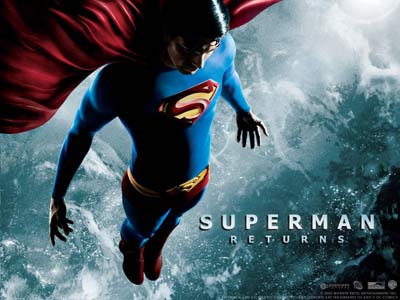
Faced with some public criticism of the massive devastation Metropolis faces in the Man of Steel movie, direct Zack Snyder has said:


For Synder, Superman is an American stand-in for a Ronin or a demi-God like Heracles or Perseus.  The wanton destruction of property and loss of live was necessary to give Superman the scope and scale of a mythological hero.

That's fine, I guess, for a movie, but it's really not a constructive way to build brand in the real world.  Yet that is what the political fighters out there subconsciously are trying to do.

I've argued before that a great number of War Room operatives see themselves as modern superheroes (like a James Bond), all that stands between us and oblivion.  This is in no small part a narrative that feeds their ego; the more important you are, the greater the stakes are in your actions - and as such, the more of everything you deserve to have for being the superhero.

There are psychological underpinnings to this mentality that are hard-wired into our species; think Alpha Male getting all the best food and the best pick of mates for being the guy who keeps threats at bay.  Of course there are other males that want that privilege, so are constantly looking for ways to bring down the Top Dog, leading to internal competitions.  


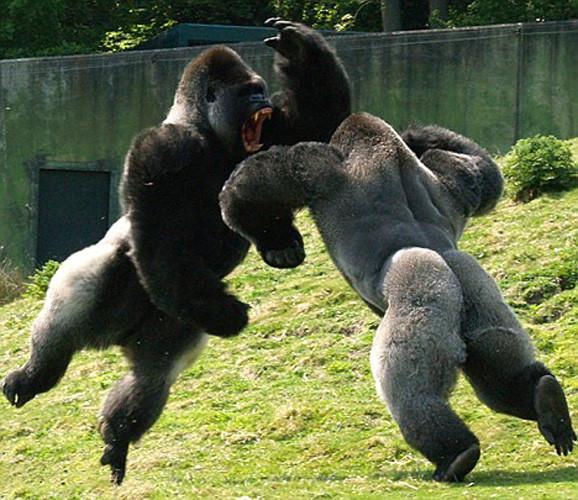
Chest-thumping gorillas, deer antlers, peacock's tails and narcissistic personalities are all genetic variances on the same theme.  Our cognitive capacity has simply allowed us to blow up this narrative to epic, god-like proportions, with some casting themselves in the role of the Alpha and doing what it takes to get there.


Thing is, Superman has never been the Alpha male - he's never sought power, prestige or fame.  As such he's never felt the need to be at the centre of glorious, epic battles the way a samurai, demi-gods or super-spies have.

Superman has never been about himself - he has been a symbol for the better angels of our nature.  He is more often portrayed as a mythical equivalent to a Jesus rather than a Heracles.  As an outsider, he has been distinct, therefore not tied to the same drives as the rest of us.  As a being of unmatched power, he's never needed to fight for title or dive into epic, destructive battle to prove his superiority.

In the words of Chronicle scribe Max Landis, Superman has always been the the adult in the room.


Landis has a great rant in which he articulates why he has no problem with Superman killing one person, if that's what it takes to save many, but takes issue with the fact that Supes allowed his epic battle to ravage his home town and the entire city of Metropolis.  

Instead, Superman should have drawn the fight away from populated areas, away from earth even to ensure the minimum amount of damage to others.

Superman isn't interested in the win; he's interested in the public good.  That's his difference; that's what makes him special.  It's also why a guy like Lex Luthor, who strives to be the Alpha, loathes the Man of Steel as he does.

Lex Luthor may become the wealthiest business man, the master of the criminal underworld, even the President of the United States, but he can never beat Superman, and that's what fuels his hatred of his nemesis.

So how does a guy like Superman defeat an implacable foe like Lex Luthor? 

We go back to Kathleen Wynne.


Wynne, again, is no demi-god, no superhero, no saviour.  What she is, though, is a leader.  Leaders differ from Alphas in that they put the people before themselves, always.  

When she won the Liberal Leadership, Wynne immediately reached out to her former rivals to find ways they could move forward together.  Others may have gloated, kicked Wynne loyalists out of the Party and claimed victory; Wynne immediately started to go back to work.  

Even as her "defeated foes" continued to pick at her, trying to demonize and bring her down, force her to play at their level, Wynne has always remained the leader.  She works with everyone who's willing and always leaves the door open for those who aren't.

Faced with an implacable foe, Wynne does what the best of leaders do - put the people first.  If a "foe" of hers has a success, she recognizes it.  When she herself makes a mistake, she recognizes that, too.  The focus is never on bringing others down or making oneself bullet-proof - it's always, always on moving forward together.


In a Legislature that is often fractious and full of over-the-top personalities trying to portray themselves as super champions in epic combat, Wynne continues to be the adult in the room.  Does she slip sometimes?  Of course she does - she's human.  But she never gives up, never stays down - and she's winning converts as a result.

Instead of trying to bring her down or demonize her, Wynne's "foes" would do well to learn from her example and start leading themselves.  

If our politicians can pull together and focus on fixing the province, just think what kind of message that would send to the rest of us.

Tuesday, 17 June 2014

Kathleen Wynne: Moving Ontario Forward Means Leaving No One Behind


This is why I love Kathleen Wynne. 
 
Politics is all about winning.  Winning, by definition, implies losers.  This is why partisan politics has devolved governance into a spectator sport where tribes compete for their fans, but most people don't tune in.
 
Governance is not about winning - it's about leadership.  Leadership doesn't pick winners and losers, it creates the conditions for shared solutions.
 
Wynne excels at this.  She always has.  She will be as committed to developing shared solutions that reflect the community voices represented by other Parties with a majority government as she was with a minority.
 
And as she said when she won the Ontario Liberal leadership - if her partners refuse to collaborate, she'll beat them.  She's already proved she knows how to do that, too.


Friday, 13 June 2014

How Did Wynne Win


You'll hear a lot of pundits offering their take on why the election ended as it did, with a Liberal majority.  Did Wynne's vision win?  Did Hudak's vision lose?  Was it third-party ads that swayed the day?  How much does the Liberal's existing record play into the picture?  Or Hudak's record as a Mike Harris stalwart?  did Horwath make any impact at all?
 
We'll hear every variant under the sun, delivered with confidence of course.  That's what pundits and advocates do - push their message relentlessly and interpret results in a way that benefits them.
 
Even the pollsters remain confident in their methodology.
 
We heard a slightly different Kathleen Wynne over the campaign than we're used to - a bit more focused on herself than what she can do - but throughout what was a tough campaign, Kathleen Wynne remained as she has always been; herself. 
 
Kathleen Wynne isn't a spinner (although she is a runner).  She is authentic, honest and direct.  Equally, Wynne isn't the sort of person who figures she has all the answers; in fact, the skill that she has the most confidence in, the one which motivated her to run for Leader is her facilitation ability.
 
It was suggested over the campaign that Wynne's sounded less like a leader and more like a bureaucrat by talking details.  In truth, she sounded less like a campaigner and more like someone ready to have a meaningful conversation with partners, which is what she is.
 
I like to think that, for the majority of Ontarians who aren't rabid partisans, this sincerity shone through.  Tired of spin, message, deflection and obfuscation, we're looking for someone who understands leadership as being a conduit, not a capstone.
 
It may just be this is how Wynne won.  Regardless, it's how Ontario is going to win, which is what our leaders should be focused on anyway.


Thursday, 28 March 2013

Be A Hero: Five Steps to Vanquish Any Problem (Fred Kofman)


See?  You don't have to a superman to be a hero - you just have to have faith in yourself.


If you don´t see yourself as part of the problem, you cannot be part of the solution.
 
Every culture teaches this through a similar story. Joseph Campbell, anthropologist and advisor for Star Wars, called it “The Hero with a Thousand Faces.” The hero starts his journey feeling at the mercy of external circumstances. By the end, he realizes he is in control of his destiny. He knows that he can choose how to behave, learn and grow.
 
Teaching accounting at MIT, I saw how numbers shape perceptions. Coaching leaders all over the world, I learned how stories shape lives. Good stories inspire you; bad stories disempower you. The worst stories are the ones that have you as a victim.
 
Heroes are not just mythical characters. They are examples of you at your best. Here are five suggestions to always remember who you are.
 
1. No problem -- Take the challenge
 
There is no such thing as a problem. What you call "a problem" is not a thing independent of you, but a situation you don´t like. It is “a problem for you.” To deal with it more effectively, put yourself in the picture. Think of it as your challenge. Take the difficulty as an opportunity to show your true colors.
 
I often catch myself saying, “the real problem is…” followed by the thought, “…that you don´t agree with me!” Equally often, my counterpart argues that “the real problem is…” that I don´t agree with him. Unless we recognize and give up these bad stories, we will each push hard to overcome the other. Push versus push equals stuck: a very expensive stalemate where we both spend tremendous energy for no result.
 
2. Drop “Who's responsible?” – Be response-able
 
You didn't do it. So what? You are suffering from it. People and things are out of control. It is tempting to blame them and play the part of the innocent victim. Don't. The price of innocence is impotence. That which you blame you empower. Become the hero of the story; focus on what you can do to respond to your challenge.
 
The inspiring question is not, “why is this happening to me!” but “what is the best I can do when this happens?”
 
I once coached a financial services executive who would always blame external factors: regulation, competition, the economy, his employees, his boss, his peers. All these forces did impinge on his goals. It was the truth, but not the whole truth. The truth that he refused to accept, the one that blocked his growth, was that he was able to respond to these forces.
 
3. Forget what you don´t want – Focus on what you want.
 
Consider an issue that troubles you. What would you like to have happen? I ask this every time I coach. Infallibly, I learn what my client would like to not have happen anymore. This is a bad end for a hero´s journey. Avoiding what you don´t want will take your energy away from achieving what you do want.
 
Your brain doesn't compute “no”. What you try to avoid you unconsciously create. If you don´t believe this, try to not think of a white bear right now and notice where your mind goes. Define a positive outcome precisely. Ask yourself, "What do I really want?" and visualize it in as much detail as you can. This will force you to put some flesh on the conceptual bones. Furthermore, ask yourself, “How would I know that I got what I wanted? What would I see? What would I feel?” In this way you will be sure that your vision has observable standards by which to measure success.
 
4. Take one eye off the ball – Go for the gold.
 
It’s not about hitting the ball; it’s about winning the game. Set your mind on what you are ultimately trying to achieve. Build a chain from means to ends, taking you from getting the job, to advancing your career, to feeling professionally fulfilled, to being happy. The ultimate goal and measure of success is happiness.
 
“What would you get, if you achieved X, which is even more important to you than X?” Ask yourself this question and discover that you never ask for what you really want—and neither does anybody else. We all ask for what we think is going to give us what we really want. Have you ever bought set of golf clubs hoping they would make you play better? And what would you get, if you played better, which is even more important to you than playing better?
 
5. Failure is not an option – Succeed beyond success.
 
Commit fully to achieve what you really want. Know that you deserve it and give it your best. This will make you more likely to get it. Success, however, is not the most important thing. To be a hero, pursue your goal ethically, as an expression of your highest values. Success may give you pleasure, but integrity leads to happiness.
Don't aim at success--the more you aim at it and make it (your final) target, the more you are going to miss it. For true success, like happiness, cannot be pursued; it must ensue, and it only does so as the unintended side effect of one's personal dedication to a cause greater than oneself. Listen to what your conscience commands you to do and carry it out to the best of your knowledge." -- Viktor Frankl, Man's Search for Meaning.
Questions for Readers
How is life challenging you to be a hero right now? What values would you have to express to be proud of yourself regardless of the outcome?

Friday, 8 February 2013

Transitioning Queen's Park Staff


Politics is much like a movie - what you see on camera or in the headlines is but a fraction of what goes on behind the scenes.  Politicians are supported by countless volunteers, stakeholders and of course, political staff.  While there is no one way into jobs in a Minister or Member's office (nor really any training once you get there), few positions you can have are more rewarding, draining, inspiring and all-to-often thankless than working in those back offices.
 
In addition to the challenges of doing The People's business, the Party's business and ideally, learning and contributing some of your own content in support of a shared vision, there's the constant uncertainty of employment (or perhaps, certainty of eventual unemployment).  So much of your job stability is dependent on factors completely removed from your actual performance; as Ministers get shuffled or Parties go in or out of favour, some positions simply vanish.  
 
With so many A-type personalities in politics, personality conflicts play a role, too - if you're associated with someone (or conversely, not seen as "one of XX's people") you can easily be painted with the same broad brush as a current or even former political boss or seen as inconsequential for not having the right connections.  Knowing which position to favour or not favour, or which of several competing direction-givers to follow can lead to analysis paralysis, which then actually does impede performance.
 
A sad consequence of this uncertainty is that some of the folk on the employer side of the equation are often in places where they simply can't keep the team together.  The cognitive dissonance that comes from having to let good people go sometimes results in a confabulated, comforting stance of "they were never that valuable anyway" being assumed by those holding the hammer.  These sorts of sticky situations result in a lot of bitter feelings, well expressed by Warren Kinsella's farewell tribute to Dalton McGuinty's outgoing staff.
 
In a recent conversation with a friend who worked on Team Pupatello, I mentioned that those who would be out of work were in for a rude awakening.  As this comment was first interpreted as meaning "those people have never had it so easy" I clarified thusly - the dedication, multi-tasking and ridiculously long hours worked in support of a cause, not a profit, doesn't translate as easily as one might hope to the private sector.  Figuring out how to frame your skills, experience and connections into a tight package that makes it clear what value you can add to a firm is far from intuitive.  Given the tightening restrictions around government relations, all the easy avenues are gone.  With a tipsy economy and an expanding pool of available labour, employers are defaulting to what (and who) they know instead of seeking to expand their operations or offerings in out-of-the-box ways.
 
The stress of the uncertainty, the loss of income and sudden inability to manage existing responsibilities, the mounting challenges and steadily increasing pressure in finding something new and the gradual loss of both financial resources and personal confidence can take a heavy, heavy toll.  These pressures can manifest themselves through things like anxiety, depression, substance abuse and damaged personal relationships.  It's not a pretty picture.
 
But it doesn't have to be this way.
 
When the Liberals were returned to Queen's Park with a minority government in 2011, it was an unfortunate reality that staffing levels would have to contract, significantly.  How to handle this situation in an appropriate manner became a topic of discussion among some of "The Centre" folk.  Although I've never been on anyone's insider list, I've been in politics long enough to know some of those who are; while talking with one such staffer at a reception, I volunteered to create a staff transition strategy that would help The Centre train and point outgoing staff in useful directions.  This offer was accepted. 
 
To me, Liberals aren't about throwing people into the deep end or buying them oodles of flotation devices - it's about teaching them to swim with the tools and training that makes the most sense for them and their context.  This "teach a man to fish" model became the basis of my plan; the opportunity presented by the election, I felt, was to put into practice the values that bind Liberals together.  Of course, in addition to helping political family members leave the nest under their own wing power, supporting staff who end up being tomorrow's stakeholders makes strategic sense.  Plus, it's an inevitability that your turn will come; we all know how karma works.
 
I called my staff transition strategy Moving Forward Together, with the implication being that moving forward together means leaving no one behind.
 
You can find it here.
 
For my part, I consider many of the people who now face employment uncertainty friends.  I get that there was some polarization that happened over the leadership, just as their was friction when the number of chairs on the deck were reduced in 2011.  That shouldn't matter - we are either all in this together, or we're not. 
 
There are ways to help the team find success that won't break the bank; they just take time, commitment and active communication.  You also have to care enough to invest yourself in the process.  But the same applies to governing, doesn't it?  If we don't believe we have what it takes to nurture and accomodate people with the tools they need to succeed, then we're in the wrong business, or maybe the wrong Party.
 
Move Forward Together - it can't be just a tagline, it has to be a value statement, a mission. 
 
But we have to believe it's possible for us to make a difference.  Not them, not you - us.
 
So - do we?

Sunday, 6 January 2013

(CFN) Is Tim Hudak Electable?


Tim Hudak does a hilarious stand-up routine.  He's as good as Rob Ford when it comes to ranting.
What Hudak is not, however, is someone with the right combination of skills, sensitivity, experience and listening ability to lead this province. 

Hudak has made it clear he’s looking for a fight. Good for him for finally shedding any attempt at sheep’s clothing – he’s going for broke with an aggressively conservative plan that, if enacted, would break the back of social services and foster a leaner, more Dickensian Ontario. Heaven help those who aren’t among the fittest because in a Hudak-governed Ontario, they wouldn’t be intended to survive. Knowing this is his last kick at the can, Hudak wants to go to the polls as quickly as possible and either get the chance to remake Ontario in this Darwinian image or go down trying. More than a few Conservatives are biding their time, counting on the latter to happen.
Politics, of course, is all about selection of the fittest through aggressive competition. As such, traditional wisdom suggests the only way for Liberals to keep Hudak from dismantling Ontario’s hard-won public services is for the Party to dig in its heels and get ready for a bare-knuckle fight against a navy Blue Machine. There’s already been some noise on the Liberal leadership campaign trail about the need to be fight-ready. Going on the offensive is a quick and easy course of action to take, but not necessarily the most resource-effective for the Party (nor necessarily in the best interests of Ontarians).
Consider:
Andrea Horwath seems to have settled comfortably into her role of compromise-supporter; one can imagine Horwath finding her happy place in the Leader of the Opposition’s office, focused on creating opportunities for thoughtful pause rather than facing Ontario’s massive structural challenges directly. With that in mind, it’s not overly difficult to see a minority government situation working, if it weren’t for Tim Hudak’s inability to think outside his own box.
There’s some (far from universal) support in his caucus for a my-way-or-the-highway approach to the Legislature, though funny enough that’s the kind of thinking Hudak has criticized the outgoing McGuinty Government of having. Fortunately for the PCs (and Ontario) there are voices of reason within the PC Caucus, including the amazing Christine Elliot. While Elliot can get her dukes up with the best of them, at her core she is a woman dedicated to making the province work – which, of course, makes her a political threat to the Liberals and NDP, but a natural ally if the goal is not a partisan win but to fix Ontario’s structural problems.
Personally, I’d rather embrace a challenge that forces me to up my game rather than spend my resources on impeding an opponent. It’s only by running along one’s creative problem-solving edge that it keeps from becoming blunt. The enduring brand is the one that expands, not stagnates or worse, contracts. Growth and continuity are accomplished through adaptation – compromise, innovative solutions and the fostering of inclusive, equitable institutions. Adaptation in politics is a collaborative process, achieved by working with partners willing to participate on non-partisan objectives. The objective all Parties should be aiming for right now is moving Ontario forward by empowering Ontarians themselves. There are a number of common-ground issues out there that could form the basis of such a positive, proactive working relationship, proactive mental health being one of them.
True decentralization isn’t about amputating government services and throwing Ontario into the deep end of the pool, as Hudak would do, nor is it about government carrying every single Ontarian over troubled waters. We need to foster the stability people of diverse challenges need to keep their heads above water, then provide them with equitable opportunities and education that will empower them swim in whatever way works best for them. To use another analogy – don’t give a man a fish, nor sell a man a fish, but teach him how to fish. Through the process, you might even learn some new techniques yourself.
There are those in the opposition who get this – they’re the ones Liberals should be reaching out to. It’s a different way of doing politics, perhaps, but I’m pretty sure there’s consensus that the current system isn’t working as well as we need it to. If Ontario Liberals (not just the institutions or the MPPs and candidates, but every Ontarian that holds true to the values liberalism, at its best, represents) are serious about renewal for the Party and the province, they need to consider which of the candidates for Party Leader are best positioned to lead this kind of solution-based approach.
It doesn’t matter where we come from, as outgoing Premier Dalton McGuinty has told us, but what we find along the way. That includes potential partners, wherever they themselves come from. The best hope for Ontario Liberals and for Ontario as a province is for the next Premier not to be someone spoiling for a fight, but someone willing to extend an olive branch to partners willing to move forward in a together-like fashion, including the Opposition. If Tim Hudak is unwilling or unable to work with the other Parties, too bad for him; I guarantee there are others in his caucus who are.

Friday, 4 January 2013

GK: Drawing People Together


"Don't judge someone until you've walked a mile in their shoes" is as dog-eared a maxim as they come, but like all cliches it endures because it's true.  Bridging the communication gap between people is also one of the greatest challenges we ever face.  This is because understanding others is not intuitive; we all view the world through experiential lenses that are shaped by our environments, families, our communities, the language(s) we speak and the ups and downs of our individual lives.  As this is an organic process, we're rarely aware of how and why we hold the views that we do.  We are therefore inclined to assume our worldview is simply the way the world is, misinterpreting the fishbowl for the ocean.
 
A quick example - the grammatical gender a language ascribes to a noun literally changes how the speaker views that object.  Heck, there are tons of words and concepts in world languages that simply can't be translated directly into others.  Then you get into experience; it's no wonder Mitt Romney simply couldn't understand the ground-level realities of the 47% and assumed they were playing the victim card.  He has never had to face the uphill adversity that so many average Americans live with day-to-day.
 
One of the key traits of strong leaders is the ability to communicate, which has to flow in multiple directions.  Too often we confuse communication with the notion of messaging, which only flows one way (Stephen Harper, for instance, is a master at messaging but dismal at communication).  Real communication is like diplomacy or mediation; it takes time to understand the players from their own viewpoint, establishes common vocabulary and then builds a common direction from there.  Leaders are meant to serve as the stone in the soup, being the thing that challenges people to find common ground and build a whole that's greater than the sum of its parts.
 
As such, the best leaders live and breathe holistic communication - walking with others, bringing people together, empowering the people to collectively create a shared vision of the future.  Communication is a lot like art that way - a pain-staking, challenging process requiring patience, a willingness to listen and a keen eye to recognize opportunity not for oneself, but for the people one wishes to communicate with.
 
Which is why I'm so excited by this:
 

It's time "forward together" leaves nobody behind.
 

Monday, 12 November 2012

What Do I Think Of Gerard Kennedy?


In politics, loyalty is everything.  It's hard to earn, even harder to maintain.  So, when you have a "lone wolf" and "non-team player" who manages to retain the loyalty of some pretty capable and in-demand people over years, that tells you something. 
 
Kennedy isn't a hard guy to like; he listens, he cares, he's charming in a low-key way.  He also makes time for people, even when they don't necessarily have anything to offer him in return.  It's just the way he is.  Not that long ago, Kennedy took the time to sit down with me, a complete stranger, to listen to my ideas for a social enterprise and offer advice.  Not only did he give some useful direction, he also put me in touch with some partners that have become invaluable.  That's not something I'll forget, and I'm hardly the only person he's helped in this way. 
 
One thing that is true about Kennedy; he is demanding.  He's not a yeller, like some politicians are, nor does he employ passive-aggressive techniques to get his staff to bend to his will.  What Kennedy does is push his people to reach higher.  He's a big thinker - he connects dots in ways that others might not think to do.  That's not a bad thing - we've done the elect the simple message guy thing recently and ended up with Rob Ford.   Friends of mine who've served on Kennedy's team in the past say it's always a challenge working with him, but a rewarding one.  And again, they continue to back him, which speaks to his character.
 
Also worth noting - Kennedy has been labeled "the man who gave Liberals Dion" because he threw in his support behind the second-last Liberal Leader to be driven into the ground by Stephen Harper's attack machine.  Look at the picture to the right - Kennedy wasn't the only one who thought Dion was worth giving a shot.  What if, for argument's sake, he'd backed Ignatieff?  He didn't work out so well, either.  In fact, if the last two losses have taught Liberals anything, it should be that we have structural problems that need addressed - we have to stop pinning all our hopes and all the blame on our leaders and step up our game at every level.  We have to take collective responsibility for our Party if we want to continue offering positive solutions and making meaningful differences in our society.
 
Last thing - people are telling us that GK has political losses under his belt and is therefore doomed to fail again.  I flatly reject that notion, because it isn't a Liberal one.  Yes, politics is an aggressive survival-of-the-fittest game and any weakness is sure to be exploited by opponents, but our political system is the foundation around which our whole society is built.  Are we going to tell people who have been fired from their jobs that they are worthless, move on?  Do we tell students who fail tests to give up because they've proven they're not up to the job?  Should we hand our veterans lump-sum cheques and tell them they're on their own?  Stephen Harper won by being the deadliest player on the field; look where it's landed our country.
 
I am fundamentally opposed to the idea of writing people off - that's not what a responsible society does.  The reason we fall is so we can learn to pull ourselves back up - society and government is the hand that guides.  That's not what's happening now and our society is suffering for it.  We deserve better than that.  We need better than that.  Leaders lead by example; if Liberals truly believe that everyone has something positive to offer, we can't write anyone off as having outlived their usefulness.
 
We have some amazing candidates who've put their names in the race to lead the Ontario Liberal Party - the province will gain no matter which one wins.  I love the fact that the three front-runners have a solid background in education and social justice, as well as experience working in or interacting with the business sector.  Remember that Tim Hudak has no professional experience out of politics, period.  He has no track-record of success to run on and his bluster has so far done nothing but polarize Ontarians and grind our Legislature to a halt. 
 
Liberals at both levels are faced with a generational challenge - to focus strictly on the win and turn ourselves into a mean political machine like Harper's Conservatives, or aim to be something that reflects the values we hold dear - the values of Canadians.  We will not win by seeking to demolish the opposition; that's the game Hudak and Harper are playing and it's one that's hurting our country.
 
At both the federal and provincial levels, we win when our communities win, when we put the people, not the Party, first.  We won't find success through dividing and conquering, but by moving forward together.


Thursday, 8 November 2012

Go Fast, Go Alone - Go Far...


“Mr. President, We want you to succeed. … Let’s challenge ourselves to find the common ground that has eluded us.”
 
 
I'm a rational optimist, so I know it's possible for people of opposing views to find and build on common ground.  I don't think people are fixed - I believe in evolution, both genetic and social.  When we focus on similarities, we always find we have more in common than not.  It's a good place to build.
 
There will be partisans on both sides who refuse to give an inch and who push for partisan victory, biting extended hands at the expense of the national interest.  The greatest test true leaders face today is to resist the urge to jump on selfish, short-term gain, fueling our political tragedy of the commons and to set the example for the more rabid partisans in their midst.
 
There is no challenge we can't overcome, no mountain we can't move, when we're all pushing in the same direction.
 

Wednesday, 7 November 2012

Obama and What Comes Next


I was standing on a roof at Daisy when Barack Obama won his first presidency.  There was a sense of pervasive hope in the air - a good man had won.  More than that, a good black man had won in a country where racism was (and is) still prevalent.  It seemed that the American dream - work hard, work together and you can achieve anything, even the presidency - was actually becoming reality.  Complete strangers, even competitors, high-fived each other and let out whoops of joy.  Life was good.
 
That was four years ago.  The world's a starkly different place today.  We have a global economic crisis, rising ethnic tensions and hot spots of conflict around the globe, growing hotter with each passing hour.  Opportunities are scarce and good, capable people are struggling to keep roofs over their heads when they could be focusing their energies on solving some of our societal problems.  I don't look forward with a sense of enthusiasm any more; there remains, however audaciously, a strand of hope.
 
The reason we have our economic, our ethnic, our legislative and our national challenges is easy to comprehend - people are refusing to work together, to find common ground, to put the well-being of the whole ahead of the well-being of the individual or the tribe.  Partisanship rules the day, at the expense of policy.  Those at the top aren't sharing; those at the bottom are giving up on the system and taking their frustrations to the streets.  It's as true here in Canada as it is in the US - and it's certainly true in many other places in the world, too.
 
Obama first won on a cry of hope that the world responded to.  In global polls, it was clear that he is the President the world wanted this time, too - not to make America weak, but to set a positive example of inclusive leadership that all can follow.
 
The challenge President Obama now faces isn't his alone - Congress, the Senate, partisans friends and partisan foes all must bury the hatchet and start working together.  They must try to find common ground rather than undermine the positions of their foes.  How Obama inspires that cooperation (or not) will define his second term and his legacy to the world.
 
It's a big challenge, one no single man or woman can overcome alone.  Obama is right - we rise and fall as one people, not just Americans, but citizens of a global village.  Let's rise to the challenges of today, together, and build a better world not just for ourselves, but for everyone.
 
Let's move forward together.


Monday, 5 November 2012

(CFN) The Politics of Opposition


November 6, 2012

“We can be in total disagreement with someone without denigrating them as a consequence.”
-       Pierre Elliot Trudeau 
                                                                                                                                                                                                                                                  
CFN – Liberal Leadership season is settling in across Canada with races underway federally, in Québec and in Ontario.  Political people are lining up behind their preferred candidates and trying to convince others to join them.  Standard wisdom tells us that part and parcel of the running for game is running against.  As candidates actually declare, supporters are starting to ask themselves – if I stand for candidate A, why do I stand against Candidate B?  As with all political races, when the lines are drawn and the water hole of undeclared voters begins to shrink the contest inevitably turns into a competition not just of policy, but of personality.  But does it have to be this way?
 
Yes, it does – because when we vote, we’re not just selecting ideas we prefer, but trusting a leader to implement them.  Rob Ford’s win in Toronto was due at least as much to his perceived commitment to keeping his word as it was to his actual policies.  More than that, we pick leaders based on our perception of their ability to play politics successfully.  Part of Michael Ignatieff’s perceived appeal was that he would be the second coming of Pierre Trudeau.  A well-spoken intellectual with a bit of international seasoning would surely have the moxie needed to woo the masses and take on a rather bland Stephen Harper.  That didn’t work out so well because Ignatieff fell victim to the truest of political truisms – define or be defined.
 
Now, Justin Trudeau has ascended into the public spotlight in a fashion most candidates can only dream of, partly because he is the literal next-gen Trudeau, but also because he looks and sounds the part of a successful politician.  In the absence of specific policy, pundits have focused on how fresh and energized Trudeau will look squaring off against the two angry old men that are Stephen Harper and Thomas Mulcair.  Justin Trudeau’s hair has gotten more press coverage than Mulcair’s stance on just about anything.  According to some polls (always to be taken with a grain of salt), Trudeau’s image alone could be enough to return the Liberal Party to government.  Potential leadership opponents have been gun-shy to enter the race, faced with the prospect of out-charming a political superstar.
 
This reality presents a bit of a conundrum for the Conservative Party, too; the personalized line of attack that worked so well against Ignatieff and his predecessor, Stéphane Dion, will bounce off Trudeau’s flowing locks harmlessly.  Canadians already feel they know Justin and like what they see.  The Tories face the much more daunting challenge of attacking Trudeau’s eventual policies as harmful to our nation’s security and economy.  That will be a tough card to play, as it can cut both ways.  Count on Stephen Harper to buffer attacks with an attempt to soften his own image; we might soon be seeing more of the infamous sweater vest.  Given that his entire political narrative has been built on an arc of opportunistic cynicism, it’s doubtful any such attempt will be taken seriously by anyone other than Harper’s most die-hard supporters.
 
It would be silly to deny the importance of personal brand in shaping political success – but what of personal attacks on competitors?  Is it possible to do politics without denigrating one’s opponents?  The evidence isn’t promising.  Political attack ads are nothing new – they’ve been around, in fact, as long as politics itself.  As the best policy choices tend to hover around the middle, personal attacks present clear opportunities for candidates to establish why their political brand is a safer, stronger one than that of their opponents.  Survival of the fittest, after all, isn’t about being the strongest but being the last candidate standing. 
 
There’s an unfortunate sidebar to this, though – when would-be leaders or Parties focus so intently on shoring up their own political brand and relentlessly attacking their competitors, politics becomes more about attack and defend rather than working together to create the best policy. This is when mistakes happen, as they did with the Walkerton tragedy in Ontario or as they’re happening right now with Harper’s mismanaged trade deal with China.  These sorts of mistakes foster disillusionment in the voting public, leading to lower turnouts at the polls and a weakening of our democratic system.  Is this an inevitable political paradox?  Is the politics of opposition necessary to win, but unavoidably damaging over the long run?
 
Not, I would argue, if one’s political brand is designed to be supportive (dare I say, leader-like) from the get-go.  One of my favourite campaign moments came in the 2003 Ontario general election when then-Official Opposition Leader Dalton McGuinty came to the defense of Premier Ernie Eves.  Eves had been rattling off the nonsensical insults that frequently crop up in the waning days of campaigns, calling McGuinty a pointy-headed reptilian kitten eater.  When asked about this by the press, McGuinty’s reply was political gold; “I know Ernie, and this kind of thing isn’t him.”  With one sympathetic phrase, McGuinty showed the class and empathy most of us want from our leaders and undercut his opponent without resorting to personal attacks himself.  McGuinty walked away from that election Premier of a majority government.
 
One of my favourite Ministers in the McGuinty government is Kathleen Wynne, one of the two declared candidates hoping to become the next Leader of the Ontario Liberal Party.  The reason that I and many Ontarians of all or even no political stripes like Wynne so much is because she is sincere, dedicated and positive.  
 
In addition to this, she is consistent in both her thoughtfulness and in her personal integrity.  When she expressed discomfort with the recent prorogation to the Queen’s Park Press Gallery, there were few who assumed Wynne was strategically distancing herself from her Party for personal gain.  
 
Why?  Because the Wynne we heard that day was the exact same woman that expressed dismay when her Party backed down on increased sex education in Ontario’s public schools
 
Wynne remained consistent to her brand when she sent out a tweet Monday morning, congratulating her leadership opponent Glen Murray on a media interview:
 
Just heard @Glen4TC on @metromorning Great job articulating your experience and ideas!
 
Now, I’m sure the people who actually get paid to do political punditry would disagree with me, but I’d argue that little line scored Kathleen Wynne the first point in Ontario’s leadership race.  She has demonstrated that the person who’s running for leader is the same one who was much respected as a Cabinet Minister, reaffirming her integrity and credibility.  She has complimented one of her opponents, setting the campaign respectability bar high and making it harder for anyone to use personal attacks down the line.  At the same time, she has set a positive tone for the race that will help avoid the fractious politics that often come with leadership races and could weaken the Liberal Party leading in to a likely spring election.  Not bad for a kick-off, I’d say.
 
Politics is perceived as a blood sport because it’s always been that way; this doesn’t mean it can’t change.  Just as there were days where it was unthinkable that a woman would have a vote, much less lead a Party or a province, there’s no particularly valid reason why we can’t put the politics of denigration behind us and move on with more respectful competition; such mindful contests could even be of strategic benefit, as I think Kathleen Wynne is teaching us.
 
Yes, politics is about fighting to the finish, but leadership is about setting the example.  It’s time for Liberals to show everyone just how progressive they’re willing to be.


Why Society Needs Stones


Fiscal conservatives in the vein of a Rob Ford or a Tim Hudak think thusly - centralized spending is bad.  Public services are doomed to be less effective that privately offered ones; poor, sick, under-educated and damaged people are chaff that free market competition will separate from the wheat.  But where does the chaff go?
 
Rob Ford would like to see them leave the city.  In reality, they move into slums and onto the street and from there, into hospitals and prisons.  We are all acutely aware of the problems being faced in both those institutions.
 
Here's the thing that nobody wants to accept - fiscal conservatism in the absence of a social conscience doesn't work.  It never has and it never will.  Competition doesn't result in greater opportunity for everyone; it results in those with less scruples getting ahead.  You know who are the real flag-bearers for free-market competition?  Drug dealers.  Smugglers.  Pornographers.  Snake-oil salesmen.  Those who prey on the weak and rely on coercion either by force of words or force of action to keep competition at bay.  It's bread, circuses and alcohol, the tools used by would-be tyrants from Rome through the European colonization.  Nothing has changed, except for those times when we look past immediate selfish gain and think about the bigger picture.


People who get ahead don't instinctively look to give back to society or create opportunity for others; most figure they got where they did through grit and a willingness to step on a few heads, so it's up to others to do the same.  Social success is like a game of asshole; it's more by luck of the draw that those at the bottom get ahead.  I know people at the top and bottom of the economic food chain with the exact same skills and personality; what led them to different paths were life events largely beyond their conscious control.  When you've got to the top, you feel entitled and look down upon those who don't fit within your same frame of aggressive, single-minded success

Nobody wants to hire someone they view as a social failure and whoever they bring on, they're going to try and give them as little in return as possible.  The ones that get the decent salaries and benefits are the uber-confident, aggressive types, regardless of skill.  When that trend is followed, you end up with corporate configurations like Goldman Sachs and "successful" politicians like Rob Ford or Tony ClementChris Mazza wasn't an accident - he was a product of our increasingly survival-of-the-fittest competitive society. 
 
The decline starts by limiting hiring; that means less people in the workforce relying on more public services, also suffering the stress that comes with being a nobody in a society that defines personal worth by employment, not ability to contribute.  It also results in the people at the top demanding more and expecting to do less to get it, because they think they're entitled to eat the whole cake.  When the top takes more than its share and the bottom, seeing no opportunity for advancement, starts to give up trying and just survive on what crumbs they can get, economies start to wither.  It's what's happening now and what's leading to these resource reductions in the first place.
 

Trimming back the supports that help elevate all citizens only increases the opportunity divide between aggressive haves and less-confident and less-educated have nots.  When there's no glass floor, crime invariably increases, placing greater demands on reactive social justice services and driving a flaming wedge between social classes - and in communities as diverse as Canada's, between ethnic and religious groups, too.  It's a recipe for all-out chaos.
 
Those aggressive people who are willing to take risks do so at the expense of others, not themselves.  They know they can always strong-arm government into bailing them out or just fire staff and carry on as always.  Those who aren't aggressive are more risk-adverse, meaning they stagnate, leaving society to stagnate along with them. 
 
This is why "every man for himself" simply doesn't work.  People at all levels need to collaborate, to be empathetic to the plight of their neighbours, to be willing to share risk and responsibility to move society forward.  The rise of civilization is the story of centralization and collaboration.  Where this falls, anarchy returns.

So what is it that gives people cause to work together - to feel empathy, not contempt for those of lesser aggression, or to work harder than we might think we're capable of?  Spokes may come together to form a wheel, but it's the centre hole that makes the wagon move.  Society needs a strong centre of gravity, a shared vision of where we can go to bring us together.  This can be religion; the Golden Rule is a universal one for a purpose.  It can be government; when a leader is charismatic enough, when their vision is both compelling and pragmatic enough, they can inspire whole nations to follow them.  
 
There is a lovely little folk tale called "Stone Soup" that tells of a man who comes to a village full of selfish hoarders who don't want to share what's theirs with him, or with each other.  The man produces a stone and proclaims he will make stone soup, the most amazing and tasty dish of all.  As he boils his stone in a pot, others become curious - they want to partake in these riches, too.  The man encourages people to join him and freely offers his soup, but lets it be known that if he had a carrot, or a potato, then the soup would be even better.  It's this motivation - to give a little but get something more, individually, in return - that convinces the villagers to contribute what they have.  In this manner, the man convinces the people through vision, not force or a fruitless laissez-faire approach, to come together and create something greater than they could do on their own.  In this way, the man leads and inspires by example.  When his work is done, people say "amazing, we did it all by ourselves."
 
Time and institutional fatigue have eroded the stones that brought us together - faith in something larger than ourselves be it a god, a nation or a social purpose.  Without this centre, we're adrift.  Pretenders will suggest that it's external threats we need to focus on and in this way, encourage us to abdicate our own responsibilities to each other.  It's an easy message to buy into, but it's not leadership. 
 
What we need today, more than ever, are leaders with the stones to bring people together.  You can go faster on your own, perhaps, but we can only go far together.