Search This Blog

CCE in brief

My photo
Recovering backpacker, Cornwallite at heart, political enthusiast, catalyst, writer, husband, father, community volunteer, unabashedly proud Canadian. Every hyperlink connects to something related directly or thematically to that which is highlighted.
Showing posts with label Myth. Show all posts

Thursday, 24 July 2014

Superman vs. Lex Luthor: Kathleen Wynne, Max Landis and The Adult in the Room


Let's be clear from the outset - Kathleen Wynne is no Superwoman.  She is a mortal human being with strengths and weaknesses, abilities and limitations like the rest of us.  It's as naive to assume she can single-handedly solve Ontario's problems as it is to blame her for them.

So why the Superman analogy?  We'll get to that in a bit.

First, Wynne.  What sets her apart as a leader is that she has never tried to portray herself as the Woman of Steel.  She has never suggested she's got all the answers, nor has her team ever said only she can prevent forest fires.  In fact, this "I'm not the answer, but I will be a conduit" narrative has been part of her identity her entire career.

When Wynne says "move forward together", she means it.


This is not common in politics.  There's a reason for this, of course - in any electoral race, only one person can win a nomination, a seat, a leadership or the responsibility of being Premier.  Winning is all about beating the other folk, which in politics tends to translate into "I'm the path to salvation/they are the path to damnation" framing.  If you turn the other cheek to your opponents, they'll smile as they step on your throat.

Tim Hudak was a great example of this kind of politicking; he constantly protrayed himself as Stern Father, the man with the plan, the Master of Political Kung Fu, the only one who could fix everything if we'd just give him the keys to the Premier's Office. Hudak relished a good fight, as did his team - as do most political operatives.  

For them, politics is a bloodsport, the grand arena; they love epic contests, battles of skill and fortitude. There's nothing they relish more than dining on the ashes of their opponents on the field of victory.

Which brings us back to Superman.

Faced with some public criticism of the massive devastation Metropolis faces in the Man of Steel movie, direct Zack Snyder has said:


For Synder, Superman is an American stand-in for a Ronin or a demi-God like Heracles or Perseus.  The wanton destruction of property and loss of live was necessary to give Superman the scope and scale of a mythological hero.

That's fine, I guess, for a movie, but it's really not a constructive way to build brand in the real world.  Yet that is what the political fighters out there subconsciously are trying to do.
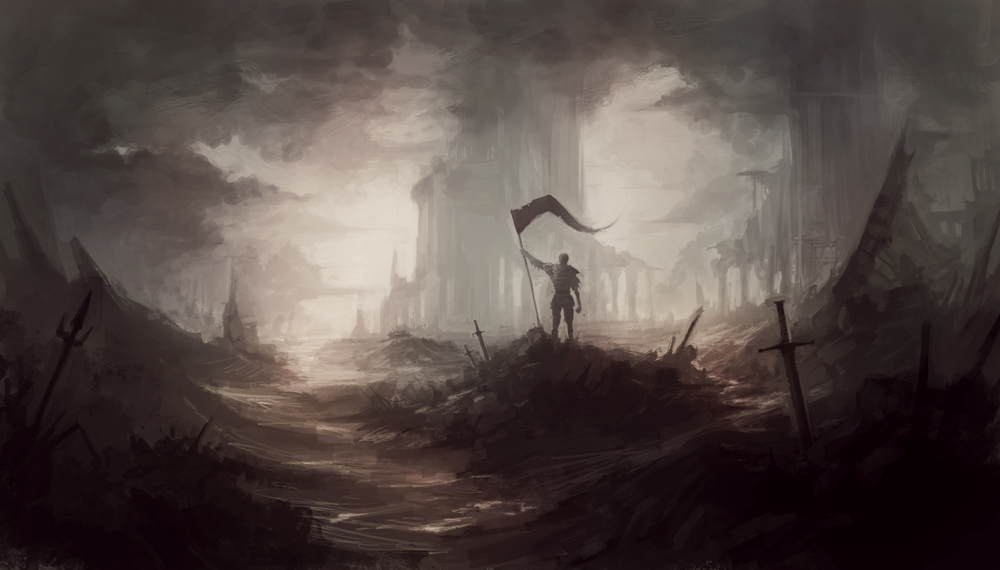
I've argued before that a great number of War Room operatives see themselves as modern superheroes (like a James Bond), all that stands between us and oblivion.  This is in no small part a narrative that feeds their ego; the more important you are, the greater the stakes are in your actions - and as such, the more of everything you deserve to have for being the superhero.

There are psychological underpinnings to this mentality that are hard-wired into our species; think Alpha Male getting all the best food and the best pick of mates for being the guy who keeps threats at bay.  Of course there are other males that want that privilege, so are constantly looking for ways to bring down the Top Dog, leading to internal competitions.  
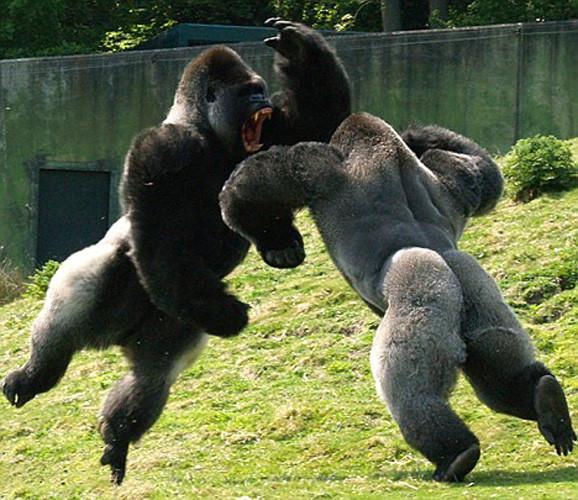

Chest-thumping gorillas, deer antlers, peacock's tails and narcissistic personalities are all genetic variances on the same theme.  Our cognitive capacity has simply allowed us to blow up this narrative to epic, god-like proportions, with some casting themselves in the role of the Alpha and doing what it takes to get there.


Thing is, Superman has never been the Alpha male - he's never sought power, prestige or fame.  As such he's never felt the need to be at the centre of glorious, epic battles the way a samurai, demi-gods or super-spies have.

Superman has never been about himself - he has been a symbol for the better angels of our nature.  He is more often portrayed as a mythical equivalent to a Jesus rather than a Heracles.  As an outsider, he has been distinct, therefore not tied to the same drives as the rest of us.  As a being of unmatched power, he's never needed to fight for title or dive into epic, destructive battle to prove his superiority.

In the words of Chronicle scribe Max Landis, Superman has always been the the adult in the room.
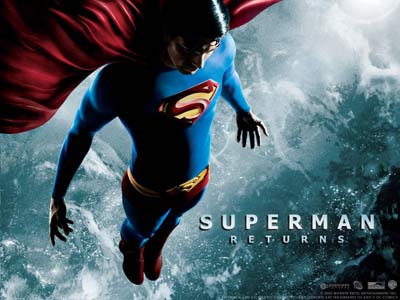

Landis has a great rant in which he articulates why he has no problem with Superman killing one person, if that's what it takes to save many, but takes issue with the fact that Supes allowed his epic battle to ravage his home town and the entire city of Metropolis.  

Instead, Superman should have drawn the fight away from populated areas, away from earth even to ensure the minimum amount of damage to others.

Superman isn't interested in the win; he's interested in the public good.  That's his difference; that's what makes him special.  It's also why a guy like Lex Luthor, who strives to be the Alpha, loathes the Man of Steel as he does.

Lex Luthor may become the wealthiest business man, the master of the criminal underworld, even the President of the United States, but he can never beat Superman, and that's what fuels his hatred of his nemesis.

So how does a guy like Superman defeat an implacable foe like Lex Luthor? 

We go back to Kathleen Wynne.


Wynne, again, is no demi-god, no superhero, no saviour.  What she is, though, is a leader.  Leaders differ from Alphas in that they put the people before themselves, always.  

When she won the Liberal Leadership, Wynne immediately reached out to her former rivals to find ways they could move forward together.  Others may have gloated, kicked Wynne loyalists out of the Party and claimed victory; Wynne immediately started to go back to work.  

Even as her "defeated foes" continued to pick at her, trying to demonize and bring her down, force her to play at their level, Wynne has always remained the leader.  She works with everyone who's willing and always leaves the door open for those who aren't.

Faced with an implacable foe, Wynne does what the best of leaders do - put the people first.  If a "foe" of hers has a success, she recognizes it.  When she herself makes a mistake, she recognizes that, too.  The focus is never on bringing others down or making oneself bullet-proof - it's always, always on moving forward together.


In a Legislature that is often fractious and full of over-the-top personalities trying to portray themselves as super champions in epic combat, Wynne continues to be the adult in the room.  Does she slip sometimes?  Of course she does - she's human.  But she never gives up, never stays down - and she's winning converts as a result.

Instead of trying to bring her down or demonize her, Wynne's "foes" would do well to learn from her example and start leading themselves.  

If our politicians can pull together and focus on fixing the province, just think what kind of message that would send to the rest of us.

Monday, 18 March 2013

The Myth of the Superhuman Ancestor


Kids these days, eh?

They're not as tough as the previous generation. They're softer, weaker, less focused, etc. It's a common, conservative theme found cross-culturally, around the world.

The implication is pretty clear - the youth of today are ill-equipped to deal with the challenges of the real world, challenges that were ever-present in the past. The womb-like protections of society - things like book-learning indoctrination, public safety and over-bearing social institutions are leeching out the tough physical and moral fibre that has allowed our species to endure.  Something has been lost - the future looks less and less certain for humanity.

Today's conservatives add nothing new to this persistent theme.  Feudal Japan bemoaned the loss of fierce, independent warriors as the Tokugawa period came to a close. Ayn Rand feared the damage the imposed illusion of society would wreak on the human condition. Andrew Keen fears the loss of tangible relationships due to the increased use of technological tools of communication.  Part of conservation, I guess, is preservation, so this fits.

Human mythology (formerly an oral tradition, memorized and retold as consistently as possible) is rife with tales of glorious ancestors - longer-lived, stronger, in more direct commune with the God/Gods who were the absentee CEOs of society. The myth of the Noble Savage is the same - we harbour the belief that Native peoples the world over were somehow more pure, more intertwined with nature than they became once tainted by the unnecessary complexities of modern (Western) society.

While there are no giants - no Hercules', Samsons or Hunahpu/Xbalanque anymore, there's no substantial evidence that there ever was. If you look at archaeological records and human remains from everywhere people have settled, they tell gruesome tales of degenerative diseases, crippling wounds and deaths from simple conditions that we take for granted as non-issues today.  Our ancestors were smaller, less well nourished and more prone to illness than we are today.  In fact, it was the lack of the hallmarks of complex society (diversification, adaptation, administrative complexity, domestication and social services) that led to the fall of aboriginal peoples in the Americas and elsewhere to European invaders, their diseases, animals and technology.

Yes, people without medicine and shelter would have had greater exposure to and in some cases, resulting resilience in the face of nature, but that didn't really help them any.  The domestication of animals has done far more to further the development of disease immunity, though inoculation remains one of the greatest tools of human invention.  Life spans and quality of life haven't been decreasing with the spread of the Disease of Civilization, they've been increasing.

The same holds true for communication and social living - child and spousal abuse is more common, not less, in tribal society. The tough, independent streak sets tribes at war, hindering dialogue and increasing the likelihood of wasteful conflict and xenophobia.

If you really want a glimpse at what life among our noble ancestors would have been like, look at the tribal fiefdoms of Northern Afghanistan.

So, what gives?  What purpose could we have for glorifying the past with grandiose notions of a lost perfection that bears no resemblance to actual history?
 
Another LOTR quote to hammer home the point:
 
 
Traditional wisdom - instinct, if you will - tells us people are like sandstone, our essence slowly being leached away by time and foreign elements.  There is a recognition of strength as a concept, but as a thing that gets taken away by change, not enhanced.  Endurance and forcefulness are the virtues that matter.  We are the cure - they are the disease.
 
Now, take that concept out of Middle Earth and place it in a real-world context.  Don't want your daughter marrying the coloured guy?  Suspicious of foreign intentions, new music, technology?  Fear something immutable is being threatened by change?  Worry that a sea of troubles is eating away at your shores?
 
Tell me - what are your thoughts on evolution?  What are your thoughts on innovation?
 
Evolution is essential for survival.  It comes through exposure to the new - new genes in the mix, exposure to new diseases through livestock (allowing for disease resistance to develop), etc. are what allow us to survive.  Evolution - change - is good and necessary; true strength comes through adaptation which requires diversity, not through intransigence.  Unlike Tolkien's Numenoreans, intransigence and the absence of fresh blood leads to weakness.
 
Yet its intransigence, the absence of mingling genes and the maintenance of purity that traditional wisdom values as a strength.
 
Reality - stasis is bad, change is good.
 
Myth - strength is demonstrated by unwavering endurance; change, trickery are evil.

So why is our belief at complete odds with nature, especially when the historical evidence is so perfectly clear?

It's because traditional wisdom and instinct gives us the wrong starting point.
 
The focus on a mythical state of grace that has been lost over time is a red herring, a confabulated justification for the true heart of the matter - people have an instinctive fear of the unknown, including change.  This fear of change comes first and because it's such a hard-wired instinct, we don't question it.  Instead, we find ourselves needing to rationalize this fear to the detriment of fact. 

Consider the biological impact of change:
 
 
Our ancestors would have feared change in the same way - in fact, we know they did, because the traditions they left behind tell us so.  When we fear change and buy in to the notion of a fading perfection, we're actually limiting ourselves to the tools of the past.  Kids today aren't weaker than the generation before - they are, instead, better adapted to the present.  With the right training, tools and exposure, they would be as capable of surviving the same elements our ancestors did.  Soldiers, wilderness campers and even scouts do this all the time.  However, with modern tools, medicine and strategies, these modern-day wildlings are even better able to survive than Otzi would have been.
 
We need to train ourselves to flip our perspective around - diversification, adaptation and accommodation aren't things that weaken the human condition, but enhance it.  It's counter-intuitive, perhaps, but a conscious exploration of the facts explain why this is.  Besides, if we give in to instinct and fight off change, we are equally condemning ourselves to the annals of myth and legend.
 
Perfection is not a thing of the past but rather a think of the future.  Truly, the best is yet to come.

Monday, 11 February 2013

Don't Read This if You Don't Want the Truth About Santa!!


Coca-Claus

Did a soda-pop company invent Santa?

by Seeta Pena Gangadharan

Santa Claus is the result of a Coke deal.
 
No joke. Fat, jolly Santa -- the guy with the red suit and cap, the thick black belt and sooty boots, the rosy cheeks, the luminous eyes, the brighter-than-white teeth -- is the spawn of an advertising campaign by Coca-Cola back in the 1930s.
Surprised? Don't be. As far as Coca-Cola is concerned, this is public knowledge. The company is open about its role in popularizing Santa; it has even sponsored gallery exhibitions on "Advertising as Art" that explain how it all happened, one of which was held at the Carrousel du Louvre, in Paris, in 1996. Here's the story:
 
Back in the late 19th century, when Coca-Cola was new, the whole purpose of the beverage was medicinal. If you were feeling "low" or if you suffered from headaches, a Coke was the perfect remedy. The featured ingredient -- cocaine, or coca-bean extract -- guaranteed a renewed agility and acuity. Indeed, many people found out about Coke from their pharmacists; the company paid pharmacists a commission if drugstores allowed them to install a carbonation tap on the premises.
 
By the 1930s, Coca-Cola needed to re-evaluate its business plan. The more controversial aspects of the beverage had long been dealt with (as early as 1903, coca-bean extract was removed and caffeine took its place), but it was the Depression; beverage sales were slow -- especially in the wintry months -- and Coca-Cola needed a new hook and line to attract the American market.
 
So, in 1931, Coca-Cola changed its target audience: from the adult looking for a pharmaceutical pick-me-up to the whole family. Coca-Cola was now a great taste to be enjoyed by everyone! To bring the point home, the company launched an extensive advertising campaign that pioneered the use of well-known artists as ad designers. Coca-Cola blitzed pharmacies and stores with promotional material suitable for the whole family.
 
The most successful illustrations were by a Swedish artist named Haddon Sundblom, whose work depicted a portly white man in a red suit bringing joy to family and friends with a bottle of Coke. The figure in the illustrations was the first modern Santa.


Naturally Coke can't take full credit for bringing Santa into the homes and hearts of Americans everywhere; the full history of Santa Claus is much longer than the history of the Coca-Cola company. Various folk traditions incorporate mysterious holiday gift givers: St. Nicholas, loosely based on a fourth-century bishop of Asia Minor; a Scandinavian dwarf or a goat; Kolyada, the white-robed girl of pre-revolutionary Russia who arrived atop a sleigh with accompanying carolers; and the many religious gift bearers associated with the Magi.
 
In the United States, the Dutch were primarily responsible for spreading the idea of Sante Klaas, whose character was based on one of their revered bishops. Sante Klaas gave form to the current myth of Santa and fleshed out his reputation as a gift giver: eight flying reindeer, living near the North Pole, filling socks with presents, arriving through the chimney.
 
Two people are usually given credit for creating the American version of Santa: Clement C. Moore and Thomas Nast. In 1823, Moore wrote "A Visit from St. Nicholas," the poem we generally think of as " 'Twas the Night Before Christmas." His description of Santa is suggestive of a fat man, in the gnomish fashion of the earlier European versions.
 
The poem reads:
His eyes how they twinkled! His dimples how merry!
His cheeks were like roses, his nose like a cherry;
His droll little mouth was drawn up like a bow,
And the beard on his chin was as white as the snow . . .
He had a broad face, a little round belly
That shook when he laughed, like a bowl of jelly.
He was chubby and plump, a right jolly elf . . .
Nearly 40 years later, political cartoonist Thomas Nast drew a version of St. Nicholas for Harper's Illustrated Weekly. Nast's Santa, now a famous image, wears a woolly suit and resembles a stout elf with whiskers and a beard. But still, he doesn't look quite like Santa. Most of Nast's illustrations were black and white, but even in his color renditions, Santa prefigures the modern, commercial image only vaguely. Most notably, his trademark bright red color is missing.
 
As a jolly man in a red suit, Santa Claus is pure Coke. The company found that Haddon Sundblom's image of Santa Claus -- modeled, incidentally, on a retired salesman named Lou Prentice -- hit the right buttons in terms of stirring the hearts and quenching the thirsts of consumers everywhere. The company contracted with Sundblom to continue making Coke ads with this model for the next 35 years.
 
Using Sundblom's version of Santa, Coca-Cola orchestrated a full frontal attack on the market. Santa-Coke propaganda was everywhere. Magazine advertisements were particularly popular, as were point-of-purchase promotional items. Collectibles, too, were another way that Coca-Cola expanded its presence -- a strategy that is standard today for any advertiser, from Camel to Nike.
 
Coca-Cola also patented a formula for the bright red color used for Coke packaging and for Santa's suit. Any artist working for Coca-Cola was required to use this color red; every Santa in every Coke ad was the exact same red color as the Coke label. As with its famous bottle, Coke had given birth to a nearly universal American icon.


A marketing campaign, of course, can be too successful for its own good. We no longer associate the Coca-Cola company with Santa, even a Santa dressed in the exact color of a Coke can. In becoming ubiquitous, the two icons have become independent again. Now the link is a matter of advertising history, something to be studied by marketing students and maybe the slew of tourists and French citizens who saw Coke's exhibit at the Louvre. Occasionally, Coca-Cola revives Sundblom's Santa in a nostalgic appeal to its loyal consumers, but the story is rarely told.
As Mark Pendergrast, author of For God, Country and Coca-Cola, concluded:
Prior to the Sundblom illustrations, the Christmas saint had been variously illustrated wearing blue, yellow, green, or red. . . . After the soft-drink ads, Santa would forever more be a huge, fat, relentlessly happy man with broad belt and black hip boots -- and he would wear Coca-Cola red. . . . While Coca-Cola has had a subtle, pervasive influence on our culture, it has directly shaped the way we think of Santa.
Seeta Pena Gangadharan is a freelance writer living in London.

Monday, 23 July 2012

Waiting For Superman


Max Landis, the brilliant writer of Chronicle, has done a hilarious rant about the enduring popularity of Superman.  Landis contends that Superman is boring because, in essence, he's perfect; powerful, wise, compassionate, constant.  He's unrelatable, says Landis, which is why he's not relevant to an audience that wants to see themselves reflected in their heroes.  This logic rings true; none of our heroes are perfect, no legend is without flaws.  The Greek and Norse gods were essentially Dawson's Creek with superpowers; every mythic character from Gilgamesh to King Arthur to Anakin Skywalker had their fatal flaws.  They've either died heroes, or lived long enough to see themselves become villains


That's why Game of Thrones makes for such compelling reading/viewing. 


Landis also rips to shreds the chintzy way DC killed Superman off for ratings, then just as quickly brought him back.  Superman didn't change, his world didn't change, the audiences felt ripped off.  The stakes going in seemed so huge, yet there were no consequences.  It didn't ring true; our mythic protagonists, be they of good character or bad, must change the world with their passing.  Whether heroes or villains, these icons must die if they are to be reborn as more than just men, if they are to become legends.  Giants do not walk the earth without leaving footprints.


It has been said that there are no giants any more.  The larger-than-life leaders who shaped entire nations with their great and/or terrible visions have been replaced with technocrats, tweaking away at the margins.  An aversion to risk has replaced boldness; messaging has replaced vision.  We actively tear down our icons, whatever the forum; in an almost Socratic way, we subconsciously seek out and exploit the chinks in their armour.  We mistrust superiority as an oppressive force that, because it must by its inherent nature be flawed, will lead us into temptation.


Yet, locked away in the deep recesses of our hearts lies hope that one day the perfect hero will rise, take our sins onto their shoulders or do away with challengers and show us the way to a better world.  It's one of the great contradictions of humanity; we crave assuredness and unwavering discipline in leaders, but know our leaders are only human and therefore fear the inevitability of their - our -  failure.  We know that when we place our faith in all-too-human unwavering confidence, we inevitably end up disappointed.  This is why we tear our icons to shreds; if they seem too good to be true, they probably are.  It behooves us to deconstruct their perfection and discover those fatal flaws before they are able to harm us.  The only leaders who can bring us to the promise land, truly, must be superhuman.

But there are no Supermen in the real world.  We're waiting for someone who's not coming.

Which is why we love come-back stories.  We feel as though flaws are ingrained into our nature; the only way to grow beyond our faults is by first succumbing to them.  As much as we want to destroy our icons, we draw inspiration when they rise from the ashes/shed the skins of their mistakes; in so doing, they provide us with hope that we too have that power.  Whether you look at religions (accepting original limitation and being reborn) or overcoming "personal weaknesses" (admit you're an alcoholic then strive to be sober) or any form of education (tests, coming-of-age ceremonies, graduation ceremonies, etc.) we have a habit of building rituals around the notion of personal transitions.  We need these moments of personal transcendence to be wrapped in contextualized significance if we're to accept them as having real social meaning.

It's no surprise, then, that we expect our heroes to fall down, spend time delegated to the wilderness and be reborn as role models.  It's through the process of failing that they learn to pick themselves back up and transcend normalcy into exceptionality.  If gifts are not earned, they are not respected and therefore, not to be trusted.

There's a lesson in this, one that we already know but most of the time choose to ignore.  Failure is inevitable; not something to be avoided, denied or trickled down to others, but sought out.  When we cut away (which is different than deny) all the doubt that holds us back and actively challenge ourselves, there's a bit of a multi-faceted hero in each of us.

Which is why the best leaders don't impose from without - they nurture from within. 

RELATED - saw this quote, had to post here: "They are like Superman emerging from the phone booth in times of crisis; their abilities to concentrate and solve problems go up."