Search This Blog

CCE in brief

My photo
Recovering backpacker, Cornwallite at heart, political enthusiast, catalyst, writer, husband, father, community volunteer, unabashedly proud Canadian. Every hyperlink connects to something related directly or thematically to that which is highlighted.
Showing posts with label Economics. Show all posts

Thursday, 15 January 2015

Harpernian Irony


Let's be clear, folks, there are only two things that matter - the economy and security.  We can easily secure the economy by reducing taxation and therefore government services (and making sure people understand this through massively expensive marketing campaigns) on the one hand while focusing all our attention the extraction and export of natural resources, especially oil.  What can go wrong with that?
 
The next issue, those perilious troubles lapping at our shores and scurrilous rabble-rousers and sociology-commiters on our own soil.  They must be stopped by extreme security measures, increased monitoring of private engagement and of course, tougher penalties.  And if we happen to get some information that may prove useful (at least politically) through torture, oh well, eh?  It's like those missing aboriginal women; it's their own fault for getting mixed up in such things as being a native woman or being a man with a name like Maher Arar. 
 
The Harper government has curtailed the free flow of information, the basis of intellectual thought.  They have provoked strong emotions with their rhetoric and actions for political convenience.  They have increased security that by the very nature of the system they're strengthening targets minorities unfairly, resulting in an imbalance in civil liberties.
 
Oh yeah, and the putting of all eggs in the oil basket isn't working out quite the way they'd planned, is it?  So much for being history's actors.
 
This is master strategist Stephen Harper at his best; his approach to government is fostering a disruption of social cohesion that fosters the very kind of internal risks he wants to fight against.  All that may be intentional, depending on how cynical he is.  But to tout oil as the only economic solution that matters when all evidence has pointed to the contrary, and now the reality is proving the point?
 
They say Harper is a man with a sense of humour.  Hopefully, he appreciates the humour in all of this.

Friday, 5 September 2014

Don't Be Hasty


Embedded image permalink


Is life a race to the finish line?  It often feels that way.  We're rushing out the door to work, rushing to complete tasks, rushing to pick up the kids before we have to start getting fined for overtime.  

It's a competitive world out there - to get ahead, you have to do everything faster than the other guy.  Time is money, etc.

Since time is so precious, we don't want to waste it on things that don't provide a rapid return on investment (ROI).  What does that mean, in practice?  It means people who don't provide value don't get your time, unless they pay for it.  Communication has to be distilled down into talking points with as little detail as possible, since no one has the time nor inclination to understand big ideas.  When you look for wins, you focus on what provides the most for the least effort - ie, the low hanging fruit.

That's the frame in which our society works.  This would be the same society that's cracking at the seams from structural neglect.  Anything that can be kicked down the road has been, to the point where we're almost out of road.  That applies to infrastructure repair, upgrades to our education, healthcare, social service and even democratic apparatus.

It should therefore come as no surprise that a growing number of people are falling through the cracks.  

Missing aboriginal women.  Persons with mental health in the justice system, or the hospital.  Cardiac patients who fall into patters of expensive recidivism before they die.  Presenteeism.  Substance dependence, ranging from functional alcoholics to Xanax prescriptions to the use of harder drugs, like crack.

Too many people are falling behind.  

What of it, though?  This is a race to the finish line - those who can't keep up get left behind, right?  That's how it's supposed to be.


So the driver maximizing their time by talking on their cell while rushing lights - if they hit a pedestrian or a cyclist, it's kinda their fault, right?  They should've seen the busy guy and stayed out of their way.  If they didn't, they fall behind, or down, or step out of the race prematurely as it were.


I've seen something similar in business.  My favourite example was a consulting firm who build staff time by the hour; this firm made a ridiculous amount of cash, but they wasted a ton of it, too.  By rushing, by valuing the boss' time over the team's time, countless billable hours were lost as staff waited in meetings for the boss to arrive, or take a phone call, etc.  Over the course of one week, this firm lost $20,000 in billable hours due to time mismanagement by the leadership.

The same was true of process and paperwork; the organizational system was so weak that expenses that could and should have been filed disappeared into the ether.  More than this, everyone at the firm was constantly rushing, popping advil like candy.  Communication was poor, because who had the time for empathy or clarity?

It's a story we see everywhere; there's no time for anything, we have to keep rushing forward.

Even our kids have to take a back seat to us getting ahead in the real world, making money to stay afloat and maybe have time to rest in that period of years between when we retire and when we die.


How many children are raised by daycare operators or nannies - or in lower income households, are latchkey kids?  What does this experience do to their social development?

Oh well, we say.  Would love to do more, but there's no time.  No time.

We rush through our days because there's not enough time.  We speed through neighbourhoods and cut corners because there is no time.

We fret and fume because of gridlock, queues, slow service providers because there's no time.

Yet what do we all look forward to?  Those times when we get to slow down.  

It could be after work, it could be vacation, it could be retirement.  We busy ourselves to the point of heart palpitations, rushing to get to the point where we can rest.  

In this mad dash, everything listed above falls through the cracks, which continue to widen.  

Including our youth.

Recently, at a Why Should I Care mayoralty conversation, 19 year-old candidate Morgan Baskin told the crowd that her greatest asset was her future - all the time ahead of her that she could use productively.  She expressed concern that the adults in the political room were squandering that future for her and other youth, which why she was running.


This isn't to say we don't want what's best for our youth; in fact, parents will often work harder and push their kids harder so that they may be competitive down the road, as in able to move even faster.


Yet how often do we vent about the notion that kids want to get from education to meaningful career overnight?  How often are we telling them they have to take the time to work to get where they want?

Never does it occur to us that their inclinations are being shaped by the social influences around them - now is not the time for sociology, after all.

I was asked today if money makes the world go 'round.  My answer is, no - physics makes the world go round, at the same speed, consistently.  This steady pace will continue long after we as individuals, societies and even as a species have faded away.  

What is money but an exchange system?  It's a bridge for communication that helps us work together in something theoretically equaling a fair trade.

We like to say that time is money, but the truth is we are sacrificing our time for money - and doing a poor job of it, too.

Our mad dash to the finish-line has caused us to lose sight of where we're going.  The journey there is increasingly becoming a harrowing experience.  There's no gold medal at The End - so what are we racing for?

A quick little annecdote about Minister Yasir Naqvi.  You'll note that he cleverly inserted a line in his quote about knocking on doors regularly, which he does.

Yasir, despite being a Minister and having busy work to do if he wants to increase his brand value for future ambitions has always, always made time to connect with his grassroots constituents.  He does this, so far as I know, every week.  It's something that matters to him and that he makes time for.

It should come as no surprise, then, that when elections roll around, Yasir's already got the goodwill of his constituents, which impacts his results.

Our time isn't money - our time is our most valuable commodity, because once gone it can never be returned.

The finish-line, of course, is when we die.  There's no gold medal, no bonus, no 15 minutes after that.

We have to decide what we do with the time that is given to us.  And as of right now, we're not getting nearly the value from it we could.

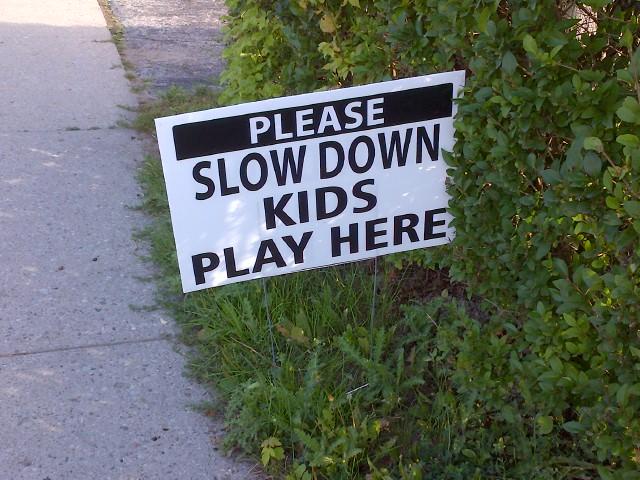
Slow down for the kids.  A meta-statement if ever there was one.


Tuesday, 11 February 2014

Why Cars Should Be Considered Hes


The Harper Government is not fond of unions.  They block growth, demand the world and generally impede success through aggressive obstinance - right?

The auto industry, clearly, is a different matter.  They simply do a good job of selling their value to the Canadian economy.  Squeaky wheels and grease, so to speak.

This sounds oddly familiar:


The auto industry is subsidized beyond it's actual contributions to the economy, because they put up more of a fuss about money.  They complain, they threaten, they spend time, effort and money advocating for themselves - and as such, get more.

But is this overall a good thing for the Canadian economy?  Are we greasing the wheels at the expense of our economic chassis?  By heavily investing in traditional manufacturing, are Canadian governments impeding our national ability to innovate and growth into new opportunities?

Well, no - because if those new opportunities were so great and bountiful, clearly someone would be aggressively selling them to the laissez-faire purse string holders.  These innovators, social and otherwise, would be aggressively pitching, attending fundraisers, golfing and otherwise strategically hobknobbing with our socio-economic influencers.  That's the way the capitalist system works, right?


By doing things like going out for drinks after work, weekend golf tourneys, all that kind of thing.

Which is kind of hard to do if you have kids.

It's sad how many competent, even excellent women I know in fields ranging from community consultations to government relations who are almost apologetic when they get pregnant, because they know it's going to place a burden on their employers.

Worse still is knowing how many working mothers (who don't make enough to afford nannies) simply can't go drinking after work or play golf on the weekends, because it's just accepted that they're primary caregivers - even when they are full-time employed.


To sum up, women who take responsibility for both work and family are punished because they aren't pushing themselves while men who take the time to sell themselves get the raise and the corner office.


Conversely, men who "act maternally" by taking responsibility for family and firm, putting the interests of both before self are marginalized.  They aren't man enough, you see - they don't complain enough or drink enough or go to the links enough.

I laugh when I hear people like Michael Hlinka talk about how employers reward value as a matter of principle.  We've got a very primitive notion of what value is.

But so what as along as the economy keeps rolling as it always has, I suppose...

Thursday, 5 September 2013

After Action Reports: Death and Iteration in Business


Of course, you can always blame someone else for your woes and keep doing things the way you always have.  That tends to work real well.

When you find the right priority - and it might be a bit loftier than pure profit - you expand your perspective and enhance your capacity to bring new insights and new tools to the table.  Inevitably, those additions will benefit all your other objectives, including profit.

That's how value-add works.


Not Sharing the Opportunity to Learn is a Cardinal Sin

I have never worked for a company that was dogmatic about project postmortems but I have always wished I had. After all, project postmortems teach us so much.
Learning from the mistakes and experiences of others constitutes the better part of our business education. It’s why we ask successful entrepreneurs to coffee and hang on every word when they speak at conferences. All those stories are postmortems. Postmortems condense all the experience and learning into a nugget of shared wisdom.
Despite their value, postmortems are uncommon. They exist only in delicate corporate cultures that demand excellence but support learning. Harder still, framing one’s own failure to colleagues daunts the entry-level employee as much a seasoned CEO.

It’s rare to find an enterprise that conducts postmortems consistently. Very few startups do. But I came across one business in a sector I wouldn’t have expected that exemplifies the value of the everyday post-mortem.
Alcoa, the Aluminum Company of America, generates $24 billion in revenue and for decades held the title of largest aluminum producer in the world. In the mid-1980s, the company hired Paul O’Neill as CEO. O’Neill changed the course of the business and doubled revenues in ten years because he instilled one particular value in the company. Unlike his predecessors who focused on increasing profitability to drive market cap, O’Neill championed safety as priority one from his very first shareholder meeting.
This ostensibly odd decision created a cascade of cultural changes within Alcoa. First, it united the interests of managers and unions who had been at odds over wages and benefits. After all both sought safer working environments for their teams. Second, because every accident needed to be reported in a timely fashion according to company policy, Alcoa became one of the first large enterprises to adopt email. Last, as employees focused on reporting accidents quickly and widely, the company cultivated a culture wherein people learned from others’ mistakes and everyone benefitted as a result. Accident rates plummeted, productivity rose and the business boomed.
A few years into O’Neill’s term, at a shareholder meeting, a Mexican nun (who was a shareholder of Alcoa) pointed out to the CEO that some members of her parish had suffered exposure to toxic gases working for Alcoa. The company investigated. They discovered that one of the most senior and tenured members of the management team, Bob Barton, had covered up the gas leak. O’Neill fired Barton immediately.
O’Neill said later, “…no one else had the opportunity to learn [from the accident]. Not sharing an opportunity to learn is a cardinal sin.” And his employees agreed.
Postmortems demand a culture of honesty and communication, two of the core values of the strongest relationships and cultures. I hope we see more of them in startups.

Thursday, 2 May 2013

Committing Sociology vs Social Pruning: Liberal Vs Conservative Governments


 That's a professional economist who has actually made a living as an economist speaking.


Then, there's this from the federal level:
 
 
Stephen Harper, the Economist Prime Minister, can't account for 3 billion dollars of taxpayer funds.  If I hire an economist to help me sort out my finances, I would kind of expect them to look backwards, forwards, under every rock and around every corner to make sure we have a good understanding of where we're at so we can figure out where we can go.
 
The Harper government hasn't done that.  What they have done, conversely, is spend huge sums on Canada's Economic Action Plan ads, muzzled dissenting opinion and attacked opponents.
 
Which is exactly what Mike Harris did when he was Premier.  They threatened and bullied opponents and spent heavily on advertising to promote the message they wanted people to hear.
 
Oddly enough, whenever Liberal governments start to focus on message over substance, that's when they start to go astray on program management, too.  Conversely, when they focus on policy implementation instead of dedicating oodles of their time to brand-building, they get whacked for it.  The more they get whacked, the more energy they need to divert from accomplishment to branding.
 
The reason why this happens is simple, but not sound-bite simple, which is probably why no one pays attention to it.
 
People rationally understand we need complex, collaborative solutions to our complex, collaborative social problems but emotionally, we respond more strongly to symbolism; messaging, branding, chest-thumping.
 
 
Aggressive, hard "C" Conservative governments function like lions on the savanna - they spend as little energy as possible on doing anything other than looking magnificent and smacking down opponents.  They aren't interested in making a system work or supporting the nation - their sole focus is on dominance.  Be it Stephen Harper or Rob Ford, the style of governance creeps ever further towards feudalism, with the King providing both judgement and direction in the absence of research, evidence or a cross-section of public opinion.

So, Harper's Canada has stifled debate, issues personal attacks on opponent after opponent, tried to threaten foreign scientists over data release and walked away from any international conversation they don't feel they can be top dog at.  Control is increasingly isolated at the top and starved of exposure to the realities of the people being governed.
 
Cynical Harper operatives pat themselves on the back for cleverly "starving the beast" by cutting off StatsCan, CIDA, national healthcare planning, etc. at the knees, thinking they've pulled a fast one on the Socialists and Separatists and irrevocably made Canada more conservative.  The actual result is that our national brand is diminishing and public confidence that government knows what it's doing is decreasing.
The solution to this, of course, is more dehumanization of opponents and more pumping of self, extending the peacock's tail a little further.  This increased focus on appearance and marketing will come at the expense of more government programming, which will result in more embarrassing slip-ups.  The Tories are painting themselves in to a corner and hastening the demise of their emperor's cloak of a Canadian conservative movement.

The pendulum will swing back and a more liberal government will take the reigns, start re-opening conversations and start rebuilding the infrastructure necessary for a complex system like a country to function.  If it doesn't happen through the electoral process, there are groups like Anonymous who will eventually make sure it happens regardless.  Post defeat, it won't take long for the Political Right to start their process all over again, focusing on self-promotion and oppositional attacks, egging progressives to respond in kind.  If and when the progressives do, they'll become more partisan, less focused on the system and start emulating the same damned mistakes that do in every Party.
 
Competition is the natural state of play - it's as true for human beings as it is for any other animal.  Competition is resource-intensive and isolationist; you work against, not with.  Progress, however, comes through collaborative efforts, planning and dialogue.  Humans are a progressive species, which is why we're not running from lions on the Savannah plain any more. 
 
Society is the result of progress, not competition.  Competition is more about branding and appearance than it is about substance.  If you doubt that, explain to me why fashion remains such a lucrative industry and why the more money people have, the more gets spent on image.  At its extremes us-vs-them competition chips away at society; wars destroy infrastructure and kill children.  We do these harmful, wasteful things because when we're reacting, we're not thinking
 
Progress trains children to innovate and build infrastructure.  You simply can't think ahead if you're always focused on fight or flight.
 
In a social context, the value that Hard Right Conservatives provide is again, a natural one - they act like brushfire, clearing away outdated and tangled infrastructure to make way for new growth.  Or you can call it synaptic pruning - it amounts to the same thing.
 
We're in the "clear space for new connections" part of the social cycle now, though there's a growing trend towards committing sociology.  If we took the time to understand why we react the way we do, we could accomplish this transition without the associated pain and frustration - but that takes a level of foresight we simply don't have at the moment.
 

Friday, 19 April 2013

Economics Vs Social Economics


If the only thing that mattered was profit, this trend wouldn't have happened, would it?
 
People aren't rational - they fear differences.  Stigma is an anxious reaction, the same kind of feeling you'd feel giving your first presentation to a big audience.  Like any perceived phobia, regular, contextualized exposure with positive outcomes reduces the perception of threat and builds resiliency.

After, being tough isn't about building walls or firing people - it's about rolling up your sleeves and tackling challenges head on. 

It's a another thing our Economist PM could stand to learn.  As the Toronto example proves, its one Alberta will learn - and which will change their perspective in interesting ways.
 

Friday, 22 March 2013

Free Market Theory and Creative Destruction (James Kwak)


Or something like that.
 

How Supposed Free-Market Theorists Destroyed Free-Market Theory

This guest post was contributed by Dan Geldon, a fellow at the Roosevelt Institute. He is a former counsel at the Congressional Oversight Panel and a graduate of Harvard Law School.
Over the past year, there has been much discussion about how the financial crisis exposed weaknesses in free-market theory. What has attracted less discussion is the extent to which the high priests of free-market theory themselves destroyed meaningful contracts and other bedrocks of functioning markets and, in the process, created the conditions for the theory’s weaknesses to emerge.
The story begins before Wall Street’s capture of Washington in the 1980s and 1990s and the deregulatory push that began around the same time. In many ways, it started in 1944.
 
In that year, Frederich von Hayek published The Road to Serfdom, putting forward many of the ideas behind the pro-market, anti-regulatory economic view that swept through America and the rest of the world in the decades that followed. Von Hayek’s basic argument was that freedom to contract and to conduct business without government meddling allowed for free choice, allocated resources efficiently, facilitated economic growth, and made us all a little richer. Milton Friedman built on Hayek, creating an ideology that resonated with conservatives and ultimately became the prevailing economic view in Washington.
 
While many have noted how information asymmetry, moral hazard, and agency costs reveal glaring holes in free-market theory and contributed to the current crisis, few have focused on the extent to which the supposed heirs to von Hayek and Friedman directly and purposefully created market distortions and, in the process, destroyed the assumptions of free-market theory.
 
In other words, the same interests that claim the mantle of von Hayek and Friedman pulled the threads from the free-market system and exposed the theory’s greatest weaknesses.
 
In the years leading up to the crisis, the proliferation of fine print, complex products, and hidden costs and dangers – and the push against government regulations over them – exemplified the larger pattern. While touting complexity as a form of innovation and railing against every attempt at government interference, supposedly pro-market forces used that complexity to clog the gears of free market machinery and to reduce competition and maximize profit.
 
When consumer credit contracts are buried in so much legalese that even experts can’t understand all the terms –­ I heard one former CEO of a top financial company admit privately that his lawyers couldn’t explain various mortgage terms and conditions — how can anyone believe the mortgage contract represents meaningful free choice? What consumer is able to weigh the benefits and costs of individual financial product features buried in the fine print and decide what to take and what to leave?
 
The corporate assault on comprehensible contracts is important because contract law has been the bedrock of capitalism for a long as there has been capitalism. By enabling free choice, meaningful contracts maximize economic efficiency. The assumption behind von Hayek and other theorists is that robust contract law facilitates a vibrant economic system and minimizes the need for government intervention in the economy. But that went out the window when von Hayek’s theory itself was used to manipulate contracts. Now that products and fine print have become so perverted and incomprehensible, how can anyone expect contracts to steer the market in economically efficient ways?
 
We now know that the problem of complex contracts did not just harm consumers. Municipalities across the country were lured into buying toxic derivatives and institutional investors were routinely abused at the hands of complex products. Stories about Wall Street’s math wizards purposefully cramming dangerous and confusing products down the throats of the unsuspecting are commonplace and legendary.
 
The world has changed in fundamental ways thanks to computers and complexity can have value, but the world as we now know it has made traditional economic assumptions that assume real choice and real contracts irrelevant. All that’s left is the hollow façade of choice when your broker shows you where to sign or when you click “accept” after quickly scrolling through incoherent legalese. And we all are forced to accept this even though we know that the large majority of these products –­ and the actual deals around them — just aren’t that complicated. The only thing that’s complicated are the fine print and the economically valueless tricks and traps hidden in the legalese.
 
Some conservatives are quick to blame the fine print on litigation and trial lawyers. But that just doesn’t explain all the complexity that has come to define Wall Street. Talk to a CEO of a major credit card issuer privately, and they will admit that “stealth pricing” was purposefully innovated to maximize profit by making contracts difficult to understand and compare. The proliferation of opacity and the lack of competition in the industry are not an accident.
 
The industry has not only manipulated contract language to prevent real agreement (or what contract lawyers call “meetings of the mind”), but it also massively increased its negotiating leverage with counterparties by making it so onerous to walk away from boilerplate and incomprehensible terms and conditions. It’s not easy to negotiate with the other side of a 1-800 number, nor is it easy to go toe-to-toe with an industry that can and does get away with tricking and trapping even supposedly sophisticated investors.
 
And if you think all that were enough, many of the same conservative economists and lobbyists have fought tooth and nail behind the scenes to preserve implicit government guarantees created by the bailouts – guarantees that allow large banks to access capital more cheaply than the smaller banks left struggling to compete. While touting pro-market values and railing against “big government” attempts to break up the big banks, they are directly and purposefully allowing for market distortions. And those distortions help explain the massive consolidation we’re seeing in the industry, the dwindling of real competition, and the proliferation of faceless conglomerates with infinite leverage over the drafting of terms and conditions.
 
What’s really galling though isn’t that supposed free-market advocates are so hell-bent on distorting the market wherever necessary to inflate profit. What’s worse is the extent to which the same interests successfully advocated the rules that allowed this to happen under the well-worn guise of–you guessed it–freedom to contract and freedom to choose. That is, through their well-financed and well-oiled lobbyist teams, they facilitated the destruction of the freedom to contract and free choice while pretending to do the opposite. They killed the free market in the name of saving it.
 
The greatest lesson from the crisis that we haven’t yet learned is that “industry interests” and “free-market interests” are not the same. In fact, they are more like oil and water, as the industry profits most in the absence of true market competition. And so it should be no surprise that Wall Street has devoted itself to making contracts indecipherable, building boundless negotiating leverage and fighting for favorable breaks and regulation at every turn. What should be a surprise is that the same scoundrels that killed our markets (and also, mind you, wrecked the global economy and demanded taxpayer bailouts) have so ably sold themselves as natural heirs to von Hayek ­and Friedman — and that so many of us have let them.
 
By Dan geldon

Sunday, 2 December 2012

The Best Innovations Start Free


I


Texting started off free, and turned out to be quite profitable.  But, again, it started off free.  If the strict profit model had been applied here, we'd never have had texting - it needed to exist first for its value to be proven.  Someone had to take the risk by going pro-social with the service, first. The evolution of Facebook has followed a similar pattern - what starts off as fun, innovative and free becomes commercialized over time as the money people start to smell opportunity, then start to fear loss.


When it becomes solely about profit and related status, personal risk ceases to be desirable; consequences get downloaded to those with less to gain and more to lose, reducing the opportunity for innovation.  Instead, sure things are what get bet on.  In changing times, there's little that's 100% certain - even the buckets one tends to think of as immutable, like natural resources, aren't the cornucopia we often take them for.

Innovation is essential for growth, but it's dependent on vision first, capital second.  Something to think about.


Monday, 15 October 2012

IR #4: The Conscious Revolution


I think Martin Wolf's on to something with his assessment, but I think he needs to take it a little bit further down the path.  Previous industrial revolutions have built the Western World we now live in.  As with all foundations, though, when the house-keeping isn't kept, cracks start to form and new growth starts to take over.
 
Innovation isn't dead, because it isn't as tied to our current capitalist model of economics as we think.  In fact, our understanding of how innovation really works is just now starting to bleed into our collective consciousness.
 
We are likely first-hand witnesses to the end of an era.  That also means we get to be actors in the ushering in of a new one.  Oh, the thinks we can think, eh?  Welcome to the Conscious Revolution.
 

Tuesday, 25 September 2012

Who Is Stephen Harper?


As Stephen Harper slowly dismantles Canada's Parliamentary democracy by trouncing all oppositional voices, blatantly misrepresenting facts to the Canadian public, stifling research and blocking our elected officials, even those in his own Party, from doing the job they were elected to do, comparisons to George Orwell's 1984 are growing in number.
 
I don't think that's particularly accurate.  We know Stephen Harper is a real person, and he certainly doesn't attempt mind control.  There are enough tools out there for the populace to get the real skinny, should they care to.  But they don't.  It seems like every week there is a new scandal of some sort emerging from his Party, airplanes and misspent dollars and vital facts ignored, like the impact of policy on the well-being of employees.  Again, it's all out there, but we're too comfortable to put in the due-diligence and get the other side of the story.  Harper knows this and has played on our collective, willful ignorance to great effect.
 
Harper's self-proclaimed big policy narrative has been to make Canada a strong presence on the global stage, both economically and militarily.  That sounds good, but what he's really been doing is undercutting our front-line troops, turning the military into a political office and now, he's even shrinking our diplomatic presence overseas.  Those pesky separatists are stating to make noise again, too - Canada, they say, isn't working for them.  Harper will continue to ignore this fact until and unless separatists start taking actions bolder than hiding the Maple Leaf.  If that happens, it could quite likely be after Harper has left the federal stage and returned to his beloved Alberta, swimming in oil wealth.  In a Canada wracked with financial and constitutional challenges, it might just be time to  get back to his business of firewall building.
 
What Stephen Harper is, first and foremost, is a cunning politician who knows how to play the game in the long-term interests of his Party and his home province.  Sadly, that kind of thinking comes at the expense of an atrophying Canada.   His political pundits will tell me I'm a nut-wing socialist for suggesting that Harper is anything other than the best Prime Minister in the history of the parliamentary system and certainly won't agree that Canada's international reputation continues to plummet under Harper's watch.  Any examples I cite from people who work in international diplomacy, foreign news or stories of Canadian travellers back depressed at how they aren't getting the same kind of cheerful response they used to will be dismissed, ignored or criticized as propaganda.  Why deal with the evidence when you're convinced you can make up reality as you go?
 
But that's Harper's ambitious little political circle.  What of Harper as an individual?  He's a man who appears to think of himself as the smartest in any room, is deeply suspicious and perhaps even contemptuous of people who he feels "don't get" what he sees as the fundamentals of economics or his particular world view.  Harper has essentially declared political war on creative/collective types like artists, socialists, environmentalists, human rights advocates.  While our Prime Minister by no account enjoys the political spotlight, he's supposedly quite funny and engaging in his smaller circle of like-minded individuals.  Though I'm sure that circle defines those terms differently than the rest of us might. 
 
There's a pattern of behaviour here, familiar to anyone who has read Atlas Shrugged.  Perhaps it's not Big Brother that Harper is modelling himself after - maybe in his heart of hearts, he sees himself more as the real-life manifestation of the fictional John Galt.


Saturday, 15 September 2012

Occupy an Idea


"An idea is like a virus, resilient, highly contagious and the smallest seed of an idea can grow. It can grow to define or destroy you."


Occupy Wall Street “put inequality on the political agenda in a way that simply wouldn’t have happened otherwise,” said Carne Ross, a former British diplomat and author who is involved in the movement. “That is an extraordinary achievement, even if Occupy never did another damn thing.”


They are still disorganized - more of an idea than a movement.  Largely, it's still a group of frustrated people, not all clear on what solutions exist to the inequities they see.  Self-appointed, they represent the 99%.
 
 
They are Occupy.  And they've never gone away. 
 
 
Occupy has a lot of work to do and face several trials by fire as their mission gestates.  Of high priority for them is the crafting of key messages, developing clear asks that provide the elevator pitch to every citizen of why it is they should care.  They're already adept at tactics - now it's time to build a strategy.  Fortunately for them, there's plenty of precedent to work with.


Thursday, 13 September 2012

Stephen Harper's An Economist - Right?


Here's the rub - economies are about more than just numbers - they're about behaviour.  If you can't wrap your head around how and why people make financial decisions in practice, you're predictions will always be off.

Monday, 11 June 2012

An Era Exploding - in Opportunity


This is true, though it needn't be.  We aren't being backed into a corner by economic challenges; the social challenges that are mounting in response to the financial ones aren't a nail in a coffin.

Instead, we have an unparalleled opportunity to break the mold, rethink the way we do business, govern, and participate in society. 

We can have staff transition strategies.  Governments can coordinate shared service models empowered by one service platform that is open sourcedBusinesses can create new markets, empower employees and reduce the barriers that constrain productivity and lead to mounting insurance costs, but also broader health care costsOnline training can be expanded and students given more power, twinned with more mentorship, throughout their ongoing studies.

It's all there for the taking - we just need the will to think it through and make it happen.


Saturday, 3 March 2012

Buyer Beware: If Your Trade is Money, You Still Have To Deal With People


What disturbs you most about this picture; that people are walking by nonchalantly, or that the homless guy has a pet he can't take care of?  We revist this at the bottom.


 I got all excited about the title of this article – then saw how clearly its author wasn’t connecting the dots herself.  It was, to say the least, disappointing.

Francis’ approach is not an atypical one for someone with an aggressive, pro-capitalist mentality.  She talks about economy and policy through a focus on commodity prices, the tax base, export markets, etc. 

The only time she talks about actual people is through a financial lens.  Health care costs, education costs, social expenditures outpacing economic growth, etc.  Immigrants are equated with additional taxpayer expenses.

“Tough-minded” folk like Francis take the approach that it’s a dog-eat-dog world, you have to stay competitive to get ahead, etc.  The only people we should encourage are the ones willing to do whatever it takes to succeed.  When it comes to business or politics, caveat emptor is the name of the game.

Of course, it’s this mentality that led to the spectacular rise and rapid decline of the capitalist system, just as it spurred the growth of and has now spurned support for the Conservative Party of Canada.

The big “risk takers” in the capitalist system aren’t the bravest – they’re the trickiest.  They’re the ones who find ways to download the consequences of risk to those with less money or less guile; that is, the lower-class, the disposable employee, the uneducated who spend without proper planning.  This might have been a model that worked back when Western feudalism or early in the industrial age, but it doesn’t cut it any more.

In the days where the rich sold products made on the back of cheap leabour to each other, crime was a bigger issue, as were epidemics.  The more condensed communities got, the worse the problem became.  Conversely, as public health care and centralized social service delivery grew, life got better.  Income disparity shrank as education, diversity, health and safety were regularized.  This trend led to the development of the modern middle class; the very group that is currently being squeezed.

As the “tough-minded” people sought ways to get ahead, they found increased justification for doing so at the expense of their less hawkish social peers.  What has resulted?  An increasingly polarized society with both ends embittered against each other.

Yet, the 1% simply cannot exist without the 99%.  You can’t run a business without people; you can’t compete in today’s emerging markets without properly developed and accommodated cognitive skills.  Labour is a transaction – a person sells their skills to an employer who benefits from the resulting products or services.  In this case, it’s the employer who needs to keep “buyer beware” in mind; if you’re not willing to invest in your human resources, it’s your own productivity that will suffer.
If you said that the homeless guy isn't fit to have a pet - what say you to the countless employers who are routinely causing stress-related illness in their employers, reducing their own productivity?
It's time for a systematic rethink.

Sunday, 22 January 2012

Alchemy, Wealth and Eternal Life


“I look to heaven and I see
there's a silver dollar
in the sky shining down on me.”


-       Sitting In the Sun, Louis Armstrong
Reading “The Alchemist” by Paulo Coelho, many thoughts cross my mind.  Each stems back to the same place – the nature of perception. Or, as we refer to it in more concrete, rational, scientific terms – cognition.

I’m an anthropologist by training, a traveler by nature and a linguist by inclination.  I’m also hard-wired to be pro-social, which is why I have always been fascinated in that which connects people and that which cleaves us apart.  The pursuit of this understanding has taken me around the world, from small communities in Ecuador to hot spots in Bosnia to the Pink Palace in Ontario.  A little story cuts to the root of what I have learned so far:

When I was living in Italy, a key Other identified by many of my Italian friends were the Maroccini – the Moroccans. The epithets used against foreign Moroccan workers were the same as has been used against any Other in history, whether it be the Gauls, the Irish, the Chinese or First Nations:

- They don’t think like you and I;
- They are corrupt, immoral, dangerous;
- They are intentionally out to get us;
- They are not to be trusted, therefore:
- We must defend against them, through offense if necessary.

It’s a deep-rooted fear of the unknown which quivers beneath the surface of many a mind to this day.

During a trip from Italy to Morocco with a busload of Moroccans and over weeks spent in various parts of Morocco proper, I heard the exact same prejudice raised.  This time, it was about the Italians on the part of Moroccans. South of the Atlas, I frequently heard the same words spoken by small-towners and Tuareg, but in reference to the big-city folk from Casa.

Of all the wonderful riches of diversity that separate ethnicities, linguistic groups, religious groups and political groups, people fundamentally have one key thing in common – a mistrust of each other. That mistrust is instinctual, limbic-based and fortified by a deficit of understanding.  That lack of awareness helps leave one with the feeling of being unempowered, of not having control.

Why, though? Why does surface or anecdotal knowledge lead us to focus on differences between people, when the similarities are so pronounced?  In my experience, language is the key. We codify everything – nature, people, positions – by giving them names.  Trouble is, the naming of things applies levels of value that are not intrinsic to the subject in question. Codification allows for more complex communication, certainly, but it equally imbues whatever's being defined with significance beyond its internal fabric.  We automatically mistrust what we don't understand, because it is different.  That mistrust wedges itself into our definitions.  That cognition-level stigma restricts us from knowing a subject on its own terms; instead, we know things in terms of what they mean to us.

The Other provides a clear example of this.  When you define a person as different than you, they become foreign, unknowable, threatening. Conversely, if we used the elements we have in common to form the base of understanding, diversity becomes an opportunity for growth, difference becomes a positive, the unknown becomes a teacher.

That variance in perspective leads to the great irony of alchemy, the mystical search for immortality and immediate wealth that played a role in fostering the development of modern science and Western thought in general.  The perspective that developed alchemy has left us with individual-focused definitions of wealth and life - a perspective which leaves us searching for answers to problems that exist in our perceptions alone.

This framework and the quest for the Elixir of Life and the Philosopher’s Stone is core to Western thought; therefore, it has informed the institutions and infrastructure that form the skeleton and nervous system of Western civilization. Our health care system is designed to help us individually live longer.  We want to live longer to enjoy wealth.  At the same time, we try to get rich as quickly as possible to be able to enjoy our wealth for greater parts of our lifespans (hence the inevitability of get-rich-quick schemes). Or, we tackle the problem from a slightly different angle and seek immortality and wealth through legend. It’s the same choice Achilles grappled with – glory or immortality, only now we define this by saying it’s better to burn out than to fade away.

When you define riches as that which are rare and difficult to obtain, you automatically set yourself on a competitive trajectory. Precious metals are rare, so it’s those at the top of the food chain who get them. Money doesn’t come easy, so it is seen as important. Unless you’ve got access to financial wealth – in that case, it’s some other rare commodity you seek, with your money, that helps define you as rich. This can be an artist’s work (which gains much value once it’s clear that their output is irrevocably limited) or a pet or pelt of a nearly-extinct animal. The pursuit of wealth is a perpetually isolating one, intrinsically twinned with the fear of losing something – something you have already, or perhaps the next opportunity if you don’t move quickly enough.


WEALTH
The big secret of the Philosopher’s Stone is this – you cannot turn common stones into gold, but there’s no particular reason why gold must be exclusively valuable. In fact, you can choose to value that which is all around you, if value is not prescribed as something you can have to the exclusion of others. Hence the Satchmo quote that kicked this article off – the glory of a sunset is a wealth everyone can attain when wealth is seen not as an individual end but as a personal, connective beginning.

What of the other quest of alchemy, the Elixir of Life, which is essentially the same conceit as the Fountain of Youth? The same principle of codification applies here. When you identify things in terms of possession, you either have something or someone else does.  If there's something someone else has and you don’t, you must’re probably missing out. There’s a reason why anxiety and depression are connected to consumption. Equally, when you view life on the individual level, it is short, your time is limited, the stress is on to get what you can with the time that you have.

This is what we do – we start inward, then expand slowly outward. We worry about our own lives, then the lives of our families, our self-identified groups, our communities and somewhere way down the line, our species and the general ecosystem. Yes, we in the West understand the circle of life, ashes to ashes, etc, but we don’t really believe it. Life is a trajectory, not a cycle; when we’re done, we’re done. This is all there is.

Of course, we could dig deeper, if we wanted to - cells within our body die and are replaced all the time. The fabric of who we are changes over the course of our lives - we're literally not the same people at our deaths as we were at our births. That same perspective can be applied to society; the death of an individual does not mean the end of society, just as the end of a society doesn't imply the end of the species.  Individual deaths actually facilitate the adaptability of the whole – as true for cells as it is for political parties or business ventures.  These days, in social contexts, we refer to this adaptive process by a new name – creative destruction.

It is widely recognized that the business which proves itself incapable of innovation is destined to fail, just as the body or society that does not adapt cannot last.  Of course, that which is successful will invariably incorporate elements of that which came before, as is the nature of evolution.  Existence IS a cycle of regeneration, not a trajectory; death is a starting place, as much as an end.

Yet our society is built of individuals seeking their own survival and benefit; that is the perspective that informs everything from the way we plan cities or conduct ourselves in traffic to the way we fund health care programs (again, designed to keep us ticking for as long as possible). Going inwards, we don't see the loss of a limb as the loss of self; so long as the self is intact, the limb can be compensated for (when it comes to impacts on our cognitive abilities, however, there is a sense that with neurological challenges, a measure of the man is lost).  At the outer (governance, corporate) level, individuals are often viewed the same way, though the emergence of the knowledge-based economy is changing this.

Systems are built with focus on how to support the individual, then expanded to groups and models. Institutions - public, Not-For-Profit, Private - worry about achieving their own interests and mandates first, frequently at the expense of others in their field. This is why we are being weighed down by the burdens of duplication, gaps and overlaps; repetition and inefficiency results when you look from the ground-up, rather than from the crowd inwards.

It is no surprise that the more densely integrated global society becomes, that trend is starting to change.  It’s also no coincidence that this change is being accompanied by a deeper understanding of cognitive function and how individual perception informs crowd behaviour.


LIFE
Have we strayed from the quest for the Elixir of Life?  No – we’ve just given it some background.  The nature of existence is cyclical, but the nature of cognition is linear.  The major religions touch on the circle of life – ashes to ashes, dust to dust, etc – but they do so from a linear fashion.

Consider: Hindus believe in reincarnation. There’s comfort in knowing that, in some way, your individual existence will go on. Buddhists, on the other hand, are focused on Nirvana – the ending of one’s individual existence. Samurai in feudal Japan looked at life from a completely different perspective – they focused on death. In the Hagakure, Yamamoto Tsunetomo tell us "The way of the warrior is death." This doesn’t mean Samurai were suicidal; what it meant was, the individual acceptance of death took away the fear of ending.  By accepting an end was inevitable, they had no resistance to living life fully.  Lao-tzu put it thusly:

We hammer wood for a house,
but it is the inner space
that makes it livable.


When you perceive wealth as personal, it is fleeting.  When you view life as individual, it, too, is fleeting.

Alchemy is the pursuit of the eternal through the lens of the individual.  The eternal, though, is beyond the grasp of the individual – it is not achieved through chemistry or industry, but by shifting one’s perspective beyond the self.  Don Tapscott calls this “networked intelligence.”  That expansion of self is a proven generator of wealth.

The real magic, then, happens when we sublimate the self and allow ourselves to connect with the matrix of the eternal.  Wealth is not isolating, but shared.  Life is not personal, it is systematic.  We move forward, as they say, together.