Search This Blog

CCE in brief

My photo
Recovering backpacker, Cornwallite at heart, political enthusiast, catalyst, writer, husband, father, community volunteer, unabashedly proud Canadian. Every hyperlink connects to something related directly or thematically to that which is highlighted.
Showing posts with label Centre for Social Innovation. Show all posts

Tuesday, 8 December 2015

#12Days of #SmackdownCSI


It's that time of the year - the time when the the friendly, collaborative people at the Centre For Social Innovation sharpen their knives (or at least, spatulas) and bring out their smack.

Well, at least that's the theory.  So far, this year's been quiet - really, it seems like Team #12Days are the only serious players in the running.  Which I get - we are kinda hard to beat.

We've got the plan.  We've got the story.  And yes, we've got the kick-ass cocktail, too, which is more than some sugar-coated lollys can say.

And we will be counting the 12 Days to Smackdown, giving all and sundry a walk down memory lane of the incredible journey CSI, under the guidance of the amazing Tonya Surman and supported by an incredible cast of characters, has taken from then to now.

Follow along on Facebook or Twitter as we move closer and closer to the final day... 


On the 3rd Day of , gave to us:


Shakira’s hips weren’t lying. Stephen Harper became Prime Minister of Canada. Ontario and Quebec were rocked by a 4.5 magnitude earthquake. Fortunately for Canada, this was also the year The Centre for Social Innovation became a global face for social innovation through speaking engagements around the world. Someone had to pick up that torch!


On the 2nd Day of , gave to us:


The Martin government falls with a no-confidence motion, same-sex marriage becomes legal in Canada and the Canadian Disaster Assistance Response Team provides post-tsumnami support to Sri Lanka. Of course, the biggest news of 2005 – that was the year Eli Mansky joined the Centre for Social Innovation team. 


On the 1st Day of , gave to us:


In the year Leonardo Dicaprio took to the skies as innovator Howard Hughes in The Aviator, a dynamic group of changemakers (including Tonya Surman) opens the doors to CSI – a new home from which 14 founding members took flight. 

Wednesday, 28 October 2015

Open Canada: Trudeau's Number


Lots to cover, so let's dive right in - and, as Katie always suggests, I'll include a call to action at the end.

Justin Trudeau has made some bold commitments around Open Government and Open Data.  These particular promises were more than a way to define the Liberals as different than the Tories - changing the way government works is something his inner circle has been committed to for a long time.

One commitment that has a lot of people both outside and inside the public service excited:

– Involve Canadians in policy-making: The Liberals would use technology to engage more Canadians in the development and evaluation of public policy.

So, here's a question:

How can Canadians play a meaningful role in policy-making, impact-checking and avoiding unnecessary duplication, gaps and overlaps?  Government has a hard enough time doing this on its own, which is why silo-busting change management/culture development are popular pursuits right now.

Policy Hacks and Civic Engagement

Under Tony Clement, the federal Open Government team has done some amazing work around opening data and engaging Canadians with the goal of empowering citizens to turn public data into profitable enterprises.  The Canadian Open Data Experience was the largest hackathon in Canadian history.

At the same time, some Virtuous Schemers from that team have been exploring ways to strengthen engagement between the public service and every day political citizens with the intent of addressing structural concerns and wicked problems like poverty and climate change.

All of this should continue.  In addition, it would be amazing to see more engagement/hackathons between public servants and other players to hack policy issues and solutions that don't necessarily have to originate from government. (Think Civic Design Camp, Civic Tech, Community Solutions Lab)

Displaying IMG_20151026_145521.jpgMP Committees and touring consultations and whatnot are great - imagine they could tap into local/regional/national policy-making groups that were using open data to assess, prototype and refine policy, programs, co-design opportunities that could be citizen-led and private-sector/foundation funded?  Imagine government was a facilitator of civic leadership rather than CEO?

This is all happening in small-scale ways across the country.  What's needed to bring it all together is a stone in the soup, a source of inspiration (and, let's be honest, permission) - in short, someone like Justin Trudeau.

ACTION ITEM #1: Task the new President of Treasury Board/their Parliamentary Secretary to do a landscape assessment of groups, orgs and initiatives already in this space and start convening them in collaborative ways, offering them moral support, connections to funders/partners.

Open Data/Data Stories 

Opening up public data for public use is a monstrous task, not made any easier by the fact that different levels of government and even different departments of government aren't all in agreement with processes or platforms or even definitions.  There are even governments out there with significant caches of data still being kept on paper.

Worth remembering - what we're talking about here is a massive culture change.  If you've ever had a secretary who was insistent on keeping paper records because they didn't trust/feel comfortable with computers, picture that on a national scale.

As has emerged from Ontario's Open Data Directive process, it's not enough to make new demands of the public service - major culture change, support and a shift in agency to younger staff more comfortable with new ways of doing this is required to really make Open Government a reality.  More on this in the next point.

Beyond all this - who is Open Data for?  Is the goal to reach out to hackers or entrepreneurs, foundations focused on impact investment or not-for-profits?  If it's for everyone, what needs to be done to make it easier for Canadians in general to be aware of open data and comfortable navigating it?

This is a mighty challenge, but a doable one.  If Apple could transform computers from tools for the elite into necessities in daily life, there's no reason Canada can't do the same thing with data.

ACTION ITEM #2: Develop a national campaign geared towards increasing public awareness of Open Data and its value.  This campaign will also target governments, encouraging/enticing them to strengthen existing efforts to standardize data and data presentation.  (sales analogy: public = kids, government = parents, data = cereal)


That's Open Data - what about Data stories?

No offence to Katie; numbers may tell, but stories sell.  Stories also have the power to transform complex data sets into narratives people can wrap their heads around (instead of focusing on ingredients, talk about what those ingredients can make)

Here's where maps come in - GIS, data layering, money-tracking and all that fun stuff.

Picture sitting down at a computer and opening up a map-based portal that allows you to layer data in comprehensible ways to see how different sets interact.  Imagine this portal could even animate data presentation so you could see changes over time (and even predict them to a degree, like weather maps).

An example - I go to this portal with a particular interest in, say, Eastern Ontario.  I'm given the option to pick some data layers to add in:

- age demographics
- employment rates
- existing/planned healthcare infrastructure
- time frame of 2000-present

The portal would create a map that displays all these things in visual terms (a bit more sophisticated than what WellbeingTO does) and let's me see how they have evolved over time.  Down the road, the system might even add value by recommending related sets to add in for a more robust picture.

From another angle - imagine this portal could map demographics, quality-of-life-indicators, services offered locally, providers and funding.  Where is money being spent to achieve specific goals, but those goals aren't being reached?  What best practices exist on a small scale in one region that could be invested in and expanded?


Displaying IMG_20151026_145127.jpgA platform like this would address so many concerns funders, service-providers and end-users (citizens) have right now.  Entrepreneurs looking for new markets and new opportunities could use this platform to find gaps - as could governments themselves.  Government wouldn't need to be the owner of such a tool, just a supporter. There are brilliant young changemakers playing around with concepts like this right now like Oohee Lee (not even a Canadian citizen, worth noting, but none-the-less a person adding incredible value to the country).

Fun side-bar - when you create platforms like these, either in person or online, you end up with entire communities dedicating themselves to support solution-making in communities not even there own. Case in point: Pakathon. Can you think of anything more Canadian than that?

ACTION ITEM #3: In conjunction with the Open Data capacity building campaign, have a challenge/hack/competition that empowers the Canadian community to develop a digital data hub which allows individuals to access public data and use it to tell stories, identify challenges in user-friendly way.

Open Government/Responsible Society

There is a big challenge that comes with Open Data which hasn't been fully addressed.  As more and more data becomes open, we're going to see more and more examples of government getting things wrong.  Money has been spent without results.  Important problem areas have been missed or avoided.  Presenteeism is a big issue in our public services.

Imagine heeding the call and becoming a public servant, excited to make a difference for your country, only to find yourself in a culture where your expertise is dismissed, you're rarely allowed to see the big picture and you're regularly on eggshells, terrified of being the next Public Servant Zero.

That's a common story right now, and this is before open by default has become common practice.

Some big challenges to open:

- a culture of gotcha politics
- a public that has become used to reacting against negatives instead of contributing to solutions
- a culture class between traditional, top-down management structures and a more Millennial, flat-org approach to engagement
- stakeholders focused on what they want/what they aren't happy with rather than systems thinking

It's not enough to say "government, be open!"  There is a lot of supportive work that needs done to enable a culture of openness and engagement within the public service and, just as importantly, between governments, the private/not-for-profit sectors and civil society.

Where to begin?

Real change begins at home.

Government culture change, new forms of internal engagement/cross-pollination, even redesigning working spaces to facilitate the sorts of engagement and results we collectively want are all tough nuts to crack, but great strides have already been made.  There are some cool partners out there to work with, too.

A selfish example - the Centre for Social Innovation has pro-actively developed the kind of working environment and culture that government should be looking to emulate.  Heck, the CSI model is being studied and borrowed across the globe; even Kathleen Wynne has mulled the idea of a CSI Queen's Park.

What would a CSI Parliament Hill look like?

How could the right culture-change and space development empower engagement, resiliency, a can-do mentality and all the soft stuff necessary to help public service transition to Open By Default?

The key thing is that the answer isn't going to come in the form of one-off sessions on culture change; it has to be engaged into the every-day operations of government.

ACTION ITEM #4: Develop a culture change-management strategy for the Canadian Public Service (and Parliament) that emphasizes emotional resiliency, collaboration, systems-thinking, #HowMightWe vs #YouCantDoThat thinking, etc.  

ACTION ITEM #5: Pilot a CSI-style collaboraiton/community animation space on or near Parliament Hill to facilitate cross-pollinated engagement and solution-finding for public servants and beyond.

It's not enough to have a government that's open, however - you need a society that's comfortable and supportive of the bumpy transition it'll take to get there.  Make no mistake - change at this scale is messy.  There will be a lot of things that happen and even more discovered that could (and should) make communities and stakeholders angry.

This is a big reason why successive governments make promises about new ways of doing things, transparency, etc. and don't follow through.  It's not just about falling into behavioural traps; it's a big challenge to change when the public wants change to be painless.

If you want a government that is truly open, you need a society that is willing to work with government through the process that will get there.  You can't have an Open Government without a Responsible Society.

So how do you nurture that?

Anyone in politics has the answer to this question, even if they don't realize it.  What sells a person, product or process best is a third party validator.

Lucky for government, there is an entire movement of people and organizations already playing that role.  It's not just a national thing, either - it's international.  The world wants open.

And if Canadians can position themselves as global leaders of open and engagement, the catalysts for government/civil society engagement change everywhere, I think you'd find a steadily growing amount of Canadians would happily join that movement.

Especially youth and New Canadians.

Which brings us back to our first point about involving Canadians in the policy making process.  If the people see themselves as active, valued participants in a shared mission of transforming Canada into a world leader and catalyst for open, transparent, engaged - moving forward together/leaving no one behind - everything else will fall into place.

ACTION ITEM #6: As part of their landscape assessment, the new Treasury Board President/Parliamentary Secretary will actively nurture relationships with the Open Community (including support of Open events through attendance, social media promotion, etc).  

ACTION ITEM #7: The Open Outreach campaign will develop awareness, capacity and appetite for open gov/open data, but with an emphasis on why this matters and what we might collectively achieve.

Katie Telford likes numbers; numbers tell a story.

To pull a page from Justin Trudeau's book, here's my number - one.

One singular vision of the #countrywewant that can rally, inspire and engage Canadians in common purpose to be active participants in shaping a Canadian whole that is more than the sum of its parts.

It doesn't matter what this vision gets called, though it will definitely help to have a catchy brand.

What matters most is that the leader embodies it.  When that happens, others will follow.


There are 7 action items in this post - that's the number of ideas an organized mind can keep afloat in its working memory at one time.  The last two are really tag-ons to the first two, so you could even say there are just 5, which is a number most Canadians can hold on to.

Which leads to my call to action.

There is nothing on this list that isn't being tackled in one form or other already.

We have hackathons.  We have partnerships between public servants and community groups.

Open Data Days and related events are all trying to build community and empower people to be agents of change.

Speaking of agents of change - CSI is helping empower good ideas for social impact in a variety of ways.

And virtuous schemers are attempting the Herculaneum task of changing government culture from the inside out.  These are unspoken heroes whose efforts probably won't be felt for a generation and whose impact they'll never get credit - but they do it anyway.

You can be part of this change.  In fact, the change we seek can't happen without you.

Get informed, get engaged, make a difference.  It's great if there's a central leader who gives us the inspiration, but ultimately the power is ours - and always has been.

Here's one last number to help you get started - 200.

Canada's bicentennial will be celebrated in 2067 - far enough away that we can't predict what the world will be like at the time, but close enough that we could play a major role in actively shaping that future if we put our minds to it now.

There are countless Canadians doing just that, right now.

Are you with us?


Saturday, 29 August 2015

#CCETakeover Day 6: CSI and the Spirit of Change


If you've come along for the whole #CCETakeover ride, you'll probably have noticed some consistent themes: 

- the desire to contribute more to society; 
- the search for community; 
- the emergence of a movement that is, depending on your point of view, either disrupting the status quo or in timely fashion trying to steer our civilization through a tectonic shift of cultural change.

Our journey began with the idea of DECAs as value-adding community animators, but as a counterpoint the reality that many people both members and DECAs alike have gravitated towards CSI looking for community. They are living through self-defined "periods of transition" and have come together because they feel that CSI is a place they can belong in, be part of.

This bears repeating - they're not coming to CSI looking for profit, a new market, or to get an in with a growing organization. They're not coming (at least not primarily) for the basics of space and desks and administrative assistance. These are all things that can be found elsewhere.

Entrepreneurs, Not-For-Profits, even corporations and public servants are migrating to CSI in search of something deeper than the material - something that isn't so easy to find in their normal lives and spaces of engagement.

They come to CSI looking to find themselves. They come to belong. They come to be part of something greater than themselves.

Pause on that for a second.

In Marxism, religion is labelled as the opiate of the masses - something that oppressive rulers use to keep lower classes in line. The implication in this is that the community existed first, and that religion was essentially a con created by elites that allowed them to rise to the top and ensure the common folk carried the labour burden.

Archaeological sites like Gobekli Tepe paint a different picture. They suggest that religion may have come first and became a focal point around which community could form, like the stone in the soup.

Now, think about political parties, or comic-cons, or festivals like Burning Man. What are these except places where people go to discover, share, create and belong? An individual or group of individuals, motivated by the urge to see something in the world that they feel is lacking, or find an avenue for expressing something they feel can't be expressed in their normal lives create a space for new kinds of activity to occur. They may be seen as outliers as first, but others recognize something is happening that they want to be part of. That's how any movement begins.  

Think about User Generated Content as a concept - the idea of people creating their own tweets, sharing their own ideas, investing in costumes or solutions that someone else will benefit from. Is it really a clever scheme by corporate/partisan interests to get people to do their heavy lifting for them, or is it a natural human inclination these organizations are simply harnessing, like hydro-electric power?

If it is a human instinct, it's about more than aggregating in communities - it's about personal empowerment within that community. Like DECAs who design better processes or members who plant the seeds of a community garden.

Functionalism looks at religion as sort of a manifesto for society; a standardization of values to allow for smooth societal operation, flow. We know there's a lot more to society than symmetry, though, because the world is a complex system that is constantly in flux; society also needs to be in flux, which means standardization is actually long-term detrimental to the well-being of society.

It's the core principle of Darwinism; that which survives isn't the toughest/most stubborn and inflexible, but rather that which is best able to adapt to its environment. It just so happens that consensus is growing at all levels of society and around the world that we are in the first blush of a tectonic soci-economic shift.

Besides, the implication of functionalism is that the community existed first and that religion is the thing that evolves to allow societies to function cohesively.  

If that's the sum of what religion has to offer - in essence, rules - why has religion consistently been a catalyst for the creation of entirely value-add art?

Visit any continent, inhabit any society - the material culture of humanity is illuminated with value-added art, architecture and music created for the glory of (insert deity here). Throughout history, people have been inspired to create art and add value to their community because of religious fervour. It's not the only motive (love is another one), but it's a consistent one.

I'm sure by now you can see where we're headed.

There is evidence to support the notion that some form of religious instinct serves as a centre of gravity that pulls people together - call it the spirit of community. While organized religion (much like organized politics) can lean towards an insistence on rigid hierarchies, rituals and codes of surface societal conduct, the raw spirit of religion has been known to inspire people to create, experiment - be innovative. That, and of course, to be pro-social.

It used to be the case that religious institutions did the lion's share of charitable/social service activity.
 
As our society has expanded and older religious/social models have faced challenges in adapting to our shifting societal consciousness, we've seen a diversification of charitable/public service providers and solutions offered.


Less people make weekly visits to partake in religious services. Less people identify themselves as being part of one religion or another. Heck, less and less people believe in the concept of a divinity, period.

At the same time, there are a massive number of charitable organizations, not-for-profits, community groups and corporate social responsibility initiatives out there all seeking to do what used to be the purview of the church and, to some extent, the state.

In fact, there are so many funders, service providers, etc. out there now that we lack a comprehensive system to keep up with all of them. Our current model of service provision, including government, is plagued by duplication, gaps and overlaps. Humans do silos well, but systems - that's a work that has progressed in iterative fits and spurts throughout history.

The past two days of #CCETakeover have explored some of the work being done right now to facilitate this transition from silos to systems through open government and open data initiatives. Even media organizations like the Toronto Star are getting in on the game, asking #howmightwe provide access to our resources so as to empower others with them?

If wade into the conversations being had at forums ranging from Open Data Day to the Toronto Global Forum to countless chats in coffee shops across the land, there's growing buzz around the concept that all of this is leading somewhere, that there is a common ground in the middle of activity that we just need to discover.

Over the course of #CCETakeover, we've also looked at innovative programs like Techsdale and Community Solutions Labs that aim to empower traditionally marginalized people so that they can be equal partners at the social table.  Projects like these empower individuals within target communities. And they start by creating shared spaces and cultures that nurture belonging.

Initiatives like these aren't about service provision, capitalizing on an untapped market - in fact, the revenue-generation model is often the last bit of business to be tackled.  The key motivation isn't to reel people (and their pocketbooks) in, it's about growing strong communities.


Which leads us back to CSI.

What is CSI?  Is it a co-working space?  Is it an incubator?  Is it a unique environment that places coffee-making higher up on the to-do list than turning on the printer?  It's all of that, but from its inception, CSI has aimed to be something more.

"It's a place where I think you belong", Adil Dhalla has described it, perhaps prophetically.

CSI's membership continues to grow.  Its events attract more and more people, each one looking to find something - and each one ultimately finding both a community to belong in and an encouraged opportunity to be and do more within and beyond it.  It's not just the grassroots/Not-For-Profit community that has become a pillar of the CSI community - For-Profit entrepreneurs, corporations and even government is starting to put down roots in the centre.

My favourite examples of this are the weekly salad club which happens at each location and the community potluck with which CSI Regent Park is helping to animate not only their members, the broader neighbourhood around them.

The format of these events is pretty simple - CSI provides the pot (physical space) and a stone (the event), then inspires others to bring their own ingredients into the mix.  With a bit of intentional animation, what results is not only a meal as rich as its members, but a dynamic community of engagement.

CSI members are, by and large, change-makers.  They are part of a community that believes in community.  Members reflect the Grasssroots, For Profit and, increasingly, government agencies, partners and even public servants like Diana Thai.  The same holds true for those who are becoming part of the broader CSI community through events, programs and projects.

Wherever they have arrived from, these change-makers, virtuous schemers and community animators have three things in common:

- the desire to contribute more to society; 
- the search for community; 
- the belief that a movement for social change is emerging

These needs and beliefs have driven each one of them to the Centre for social innovation.

I don't think it was intentional.  If anything, the story to date seems to suggest that the catalysts of CSI were simply the first ones to put down a pot, toss in a stone and issue an invitation.

As things often happen, CSI just ended up being conceived and executed at the right point in time when an unnamed community of people were individually looking for an aspirational community to belong to that didn't seem to exist anywhere else.

Part by design, part by luck, but to a large extent simply because there is a need, CSI has come to represent the spirit of change that defines the age we live in.  Increasingly, CSI also embodies the spirit of community that people are seeking.

That's why it is becoming a centre of gravity for the change-making movement of our time.

Is the Centre for Social Innovation a modern-day Gobekli Tepe? If so, what are the broader implications of that?

I have no answers to share with you - only perspective.

After all, this takeover is a ride we're all taking together, as a community.

And where we go from here - that choice is up to us.


#CCETakeover Day 6: Spirituality and Social Change (by Derek Alton)


I have always been fascinated by social change, the process by which we transform society.  I think social change shows humanity in our full glory, exploring our full potential where imagination and reality collide on a large scale with people, both as the painter and the paint.  As a result I have always been curious about the strange breed of people who seem to be at the center of this action.  Some are larger than life figures while others work in the shadows without ever getting the recognition they deserve.  Call them social innovators or systems changers or misfits for all I care, but “they change things, they move the human race forward.” (quoting the famous apple commercial)

Make no mistake, this is a strange breed of people who see the world differently, not for what it is but for what it could be, people who seem compelled to challenge the status quo, to say this is wrong, we can be more, we can be better.

These are my people!

So what is at the heart of this group of people, that drives us, sustains us, inspires us and defines us?  Maybe it is the one thing that we seem to struggle to talk about with each other.  That thing we all do without really realizing it whether it be at work or when we are alone in our bedroom.  The word that captures this mysterious dynamic within us is spirituality.

Now, I don’t mean spirituality as a religious thing, though for some it is.  Rather I am referring to that force, flow, energy or idea that compels social innovators like us to do things different, bigger than any sane or rational person would.  It is something that seems to be larger than us; it comes from both within and beyond us, sometimes driving us and often times dragging us forward.

Being a social innovator is a difficult road.  We are going against the main stream, against societal norms.  We are challenging power structures and making people uncomfortable.  As a result we are often the odd ball in any group.  The round pegs in a world full of square holes.  People don’t seem to get us; they don’t understand why we can’t just be satisfied and do things normally.  It is at times an incredibly lonely road. 

Often we have no idea what we are doing.  We know something is wrong but we do not know what the solution is, or we have the solution but no one seems to care, or our plan doesn’t work.  As a result we often fail way more than we succeed.  We call this “failing forward” and tell ourselves it is a normal part of innovation, but that doesn’t make it any easier, that doesn’t take the disappointment bite away or satisfy funders.  I can’t tell you how many times I have thrown up my hands in frustration and defeat, even been to the point of tears.  Being a social innovator is at times an incredibly difficult road.

Yet we do it, we pick ourselves back up and try again.  Why?  Because we are compelled by something greater then ourselves, that fuels and drives us, that keeps us moving forward when we want to do nothing more then give up and binge watch House of Cards while eating ice cream. 

Yet, we do not seem to talk to others about this.  Why? Maybe it is because it seems crazy.  Maybe it is because we are afraid we are the only ones.  Maybe it is because it sounds spiritual or even worse, religious, in a world where this is looked down upon by many.  Or maybe it is because we don’t really understand it ourselves.  Yet this force drives us, pulls us often kicking and screaming away from better paying, more stable jobs and simpler easier lives.  It pushes us to work ridiculous hours to the point of burn out.  It is what carries us through the lows and makes the highs so sweet.

If this, whatever it is, is so foundational to our success, how do we create more space for it?  What are potential spiritual practices that we can develop?

I think first and foremost we need to talk about it more with each other.  Move it out of the shadows and into the light.  Each one of us, through our experiences, has nurtured a relationship with this force that compels us and I think we can teach each other a lot.  I will get the ball started with 10 practices I have learned so far in my journey.

1.      Stillness – I am often on the go so much, cramming as many meetings and tasks as I can into my day.  In the frenetic pace of the Internet age, I have come to realize the importance of carving out space just to be still.  For me meditation is a practice that fosters this.  I also have a mindfulness app that dings periodically throughout the day reminding me to just be still.  To get out of my head and just be.  Sometimes I have too much energy so I go for a walk, or run and by the time I finish I feel more still.  I become more awake to the present moment.

2.      Listening – In systems change literature, we often talk about the importance of listening to the system before we act.  Listening for what is trying to emerge and then helping it along, or sometimes even getting out of the way.  In a world full of noise, true authentic listening has become a lost art.  Once you create the stillness, the challenge is to listen, without filling the gap yourself.  It is in this gap, this place of stillness and emptiness that something called emergence happens within us, but also within any system or organization that practices stillness and listening.  It is from this dynamic of emergence that new insights and potentialities arise. 

3.      Play – I often take life too seriously and put a lot of pressure on myself.  In contrast, it is when I am at play that I feel the most free.  Free from outcomes and expectations, free from pressure to perform.  They say that Einstein’s best ideas came when he daydreamed, unbound by the pressures and realities of life.  He let his imagination run wild and out of the void emerged insights way too crazy to be thought of anywhere else.  These insights would come to revolutionize our world.

4.      Music – Music has an incredible power on us, it can compel emotions and shift thoughts.  I have a playlist I call “epic music” made up of songs that pull me, cause me to get into a higher state of mind and foster inspiration. (Here is a link to my playlist)

5.      Role models – The walls of my bedroom are covered with posters of social innovators of the past.  People like Gandhi, Mandela and Einstein.  I study their lives, learn from them and through that I am fortified in my belief in humanity and the possibility of social change.

6.      Videos – News and video feeds are dominated by negativity, people at their worst.  To counter this, I have created a playlist of videos that show humanity at its best, embodying for me who I think we can become.  These videos fortify my belief in this vision and inspire me to push for it. (Here is a link to my playlist)

7.      Conversations – A year ago I had a month off so I traveled across the country seeking out conversations with social innovators.  These conversations allowed me to connect with their passion and vision which resonated with my own.  Their stories inspired me to be more and do more.  Finally, these conversations served as an arena for me to process ideas and possibilities with the help of others.  We often talk of spiritual practices as being a solitary endeavor but I believe they can be communal as well.

8.      Nature – For me the greatest inspiration has always been nature itself.  This is where the flow of life is at its most vivid, unbound by the structures of humanity.  Listening to the birds and the crickets I think should be a daily ritual for everyone.

9.      Physical activity – Beyond being good for my health, I find physical activity helps release pent up energy and stress that is blocking my ability to be present and to listen.  I find I am the most at peace immediately following a good intense game of soccer.

10.  Self Reflection – Socrates once said, “the unexamined life is not worth living.”   We spend so much of our life acting without thinking.  For me, building reflectiveness into my life has been very important in making sure my actions are in line with the mission and purpose that I feel compelled to live.  It allows me to bring more intentionality to what I do but also a level of awareness of what is emerging.  Journaling has been the habit I have developed to help with this.


What about you?  What are some of your spiritual practices?  What fuels and drives you as a social innovator?  Share it hear and lets get the conversation started.

Thursday, 27 August 2015

It's Time for a CSI Queen's Park (Co-written with Diana Thai)


“I’d love to see a CSI Queen’s Park!”


Sounds like a great idea, right?  What better marriage could there be than a partnership between the world-acclaimed social innovations of CSI and the Government of Ontario?  It’s a fun idea to think about when you hear it.  When the person saying it is the Premier of Ontario, it’s not just a dream - it’s a mandate.


It’s hard not to share Kathleen Wynne’s enthusiasm.


Far more than just a co-working space, the Centre for Social Innovation is a community, an incubator, a movement of like-minded-people inspired and challenged to do nothing less than change the world for the better.  

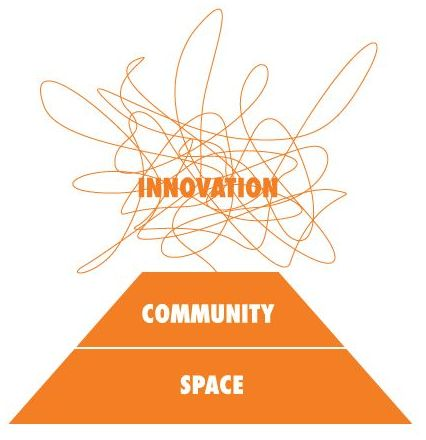
If CSI were a Maslow pyramid, the physical space - the buildings, kitchens, desks, printers and wall space would be the bottom tier.  Moving upwards, the next tier would be the people - staff, DECAs (Desk Exchange Community Animators - more on this later), members and everyone who interacts with and in CSI space.  


Bridging the community, catapaulting new ideas and catalyzing new ones is all CSI’s programming.  The DECA program is a great example of how CSI is finding new ways to both enhance their members’ experience and support emerging entrepreneurs and ideas all at the same time.


DECAs are community animators who tackle the administrative details that allow CSI’s members to focus on what they do best - change-making.  More importantly, however, is the role of animation; understanding both members and the broader community and providing support and connectivity to help members reach higher and accomplish more together.


This is the secret sauce of CSI - the space, the programming, the amazing community animation and the consistent sense of play have resulted in a place where silos don’t form and cross-pollination is hard-wired into the system.  It’s a format that is being copied by organizations across the city and around the world and is commonly referred to as “the CSI model.”


In 2013, the X-ray Inspection Services Branch at the Ministry of Health and Long Term Care  launched its first survey ever to be conducted to its 7,000 facility owners operating 60,000 machines. The survey uncovered areas where owners were unsure of how to comply with the appropriate Acts and Regulations and a system that required more accountability. This sparked a change for database requirements  and systematic reviews, modelling solutions inspired by other branches, while working within its limitations.


Embedded image permalink
It’s worth saying again - government wants to change and is trying to change, but change is hard - especially for an organization of the size and scope of government.


To look at it through a #howmightwe lens, the question governments, including Ontario’s, are asking is “how might we support the culture change we recognize we need to provide the programs Ontarians need from us?”


Well, you know - it starts with the creation of shared space, a place where people from different Ministries and agencies can co-work together.  It moves on to the animation piece - curating this community, looking for and addressing the duplication, gaps, overlaps and opportunities we know are there.  It continues with creating a culture where public servants feel empowered to discuss, collaborate, innovate and test new policy and program ideas.


As it happens, these are all things CSI excels at.  These are the attributes Ontario’s Premier Kathleen Wynne was talking about reproducing when she said “I’d love to see a CSI Queen’s Park!


Governments across the globe are looking for ways to update our centuries-old model to be reflective of and responsive to the challenges and opportunities of our age.  Ontario has the good fortune of being home to one of the most innovative change-making organizations on the planet.


What else are Virtuous Schemers if not Agents of Change?

CSI Queen’s Park - it’s an idea who’s time has come.