Search This Blog

CCE in brief

My photo
Recovering backpacker, Cornwallite at heart, political enthusiast, catalyst, writer, husband, father, community volunteer, unabashedly proud Canadian. Every hyperlink connects to something related directly or thematically to that which is highlighted.
Showing posts with label Power. Show all posts

Thursday, 23 July 2015

The Stampede Threesome: Sexism, Social Media Shivarees + Social Tipping Points


There I was, just trying to read a thoughtful piece on the problems with policing in Toronto by my friend Andray Domise when this headline catches my eye:

Catching Up With the Woman From the Calgary Stampede Threesome at Her Strip Club Debut


I can't say I've ever been to the Calgary Stampede, but somehow I doubted that anything featuring a threesome would be part of the official agenda.  My curiosity was piqued enough to see what was going on.

The story that emerged - and I'm surprised I didn't hear of it first on Twitter, where I spend an inordinate amount of time - was of a woman and two men who had consensual three-way sex in a somewhat public space.  Someone saw it, was disgusted and to properly express their disgust in a 21st Century way, filmed and posted video of the act that caused them such discomfort.

No more the "look away, kids" mentality of our parents - when we see something we feel is out of tune with our social norms, we take the story viral.  We'll come back to this later.

The bias with which the Stampede Threesome (Stampedesome?) story has been portrayed online and what that says about our male-centric society has been much discussed.  Men are encouraged, even celebrated for being sowers of seeds where as women, society's nurtures and child-rearers, are shamed for being sexual creatures.  How exactly men are supposed to sow if fertile fields are closed to them remains one of those social paradoxes that we tend not to explore.

Of course the shaming of women isn't limited to sexuality (which is regularly a substitute for social power) - it applies to women displaying any non-demure behaviour.  Another recent case in point - Imperator Furiosa.

Furiosa - Charlize Theron's character from Mad Max: Fury Road has been viscously and virally attacked for hijacking a movie whose title references the male hero.  Apparently, she's part of an insidious feminist conspiracy to undermine masculinity, a forcibly planted female lead in what's supposed to be a boy's movie.  

Written and directed, mind you, not by a feminist auteur like Ava DuVernay, but by the same dude who has sheppearded the Mad Max franchise from the beginning - George Miller.

What's the connecting thread?  Society's men call the sex/hero shots and someone has altered the rules.  And the macho men, they don't like it.  They feel threatened.  It's like the Muslimification of the Western world, only worse, because this time it's their own women undermining man's natural role as roost-rulers and power-wielders.

Meanwhile, Alexis Frulling - the lady at the centre of this story - has done a remarkable job of crisis management (own the story from the outset, ensure your own narrative is well-told and widely-circulated).  More than that, she seems to have done a pretty good job of turning an avoidable moment of infamy into an entrepreneurial opportunity.  There's strip dances, sex tip videos, etc, etc. She could probably do well with a line of merch, too - the ways she could continue to reap benefit from her 15 minutes are endless.

If Frulling were a guy, she'd be given props for ingenuity and seizing an opportunity.  She's a woman, though, so instead the whole incident is being framed as a manipulative publicity stunt (still no mention of the men involved, mind you).
The fact that this 20-something (manipulator!) beautiful (Delilah!) woman (whore!) has become a magnet for social castigation from a vocal segment of the population isn't surprising.  Same thing happened to Jennifer Lawrence, although her source of sexual infamy was intended to be private; the same thing's happening to Steph Guthrie for fighting back in a way that would, again, be celebrated as tough political winning if she was a man.

It's a well-established social phenomenon best represented by the shivaree, an ancient custom intedned to force social outliers to conform to societal norms.  Instead of pots and pans, though, these mass-shamings now take the form of viral campaigns, like #DuffyPickUpLines or #TellVicEverything.
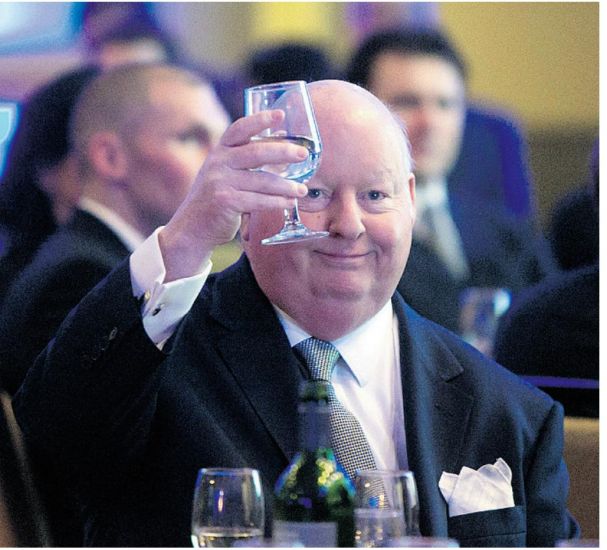
Mike Duffy and Vic Toews, mind you, are/were supposed to be social elites, defenders of tradition, etc.  They were shamed for abusing their position, whereas Fulling is being castigated for stepping beyond the prescribed bounds of acceptable female behaviour and nudging into males-only territory.  

Castigated by a vocal few, though - hardly the majority.

Back to the Andray Domise article that kicked all this off:

Without a highly visible outcry that shames the Board into adopting changes, the work done by police to increase transparency and reduce fatal encounters often amount tohalf-baked and widely criticized measures. 

Highly visible.  Shaming.  What he's calling for - what #BlackLivesMatter or any of the related campaigns around young black men killed and young black women abused by police represent - is a shivaree, public pressure for behaviour modification.  

It's what any protest seeks to accomplish, really; forcing the shapers of public norms (ie policy) to get more in line with the public (or a subset of the public) mood.

Gay marriage is another example of this, with even corporations getting on board.

You may note something of a trend-line connecting the dots here.

Yes, Alexis Frulling has many vocal online detractors, but she's also got a lot of supporters who are equally turning on the societal norms that punish women for doing what men get celebrated for (while still being told to be more like men when it comes to breaking the glass ceiling in work or politics).

Society used to be a lot smaller - homogeneity and cultural standards were easier to universalize through shaming efforts such as the shivaree.  By and large, though, those smaller societies had more standardized social roles, too - roles that limited people to certain constraints that may not have reflected their individual capacity.  Marriage was limited to men and women, holidays were Christian affairs, men - particularly alphas - dominated in the boardroom, the bedroom and in the House of Commons.

Society has changed; the needs of society have changed.  We've collectively outgrown the standards of the past which actively impede economic and social success.  What we need always comes second to what makes us comfortable, though - which is especially true on the macro scale.  As traditional society and the failings of our political, economic and social systems and norms fail a growing percentage of the population, though, the scale is tipping from efforts to maintain the status quo (shivarees) to calls for systems disruption and more equitable social standards (protest).

Perhaps Alexis Frulling is the perfect metaphor for this tipping point; the passive, minority partners in our social relationships are weak and passive no more.  

The time of top-down messaging and social norm-defining is over.

We're into three-way conversations now, and the usual suspects are just going to have to get used to sharing the marketplace of power.


Tuesday, 27 May 2014

The Problem with Competitive Politics: Why Position is not the same as Power


This isn't just Kinsella's opinion - it's common sense in political circles.  I cannot count the number of times I have been told by senior Liberal and Conservative advisers (I don't know any NDP advisers, but have seen them operate this way, too) that to be effective in politics, you need to pick fights.

Not pick your fights, but proactively go out and start fights.  It's the whole "define or be defined" thing - if you wait until foes come at you, as they inevitably will, then their line of attack will shape your public image.  On the other hand, if you go out and pick fights yourself, you will define yourself by making it clear who it is you stand against.

Mike Harris stood against teachers, nurses, First Nations groups.  Vying for a seat in Kitchener-Waterloo, the last iteration of Team McGuinty decided picking a fight against teachers would brand them the right way, too.

People who have been friends and colleagues, when they find themselves in different camps, will burn their bridges and end friendships because that's simply how they see the game being played.  You have to stab a couple people in the back to make it to the top of the heap, right?

After all, in the game of thrones, you win or you die - and there are only so many chairs at the top.

I will argue, as I have always done, that these die-hard political scrappers are mistaking power with position.  

If you want to be Premier, or a right-hand adviser, or a pundit on TV, yeah - you tend to make your name by breaking others.  Attacks make good headlines, etc.  If it's your goal to have the car and driver, the "Honourable" title before your name and access to the most exclusive events, by all means, go be a political warrior.

When you commit to defining yourself by your enemies, though, you've just handed them the keys to your brand.  They will define you in perpetuity, not your own achievements.  

That's not power - that's dependence.


During my time at Queen's Park I worked for a humble, hard-working MPP who was loved and respected by all.

Even when he frustrated people in the Premier's Office or on Opposition benches - which, rest assured, he did - Jim Brownell was always his own man, committed to one clear purpose.

That purpose wasn't power - it was empowering his constituents.

Jim was never a Minister, never had a car and driver, was never a sought-after pundit.  He never worked for those trappings of position and therefore never got them.  In traditional political terms, you could say Jim never amounted to anything.

Yet Jim's record stands head and shoulders above most of his colleagues, whatever their title or position.  His accomplishments aren't a laundry-list of things the Centre decreed for his Riding, as is the case for many pols; these were things he fought, negotiated and charmed his way into delivering for his constituents.

A couple of my favourites:

- Downtown loan forgiveness for every municipality in Ontario that had a loan to pay back

Jim wanted the Province to forgive Cornwall's loan to give them relief after some prominent mill closures; the Province replied they couldn't just do it for one community.  Therefore, Jim personally advocated on each municipality's behalf to get it done.

- Early Works development for the Cornwall Community Hospital

There was a five-year hospital development plan, and the CCH wasn't on it.  Instead of fighting or yielding, Jim found a third-way solution that created wins for everyone.  

- Eastern Ontario Development Fund

Not just Jim's accomplishment, but one he worked on with Eastern colleagues that continues to support economic growth in Eastern Ontario today

- The Premier's Gravesites Program

Jim was ridiculed for thinking history and recognizing Ontario's past leaders mattered, but he did.  Now, there's a program that ensures each burial place is recognized with a plaque and a flag.  Every future Premier of Ontario owes Jim for that.

- Riding Days at Queen's Park

Jim hosted the first Riding Day at Queen's Park by bringing community partners up from Stormont Dundas and South Glengarry for a day of meetings, attendance at Question Period and a reception at the end of the day.  It was a great hit; people at QP really got a sense for the culture and vibrancy of the region at the same time as Jim's stakeholders got to see just how much clout their MPP had at Queen's Park.

It's no surprise that many a Member have since copied Jim's model.

and finally - Brownell Night

This last might seem strange, but to me is none-the-less important.  Jim started a monthly gathering of Liberal staff, the first time such a thing had happened.  Suddenly, people who'd known each other by phone alone got to know each other as individuals.

Brownell Night became an opportunity to build community, cohesion and a sense of team within the Liberal Party of Ontario - something which, from what I hear, doesn't exist any more.  As the man who knew staff in every Ministry, he unsurprisingly became very popular.

Jim never once picked a fight, but he ended several.  My favourite also goes back to John Tory, who was accusing him of inactivity on hospital development in the riding.  Within minutes of Tory blasting Jim in the Legislature, he had a hand-written note from Jim on a picture of the development project at CCH on his desk.

People quickly learned not to misrepresent Jim's activity.  That didn't earn him enemies; it earned him respect.

Maybe Jim's name won't be recorded in the history books or ignite conversations decades hence - but he will be remembered fondly by each and every person he interacted with.  People still seek him out for advise today, and tend to regret it when they don't mind his wisdom.  Not because he attacks them, of course, but because he's got a habit of being right.

Oh - and he does have a road named after him.

This is the lesson that too many political pros don't want to hear because, truth be told, they enjoy the fight.  They see power as something to be held over others and relish bringing others down to increase their own stature.  In their minds, they're front-line soldiers, keeping the other tribe at bay.

Perhaps the most "successful" political people want to be judged by the enemies they have made. That's their choice.

Leaders, however, are judged by what they accomplish.

Note on the picture topping this post - it's taken from a Swerhun consultation.  

Haven't heard of Swerhun? That's probably because they're not big on the self-promotion thing.  They, like a growing number of virtuous schemers, are quietly working behind the scenes, building community, creating partnerships and establishing trust where none previously existed.

These people don't really care if you know who they are - they know they're changing the system regardless.


Tuesday, 25 March 2014

The Danger of Unfettered Donations in Politics


Or, power and political donations.

Folk like Pierre Poilevre probably think they're being fiendishly clever by jigging our electoral process to make is so that the Political Parties capable of raising the most money are the ones most likely to sway more voters and stay in power.

Really, though, they're being tragically short-sighted.

When you become addicted to donations, you become enslaved to your donors.  As is the case with any addiction, more and more of your energy gets directed towards getting your next fix to the exclusion of all else.

The Conservative brain trust probably think this is a good thing, as it means that their base and like-minded donors will come to dominate Canada's political landscape in perpetuity.  This isn't the case.

Because the addiction will start to flow the other way, too.  We see this already - Political Parties are raising more and more money while Not For Profits are withering away because of a lack of funds and fundraising capacity.  


As corporations hold their capital and public services both shrink and fail to grow to meet civic need, we're going to see a growing rift between the addicted people with power and the expanding number of disenfranchised people.

There's historical precedent for what happens when this balance teeters to far out of whack.  But Empires don't worry about history, do they?

Which is why they fall.

Thursday, 30 January 2014

The Responsibility of Leadership


I like this, a lot.  If you choose to pursue a career in the spotlight, it's like choosing to be a police officer.  Yes, you are a human being and are allowed to be a human being, but at the same time as soon as you put on a uniform, assume a mantle or become an icon, the essence of what you are is infused with the emotional investment made by your constituents or fans, both of whom, ultimately, are the people you serve.

Particularly in the dopamanic, intrusive age in which we live, it's very hard to draw the line between what's acceptable and what's not from people in positions of power and influence.  If it's strictly a peer-competition thing, you end up with a gradual weakening of the concept as people seek new ways to undermine others or raise their own start just that little bit further.

Like driving a car or a bus, the greater the power you wield and the more people are impacted by it, the greater becomes your responsibility to be mindful of the consequence of your actions.  I would be more forgiving of the digressions of a depressed, unemployed 20 year old than I would those of an elected Chief Magistrate. 

So how do you put a floor underneath responsibility of leaders and icons to the people?

Ask yourself if you could, in good conscience, look a seven year old in the face and say "when you're my age you should feel comfortable living your life just as I do."  

Then surround yourself not with people who will have your back and clean up your messes, but remind you of your responsibility and support your ability to fulfil it.


Wednesday, 8 January 2014

The Truth About Power Via Margot Robbie


Everyone wants to live life like the movies.  They want the perfect everything - perfect body, perfect partner, coolest friends and greatest experiences, all as easily as they seem to come on the silver screen.

Of course, nothing on the silver screen is as simple as it looks.  Film making takes a great deal of preparation, logistics, communication, editing, financing and above all, discipline.


The best film makers don't do what they do for the money and glamour it brings any more than the best politicians are about power and fame.  They have a story to tell or a vision to implement.  They may have fun at what they do, they may indulge in some of the benefits that come from their position, but for the true leaders, what they get never replaces what they leave behind.

Because no one gets everything they want; such is not sustainable and never will be.

Power has to be about balance, as does resource access; when it's not, you're just precipitating a fall


Wednesday, 26 June 2013

Max Landis On Power and Man of Steel


"Having that much power makes you responsible for other people."
 
Yes.
 
First let's clarify what power is, though.  It isn't the mad grab for dominance over others that both capitalism and socialism breed - "I have resources and ego issues so everyone either does what I say or simply don't matter."
 
No.  Power is like driving car on streets where there are pedestrians and bicycles.  You don't try and remove the less-powerful entities, like Rob Ford would do in an attempt to push the weak to the margins and allow cars to rule the world.  What you do, as a driver, is drive responsibly.  As your vehicle has the capacity to kill you are more responsible than the pedestrian or the biker who doesn't have that kind of street clout. 
 
This isn't to say those with less power have no responsibility, only that those with power have more.  Its why those at the top of the social food chain, be they politicians or sports stars or the super-wealthy get held to a higher standard of accountability than regular people do.  Average folk know that they have less influence than those at the top and will seek to knock down or penalize behavior seen as over-the-top.  Elections, talk radio, tabloid newspapers and thanks to Social Media, social murmuration are the tools we use to keep the powerful in line.
 
Of course, this is why it's a slippery slope when politicians try to pull the HOAG (Hell Of A Guy) card.  Back to Rob Ford, who has tried to portray himself as an average bear in the same way George W, Bush did; Ford is not rooted in the same world as the everyman/woman.  He comes from wealth.  He has access to people and resources that a kid from the wrong side of the tracks simply can't connect to without a bridge.  When people like him portray themselves as average bears, they are attempting to remove themselves from the increased scrutiny society places on those we know to be elites.
 
So what if Ford gets drunk at hockey games, doesn't read his Mayoral accountability material or texts while driving?  Any average Joe does that.  Yeah, but not any average Joe is responsible for running a city.
 
With great power, we've been told, comes great responsibility.  We should demand nothing less from our leaders.
 
In fact, true leaders strive to give us nothing less.

It's not about having power.  It's about how you empower others.

Friday, 15 February 2013

Thoughtful Sex


Then, consider Matt Ridley's notion of Ideas Having Sex - innovation as social procreation, as it were.
 
 
Does desire bring people together in an equitable way?  Not really.  Desire, be it for power, for resources, for sexual gratification brings with it the need for domination.  It's why a balanced "free market", otherwise known as "selection of the fittest", doesn't work in an interdependent social context, which we undeniably are (unless you are able to make your own clothes, grow your own food and sustain your own public infrastructure, which would be quite a feat).
 
Conversely, responsibility - the apparent opposite of desire - is about what you give back, not what you receive.  When people collaborate in an understanding, trustful way (this can be a married couple, a company of soldiers or an office team) they create something that has greater reach through space and time than can an individual. 
 
Who do we choose to surround ourselves with?  Most of the time, those choices are out of our hands; we can mistrust the Other and live in desirous suspicion, or we can love our neighbours - a theme repeated throughout world religions.
 
Which makes me think of the Sufi maxim - "God is great, there is nothing but God, therefore I am God."  Which is an ecstatic thought that can occur to people having dopamanic manias, pushing their pre-frontal cortexes beyond normal, beyond even individual safety.
 
But society isn't about the individual - it's about the social whole, a new system that's greater than the sum of its parts.  You can't sustain a system if its components aren't properly maintained or pushed too far past their limits, which is what's happening in our society.  At a point of increased tension, polarization and social friction, we're beginning to turn towards leaders who know how to serve as bridges, not battering rams, looking to see what places they can bring us to.
 
It's all fun stuff to think about - and share.

Thursday, 19 July 2012

Politics: Game of Power


                                "You don't fight with honour."

                                "No.  He did."


I used to live a ten-minute walk from that park.  My son and I have played there many times.  I know some of the families that would have heard the gun fire and I have a very good idea of what living in fear does to one's ability to focus on anything other than survival.  In a climate of fear, there are only two escapes; to hunker down and stay as isolated as possible from potential threats or become the feared and take what you want by force.  Anxiety and aggression; that's how survival of the fittest really works.  That's what's happening with these shootings.

We really shouldn't need to explain this to Rob Ford.  By all indications, he exists in a near-constant state of cortisol-fueled reactiveness himself.  He doesn't like to be managed, says his former Hand who also used deceit to eliminate a potential threat to Ford's ascendancy to the throne.  Now holding the chains of office, Ford feels harassed by media and wants to retreat to the safety of his castle and even increase his holdings if necessary to feel secure there.  Along the same theme, he bans access to reporters and outlets he doesn't like, or whole retinues if people he doesn't like are in the party.  Beat that, reporters.  Meanwhile, Ford himself is hyper-aggressive; chasing jouranlists down halls, giving the finger to drivers, snipping at TTC drivers.  Argue all you want about his justification; he's got a track-record of escalating problems. 

There's the rub - he keeps suggesting people should just go along with him and things will work out, but people don't go along with him, creating mounting problems.  Council won't fall in line?  Ford focuses on how to get rid of them next election instead of working with them now.  He's Mayor, after all, he should be able to do what he wants.  Gang violence in the streets of Toronto?  Get rid of them, too.  "...I want them out of the city. Go somewhere else, I don’t want them living in the city anymore.”  His solutions is to get rid of problems or pass them on to others - not solve them. 

Run 'em out of the city.  How do you do that, exactly?  How do you get people with guns out of the woodwork?  By toughening sentences?  All that does is make criminals work that much harder to avoid getting caught.  See, they don't want their rights trampled, either.  They want to do what they want; consequences are for those without control.  People who kill other people are really the pinnacle of survival of the fittest - they remove the competition, proving just how tough they are.  They're the boss - they get to do what they want, so long as they reinforce their power.  The only way to tackle that approach head-on is through escalation.

Which is exactly what Stephen Harper is doing.  With what I'm sure he feels are the best intentions, he is reducing opposition to his reign and increasing punishment for those who don't fall in line.  He's also a fan of firewalls; building moats around his castle to keep the barbarians at bay.  Barbarians within the realm need to be removed, either directly or indirectly.  It's all in the name of free market capitalism, he'll tell us with a nod to his economic background.  Regulation, special interest groups, unions are all impeding prosperity.  Without rules, the law of supply and demand takes over.  Am I picking unfairly on Tories?  Well, how 'bout this - it was the other guys who introduced the concept of the War Room. 

Politics isn't about supply and demand.  It certainly predates a money-based economy.  Politics is about the obtaining, retaining and the hereditary passing on of power.  Politics is selfish, tribal and focused on doing whatever it takes to win -  be it treachery, manipulation or the surest way to force compliance, violence.  In a battle of strength, it's he who has the most destructive weapons and the largest army that survives; but you need money to buy these things. How do you get them?  People consumed by power don't bargain or negotiate for what they want; they take it by force.  They oppress challenges to their power through force.  To things not directly connected to their power, they say "so what?"  Which is what Toronto's gangs, or drug cartels in Mexico, or any extremist group tries to do.  Sadly, it's what our frame-the-message, define-the-ballot-question political agents (Parties, sectors, everyone) tries to do, too.
The narrower our wedge of focus becomes, the more we miss the external factors that create threats.  Issues like poverty or civil rights are "minority group" issues; if they're not going to support you anyway, and their causes are in opposition to the causes of your voter base, ignore them or use them as wedge issues to foster more support on your side of the scale.  Sustainable economies and productivity; those come second to the rights of the brotherhood.  What are the populations that fall through the cracks through this approach?  The poor, the disenfranchised, those who are more likely to take up arms, join gangs and get what they want at the margins of civil society, where regulations aren't enforced.  Pirates, brigands, gangs all gestate in this social gap, eventually creating problems for those at the other end of the spectrum.  What happens to those in the middle?  Fear is only sustainable for so long, before it turns to anger.  Angry people have this habit of taking to the streets.

What happens when civil society comes into conflict with feudal politics?  Take a gander at Syria for an example.  While we will see an increase in violence across the Western World and the need for more militant intervention in the face of unacceptable violence, we aren't going to have a civil war, nor repeat World War II.  I don't say that out of whimsical hopefulness, but out of an understanding of history.  War might make a profit for some, but not when it's being fought in your backyard.  In terms of stable profits, you need stable society, which means compromise solutions.  Those with capital will tire of the hits instability inflicts on their wealth and will use their resources to reign in the politics. 

Private sector interests facing loss want regulation, they want stability, they desire order.  Nobody is imposing this on them; it was people of means that gestated our current system of governance in the first place.  People of means will also proactively support stability and market generation; charity, education, micro-credit, whatever are all means of enhancing the labour pool and expanding markets.  With stories like Davos and Goldman-Sachs we see a proactive-approach to emerging threats that the private sector is hoping to proactively resolve, before it's too late.  They talk about this lots, but what action do we see taken?  

  
Action might be directed from the top, but it always comes from the bottom.  The foot soldiers of any movement are the rank and file of society.  How do you motivate every-day folk to risk their lives?  It helps if their lives are already miserable and they have little to lose, but the best motivation comes from believing in something that is bigger than the individual; the tribe, honour, a better world.  Here's a vision that would help convince a guy like me to take up the sword:

Peace, order, good government - and opportunity.  Not for me; I'm part of the first generation in a while that's being told to expect a lower quality-of-life than my parents.  If the world is contracting around us due to the narrow vision of some, it'll take a generation to broaden our horizons.  As I contribute to a better world, it's for my son and, by association, all the children that will be adults around him.  I would rather none of them in this increasingly-integrated world grow up in poverty, surrounded by gunfire and without hope, because I know what sort of behaviour that experience fosters in the long run.  History provides lots of examples.  I'm even willing to give up a bit, personally, to foster that world.

Power is about control - drawing resources to oneself and gaining the ability to do whatever one wants.  The only way to acheive power is through manipulation, be it verbal or by force.

The opposite of power is not powerlessness.  It's sacrifice; the willingness to put collective interests ahead of individual interests.  Sacrifice is not something that can be forced from without; it has to motivated from within.  Honour isn't something that must be shed for accomplishment; it's something that must be obtained to maintain it.  By empowering others, everyone gains something.  It's this thing called society.  We can live together, or we can die alone.