Search This Blog

CCE in brief

My photo
Recovering backpacker, Cornwallite at heart, political enthusiast, catalyst, writer, husband, father, community volunteer, unabashedly proud Canadian. Every hyperlink connects to something related directly or thematically to that which is highlighted.
Showing posts with label Loyalty. Show all posts

Saturday, 1 February 2014

The Truths We Cling To


But there must be honour among thieves, as it were - a shared chivalric code which all players of at least the same team hold to (or failing that, a code of silence).  Without such common ground there can be no loyalty and, as a consequence, neither accomplishment nor sustainability.
 
The implication of Kinsella's statement is that those Senators of the Liberal persuasion have earned better treatment from their Party than to be laid off from Caucus (which is what this is - nobody has been fired, the Liberals' Senate Caucus has just been disbanded). 
 
This is one of those matters-of-opinion things; a colluding Senate team and a House team has always led to tricky games being played and, if Trudeau is sincere about working to foster a less partisan Parliament, this isn't so bad.  Whether a less-partisan Hill can work these days is a completely different question with other fun considerations to consider.
 
Even with the cruel and callous Trudeau Plan, Senators still have far more income, clout and opportunity than most Canadians do - we don't have assistants, fancy offices or comfortable taxpayer-funded salaries. 
 
We also have never had anything resembling inside access to the backroom planning that informs Leaders' decisions; most people honestly believe that's what things like policy conventions and door-knocking are for. 

Some of us even believe that there should never have been partisan camps within the Chamber of Sober Second Thought.  If Independent Senators will bitterly work against former caucus colleagues instead of embracing the ethical clarity a post-partisan reality provides them, then they're not thinking soberly, are they?
 
It's a matter of debate if these Senators have been treated in cruel and callous fashion.  Legitimate arguments can be made for both sides with people, as they tend to do, finding every possible argument in favour of their own position and against that of someone else's. 
 
From Kinsella's point of view, it was cruel and callous to "let go of" hard-working team members who had been hard working team members for a while.

I don't remember hearing him raise similar concerns during the Great Staff Cull of 2011.
 
 
What immediately laid ahead, as it was clear that a minority status would require a significant truncation of staff, was to figure out what to do about all those existing staff who'd in some cases been with the McGuinty Liberal Team since the first term.  Not all of them could be brought back.
 
This was understood; many staff remained uncertain but hopeful.  By and large there were concerns among the ranks, who often felt like functionaries for the team rather than part of the team, of a Wilkinsonian approach
 
Suggestions were made that an appropriate staff-transition strategy could serve as a counter-weight to dismissals - a strategy that recognized the work of staff, practiced a bit of what Liberals tend to preach and also maintain positive relations with a host of loyal folk who might end up working in influential capacities, as often happens with former political staffers.
 
Such was not to be.  All staff were let go of and told to wait by the phone for the call back to work.  Dutifully, many hopeful people waited.  And waited.  And eventually their severance wore out and they realized no call would come, was never going to come.  They'd been left at the alter of unemployment and were now on their own.
 
To me, that was cruel and callous treatment (and no, I was not on either side of the decision process).  More than that, it was cowardly.
 
That's just me, though.  There are many leaders and organizers who see The Leader as infallible, the inner circle as Alpha Dominant and staff as hired help, rewarded through wages and clout who should recognize they are dispensable from the outset.  Loyalty is meant to flow up, never down.
 
Are paid Senators who retain everything except the ego-stroke of being in backroom conversations and who are forced to offer their policy or partisan ideas like any other Member of a Party (assuming, of course, they all have paid LPC memberships) being treated cruelly and callously?  Was it wrong to tell them of the inner team's decision after the fact?
 
Was it cruel and callous to lay off staff, give them the impression they'd be getting a phone call and then never following up, period?
 
I have long since learned not to expect consistency in the thought processes of political people.  You can't get ahead in a survival-of-the-fittest game without rationalizing cognitive dissonance at least some of the time.
 
As Obi Wan Kenobi stated a long time ago, "the truths we depend greatly on our own point of view."  If political people tend to be even more slavish to points of view than, say, evidence or best practice, that says as much about us as it does about them.
 
Key to this equation, naturally, is how we view people in relation to our own standing.
 
To know the world, take yourself out of the equation

By putting their teams after their mission and themselves always last, true leaders do this all the time.  Which is why they don't need to demand loyalty; it just comes naturally.

Thursday, 3 October 2013

Loyalty Vs. Omerta - Definitions for #Topoli (UPDATED)


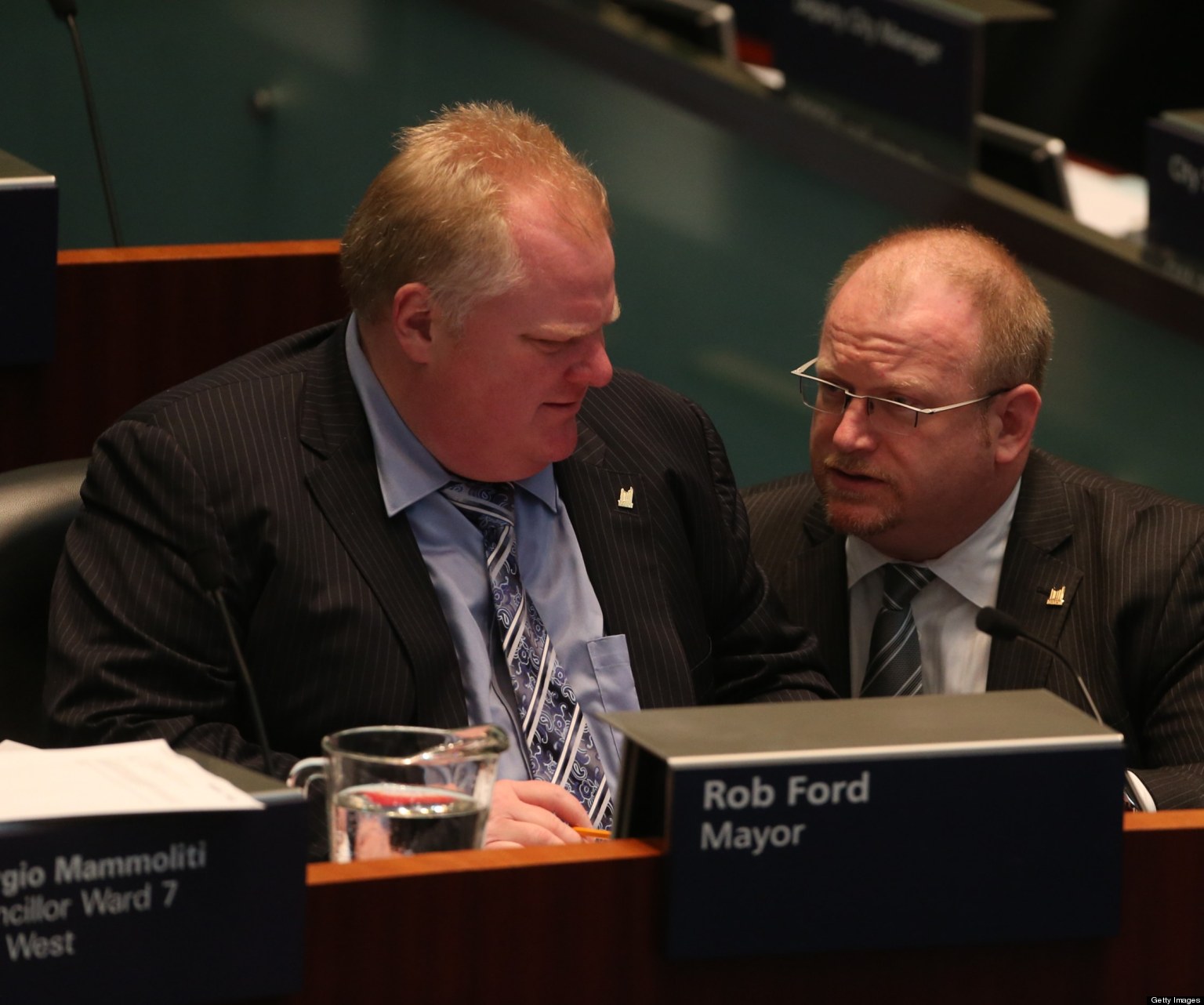
"He's a good guy," Ford said.  "I don't throw my friends under the bus."

"You can't teach loyalty." 

Oh, your Worship... let's do some term clarification here.  

Throwing Under the Bus is when you make someone the patsy - make them take the fall for something done by someone higher up in the industry or for implementing their instructions (See Sona, Michael for a potential example).  The implication is that you are offering up someone else in an abdication of your own responsibility.

Not ratting on your friends would be a better term to use here.  It relies on the concept of Omerta, or an anti-authoritarian code of silence - first rule of Fight Club is, you do not talk about Fight Club kind of thing.  The implication is that you know your friends are engaging in misdeeds, but you're not going to talk about them - even if the law states that you need to.  This code of silence is generally a mutually-reinforcing thing; you don't snitch on me, I won't snitch on you and we'll both get away with breaking the rules.  See The Godfather for what a code of silence "between friends" looks like.

Or better yet, watch GoodFellas, because that's more often than not how cones of silence dribble out into convictions.  See The Prisoner's Dilemma for further reading.


Both throwing under the bus and not ratting on your friends are demonstrations of putting selfish interest and the avoidance of accountability before the public good - something the Chief Magistrate, as Public Servant #1, should really be focused on.


Loyalty, however, isn't about protecting friends or enabling bad behaviour - it's about serving the mission set forward by the leader, fulfilling the mission-related tasks as assigned by the leader and adding value - partially by providing critical assessments to the leader of when they're going astray.

Doug Ford's use of the term loyalty in reference to David Price is another indicator of how the Fords seem to feel loyalty actually has the same meaning as omerta, which it does not.  This creates problems for the Fords; despite Doug's saying that he doesn't know Lisi and Ford's insistence that he was shocked, shocked to hear Lisi had been charged with drug-related offences, the overarching narrative would suggest otherwise.

Good investigators, which the folk on this case apparently are, will have no trouble connecting the dots and building a map of behaviour between the parties; if Lisi knows Price and they were both involved in the hunt for a non-existent video that has been connected to a murder, the police will be able to shade in the dark spots and build a legally condemning picture of how this ring operated.  That's before you get to the interrogation part of the equation; you might be surprised the sorts of effective techniques for teasing out truth there are these days.

The Fords haven't promoted loyalty to themselves nor demonstrated loyalty to their circle; instead, they've let down their friends and betrayed the city.  If Rob Ford was truly loyal to Sandro Lisi, he would have encouraged him to get help and develop legal means of success.  The best social program is a job, after all - one presumes by this Ford means a legal one.  For his part, if Lisi was truly loyal to Rob Ford, he would have either not engaged with him or kept his own nose clean to avoid potential negative consequences for his friend.

The same, let it be noted, is true for everyone on City Council and within the Mayor's Office who had any knowledge of these problems and chose not to act.

There has been an exemplary model for what real loyalty looks like in this story - one that will hopefully get due recognition with time.  That role model is Mark Towhey.

Towhey, a soldier by training, always put the mission first; he believed in what Rob Ford stood for and believed in what they could accomplish at City Hall.  Everything he did was viewed through that lens.  Ford's former Chief of Staff didn't tell tales out of school, but at the same time he did not shy away from his responsibility to provide critical advice to the Mayor or to cooperate with the police when that became his duty.  

Ironically, Ford rewarded this exemplary loyalty by throwing Towhey under the bus.  I guess he didn't consider Towhey a friend.  The rest of the staff who opted to follow Towhey out the door?  That tells you a bit about who had earned respect in that office, doesn't it?

Despite everything Towhey has been through - despite the fact that it grows more likely that history will vindicate him, daily - he is still holding the line.  Long after Ford is gone, I imagine Towhey will still be supporting the vision he believes in.

Now, that's loyalty.

UPDATE: But there is one issue that falls through the cracks in the Canadian press's editorial room: racism.  Specifically when it comes to Black Canadians, the rule of Omerta reigns.

Friday, 30 August 2013

Loyalty Is Not Blind


"The reason they speak up is because they care about the institution and want to keep it."

Who do you think has been more loyal to Rob Ford - Mark Towhey or David Price?

I had a chat with a friend the other day about innovation and revolution.  She argued that the most powerful drive for change is anger; sometimes, she said, you just need to burn down failed institutions so that room is made for something to replace it.  Like many people these days, she also expressed a great deal of frustration at the myriad failings within our society.  We're not at the point of revolution quite yet, she said, but we could be.

Syria is; the same holds true for Egypt.  Competing interests and groups are duking it out for supremacy, or at least the right to be rid of the other.  The same principle applies to the notion of voting Political Parties out rather than voting them in; at both the federal and provincial (Ontario) level, Opposition Parties are lighting the kindling of controversy, trying to see which argument against will catch fire.  You could say that's what's happening within the Ontario Progressive Conservative Party, too.

Of course, the dominant Party rarely goes down without a fight.  They close ranks, fix bayonets and deploy the drones.  It's a costly process that destroys lives and infrastructure in war and careers and policies when it's politics-as-usual.  Where the system isn't working, though,  it will inevitably fail; the only question is how long the collapse takes and how many casualties pile up along the way.

I disagreed with my friend; I suggested that it wasn't anger against, but commitment to that was the greatest driver of change.  Just as Adrian Verster decided to tackle bike accidents when a loved one was hurt and Alexander Graham Bell was motivated out of the desire to help loved ones who were deaf, it's those who choose to solve problems rather than fight them or walk away that tend to catalyze innovation.

 You have to truly believe in something to put yourself in the line of fire, either externally or internally.  As we'e seeing on numerous political fronts, a lot of backroom folk who never expected to be on display are demonstrating the limits of blind loyalty; when your leader stops leading, you have no choice but to find your own way.

Towing the line isn't loyalty.  Defending every action, whether appropriate or inappropriate isn't loyalty, either.  That's enabling.  Enablers fundamentally don't care about the person or organization they stand behind; they care about what that institution can do for them.

I would argue that David Price, from what little we've learned of him, is an enabler.  Mark Towhey, on the other hand, demonstrated true loyalty to that which Rob Ford is supposed to stand for.

For pointing out a problem and offering a solution, Towhey was punished.  Rob Ford wasn't ready for change.  By trying to enable the misdeeds of Senators and lord knows who else, a growing number of Harper Conservatives threw the substance of what Harper is supposed to stand for under the bus - and are paying for it.  For his part, Harper didn't want to see, didn't want to hear because he didn't want to be responsible.

There are similar stories of other institutions trying to step on "whistleblowers" rather than stamp out their own burning platforms.

A little advice for leaders, then - don't mistake enabling for loyalty and don't assume challenges to the status quo are an indication of stupidity.

It takes a bit of foresight to know the difference.

Thursday, 25 July 2013

Loyalty in Business and Politics


What is loyalty?  Is it partisan - my country right or wrong? Or is it through dedication to the mission and conscious support of decision makers?  When I think about loyalty, I always come back to this quote from Crimson Tide:
 
Be careful there, Mr Hunter. It's all I've got to rely on, being a simple-minded son of a bitch. Rickover gave me my command, a checklist, a target and a button to push. All I gotta know is how to push it, they tell me when. They seem to want you to know why.  


7 Qualities Of A Truly Loyal Employee

Dharmesh ShahDharmesh Shah

Founder and CTO at HubSpot


First things first: Where employees are concerned, loyalty has nothing to do with blind obedience, or unthinking devotion, or length of tenure.
 
Surprised? Think of it this way. Which employee displays greater loyalty?
 
1. The employee who has been with you for ten years and in that time has learned to do just enough to fly, unseen, under the performance issues radar, or
 
2. The employee who has been with you for 18 months and believes in where you’re going, how you want to get there – and proves it every day by her actions
 
Of course experience is important, but given the choice I'll take the employee behind door #2 every time.
 
At HubSpot we’re fortunate to have hundreds of extremely loyal employees. We're working hard to create a culture that recognizes and rewards true loyalty. We still have a long ways to go, but you can see our "work in progress" in our Culture Code slide deck.
 
Truly loyal employees are not just committed to helping their companies succeed; their loyalty is also displayed in other ways, some of them surprising.
 
1. They display loyalty through integrity.
Many people assume loyalty is proven through obedience: Often unthinking and unquestioning, even when a request or directive falls into a gray area or, worse, is unethical or illegal.
 
An employee who consistently seeks to do the right thing is not just following a personal credo – she’s also looking out for your long-term interests. You may see her as disloyal today… but in time you’ll realize that she displayed the highest form of loyalty by helping you avoid missing the “do the right thing” forest for the “do it right now” trees.
 
2. They generate discussions others will not.
Many employees hesitate to voice their opinions or feelings in a group setting. Some even hesitate to voice their opinions in private.
 
An employee once asked me a question about a new initiative. After the meeting I pulled him aside and said, “Why did you ask about our new pricing strategy? You know what we’re doing – you were part of the planning.” He said, “I do, but a lot of other people don't, and they’re hesitant to ask since they aren’t directly affected. I thought it would help if they could hear what you’re thinking and what we’re planning.”
 
Loyal employees have a great feel for the issues and concerns of the people around them, and they ask the questions or raise the important issues when others won’t. They know, for the company to succeed, that you need to know what employees are thinking… and that employees need to know what you are thinking.
 
3. They praise their peers.
Truly loyal employees care: About the company, about its customers, about its mission… they feel they’re working for something greater than just themselves. So they appreciate when another employee does something great because that means the company is fulfilling its mission.
Employees that praise and recognize others, especially when it’s not their job to do so, don’t just display great interpersonal skills. (When you do something well, praise from your boss feels great… but it’s also, at least generally speaking, expected. At least it should be. Praise from a peer feels awesome, especially when you respect that person.)
 
By praising others, they show they care.
 
Caring forms the basis of loyalty.
 
4. They dissent and disagree
Every great company fosters debate and disagreement. Every great leader wants employees to question, to deliberate, and to push back. Weighing the positives and negatives of a decision, sharing conflicting opinions, playing devil's advocate… disagreement is healthy. It’s stimulating. It leads to better decisions.
 
Loyal employees share their opinions, even when they know you may not initially appreciate those opinions, because they want the company to be better tomorrow than it is today. And they’ll occasionally take stands against a point of view or decision.
 
5. They support in public.
After a decision is made, loyal employees get behind that decision even if they privately disagree. And they don’t just pay the decision lip service; they support the decision as if it were their own – because when you’re loyal, every decision is, ultimately, your own.
 
When they disagree, some employees (the not so loyal ones), whether passively or actively, try to show that a decision they disagreed with was in fact wrong.
 
A truly loyal employee puts aside his feelings and actively tries to make every decision the right decision – instead of willing it to fail so they can prove themselves right.
 
6. They tell you what you least want to hear.
The Inverse Rule of Candor states that the greater the difference in “rank,” the less likely an employee will be to openly take a different position: An entry-level employee is fairly likely to tell his direct supervisor that he disagrees with that supervisor’s decision, but he is almost totally unlikely to tell his boss’s boss’s boss that he disagrees with his decision.
If you’re the CEO, that means your direct reports may pull you aside for an open, forthright chat… but few other employees ever will.
 
Truly loyal employees know that what you least want to hear may be what you – and by extension your company – most need to hear: That an initiative won’t work, that a decision-making process is flawed, that a mistake has been made… truly loyal employees realize that while you may not like what you hear, ultimately you want to hear it because what matters most is doing what is best for your employees, your customers, and your company.
 
Well-intended silence can be a good sign of loyalty; speaking up, especially when it’s awkward or even painful to do so, can be the best sign.
 
7. They leave when they need to leave.
If you can’t tell by now, a truly loyal employee is almost always a sensational employee. Often, they’re your best employees – so the last thing you want is for them to leave.
Yet sometimes they do: For a different lifestyle, for a better opportunity, for a chance to move to a different industry, or simply to take what they’ve learned and start their own company.
When it’s time, they tell you it’s time to leave – and they help you prepare to fill the hole they create.
You? You’re disappointed but you wish them well. For a time, even if only for a few years, they put your company’s interests ahead of their own…
 
…and now it’s your turn to do the same for them. Of course, you can always make your most convincing arguments to encourage them to stay (hey, you’re loyal too!) – but if it doesn’t work out, the right thing to do is to return their loyalty, wish them well and help them continue to stay awesome.
 
Dharmesh Shah is founder/CTO at HubSpot and blogs somewhat regularly at OnStartups.com. You can get new updates by clicking "Follow" at the top of this page.

Wednesday, 27 March 2013

Party Friction : A House Divided


This is a much more complex statement than most political organizers give it credit for. 
 
How often do unelected senior staff see themselves as the embodiment of a given Party - and therefore, the only voices that matter?  This is not a stance that gets staked out maliciously.  A lot of high-level political staff work their way through the ranks, making personal sacrifices and putting in a lot of blood, sweat and tears in support of the vision their Party represents. 
 
This brand loyalty is commendable, but in the high-stakes, competitive game that is politics, there's a natural shift that happens between supporting the vision a Party represents and backing the tribe, no matter what.  It's this shift from cause to partisanship that leads people astray.  
 
When you see yourself as a grizzled Party veteran, you develop a certain sense of entitlement - you've been through the trenches, you know what's best for the Party.  Newbies, be they staff or even Members, don't have your skin in the Party game nor your institutional experience, so it's their job to serve you, in support of the Party, rather than your job to empower them.  Strict control of the team and a go-for-the-throat approach to the opposition is the only way ahead.  
 
The result is an increasingly tightening fist that ignores, threatens or eliminates opposing perspectives.  Of course, the public has differing perspectives; when you cease to include them in internal conversations, that approach bleeds out to public communications, too, with a shift of focus from informed conversation to message control.  It happens all the time, to all Parties - it's a chief reason why governments (and for that matter, nations) fail.
 
As is happening now to the Federal Conservatives (and as some of us predicted was coming); internal dissent to this increasingly top-down process and growing frustration with the firewalls that have grown up around government are eating away at the CPC from within and chipping away at those walls from without.
 
There's another side to this story, though - in a tightly controlled system, many of the staff that work their way up the ladder are able to do so because they affiliate themselves with (or are taken under the wing by) senior staff who groom them to carry on their particular legacy. 
 
Those who might have differing perspectives or loyalties more to an employer (elected official) or the vision over the brand can be seen as not being team players and be marginalized or even fired, creating disaffection among natural Party advocates.  Yes, actual ability and creativity play a role in this process, but not as much as everyone likes to tell themselves.  If disenfranchised staff manage to stick around - or even if they don't - they can harbour grudges against those senior folk that, from a non-insider perspective, are seen to have hijacked the Party from its roots and its beliefs. 
 
Leaders come and go; when one leaders goes, the Senior Centre will naturally gravitate towards one who is most reflecting of their way of doing things and under whom they can carry on in the general roles with which they've become comfortable
 
They may legitimately see differing voices within their own Party as threatening to the establishment they feel they've built and, therefore, the Party itself.  At the same time, those who have been marginalized over the years (and also those who simply want to build something of their own) are going to see the Establishment as the problem and themselves as the solution.
 
In this way, leadership votes can be less about a particular leader than about the teams that back them and the strategies/communications gambits they have played.  It's not how politics should work, but it often is.  This being the case, backroom operatives that fight tooth-and-nail for a particular candidate/method of operation in which they play a key part may see the Party's choice of a differing candidate as a slap in their own face. 
 
If they aren't shown the door by the new team, they may just walk off themselves in resentment.
 
More than a few political operatives should pay heed to the advice of Colin Powell: "Never let your ego get so close to your position that when your position goes, your ego goes with it."
 
This is the scenario unfolding right now in Harper's Conservative Party; if he's serious about keeping his coalition of Reformists and Conservatives together, he's going to have to switch up the methodology that got him into power and with which he's governed so far. 
 
A good model for him (and his potential successors) to look at would be Ontario Premier Kathleen Wynne.  Wynne faced a similarly polarizing battle with Sandra Pupatello that demonstrated a rift between the establishment and many of the junior staff/Party members.  The Leadership Convention itself was a bit messy, but Wynne and her core team did an amazing job of reaching out to and including the organizers of other candidates, especially Pupatello's. 
 
Worth noting - what allowed Wynne to pull this off was a steadfast focus not on the Party as a brand, with wagons circled and pistols drawn, but of the vision and virtues the Party is meant to represent.  In her internal actions, her dealings with Opposition Parties, the press and stakeholders, Wynne has kept at it, walking the talk and leading by example
 
This inspires trust, faith and loyalty, which are the fibres that hold a Party together.  Carrots and sticks simply don't have the lasting power to accomplish this.
 
Yes, there are differing viewpoints both within the Party and across the province, but Wynne is applying her mediation skills and active listening ability to keep people engaged, making them feel respected.  This allows her the space and time to drill down to points of commonality and build back up from there.
 
If Team Harper put their vision (though I'm not sure exactly what that is, as their actions are pretty contradictory to their supposed intent) first, they would be able to engage the growing discontent in their own Caucus and across the country the same way.  Take abortion as an example; at the end of the day, pro-life advocates don't want to see young lives penalized for the sins of their fathers/mothers.  Fair enough; what about looking to empower those fathers and mothers to make better choices at the outset? 
 
Contraception is part of that mix, yes, but not exclusively; education, as for all things, is key.  Sex education, social-emotional learning, respect for difference and self-discipline through initiatives like Positive Psychology and Roots of Empathy.
 
You can take the focus on abortion and judo-flip it into a mandate to directly tackle stigma, poverty and education challenges.  Why bait and switch when you can convert?
There is always a solution to every problem, but as every problem is complex and interwoven with the very structure of our society, it's important to scale down to the core basics that everyone - even those whose opinions you detest - can agree upon.  From there, you build up and move forward.
 
Which brings me to my key point - yes, the party that doesn't stick together doesn't win together, but you don't achieve cohesion through strict top-down control; that's invariably a recipe for friction. 
 
The best leaders don't act like tyrants - they tend to be more like teachers.