Search This Blog

CCE in brief

My photo
Recovering backpacker, Cornwallite at heart, political enthusiast, catalyst, writer, husband, father, community volunteer, unabashedly proud Canadian. Every hyperlink connects to something related directly or thematically to that which is highlighted.
Showing posts with label Ontario. Show all posts

Friday, 14 February 2014

The Maintenance of Morale in Politics


In politics, you hear a lot about tactics and strategy, communications and attack ads, ground wars and War Rooms.  What you don't hear a lot about is morale.

Politics is, in theory, a zero-sum game; you win power or you lost it.  Everything in between simply means the war isn't over yet.


And war is the appropriate terminology here.  Political operators are increasingly seeing themselves as generals in epic battles between good (whatever our side is) and evil (the other guys).  There can be no middle ground in these titanic contests and, as such, no focus wasted on anything that isn't growing the numbers.


Policy is designed to woo voters (or suppress support for other Parties) and entice donations, which is why Members get fundraising letters after each and every announcement.  

Attacks are the same - they focus on the bad of whatever is proposed by other Parties and seize on any gaffes, portraying them as The Worst People In The World.  Attacks are also accompanied by requests for donations; we need your money to stop them, after all.  Only we have a plan; they will eat your babies.

Political fundraising is no different than selling war bonds.  Every donation you make is a bullet in the barrel of your best guy's gun... er, a flyer in the mailbox for your best candidate.  


Who will campaign door to door for the country/province?   Why, the super-heroic leader with a plan, of course.

In political warfare, everything flows inwards and uphill; every hour volunteered, dollar donated, call made or video retweeted is meant to build the brand and capacity of the leader, like a rush of blood to the head.

For senior political operators, this is the message that needs to be communicated to the public, but especially to every paid staff, association member and volunteer - to support the cause and fend off the barbarians at the gate, you need us.

Regional members that question the Leader get chastized.  Paid staff who aren't spending their spare moments knocking on doors get fired.  Wannabes who don't go knocking on doors don't get hired.  Members who can't add to the War Chest don't make Cabinet.  Cabinet Members who disagree with the Leader don't stay in Cabinet very long.

Follow the Leader to win.

This is where political wisdom and actual military practice diverge wildly.  
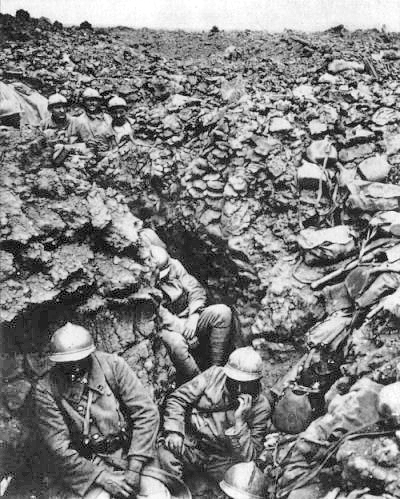

In politics, the theory is that you can brow-beat, cajole, bully and pester your team as much as you want so long as you produce a win.  Do that, and all else if forgiven and forgotten.  Those who fought most aggressively (or advertized themselves most aggressively) get rewarded for what they do.  Those who didn't measure up (or, heaven forbid, complained) get ignored until the next election or dropped from databases entirely.


Morale is considered a product of victory, not a tool to achieve it.  If you can't suck it up, then you don't belong in politics.  It is a blood sport, after all.

In the military, the reverse is true.  Through hard lessons and by studying previous ground wars, great generals have learned it is an absolute failure to dismiss your troops as pawns to be moved by master strategists.  If your ground commanders take issue with a set of instructions or an approach, it pays to figure out why.


Whenever I'm giving advice to political people, this is the message I try to drive home - leaders don't win wars, teams do.  Particularly in this day and age where one campaign bleeds into the next - where, essentially, the war never ends - the maintenance of morale should be the second item on the leader's must-do list.
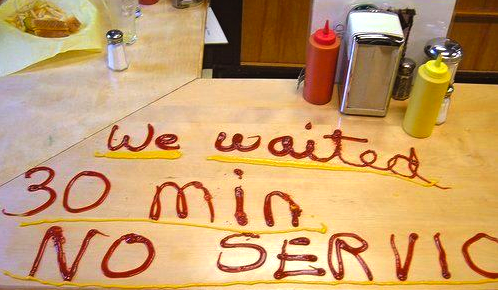

If a front-line soldier is dispirited, if their morale is low, they lose their focus and are more likely to wither at the first sign of steep resistance.  If a front-line retail worker feels underpaid and unappreciated, they're going to give customer service commiserate with what their bosses have indicated they are worth.  

Or, they're going to treat that customer in much the same way as they're treated - as someone that needs to get in line and do what they're told, rather than as a partner who's valued and respected.

The same holds true for politics.  Where morale is low, chances of success are low; chances of sustained success or growth are even more dismal.

It's wrong to assume that a local association or candidate is obstinate or lazy because they disagree with an approach or don't seem to get your message.  Odds are they have a reason for disagreeing, that your message wasn't properly communicated or they don't feel empowered and emboldened enough to act independently.

You might be surprised at the level of resistance this notion receives.  It goes against the whole "star spangled man with a plan" of traditional political wisdom.  It's the numbers - of dollars in the bank and memberships signed - that matter; everything that doesn't directly fuel these two endeavours is wasted effort, especially when you're talking about the leader's time.

There are three main reasons that contribute to this top-heavy, morale-low culture:


1) Politics isn't about winning, it's about survival of the fittest

If volunteers don't pan out, they'll wander off; if staff aren't doing what you demand, they can be replaced; if associations or candidates can't manage on their own, that's their problem.  

Which is why Partisans become so disconnected from reality, become geographically centralized and end up with a bunch of people at the top who think and act in exactly the same manner.

Evolution isn't consolidation, however - it's about adaptation.  You don't get that without diversity and expansion.

2) Politics focuses on battles, not the war

Get through this battle, worry about the next one later.  Promise whatever to win now, worry about implementation later.  

You can always spin your way out of the next problem, right?  Those who disagree with this sentiment just aren't functionally focused enough on what matters (see point 1) which is to keep winning (see point 3).

3) Partisans put the Party ahead of the People

Remember how I said that morale is the second most important thing leaders should focus on?  The first is vision.  

Without vision, politics is tribal warfare.  This is why you can see the same policies come from completely different Parties - even if that same Party has previously criticized that policy.

Tribes, by their very nature, are small and much more homogeneous than larger, more complex societies.  They don't need vision or complicated infrastructure to function and are much better at identifying who enemies are - they're those who aren't us.

Politics as we see it can't be tribal - not if it wants to succeed on the grander scale and certainly not if it hopes to build sustainability into our system.


And this is the biggest difference between politics and true warfare.  Wars haven't fought for leaders since the days of feudalism.  Today, wars are fought for the well-being of the people and they're fought together.


That's what our politics is missing.  Leadership isn't about people supporting you - it's about you supporting them.  


Leaders know where they're going and will do whatever it takes to help their people get there.  That's morale.


Thursday, 13 December 2012

Is Ontario In the Closet about Stigma?


It's a sad fact, but homophobia still plays a role in politics; so do racism and gender-bias, among other stigmas.  Sheila Copps was regularly dismissed in a way she never would have been if she were male.  There are still plenty of folk in the United States who simply refuse to accept the notion of a black president and try to confabulate reasons why  Obama can't be legit.  

At the same time, Sheila Copps was an elected politician; POTUS Obama was just elected for a second term.  There was a time when women weren't allowed to vote and black men were enslaved.  In the Ontario Liberal leadership race, there are candidates who are gay, who are women, who are visible minorities - there's even one with a physical disability.  These accomplishments are significant victories that have been hard-won and need to be vigorously maintained, but we're headed in the right direction. 

I have enormous respect for trailblazers who refuse to believe there are certain positions that are simply off-limits to some and choose not to accept that some blatantly stigmatic attitudes aren't worth challenging.  In changing society's perceptions, these outliers enrich us all by forcing us to think more broadly.  Some of them make excellent leaders, given the opportunity.

Discrimination is like wine (easy to consume but leaves a nasty hangover) but with time, in iterations, it's being watered down by experience and understanding.  Stigmas are the same as any phobia - they can be overcome, but only when confronted.  

Wednesday, 26 September 2012

Politics Now


Speaking from my minimalist experience, I can tell you politics is a blood sport; loyalty is demanded but scarcely returned, partisan benefit regularly (and increasingly) squeezes out broadly-based good public policy and individual human value counts for nothing.
 
It's funny - for all the attention paid to developing human narratives in support of partisan ambitions, politics is ultimately a dehumanizing process.  Comparisons to warfare are spot-on except instead of your life, it's your reputation that is constantly on the line. How many front-line staff have had their names torn to shreds in the media, sometimes just for following orders?  
And that's just the external risk.  Political campaigns (which never really end, these days) are kill-or-be-killed scenarios.  When you work an election, you get to see the uglier side of our democracy under high-pressure situations with little food and sleep. Frequently, you are given ample reason to question the people and beliefs you are fighting for. In your devotion to the bigger cause, you'll sometimes even find yourself justifying lapses in your own moral standards.  Unlike war, though, you can't always count on your teammates to have your back; they're just as likely to stick a knife in it if doing so serves their interests.  Where reputations and future success are at stake, you pretty much expect to be abandoned should ever you fall.

A lot of folk in politics believe that empathy is for the weak. These are the political Bill Kilgores that talk about victory but really see nothing but the battle. They will pathologically throw colleagues, staff and even leaders under the bus or download responsibility for their actions, never thinking twice about the consequence for others. It's kill or be killed, they tell themselves. We're doing what everyone else is doing, just more effectively. This probably comes as a surprise to nobody - there's a reason why we don't trust politicians. What's more of a surprise, I'd warrant, is just how many people in politics do have a conscience.
 
These aren't the folk that are in politics primarily for prestige or position, but because they (perhaps naively) actually believe in the system.  Most of them don't last long.  Those that do invariably end up with at least some innocent blood on their hands.  If you have any shred of decency, the things that you have endured and done to stay alive or support your cause will haunt you long after the election has ended.  Operators likes this wear their political sins like a chain, unseen yet chafing.

There's a reason dedicated campaign staff emerge from from the shadows of elections looking a bit like wraiths themselves, expressing PTSD-like symptoms.  Somewhere along the journey they've started to lose faith in the vision that motivated them in the first place and, therefore, are left to question just what it is they believe in and what they have sacrificed in support of that cause.
 
Why do we fall, though?  Because sometimes it takes feeling like you're in the bottom of the pit before you can really look around at the every-day people impacted by politics.  You also have to reach the bottom before you have reason to look up and see the light.  I can think of a couple high-profile people who have seen their entire lives dissected on the public stage - that kind of deconstruction invariably leads to some painful introspection as well.  One fella I recently had coffee with is in the process of re-findging himself and trying to figure out what his life should mean.  That was the key thing, though - it has to stand for something. 

Although these folk might not always have faith in themselves, it's the people who question the status quo and suffer from self-dout that give me the most hope

Why's that?

Because while things end, endings don't always mean what we expect them to.

Thursday, 10 May 2012

What the World Can Learn From Ontario's Education Successes


In other words – move forward together.  Not just a cute political line, but a model that succeeds.  Funny how that works, isn’t it?

Let's not rest on our laurels, though - we can make one of the world's best education systems even better.  The current appetite for change allows for new ideas and structural changes that are long overdue.

Extending the school year is just one such example; very few kids need the tilling season to help on the family farm any more, which is was the point of that system.  Doing that (but including sufficient break periods throughout the year) means more education, could allow for teachers to have more normalized schedules (with a couple blocks of weeks off here and there for battery recharging) and make better use of our education infrastructure.  With an expanded suite of after-school programming, it can be easier for parents of all economic backgrounds to provide quality extracurricular programs for their kids and manage their own time better, too.

That's one idea - there are plenty more good ones out there.  When we choose not to settle for best, there's no limit to how far we can go.

Thursday, 29 March 2012

On Teachers, Sick Days and Education Reform


I have this unfortunate belief that, as a person in society, I have a responsibility to try and make the world a better place.  It's why I got into politics.  My overarching imperative has always been the same - bring people together in non-confrontational ways and encourage the kinds of discussions that lead to win-win solutions.  That's it.


I have never sat in on the collective-bargaining process, so it's a guess when I picture two groups locking horns, looking for what's best for their individual tribes.  In small "p" politics, which we each engage in every day, it's about positioning, allies, wedge issues and traction.  What gets lost in this type of interaction is the public good.


Every single teacher I know understands that our economy is in rough shape; they have an equal belief that we need strong education to nurture the right tools in our children so that they can make the world better.  Money is not an issue for these teachers - they want to live comfortably, like everyone, but what gets them out of bed in the morning is the lives they touch every day.  In fact, a huge part of what motivates them is the desire to ensure each of their kids has the chance, in turn, to live comfortably.  These teachers are willing to take pay freezes, even for four years, because they understand the economy is tight and there's no more money.  They do worry about new teachers, though, who might have a bit more trouble with bills. 

What matters most is that they have the resources they need to do the job well and the accommodations, like sick leave, that let them be 100% every day they're in front of a class.  The length of the school year could change; all that matters is that when they're not well, their students aren't negatively impacted.  It's really not that much to ask.  Since they are flexible and public-good oriented, there's a real opportunity here for creative structural reform, which is long overdue anyway - we can't keep relying on a 20th or in some cases, 19th Century model of education in a 21st Century reality.


I hope that the collective bargaining process starts with the end goal in mind - strong, healthy and accommodated educators for a strong, accommodating education system helping our youth become the best they can be.  We desperately want our youth to have the opportunities that elude some of us now; therefore, we need our teachers at their best.

Again, for everyone - it's not about "what's in it for me" but rather, how can we move forward together.

Wednesday, 29 February 2012

It's Time To End Feudalism In Healthcare


Moral authority doesn’t come from without – it comes from within.  Communication doesn’t start with the other party – it starts with you.

Ontario’s healthcare sector has an historic opportunity to do the right thing – collaborate on building an integrated healthcare system.  Starting with “but I need to fund my program” is the wrong approach.  There are countless programs out there that overlap, duplicating services for some demographic groups, leaving others in the lurch entirely.  The same applies to business supports, social services, educational services.

It’s time for public service providers to get out of their feudal mentality – Ontario is not a series of publicly funded fiefdoms, we’re a society.  We, as a people, are integrated – we need our services to be integrated as well.

The way of the future is specialized services offered in coordination.  I can think of several groups of healthcare stakeholders I have spoken to that want to develop shared service models; the consolidation of back-office functions, IT, etc was being discussed by multiple players long before the Drummond Report came out.  The biggest challenge they faced wasn’t will or connectivity, but follow-through.  “We aren’t mandated to integrate” isn’t good enough when there are people falling through the cracks. 

If government isn’t giving you its blessing to open a dialogue with partners, you do it anyway.  Boards of Directors can do this on their own time, without eating into existing budgets.  If you are in the business to serve your stakeholders with the best service possible, that means you support whatever model makes that happen, whether you’re the provider or not.  There’s lots of work to be done, everyone will have a chance to specialize – when they work together.

Besides – if the hammer is eventually going to fall, does it not make sense to proactively plan your own future rather than reactively implement someone else’s plan that perhaps doesn’t accurately reflect your ground-level reality? 

A couple of easy starting points:
- Greater accountability for financial resources – how many dollars get spent in funding envelopes because, well, it’s money, in that envelope?  If it doesn’t have to be spent in one area, reallocate within an institution or even cross-sector to where the need is.
- Shared service models for related services serving overlapping demographics
- A digital map of services to lay out what we have, who it serves and how the pieces interact

-       Look outside the box – much of reactive healthcare could be superfluous if we instead invested in proactive health and mental health promotional services.  Same applies to justice and broader social services.  Because we don’t take the time to plan and act proactively, we spend much more at the back-end. 

Some examples of this? 
     *  “mental ergonomics” in the workplace
     *  staff transition strategies
     *  Social Emotional Learning in schools (included in Full Day Kindergarten, by the way)
      * regular staff team-building exercises.

There’s a real appetite for leadership out there – all we need are people willing to lead.


Friday, 24 February 2012

Mental Illness Tragedy in Toronto


Today, at around 1:30 pm on the Queen's Park TTC subway platform, I was part of a tragedy.

Sadly, it’s a tragedy that plays itself out every single day.  An older gentleman, gaunt, bald and with a full grey beard was being kicked off the train by its operator.  The why is no surprise - the man was swearing, claiming he was a US Marshall, pointing and being belligerent to the operator.  The operator was not happy; the other passengers were decidedly uncomfortable. 

I'm hardly an expert, but the behaviour this man displayed was indicative of a mental illness.  The operator was in reactive mode; the man was a threat which he wanted to remove.  The other passengers were equally reactive, trying to bundle into themselves as much as possible, not wanting anything to do with what was playing out in front of them.

Me?  I ran through the underlying context in my head – which illness the old man was likely inflicted with (schizophrenia was my guess), the limbic reactions of the passengers and operator, the broader public services that apply to mental health and justice, plus the sad regularity of the scene.  Yet still, I did nothing but watch. 

Since then, I've asked myself why I sat by, passively, when I knew what was going on and could probably have done something to help.  The answer troubles me; despite what I know about behaviour, about TTC operations and about available mental health services in Toronto, I felt helpless, unempowered, to make a difference.  If I stepped up, how would I explain the facts to the operator?  What techniques could I use to reach the old man?  How much time would it take and would, ultimately, I be able to connect the man with the help he needed?  I didn't act; the tragedy unfolded unabated, as it does time and time again.

It's not my fault that the man was sick.  It wasn't my fault that the operator was tired and frustrated.  It wasn't my duty to act - but then, whose duty was it?  Nobody was to blame, but we were all guilty of not trying to help.

We live in a society and, like it or not, we live in it together.  What happens to each individual one of us has an aggregated impact on all of us.  That man might end up sleeping in a police office, or in a hospital, costing the public money and reducing the availability of service to the rest of us.  There’s an unlikely chance he might hurt someone else, reacting to his environment much as the operator did.  Most likely, the man might do something to hurt himself. 

When we let tragedies like this happen, we are all lessened in every way – morally, financially, service-wise.  We are all responsible; abdicating our duty to each other is not enough.  When we look beyond what we see, when we reach past our feelings of discomfort, we empower ourselves to be part of the solution.

The road to empowerment lies through education.  The people we generically label as “crazy” aren’t monsters – they are real people with real families.  They’re just suffering from illnesses, illnesses for which treatment and supports exist.  The person who is sick just needs the chance to be connected with those services. 

Here are some websites you can visit to learn more:


I am advocating for a web system that makes it easy for the average person on the street to take a photo or send a text into an online portal, connecting a situation as it happens with the local service providers who can do something about it.  We already have suicide lines in subway stations; Google Maps lets us find restaurants or theatres and rates them.  A digital mental health service system wouldn’t be much different, wouldn’t cost much to build and it would make it easy for everyone to make a difference without getting directly involved.  Such a system would help police, justice services and mental health service providers connect people with mental illness and their families with the assitance they need.  If you think this is a good idea, drop me a line here on the blog or via Twitter @__cce.  You can help.

There is lots of good work being done right now, partially by the organizations listed above but also by businesses like Great West Life and Bell Canada.  There are many, many politicians who are taking mental health and its impacts seriously – find out who your local representatives are and ask them what you can do to help.

The most important thing we can do is learn – learn about mental health and how it effects not just those with mental illness but each of us in how we live our lives, every day.  This is vital, because it does impact us;
We all pay the costs when we do nothing; by doing something, we can all benefit.

When you’re not part of the problem, you’re part of the solution.  Be part of the solution.

A Lesson In Leadership For Tim Hudak


Adam Radwanski, Globe & Mail
Leadership is the ability to unite people behind a common vision and inspire them to work proactively and collaboratively to achieve that vision.  To make this happen, the temptation to react, to jump for the small victories that detract from the actualization of the vision must be suppressed.  A good leader provides his team with hope, empowering them to forgo the seed and wait for the fruit. 
This is a lesson Tim Hudak and the Ontario PC Party need to take to heart.  So far, Tim Hudak’s performance as leader has been nothing but reactive; reactive to foreign workers and foreign students, reacting to sex education, pushing the fear and anger buttons over crime, jumping with vigour on whatever rakes the governing Liberals put in his path.  This reactionary behaviour doesn’t get you anywhere; it just gives you a headache and eventually, becomes painful for an audience to watch.
What vision does Tim Hudak have for a strong Ontario?  Advocating for cuts alone isn’t a plan – again, it’s a reaction.  How would cuts fit into a broader plan?  What are the other pieces of that plan?  To date, he has not articulated a plan for where he wants to take our province.  While reactiveness and attacks might be enough to sustain a frustrated, scared and angry base, it’s not enough to win the province on.
Dalton McGuinty (who does have the advantage of time and experience on his side) has a clear vision for where he wants to take Ontario, whether it is universally agreed with or not.  McGuinty sees tomorrow’s Ontario as embracing the Knowledge Economy and pursuing innovation into emerging sectors, like clean/green tech.  He sees diversity as the foundation of knowledge, so is supportive of ethnic communities and art industries like film.  To embrace this opportunity, people need to get along – which means a high quality-of-life (healthcare, anti-bullying, strong social services) but also a responsible, affordable, sustainable one.
McGuinty has the vision – it’s what he unites his people behind.  It’s those people who provide the ideas and wherewithal to make that vision a reality.
Tactics in the absence of a strategy is no plan at all.  It’s time for Tim Hudak to articulate his vision for our province; his real test of leadership won’t be how successfully he can attack the Liberals, but rather, how efficiently he can unite his own team behind that vision.

Thursday, 23 February 2012

The Secret Meaning of the Drummond Report


    - The Drummond Report


The vast majority of media attention the Drummond Report has received relies heavily on superlatives like “profoundly gloomy” and well-worn phraseology like "tighten your belts" and “calls for cutbacks.”  The pundits tell us we must be ready for a “battle over the report” at Queen’s Park.  It seems to me that there is an underlying theme here that most folk are missing, which I’ll get into shortly.  First, some background.

Along with the gloom and doom and austerity, there was a sidebar story about how much Drummond himself got paid to do the report, with NDP MPP Cheri DiNovo tweeting messages like Drummond paid 1500 tax $ a day says "Don't spend tax $" This passes as economic expertise.” and “Amazing! Drummond (paid 1500 tax $ a day) says cut services not tax gifts to the rich Who knew?

Yet, it turns out that Don Drummond, the man behind the report, only charged the government for 51 days of work, although he did much more.  In essence, Drummond’s take-home was about half what it would have been if he’d charged commiserate with the work he did.

Why?  Why did Drummond cut back his own benefits?  It could have been a fear of public reaction, but quite frankly, the average bear on the street has no idea what he looks like – even now, Drummond can walk the streets of Ontario with anonymity intact.  It might have been out of altruism, setting the example he lays out in his own report; this would be real leadership on his part.

I think there’s something more going on here, something that sparks my optimism. 

When talking about the report itself, Don Drummond called it the “culmination of everything I’ve done in my professional career.

With this statement, combined with everything else he has said publicly and even the content of the report itself, one is left with an impression not just of a fulfillment of contractual obligations, but of legacy.  Drummond believed that his report represents a turning point in Ontario’s history, therefore setting precedents that will be followed by other provinces and jurisdictions around the world.  That’s a heck of a mark to leave behind.

You can interpret this as blind ego and might not be off the mark, but take that thought a bit further down.  What is ego?  Ego is about meaning, establishing personal value in a social context.  We all want the work we do to mean something; we want to know we’ve raised our kids well, that our bosses appreciate our projects, that our friends value our contribution to their lives.  Altruism, by its very nature, is about creating meaning through personal sacrifice.

I believe that Don Drummond – wealthy man, powerful man, economist, opportunist – turned down extra cash from the people of Ontario because his work, in and of itself, had meaning for him.  It creates value for his society, etching his name into history.  Making it about the money would have detracted from the purity of his social legacy.

You can dismiss this as idealistic – (here’s a piece I wrote to give more credence to the theory); feel free to look up work and meaning” on Google.  You’ll see that there is an increasing focus on what people want their job to mean even over how much they get paid for it.

Which brings us back to the report itself.  Yes, there are calls for cuts and a great deal of focus is given to Ontario’s red ink, which is as it should be.  The single greatest theme of the report, though, is about integrative collaboration – of breaking down Ministry and Service silos, of reducing the competition between players that provide similar resources, of creating aggregate service portals and above all, about specialized collaboration between players.

Competition is about what you get back.  Under the existing social model, services competing for resource dollars will dedicate percentages of that funding to fighting the other guy. This results in duplication, gaps and overlaps in services that leave some Ontarians out of the loop and ultimately, cost us more through inefficiencies.  So focused on their own piece of the pie, it’s a challenge for any player to proactively seek out partners doing similar or related things and find ways to work together.  This competition extends itself to government – there can be only one governing party, so the resources of all Parties go into hyper-competition, often at the expense of potential collaboration.

Meaning, however, is about what you leave behind; leaving your mark on the world, healing a patient, teaching a student, helping an employee find new work, helping a neighbour shovel their driveway.  It’s why the best politicians get into their business in the first place.  The money, fine, it’s good to make a decent living, but you can make a lot more in the private sector.  What you can’t get from the private sector as much as you can from public office is public legacy.  To leave a legacy, you have to do things.  To dedicate yourself to an ideal so entirely, it has to have meaning for you.

Politicians are ideologues.  They all have at least a glint of legacy in their eye.  Ultimately, though, their whole reason for being is the meaning of what their work accomplishes.  When work has meaning for you, it becomes bigger than self-actualization.  You might want to work with others to achieve it – in an association, for instance, or in a Political Party, or perhaps, as a society.  This, then, is the message I have taken from the Drummond Report, a reflection of the vision of the man who authored it.

Ontario is internally competitive, rewarding some disproportionately more than others.  Services exist in silos, which are inefficient; it’s not a question of less being more, but of redundant duplication being more.  To realize Ontario’s maximum potential, we need each Ontarian at their best – which means better access to training in accessible formats and working conditions and environments that are tailored to eliciting the best from Ontario’s workforce.  A proper focus on the front-end – making Ontarians stronger – will keep them out of hospitals; we can help that further by realigning systems like health care, social service and justice to work in a coordinated, integrated, specialized way.  Collaborative specialization will be more efficient and certainly reduce the gaps, but more than that – the integration of services will allow for greater cross-pollination of ideas, which is the essence of innovation.  Making this happen won’t be easy, but it will be impossible if politicians, unions, associations, profits and not-for-profits and the average person on the street dig in their heels and look to their individual interests first.

That, then, is the deeper meaning of the Drummond Report.  Ontarians can achieve great things – but only if we work with each other.  The future lies not to the left, nor to the right, but forward, together.