Search This Blog

CCE in brief

My photo
Recovering backpacker, Cornwallite at heart, political enthusiast, catalyst, writer, husband, father, community volunteer, unabashedly proud Canadian. Every hyperlink connects to something related directly or thematically to that which is highlighted.

Sunday, 21 October 2012

The Harper Government's Values


The Harper Convervatives have values, of a sort.  They believe that might makes right and that those with power make the rules, but aren't beholden to them.  They see themselves as an empire, now, and look down in contempt at those rooted in what Karl Rove called the reality-based community.
 
Team Harper has no respect for Parliament.  They have no respect for process.  In the words of John Baird, they think nothing of going over the heads of Canada's duly elected representatives and even the Governor General to get what they want.  The only judges they say they respect are Canadian voters - yet they routinely misinform Canadians or withold information, trying to ensure that the only message that gains traction is their own.  Anyone who disagrees with them is at increasing risk of being branded an enemy of the state.
 
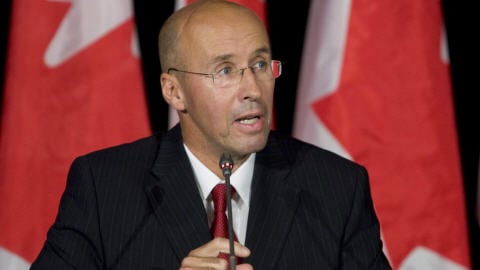
Team Harper has even taken to disparaging the Parliamentary Budget Officer, Kevin Page - a man they appointed to a position they created. 

Conservative operatives provided false claims against an MP of unquestionabler character, Irwin Cotler.  They have questioned the commitment to Canada of a man who risked much in the name of unity, Stephane Dion.  In their quest for power, the CPC have even attempted to bribe a dying man.
 
Harper attempts to convince us that Canadians don't care about such matters - that integrity, honesty and the will to find shared solutions don't matter in today's worlds.
 
You can argue that these are values, the sort of values that elites have always emposed upon those they sought to rule.
 
I would argue, though, that the Harper CPC's values aren't the same as Canadian values.  Not by a long shot.

PTSD a very real — but mysterious — problem for soldiers (by Peter Worthington)

 
The Harper Conservatives are all about fighting, dominance, etc.  They don't seem to care about the individual or social psychological consequences of their aggressive approach to politics.  Our democracy is suffering.  Our soldiers are suffering.  It's not too late, though - they can turn the ship around.  If they won't, then perhaps it's time for a new captain.

PTSD a very real — but mysterious — problem for soldiers


TORONTO - In recent years, it’s become generally accepted that post-traumatic stress disorder (PTSD) is a genuine affliction that can affect those in high-tension, physically and emotionally charged jobs: Military, police, fire-fighters, emergency medical people.
Soldiers, especially, are prone to PTSD. In fact, the greatest threat to Canadian soldiers on dangerous missions (like Afghanistan) is not roadside bombs, ambushes or enemy fire, but PTSD.
It’s estimated that up to 25% of soldiers in danger zones come down with some degree of PTSD. And symptoms can occur years after the experience, and/or be manifested in alcoholism, severe depression, aberrant behaviour, even suicide.
PTSD is an invisible war wound that can be as devastating as a missing limb. Or more so. Often unrecognized, there is also stigma attached — though not as much as in the past when PTSD was variously labeled as shell shock, lack of moral fibre (LMF), battle fatigue, even cowardice.
These days PTSD is accepted for what it is. Soldiers basically feel relieved if they don’t come down with it – or don’t think they are afflicted. Often they just don’t know. Research is never-ending about the causes and incidents of PTSD.
In the U.S., it’s estimated that PTSD afflicted up to 20% of those who served in the second Iraq war; 10% who were in the brief Desert Storm campaign; 30% who served in the Vietnam war.
When undiagnosed and untreated, PTSD sometimes leads to suicide.
A recent news item that caused concern was 38 U.S. Army soldiers committing suicide last July — a grisly record, considering that in a volunteer army, all applicants are supposedly screened for emotional and physiological stability and such.
Since the beginning of the war in Afghanistan, over 2,600 American soldiers have committed suicide — compared to 2,000 who died fighting. That’s a horrendous statistic.
Of 187 U.S. military personnel who committed suicide up to August this year, 116 were on active service, 71 in reserves. It’s probable they all suffered from PTSD.
In the Canadian military, 20 soldiers committed suicide in 2011—up from 12 in 2010. While not on the scale of the U.S. military, it’s still a concern because volunteers in our military are also screened for emotional stability.
While there is research to determine types who might be susceptible to PTSD — and even more research on how best to treat the ailment — there is virtually no research underway on personalities unlikely to succumb to PTSD.
And there are such types who seem immune to stress disorder.
The Bellwood Health Clinic in Toronto specializes in treating those afflicted with PTSD. And it’s not just soldiers. Police, firefighters, individuals in hazardous jobs are all susceptible courtesy of their occupations, though for obvious reasons they get far less attention than the military.
(As an aside, it has always puzzled me that a young nurse in an emergency ward can be exposed to horrendous injuries yet not come down with PTSD, while a soldier who is trained to expect the worst, may find it traumatizing).
At Toronto’s Bellwood Health Clinic, Michael Hartmann, clinical manager of the PTSD/trauma program, and Dr. Simone Arbour, research coordinator, suggest that what may tip the balance with a soldier, say, in Afghanistan, is not what he endures but the horrors he sees others subjected to. This seems a valid observation, since being in the eye of a hurricane is often easier than being on the fringes.
One of the problems of soldiers returning home with undiagnosed PTSD, is that they often have no outlet for their feelings. Family members and friends can’t fully understand what they’ve been through, thus they turn inward and emotionally further isolate themselves.
Bellwood staff find families can be vital for helping veterans readjust. The longer PTSD is dormant and untreated, the more rigid and obsessive it can get.
Some soldiers have done several missions in Afghanistan while being afflicted throughout with varying degrees of PTSD, that steadily intensify.
What makes Afghanistan so prone to cause PTSD is that every time a soldier left the base for any reason, he/she was constantly aware that a they could run into a roadside bomb could at any time. In some cases, a soldier in Afghanistan might never have been shot at, never engaged the Taliban in a fire-fight, yet came down with PTSD from simply driving in streets or the countryside.
Every soldier was always aware that someday the law of averages was likely to catch up with him. Every trip outside the wire increased the odds for an incident.
In that sense, Afghanistan was more nerve-wracking than a conventional shooting war like WWII or Korea, or even Vietnam.
When asked if there’s any way to detect those likely to be susceptible to PTSD, the answer from Michael Hartmann was a blunt: “That’s the million-dollar question.”
It’s an answer the army would like to know. Training, morale, discipline, understanding, all help to prepare an individual, but there are no guarantees. Lt.-Gen. Romeo Dallaire coming down with PTSD after commanding UN Forces in Rwanda during the time of genocidal slaughter, brought acceptance and respectability to the ailment, but did little to lessen its prevalence.
U.S. and Canadian statistics alone indicate need for research into personality types resistant to PTSD. As far as one can determine, those who have the ability to put events behind them and move on without looking back, seem less prone to come down with PTSD. But the human psyche can take only so much.
In World War II, Field Marshal William Slim remarked of the Burma campaign that “the British soldier is not braver than other soldiers, he is just braver longer.”
That assessment could apply to those who don’t come down with PTSD. It just takes longer to get them. No normal person can endure horrors indefinitely without cracking.
Now that Afghanistan is kaput for Canadians, the task of dealing with PTSD “victims” (if that’s the right word) is the responsibility of Veterans Affairs, which these days has to deal with a different sort of wounded soldier than in past wars.
Not all PTSD is the same, but all types can be crippling and all deserve the support that is given to those who have visible, life-altering wounds.
In many case, PTSD is a war wound — and soldiers who are wounded for their country have earned and deserve everything the country can do to repair the damage.
Most would agree with this, but words and deeds don’t always coincide.
Too many of Canada’s wounded feel now that the shooting is over, they are being abandoned. Sometimes, their only protector is media publicity, because that’s what grabs the attention of politicians who make the decisions.


Presence, Bullying, PTSD and the Resiliency Solution


Look at Dianna Booher's list of traits common to people who "lack presence":
 
  1. Others often interrupt you as you speak.
  2. Your recommendations carry little weight with decision makers—or even your friends.
  3. You often hear, “I’m not following your point. Would you repeat that.”
  4. Your stories seem to “fall flat” and have no impact during formal presentations.
  5. You often lose emotional control during meetings, either displaying anger or withdrawing.
  6. You have difficulty facilitating discussions among strong personalities.
  7. In a group, you feel more comfortable standing off to the side than in the center of activities.
  8. Team members often make decisions on important issues without asking for your input.
  9. When others ask questions or seek your opinion, you have difficulty thinking on your feet to respond clearly, concisely, and completely. You typically feel that you need a “re-do.”
  10. Others point out inconsistencies in your behavior. What you say you value and believe doesn’t match what you actually do. You don’t demonstrate the “courage of your convictions” to act. Consequently, you seem irresponsible or unpredictable to others.
Then, ask yourself what kinds of people tend to be targeted for bullying and ask yourself, why?
 
Then, look at the sorts of behaviours that stem from Post Traumatic Stress Disorder and the consequences that stem from it.
 
Lastly, dig into Positive Psychology and the Resiliency Solution.  If the sorts of behaviour that encourage bullying can be overcome and if the inclination to bully those who "lack presence" can be trained against, what kind of difference would it make to include educaiton that covers this kind of thing in our schools?
 
We're already starting to do it through Social Emotional Learning and programs like Ontario Shores' mental health curriculum.
 
We can make the difference - not be reacting to bullying, but proactively educating and training individuals against it, like a bullying innoculation. 
 
It's a social win, a political win and a fiscal win, just waiting for someone to take the lead.

Shocking: I agree with John Snobelen


 - Snobelen
 
 
 - Me
 
Leaders don't dominate the spotlight - they lead.  Politics used to be considered a higher calling, something the individual undertook to contribute to something larger than themselves - not to enlarge themselves.
 
It can be that way again.

Saturday, 20 October 2012

The Travers Debates: Canada faces a brighter future than the US (Allan Gregg)


Canada's best destiny is not as a power, but a power broker

Opening Statement

“Be it resolved that that the future of the United States is brighter than Canada’s”

Allan R. Gregg on the negative side of the resolution

For the better part of modern history, the facts have supported my worthy opponent’s side of the resolution.
 
Fueled by a revolutionary fever and personified by the most impressive generation of political leaders on record, within two Centuries, the United States literally modernized the world. Its worship of enterprise, initiative and individualism was buttressed by an unwavering belief that theirs was the “Shining City on the Hill” that would provide a beacon for the world to follow. This ethos of exceptionalism gave America an unshakable confidence and focus to pursue its destiny; and created a resilience that allowed them to weather a Civil War, the Great Depression and two World Wars – growing ever stronger with each encounter of adversity.

Canada’s beginnings were more modest. Founded in counter-revolutionary roots, our leaders tended to be more pragmatic, than idealistic or inspirational. Still, in the face of vast and inhospitable terrain, all the while living in the shadow of the most powerful and militaristic nation in civilization, we were able to build one of the most prosperous and generous countries in the world. Absent a unified founding myth or heroes, we nonetheless developed our own unique national personae; one focused not on “might and right” but on an ability and willingness to accommodate and even value differences. In strong contrast to the US, we view immigration not as a problem to be managed, but as a national asset; the NDP are not vilified as dangerous socialists but Her Majesty’s Loyal Opposition; and the BQ are not branded as seditious traitors but – for good or ill – the legitimate government of the second largest region in the land. Far from signs of blandness or weakness, as we look towards the future, our ability to accommodate differentness and find compromise with otherwise opponents, now serves us well.
 

In contrast, I will argue tonight that the very culture that made the United States not just the most powerful, but the best country in the World, now serves them poorly.
 
America’s future is clouded not by the fact that they are on some kind of death spiral of decline, but – as Fareed Zakaria noted – by the rise of everyone else.
 
Moreover, in Thomas Friedman’s flattened world where everyone has access to same educational curriculum, information and invention, values and culture matter more than ever. Futures are formed by what you do with this knowledge, rather than in the past where fortunes were determined by whether you possessed, and could make others pay for it.
 
Being the alpha dog, winning every race and leading the World is in America’s DNA. Now as the world is starting to catch up, there are increasing signs that the United States is suffering from post-Hegemonic Stress Syndrome.
 
The most obvious manifestation of this is how core values that once unified and set the course for the United States now set them apart and leaves them rudderless. The sacred pursuit of individualism now makes America one of the most inequitable nations in the world. Disparities between rich and poor, divisions along ideological and religious lines have lead to the demise of political compromise and the erosion of what has been called “the vital center”. As a consequence, what was once the most vibrant political system in the World is now virtually paralyzed; and the most dynamic enterprise on the planet is now functionally ungovernable.
 
In the same way, America’s blind faith that it is destined to lead, now makes it nearly impossible for them to fit in or to follow. This sense of exceptionalism justifies unilateralism and leaves them increasingly isolated in an ever-more connected world. This same fear also makes it impossible for their leaders to disengage from almost a trillion dollars in military commitments, choking off expenditures that otherwise might be applied for much needed social programs and infrastructure or making more friends in the world.
 
Even the ingenuity and innovation that marked American enterprise is now being perverted by their inability to grapple with the prospects of decline. While still a relative powerhouse in patent filings, as a proportion of GDP, the United is now only ranked 5th – behind New Zealand. As a percent of total R&D spending they rank 10th – behind the likes of Poland and Ukraine. In fact, protecting copyright appears to be more important than creating it; as much vaunted examples of US ingenuity – such as Apple – now spend more on litigation than research and development. Instead of creating a $2,000 car – such as the Tata in India – the best and the brightest seemed to be more consumed with developing more derivative products that generate individual fortunes but no national wealth.
 
It isn’t by chance that Canada has fared better in the post-meltdown period of 2007-8. In the same way that we have no qualms about – and there is no protest against – things such as limits on election expenses, our more collectivist impulse lead us to regulate our financial service sector. In fact, the very absence of an unassailable national ideology means that compromise is not only possible, it is also still highly valued in Canada. Could you image a leading Conservative leader in the United States deliberating avoiding a divisive dust up over an issue such as abortion, because it would be a diversion away from more pressing national matters?
 
And as a middle power, we have always known that co-operation – rather than conflict – serves our interests on the international stage. Consequently, Canada fits more easily into our interconnected, flatten world and has the potential to be a friend to all nations. And because of the value we place on our multicultural make-up, we are now positioned to harness our ethnic Diaspora as ambassadors to expand trade between their new and former homelands.
 
No one disputes that there are forces shaping and changing the patterns of power in the world, and few would dismiss the great threats that these changes pose to the status quo. What is at issue now, is how well equipped nations are to adapt to adversity and how resilient their culture is when it is time to rise up to those changes. Compared to the United States, I have to say, Canada’s future looks very bright.

Closing Statement

Canada never has been – nor has ever sought to be – a world military or even an economic leader. But as a nation, we do see ourselves as moral leaders. And this is more than just vanity or hubris.
This is how the world can see us as well.
 
A welcoming home to the displaced and those seeking a better life; a stable country whose policies are rooted in common sense rather than the cult of personality or ideological zeal; and if not a world leader, certainly a nation with the potential to lead by example.
 
This isn’t a portrait that generates much chest thumping; but it also is one that requires no saber rattling.
 
We have flourished in the shadow of the most powerful nation the world has ever known. And while we share a continent, we have steadfastly stood an independent ground and reveled in our differences.
It is difficult and nearly impossible for America to learn from others because – as a world leader – they believe no one has anything to teach them. We have looked into the mirror of America, learned from their mistakes and adapted accordingly. And at the end of the day it is that resilience – and humility – that will propel Canada forward … and hold America back.
 
Thank you

Friday, 19 October 2012

3 Ways to Develop Creativity in the Workplace (by www.buzz.waspbarcode.com)

 
Motivating innovative labour through redesigning work and workspaces?  Sounds like a brilliant idea.


It doesn’t matter if you are a small marketing agency or an accounting firm; every work environment thrives on creative individuals. Sometimes getting those individuals to release their creative energy is easier said than done. Employees are often too focused on the task at hand, making those “ah-ha” moments few and far between. And when they do fall upon us, it’s often too late to make the appropriate action.

As a small business owner, it is your responsibility to harness this creative energy on a daily basis. Below, we’ve listed three simple ways to encourage creativity within your small business.

1. Participate in Social Networks

One of the best ways your employees can release their creative energy on a more regular basis is by participating within social networks. As an individual increases their social circle, they are more likely to be surrounded with diverse conversation, ultimately sparking new ideas from within. It’s important not to focus too heavily on social networks as it may have an inverse effect on the brain. Moderation is key.

2. Evaluate Your Office Décor
 
Sometimes all it takes is placing an individual in the right atmosphere. Unique office design is a major component to sparking creative ideas. However, you’ll want to make sure your office design is still on par with your overall brand image. Here are a few examples of creative workplaces. Who knows, they may spark a few ideas for your small business!
 
3. Create a Suggestion Box
 
This is a brilliant idea. Employees can be timid when it comes to voicing opinions. Why not make an anonymous suggestion box for employees to bring forth thought-provoking ideas?

Where the Magic Happens


Ooh, I kinda like this:


Promotion & Information
 
Your consumers will initially be attracted by the packaging of your product but, to keep their attention, it has to provide value. If your product requires instructions for use, the packaging can be an ideal place for those instructions. Use the space wisely to tell consumers how your product will benefit them, while providing directions for use.