Search This Blog

CCE in brief

My photo
Recovering backpacker, Cornwallite at heart, political enthusiast, catalyst, writer, husband, father, community volunteer, unabashedly proud Canadian. Every hyperlink connects to something related directly or thematically to that which is highlighted.
Showing posts with label #elxn42. Show all posts

Friday, 9 October 2015

Political Irony in Canada


This man is Canada's Prime Minister.  He's supposed to be Unifier in Chief, the embodiment or at least the public-facing representative of Canadian society.

He's been pushing the "troubles at Canadians shores" narrative for quite some time.  It's ISIS, not CSIS, he tells us, that we should be afraid of.

Meanwhile, CSIS has been telling us the greatest threat Canadians face isn't ISIS, it's home-grown terrorists.

Not doing so hot in the polls, Harper calls in a foreign campaign fixer, this guy:


This foreigner, invited at the behest of the Prime Minister to do work that, frankly, could be done by a Canadian, takes a hard line against Mulisms in Canada, identifying them as the boogeyman Canadians fear most.

The niqab thing.  The niqab thing escalated to the civil service.  The tip-line thing.  The shenanigans around allowing refugees in.

There have been consequences to this, including niqab-wearing women being attacked in Montreal and Toronto and most recently, my friend Farah Mawani suffered a verbal onslaught of Islamophobic remarks.

Which kinda feeds into CSIS point, doesn't it?

In response to this attack @WiTOpoli creates a hashtag, #countrywewant, as a positive counter to the negative attacks and repercussions of the Team Harper strategy.

This grassroots-led move goes viral.  Media personalities, celebritives, community members, even party leaders like Mulcair and Trudeau get on board, sharing their visions of what Canada is rather than what it needs to be defended against.

And at the end of the day, this picture emerges:

Displaying _new_Tw_gallery_img.png

This woman is standing proudly in front of the Canadian flag, a new Citizen able to vote for the first time in this election.  She has won the support and admiration of countless Canadians, become a cause to rally behind.

This image should be something Harper and co can use to conjur up fear.  Instead, it becomes a symbolic moment for Canadians stepping up for their individual freedoms against a government who, once upon a time, was all about individual freedoms.

Poetic justice, indeed.


Wednesday, 7 October 2015

#countrywewant ((#MyCanadaIs A Place to Belong)) UPDATED


Diversity is strength.

It's true of genetics and it's true of society; the more variety you have, the more opportunity you have. Diversity of tools, ideas, voices and perspectives brings more options to bear in problem-solving and increases capacity to adapt and resiliency in the face of change.

The Canada I know is not one that fears troubles at our shores, but embraces our ability to make a positive difference in the world.  Whether it's fighting for the rights of people to be different against Nazi Germany or in the Bosinan War, or providing medical and political solutions through groups like CISEPO, we're always ready to dive in and help as we can.

The Canada I know never shies away from a fight, but excels at crafting alternatives.  Whether we're nudging for the end of land mines or crafting new ways to keep the peace so that dialogue can occur with Peacekeeping, Canadians are a creative lot that prioritizes solving problems over ending people.

Why are we so ready to make sacrifices and share our resources and ideas with people who live across the world?

Canada is an idea, a vision of what the world can be.  

We are a nation of communities based not on an ancestral lineage or a culture carved in stone but on the idea that diversity is strength.  And when dream and share and build together, even the sky doesn't limit us.

What makes Canadians different is that their differences are celebrated as opportunities for understanding, not rejected as threats to a mythic stereotype.

Canadians recognize with pride and humility that ours is truly one of the best places to live in a world where far too many of our fellow human beings live in poverty, bereft of opportunity, bereft of security, bereft of hope.  We choose to help others out of a sense of human responsibility to help others achieve what we can too easily take for granted.

Canada is a country that is proud of its role as a safe-haven, whether to refugees from war-torn countries or to planes thrust into the chaos of 9/11.  I'll say this again - Canada is proud to open its doors and provide shelter, even a home to those in need.

Why?  Why are we not afraid of the wily schemes of Machiavellian foreigners?

Because we are so confident in what Canada stands for and how we, as Canadians, embody that belief in our daily lives that fear is unnecessary.  Canada was made by people of different cultures, languages, customs and world-views, and that diversity is what makes Canada great.  Canada is a celebration of the possible.

How can you be every day in a place like this and keep maliciousness in your heart?

Canada is a place of refuge.  It's a celebration of humanity at its best.

Canada is more than a place to live - it's a place to belong.


UPDATED 9/10/15

Illustration by Terra Loire GillespieBased on our growing concern, and spurred by my experience with Islamophobia on Tuesday, Women in Toronto Politics released this statement today, and launched a #countrywewant campaign. http://witopoli.com/2015/10/09/countrywewant/ 

Please read and share our statement and graphics (one included below), and join our discussion on Twitter and Facebook to share YOUR vision for our country!

Farah is a friend from the Centre for Social Innovation and someone that works actively for the betterment of our country and all people in it.

Her #countrywewant campaign with @WiTOpoli has taken off, and for good reason - Canadians are tired of division and a focus on the past and want to work together right now to ensure a brighter future for all.

Please support her campaign and share your thoughts on what the #countrywewant looks like now and down the road.

Wednesday, 30 September 2015

Trudeau, Mental Health and the Public Service


Good for Trudeau (text from his letter below).

Sad reality is that a growing number of Canada's public servants don't have job stability or benefits (renewed contracts replacing permanent positions) and for those who do, the culture, accommodations and design of government work is sorely lacking.  The stress, uncertainty, low morale, unclear direction, conflict of what they're supposed to do and what partisan staff pressure them to do is taking a toll.  Presenteeism is rampant, as are prescriptions (and claims) for depression and anxiety medication.  


It's a problem the private sector is twigging on to and, in fits and spurts, taking steps to address. They have realized that saying "get over it" and punishing people with the cognitive equivalent of carpal tunnel syndrome doesn't solve the problem, it only exacerbates it.  If the bottom line dictates better employee support, so be it.

Does it not make sense for government to do the same?  Should government not be leading by example?

Were I team Trudeau, I would talk about this a lot more in the coming weeks (and to a certain Trudeau advisor: I told you this was coming!); it's an issue that impacts Canadians at all levels deeply, ties into the values Trudeau speaks to and highlights the cognitive dissonance in Harper's stance on mental health vs. occupational mental health.

Sad part is, this could and should have been a win for Harper.  That's what happens when you're functionally fixed and unable to adapt though.


Monday, 28 September 2015

O3 - the Red Pill for Canadian Democracy


Take the blue smartie and this life continues forever and ever.
Take the red smartie, and I show you what progress really looks like.


If you've been frustrated with the current federal election, take heart - you aren't alone.  More and more people feel like Canadian politics is a closed box, and that citizens are little more than human resources whose purpose is seen as feeding the machine.

What if I were to tell you that this paradigm is changing?  

That the traditional hierarchy of government is being disrupted from without and from within?

That right now, in this very election, citizens have the power to shape the future of our country in ways never before imagined?

We've been living in a dream world, under the enforced illusion that only they have the power to keep our country from capsizing on troubled shores or sinking from a thousand leaks.

If you want to stay frustrated with the system and remain comfortably cynical, tune out.  Walk away.
                                                    There are many that want you to walk away.


If, on the other hand, you want to know what O3 is, click here.

Remember, though - we're only messengers.

Where we go from here... well, that choice has always been ours to make.

Thursday, 24 September 2015

Polls: The Entrails of an Election


This poll is telling us that the Tories are way in the lead, with a majority within reach.  I say again, for emphasis: this poll.  Call it a snapshot of a percentage of one moment in time, if you will; it's one of many polls we've seen this election.  One or two of them are bound to be predictive in much the same way as a stopped clock is right twice a day.

Personally, I think the Conservatives are likely to land on top - not because a majority of Canadians think they have the best plan or see Stephen Harper as the embodiment of #CPCJesus.  Rather, they have more angry people in their base than discouraged ones, meaning they are more likely to vote, and donate, etc.  They will invest heavily of their time, money and speaking points to support the only party they feel will meddle less in their lives, cut their taxes, secure their freedom of speech.

That, plus the Conservatives have always had a more effective GOTV than its opponents.  And I feel comfortable in arguing, they have demonstrated more of a systematic willingness to do whatever it takes to win (whereas for the other parties, it's some individuals rather than the culture).

All that aside, though, political people are still following the polls, responding to the polls, trumping what bolsters their team and poo-pooing what doesn't.  It's a Pavolovian thing, I think - political people get the same sort of dopamine hit from a poll that other people get from checking their social media feeds.

If you collate all the polls after the dust settles, I'm sure you will find all kinds of interesting patterns. The entrails of #elxn42 will no doubt be carefully poured over by the sorts of people who do that, looking for lessons or trends and whatnot.

How reflective will those stories be of what actually happened on the ground, though?  On any given day, we've had polls that have placed each party on top and lagging behind, simultaneously.  They're all the result of surveys and such, so they're all true for a certain slice of society at a certain point in time... to a degree.  What's not revealed by these polls is how reflective respondents answers are of their actual opinions.  

When a server in a restaurant asks you "do you want white or red with that?" they're trying to nudge you to an answer; the hope is you will just choose from the options before you.  When a poll asks you which leader you like best, then who next when you remove your first choice, or which policy area concerns you the most, it is doing the same thing.

How many polls have the optional answer of None of the Above or I'm worried about them all equally, because they all affect me equally?  Or I don't know and don't care?

One of the biggest challenges for service providers, politicians, etc. in working in marginalized communities is trust, openness and authenticity.  This is for good reason; programs will run for short durations, promises won't be followed up on, or the external leader wading in will come across as White Saviour rather than community supporter.  It is very hard to earn trust when you're seen as part of the problem, and that with just cause.

When people don't trust you, they aren't open with you.  They aren't authentic with you; more than anything, they probably just want you to go away.

To an increasing degree, Canadians on the whole are feeling marginalized in our political process. Their elected representatives represent parties first, constituents second.  Engagement takes the form of donation asks or as backdrops for announcements rather than serious conversations.  Question Period has become insider baseball - more about scoring points and hits than properly debating the pros and cons of policy.

Polls are snapshots of a much larger story, much like touching the tail and pronouncing that the elephant is like a snake.  Elections are won or lost by parties, which is a much different beast than being the process by which the populace chooses the best governance for the country.

While I'm sure the entrails of this election will provide hours of joy for many backroomers, I really hope the parties and pollsters pay real attention to the mood of the nation after the election. 

Ultimately, this process isn't about the parties and who wins; it's about Canadians and the effectiveness of our democratic process.  That's not something determined by seeing how many people picked the white over the red.

Sad part is, it's going to be harder than ever to match voting patterns with demographics due to the death of the long-form census.  If millennial turnout is low, if new Canadian turnout is low, then we have a numbers challenge our polls aren't even hinting at.

When the majority of Canadians are neither represented by nor invested in a "majority" government, we've got a problem.


Monday, 21 September 2015

An Easy Start for Preventing Vote Suppression


Elections Canada has quietly warned staff to be on the lookout for increasingly sophisticated tactics aimed at discouraging - or even stopping - voters from casting a ballot.


While Canada's political leaders may disagree on all kinds of things, they surely must agree that what matters most is the ability of Canadians to democratically elect the governments that enact policy on their behalf.

Which means all of our leaders should be dead-set against any attempts at voter suppression.  Loudly and proudly so, in fact.

Fortunately for them as leaders of their respective parties, they have a fair bit of influence in shaping the activity of their partisan teams.

With that in mind, here's an easy thing Canada's political leaders can do to prevent vote suppression:

Declare both publicly and via internal communication that any card-carrying member of their party found engaging in vote-suppression activity is banned from engaging with their party for a period of 20 years.  

Related and in the interests of solidarity, party leaders could commit to not accepting as members anyone found to be guilty of vote-suppression from other parties for the same duration.

Such a ban would include:

 - party membership and all the rights provided
 - ability to donate to that party (sending the signal that you can't buy your way around the ban)

To ensure clarity here - after all, there's a difference between an attack ad and vote suppression - party leaders would, as part of their messaging, include a frame and examples of activity that count as vote suppression. If parties can provide sample ballots and GOTV, after all, they can surely provide their teams information on what not to do.

Things that come to mind:

- The provision of information about voting access or eligibility that is contrary to the law by flyer, phone, in person or online (ie date of election, location of polling station, false information about voting restrictions related to police records or employment. etc.)

- Providing intentionally false or misleading information about other parties or candidates (ie: if you tell anyone "they" are busing in voters, using doctors' offices addresses as residences, etc. have proof or you're gone)

If you can think of others, stick them in the comments, or perhaps Elections Canada could provide a comprehensive list.

Elections can be tense, pressure can be high and people can get carried away - we get that.  If Canada wants to be Tough On Crime, however, you'd think that the first place to enforce this would be where our democratic process is concerned.

If you think this is a good idea, let the leaders and their parties know.


Tuesday, 15 September 2015

The Political Free Market: Bringing Down Under to the Great North (and some fresh air at the end)


"They" being select members of the B.C. business community, the kind of folk that Lynton Crosby wants to find a relevant message for.

Expect more of this ABC-style approach to political campaigning as the season-long #elxn42 lumbers forward into fall. Identify your target market - only your target market, not (pejorative minority group) - they aren't your people anyway - and then close that deal.  If you keep hammering at them, hitting the key emotional triggers and all that jazz, you'll push them into making a choice, and that choice will be in your favour.

Pretty simple, right?

You'd think so, at any rate.  Apparently not, though.  Despite having aggressive sales folk like Nick Kouvalis and comms whizes like Kory Teneycke at his service and despite having long-term loyalists like Jenni Byrne and, um, Chris Woodcock in his circle, Harper has decided to look further afield for the talent he needs to win this election.

It's not that, you know, he's ungrateful to his own people.  He simply realizes it's a tough election and he could very well lose, especially if his campaign can't get on the right course.  Staying the course isn't an option, because too much is not going his way.  If they're too risky to guarantee a win, you have to look at other options.

Which is what a lot of Canadians, including traditional Tory supporters, are doing.

Harper's people, meanwhile - they're all about the free market and against national protectionism. 

They won't be the slightest bit wounded or embittered about Harper's clear indication that he doesn't feel they're up to the job and preference for bringing in an Australian to do the job they are having trouble with.


Which is why Harper's whole team is surely embracing the simple message frame and proven track record of that Voldemort from Down Under, Lynton Crosby.

It doesn't matter whether he comes from up above or from Down Under, or how much skin he has in Canada's election.  It makes no difference whether the policies and messages he picks as winners for the target he identifies create headaches for non-Con market voters.  All that matters is that he can deliver the goods.

This got me thinking.

Harper's message is that the other guys - Trudeau and Mulcair, because he is loathe to mention Elizabeth May's name - are too risky.  You can't be sure they'll do a good job, and if they don't, fire and brimstone will ensure from the ruptures that will form in the earth, sucking all that is good and traditional down the drain (like manufacturing jobs and the forest industry).

Thing is, though, Harper hasn't done so hot himself.  He's continued and exacerbated the trend of poisoning the democratic well for partisan gain; he's made a mess of relations with provinces, the media and countless stakeholder groups; un- and under-employment are on the rise, aboriginal women are still going missing, pipelines are still pipe dreams, etc.  

Can we really count on Harper to do anything other than what he's been doing already?  That's what his campaign seems to suggest - more of the same, when that simple hasn't been good enough.

It's a bit risky, isn't it?

Maybe Harper has provided us with the extra option we needed.  Perhaps we don't need to limit ourselves to the risky choices before us - Harper didn't, and as leader he sets the example, doesn't he?

There's no rule that says Canada's Prime Minister has to be an elected official.  To be honest, the office of PM is one of convention, not one of legislation, so we have all kinds of flexibility on how to fill the role.

To keep things moderately in-house, though, what we could do is look at honourary Canadian citizens to fill this honourable role.

Here are some options:
   Karim Aga Khan IV

   Malala Yousafzai

  Aung San Suu Kyi

 and my personal choice:

   The Dalai Lama


Of course, we don't have to look abroad to find the best fighters to conquer electorates, or to fight off our political representatives. That's another thing that's become convention, but is not and does not have to be the rule.

Perhaps instead of looking abroad for people to fight his battles for him, Harper should look to the past for some advice on what it means to be Public Servant #1, as the Prime Minister should be:

- the Honourable Jim Flaherty, 2011

As for the rest of us - maybe we have to stop waiting for someone to solve our social ailments. Maybe we have always had the ability ourselves, and just needed the opportunity and encouragement.

Now's the time for something different.


Friday, 11 September 2015

If Jon Snow ran for Public Office


Resting Parrot - e's not resting... he's dead! Lovely plumage though...


Jon Snow is dead.  No, really - no pining for the fjords from this Westerosi Blue.

See, we've been told again and again that John Snow is dead - by the show runners and by the actor himself.

Never mind the lack of a hair cut.

Never mind the popping up in all the locations where Game of Thrones is filming.


It's one of the worst kept secrets in television history (like, ever!!  Or at least this season), yet the show-runners still try to keep up appearances.  

Why?

Easy enough - it's a path they've already started on - keep the audience out of the know, keep 'em focused on the story that's being told, etc.  It'd be kinda embarrassing to change tune midstream, wouldn't it?

The producers have a particular story they want to tell - one that, before social media, smart phones and the like, they could have stuck to with only the most modest bits of trickery.  When The Fugitive series was filming, the lead actors weren't allowed to dine together at restaurants so as to preserve the tension of their on-screen story. These days, that wouldn't matter - barbecue pictures and vines of them paling around the set would have emerged, ruining the illusion.

Speaking of ruined illusions - how about that #elxn42 campaign?

Never mind that the Liberals are controlling open nominations or the Tories are fumbling their economic fundamentals; it's the Facebook and Twitter gaffes, the bozo eruptions et al that are ruining the carefully-scripted narratives of the campaigns.

No matter how hard the Party comms teams try to stick to their strategies and suffer no deviations, reality and its virtual airing keep getting in the way.

We have the Price of War Rooms telling candidates that even if they never have a fresh unscripted moment ever again, whatever they did at any point in their online lives (which for anyone under the age of 20 is pretty much their whole lives) is available to be used against them.

It's getting harder and harder to keep secrets.  It is therefore getting harder and harder to tell stories without acknowledging the public's ability and clear desire to be part of the story-writing process.

You can think it good, bad, or some mix of each, but the fact remains - Jon Snow would have a helluva time running for office.


Thursday, 10 September 2015

The Digital War Room: Political Memory and Glass Houses


  - Warren Kinsella

He's right, too - you can't stop the signal.

It's not just politics, either - online presence creeping is the new police check, except it's much more pervasive and much more judgemental, too.

In one of my earliest posts on this blog, I wrote the following:

When you aren't weighing the pros and cons of doing something you know is wrong, or of not thinking an action through, you're spending more time doing what you know to be right and making sure you've thought through the consequences. 

I didn't know as much about how the brain and behaviour works then as I do now, and while I still believe that consciousness leads to mindfulness leads to more responsible individuals and a more mature society, I'm less certain about how easy it'll be to get there.

The theory is that youth is a time for development, exploration, acculturation; you're going to do things in your younger years that, down the road, will be seen as questionable.  It's true for all of us. At the same time, there are things we do in our personal lives we wouldn't dream of doing in our professional lives (eg - almost every teacher I know is a potty-mouth when they get together outside of school).

At the end of the day, it isn't always clear what's right - and what's right can shift over time.  Should John A be vilified for what he got wrong, or commended for what he got right?  

How much of this should we be judged on in the present?  What bearing should youthful indiscretions or lessons learned have on our individual present?  How about when something or someone we have publicly supported (say, Mike Duffy or Jian Gomeshi) turns out to be a fraud or have unacceptable demons in their closet?  Should our ignorance in the past forever define who we are and how our judgement is judged?

As digital natives grow up, the entirety of their lives will be available for scrutiny in real time.  Those who are inclined to believe they have the right/need/entitlement/whatever to represent others will continue to be the kind of people who live large and have skeletons in their closet.  

What impact does this have on how we view potential representatives, and who is willing to put their name forward for public office?  Should some sort of regulation on War Room activity be enacted? Shoud individuals be more cautious over the entirety of their lives - is that even possible?  Should voters be less judgemental of skeletons in closets - and to what degree?

It's a conversation we need to start having now.

Thursday, 3 September 2015

Chris Alexander Pulls a Vic Toews


Sense some similarities?

So, what gives?  How can Minister of the Crown so shamelessly lie right into the camera and denigrate the people calling them to account?

Sadly, the answer is a simple one - as partisans (and the CPC as egregious examples of this) focus more and more of their energy on messaging, they're losing the ability to think critically.  There's no emotional intelligence in these responses; it's all pre-programmed messaging and knee-jerk aggressive reactions.  A strictly top-down society is a failed society.  

Good messaging regularly repeated can help win elections, sure, but policy isn't about winning.  It's about leadership.

That's something we desperately need right now, but none of our supposed leaders seem able to provide it.  Why?  Why does the culture favour and reward people who put self-interest before the public good?

When the answer to that question is widely accepted, we'll know exactly what needs to be done next.


Wednesday, 19 August 2015

Accountability in the Age of SM


I have decided to step down as a candidate. Please read my full statement on my FB page:


... which can be found here.

I don't know Ala Buzreba - she blipped onto the radar today and likely will be blipped out before too long.  I hope some sincere self-reflection is in her near future.

What stands out for me, though, is that she stepped down, and did so on the same day the story blew up.  Sure, there was no doubt backroom coaxing on that front, but how often do we see this happen in modern politics?

You can argue the severity; is the vitriol on her page worse/equal to telling Canadians you're with them or with the child pornographers?  To offering political truth versions of the facts that misrepresent the actual truth to the public?  

Stepping down was the right thing to do.  If a young woman at the starting of her career can quickly admit and take responsibility for her poor judgement, you'd kinda hope some of the older war horses might be willing to do the same.

Thursday, 13 August 2015

CPC: No Home for Tom Sawyer


Nope; Tom Sawyer would never make it as a CPC candidate/MP.

Hell, he wouldn't even make it into one of Harper's rallies.

But he would feel right at home as a Virtuous Schemer.

Care Bear Economics + Pugilist Politics: This One's From the Heart


Here's the Post headline:


Here's the quote, in full:


Folk are having a field day with this, mockingly referring to "Care Bare Economics" and calling this Trudeau's campaign-sinking flub.

All that's spin, of course - his opponents and detractors are always on the look out for the campaign-sinking line; the detractors of each leader and party are doing the same.  Hence the focus on Mulcair's eyes, or Harper's lack of personality; these are sound-bite simple things that ads can be based on.

Being politics, the emphasis is always on tearing down your opponents, not trying to understand what they mean, only what they're trying to convey.

I'm going to ask the question because I think it's an incredibly relevant one:

What does economy from the heart outwards" actually mean?

It actually surprises me that the spin class can't figure this one out all on their ownsome.  Really, they should be the first to glean the substance of the phrase.

So let's make this relatable for them.


Do attack ads work?  Of course they do - that's why partisans use them.  The gurus of spin and emotion-based advertising get that people think with their head but act with their heart - their emotions.  


We may not like attack ads, because they are intellectually offensive to us, but they work because they play on our emotions, going over the heads of our conscious, contemplative selves.

Put it simply - it doesn't matter how much the party spokespeople try to portray themselves and their leaders as logical, evidence-based communicators; the substance of their presentation is emotional, not factual.

The Kory Teneyckes of the world may put down Trudeau and his "Care Bear economics", but they're just as invested in emotionally-driven messaging and planning as anyone else.

People think with their brains, but act with their hearts.  Their actions are driven by emotion first, logic second.  It's basic behavioural economics.

Which is what Care Bare economics is; a cutesy way of referring to growing field of study that is reshaping the way we view everything from voting behaviour to innovation to motivating productivity.

Stephen Harper is an economist.  He's studied economic theory; he gets the math of economics.  That should make him an excellent economic manager, right?  Able to predict trends through simple calculations?

Yet like so many economists, he's gotten more wrong that he has right.  He has not managed to steer the country away from our latest recession and in fact, when you look at his positions on everything from cutting childcare cheques to stifling pension supports, he's piling on our socio-economic structural deficits.

How can this be?

It's because Harper doesn't get people; he doesn't get behaviour.  He's thinking about numbers, about markets and banks and purchasing power - not about human motivation.  That's not something he knows how to do.

Harper wanted to be leader because he wanted the country to look the way he wanted it to.  To him, being the leader equates with being the boss - when he's in charge, he calls the shots, full stop.  

Yet look at his litany of failures.  The US didn't tow his line on Keystone.  The provinces have essentially ignored his anti-national health care stance and are going it alone.  The Supreme Court has knocked down legislation as unconstitutional, his attempts at burying the Duffy Affair - one of his own making - have failed; the list goes on, and on, and on.

And on.

Why?

Two reasons.  The first is the easiest: Harper doesn't get people.  He doesn't know how to inspire, because he can't emotionally relate to what drives people to act.  There's a diagnosis in this, but the bottom line is that Harper uses the emotional equivalent of a sledge hammer (fear) because it's really the only tool in his motivational box.

Not everyone is afraid of him, especially when it comes to international partners.  Harper likes to be the smartest, most unchallenged person in the room, and that doesn't happen on the global stage.  He fails at achieving his goals.  


Some people are more committed to what they do than they are to themselves, something else Harper doesn't get; so when staff go rogue or stakeholders he can completely undermine stand against him, he can only see these actions through the lens of "why don't they get it?"  

Harper consistently fails to understand the behavioural consequences to his actions and, as a result, walks into one political rake after the other, from Prorogation to pension reform to corrupt Senators.

The second reason spins off of the first; because Harper doesn't get people and doesn't get motivation, his starting point is way off the mark.  His "vision" of Canada is of a static, neo-con box that he wants to stuff all of Canada into.  It's a completely unachievable goal that will never happen, because people aren't all the same; the world is more complex than the Platonic Cave of Harper's dream Canada.

Stephen Harper is a great tactician, but he sucks at complexity theory.  He understands numbers, but he is clueless about people.

This is why he consistently falls short of his objectives.

Back to Trudeau.

From all indications, Trudeau is no less an egoist than anyone who runs for high office; from words he chooses to some of the positions and messaging he approves, he's not directly in line with the average Canadian either.

One thing that's emerging about Trudeau as the campaign gets underway, though, is something we kinda knew already.

To sum it up with an analogy; 

If you're in a fist-fight, the objective is never to hit your opponent; it's to punch clear through them.  

If you're giving a concert, or teaching a class, or delivering a speech, the goal is never to project to your audience - it's to captivate them, own them.

This is a thing that Trudeau gets, regardless of whether his execution leaves something to be desired or not.

His debate close is evidence of this.  Many people who don't like him didn't like it, but many people who are neutral about him were moved by his words, and that was the whole point.

The goal of leadership isn't to force people into your box, as Harper has consistently tried and failed to do; the purpose of leadership is to inspire people to be full partners in the realization of a vision that everyone relates to, but you have taken it upon yourself to articulate.

When people put themselves first, collective action is short-sighted.  Tragedy of the commons scenarios ensue:

- people rush the yellow light to get ahead and slow down all traffic by crowding intersections
- Senators will take whatever they can get, because they can, without consideration to the broader consequences for their teams
- employees will do the bear minimum and offer no insight, because that's all that's on offer

When people believe in something, they can be more than the sum of their short-term interests; they can be a community.

This concept of communal drive and inspired action is referenced heavily in modern business classes, at economic forums like the Toronto Global Forum and is a core principle of incubation spaces, social innovation leaders like CSI and any good User Generated Content campaign on social media.

Government policy is increasingly moving in the crowd-source direction.  Millenials are motivated at least as much by what they can contribute, when inspired, as what they can take away, carrot-and-stick style.

His wording might not be perfect, but Trudeau's general perception of Care Bear Economics is in tune with broader societal trends as we shift from the 20th Century Industrial economy to the 21st Century social capitalism.
Image result for policy hackathon
Which of course means nothing in the heat of an election campaign.  If you can't explain all of this in a bumper-sticker sized quote and a hashtag, you're wasting your time.

Big picture, though, it doesn't matter.  

Whether led by Trudeau or, as is more likely, led by a coalition of grassroots activists, virtuously scheming public servants and heart-based leaders from the corporate world, Care Bear Economics is on the rise, and that's a good thing.

It's a generational thing; if you don't get it, don't panic.  I guarantee your grandchildren will.

Monday, 10 August 2015

There is no Dear Leader in Democracy


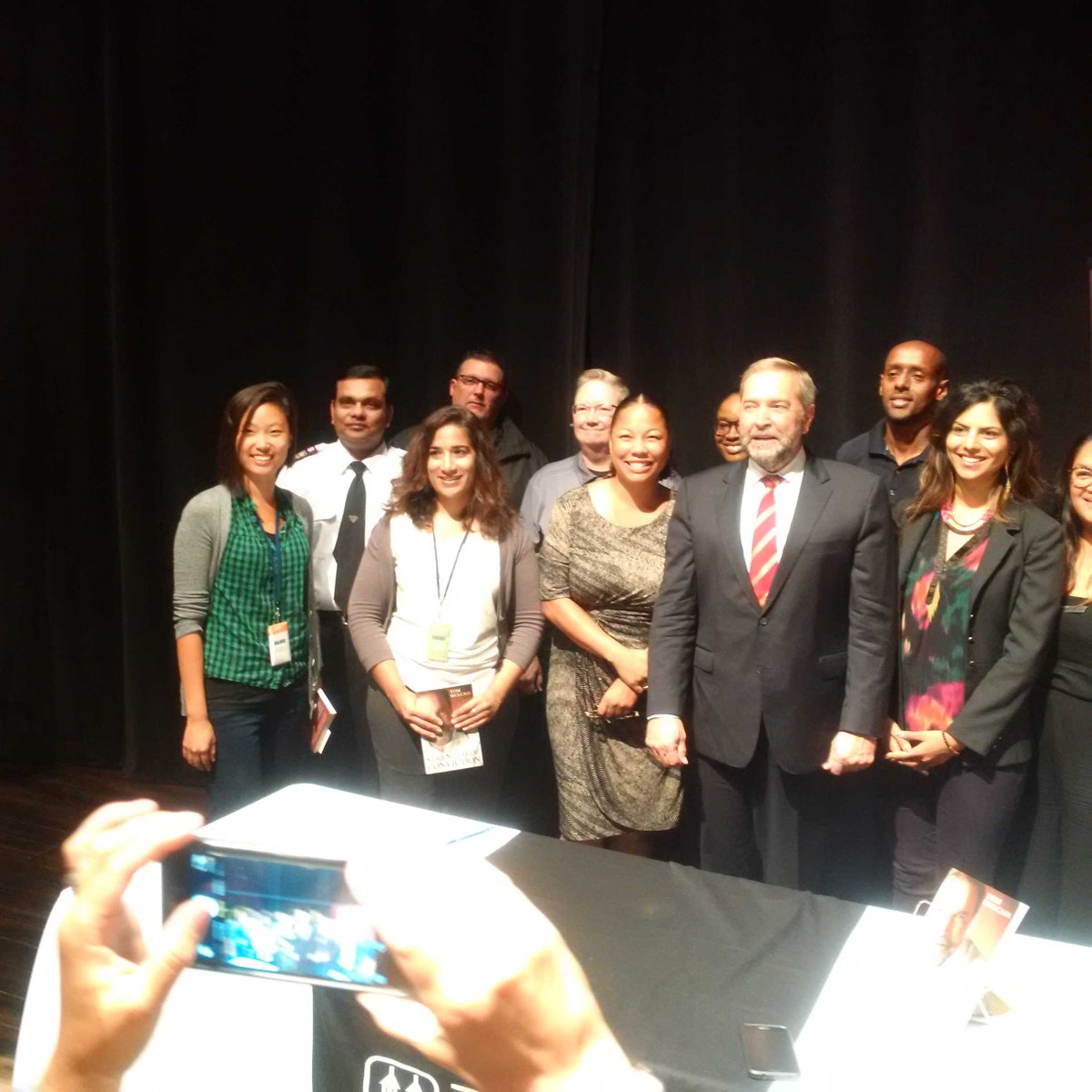
This morning, while training new DECAs at CSI Regent Park, I learned that Thomas Mulcair was launching his book and his campaign on the 1st floor of the building (Daniels Spectrum).  For a while, it seemed like he might come up for a tour of the facilities.

Embedded image permalink
I hardly qualify as a Dipper (I'm an aspirational post-partisan Liberal), but I was still glad that a party leader was visiting a public space in the community and might even pop up to CSI for a tour.  With a couple staff and CSI community members, I went down to plug social innovation in general and CSI in particular.  I had no problem tweeting promos that let people know he was there, nor in taking pictures of him with people who may or may not be supportive of him.

There were security folk present, but at no time was anyone pushed away, sniffed with dogs or ever made to feel like they didn't belong in the presence of The Leader for any reason.  Heck, I even got a pat on the back from one of Mulcair's folks for trying to coerce him up to the 3rd floor (offer's still open, btw!)

Maybe it's because Team Mulcair isn't as experienced with public engagement at rallies as the other guys; maybe it's that the audience was only a few dozen people.  I don't know.  What I do know is that everyone in the room was polite, engaging and non-confrontational and the leader was as approachable as anyone leading a book-signing can be.

Worth noting - I saw no evidence that members of the CPC or LPC War Rooms were present, which might have something to do with the civility.  Had they been present, they would have been looking for gotcha moments or inducing some of their own, which would likely have put a chill in the air (naturally, the whole reason for doing so).

Contrast this experience with Susanna Kelley's experience with Team Harper.  She's well-enough known that her threat-level could easily have been verified, if Team Harper had any real intent on transparency in their events and engagement with the public at large.

As Kory Teneyck has made clear, though, that's not the intent of Harper's campaign.  

When the CPC is doing a manufacturing announcement, see, they only want manufacturing people as backdrop.  If they're doing a safe-zone rally of established Harper fans, they're keeping everyone else out, like bouncers turning away poorly-dressed folk trying to get into a posh bar.

Put another way - if you're not the market for whatever's on offer at a given event, you're not welcome.  Between outings, you're not welcome.  

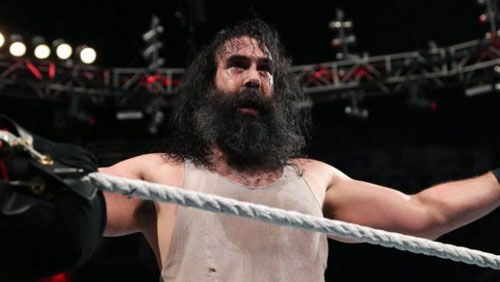
Like a WWF wrestler, when the PM is off, he's off - you only get to see the showman when he's on stage.  When he wants you to see him.  

The reverse isn't the case; it's a dangerous world out there full of people who may not have The State's best interests at heart.  They could be terrorists, or eco-terrorists, journalists or public servants. You don't need to know what the Leader is up to when he's not messaging, but he needs to know what everyone else is doing, just to be safe. 

I wish that was hyperbole; I wish I could laugh along with the snide dismissals partisan flaks will drown such statements in.  The problem is, they're right on the mark.  

When you're inside the bubble, it's hard to see how the isolation impacts you.  When you're confident in yourself beyond all measure, it's impossible to see how success can erode your integrity.  Like evolution, it doesn't matter if you believe in the human weakness for corruption; it exists regardless.

We have a government that talks about memorials to the victims of communism yet doesn't see how so much of their action could easily be first steps on that same slippery slope:

 - tough-on-crime mixed with tough-on-ideological opponents
 - the leader is less and less present, the partisan machine takes over government to extreme degree
 - communication disappears into messaging
 - the truth is vetted and the facts censored

Of course, you could easily think (and certainly, opposition parties will reinforce) that this is simply a CPC/government problem that a New Government could fix.  That's how the game works, right?


Italics mine.

Campaigns are increasingly not places to risk unscripted moments, planted or unplanted uncomfortable questions, etc.  It's too risky; you might end up with a bad quote or image that could derail your carefully constructed campaign plan.

The purpose of that plan?

Not for the common and noble purpose of serving the public through politics, certainly.  The public isn't to be served, and certainly not engaged.  It's to be sold and messaged to.

See, the other parties are seeing what works for the sitting government and, like it or not, are cribbing from their playbook.  They don't want to be undermined by such naive principles as transparency and accountability - that's for elections to decide, caveat emptor-style.

Public service isn't the objective.  Winning is.  

Winning in modern politics means putting the Leader first and all competition behind, with the  public little more than captive audience to the race before them.

When that happens - when a chasm of engagement and communication forms between government and the people - policy makers get further and further away from the concerns, priorities and aspirations of the people.  

The people's representatives have less and less voice; the media is increasingly kept at arm's length; the people themselves are being vetted on partisanship before being allowed to access their own government.

When the Leader comes first, the people come last.  That might be smart campaigning, but it makes for very poor democracy.