Search This Blog

CCE in brief

My photo
Recovering backpacker, Cornwallite at heart, political enthusiast, catalyst, writer, husband, father, community volunteer, unabashedly proud Canadian. Every hyperlink connects to something related directly or thematically to that which is highlighted.

Wednesday, 7 May 2014

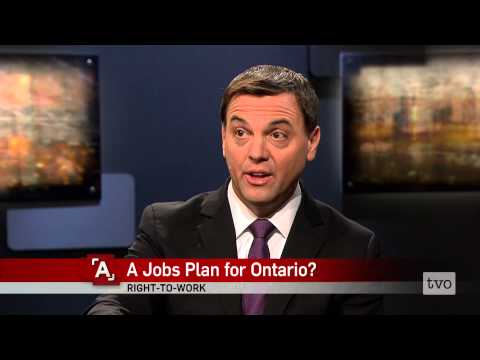
Exit Stage Left: Tim Hudak Pulls a Michael Bay


There was this time blow-'em-up action movie director Michael Bay was pitching Samsung's ultra-high definition curved TV at the Consumer Electronics Show.  He was probably paid decently to do the gig.

Problem was, the teleprompter froze.  Suddenly, there was Bay with nothing to say.  Without a prepared script, he was stumped - he froze, too.  

Instead of ad-libbing it, maybe expressing his own actual thoughts about the product, maybe making a joke out of the situation - Michael Bay walked off stage.

Bay likes to present himself as a tough guy and has a rep for being hard on his actors.  When he found himself under pressure, though, he took off, leaving those he was supporting high and dry.


The reason he walked off was because he was asked a question for which he had no prepared script - that, in fact, proved the company his team had chosen as a backdrop while he promoted his Million Jobs plan got money from the Ontario Music Fund - which was how it created jobs.

Hudak's been in politics his entire adult working life.  He's been leader of his Party since 2009. He's got one general election and a number of by-elections under his belt.

Yeah, we can say it's early in this campaign and Hudak's still working the kinks out, but - seriously, how much longer does he need?

What's really sad is that, when he went, his entire team was left hanging.  Watch the video - you can see them hesitating, unsure whether they should pick up the torch for their leader or walk off too, which they eventually did.  

Even the poor business owner who'd opened his doors to Hudak was left with egg on his face.

This isn't the first time Team Hudak has been left to try and clean up after a leader who seems incapable of budging in a position or adapting to a situation.

Of course, had Tim taken my advice on empathy and leadership, he wouldn't be in this situation.  In fact, the reason his policy ideas run contrary to what actually works is likely because he isn't good at adapting to situations, gathering opinions, generating consensus - all those niggling things leaders do.

But that'd be too much like flexibility, wouldn't it?

If he'd rather walk off the stage than lead, that's his choice.  I wouldn't want to be left defending poorly-conceived policy ideas, either.

Were I his Party, though, I'd be making sure there was a stand-in ready.

Rob Ford, Political Addiction and the Open Data Cure


Not gonna lie - I keep an eye out for stories framed this way.

Addicts.  Destructive.  Communities revolving around behaviour of an individual. 

We have a poor understanding of what addiction is and what it does.  Largely, this is because we like to think of ourselves as rational actors, in control of the choices we make.  Addiction is therefore a weakness of character, not a reflection of something more hard-wired than that.

Here are a couple points on addiction from HelpGuide.Org:


The title of the article these points come from is How Addiction Hijacks the Brain.  As in, shifts control to an external party.


It's not the best frame, because it's not actually what happens.  Addiction is more a rewiring of the brain, like a cognitive cancer.  Addiction harnesses your brain against you.  Just as an allergen causes increased histamine (which is why anti-histamines reduce allergy symptoms), substances like booze or crack cocaine increase dopamine production.

Some people are more allergic to some substances than others.  Some people are more prone to addiction than others.  Environment play a role, as does personal history.

The more exposure you have to an addictive substance, for example, the greater an impact it has on your cognition.  This is why people who are addicted to a substance over a prolonged period of time will see behaviour changes.

Also from the HelpGuide.Org article: The reward circuit in the brain includes areas involved with motivation and memory as well as with pleasure.  Addictive substances and behaviors stimulate the same circuit - and then overload it.

Has Rob Ford engaged in socially-damaging behaviour?  Yes he has.  Is he fixated on getting his fixes? That's clearly the case.  But is Ford also in an environment detrimental to his overall mental state?  

This is obviously the case - he's constantly combating someone, wading into issues that are over his head and getting stuck looking foolish on an increasingly global stage.  

Addicts become dependent on the reward trigger, but there's evidence that suggests relying on the reward trigger is also a form of escapism from a negative environment.  If you've ever wanted to have a drink after a tough day at the office, you'll know what that's like - just imagine you were living in a slum, surrounded by violence and saw no way out.  Reward hits become a form of escapism.

Let's go back to those points from earlier:


 - craving, control, dismissing negative consequences.

 - changes your brain, corrupts normal drives

Tell me if you've heard this one before - power corrupts.

Does power feel good?  Of course it does - being in charge boosts your confidence, makes you feel special, puts a smile on your face.  It's easier to make snap decisions when you feel empowered; it's easier to stay the course when you hold the reigns.

That feeling you get from power, from being the boss, from holding sway, being history's actor?

Think dopamine has anything to do with it?

Power isn't a substance, but it's a state that equally impacts dopamine production.  Dopamine, remember, is a reward system - it exists to catalyze action.  When you're in a competitive situation, dopamine (or a craving for dopamine) helps you focus, push harder, beat your opponent, score a win - and get that yummy fix again.

The longer you're in power, the longer dopamine has to structurally impact how you think.  The longer you're in a competitive situation - say, partisan politics - the more dopamine you get over long periods of time.  


Power corrupts - absolute power corrupts absolutely.  When you've had it, but feel it slipping away, but you know you can get there again, you just feel it - you tend to do what it takes to get that hit, don't you?

Our partisan political system is becoming increasingly competitive, increasingly disengaged from the social body it governs.  Partisans, especially those boys in short pants, are starting off more aggressive and narrow-minded, getting worse over time.

And those campaign fighters - well, they are always up for an election, aren't they?


Power increases dopamine production, changes the way people think and changes their resulting behaviour.  The win (hit) becomes more important than anything else - the body is left to starve, relationships are allowed to rot so long as victory is in hand or at least, on the horizon.

How do you know if you're an addict?


Well, you might be abusing the thing you're addicted to for selfish gains.

You might get testy when your access to the thing you're addicted to is challenged.

Oh - and you might find yourself lying about your behaviour.

Here's a theory - partisan politics is an addiction-driving environment that attracts people with predilections for addiction (like Rob Ford) because they already want that hit.  Even those who get into politics for other reasons face a greater risk of getting hooked on access to power than people in other environments.

The scandals, lies, self-serving tactic, completely insane posturing and overall democratic deficit we're facing is because our governance is literally addicted to power and losing its was.  The people grow weary of living with an addict.  

We're in a downward spiral, the lot of us, but there is hope - addiction can be cured.


The Peaceable Revolution is, at its core, an intervention.  While Open Government might not always be a euphoric experience, it does provide diversity, meaning, engagement, the ability to think big - and a path towards a healthy society.


Bread and Circuses: Democracy at a Distance


Do campaigns matter?  Absolutely they do.  A well-funded campaign has the ability to puncture the data fog and place tailored, appealing messages in the inboxes of voters.  It can equally place tailored, opposition-undermining ads in front of massive audiences.

The in-person stuff is often designed just to fuel this sort of big-picture outreach.  A whistle-stop is no longer meant for the audience present, but the audience available through media.

Election campaigns are complex exercises that can demonstrate the discipline and fighting capability of a given Party's ground forces.  But that's largely what elections have become - the domestic equivalent to military exercises on the borders of the Ukraine.

We know that politics is a blood sport; like any engaged sport, it can be a lot of fun.  You get your elbows up, you feel the exhilaration of a race to the finish line, you have the chance to play, test yourself against opponents and invariably, get free food, booze and exposure to important people.  

Play your cards right, you can also get useful references for work - or maybe a job itself.


It's no wonder political strategists are so adamant that elections are crucial to democracy and bully those who suggest there may be more to democratic engagement than campaigns and a vote every four years.  They love the competition and make money doing so - elections are good for them.

But elections aren't supposed to be exercises in message superiority, job-hunt opportunities or profitable ventures.  They're not meant to be opportunities to beat down people you have grudges against, either.  

That is, however, what happens when we allow our democracy to turn into a blood sport.  It becomes bread and circuses, gladiatorial combat fought by aggressive War Roomers seeking to appeal to the lesser angels of the voting audience.

Lost in this process is healthy debate, an exploration of the issues and actual civic engagement.

If we're content to watch our democracy roll out from the cheap seats, I guess that's our choice - but this is a movie we've seen before.  We should know by now the ending sucks.


Scratch and Sniff: The Hudak Man with a Plan


Hudak clearly has a straighforward, sensible plan.  It's as simple as, say, subways, subways, subways.  
Who can argue with paying less but getting more?  Sounds great, sign me up!

Until you start asking questions.  Messaging, of course, isn't about answering questions - that's why we don't call it Answer Period.  So long as you stick your message, you don't need to answer troubling questions.  If really pushed, why, you can simple revert to attacking your opponent.

The problem with this politics-by-numbers scheme is that when policy makers don't answer questions, they're also not thinking through implications.  The reason we have debate isn't to make others look bad, it's to kick the tires of a given policy and make sure there are no gaping holes.

Which there clearly are in Hudak's Million Jobs plan (but hey it sounds great, doesn't it?).  He's not alone on this front - there's holes in each of the platforms.  This is in no small part because we don't do debate in our Parliaments any more.  There's too much messiness in that process.  It's far better to simplify one's message, spend the period between campaigns undermining opponents and then really hammer them over election time.

If you win a majority, after all, you can almost do what you want, no questions asked.

Is it any wonder people are crying foul about the function of our democratic system these days?  That stench they're reacting to is the sickening form of civic engagement.

Loving Value Add: Geek is Chique


Frozen was a great movie - amazing visuals, catchy songs and the warm humour we expect from Disney movies.  It also had great characters, a touching story and a theme of female empowerment that was both poignant and timely.

We know that Frozen was well-received; box-office numbers and glowing reviews tell us that.  How we know this snowflake of a movie had actual impact, though, was the amount of spin-off activity it generated.


My favourite is this How It Should Have Ended video that parodies, with love, some of the plots holes in the narrative.  It's cute, cheeky fun, touches on what's become a cultural touchstone, but more than that - How Frozen Should Have Ended brings a whole different franchise into the equation, making us look at the characters and their potential solutions in a completely different way.

What if Elsa's parents had a setting like Xavier School For Gifted Youngsters where she could have gotten proper mentoring?  What is Elsa had a community beyond her family she could relate to?  It makes you think, what any good mash-up does.

Beyond that though, the X-Men side of the video is brilliant, full of pop-culture geek fandom.  


Wolverine is a no-nonsense kind of guy, so of course he'd be all gruff at the pop band stuff.  But in the film franchise, he's played by musical wonderkind Hugh Jackman, so that got played in nicely.  The little gesture he does when he pops his claws out?  Same one Elsa does in Frozen while singing the same line.

Shakespeare has endured the test of time because his material is so jam-packed; there's story, character, rhyming couplets, word plays, cultural references, historical references.  

The Bard was doing Easter Eggs before it became a thing.

This How Frozen Could Have Ended video is a different take on the same theme - it's all about adding value, bringing things together, loving and trusting the audience enough to geek out as a creator.

Why is this all in my head right now?

Last night during the Twitter #RBChat hosted by the lovely @cpantazis and @cammipham, a recurring theme was "how to empower your employees to engage customers in your brand story."

By and large, this isn't what sales does.  The focus tends to be on one-way messaging, transaction and an overwhelming sense of confidence and pressure almost intimidating a client into making a buy.  You don't need to think, the message goes - just do what I tell you.


Nowhere is this more the case than in politics.  Partisans of all stripes are bullying their opponents and aggressively marketing their audiences.  You have to back me, or the barbarians will break down the gate.  Do you have our leader's back?  You should feel excluded if you don't, 'cause all your friends are doing it!


Despite their commitment to building community, these Political Parties are actually attempting to build cults - sycophantic crowds who will do as told, support without question and never doubt the infallibility of the person in charge (in theory - in practice, the mandarins behind the throne). 

When only you have the plan, they must be stopped and every-day folk are caught in the middle, you're not fostering engagement.  Your audience won't love what they do, won't feel inspired by you to do something themselves - they will follow, drift away, or actively turn against.  
You're not loving what you do and you're not encouraging them to love what you do - what more can you possibly expect?


Contrast this with the Open Data movement.  The people leading the charge aren't great salespeople, aren't competitive in a partisan sense, really believe in the concept they support and totally love what they do.  Honestly, they geek out about it.

At OpenDataDayToronto, the day's lead organizer - a non-bureaucrat, non-political guy, non-business sector leader - was able to bring individuals from all those sectors together in a government building.  

The topics were pure geek - coding stuff, programming stuff, etc - but also with themes of leadership and community engagement.  A group of Grade 10s got massive applause for owning the power brokers on the stage.  Someone wrote and sang a song that included the phrase "it must be machine-readable." 

Oh, and Rage Against the Machine got played - in the heart of a government building.

Any political expert would have walked into the room and tsked - the message was all over the place, the branding was inconsistent, the speakers didn't build to a crescendo.  No villains were identified, and we all know people don't act unless there's a threat.  No deal-closer was issued; "I hope yous" clearly aren't enough to push a sale.


But the people in that room got excited, they threw down their ideas, they tweeted their thoughts for the sheer pleasure of it.  More than that, they keep coming back.  

They know there's no established community that they get to touch from the outside.  This is a nascent community they get to play a role in building.

Frozen was a great movie; despite a title that implies fixedness and division, the key message of the movie was "love thaws, true love heals."  

Through great trials, the hero broke free from expectation and, in so doing, open up her whole community to new possibility.  They loved her for it.  The audiences love Disney for it.  And the added-value keeps coming.

Do what you love.  Love what you do enough that you want to do it with others.  Love your audience enough that you inspire them to geek out about/contribute to your service/product/idea.

Absolute message control?  Let it go - in the era of value-add, there's nothing cooler than geek-chique.

Tuesday, 6 May 2014

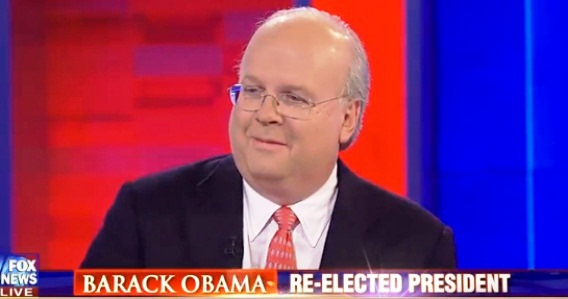
Stephen Harper Cribs Karl Rove


Is Harper attempting to spin, bend, reframe or twist the truth into a frame more conducive to his partisan interests?

Of course he is.  

Why this comes as a surprise to anyone is beyond me - it's not like it's his first time doing so. 

Remember the illegal (but actually not) coalition of socialists and separatists?  The evidence suggesting Harper knew better about the Cadman bribe, or should have known about the Wright/Duffy deal?  

And those are just a few examples.  There are lots more, from his and the Party he leads.  

One of my favourite dismissals of process was John Baird's statement that the Harper CPC would go over the heads of the institutions to whom government represents (the monarch) and is accountable to (Parliament).  Or what about the non-consultations of Pierre Poilievre in his attempts to rewrite how Canadian elections work?

Time after time, we've seen that Team Harper either doesn't understand how our system works, doesn't care, or some combination of both.  

Why should they?  After putting up with Canada being governed by those they detested for so long, they've got a majority and are damned well not going to let opponents get in their way.


Worked out well for Karl Rove after all, didn't it?


An Uncomfortable Truth


But there's something all-too familiar with that notion of political operatives believing they are charged with doing the dirty work on society's behalf, bending the rules civil society isn't willing to so as to ensure the bad guys are kept at bay.

Stepping on throats is an unpleasant business, best done discreetly by folk like them - or so they tell themselves.

They being everyone from Golden Dawn to the NSA to a host of War Roomers.

It's too bad these types tend to be too self-indulgent, over-confident and paranoid to take a step back and realize that society doesn't need them to play dirty.

In fact, we'd all be better off if people like them would reign themselves in and show some respect for their opponents.  Whatever tribe they claim to be defending, the truth is they're a kind all their own.

They aren't part of the uncomfortable solution; rather, they're the source of an avoidable problem.