Search This Blog

CCE in brief

My photo
Recovering backpacker, Cornwallite at heart, political enthusiast, catalyst, writer, husband, father, community volunteer, unabashedly proud Canadian. Every hyperlink connects to something related directly or thematically to that which is highlighted.

Thursday, 7 August 2014

The NBCs of Closing: From Transaction to Relationship


Remember Always Be Closing?  Make the deal, focus on the transaction, get them to sign on the line which is dotted, period?

That's so yesterday.  We're moving on from that.  

Traditionalists and tough sales folk will scoff, brush off what they see as a fad and go on being Don Draper or Wolves of Wall Street.  Everyone else, though, is paying attention to this bit of wisdom:

Never Be Closing.  NBC.

Why, you ask?  Isn't the whole point to make a sale and move on?

Nope.  Making one sale is about pushing for an end-game; the pressure is on to do business, whatever the cost.  You will cheat, lie, bully, beg, whatever it takes to cross that line - but what then?

Especially in the days of social media, your reputation precedes you.  If you're a bridge-burning ass, people will know.  They will care, too - because, by association, working with you will leave a taint on their brand.

That means the day of Gordon Gecko is coming to a close.  What comes next, well - read the other half of that famous Art of War quote to see.


The Foxy Rock


I have had many monikers over the years and across the continents, with the most common one being CCE (for, naturally, Craig Common Era) - but this is a new one.

Somehow, I doubt it'll catch on...


Noah's Infrastructure


Am I smiling?  Yes I am.  We've had such relative stability in Canada for so long that we've become complacent.  The each man for himself/Jedem das Seine message has appealed, because enough Canadians have not had to worry about basic things like food, shelter and security.  Instead, they had the luxury of focusing on things like earning and keeping more money to do whatever they wanted with it.


This is the frame that many governments, best embodied by the current crop of federal Conservatives have presented to us.  We'll keep the threats at bay and open doors - you guys earn, produce, sell, spend.  Tax has become a dirty word, as though politicians are sifting through the pockets of the nation strictly so as to line their own.


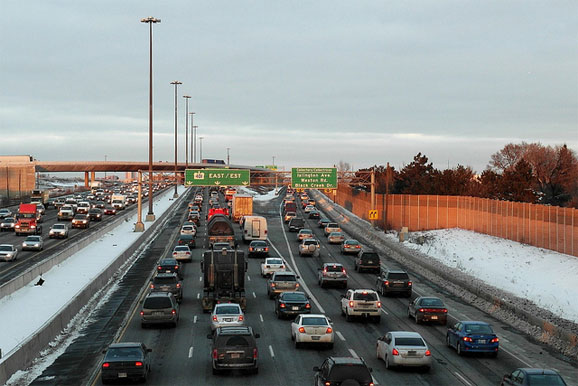
Of course this isn't true.  Taxes pay for public infrastructure and public services.  These are essential things in any community - you can't privatize everything, because who would pay for it?  Would one BIA pay to maintain the roads in its community, or the water pipes, or hydro lines?  Of course not, they'd demand that others who use that space chip in.  How about highways?  Should the people who ride it be the only ones that pay?  What about companies that ship goods?  They would invariably include the cost of transit infrastructure into the price of their goods.  It goes on and on.

While public consultation, planning, implementation and maintenance is far from a perfected science, it is necessary.  Yet public infrastructure has been neglected, both in terms of maintenance and in terms of upgrades.  Why?


In other words - infrastructure projects aren't the low-hanging fruit we're looking for (though they are the heroes we need right now).

Burlington floods.  Toronto floods.  Manitoba floods.  See a pattern emerging?


The scale has shifted, folks.  The signs are there, but far too many of us aren't seeing them; far too many of our decision-makers are opting to ignore them.  Those that are tasked with solving the problem are overwhelmed; there is no way for a tiny group of planners to weather the storm, if you'll pardon the pun.

And they are afraid to be crucified if they get it wrong.

So here we stand, folks - 

- We want things to stay static, or revert to how they were when the world was a different place.
- We want more for ourselves and are more resentful about sharing.
- Governments are telling us the only threats we need to worry about are foreign terrorists, fraudster immigrants and lazy and/or leftist Canadians.
- There's no money, we're told - though there's a ton of it, just not in the reach of the general public or being spent to the public's structural benefit.
- and the waters continue to rise.


I've written about all this before, of course, much as I wrote about the resurgence of mental health, the rise of government digital platforms, a shift in public engagement, etc.  It's kind of my thing.


I have also written about what we need to be doing to prepare for the severe weather ahead of us, starting with a massive culture change from "me first" to "go the distance together."

Emergency preparedness needs to be promoted and facilitated everywhere, from marginalized communities to Bay Street towers to the rural north and east and west.  Community action plans on what to do when severe weather crises hit need to be devised and supported, but those require engaged communities.  


Behavioural Economics tells us what we can do to nudge that kind of capacity building which, at the same time, can build more resilient, adaptable people and populations that will also be better positioned for economic success and civic engagement.  A bit of sociology-committing can ensure we have proper communication tools for emergency management coordination and hand-offs between citizens and public servants.


It's a challenge, to be sure.  It's not as selfishly sexy as most politicians would want, as it implies that we, not they are the answer.

But make no mistake, it is what's coming.  The time to start preparing for this storm of change is now.

Are you onboard?


Wednesday, 6 August 2014

We are the End of War


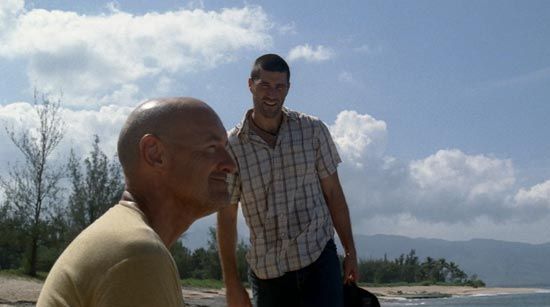
I like to refer to LOST and, in particular, one quote by Jack Sheppard (the show's stand-in for Jesus), because it is a perfect modern adaptation of a parable that's older than time:

It's been six days... and we're still waiting.  Waiting for someone to come.  Well, what if they don't?  We have to stop waiting.  We need to start figuring things out.  

Those who would make war, or would step on the throats of their supposed foes will tell us that's exactly what they're doing.  There's no time, we are right, they are wrong, ends justify the means, etc.  This is how escalation happens.

Despite what the warriors of the world tell themselves, they aren't the boss - they are slaves to the ancient drives of their brain, the Id, the devil on their shoulder.

What has every bad guy in every tale done but seek total control by defeating and oppressing their foe?  

There's meaning in this that isn't about good or bad, but about survival, evolution and society.

People are designed to put their own interests first, Ayn-Rand style, but only up to a point.  It's a point we passed long ago, though the drive remains with us like an emotional appendix.

Every man for himself is not gonna work.  It's time to start organizing.  We need to figure out how we're gonna survive here.

Here - the world in which we find ourselves, without the support of an external network, a supreme being or compliant resources.  In the Bible, it's the world beyond the Garden; in LOST, it's the island.  

For us, it is everywhere we find ourselves on this earth.

Of course we have started organizing, and we are iterating ways to survive here. Migration, technology, socialization, infrastructure, government, community and religion are all examples of this. Newer to our design but no less important is the urge to be part of something greater than ourselves, to communicate, to belong.  

I'll take a group in at first light.  If you don't wanna come, then find another way to contribute.  Last week most of us were strangers.  But we're all here now, and God knows how long we're gonna be here.

But if we can't live together, we're gonna die alone.

When any individual tries to be top dog, they will step on others.  When any one community, however it self-defines, feels entitled by superiority to more - more resources, more rights, more land - others suffer, but also fight back.

What happens in war?  The things that hold humans apart - infrastructure, care for the weak, medicine - all those things fade away.  Famine, pestilence, disease are all products of war, which is itself a game of dominance.

We're seeing what happens when we choose not to live together in the Middle East, which is a sad irony.

It doesn't matter to me whether you focus on the science or the faith, they both amount to the same thing - we are stronger together.  We can only survive together.

Not like cogs in a wheel; we're not machines - but as parts of the social ecosystem.

Like a garden.


The Best Ideas Don't Have to Cost a Fortune


  1. It would be great if there was a readable source for us dealing with financial things for the first time


"I don't think about anything unless I'm paid to."

That gem was once uttered to me by a successful, respected, wealthy government relations consultant.  He meant it, too - this guy, like most government relations or public affairs or management consultant folk bill by the hour, or even by the 15 minute time increment.  

They're consultants - they are experts and their expertise costs money.  If you want some of their time, you have to pay for it.  

Since they are paid for their advice, advising is their focus.  They may offer added value to keep a contract - a bit of writing here, a few words in political friends' ears there - but by and large they are financially fixed on the idea of offering advice and moving on.

The problem is, their commitment is to the activities that bring them money.  They have no reason to stay engaged with a topic before or after they get paid to care about it.

Traditional high-priced consultants come at problems from the outside, offer their wisdom, write a report, collect their paycheque and move on.  Nowhere in this transaction is a need to map their consultation to reality; behavioural economics, design thinking, iterative process and community relationship-building aren't in their mandate.

So how many super-smart (or at least, super-successful) consultants have been paid top-dollar for reports or advice that goes into reports that are subsequently shelved?  How often do ideas implemented not stick, because they weren't grown from the ground-up?

We spend a lot of money - tax payer dollars, which are supposedly valuable - on advice that sounds nice but doesn't reflect the real word and won't be acted upon anyway.  The theory of transactional politics is that the advice offered is a consumable product that one stakeholder or another may decide to carry forward, while others may oppose it.  

Such was the case for the Drummond Report - lots of ideas were presented, with interest groups picking the ones that mattered to them and pushing for action/insisting that action not be taken.  Politicians were the ultimate recipients of all this lobbying activity and based their go-forward options on what they felt was in their best political fortunes, which theoretically maps to the biggest voices from the public.

That's how democracy works, right?  Everyone pursues their own interests and majority rules.

But we all know that isn't how it works - the loudest voice can come from the smallest groups, if they are well-funded.  I remember once sitting around a board-room table with a bunch of political organizers who talked about how they wanted a commission created and who they wanted to have on it, but how they would shape the recommendations regardless.  Their clients would then be well-positioned to get what they want, whether it was in the broader public interest or not.

That's not democracy - that's transactional politics.  Which is what we get when the smart people only care about what they're paid to care about.

This is why we have so many boring, unsexy or complex structural issues that never get addressed or, at best, get token solutions so that a government can't be accused of not caring.  In the worst possible scenario, transactional players actively want problems to persist so that they can keep getting paid to address them.  

Why on earth would I try to solve lead poisoning when I make my money curing it?  That'd be like putting myself out of business - or forcing myself to adapt.

This is why the best consultants aren't the people paid to think, but the people who live a given problem every day.  They have insight into how the problem impacts them on multiple levels, can walk policy-makers through their challenges and offer ideas that are grounded in their world, rather than imposed from above.

Far too often, public consultations is a PR exercise - something to keep the plebes happy, rather than an actual attempt to gain insight and ideas.  It's too bad, this, because there are a lot of great ideas brewing among the people policies are being designed to help.

Why?  It's easy - solving their problems isn't a think they get paid for, it's their life.  This is why the best, most passionate and most dedicated advocates for any cause are people with lived experience.  Think Clara Hughes.  Heck, go bigger and think Helen Keller, or the likes of Martin Luther King Jr.  They weren't motivated by money to change the world - they wanted to change the world so that they might equitably live in it.

As is often the case, what helps the most disenfranchised helps the rest of us.  The Labour Revolution was about sustainable living for hard-pressed employees; it ended up improving productivity, quality of life and spun off whole new industries.  Emancipation in all its forms has done the same thing - reduced poverty and crime, expanded the workforce, created new markets and brought new ideas to the table.

My favourite example, one we continually seem to forget - the more rights and equitable opportunity women get, the more peaceful, stable and successful our societies become.  You don't get that when the Alpha Males just focus on what they think matters, do you?

Society is becoming increasingly stratified into haves in competition and have-nots that serve as collateral damage.  The former tell the latter to suck it up, try harder, do something more to earn a spot at the big boy's table.  

Meanwhile, those without access, sophisticated training or a familiarity with jargon are telling us what they need to succeed.  Deemed inferior by the Alphas, these voices are too-often ignored, dismissed or ridiculed, which is an opportunity lost.

While the consultants independently mull what to do about youth disengagement, financial literacy, youth employment, declining voter turn-out and sluggish economic growth/a lack of innovation, we have people like @gofango, hinting at shared solutions for all these problems - solutions rooted in modern tools that she will understand far better than the seasoned vets who grew up with type-writers and see excessive ink as a way to demonstrate wealth and success.

It's time we flip our consultant model on its head and rethink how we define expertise.  We need fewer consultants who only think about what they're paid to and more who believe that the people have the answer and serve as conduits/translators for them.

Best part - the people who do something because they believe in it don't want a ton of money.  They need sustainable living, tools and the opportunity to own what they do.

Is this the way things work?  No.  It would be a new way for government to engage, bypassing the usual suspects they have relied on for so long.

Governments needn't worry, though - there are plenty of people on the front lines of society who would happily walk politicians through this process for the first time.


Tuesday, 5 August 2014

... and Community


. anything can be done ;-)... Those who say differently lack imagination and determination

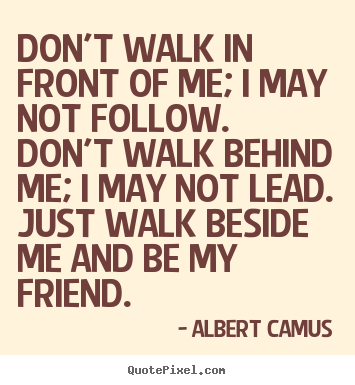
We can go pretty fast on our own, but to go far, it takes a little help from our friends.

I know Richard would agree.  His journey, after all, is as much about him helping us as it is us helping him.  

He's a catalyst.  Which, you know, is what leadership is all about.

It's Not End Times, So How's About a Bit of Matzah?


Those of us who just want peace.

What, pray tell, is peace - and what is it for?

This is an important question to ask because - ready for it? - there are far too many people who don't want peace.  In fact, a health chunk of our leadership isn't interested in peace.

Peace is the absence of hostility.  Peace is respectful debate, empathetic communication and the ability to put the interests of the whole before one's own tribe, or one's own position and brand.  Above all, peace is patient.


Politics, as it functions in most circles of the world, is the absence of peace.  Politics is competition, forcing one's position, picking strategic fights, building coalitions and of course, about gaining and holding power.  

There's no time for deliberation in combative politics - that's all a bit too much like committing sociology. Life has winners and losers and to be the former, you have to make some of the latter.  There's no time to be nice when winning is at stake.  Every ounce of cognitive, organizational capacity has to be dedicated to beating the other guy.  That's the primary objective; when they're destroyed, you've won.

Some people are impatient, narcissistic, power-mad or just plain mean.  Others have life experience that makes them so.  Societies or community cultures can be shaped one way or the other - under threatening circumstances people of any given tribe are more likely to think "them vs us" and focus on end-states instead of pondering the dynamism of social living.

The aggressive, winner-take all types who tend to force their way into positions of leadership want it that way.  They don't want us to think, to understand, to connect - they want us to follow.  It's as simple as that.

Do political leaders and their supporters demonize their opponents and push the envelopes of acceptable conduct?  Of course they do.  They want an ideological war, because that's how they raise funds and score votes.   

Aggressive politics is on the same behavioural spectrum as flat-out war.  "Picking fights" with a union or a community group is no different than lobbing bombs at one region or another; the only difference is the severity, and the confabulation required to justify one's actions.

In all cases, collateral damage is just one of those things.  Survival of the fittest, etc.

Because really, that's what it comes down to.  War is The Heart of Darkness, the most basic instinct that evolution has developed for us.  In our ancient past, the world was always a threatening place; we weren't the dominant species, we didn't have tools or infrastructure, we would only have interacted with other human groupings in competition for resources or maybe to exchange mates.

We have lived the vast majority of our existence this way; it's more natural for us to stand against than it is to stand together.  

Back then, it mattered who the alpha was and that they were tough enough to keep the collective us safe. 
That's why we have Alphas in the first place.  It's why we will be inclined to respect tough, assertive people. We're programmed to.

That was then.  Now, everything has changed.

We don't have to live in perpetual fear any more.  The threats we face aren't lions or tigers, or shelter, or the dark.  By and large we even have enough food for everyone, if it were properly allocated; medicine has reduced illness to a pale shadow of what once it was.

What is the opposite of hunger and the dark?  What is the opposite of fear?

It's easy - bread and candles.  Community.


This is the lost lesson of religion, which isn't about end-times, isn't about supporting a deity who will punish our foes for us.  In its most basic form, religion is the antidote to fear - it is faith.  It has built common ground and a shared mythology that unites people, no matter where they come from, who their family is or what they bring to the table.

Religion builds common ground and invites everyone in, equally.  It has done this throughout time and across culture through the usage of bread, candles and the stories which we create and share together.

There is no breathing creature called Hamas any more than there is an island called Israel.  There is us, there is space, there is the light that brings us together and the darkness that keeps us apart and afraid.

So it is with this war, or any other.  It is not for me to say who has been more aggrieved than any other, nor who deserves justice more than their peers.  To me, that's a bit like saying one family is more entitled to a seat at the common table than another.  It can't work that way.

When we focus on what drives us apart, we lose, and those who crave the spoils of war win in goods what they lose of their souls.

When we focus on what brings us together, what we can build together on common ground, there are no winners, nor are their losers - there is community.

That's the big secret, the thing which eludes us when we forget how to look beyond ourselves or our tribes to something bigger.


Peace belongs to everyone.  Until we learn to live as though the whole were more than the sum of its parts, we'll never have it.

Break bread, people - dip it in some soup, tell a story, laugh.  

None of us is going anywhere any time soon, so we might as well learn how to live together.