Search This Blog

CCE in brief

My photo
Recovering backpacker, Cornwallite at heart, political enthusiast, catalyst, writer, husband, father, community volunteer, unabashedly proud Canadian. Every hyperlink connects to something related directly or thematically to that which is highlighted.

Monday, 10 February 2014

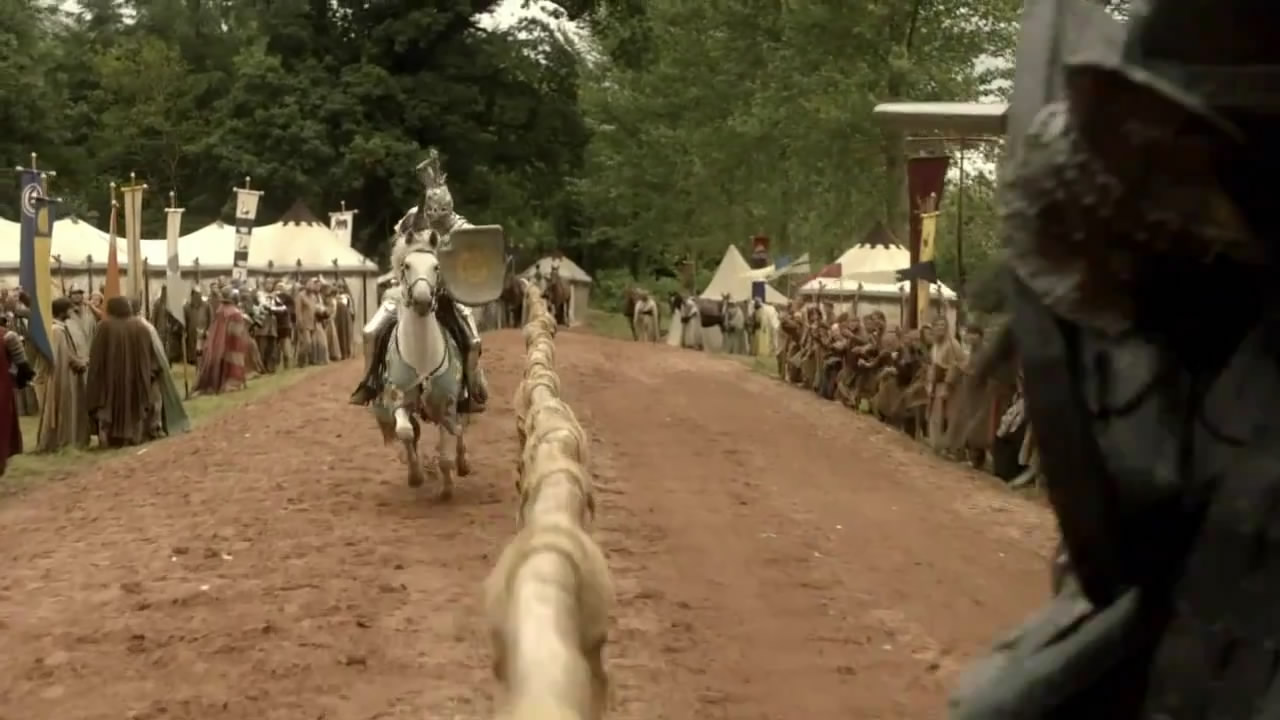
The Joust Society: Political Hockey Without a Referee


Well, duh - of course that's what they're going for.  Team Harper has made it clear from day one that they are anti-government, anti-middle ground and anti-compromise.  They are authoritarian and believe tough competition is the only way forward.


The goal has always been to remove the middle man so that the left and right can fight it out in costly fashion.  They figure that in a rules-free game they will always be the team more ready to do whatever it takes to win.  


Then, instead of being forced to submit to the rules of the game, they can make the rules as they see fit from a position of unquestioned authority.

Of course there's more to the game than competing teams and the middle-man, which the hyper-partisan always fail to neglect; when there's no institution, who pays for the Zamboni and makes sure there's a roof over the audience's head?

Winning the Leadership Deficit


Why indeed?  For her to do anything other, in fact, would be detrimental to her cause - i.e. winning.

Winning is what politics is all about.  In theory, you need to win so that you can implement some kind of plan (or as is more often the case, stop some other Party from implementing theirs); in practice, however, it ends up being about stacking the deck to facilitate future wins.

This, you see, is the lesson that political operators have been learning over the years as they look at the playing field and see who's scoring wins and how.  Attack ads, robocalls, false insinuations, bald-faced lies, emotional button-pushing, muzzling bureaucrats, opposition groups and even your own staff fit into this bill.

Speaking of Bills - how about that oddly-named Fair Elections Act?  The Tories have said they're all about hyper-competitiveness in the House and across the Commons; government and anything that fosters equity gets in the way of that.  Anyone that speaks against this clearly isn't using their big-girl voice.


When smug, entitled hacks who've never had to fight for democracy start deciding who the enemies of the state are and doing everything within their increasingly centralized powers to bring them down, we have a problem.

The sad part is that those win-centric elites have no idea just how big that problem is becoming.  While they decry the authoritarian way Vladimir Putin is peering into the bedrooms of his nation - as well as those of all its guests - we're seeing the same sort of thing happen to an increasing degree here.

It's like a switch was flipped somewhere in the recent past - we've gone from "the voters are always right" with leaders needing to respect results to "the leaders are always right" and therefore skewing the process so that voters deliver the results those leaders want.

Rob Ford is up for re-election as Mayor soon - anyone want to hazard a guess what examples his campaign team is looking to borrow from?

When moderates like Andrea Horwath are willing to check their beliefs (and integrity) at the door if they feel that's the price of getting in, they validate and reinforce the worst offenses committed by their peers.  

The bottom line is this - you govern how you win.  If you break some rules or ignore some issues to get through the door, it is next to impossible to change your playbook once you get the corner office.  Why would you want to break what's clearly worked?  If anything, history shows that leaders increasingly fall into the trap of questionable tactics the longer they're in charge.

The people up top have an increasingly narrow focus as they put the win before absolutely everything else.  This is dangerous, not just because of the choices (or refusal to make choices) it leads them to make, but for all the other concerning trends out there they're not paying attention to.


Thank god we are starting to see true leadership emerge from within.

Sunday, 9 February 2014

The Uncomfortable Truth Behind Cognitive Labour


I may have posited something along these lines to various tough-minded people in charge; they may in turn have told me I think too much.

But I've got a habit of being right on this stuff, don't I?


How Capitalism is Like Depression

Depressed Leaders Think Ahead


Did Dean de Mastro think ahead, or learn from his mistakes?  No he didn't.

Did Julian Fantino or Rob Ford or Vic Toews ever truly admit to responsibility, mull over their weaknesses and try to do better?  The evidence isn't promising.

Did Mike Duffy recognize guilt and try to solve his problem, or did he deny blame and try to make the problem someone else's?  Has Stephen Harper or his inner circle every accepted responsibility for mistakes, or have they blamed others and tried ever harder to obscure their actions?


We can go on forever with this list, but it comes down to this - the majority of our genetic programming encourages us to trust the people who shoot first and ask questions later.  It's a decent method in a small-band, survival-of-the-fittest scenario, but not for a complex, interdependent society.


The people we need to turn to the most in complex social times are the ones we're least likely to pay attention to until it's too late - sometimes for them, far too often for the rest of us.

While the boss asks, "what's in it for me right now?" the leaders looks ahead to what can be gained - or avoided - and acts accordingly.

We don't have a lot of leadership these days.

Which, I would imagine, is why we are constantly dogged by past mistakes.

The Opposite of Analysis Paralysis


Isn't shooting first - it's staying focused.  Can you be mindful of your environment yet equally focused on a task?  That's what driving is, isn't it?


Several studies found an increase in brain activity (as measured indirectly by blood flow) in the VLPFC of depressed patients. Most recently, a paper to be published next month by neuroscientists in China found a spike in “functional connectivity” between the lateral prefrontal cortex and other parts of the brain in depressed patients, with more severe depressions leading to more prefrontal activity. One explanation for this finding is that the hyperactive VLPFC underlies rumination, allowing people to stay focused on their problem. (Andrews and Thomson argue that this relentless fixation also explains the cognitive deficits of depressed subjects, as they are too busy thinking about their real-life problems to bother with an artificial lab exercise; their VLPFC can’t be bothered to care.) Human attention is a scarce resource — the neural effects of depression make sure the resource is efficiently allocated.

Strategic Depression: Something to Chew On


Depression is on the rise, so it's worth taking a closer look at.  Maybe even a sustained look.

We've got this trend right now towards simplicity - we want bullet-point messaging, one-off solutions, so on and so forth.  Tough-minded leaders are taking hammers to social problems and when that fails to do anything constructive, they move on.

Of course, a focus on simplicity when dealing with complex systems is short-sighted; as a result, the middle-class is hollowing out, the economy is becoming untethered, the democratic deficit is growing and our integrated social fabric is unraveling.  Oh, yeah - and there's that persistent mental health crisis thing.

Additionally, we've seen some worsening of weather lately - ice storms, floods, so on and so forth.  It's becoming increasingly clear that the systems we have in place today aren't equipped to handle the challenges we are facing, natural, internal or systematic.

There's nothing sadder than watching tough-minded leaders stranded like starfish on the beach when reality crashes over the fire-wall of their simple plans.  "It was just good business," they'll tell us in hushed tones.

Canadians don't much trust their leaders right now; instead, they're looking inwards for direction and ruminating just a wee bit more on how to prepare for what comes next.  Maybe a few of them are even starting to wonder how we can proactively shore up our future in spite of the failings of our social bosses.  You know, like Churchill did.

Something to think about, is all.