Search This Blog

CCE in brief

My photo
Recovering backpacker, Cornwallite at heart, political enthusiast, catalyst, writer, husband, father, community volunteer, unabashedly proud Canadian. Every hyperlink connects to something related directly or thematically to that which is highlighted.

Tuesday, 7 January 2014

Investing In People: The Social Paradox


I found this post fascinating, because it reflects the transactional attitude I see reflected to an increasing degree across the social spectrum.

Life, the message seems to go, is a series of investments; we, in turn, are consumers.  

Investment:  The action or process of investing money for profit or material result.

If I get into a relationship, I want best value for my investment.  That means I'm only going to invest in you if I see the potential for return on that investment (ROI).  This can play out as "I will enter a relationship with you if I see it as a solid long-term investment, i.e. you will maintain a sufficient balance of looks, health, wealth, power, status and chemistry throughout my life span."  

It can also mean that if I buy you dinner, I better get something in return.  Conversely, it can mean that if I can't immediately see the ROI, I'm not going to invest in you, period.  Which results in this kind of thinking:


Think about this for a second; social housing, employment insurance, public services in general are about ensuring all people, but especially those without the means to provide for themselves, have access to the basic necessities of life.  Where's my ROI for my taxes?  I'm not getting profit or material result from subsidizing housing, education or vaccines for poor people, am I?   


Think about this transactional perspective in business, as many bosses do - they are loath to make any investments above and beyond salary, because they expect their employees to bring everything else to the table.  If you provide value, you get a bonus; if you don't, you're fired.  Risk-taking is fine, so long as it doesn't fail; small wonder there's so little of it in Canada.

Should employees cease to offer proper value-for-investment because they're distracted by pregnancies or illnesses or what have you, they cease to be a solid investment.  In fact, it's better to hire people only on a contractual basis, so as not to lock myself in to investments that may not be sustainable.

Canada's middle class is shrinking - there's still lots of money at the top, it's just not being invested in the middle.  Government is theoretically responsible for putting a floor underneath the lowest class, but we're shrinking public services, too - as mentioned before, they aren't seen to provide a decent ROI.  Instead, the Harper government is pursuing more tax-cuts for businesses; after all, they're successful, so an investment in them is money well spent - right?

When successful people stick to investing their time and money only in others they deem successful, then less is invested in those who aren't successful.  That's how they ensure their ROI.

This has been a big part of Stephen Harper's political brand - he's good at winning politically, so that naturally makes him the safest investment, right?  You want to invest in a winner.  It's also the argument provided by governments on why they pay top dollar for top public servants - if you want the best, you have to be willing to invest in them.

Meanwhile, fiscal conservatives are saying the middle-class' problem is that they're setting their expectations too high; they need to be realistic.  This means backing away from post-secondary education (it's not landing people jobs and therefore is a poor investment) and focus on taking existing jobs in, say, the natural resources sector

Cammi equates success and power with intelligence.  I guess it depends on how one defines smarts; one of the most successful, powerful people I've worked with directly once shared this bit of wisdom with me: 


Very successful, guy, this - he's founded companies and led others to success.  He's also written off anyone in his life who he didn't see as enhancing his success, including staff, friends and family members.  Oddly enough, this fella built his name in politics; he was smart enough to know who to ally himself with, who to stab in the back and how to present himself as confident enough to be successful.
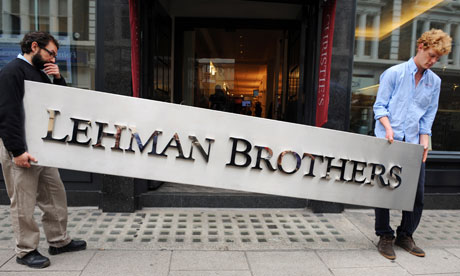

This is not uncommon.  Aggressive, success-oriented people tend to be really good at applying pressure, be it in sales (Always Be Closing) or in work (find 10% in savings or you're fired) or home - and failing that, out of the home.  The difference between white collar criminals and  

These folk make a lot of money, find power, earn confidence by the sheer force of their will.  In turn, they maintain a narrow focus on that which builds their brand and fuels their success.  Mike Duffy was a great fundraiser.  Nigel Wright was a loyal, strategic operator.  Doug Ford could still be a good investment.

It's good business to invest in these sorts of people; they're known commodities that get their specific tasks done - what else matters?  This transactional approach work, until it doesn't.  Canada has been relying on natural resources, because it's tried-and-true, just as we still have business-minded leaders who insist traditional manufacturing will be the basis of future success - we just need to lower related costs, like they did on Easter Island.

The story of society is a move in the opposite direction, from transactional investments into more long-term, strategic ones.  Wealth redistribution, public medicine and education, infrastructure, government and the innovation that results from collaboration are all examples of this.  

Therein lies the great social paradox; the more we focus on individual success and transactional benefit, the less stable (and valuable) society becomes.  It's when we start investing in each other, looking towards what we can give rather than gain, that we create true sustainability.

Altruism is selfishness that plans ahead - a lesson we are doomed to repeat every time we lose sight of the big picture.

Monday, 6 January 2014

Kathleen Wynne: Falling Like A Leader


Kathleen Wynne is not perfect.  Not only has she made mistakes - she will continue to do so.  I have as much faith in this fact as I do in her ability to learn from these mistakes.

We don't value mistakes much in Canadian politics; we tend to be risk-adverse.  Certainly, our politicians pointedly attack each and every demonstration of mistake-making as if it were a fatal virus. Which is probably why our leaders are so reticent to admit to (or learn from) mistakes of their own - to do so would be an admission of weakness, and we can't have that, can we?

Far better than risking a mistake that could be pounced on by opponents is to do nothing at all, or better yet - to offload responsibility to someone else or kick the ball down the field.  Our federal government has certainly excelled at both these ploys.

It's all well and good to stick with strong and stable, but here's the reality - the world is not a stable place.  It never has been.  Nor have successful societies ever been stagnant, willing to rest on its laurels; in fact, its when societies fail to adapt that they tend to fail beyond repair.

Name any great leader, businessman or visionary in history (take Steve Jobs, Nelson Mandela and Abraham Lincoln as three examples) and I'll show you a colossal failure of a human being - until they weren't.  That's the secret to success, which is the same secret to any evolutionary process. 

If you want to reach great heights, you have to learn how to fall.  Sometimes, the point of these falls ends up being to show others how much higher it is possible to climb, as has been the case with any pioneer.  If it weren't for these people who reached, explored, tested new ideas, we'd be back where we started.
It's easy to point out all the things that went wrong during the recent ice storm.  It's would be simple to stick to the negative, to attack, to abdicate responsibility.  To do nothing at all would certainly be less risky.

But inaction is not leadership.  After all, you don't win by sitting on the sidelines.

Still Waiting For Someone to Come

Political Indulgences


You should be very afraid for what comes next; your future, the opportunities available to your children are all at risk.  There's an evil force out there conniving to take away your freedom, your rights, your opportunities.  

You can't stop this force that will take away your individual rights; only WE can.  We will stand up for you, fight the bad guys on your behalf, so on and so forth.  But this kind of service doesn't come free.

If this sort of messaging seems familiar, it should.  We've seen it time and time again, under different guises, but the purpose is always the same.

There is the institution, headed by a leader, who will take care of everything - you just need to invest in them and know better than to question their wisdom.  They don't make mistakes, not like ordinary people do.  


It's a trap our leaders fall into when power and the wealth that sustains it becomes more important than the notion of accomplishment.  Whether it's the divine right of kings or the divine right of politicians, the result is the same - poor choices get defended, people are criminalized and the methods by which power is sustained become increasingly unscrupulous.


Sometimes it just takes a brave soul to point this out and offer this little reminder; the church isn't a building any more than the State is a Party.

The promised land is never imposed from without, but nurtured within.  

Adam Goldenberg and the Liberal Movement


I would certainly agree with this - in fact, I've been nudging in that direction for a while now.

The Tragedy of the House of Commons


As for who in liberaldom has the capacity to pull a Kenney and champion the movement and social change over partisan fortunes, who knows.  We'll see who emerges for this role in 2014.


The Temporal Parade


Yes and no.  If you are here, you are not there - but there still exists, doesn't it?  

To be less abstract; if you're leaving home for work, your workspace still exists whether you are there nor not.  When you're between locations, both home and work exist simultaneously, but you're not at either one of them.

To use another analogy, let's say you're in a crowd, watching a parade.  As the middle of the parade goes by you, the beginning of the parade still exists - it's just moved beyond you.  Exactly what the floats and performers are doing down the road may differ from what you saw in the fine detail, but essentially it's the same thing.  

This holds true for the end of the parade you've yet to witness; it exists and is being experienced by another group of people in much the same way you'll experience it, with some variances.  What exists in front of you at any one moment is different than what came before or after, but the whole parade exists simultaneously.

From a physics perspective, time is like that parade; it's a fourth dimension which lies beyond our ability to perceive, but it's there, like dark matter, whether we perceive it or not.

The moment you drop a ball, it has not touched the ground - but you can safely predict that it will hit eventually.  Unless, that is, it's intercepted by something, like a baseball bat.  The speed and trajectory with which the ball is thrown will premeditate the outcome, as will the perceptiveness of the person holding the baseball bat.  These are all factors that need to be calculated to successfully predict the outcome of when and how the ball will touch the ground.


In sports, war, love, business - every human endeavour, really - we are constantly trying to wrap our heads around the factors that will impact events.  What will a competitor do?  What will the market support?  What "play" is the opposition going for?  Which tactics will the enemy employ?


What will the next float look like?  

This brings us back to time. 


It's possible the speed at which the parade moves will vary; it's likely that the exact performance you get will be different from what someone who saw it before might suggest.  You can argue that unexpected circumstances, like a terrorist bombing, can throw the parade off entirely, but so far as time is concerned, bombers are just performers in the line, same as any other.

There was a time when humans turned to omens and myth to forecast the future; rituals and sacrifices to gods became tools to shape the future.  As we progress, science has begun to replace such magic, helping us better predict (and plan for) weather, emergencies, health and security events.  We know the next ice storm, epidemic or political election is coming; the more we work at it, the better we get at knowing when and ensuring we're prepared for it.

After all, you can't put your life on hold or skip the parade just because it may rain; not if you truly want to life.  Instead of waiting out the storm, plan ahead.    


Proof Doug Ford Doesn't Believe in the Free Market


So there are some tree removal companies offering a square deal and some who aren't.  How is this "just not right?"  

Clearly, the people who offer the better deal are going to get business; the gougers won't, and therefore will either have to adjust their fees or go out of business (or spend more on misleading advertizing promoting themselves and demonizing their competition).


It's basic free market economics - if a service has value, then more people will want to pay for it, meaning more people will offer it, leading to competition.  As we all know, competition leads to better value-for-money.  

Which, naturally, is why Conservatives are all in favour of equitable competition, transparency of information, debate, so on and so forth.

Then there's this whole "after what people have been through, it's just not right" nonsense.  Look, we're talking about big boys and girls, right?  If they did what they should have, they planned ahead, got insurance, made sure not to have mature trees on their lawn that could drop branches on their roofs, so on and so forth.  Employers played smart and had work-from-home plans in place in case of storms.  

So what if the power went out?  Folks who were prepared had generators and knew better than to buy into the whole leftist, anti-independent functioning crowd and their carbon monoxide talk.  People need to learn to live within their means, spend their money wisely and in a forward-thinking manner; reliance on the State in times of hardship is childish.  Falling victim to gougers, con-artists and their ilk is just a sign of stupidity, and we've no need for this sort of person in the first place.

Because if you're against social housing, welfare, public healthcare, market regulation, organized labour and everything that Doug Ford proudly stands against, then it applies equally to city-wide emergencies as it does to individual ones.

This is the key thing that hard-right Conservatives constantly fail to recognize; there are always people in crisis out there, just as there will always be more broadly impacting crises down the road.  In fact, the more individuals are stuck scraping by day-to-day, the less able we all are to manage big challenges like floods and epidemics.
You can't help your neighbour when you're just getting by yourself.  It also doesn't matter how wealthy you are, if a bad flu bug hits, you're just as vulnerable as the poor person.  The more poverty there is, in fact, the more vulnerable everyone is.

All the public services they stand against exist to help everyone in crisis, whatever and whenever their crisis may come.  Without them, we lack flexibility to adapt and become easier pickings to the gougers and cons.

Yes, we need to do a better job of coordinating and evaluating these services, but the answer isn't cuts but integration.  That's what Open Government, in fits and spurts, is trying to do.

It's good that Doug Ford has recognized the fallacy of the Free Market in times a time of wide-spread crisis; the question is whether he'll internalize this lesson and carry it forward.  The next time social housing, youth programming or emergency funds hit the headlines, we'll have our answer.