Search This Blog

CCE in brief

My photo
Recovering backpacker, Cornwallite at heart, political enthusiast, catalyst, writer, husband, father, community volunteer, unabashedly proud Canadian. Every hyperlink connects to something related directly or thematically to that which is highlighted.
Showing posts with label the Public Good. Show all posts

Tuesday, 26 November 2013

Confidence Vs Trust: Lessons from #AskJPM for Canada's Consultations


What is the difference between confidence and trust?

Confidence is a projection; it's a way of presenting yourself that is meant to tell people you know what you are doing, they just need to step back or follow directions and let them do their thing.


We have a lot of confident people running the show in government, in the Private Sector and in bridging fields like Public Relations and Government Relations.  These are people who are absolutely convinced they have the answers and/or the fortitude to make things happen.  The flip-side to this equation, however, is that they feel a sense of entitlement to the levers of power; they are smart, we are dumb.

These kinds of people don't ever make mistakes - how could they?  That would undermine the confidence people are supposed to have in them.  Instead, mistakes get off-shored, downloaded or thrown under the bus with convenient scapegoats.  Equally, when presented with a question they can't answer or aren't prepared to answer, it's considered bad form to say "I don't know" - to admit you're not omniscient is to admit weakness, a no-no when it's confidence that defines your brand.

Confidence is fundamentally about superiority - feeling more important than others and communicating that message to the public at large.  In the workplace, the confident people are the boss - no need for the team to think, because they have all the answers.  

In public consultations or any sort of service transaction, the same holds true - people are consumers and the confident men are sales agents; when discussing new policies or system reforms, the trick is to sell, with confidence, the changes you are making to their world, not to get input.  

One of the most successful businessmen I know, who in the grand scheme of things is really just a middling player, once gave me this nugget of advice: "you don't have to know what you're talking about, you just need to sound confident while you're saying it."


Stephen Harper is really good about sounding confident on everything from the soundness of his economic strategy to his lack of knowledge about the Senate Scandal.  Rob Ford is equally confident, even ebullient as he talks about not being a user of crack cocaine and having never missed a day of Council.  


The truth behind all these statements is being chipped away at, but these confident men hold true to notion that so long as you keep your message simple, say it often and say it with confidence, people will eventually just go along with it.

But people aren't going along with it.  They hear the voices of single-minded confidence and see the world around them increasingly at odds with what they're hearing.  


There's a reason why voter turnout is decreasing and why decision makers are increasingly viewed with disdain in our country, and in countries around the world.   The jig is up; partially thanks to social media, the behind-the-scenes sausage-making process of politics is increasingly coming to light.  

We're seeing that the confident messages we're hearing are empty.  We're told to trust our leaders, because they have all the evidence that matters, but we're also seeing not only how they don't have the evidence, but are discarding any facts that don't fit their message.  Sometimes, they are contradicting themselves, with the new message delivered as confidently as the old one, despite the fact that they are completely the opposite.  


Harper's stance on who knew what when in relation to the Senate Scandal is a great example of this.  It doesn't matter if he tells us his position has been clear all along, with confidence - we can see that's not the case simply by stacking his various statements up against each other.


In business, the usual suspects are lining up inside of fragmenting fields, like Public Relations, insisting they have the expertise to message better than competitors in this changing field, focusing on the confidence piece.  Yet they're using the exact same language as any of their peers.

The public has grown wary of confident tones - we have grown sceptical of righteousness.  We no longer believe the talk when we hear politicians promise new eras of transparency, because we've heard that line before.

Trust is not about projecting uber-confidence and convincing people just to follow along; trust is about competence.  As such, particularly now when people have so lost faith in decision makers, leaders can't walk in to a room, talk boldly about their abilities and expect people to immediately line up behind them.  Trust has to be earn and for that, competence and commitment need to be demonstrated.

There are several consultations going on right now at the municipal (Toronto) and provincial (Ontario) level; these consultations are meant to solicit public feedback on how to better present public services, how to do Open Government and how to create an actual dialogue between citizens and policy makers rather than a one-way message track.

Few people are ready to believe these processes are sincere - why should they?  Sincerity has never been part of the equation before.  Studies released today are bringing forward the same recommendations raised in the last several cycles of studies, meaning the recommendations found within have not been acted upon.  We see structural deficits growing, we see the strangulation of the middle class and yet we hear policy makers saying they have all the answers (and their opponents have nothing but harmful, self-serving agendas).

But there are also an emerging pocket of leaders and teams that aren't focused on hyper-partisan, hyper-confident message tracks and who recognize that trust must be earned and that the best way to lead is by example.  

The people behind the Open Ontario and Toronto Strong Neighbourhood Strategies are conscious about the perception challenges they face.  As such, they are working hard to be open, transparent and to actively listen.  They even realize that who they put forward to engage in conversations sends a message to their prospective audiences and are trying to match people to the crowd.  

This is not a one-off project for them, a paycheque they collect and move on from; open governance and citizen engagement is a passion.  People like Fenicia Lewis-Dowlin, Zeena Abdulla, Leslie Church and even Don Lenihan have recognized we are at a turning point in society, a culture shift that they want to play a positive part in.


But they realize it's not something they can do alone.  If anything, they recognize their job is to be crystals to focus attention, stones in the collaborative soup.

That's the key difference between confidence and trust, which is the same difference between being a boss and being a leader;

Bosses project confidence and demand subservience.  Leaders work hard to earn trust and empower their teams.

Communication is a tricky business; it means thinking differently, challenging your own point of view and thinking laterally, which is the exact opposite of what we've been taught to do in a goal-oriented society.

It all comes down to this: we need to start figuring things out.  We need to figure out how we're going to survive here.  We may have been strangers before, but we're all here now, together.  If we can't sort out how to live together, we will die alone.

Wednesday, 13 November 2013

Political Seppuku Noble Sacrifice and Exemplary Leadership


PS - Don't click on the link above if you're the squeamish type.

If you're involved in politics, though, odds are you aren't so squeamish.  It's not a business for the faint of heart.

So, what do people get into politics for?  Yes, there are those who see it as a cushy gig with lots of perks, just as there are those who see it as a stepping stone to a higher-paid career consulting somewhere down the road.  And absolutely, there are those who enter politics because they have egos bigger than their constituencies and are only really interested in power, whatever that means.

But there are those who get into politics for the right reasons - because they believe in a cause or they're angry at the direction a government is taking.  Stephen Harper and Rob Ford are two examples; we'll get to them later.

Some idealistic political ingenues enter the field convinced they have the moxie to change the system from within, that their principles are so rock-solid that they will never, ever fall victim to the cynicism of politics-as-usual.

Those that hold to this course don't last long - case in point, Stéphane Dion.  Dion's greatest sin was that he was not a ruthless, step-on-their-throats political operative.  He thought policy-wise, not tactically. As a partisan, Dion was weak - and we all know what happens to the weak in a survival-of-the-fittest game.

Those who survive and thrive in our political culture do so by learning to play the game, which is essentially do anything you think you can get away with to win/kneecap your enemies and if you get caught, deny, deflect or bait and switch as long as you can and hopefully all will be forgotten.

This is where we come back to Harper and Ford.  


Harper is a policy wonk - he basically had to have his arm twisted to run, but when he did, it became his divine crusade to remake Canada in his own image.  In his mind, his cause is just; as a man of functionally fixed faith, his belief in his righteousness has never wavered.  His ethics, however, have flipped and flopped across the political landscape like a fish out of water.

Remember when Harper declared that "moral relativism simply cannot be sustained as a guiding philosophy?"  That was back when he thought that transparency was vital to democracy and that leaders should be held accountable but even more than that, should feel accountable for their choices and the actions of their team.

Since then, Harper has become the moral nihilist he once derided.  His talking points are consistent, his bluster remains the same, but Harper has become the embodiment of everything he once stood against.  He has broken his promise on accountability and transparency, stifled the flow of information that's vital to an engaged, dynamic democracy and worse, he has either tacitly approved or willfully ignored the creep of entitlement and corruption into his own office. 

All of this, I have no doubt, he has done in good conscience, because he feels righteous and knows in his Machiavellian heart that it's his occupancy of 24 Sussex that allows for his crusade to press on. What need for consultations with Provincial counterparts?  Don't they realize he's Prime Minister?

There are consequences to Harper's my-way-or-the-highway approach.  While the rest of the world is recognizing the need to invest in massive service integration and restructuring processes if they are to have any hope at stabilizing their economy, supporting their populations and building pathways to future success, Harper is contemplating a scorched earth policy that will devastate Canada's opportunity to adapt - all because it will kneecap his opponents.  

There are precedents out there for what happens when leaders righteously convince themselves that their grip on power is in the best interests of the people they are meant to serve, not dictate to.  For a recent example, look at Syria.  For the most egregious example, look to North Korea.

Then, there's Rob Ford.  With all the emphasis these days on Ford's Follies - crack-smoking, binge-drinking, murder-threatening, bobble-head signing and so forth. people have lost sight of the man's basic profile.  Rob Ford is the guy who poked his nose into other constituencies because, dammit, someone had to get things done.  Ford is the guy who offered to score Oxycontin for a man who said he needed it.  Ford is the guy who loved to coach football and felt that, dammit, those kids needed him - without him, they were doomed to burn in the fires of their own inadequacies.

How devastated was he to lose his position as coach of the Don Bosco Eagles?  What did that do to the self-image he has created for himself; isn't  he supposed to be this great... crusader?  He has been lambasted, ridiculed the world over and been forced, even if in small measure, to admit that the cloak he has wrapped himself in is an illusion.  He has far more to lose now than he ever has before - as do the people who have taken him as their champion, come hell or high water.

Those people - this Ford Nation - aren't disappearing, despite what some pundits are suggesting.  They aren't abandoning their man as his faults are seized upon and exploited; rather, they are increasingly demonizing their opponents, dehumanizing them in the same way they feel the leftist, urban elite cyclists and thug-huggers are vilifying their man.

Intransigent, power-addicted leaders have this habit of polarizing the people into for and against camps.  At the same time, the people who convince themselves that their leaders are the embodiment of perfection and idealize them as superheroes feed the descent from participatory democracy to fractured society.  Add Greece's Golden Dawn and Hungary's Jobbik Party to the list.

This is where the ancient Japanese custom of Seppuku comes in.  On the surface, Seppuku is simply a painful form of suicide; one who commits Seppuku jabs a sword into their own bowels and slices open their own belly, leading to a slow, agonizing death.  Beyond this, though, Seppuku was reflective of Bushido, the Samurai code of ethics.   

Seppuku and Bushido are not an easy concept for us Westerners to understand, as it involves three concepts that we seem to have done away with - shame, honour and sacrifice.  The Hagakure, the defining text for Bushido, gives us insight around the concept:


Living without blame doesn't mean acting inappropriately and then denying/deflecting blame - it means not doing things that are inappropriate in the first place.

Rob Ford's heart is not set right - if it were, he'd probably have less substance abuse problems, but he would also not be Mayor.  

I'm sure Stephen Harper thinks his heart is set right; he might even pray every morning and evening. 

The fact that so many of his hand-picked people have failed in their civic duties and he still feels entitled to be Prime Minister is all the evidence we need to see that Harper has lost his way.  

Does it come as any surprise that the teams around both men are willing to bypass the rules, act unethically and when their shame comes to light, defiantly defend their actions or seek to minimize the damage to themselves?  After all, that's exactly what Ford and Harper are doing.  

Today's political staff have, by and large, hitched their wagons to the horse they think most likely to win - it's the spin-off benefits of being wingmen to the winningest leader that motivates them, just as winning is what motivates their leader.  The rational pursuit of self-interest has led to political protectionism and the decline of Canadian democracy.

Just imagine if we had, any at level, leaders that understood and practiced a modern-day variant of Bushido.  By acting as if they, as individuals, were already dead, their primary objective would be obsolescence - creating teams and plans that would persevere long after they were gone.  


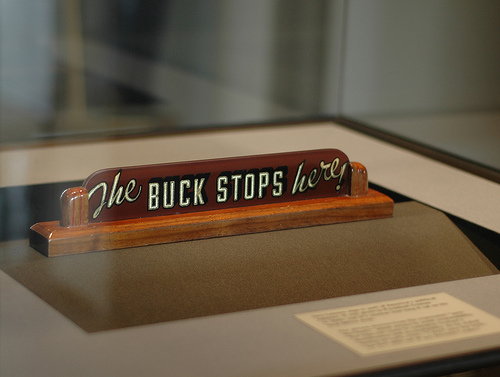
By making it clear to their teams that the buck really did stop at the top, these leaders would make it clear they are prepared to sacrifice themselves should any individual under their command behave improperly.  Of course, such a leader would be able to demand right action from their people because that would be the example they set, every day.

This does not mean that every mistake is punishable by death; people are not perfect and failure is a natural part of the learning cycle.  It does mean a commitment on the part of all participants to ensure learning and correction, rather than denial or protectionism, happen.  It's when failure is swept under the carpet in the name of self-preservation that organizations from the top to the bottom, go astray.

Fortunately, we're a bit more sophisticated than feudal Japan.  Words are our weapons of choice; the majority of our wars are fought through the media; assassinations have been replaced with character assassination.  In the modern context, honourable death on the field of battle or through Seppuku has been replaced with career suicide.  

Whistleblowers like Edward Snowden consciously sacrifice their reputations and careers in respect of principles they hold to be more precious than themselves.  Politicians who sacrifice their own political careers and ambitions for the good of what they believe in do the same; two examples that come to mind are David Caplan and Chris Bentley.

The Rob Ford staffers that have resigned to get themselves as far away from a slowly unfolding train wreck are not acting out of a code of ethics - they're acting from a sense of self-preservation, following the example of their boss.  By speaking truth to power, regardless of the personal consequences, Mark Towhey was the one who put the cause before everything else, including the boss, including himself.

But, you may tell me, to practice Political Bushido is to commit political hari kiri; if every honourable person were to sacrifice themselves for their principles, why, there would only be unhonourable people left - surely, we don't want that?  Absolutely true - but tell me, how's our political culture working out right now?

At the leadership level, sacrifice isn't about personally defeating an opponent, it's about changing the expectations of the people.  Look at any movement in history - it takes martyrs to catalyze the public's willingness to act.

Politics isn't a business for the squeamish, nor is it a venue for self-denying optimism.  What politics is supposed to be, however, is a noble profession.  It can be again - it has to be, again.  What we are missing now are leaders so committed to what they believe in that they are prepared to fall on their own swords in defense of their principals.

When that day comes, we will finally have leadership again.

Monday, 25 June 2012

Atlas Never Wavered


Whenever I hear someone decry the idea of "The Public Good" as some sort of totalitarian subterfuge, I ask them why giving back and self-moderation somehow implies a loss of freedom.  The answer, invariably, is that they don't want anyone telling them what they can and can't do - which, of course, kinda misses the "self" part, but I digress.

Let's play along for a minute.  What happens when everyone has complete independence to do whatever they want to?  They come into conflict.  Our costly and inadequate justice system is all about people trying to protect their own interests, with a third party arbitrating (not a very independent solution, but maybe that's just me).    Or, by looking after their own immediate interests, the group - because that's what society is - creates tragedy-of-the-commons scenarios ranging from pushing-matches to get on and off subway trains to the denuding of natural resources without consideration for tomorrow's needs.

How do you avoid zero-sum conflict or unsustainable practices?  It's simple - by thinking ahead.  When you plan - when you're strategic - you invariably include other people's interests into your calculus.  Everyone knows Sun-tzu's maxim about knowing yourself and knowing your enemy

Another one of Sun-tzu's key lessons is about discipline, or self-control.  There's also the one about creating resource-efficient, win-win scenarios where possible to avoid the loss that invariably occurs through conflict.

In other words, be mindful of the consequences of your actions.  Taken from a slightly different angle - do unto others what you would have them to unto you.

True independence comes not from hiding from the reality that we're all in this together, but internalizing that concept and acting from a place of consciousness.

In other words, altruism is nothing more than selfishness that plans ahead.

And true leadership isn't about control, but empowerment.

Monday, 30 April 2012

Withdrawals From the Public Trust Always Get Collected


Of course we know that, in practical terms, this isn’t really true.  People break the law without consequence all the time.  Even governments break the law – and we let them get away with it.  For every Riadh Ben Aissa that gets caught, there are countless more that don’t.

Having said that – no withdrawal from the public trust is ever really forgotten.  If we’re busy and flush enough, we might overlook an unpaid debt for a time.  Particularly when political and financial capital are harder to come by, though, the time always comes to collect.

Taylor is one example.  Gadhafi is another.  So is SNC.  We have political examples right here in Canada where promises made are now being called in and withdrawals from the public trust are starting to be felt.

There’s a better way.  Instead of acting on a narrow wedge of interests and putting off consequences, we can proactively consider potential outcomes and plan broadly.  Rather than take withdrawals from the public trust and hope nobody comes to collect, we can make investments.

Either way, one thing is certain – we reap what we sow.


Sunday, 15 April 2012

Pay It Forward: Civic Debt, Public Investment


-          Margaret Atwood


Silo Entrepreneurship


I had just sat down on a subway car in Spadina Station when a woman walked through the open door, holding a piece of cardboard that read “I need money, please help me.”  In a loud, rambling voice, she announced to the train passengers that she was poor, had three children she didn’t know how she was going to feed and wasn’t sure she could go on living, could we please give her some money.  This woman, somewhere in her 20s, proceeded to walk the length of the train and solicit donations from every passenger individually. 


Many were shocked; this is not the kind of behaviour one sees on a regular basis on the TTC.  It was all familiar to me – I’d experienced full-time beggars in third-world countries the world over.  There’s a certain cold professionalism, almost a workman’s pride in the way these beggars present themselves.  When the woman came to me, I told her she didn’t have to beg; we have a great social support network in Ontario that can make sure her kids get fed and help her train for the workforce.  She smiled vacuously, said “thank you, sir” and then moved on to ply the next person in line.


To me, this woman is the embodiment of the competitive, entrepreneurial spirit. 


Say what now?


Some people shill treatments and health supplements that aren’t evidence-based.  Others sell insurance on things that you can’t really ensure (which is, essentially, what indulgences were).  This woman’s particular product offering was guilt.  She writes her signs, she works day long plying her craft and, if she’s hit the right notes (or landed the right mark), she gets paid.  How well and hard she works, with a bit of luck on the side, determines her income.  She knows there are always those out there willing to fork over cash without question, because guilt remains, for some, a powerful motivator.


Remember – this woman wasn’t looking for a social hand-out, nor was she interested in living high off of the public teat.  Was she contributing in any meaningful way to our economy?  People were giving her cash, so that proves there is a market for guilt.  If you truly believe in the free-market, supply-and-demand modality, then yeah, she was doing exactly what capitalist purists would want her to.


Yet, she contributes nothing to the fiscal well-being of the province whatsoever.  At the same time, she doesn’t take anything away from the fiscal well-being of the province, either.  In essence, she lives off of the grid.  Until something goes wrong.


“Money is like blood in that it has to circulate, otherwise it’s meaningless.” 


I would suggest that the hyper-rich live off the grid in exactly the same way.  Yes, there’s an argument to be made that the 1% owe society nothing; they worked hard, broke a few heads where necessary but were successful on their own merits.  To the victors go the spoils, etc.  If the elite want to vacation overseas, buy lavish imports and spend money on expensive trappings that don’t necessarily benefit local economies, that’s their choice.  But what are the consequences of that choice?  If the rich don’t invest locally, what does their wealth contribute to social functioning? 


We don’t have to speculate; history has lots of examples of what happens when economic blood doesn’t circulate.


Civic Debt


Back to the beggar.  I had just started to read an article on debt as this woman entered the subway car.  The POV piece, written by Sarah Keenlyside, is a discussion about Jennifer Baichwal’s documentary film Payback: Debt and the Shadow Side of Wealth, inspired by Margaret Atwood’s 2008 Massey Lecture and book of the same name.  It explores the concept of debt, not just fiscal, but social.  Keenlyside’s article starts with a retelling of a debt of honour faced by an Albanian family in light of a murder by the family’s father, ostensibly in defense of his property.  The family, including the blameless children, are now trapped at home because of the cultural debt racked up by their father. 


This story made me think of a Globe and Mail piece on the tussle between teachers and the Ontario government:


Positioning aside, the basic message here is a different angle on the same debt theme; it is suggested that teachers are fostering a contractual debt that will get paid through alternative means.  The teachers can argue that government has a debt with them, not just for campaign assistance in the past but because something they see as necessary for the conduct of their work (a sufficient number of sick days and manageable class sizes) is being deducted from their social payment.    Who will that cost trickle down to? 


Both sides will argue they are in the right; that they have, in essence, paid their dues.  They can both make compelling arguments to that effect in the court of public opinion.  Those arguments will do nothing to alter the terms being handed down to students. 


Does this process make sense in terms of payment and payback?  Maybe.  Does it make sense in terms of social development?  Not really.


You can look at Canadian politics through the same lens.  The Harper government is adding heavily to our democratic deficit by disregarding Parliament, the law and the truth.  They might think they’re getting away with it, but history tells us they’re really just adding to the public trust debt.  That’s a debt the public will eventually seek payment for, one way or another.  The same holds true with our ecological deficit.  You can make a mint off of natural resources, if you have them, but when you focus on that you neglect the need to diversify your economic ability (remember pulp and paper?).  Oh, yeah – then there’s this word “aquifer” that doesn’t get as much attention as it should.  Plus hewing wood doesn’t pay as well as selling finished products.  But I digress.


Public Investment


There’s the accumulation and trading off of debt; essentially, borrowing from tomorrow to pay for today.  Then, there’s investing in the future – the busker model of interaction, also known as strategic thinking.  When you bring an umbrella in case it might rain, that’s investing in the future; you have to carry the thing and might not use it, but you know you won’t end up getting wet.  There’s public health care; you pay for services when you don’t need them so they’re there when you do.  At the same time, you ensure that other people aren’t getting sick, leaving you with reduced risk in suffering from exposure to epidemics.


Continuing with the health care example, there’s another benefit – when health care professionals can focus on working rather than how to earn money, they can proactively refine their craft rather than waste time building in cosmetic frills that contribute little but pay well. 


Public education works this way too – we train kids today so that they’ll be able to find or generate work later, rather than be unemployed, disengaged and potentially criminal.  Even people without kids benefit, when they look at the big picture – investing in someone else’s children means those kids will offer the services you need when you need them down the road.


This, in a nutshell, is what society is all about – planning ahead, giving a bit to gain more down the road.  This isn’t a uniquely human thing to do – altruism is proven to give an evolutionary advantage in other species as well.


The Public Good

I recently heard Gerard Kennedy chat about the concept of the public good.  Kennedy talked about things I believe in strongly – not trying to skirt the rules to see what you can get away with or disenfranchising others; pushing boundaries and challenging people to do more pro-socially to see what we can achieve, collectively.  It’s this mutual challenge – to do better, not be better than – which results in greater success, better outcomes and innovation. 


Competition is about doing better than the other guy, which means at least some of your energy is going to be wasted on bringing the other guy down.  It’s challenge – not competition – that propels us forward and results in stronger individuals for a stronger society.

What's really cool is that organizations like Lawyers for Fair Taxation and Doctors for Fair Taxation understand this as well.  They're willing to put their long-term interests ahead of short-term gain, to the benefit of all of us.   
Ontario Premier Dalton McGuinty gets the idea, too.  When he created the Ministry of Infrastructure Renewal, he told then-Minister David Caplan “you’re job is to play the very long game” by looking at tomorrow’s needs and paying for them incrementally, starting today.  The HST was another example of this, as is Full Day Kindergarten.  There can be challenges with the implementation (challenges that deserved to be recognized and discussed) but again, it’s better to pay a smaller price today for benefit tomorrow.
This is exactly the opposite approach of what the Harper Government is doing.  They are drying up sources of information, reducing pension benefits for tomorrow’s seniors, atrophying public services and public trust, putting all their eggs in the natural resources basket.  They are piling on to the public deficit while theoretically managing the financial deficit.
Putting off until tomorrow is easy, but it’s not leadership.  The reason we, as the public, invest in government in the first place is so that they can strategically invest in tomorrow.
When government refuses to pay forward, it’s each one of us who is left holding the debt.


Thursday, 22 March 2012

Trayvon Martin, Throwing Starfish and the Public Good


-          Rich Tafel


An indictment of single-focus idealism that, despite best intentions, is exacerbating the problems the idealists seek to solve.


The continued myelination of Canada’s democracy, where Political Parties target just their identified voters with messages aimed at established interests (or target their opponent’s supporters with misinformation) rather than promote a genuine marketplace of ideas and subject matter.

What’s the connection?


Each of these threads are examples of narrowing one’s focus and missing the bigger picture.


Trayvon Martin


In the case of Trayvon Martin’s killer, George Zimmerman, the debate around whether or not he was a racist and this was a hate crime has become the lightning rod for attention.  While there’s been some discussion around how Florida’s gun laws and police culture facilitated this crime happening, I have so far seen no discussion about the impact of multiple other factors:


-          Previous warning signs of instability in Zimmerman’s behaviour that didn’t receive due attention;

-          The psychological impact of gated communities on those living within and without;

-          Poverty and the underlying causes of the rash of crimes in Twin Lake Townhomes in the first place;

-          What we’re doing in our education systems to provide Social Emotional Learning that can mitigate natural inclinations towards stigmatizing others;

-          Proactive mental health services.  


It’s good that people are protesting this travesty and demanding justice, but our current justice system isn’t working.  Crime reduction doesn’t stem from greater punishment but rather from increased social access to education and opportunity.  History bears this out; we’re on the right trajectory, but a tendency to narrow our focus to the latest outrage means we’re missing out on the larger picture.


Social Entrepreneurship


Rich Tafel’s explanation of the failings of many social entrepreneurs is brilliant.  He uses the story of the kid throwing dehydrated starfish back into the ocean; the boy can’t save them all, but he can save one and take moral satisfaction in that victory.  If you’re looking for moral satisfaction that’s fine, but if you’re looking to solve the problem, one-off solutions won’t get you very far.  You need a deeper understanding of context, content and consequence so you can address the key structural issues at play.


I’m reminded a bit of Canada’s NDP Party; they seem driven by lofty notions of happiness, hope and harmony.  This is all fine, but idealism alone does not viable policy make.  It’s like saying “if life gives you lemons, make lemonade” without having the lemon or seeking out water, sugar and a glass.  


Our big social challenges are candle problems – genuine solutions require out-of-the-box thinking, which means broadening one’s vision to see the whole picture, not narrowing it to focus on one’s own interests.


The Public Good


Canadian politics is still aflutter with the mounting robocon/voter suppression scandal.  Lots of the discussion centres around how high up the scandal will reach, what punishments are appropriate, whether by-elections should be called, that kind of thing.  The sad fact is, the voters who have been the most disenfranchised by this are the same ones who are likely to dismiss politics in frustration and not vote at all in 2015.  That might suit the Harper Conservatives in the medium-term, but what does it mean for Canadian democracy and our capacity to develop the best sustainable solutions through debate and collaboration in the long-term?


Voter turnout is declining and voters themselves are disengaging themselves from the process.  By focusing on how to maximize their partisan interests in this real-world context, our Political Parties are steadily narrowing their own options and ignoring the elephant in the room.  It’s a rare thing that a Party in power will make significant changes to the system to engage a broader swath of voters; that would, after all, benefit their opponents as well.  Call it The Tragedy of the House of Commons.


This same insular logic pervades Canada’s public, private and not-for-profit sectors.  So long as individual organizations and individual, vertically-integrated hierarchies keep a narrow focus on profits for shareholders, profits for owners, maintaining individual funding envelopes, etc, the really big solutions are going to be overlooked.  You can’t solve collective problems within the confines of a silo-based mentality.


As Gerard Kennedy eloquently put it at a Democracy Reform event last night, Canada’s Political Parties aren’t just accountable to their Executives or their members, but to the Canadian people as a whole.  We aren’t here to facilitate their power grabs – they’re part of our democratic system.  Hospitals worried about their funding levels are part of a broader health system, a broader social service system; the same holds true for every government service provided.  The same applies to companies and their employees, clients and partners. 


The line “move forward together” makes for a great speech-punctuator.  Beyond its rhetorical value, though, it’s actually true.  The only way forward is together.    No matter how hard we try, we can’t box out the rest of the world – does it not make sense to acknowledge that fact and consciously build a society we can all enjoy living in?