Search This Blog

CCE in brief

My photo
Recovering backpacker, Cornwallite at heart, political enthusiast, catalyst, writer, husband, father, community volunteer, unabashedly proud Canadian. Every hyperlink connects to something related directly or thematically to that which is highlighted.
Showing posts with label Sacrifice. Show all posts

Tuesday, 20 May 2014

The Noble Sacrifice and Toronto


Rubbish, of course.

See, we don't believe in society any more - there's no "Toronto" any more than there's a "Canada." That's leftist pandering, trying to manipulate you into committing sociology.

Politics is a free market, right?  To each their own, compete to win?  That which isn't fit doesn't make the cut?  Any candidate who truly believes in a competitive democracy and freedom of choice should fight to the bitter end and do their best to elbow anyone in their wake.  

That's what it takes to win.  

This is the approach increasingly being embodied by Political Parties, but also by voters.  Our laissez-faire approach to politics is exactly why we have a tragedy of the commons.

It's also, I might note, the mindset that landed us with Mayor Rob Ford in the first place.  

Ford, a populist, promised simple solutions, personal wins and an opportunity to punish people you didn't like.  So long as you didn't scratch the surface or connect the dots, his approach sounded great. 

Maybe it still does.  Big-figure cuts and simple solutions still seem awfully popular these days.

This, despite the fact that we know where reactive, selfish choices collectively lead us.

Leadership isn't about individual wins, its about collective success.  Until we start to accept and support this kind of leadership (which exists out there already) we will continue to atrophy as a society.

You get what you pay for, don't you know.

Wednesday, 13 November 2013

Political Seppuku Noble Sacrifice and Exemplary Leadership


PS - Don't click on the link above if you're the squeamish type.

If you're involved in politics, though, odds are you aren't so squeamish.  It's not a business for the faint of heart.

So, what do people get into politics for?  Yes, there are those who see it as a cushy gig with lots of perks, just as there are those who see it as a stepping stone to a higher-paid career consulting somewhere down the road.  And absolutely, there are those who enter politics because they have egos bigger than their constituencies and are only really interested in power, whatever that means.

But there are those who get into politics for the right reasons - because they believe in a cause or they're angry at the direction a government is taking.  Stephen Harper and Rob Ford are two examples; we'll get to them later.

Some idealistic political ingenues enter the field convinced they have the moxie to change the system from within, that their principles are so rock-solid that they will never, ever fall victim to the cynicism of politics-as-usual.

Those that hold to this course don't last long - case in point, Stéphane Dion.  Dion's greatest sin was that he was not a ruthless, step-on-their-throats political operative.  He thought policy-wise, not tactically. As a partisan, Dion was weak - and we all know what happens to the weak in a survival-of-the-fittest game.

Those who survive and thrive in our political culture do so by learning to play the game, which is essentially do anything you think you can get away with to win/kneecap your enemies and if you get caught, deny, deflect or bait and switch as long as you can and hopefully all will be forgotten.

This is where we come back to Harper and Ford.  


Harper is a policy wonk - he basically had to have his arm twisted to run, but when he did, it became his divine crusade to remake Canada in his own image.  In his mind, his cause is just; as a man of functionally fixed faith, his belief in his righteousness has never wavered.  His ethics, however, have flipped and flopped across the political landscape like a fish out of water.

Remember when Harper declared that "moral relativism simply cannot be sustained as a guiding philosophy?"  That was back when he thought that transparency was vital to democracy and that leaders should be held accountable but even more than that, should feel accountable for their choices and the actions of their team.

Since then, Harper has become the moral nihilist he once derided.  His talking points are consistent, his bluster remains the same, but Harper has become the embodiment of everything he once stood against.  He has broken his promise on accountability and transparency, stifled the flow of information that's vital to an engaged, dynamic democracy and worse, he has either tacitly approved or willfully ignored the creep of entitlement and corruption into his own office. 

All of this, I have no doubt, he has done in good conscience, because he feels righteous and knows in his Machiavellian heart that it's his occupancy of 24 Sussex that allows for his crusade to press on. What need for consultations with Provincial counterparts?  Don't they realize he's Prime Minister?

There are consequences to Harper's my-way-or-the-highway approach.  While the rest of the world is recognizing the need to invest in massive service integration and restructuring processes if they are to have any hope at stabilizing their economy, supporting their populations and building pathways to future success, Harper is contemplating a scorched earth policy that will devastate Canada's opportunity to adapt - all because it will kneecap his opponents.  

There are precedents out there for what happens when leaders righteously convince themselves that their grip on power is in the best interests of the people they are meant to serve, not dictate to.  For a recent example, look at Syria.  For the most egregious example, look to North Korea.

Then, there's Rob Ford.  With all the emphasis these days on Ford's Follies - crack-smoking, binge-drinking, murder-threatening, bobble-head signing and so forth. people have lost sight of the man's basic profile.  Rob Ford is the guy who poked his nose into other constituencies because, dammit, someone had to get things done.  Ford is the guy who offered to score Oxycontin for a man who said he needed it.  Ford is the guy who loved to coach football and felt that, dammit, those kids needed him - without him, they were doomed to burn in the fires of their own inadequacies.

How devastated was he to lose his position as coach of the Don Bosco Eagles?  What did that do to the self-image he has created for himself; isn't  he supposed to be this great... crusader?  He has been lambasted, ridiculed the world over and been forced, even if in small measure, to admit that the cloak he has wrapped himself in is an illusion.  He has far more to lose now than he ever has before - as do the people who have taken him as their champion, come hell or high water.

Those people - this Ford Nation - aren't disappearing, despite what some pundits are suggesting.  They aren't abandoning their man as his faults are seized upon and exploited; rather, they are increasingly demonizing their opponents, dehumanizing them in the same way they feel the leftist, urban elite cyclists and thug-huggers are vilifying their man.

Intransigent, power-addicted leaders have this habit of polarizing the people into for and against camps.  At the same time, the people who convince themselves that their leaders are the embodiment of perfection and idealize them as superheroes feed the descent from participatory democracy to fractured society.  Add Greece's Golden Dawn and Hungary's Jobbik Party to the list.

This is where the ancient Japanese custom of Seppuku comes in.  On the surface, Seppuku is simply a painful form of suicide; one who commits Seppuku jabs a sword into their own bowels and slices open their own belly, leading to a slow, agonizing death.  Beyond this, though, Seppuku was reflective of Bushido, the Samurai code of ethics.   

Seppuku and Bushido are not an easy concept for us Westerners to understand, as it involves three concepts that we seem to have done away with - shame, honour and sacrifice.  The Hagakure, the defining text for Bushido, gives us insight around the concept:


Living without blame doesn't mean acting inappropriately and then denying/deflecting blame - it means not doing things that are inappropriate in the first place.

Rob Ford's heart is not set right - if it were, he'd probably have less substance abuse problems, but he would also not be Mayor.  

I'm sure Stephen Harper thinks his heart is set right; he might even pray every morning and evening. 

The fact that so many of his hand-picked people have failed in their civic duties and he still feels entitled to be Prime Minister is all the evidence we need to see that Harper has lost his way.  

Does it come as any surprise that the teams around both men are willing to bypass the rules, act unethically and when their shame comes to light, defiantly defend their actions or seek to minimize the damage to themselves?  After all, that's exactly what Ford and Harper are doing.  

Today's political staff have, by and large, hitched their wagons to the horse they think most likely to win - it's the spin-off benefits of being wingmen to the winningest leader that motivates them, just as winning is what motivates their leader.  The rational pursuit of self-interest has led to political protectionism and the decline of Canadian democracy.

Just imagine if we had, any at level, leaders that understood and practiced a modern-day variant of Bushido.  By acting as if they, as individuals, were already dead, their primary objective would be obsolescence - creating teams and plans that would persevere long after they were gone.  


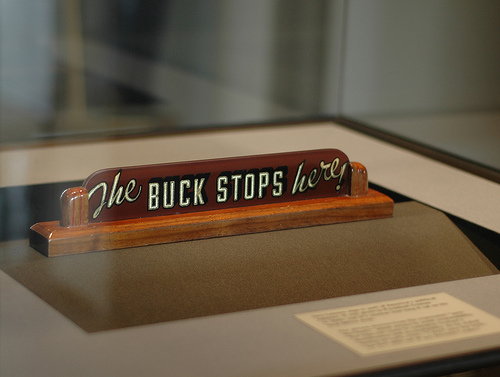
By making it clear to their teams that the buck really did stop at the top, these leaders would make it clear they are prepared to sacrifice themselves should any individual under their command behave improperly.  Of course, such a leader would be able to demand right action from their people because that would be the example they set, every day.

This does not mean that every mistake is punishable by death; people are not perfect and failure is a natural part of the learning cycle.  It does mean a commitment on the part of all participants to ensure learning and correction, rather than denial or protectionism, happen.  It's when failure is swept under the carpet in the name of self-preservation that organizations from the top to the bottom, go astray.

Fortunately, we're a bit more sophisticated than feudal Japan.  Words are our weapons of choice; the majority of our wars are fought through the media; assassinations have been replaced with character assassination.  In the modern context, honourable death on the field of battle or through Seppuku has been replaced with career suicide.  

Whistleblowers like Edward Snowden consciously sacrifice their reputations and careers in respect of principles they hold to be more precious than themselves.  Politicians who sacrifice their own political careers and ambitions for the good of what they believe in do the same; two examples that come to mind are David Caplan and Chris Bentley.

The Rob Ford staffers that have resigned to get themselves as far away from a slowly unfolding train wreck are not acting out of a code of ethics - they're acting from a sense of self-preservation, following the example of their boss.  By speaking truth to power, regardless of the personal consequences, Mark Towhey was the one who put the cause before everything else, including the boss, including himself.

But, you may tell me, to practice Political Bushido is to commit political hari kiri; if every honourable person were to sacrifice themselves for their principles, why, there would only be unhonourable people left - surely, we don't want that?  Absolutely true - but tell me, how's our political culture working out right now?

At the leadership level, sacrifice isn't about personally defeating an opponent, it's about changing the expectations of the people.  Look at any movement in history - it takes martyrs to catalyze the public's willingness to act.

Politics isn't a business for the squeamish, nor is it a venue for self-denying optimism.  What politics is supposed to be, however, is a noble profession.  It can be again - it has to be, again.  What we are missing now are leaders so committed to what they believe in that they are prepared to fall on their own swords in defense of their principals.

When that day comes, we will finally have leadership again.

Sunday, 10 November 2013

Remember


It's not just about what they fought against (those who would declare any group of individuals to be subhuman and unworthy of social equity). 

It's what they stood for - that if we can't find a way to live together we will die alone; if we can't understand that we all come from the same place, we'll never get to where we're going.

It's what soldiers of all sorts are willing to stand for to this day.

Sacrifice isn't about what you give up - it's about what you contribute to.

Friday, 8 November 2013

The Fall of Rob Ford - Not a Human Tragedy, but a Lack of Leadership


If the Premier is referring to Ford's family - folks like, say his brother or his mom and sister - they aren't giving him that advice.  The people that should truly love him, i.e. be putting his well-being first are letting him down, spectacularly.

What about the people in his political circle who have their own credibility on the line?  Tim Hudak continues to do a partisan dance, not wanting to risk fallout from proactivley intervening with the Fords and also probably hedging his bets that they'll pull through this, and therefore still be able to raise money for his Party.

Current Deputy Mayor Norm Kelly hopes platitudes will satiate the media while former Deputy Mayor Doug Holyday suggests Ford "get help" but clearly isn't prepared to intervene directly.  He's got a new job, after all - his old friend is no longer his business.

There's talk of motions at City Hall, but those are to remove Ford from office, thereby making him someone else's problem.  That's a bit like throwing an addict in jail to put them out of sight and mind, or offing someone that's too hard to communicate with.

Harper is absolutely keeping his distance; he's got enough brand problems to deal with as it is and sees Ford as an unnecessary liability, now - though that wasn't the case when the PM needed Mayor's help.

Premier Wynne is someone who actually does care, but she's also Leader of a minority government facing down opponents who will do anything to undermine her credibility and lead to an election.  The last time she opened her mouth with words of concern, she was pilloried - by Ford's brother, the man who more than anyone else on earth should have been the one sharing those words with the Mayor.

Under those circumstances, no Party Leader with electoral victory in mind would want to intervene.

In summary - Ford's family are in denial, Ford's Council allies are obfuscating while his Council enemies smell blood in the water and are going for the throat, so to speak.  Ford's conservative allies at other levels have either abandoned him entirely or are keeping their distance, hedging their bets as to whether the Fords can still be useful to them or have become a liability.  Everyone else is staying as far away from the Mayor as possible.

Put yourself in Ford's shoes.  Faced with a growing recognition that you aren't fit for the role you love and recognizing that truly, you stand alone in front of the international spotlight, what do you do?  He's lost his football team, he's lost his friends, he's lost his reputation - his title is really all that he has left.

When you have nothing left to lose, you are in a very vulnerable state.

As I've been saying for months and more people are saying now, this won't end well - unless someone steps in and demonstrates some true, tough, non-judgemental love for Ford and takes him by the hand. 

But all this could have been prevented if somewhere along the line, one of those people who Ford respects as an equal had put the man before the opportunity.  Ford should have gotten help a long time ago; all of this could have been avoided.  But that would have meant his family and allies would have had to risk their standing with the Mayor or their public reputation on the line.  

Calling this "a human tragedy" is unfair, as it lets all of Ford's enablers off the hook.  This is truly a tragedy of the commons - a symptom of a diseased political system that puts partisan success over sound choices and where our politicians are pilloried for being human, creating false expectations for the public and their peers.


We don't have leaders that do sacrifice these days - which makes me question whether we have any leaders at all.

UPDATE - with all the sensational, salacious stuff that's come out of both police reports and the Mayor's own mouth, this piece hasn't gotten as much attention as it should:
 
 
Rob Ford's the younger brother of a domineering, potentially sociopathic brother.  Rob has a couple people he idolizes - including PM Harper, who's turned his back on him and his father, now deceased.  Whatever Ford tells Council/the media/himself, he clearly knows that he is a disappointment to the legacy.
 
Ford has lost his beloved football team and his position as Mayor is under threat.  All of his dirty laundry, behaviours he seems not to have been able to control, are being laid bare. 
 
On some level it's gotta be hard for Ford to live with himself, but he's functionally fixed; to back down would be to show weakness.  In his mind, he has no choice but to face his doom head-on.
 
Calling staff in tears from your dad's gravesite easily fits the broader pattern of behaviour we've seen here.

Wednesday, 4 September 2013

War is Sacrifice


Steve Rogers: I know guys with none of that worth ten of you. I've seen the footage. The only thing you really fight for is yourself. You're not the guy to make the sacrifice play, to lay down on a wire and let the other guy crawl over you.
Tony Stark: I think I would just cut the wire.
Steve Rogers: Always a way out... You know, you may not be a threat, but you better stop pretending to be a hero.
 
 
War is the most wasteful of human activities.  It's designed to do one thing - destroy.  That destruction comes in the form of lives lost, property damaged and societies fractured.  It's all so very wasteful.
 
It also requires an utter level of conviction; you must completely overcome your enemy, reduce them to a quivering mass afraid to ever lift a finger in your presence again or you must "...plant your foot on his neck, and keep him that way forever, lest he spring up and slit your white throat."
 
There is, in my mind, only one valid justification for war - and that's to stop the fatal suffering of other human beings at the hands of oppressors.  Up to that point you have many, many tools for coercion; legislative, advocacy, civil disobedience, million person marches, more nuanced tactics of persuasion.  When the guns start picking off the people, that is when you must recognize all other efforts have, in exclusion, failed - and that's when you supplement them with extreme prejudice.
 
The conflict in Syria is one of those times.  It is incumbent on world leaders (yes, many of whom have blood of some kind or other on their own hands) to do something to protect the innocent.  That's the whole point of being a leader.
 
Now here's where I stand apart from many.  I am not in favour of armchair military tactics that keep the aggressor out of harm's way.  There is, in fact, a rule for that - do unto others as you'd have them do unto you.  If you are prepared to put a bullet into another human being because you believe it is necessary, you must be prepared to take one back.
 
To declare war on someone and expect them not to retaliate if folly.  To try and take the risk out of war for yourself is equally short-sighted - it tends to involve harsh measures like landmines, chemical weapons and drones, escalating the inhumanity of combat.  When you keep your skin out of the game, you keep your enemy at a distance, making  it easier to dehumanize them.  The person you can't see can be an animal, a beast, a sub-human creature that needs to be put down at all costs - meaning, the ends justify the means.  That's the approach Assad has taken, as have so many dictators before him. 
 
When you look 'em in the eye, they are simple another soldier following orders on behalf of a cause that's been sold to them in the most flattering terms possible.  They have families just as you do; they are as frustrated, tired and questioning as you are.  If you have to kill them - and you may have to - recognize that killing for what it is and remember.
 
This is the same reason I believe he who passes judgement should wield the sword.  Leaders calling for war from the comforts of plush offices are playing testosterone-fuelled games using the lives of others as their pawns.  Assad feels like the Big Man on the Syrian campus; he'd feel a little bit differently if the carnage being done on his orders landed directly on his doorstep.
 
There are all kinds of reasons why modern leaders don't lead from the front - bigger theatres of war require broader line-of-sight to manage multiple engagements in an effective, coordinated way.  When the people calling those shots, however, have never experienced war in person, then there's a good chance that all they see are hills on maps.  The Bloody Great War I is full of such stories of lives destroyed because leaders didn't bother to get the lay of the land.
 
Politics is this kind of warfare writ large - leaders try to remove themselves from the consequences of their direction, fostering a chain of unaccountability.  You can always spin your way out of any crisis you have brought on yourself.  Everyone that gets hurt along the way is simply collateral damage.  By enabling leaders because we think that will serve our own best interests, we fuel the problem.  The role of a leader's team isn't to protect their leader but to empower them and provide them with the best counsel possible, whether it's palatable or not.  Leaders should wear the weight of their decisions personally - it's not a privilege, being in charge, but a responsibility.
 
War is sacrifice; in situations like Syria a necessary one, but a sacrifice none-the-less.  If you're going to commit to combat - if you're going to commit your own forces to combat - have the guts to internalize what you are doing and do it properly.  That means boots on the ground, preparations at home and a never-ending commitment to try and make non-violent alternatives work.  Destruction of the enemy is never the goal - you can't do that without becoming a war criminal yourself.  Keeping your foot on the throat of your enemy isn't sustainable, either - revolutions are born that way. 
 
If a leader is to commit to war, they should do so not in a bid for self-preservation; in fact, they should do so from a mindset of never asking their troops to do that which they would not.  That means being ready to put your own life on the line as well.  That kind of conviction discourages sloppy and wasteful planning, but it is also powerful beyond recognition - there is nothing more terrifying on the field of combat than an entire force that, from the top down, is prepared to put the mission before all else, including themselves. 
 
At the end of the day it's not a matter of us vs. them; it's one world, and we all live in it together, or we can die alone.  There is nothing heroic about killing someone else; the true heroes are those ready to die themselves so that others may live.
 

Sunday, 11 November 2012

(CFN) Lest We Forget: The Causes and Consequences of War


Craig C-E
Buchenwald, like all Concentration Camps, was hell on earth. Horrific, dehumanizing death was endemic. You cannot hear the stories of survivors without feeling some shame at being part of a species that can inflict such atrocity on its own members. For people like my grandfather, the horror of the Camps is compounded by a survivor’s guilt that forever imprisons part of their souls to private torment. To this day, the sound of a German Sheppard barking or even a few phrases spoken in German is enough to send shivers up Ed’s spine. Not quite the adventure he signed up for.


Today, on Remembrance Day, we pay tribute to the veterans and soldiers in the field of combat for sacrifices made on our behalf in places far from home. I will be thinking of my grandfather when The Last Post sounds, quietly expressing my gratitude and regret for the burden he carries to this day. I’ll also be thinking about the men and women in uniform protecting Canadian interests somewhere out there out now.
The further removed from conflict we become through geography and time, the less we realize just how horrific it is. We condemn ourselves to repeat history when we forget the lessons it teaches us. Honouring our veterans and recognizing the value and nobility of their sacrifices on our behalf gives us reason to think about the causes and consequences of war. To me, they are embodied by the policy of hate represented by Buchenwald and the toll World War II took on my grandfather.