Search This Blog

CCE in brief

My photo
Recovering backpacker, Cornwallite at heart, political enthusiast, catalyst, writer, husband, father, community volunteer, unabashedly proud Canadian. Every hyperlink connects to something related directly or thematically to that which is highlighted.

Wednesday, 5 February 2014

#TorontoIs - For or Against?


I have been told, repeatedly, that Warren Kinsella is really good at what he does.  It's unquestionably true; he's the man that brought the War Room to Canada.  It could be argued that he in large part shaped a whole generation of politicing in this country.

He's right, too - the video (you'll have to follow the link to his site to see it) is powerful.  It provides a fascinating contrast between some of the diverse landmarks that are so integral to Toronto's identity and the divisive, small-minded politics of Rob Ford.

The point of this video is to demonstrate to Toronto how the world sees this city - not as one of the most diverse places on earth, not as a centre of art, business and culture, but as the playground of Rob Ford, the crack-smoking Mayor.

The video is designed to incite strong, reactive emotions of discomfort, fear, even anger.  This is how the world sees us, it says; we need to do something to change that.
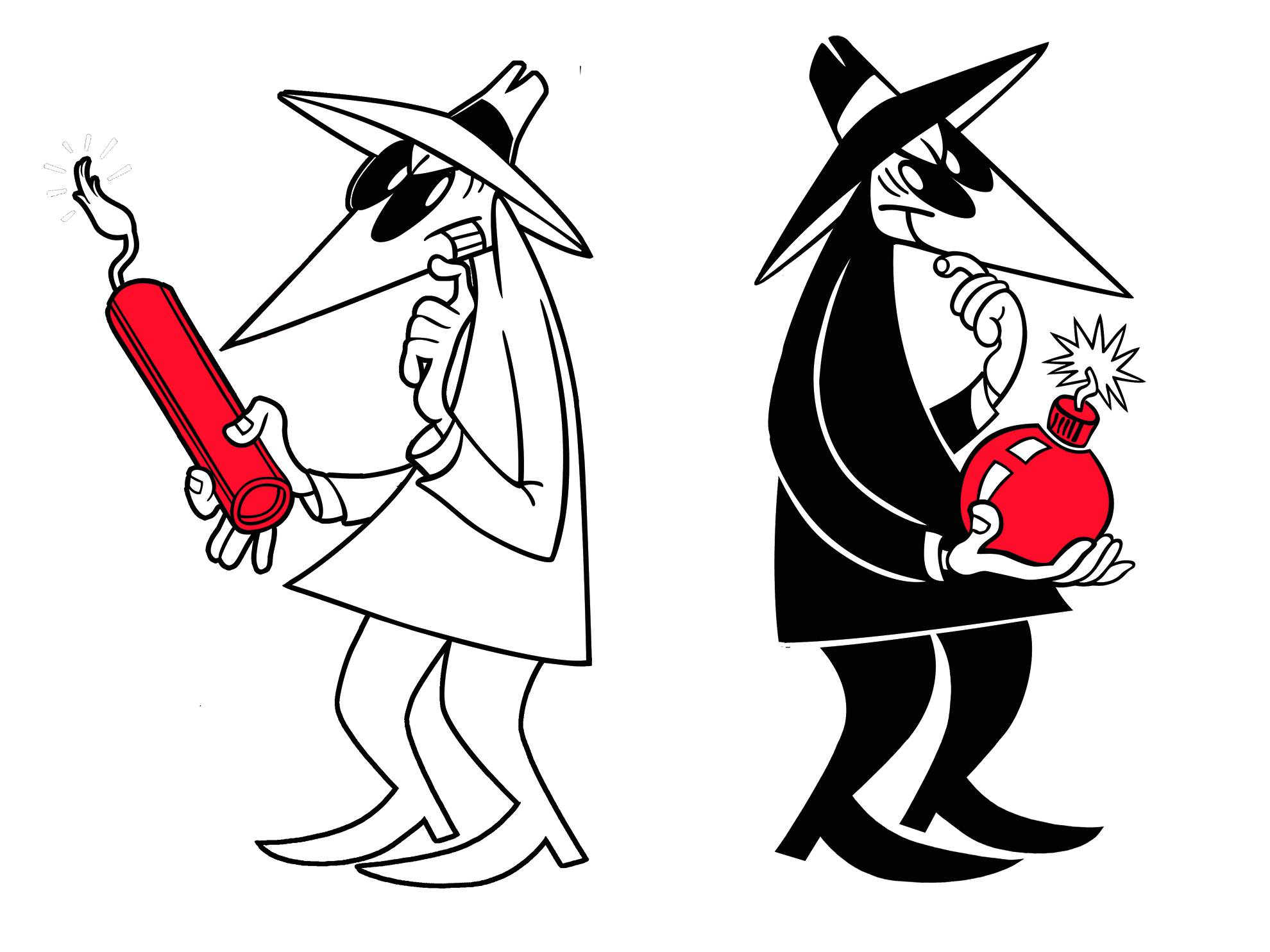

By and large this is how politics functions - we define ourselves as being different than our opponents and work hard to define our opponents as the devil incarnate.  

We have to fight against, the message goes, often with the tagline only Candidate White Hat can defeat/prevent Candidate Black Hat from bringing us down

We don't vote leaders in; we kick bums out.

But there's another way.

Instead of inciting kick-the-bums out re-activeness, we could have leaders that define themselves by their vision, authenticity and commitment to walking the walk.  Calgary has become cool in ways previously unimaginable in no small part due to its Mayor.  

Where Rob Ford talks about promises made and kept that are anything but, Naheed Nenshi is better known for what he does and how he communicates.  We don't need boastful statements; his deeds speak louder than worlds.

No less than Kinsella himself has wistfully wondered, "wouldn't it be nice to have a leader who things big, and does big things, once again?"

I think so.  I know lots of other people who feel the same way.

Being angry and resentful all the time is tiring.  Eventually, disaffection settles in and people come to accept that things won't be any better and that fighting is only going to make things worse.  It's why Canada is suffering through a winter of discontent, complete with hoarding behaviours typical of hibernating creatures.


It's true that Toronto's international reputation is largely being defined by Rob Ford, but it doesn't need to be.  If the people living here, or the people living across Canada were to see amazing, heroic deeds and hear inspirational stories of what we're really about, we may be shaken out of our misanthropic complacency and catalyzed into positive action.


That's the kind of leadership I could get behind.  Don't tell me what's wrong and who's to blame; tell me who's making a difference and give me a vision of how together, we can make our community a place to be proud of.  

Lead, for god's sake.

If you think it's powerful how people will fight when they collectively stand against, you'd be amazed by what they can do when they are united for.

Brand and the Community Conundrum


Here's the conundrum; we live in a world that is sales-oriented; wealth, success, the capacity to make things happen all relies on sales and sales by and large relies on brand.

I know lots of successful salespeople - they sell one service, one Party or just themselves and do well at it.  They don't care about a big picture, unless it's how they can influence that big picture to the furtherance of their brand.

In some cases, even the most ardently community-minded organizations become cliquish, developing an almost colonialist mentality that places them and their community-shaping ways above and beyond those of any others.


Yet within these communities or even standing outside of any branded community are activists, hacktivists and organizers frustrated with the inefficiency in inefficacy of our brand/sales oriented system.  Silos are bad - they build walls between people and organizations that ultimately have the same goal.  Silos diminish that goal and put the brand first.


There's growing demand for something, some movement or new community that surpasses these silos and united people of different professions, political ideologies and social strata behind one widely-accepted vision of what, collectively, we can be - strong individuals for a strong society.

It seems to be that we can stand together, or brand alone.  If we don't brand, though, no one knows who we are - there's no way to cut through the fog without a clearly defined and loudly promoted identity, which leads to competition for attention and resources, which is the opposite of community.

But how do you build a community that doesn't naturally succumb to the trappings of brand?  What vision is clear enough, powerful enough to empower people to want to extend their hands beyond their shaded silos and reach for the sun?

I don't have the answer.  Not by myself.  But I think I know where we can find it.


Tuesday, 4 February 2014

Silver Linings


Positivity is all the rage these days.  

There's even a new branch of psychology dedicated to it.  Yet many people don't trust the idea that you can be happy all the time, that you can force the sun to come out.

They feel that people who act happy all the time are faking it, trying to appear as something they're not or worse, are trying to feel something they don't.  

By and large, they're right.

Heartbreak sucks.  Death sucks.  Loss of health, of employment, of self-confidence sap one's soul like a dark winter, sucking the spark of life right out of you.

To deny this, frankly, is delusional.

But that's not the point.  Positive psychology isn't about being happy all the time; it's about resilience.  

There's a whole science to resilience and what it means at the neurochemical level.  I could tell you about oxytocin and the positive impact it has on your ability to bounce back from pain both physical and mental.

I could also write about the addictive quality of so many things in our lives these days (ranging from buzzes on the blackberry to points on a video game, the stock market or at election time) and the way these hits close us off from the world. weaken our immune systems, make us reliant on our fixes rather than empowered through being part of something greater.

I don't need to.  We all feel how this stuff works, even if we don't know how to articulate it.  We prefer simple messaging, after all.

It's the half-glass thing; if you're optimistic, you see it one way; if you're not, you see it another.  It's an islands and ocean thing; if you're happy, the world is full of promise; if you're scared, or hurt, or depressed, not so much.

No matter which way you look at it, the other perspective is always there.  I find that recognizing this grounds me - it's a well of strength I can tap into whenever I need it.

You can't force the sun to come out from behind obscuring clouds.  You don't need to; that ever-present silver lining serves to always remind you it's there.


Leadership Off the Links: Women Who Don't Complain, But Act (UPDATED)


AnnWong-Aging-30isthenew20-PBJMag


It's funny in a sad kind of way; on the one hand, we have Old Boy Network folk like John Tory suggesting that it's up to women to push for more money and encouraging young women to learn golf so as to cozy up to the rich white guys.

At the same time, the solution being proposed to our youth unemployment (and general disaffection with the way our system works) by these folk is suck it up and sell harder.  It's not the job of bosses to look for talent any more than it's their responsibility to proactively support and reward good work - laissez-faire capitalism and all that.

These are the same wealthy insiders who are discussing the failure of Capitalism at Davos and discussing Canada's innovation deficit at high-priced luncheons and bemoaning the fact that young people don't get the way the world works.  Oh - and then there's that whole social sustainability thing, crippled by a burgeoning mental health crisis.  Dysfunctional government doesn't help matters, either.

It's too bad the elites don't believe in committing sociology; if they did, they'd actually understand the problems we're facing and see that the solutions are already being developed and implemented.

Some of the brightest, most dedicated, innovative and solution-oriented people I know don't play golf, don't wear suits and certainly aren't interested in complaining.  To them, that would be a waste of time.

Instead, they are focused on getting things done. 

They're not afraid to give stern words to the sales-oriented laissez-faire loafers who are getting in the way of progress.  After all, when the bosses abdicate responsibility, someone's gotta lead.

And you know what else?   These emerging leaders seem to overwhelmingly be women.


UPDATE:  The best swag for women coders according to Goldman Sachs?  Compact mirrors and nail files.  Read the comments to see the psychology of why this sort of thing persists.

I'm sure some women love to be condescended to and subjected to sexist stereotypes.  We'll see how's that approach helps the Goldman Sachs' of the world recruit women.  If it's the company's culture rather than the individuals' sensitivity that's the problem, I'm sure they'll evolve with the times.

It'd only be logical, right?

Visionaries: Mad, Bad and Dangerous to Know


Kinsella makes a great point - visionaries are often catalysts for religion and wars.  They can also be catalysts for movements.

Martin Luther King Jr. had a dream - a vision of what the world could be.  JFK had a vision - to put a man on the moon.  Were it not for the lofty visions of thought leaders like these and others, where would we be?  The truth is it's these pioneers of the future that give us direction and lead the way into better tomorrows.


But big is scary; the Undiscovered Country cannot be quantified and as such is daunting.  Security, surely, lies in the past - make things as they were, wall off the changing world and stay safe.  Between the comfort of The Cave and the unknown perils of the world beyond, who would possibly want to venture out their front door?

We have political leaders these days whose stock in trade is fear.  Fear the unknown and trust in them to keep threats from landing on our shores; don't pry deeply into how they do it, though, for you may not like what you see. 

Sadly, these fear-focused folk are succumbing to their own rhetoric; they look at movements like Occupy or Open Government and fear the potential of the crowd.


Fear, of course, is a biochemical reaction shaped and wired into our brains by substances such as Norepinephrine and, funny enough Dopamine, which gives individuals little hits of happy for scoring personal wins.  It really shouldn't be a surprise that win-focused autocrats have a healthy fear of failure and losing control, which is why they tend to hoard power and tend to have bad tempers.


Leaders, neurochemically-speaking, are fueled less by fear and more by hope for tomorrow and a sense of both community and a sense of responsibility to that community, catalyzed by substances like serotonin and oxytocin.  They dare to aim higher, to break barriers, to reach for the starts and make the unknown known - and they inspire us to walk with them on the journey.

It was four years ago that a fella named Andrew Steele told me that mental health was a perpetually under-funded field; it's God's work, he said, but whose willing to pay for God's work?


The Canadian Mental Health Commission.  Veterans and Police officers with PTSD.  Social-emotional learning and self-regulation.  Cognitive Labour and human resource/work design transformation.  Bell Let's Talk.  Stigma reduction and citizen engagement.  Virtuous Schemers.  The Knowledge Economy and The Burning Platform.  Networked Intelligence through Social Media.  Open Government and Open Data.  And, of course, our globally-recognized mental health crisis.

All these strands connect in clear ways, if you think big enough, if you map them out.  Yes, we're in uncertain times and yes, many people have a little Armageddon on their minds.  Where are the leaders with big visions, we ask?  Who are we supposed to be following?

Religion or war.
Us or them.
Live together or die alone.

To those who fear (or deny) that which will emerge next, be it an external force or a loss of self, all I can say is don't panic.  It is a dangerous business, going outside our doors - who knows where you might be swept off to?

Have faith that there are those who at least have a good idea.  The visionary leadership we seek is here, right now, as it has always been.

We need only be conscious of this.

So who's up for an adventure?


A Stopped Clock and Doug Ford


If you message enough, you're bound to land on the truth, even if by accident.
 
Toronto has 44 Wards.  Councillors run in individual Wards and therefore should be spending their time trying to build support among those voters who will hopefully vote for them.
 
As Mayor/Mayoral candidate, Rob Ford is running for the whole shebang - he wants a majority of votes from all over the GTA.  He doesn't need them all to win, though - just more than the next gal or guy.  He therefore doesn't need to win support in every Ward, just enough Wards based on the internal math (assuming it's better math than Ford's financial measurements) of his campaign team.
 
So technically Ford can have ten times more support than any one Councillor, equating to broad support in 10 Wards, but still have little to know support in 34 additional Wards.
 
You're welcome.

Monday, 3 February 2014

John Tory: Competition vs Accomplishment

Patrick Swayze - Nobody Puts baby in a corner


If you're maybe kinda sorta contemplating a bid for higher office, this was about as clever as thing to say as that time Mitt Romney talked about having binders full of women.

From a behavioural perspective, however, there's something really interesting to be mined in this.


Tory makes a point; men do tend to be more selfishly aggressive than women (in that the average man is more aggressive than the average woman, not that selfish aggressiveness or passiveness are unique to each gender).


It's not a uniquely human thing; across mammalian species, males tend to be flashier in their appearance and more likely to fight with each other for status and dominance (which largely reads as increased access to women).  

Physical features like the peacock's tail and the deer's antlers are biological testament to this. 

Now think about this in a social context for a second.  We automatically assume that aggressively standing up for one's interests is a good thing, be it the better cut of meat or the corner office.   Competitive men are more likely to get what they want, therefore making them better investments.  

Right?

In nature, the more competitive male gets the resources, gets the female and passes on its genes.  In theory, the socially more aggressive male will make more sales and be of greater value to their employer; this aggression gets rewarded through higher wages and corner offices.  Eventually, they and the companies that employ them become too big to fail, right? 

Not really, no.  Aggressive, alpha salesmen are selling brand more than they are product, ignoring or downloading risk to people less important or competitive than they are.  They fail all the time - the higher up they get, the more people there are carrying the risk for them.


Aggressive sales isn't always a good thing, especially when the product or service isn't that great.  The focus shifts from being about the quality of a product and more about tearing down competitors - kinda like political attack ads. 


The other thing about an aggressive focus on winning is that, by the very nature of competition, success of one comes at the expense of someone else.  What happens when your competitors don't cave so easily?  Syria provides a great example of how badly this approach can turn out.

War has traditionally been the province of men not because they're tough enough to fight, but because on the whole, fighting comes more naturally to them. 

The ability to sell products/services of lower quality, the drive to push down competitors and aggression as a default - these might be great skills to have in a sales environment, but they're also a recipe for stagnation and failure.  Feudalism, Wall Street collapses and the hollowing out of democratic politics are all examples of where elbows-up aggression gets us.  

How many brutal women dictators can you name?  Exactly.


History is the story of humankind moving in the opposite direction, towards increased social-emotional fluency, collaboration and a focus on results rather than sales pitches.  It should come as no surprise that, as women have become more fully empowered and integrated into society, we've become less violent, more sophisticated, more balanced and even more innovative.

The last is key, especially in fields like politics.  If you think that policy development is a social equivalent to natural selection, with the best ideas already in existence needing only tough salesmen to ensure the best policy genes are carried on, fine.  But what if the solutions at hand aren't up to the challenges of the day?

Reproduction isn't about carrying one person's genes forward - it's about getting the best blend of each. 

Smart policy (admittedly, a rare commodity) works the same way.  It blends perspectives and approaches to create the best adapted and flexible end product.


If you're so focused on winning and selling what you have that you can't view alternative perspectives as anything but competition, you're losing the ability to incorporate, grow and build partnerships.  You may grow big and strong, but as a result you lose the ability to adapt and, as the world change, you become as irrelevant as horses and bayonets (or for that matter, coal plants).

Smart companies have recognized that it pays to be adaptable and to work with employees to ensure they have the tools, accommodation and compensation they need to succeed rather than wait for their workers to come to them.  

That way it's the best talent, not the most aggressive negotiators, who rise up the ranks and keep the organization competitive in an evolving landscape.

It doesn't sound to me like John Tory spent much time seeking out, understanding and supporting the best talent in his teams.  Like far too many bosses, he played the laissez-faire game, hoarding his money until someone came and aggressively convinced him to part with it.

As such, he represents traditional models of leadership that are proven less effective, especially in economies that are heavily dependent on innovation.  It's a shame, really, because he understands how destructive a winner-take-all approach can be to sound decisions getting made.


It's probably true that women are less likely to spend their time demanding more from their bosses; by the same token, it's equally likely that women leaders are more likely to do the right thing and empower their employees so they can spend more time working than negotiating.


Something I think John Tory should be familiar with.