Search This Blog

CCE in brief

My photo
Recovering backpacker, Cornwallite at heart, political enthusiast, catalyst, writer, husband, father, community volunteer, unabashedly proud Canadian. Every hyperlink connects to something related directly or thematically to that which is highlighted.
Showing posts with label the Centre. Show all posts

Wednesday, 14 August 2013

See the World, Speak the Word


Politics is a constant struggle for dominance between the red and the blue, the assumption being that you can only be one or the other.  Oddly enough, there's a correlation between political viewpoints and different regions of the brain.  


It's by combining the two lenses that you gain perspective.


Wednesday, 6 February 2013

Cenotes, Yggdrasil and A Testament to Politial Irony


One of the great political ironies, from my point of view, is this:
 
The political right says they're all about unburdening the individual of regulations and rules, then throwing them in the deep end so that they learn how to swim the stern-father way.  But then they talk about the free market as the thing that's meant to shape society, as though a structureless system is somehow itself the leader.  This shifting of power to a nebulous something beyond people leads to uncertainty, fear and anger.  An eye for an eye, etc.  God wills it.
 
The political left, however, talks about society, not a market, as the system of choice - they want everyone to live in gardens watered by running streams.  How we get there is never clear, but the thing that is seen as hindrance is often the structures that define society - business, government, public institutions.  While the talk is of social strength, the practical focus is on individuality and expressing oneself freely yet respectfully; if you are offended by difference, you can turn the other cheek.
 
There's a bit of cognitive dissonance within both these views, which actually makes a lot of sense - the reality is that you can't have a strong society without strong institutions, but those institutions cannot be strong unless the people are themselves empowered.  People are naturally imbued with both ends of the spectrum in varying degrees - the either/or dichotomy is a false, fabricated one.  The lines we draw between binary extremes exist in our minds, only; our emperor-like firewalls are made of glass.  To consciously see this, though, requires a change of perspective.
 
As it's not humanly possible to escape our own frame and look down upon ourselves from on high, another option is required.  Instead of building out, we must explore inwards, deconstructing our own points of view down to the most basic common denominator.  Funny enough, this has been the goal of science and religion, two supposedly opposing fields of study.  Both can be viewed as similar takes on interdisciplinary systems theory, considering the whole and its parts simultaneously rather than through an imposed binary lens. 
 
What does this have to do with politics?  We like to think of politics as a tribal affair, with left and right in unending competition.  The reality, however, is that the tribes at each end of the spectrum tend to trade roles and perspectives over time, chasing each other like day does night.  You can't fight the right without becoming the right; you can't squeeze out the left without becoming that which you attempt to replace.  Rather than being poles on a spectrum, the political left and political right orbit each other around a hard-to-define political centre.
 
When you drill down into that common centre, you'll find no dichotomy, no opposition, just a shared starting point from which all perspective emerges.  From that place, you can perceive the roots of the cycle and better understand its trajectory.  Conscious of this, it's possible to break free of the cycle and find balance; when the options before you aren't limited to left or right, it becomes possible to move forward.

Thursday, 29 November 2012

Communication: People Need Symbols


Anonymous uses Guy Fawkes, partially to conceal the identity of members but also to create an identifiable brand.  We might think of this and cringe, but symbols are fundamental to the way we view our world.  Flags are symbols.  Uniforms are symbols.  Even letters are symbols, representing intangibles like sound.  Zero represents a concept, nothingness, that doesn't even exist in nature.
 
We communicate the world we live in through metaphor - images painted on cave walls, languages, parables, art are all expressions of the world as we interpret it - not as the world is in and of itself.  Like any telephone game, layers and personal experiences get added to the expression of what is over time until the metaphor we communicate is something entirely different than the thing it represents.  Thus, bridges have gender, ideologies are understood as uniform blocks, The Other is separate from ourselves. 
 
The invention and use of symbols is a powerful tool - essentially, the building block of communication.  Through symbols, we can record information across time, we can teach, we can conceptualize, plan, build, etc, but it equally creates a filter between the world we are a part of and the world we comprehend in our heads.  Call it a prison for your mind.
 
Cultures around the world have identified this concept, through metaphor, and have equally proposed solutions, which in turn become wrapped in metaphor.  We like to focus on the ever-expanding differences, but here's the thing - when you get passed the telephone-game of social adaptation, you find core concepts and symbols that are truly universal in nature, like the tree, the snake or the circle.
 
The differences aren't a bad thing - they add diversity, complexity and through co-morbidity, opportunity.  It's social evolution, an exact mirror of what happens with biological evolution.  It pays, though, to always stay grounded in where the diversity stems from.  The predecessor of symbolism, that nebulous Centre, is the emotional starting point of our communication big bang.  From the centre stem all things; therefore, from the centre, all things can be unravelled, understood and rebuilt.
 
Those of us yearning for a connection with something greater than ourselves, meaning to life, etc. and look for an external diety or an external paradise are caught in a cycle of conceptualization.  The answers we seek aren't boxed definitions at all, but rather the absence thereof. 

Meaning is not found without; it's felt from within.  Those who become too enchanted by symbols lose the opportunity to divine the understanding they can otherwise unlock.


Thursday, 2 August 2012

The Centre Always Holds


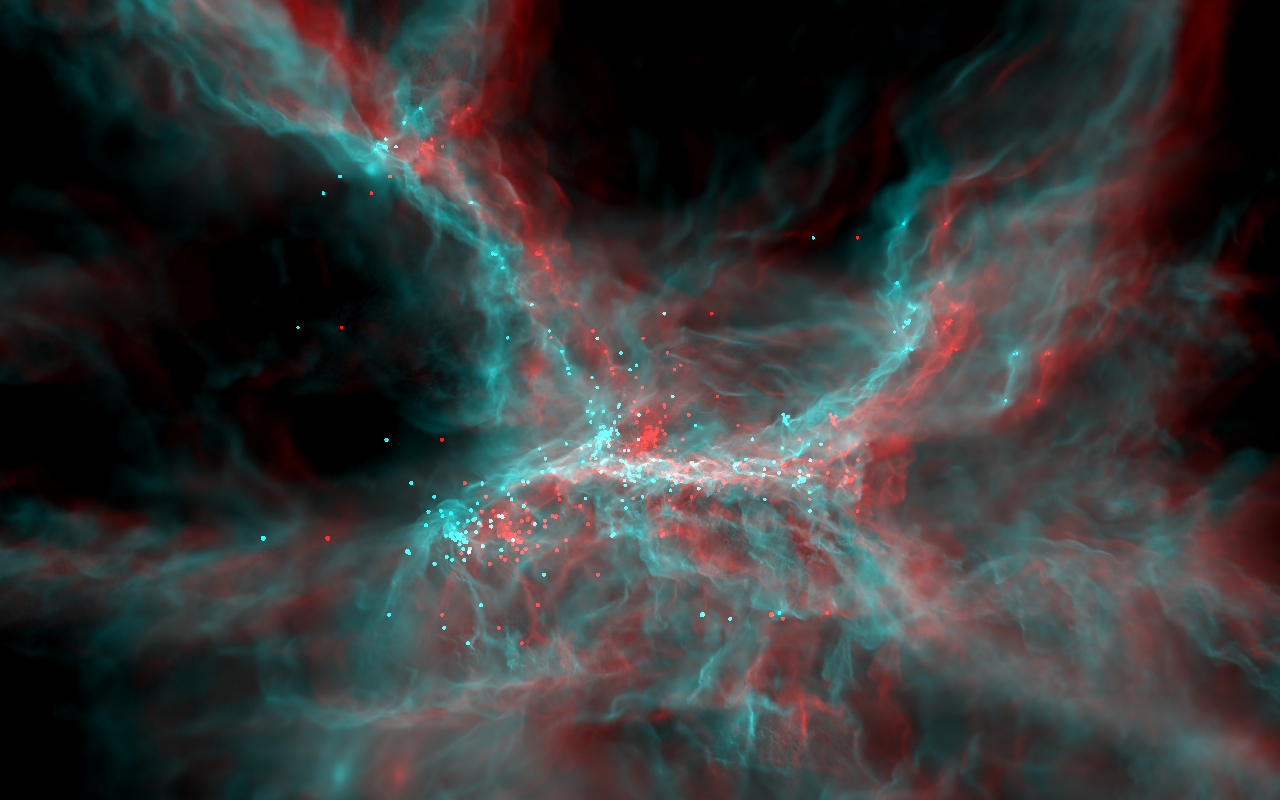
Started my day listening to a little Jesus Christ Superstar; it has struck me of late that, with so much focus on drought, political turmoil, war, etc, there are more than a few folk with a little Armageddon on their minds. Blame it on the Tzolkin.  This, naturally, got me thinking about Yeats' The Second Coming:


Of course, we Western folk tend to be a bit on the selfish side.  We look at time through our own lens, "like sands through the hourglass, so are the days of our lives" kind of thing.  Not everyone looks at the world through such linear terms; in fact, even when you look at systems theory in the West, there's a recognition of boom and bust cycles.  After all, every new beginning comes from some other beginning's end.

Days, seasons, the rise and fall of empires, the boom and bust of economies, the spiral outwards to political extremes and the oppositional contraction to the political middle - these aren't linear things; they're turns of the wheel.


The closer we collectively get to the middle, the more stability we have.  This is what Lao Tzu meant when he said "hold on to the centre."

In the mean time, the wheel keeps turning - we're just along for the ride.