Search This Blog

CCE in brief

My photo
Recovering backpacker, Cornwallite at heart, political enthusiast, catalyst, writer, husband, father, community volunteer, unabashedly proud Canadian. Every hyperlink connects to something related directly or thematically to that which is highlighted.
Showing posts with label success. Show all posts

Saturday, 15 February 2014

Linking Sex, Work and Success


So we've heard that women need to complain and golf more to get ahead; here's the other side of that equation.
 
Let's say you have a quietly competent woman who is damned good at her job and probably capable of doing more and as such, generating more revenue for her boss.  As she's not arrogant, however, it's always in her head that she should be doing more; as such, she's not boastful, but just keeps improving her performance.
 
Meanwhile, she has a male colleague who is high confident and thinks more of his value than it's actual worth - and isn't afraid to tell the same to anyone.  He is annoyed that he's not getting recognized for his awesomeness and demands more, cornering the boss on the links, at the coffee machine, whatever.
 
This guy does a great job of selling his value to the boss, who rewards him in turn.  In whatever new positions he gets, this confident guy is quick to claim credit and even quicker to defer blame, but because he's so utterly convinced in his own abilities, those susceptible to doubt find it hard to question him.
 
How many delusionally confident men do we have mucking things up in positions of power?  How many quietly capable women getting things done but not tooting their own horns?
 
Something to think about. 


When it comes to human evolution, it's likely that males who overestimated their appeal to females and pursued them even at the risk of being rebuffed were more likely to reproduce and pass this trait to their genetic heirs, the researchers suggested.

Thursday, 22 August 2013

Success Will Come and Go, But Integrity is Forever (Amy Rees Anderson)

Above all else - to thine own self be true.


If I could teach only one value to live by, it would be this: Success will come and go, but integrity is forever. Integrity means doing the right thing at all times and in all circumstances, whether or not anyone is watching. It takes having the courage to do the right thing, no matter what the consequences will be. Building a reputation of integrity takes years, but it takes only a second to lose, so never allow yourself to ever do anything that would damage your integrity.

We live in a world where integrity isn’t talked about nearly enough. We live in a world where “the end justifies the means” has become an acceptable school of thought for far too many. Sales people overpromise and under deliver, all in the name of making their quota for the month. Applicants exaggerate in job interviews because they desperately need a job. CEOs overstate their projected earnings because they don’t want the board of directors to replace them.  Entrepreneurs overstate their pro formas because they want the highest valuation possible from an investor. Investors understate a company’s value in order to negotiate a lower valuation in a deal. Customer service representatives cover up a mistake they made because they are afraid the client will leave them. Employees call in “sick” because they don’t have any more paid time off when they actually just need to get their Christmas shopping done. The list could go on and on, and in each case the person committing the act of dishonesty told themselves they had a perfectly valid reason why the end result justified their lack of integrity. 
 
It may seem like people can gain power quickly and easily if they are willing to cut corners and act without the constraints of morality. Dishonesty may provide instant gratification in the moment but it will never last. I can think of several examples of people without integrity who are successful and who win without ever getting caught, which creates a false perception of the path to success that one should follow. After all, each person in the examples above could have gained the result they wanted in the moment, but unfortunately, that momentary result comes at an incredibly high price with far reaching consequences.  That person has lost their ability to be trusted as a person of integrity, which is the most valuable quality anyone can have in their life. Profit in dollars or power is temporary, but profit in a network of people who trust you as a person of integrity is forever.
 
Every one person who trusts you will spread the word of that trust to at least a few of their associates, and word of your character will spread like wildfire. The value of the trust others have in you is far beyond anything that can be measured.  For entrepreneurs it means investors that are willing to trust them with their money. For employees it means a manager or a boss that is willing to trust them with additional responsibility and growth opportunities. For companies it means customers that trust giving them more and more business. For you it means having an army of people that are willing to go the extra mile to help you because they know that recommending you to others will never bring damage to their own reputation of integrity. Yes, the value of the trust others have in you goes beyond anything that can be measured because it brings along with it limitless opportunities and endless possibilities.
 
Contrast that with the person who cannot be trusted as a person of integrity.  Warren Buffet, Chairman and CEO of Berkshire Hathaway said it best:, “In looking for people to hire, look for three qualities: integrity, intelligence, and energy.  And if they don’t have the first one, the other two will kill you.”  A person’s dishonesty will eventually catch up to them. It may not be today, and it may not be for many years, but you can rest assured that at some point there will always be a reckoning.
 
A word of advice to those who are striving for a reputation of integrity: Avoid those who are not trustworthy. Do not do business with them. Do not associate with them. Do not make excuses for them.  Do not allow yourself to get enticed into believing that “while they may be dishonest with others, they would never be dishonest with me.” If someone is dishonest in any aspect of his life you can be guaranteed that he will be dishonest in many aspects of his life. You cannot dismiss even those little acts of dishonesty, such as the person who takes two newspapers from the stand when they paid for only one. After all, if a person cannot be trusted in the simplest matters of honesty then how can they possibly be trusted to uphold lengthy and complex business contracts?
 
It is important to realize that others pay attention to those you have chosen to associate with, and they will inevitably judge your character by the character of your friends. Why is that?  It is best explained by a quote my father often says when he is reminding me to be careful of the company I am keeping:  “When you lie down with dogs you get fleas.” Inevitably we become more and more like the people we surround ourselves with day to day. If we surround ourselves with people who are dishonest and willing to cut corners to get ahead, then we’ll surely find ourselves following a pattern of first enduring their behavior, then accepting their behavior, and finally adopting their behavior. If you want to build a reputation as a person of integrity then surround yourself with people of integrity.
 
There is a plaque on the wall of my office which reads: “Do what is right, let the consequence follow.” It serves as a daily reminder that success will indeed come and go, but integrity is forever.
~Amy (for my daily blogs go to www.amyreesanderson.com/blog)

Saturday, 22 June 2013

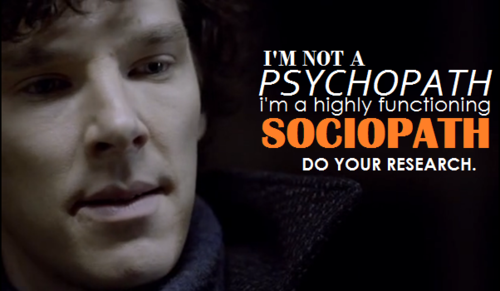
When Sociopaths Rule The World


In 2007, Neil Shah volunteered on the re-election campaign of the local MPP for Stormont, Dundas and South Glengarry.  That MPP was my boss Jim Brownell, one of the people I respect most in this world.  I'd known Neil since he was a kid, but as I'd been largely out of town for years so looked forward to seeing what kind of man he'd grown to become.
 
It was on the hustings that we had a chance to reconnect.  We talked about provincial politics, about Jim's accomplishments, about what makes a good politician and about how the system tends not to favour people like Jim that actually do put their communities first. 
 
Neil was a natural canvasser.  He knew just the right way to position himself in speaking at the door and had spent time building social capital throughout the community.  As we went about and I watched him work his magic, Neil told me about his own political ambitions, about that special gift he felt he had that meant it was almost a destiny thing for him to become a politician.
 
As he spooled his yarn (always in a calm, endearing voice) I recognized an all-too-familiar personality profile; the focus was always on him and his gifts and abilities, what he could do for others rather than on ideas, issues or perhaps even the people he would perhaps one day represent.

Sociopath!  I said to myself.  He'll probably do really well for himself.

I have worked in politics for a fair chunk of time; I've also dabbled in the Private Sector and with Entrepreneurs.  I've had the good fortune to work for a lot of amazing, highly-motivated, pro-social people who are unquestionably where they are because they care.  At the same time, I've worked with a lot of "typical politicians" and "typical capitalists" that care nothing about votes or profit and view people as little dots, as lesser thans - never as equals.
 
The kind who say (and believe) things like "we're smart, they're dumb" in relation to opponents, stakeholders, even team members or supporters.  The folk that really believe the ends justify the means and can find any excuse to justify moral lapses; the people have short memories, they don't care about process anyway, etc.  There's always another scheme that can keep them at the top of the heap, they just need to be clever enough.
 
Think about that for a second. 
 
Then think about how politics-as-usual operates.  People throw around terms like "values" and "ethics" while breaking their own, regularly; they speak of working together at the exact same time as they strain to tear down their opponents.  The electoral cycle has become about winning, not accomplishing.  One partisan side can single out the other and say "if we were in power, it would be different" but that isn't the case, is it?  Look at any level of government, any Party and you'll see a repetitive, cynical cycle. 
 
And you know what?  It works.  Attack ads work; bait-and-switch works.  That's why people use these tricks of the trade, because they are proven to function. 
 
The problem is this anti-social, sociopathic approach is like crack; it'll work for a short time but has negative long-term repercussions.  The harder you polarize, the worse become the results for society and the shorter becomes your life cycle.
 
But trying to convince a sociopath that they are digging their own grave is about as effective as telling an in-denial addict that they have a problem; they don't by it.  They feel that they are in complete control of themselves and that, as they are smarter, or tougher, or more ruthless than the other guy, they just need to stall long enough to come up with another trick and things will continue as per the usual.  Shah will be apologetic just as Chris Mazza expressed grief over the failings of his own noble mission.  Don't buy it.
 
This is why I tend not to trust the delusional, hyper-confident who never admit to mistakes, nor those those who speak of "their gifts" as though they stand above others.  After all, there's a diagnosis for that.
 
 
We have a couple of them out there right now, with lots of others ready and willing to do the hard work on our behalf.  The thing is, it's the sociopaths we tend to place our faith in; after all, manipulating others is what they are good at.  However, we can come to understand the secret behind marketing tricks; like loud volume and dry snacks in a bar, "which wine do you want with that" type service or "only we can protect you from troubles lapping at our shores" political messaging.
 
 
The trick is being conscious of this.

Friday, 12 April 2013

What Success Looks Like


Success.jpg
 
People don't like complexity.  It strains the brain and takes time.  The most efficient way to get between two points, obviously, is a straight line.
 
But success isn't a destination - it's an achievement.  Some people are lucky and have the stars align for them; they have a mentor who opens doors or a family member who opens doors.  They're born with the right genetic gifts that attract success to them.
 
For most people, though, success comes through countless iterations of trial and error, course correction and a constant deepening of one's understanding of the market.  It's messy, convoluted and requires soul-searching and contemplation - all things we don't have the time for.
 
Success isn't a big reward you get at minimum personal cost; it's something that comes at the end of significant investment, often in the face of an uncertain outcome.
 
Is it any wonder innovation is sluggish in an environment that focuses so heavily on demonstrable ROI?

Wednesday, 6 February 2013

The Pot's Boiling Over on Ontario's Mental Health Crisis


Political campaigns, among everything else, are pressure cookers of stress.  There's lots of moving parts, little time to make them gel and constantly changing environments.  Everything is high-stakes, because small slip-ups can be fatal when they trickle into the grand arena.  As such, campaigns offer a fascinating opportunity to see how people react under high pressure over long hours with little food, sleep or even breathing space.  Some crack entirely - others quit, or tune out, or become bitter.  The vast majority of campaigners adapt to the unsustainable nature of campaign politics, leading to uncomfortable wind-down periods when the campaign is over.  The real world simply doesn't function at that high level - it couldn't.
 
It couldn't - but it's starting to.  There's a slow creep of demand for more, faster, better, constantly.  Employees are being kept at their jobs for longer hours and bringing not just work, but colleagues and bosses home via cell phones and personal computers.  The bar for academic success keeps rising - marks alone aren't enough, successful students now need a host of extra-curriculars to meet the standard, which kinda means the extras are now necessary.  Pressure is on parents to be all things to all people, including transportation hubs.  Accountability has bled into personal life - you now are judged by every action you make on social media in addition to work performance. 
 
 
It's all enough to drive you to distraction - or to drive you nuts.
 
Fortunately, when a window drops on your fingers, it sometimes shakes open a door.  We're beginning to understand stress better.  Turns out that it's a bit like fat:
 
 
Fortunately, as we start to wrap our head around mental health and mental illness, we're also starting to branch out into mental fitness and broader environmental impacts, like at the workplaceWhen even Tim Hudak starts talking about mental health in terms of social support and proactive accommodation, you know that things are changing.
 
The change required is massive, though and requires collaboration at all levels - and a bit of courage at the political level.  Leaders have to be willing to forgo quick partisan wins at the expense of collaborative change, because we can't afford to dally much longer with the structural transformation needed.
 
No pressure, though - we're all in this together; we can only move forward successfully when we leave no one behind.

Is the Future of Talent in Clusters?


The Future of Talent Is in Clusters

 
An effective team is a powerful thing. Many of us have participated on teams where the members complement each other, trust each other and find ways of working that are not only effective, but also enjoyable. For teams like this, performance is typically much higher than might be expected of the sum of individuals.
 
And yet while teams often are where the real work gets done, most businesses don't value or manage them well. Many businesses aren't skilled in talent management or team nurturing. Team management, in particular, is often a scarcely recognized activity.
 
What's more, most employees don't work in high-performing teams for long periods — team members move on, projects finish, and other pressing needs come to the fore. While it's part of the normal course for organizations, disbanding well-functioning teams is actually a value-destroying activity, eradicating the "team capital" built and stored in the team. Because businesses don't fundamentally recognize such teams as entities beyond the activity they are performing, this value destruction seems inevitable.
 
But what if there was another way? One in which organizations capitalize on the inherent value of a well-functioning team? One where the organization evolves its management style to let teams self-manage to preserve their culture and value?
 
A New Kind of Team: Clusters
 
Clusters are a radical alternative to our traditional notion of teams. They are formed outside a company context, but are hired and paid by companies as a unit, as a permanent part of the company. They manage, govern and develop themselves; define their own working practices and tools; and share out remuneration. Technology trends and tools like the cloud, and collaboration suites, are evolving to make this more and more workable.
 
The business or agency treats the cluster as an atomic unit of resource and it hires, fires and positions the cluster as a unit. Likewise, each cluster appears as such a unit in the business's organization chart. Clusters plug together like Lego bricks to achieve the business's goals.
 
A cluster is not the same as a consulting model. The main difference is that clusters will typically be hired permanently by a business with a mutual intention to commit for the long term. As such, a cluster can be considered a real asset of the business, just as high-performing staff members are today. Also, the cluster model puts extreme emphasis on teams that learn how to work well together and determine their own tools and work practices. This is not always true of consultancies. An individual can be in different clusters over time, and possibly in multiple clusters at once, similar to a conventional part-time work model. Similar approaches can and should be applied to consultancy models.
 
Clusters Manage Themselves
 
A cluster typically consists of five to eight people, is hired by a business with a clear scope of work, and remunerated based on outcomes. Clusters have already established shared values, work practices, tools, and roles, such as who is good at what. Balancing team roles can be particularly important to avoid the Apollo effect, where every team member needs his or her idea to dominate and the team is unable to come to a consensus. Clusters actively seek the variety of skills, talents, and personalities necessary to create a high performing team (see the Belbin model for a good example of nine discrete team roles.)
 
While there are close equivalents of clusters in a few corners of the working world (elite military teams, medical units, and TV and film crews), this model could and should pervade much further into the working world, possibly and ultimately for all operational and project work, and sometimes even for leadership teams. I would project that by 2020, 30% of work will be performed by permanently employed, self-managed clusters.
 
The cluster manages itself by finding, hiring and firing members; governing itself and resolving conflicts; creating and sustaining work practices and tools; and managing its engagement with other clusters, teams, people and organizations in order to fulfill its direct business goals and to nurture itself.
 
In short, a cluster is an extreme version of a self-managed team. It is extreme because the enterprise only has a formal legal and financial relationship with the cluster, not its members. Note that while a cluster is self-managed, it is not typically a self-directed team. Self-directed teams define their own goals, whereas clusters agree on outcomes with the businesses for which they work.
 
Clusters Create More Value
 
Clusters offer four main benefits:
 
Higher levels of business performance through higher motivation. The cluster model, when executed well, addresses known performance drivers such as purpose, autonomy, and mastery (see Daniel Pink's book Drive for more on these).
 
Higher levels of business performance through a custom work environment. Clusters can create and sustain leading-edge electronic work environments since they are less burdened by bureaucratic decision-making and the need to serve the diverse needs of many types of teams and individuals.
Talent management in the right place. The cluster model removes the burden of team and individual performance management from the business — where it typically sits uncomfortably and ineffectually today — to the cluster. The cluster knows its own members, contributions and development needs much better.
 
Higher levels of personal happiness. Clusters are sufficiently small for members to genuinely know and care about each other, and they are stable and autonomous enough for members to support each other's long-term personal development.
 
Clusters Have Risks, But They Are Manageable
 
For the cluster model to work well, with businesses hiring, firing, positioning and remunerating clusters as atomic units, considerable changes are needed in the macro work environment, to HR and payroll, recruitment agencies, legal, financial, and real estate. Even if these macro changes are made, there are two main real and perceived risks with the cluster model: the formation of mini silos, and the inability to retain clusters or their loyalty. The key to success is to ensure that the cluster's agreed-on scope of work includes appropriate levels of commitment to, and multiple interfaces with, broader corporate goals and initiatives.
 
Eventually, wherever the cluster model is adopted, businesses will need to work hard at managing and leading them well, just as they have always done for their emerging talent assets — ensuring that the best are motivated to stay, the worst are inclined to go, and those in the middle are motivated to improve.
 
More blog posts by Dave Aron
Dave Aron

Dave Aron

Dave Aron is a vice president and Gartner Fellow in the Gartner CIO Research group, focusing on IT leadership issues. His work on clusters is part of a Gartner Maverick research project, which examines high-impact future scenarios as they emerge.

Thursday, 4 October 2012

What Science Says About Successful Bosses


There is mounting evidence that standard, aggressive management styles are simply not good at motivating innovative success.  Smart leaders are paying attention.  It's all about the cognitive labour, folks!

What Science Says About Successful Bosses

A new scientific study of managers reveals the character traits that lead to success.

Over the past year, I've been writing a book about the future of sales and marketing with Howard Stevens, chairman of the leadership assessment firm Chally. As part of a decades-long research project, Chally has gathered extensive personality data about 150,000 salespeople, including 9,000 sales managers.
 
Last week, I had a conversation with Howard where he described the results of a statistical analysis on the cumulative data on sales managers. While the data set is specific to sales, I believe that personality traits that emerged apply to any management position.
 
According to the success vs. failure statistics that Howard shared with me, successful bosses tend to be:

1. Humble Rather Than Arrogant

Failed bosses defined their role as some form of telling people what to do. Employees perceived them as obnoxious know-it-alls who wouldn't let them do their job.
 
Successful bosses put themselves and their own egos into the background. They focused on coaching employees to perform to their highest potential.

2. Flexible Rather Than Rigid

Failed bosses couldn't tolerate change themselves and so found it nearly impossible to get their employees to embrace necessary change.
 
Successful bosses knew that adapting to new conditions requires personal flexibility in order to inspire similar flexibility throughout the rest of the team.

3. Straightforward Rather Than Evasive

 
Failed bosses tried to manipulate employees using half-truths that left false impressions. When employees realized they've been fooled, they felt resentful and disloyal.
 
Successful bosses gave employees the information they need to know to make the best decisions, even if that information is difficult or sensitive.

4. Forward Thinking Rather Than Improvisational

Failed bosses often attempted to run their organizations ad-hoc, constantly shifting gears and directions, creating a more-or-less constant state of confusion.
 
Successful bosses had a plan and made sure that everyone understood it. They adapted that plan to changing conditions but did so carefully and intentionally.

5. Precise Rather Than Vague

Failed bosses created mushy goals that employees found difficult to map into actual activity. As a result, the wrong things got done and the right things didn't.
 
Successful bosses let employees know exactly what was expected of them, in sufficient detail so that there was no ambiguity about goals.

6. Patient Rather Than Ill-Tempered

Failed bosses blew up and threw fits when problems cropped up. Their employees became more afraid of doing things wrong than eager to do things right.
 
Successful bosses confronted problems by listening, considering options, deciding on the best approach, and then communicating what needed to be done.
 
Like this post? If so, sign up for the free Sales Source newsletter.


Tuesday, 24 July 2012

What We Should Have Said to PG


What ever you're trying to sell, never forget the importance of internalizing the vision and being able to put it into a narrative.

What we should have said to PG

“So it’s like a wiki?” he says, moving his fingers in circles against his temples. His eyes are closed. He’s concentrating. He has 10 minutes to understand me.

This is the story of how we interviewed at, and were turned down by, Y Combinator. I decided to write about the experience because storytelling is one function where we startups tend to shit the bed. Hopefully this post helps kick that ball forward a bit.


This past May, it cost $2,428.13 to have three of us spend 10 minutes with Paul Graham. Being from out of town (Toronto) this included flights, taxis, and accommodation for 3 nights. In hindsight, spending three nights in sleepy Mountain View was a great decision. There’s nothing to do but talk about your business from morning to night. The extra time also meant we were extremely well prepared for the interview. Or so I had myself believe.


Only now, having been tested by the pressures of a ticking clock and the questions of an impatient (and widely respected) mind, do I have the courage to say that the reason we didn’t get into YC was because I didn’t know my business well enough.


Sounds crazy, right? I mean, as far as titles go, I’m the guy who’s primary role is to know what the hell business we’re in. I’m not asked to write the code that brings it to life, or define the user experience that sets the tone – I’m asked to tell our story clearly, effectively, and when needed, very f*cking quickly. So maybe this post should have been titled, ‘What I should have said to PG’ – because this one was on me.

The following is a rough outline of my conversation with PG.

“So what is Rocketr?” he opened. To which I replied…
“Rocketr is a bottom-up approach to knowledge management. We connect people through their notepads. Basically, people take notes and decide how to share them. The primary mechanism by which they share them is through co-authored notebooks.”
“So people can all write to the same place. So it’s like a wiki?” he asked.

“Not really, no. A wiki is more like a google doc – it has one true version at any given time. Sure, there’s a revision history, but nobody lives in the revision history. Rocketr is about having one author for a given note, and a threaded conversation around it.”
It may not be immediately obvious what’s wrong with this picture, but if you picked up on it, kudos to you. There are 2 things wrong with how the interview opened:

  1. PG drove and I quickly found myself back on my heels.
  2. I stripped out so much of the marketing jargon (a YC rule), that I skipped right over the customer’s pain and the value of solving it. I gave the “features” pitch, not the “benefits” pitch.
I came into the interview ready to react. I had an answer for everything, but no real story that I was going to tell. In hindsight, I should have opened like this:

“Rocketr bridges two worlds that could not be further apart right now – how we capture information (using personal tools), and how we get work done (using team-based tools). We’re betting that these worlds will converge, because if they don’t, it will get harder and harder for teams if they can’t collaborate at the speed that information is changing around them. Oh… and the medium we use to facilitate all this, is note-taking – something we all know how to do.”
Yes – it’s a little longer, but that shouldn’t matter if I’m the one driving for those 10 minutes. Even if I was interrupted, I could pick the story up where it left off. In this version, I’m illustrating the pain, the trends, and only at the end do I mention the vehicle by which we go about it.


The missteps continued when he asked, “Who needs what you’re making?” I reacted with something like the following:

“There are two sides to the market. Organizations need this to drive innovation and individuals needs this to satisfy both use cases – personal note-taking and sharing those notes for the purpose of getting feedback. Currently, they’re resorting to email for the latter which is a terrible environment for notes to grow up in.”
Just reading that now makes me shudder. So far I’ve communicated that we are “another note-taking app” with some social features AND that every entity on Earth needs us. Kill me.


What I should have said was:

“Paul, we think Y Combinator needs this in a big way. You’re managing 460+ companies. I’m guessing you send them articles, competitive intel, potential customer leads, and a wealth of other ideas. You’re probably using email to do it. And while you might use labels or folders to keep all this information organized on your end, your startups don’t have access to that. You’re effectively relying on them to either a) action every idea immediately, or b) do multiple queries of their inbox every time they want to revisit an idea you guys discussed.”
Not perfect, but much better. It becomes obvious that the pain increases the more “teams” or “topics” you’re managing. Furthermore, by putting YC in the middle of the story, I am making it easy for him to stand in the customer’s shoes. This all but guarantees his next question will move the conversation forward – not sideways.


And if you don’t have the lucky fortune of being able to use YC as an example customer, then use someone close to them – like one of their companies. And be sure to use peoples’ names. It will make it easier for them to empathize with the plight.


No matter which way you look at it, 10 minutes goes fast. It’s incredibly easy to get flustered and not have enough time left on the clock to recover. And despite all the wonderful resources that point to the questions you’ll be asked, I promise you, you will be asked many more that aren’t listed.


My recommendation for any startup reading this, is to shift your mindset ever so slightly. Prepare like you would, but when you walk in that door, have a 4 or 5 minute story to tell, instead of 25 answers to 25 commonly asked questions. In fact, take this approach on every occasion where you get to pitch your business.


The next time someone asks you, “So what does your startup do?”, lay it on thick. Tell a story. Get them to empathize.


And most importantly, drive.

The Spatial Genetics of CRM


Of course, when the average bear refers to CRM, they're thinking customer relationship management - not cis-regulatory modules.  When you strip away the context and look strictly at the content, though, is there much difference?

Whether your business is genes or people, the same rules apply - you're looking at an organic system that functions in organic ways across a temporal map.  We like to look at the world, relationships, time, etc. as being along a line - poverty is a separate issue than gun crime, mental health is a separate issue from labour, politics is separate from behaviour, so on and so forth.

While this might be easier for us to understand and allows us to "strip away the fluff" and focus on core messaging, we do ourselves no favours when we ignore complexity because it makes us uncomfortable.

Life isn't a time - it's a map.  You can't effectively navigate your way if you don't know the terrain.  Perhaps, in the land of the blind, the one-eyed man is king, but whoever sees with both eyes is the navigator.

Thursday, 14 June 2012

Find Success Through Empowering Your Employees


It’s petty, it’s cynical, it’s essentially feudal – I give you the privilege of working for me, you even get a salary; you owe me for that privilege.  I’ve written previously about this dominance-model mentality where the boss sees themselves as a feudal lord, entitled to do whatever with their employees, who are essentially beasts of burden.  In today’s economy, this generally takes the form of employers telling employees that their carrots and sticks will be determined not just on the quality of their work, but their ability to find new directions for a business/company to pursue.

Here’s the thing; though we tell ourselves that whoever has the gold makes the rules, the reality is there are social and motivational laws, almost like gravity, that trump any of our impositions.  We don’t motivate employees the right way, because we can’t be bothered to think of them as equals.  When one’s eye is so firmly fixed on the bottom line, you miss the opportunities you have to raise the bar.

If you want more money out of a business, don’t give your employees less and pressure them to do more.  That leads to poor service, higher turnover and lost customers.  Empower them.  Train them.  Give them skin in the game – make them feel like it’s as much their business as it is yours.

This is even truer in the creative sectors like consulting or policy.  Employers, fixed in their ways and uncertain where tomorrow’s opportunities lie are turning to employees and pressuring them through carrots and sticks to come up with new ideas and new markets.  They’re making it a competitive game between their teams to see who can be the most creative and get the perks.  This is so counterintuitive as to be comedic.

It’s also a trend that’s dying out.  Whether employers like it or not, the rules are changing further still – social media is empowering the individual in ways we’re just starting to grasp.  Knowing their personal brands are at stake through association, young folk are demanding more from their employers in terms of accountability.  Smart employers are realizing this trend now and twinning an increasing demand on employees with workspace accommodations, flex time and skin in the game.

People are spending more and more time working – as such, they want to enjoy what they do and feel that it means something.  In this world, success won’t be found by nickel and diming your employees, but by empowering them to share their two cents.