Search This Blog

CCE in brief

My photo
Recovering backpacker, Cornwallite at heart, political enthusiast, catalyst, writer, husband, father, community volunteer, unabashedly proud Canadian. Every hyperlink connects to something related directly or thematically to that which is highlighted.
Showing posts with label Social Murmuration. Show all posts

Saturday, 5 July 2014

The Peaceable Revoltuion: Not Bought, but Grown

Saturday, 23 November 2013

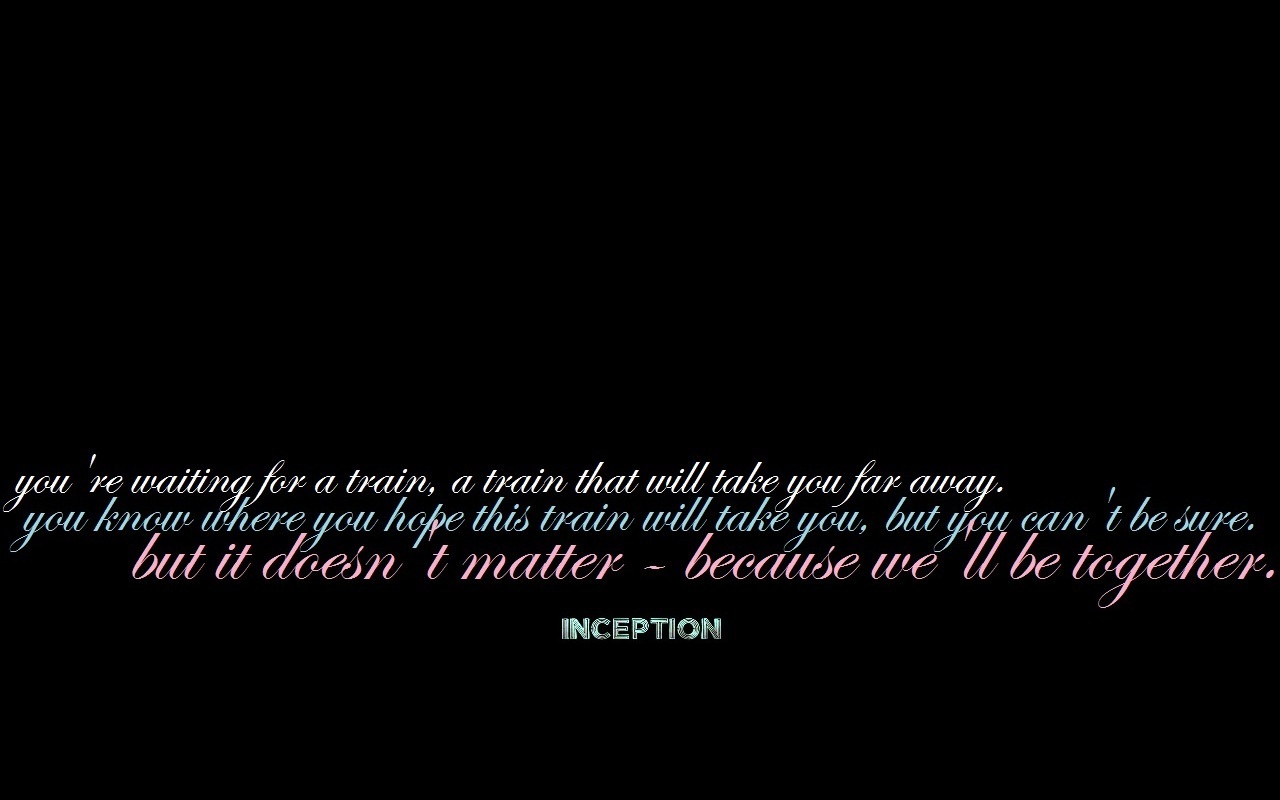
Waiting For a Train ?


He doesn't know what he'll find, but that's the beauty of being part of the swarm: Even if you don't know where you're going, you still get there.

When  you're on a smoothly-running train, it doesn't feel like you're moving; instead, it feels like the world is falling behind you.

It's only when the ride gets bumpy that you fully realize the truth:

You're not waiting for a train that will take you somewhere you're supposed to be going.

We're in transit already.


Friday, 16 August 2013

The Golden Shift in Canadian Politics


To the victor go the spoils.  The ends justify the means.  History is written by the victors.  He who has the gold (or majority government) makes the rules.
 
That, in a nutshell, is politics, with one addition - whatever you can get away with works.
 
It's this last that is causing so many political operators problems these days, because the benchmark for what you can get away with has shifted rather dramatically.  As with most changes in information tech, practice tends to lag behind capacity on the adaptation curve.  A seasoned generation of backroom operators are using new tools in old ways; convinced they're the smartest people in the room, it doesn't occur to them that maybe other folk have adapted more quickly.
 
It isn't an insiders game any more, with voters on the sidelines - thanks to Twitter and the like, we're all on the field now.
 
What happens when these folk get caught with their hands in the cookie jar, or caught in a lie, or caught with their pants down?  They're turning to the old tools of circle the wagons, bait-and-switch and digging up dirt on opponents.  The problem is, it's not so easy any more - it's not just the political chattering classes and the media pundits who need to be distracted - it's a growing number of Twitter users, Facebook posters and photo takers and civic engagement/watcher groups ranging from Anonymous to the Samara Institute.
 
It's no longer enough to hope that a story won't have legs or that you can spin yourself out of any hole you dig - there are simply too many ways for bad behaviour to be caught and those behaviours connected into patterns.  Maybe you can punt the consequences to a successor or maybe the blame will be born by your whole class, but that's hardly sustainable planning, is it?
 
You can't get away with murder in Canadian politics and, thankfully, our Political Parties limit their offensive tactics to character assassination.  Consider this yet another shift - the water hole of unethical tactics you can get away with is shrinking at an ever increasing rate.
 
There's an easy way to stay ahead of the curve, of course - that's to assume that everything you do can and will be revealed and act accordingly.  The word for that is transparency.  Yes, real transparency means more work on the front-end and yes, it assumes other players are equally going to play by the rules but it also mitigates your chance of digging your hole deep enough it becomes your grave.  Besides, as we've seen - people at all levels are on the lookout for wrongdoing to criticize.  If you keep your nose clean and remain open about it, that laser-like scrutiny will focus where the dark spots truly lie.
 
It's amazing what a little golden sunlight can do...
 

Wednesday, 24 July 2013

What workplaces need to learn from bees (Harvey Schachter)


Gives a whole new meaning to cross-pollination, doesn't it?


What workplaces need to learn from bees
 
David Zinger is a Winnipeg-based consultant who hosts a human hive, the 5,900 member Employee Engagement Network, for whom collaboration is a vital concern. Phil Veldhuis is a professor of philosophy at the University of Manitoba who also happens to be a bee whisperer and bee hive keeper, hosting 1,200 hives with about 48 million swarming bees each summer. Aganetha Dyck is an award-winning artist who has created art with honeybees for two decades.
 
In recent years, the three got together to look at what could be learned about human collaboration from studying bees, and also to mix objects from the office with honeybees. The result was a reaffirmation of some prevailing wisdom on collaboration, some new insights, and a few computers and a cellphone encrusted in honey that have made for some unusual art objects.
 
“I thought there were a lot of connections between the way the bees work and the way we work in an office and use social media,” says Mr. Zinger in an interview.
 
For bees, the waggle is an essential approach. A waggle consists of figure-eight dances performed in the mosh pit of honeybees, designed to give direction. The scout bee’s waggle indicates to the rest of the colony where essential resources lie. Similarly, Mr. Zinger has collected a number of waggles – important directions for managers – that he shares in an e-book called Waggle, including:
 
One bee matters: At one point Mr. Zinger’s daughter Katherine was shooting a video of the installation of a computer in the hive when a bee landed on the beekeeper’s hand and began to sting him. When a worker bee stings, she dies. With 48 million bees, one bee seems insignificant – but not to Prof. Veldhuis. He gently wedged the stinger out of his palm, and set her free, demonstrating that one bee mattered. Often in our organizations, there seems to be so many people that we don’t have the time or energy to focus on their needs. But that teaching moment by Prof. Veldhuis suggested to Mr. Zinger “a level of caring we should be showing for people in our organizations. If you can care for one bee like that we can raise the ante in our organizations.” So while working collectively, he urges you not to lose sight of the individual, indicating with your daily actions that each person counts.
 
Small steps add big value: Honeybees are responsible for pollinating the entire crop of almonds in the United States. Their contribution is considered to be worth $2-billion. But each individual bee pollinates just 19 cents of almonds. “It’s never one bee that builds all those cells for a honeycomb,” adds Mr. Zinger. So at work, help each employee to understand how they can create value. Know that each employee makes a small, but important contribution, and think of the small steps that they can take to help your organization get ahead.
 
Success is in succession: Honeybees don’t live very long – perhaps a month in summer and six to seven months in winter – but during that brief lifetime they cycle through 15 to 20 tasks, including cleaning, brood tending, Queen tending, comb building, food handling, ventilation, guard duty, orientation flights and foraging. “The work flow and succession planning is phenomenal,” says Mr. Zinger. With that in mind, he suggests you consider whether you are ensuring there is someone ready or being trained for every role and function in your organization to make transitions seamless. Help employees to experience career progress and stop packaging work within tightly defined jobs and roles.
 
Go girl: Hives are female-dominated workplaces, with all the work done by females. Drones, the male honey bees, need help looking after themselves and have the sole purpose of mating with the Queen Bee. “Could being female or more female in how we work be the vital elixir of collaboration?” he asks in his book. In the interview, he is more cautious about going too far in differentiating between female and male characteristics. But research, he says, shows that certain behaviours associated with women – notably collaboration – can help organizations and it needs to be acknowledged that the highly productive beehive has a female culture.
 
Waggle while you work: You may not literally need to communicate by dance, but pay attention to communication in your leadership activity, letting people know where resources are and what is happening. Bees vote on a new home in quite a democratic way and organizations need to rethink in a social media world how better to tie everyone into decision-making. Perhaps the tendency of leaders to go off on private retreats for major decisions has to be replaced by more inclusive, social media gatherings to decide on strategy and purpose.
 
Pollinate profusely: Honeybees pollinate while gathering nectar from outside the hive. Similarly, you need to reach out beyond your hive, collaborating with others as you share and gather new ideas from everywhere.
 
He stresses you can go too far in the beehive metaphor, but still feels it’s helpful to employ this biological metaphor and look at our organizations differently. “It has been a fascinating project. I hope it’s a little nudge for people to think differently in their hive,” he says.
 
Special to The Globe and Mail
 
Harvey Schachter is a Battersea, Ont.-based writer specializing in management issues. He writes Monday Morning Manager and management book reviews for the print edition of Report on Business and an online work-life column Balance. E-mail Harvey Schachter

Wednesday, 26 June 2013

Max Landis On Power and Man of Steel


"Having that much power makes you responsible for other people."
 
Yes.
 
First let's clarify what power is, though.  It isn't the mad grab for dominance over others that both capitalism and socialism breed - "I have resources and ego issues so everyone either does what I say or simply don't matter."
 
No.  Power is like driving car on streets where there are pedestrians and bicycles.  You don't try and remove the less-powerful entities, like Rob Ford would do in an attempt to push the weak to the margins and allow cars to rule the world.  What you do, as a driver, is drive responsibly.  As your vehicle has the capacity to kill you are more responsible than the pedestrian or the biker who doesn't have that kind of street clout. 
 
This isn't to say those with less power have no responsibility, only that those with power have more.  Its why those at the top of the social food chain, be they politicians or sports stars or the super-wealthy get held to a higher standard of accountability than regular people do.  Average folk know that they have less influence than those at the top and will seek to knock down or penalize behavior seen as over-the-top.  Elections, talk radio, tabloid newspapers and thanks to Social Media, social murmuration are the tools we use to keep the powerful in line.
 
Of course, this is why it's a slippery slope when politicians try to pull the HOAG (Hell Of A Guy) card.  Back to Rob Ford, who has tried to portray himself as an average bear in the same way George W, Bush did; Ford is not rooted in the same world as the everyman/woman.  He comes from wealth.  He has access to people and resources that a kid from the wrong side of the tracks simply can't connect to without a bridge.  When people like him portray themselves as average bears, they are attempting to remove themselves from the increased scrutiny society places on those we know to be elites.
 
So what if Ford gets drunk at hockey games, doesn't read his Mayoral accountability material or texts while driving?  Any average Joe does that.  Yeah, but not any average Joe is responsible for running a city.
 
With great power, we've been told, comes great responsibility.  We should demand nothing less from our leaders.
 
In fact, true leaders strive to give us nothing less.

It's not about having power.  It's about how you empower others.

Saturday, 22 June 2013

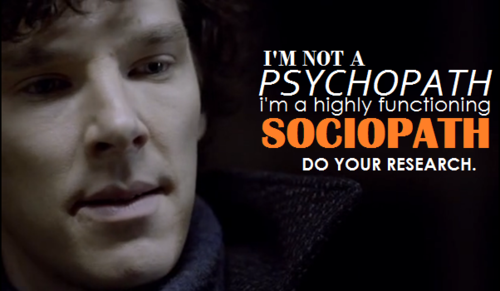
When Sociopaths Rule The World


In 2007, Neil Shah volunteered on the re-election campaign of the local MPP for Stormont, Dundas and South Glengarry.  That MPP was my boss Jim Brownell, one of the people I respect most in this world.  I'd known Neil since he was a kid, but as I'd been largely out of town for years so looked forward to seeing what kind of man he'd grown to become.
 
It was on the hustings that we had a chance to reconnect.  We talked about provincial politics, about Jim's accomplishments, about what makes a good politician and about how the system tends not to favour people like Jim that actually do put their communities first. 
 
Neil was a natural canvasser.  He knew just the right way to position himself in speaking at the door and had spent time building social capital throughout the community.  As we went about and I watched him work his magic, Neil told me about his own political ambitions, about that special gift he felt he had that meant it was almost a destiny thing for him to become a politician.
 
As he spooled his yarn (always in a calm, endearing voice) I recognized an all-too-familiar personality profile; the focus was always on him and his gifts and abilities, what he could do for others rather than on ideas, issues or perhaps even the people he would perhaps one day represent.

Sociopath!  I said to myself.  He'll probably do really well for himself.

I have worked in politics for a fair chunk of time; I've also dabbled in the Private Sector and with Entrepreneurs.  I've had the good fortune to work for a lot of amazing, highly-motivated, pro-social people who are unquestionably where they are because they care.  At the same time, I've worked with a lot of "typical politicians" and "typical capitalists" that care nothing about votes or profit and view people as little dots, as lesser thans - never as equals.
 
The kind who say (and believe) things like "we're smart, they're dumb" in relation to opponents, stakeholders, even team members or supporters.  The folk that really believe the ends justify the means and can find any excuse to justify moral lapses; the people have short memories, they don't care about process anyway, etc.  There's always another scheme that can keep them at the top of the heap, they just need to be clever enough.
 
Think about that for a second. 
 
Then think about how politics-as-usual operates.  People throw around terms like "values" and "ethics" while breaking their own, regularly; they speak of working together at the exact same time as they strain to tear down their opponents.  The electoral cycle has become about winning, not accomplishing.  One partisan side can single out the other and say "if we were in power, it would be different" but that isn't the case, is it?  Look at any level of government, any Party and you'll see a repetitive, cynical cycle. 
 
And you know what?  It works.  Attack ads work; bait-and-switch works.  That's why people use these tricks of the trade, because they are proven to function. 
 
The problem is this anti-social, sociopathic approach is like crack; it'll work for a short time but has negative long-term repercussions.  The harder you polarize, the worse become the results for society and the shorter becomes your life cycle.
 
But trying to convince a sociopath that they are digging their own grave is about as effective as telling an in-denial addict that they have a problem; they don't by it.  They feel that they are in complete control of themselves and that, as they are smarter, or tougher, or more ruthless than the other guy, they just need to stall long enough to come up with another trick and things will continue as per the usual.  Shah will be apologetic just as Chris Mazza expressed grief over the failings of his own noble mission.  Don't buy it.
 
This is why I tend not to trust the delusional, hyper-confident who never admit to mistakes, nor those those who speak of "their gifts" as though they stand above others.  After all, there's a diagnosis for that.
 
 
We have a couple of them out there right now, with lots of others ready and willing to do the hard work on our behalf.  The thing is, it's the sociopaths we tend to place our faith in; after all, manipulating others is what they are good at.  However, we can come to understand the secret behind marketing tricks; like loud volume and dry snacks in a bar, "which wine do you want with that" type service or "only we can protect you from troubles lapping at our shores" political messaging.
 
 
The trick is being conscious of this.

Wednesday, 29 May 2013

Edward Greenspon and Media Murmurations


It's not hard to see why I enjoyed this piece - I see a trend of social murmuration on platforms like Twitter, too.  I like the fact that Greenspon refers to the Harper government's general inclination towards divide and conquer, too.  They're particularly good at that, but we have a political system entirely geared towards creating coalitions of voters around a given issue rather than drilling down to and then build on the foundation of common aspirations. 
 
We find all kinds of ways to justify this essentially tribal politics, but if you look more broadly, you see the same thing happen within and between religious institutions, community groups, even the scientific community.  It's no surprise why - we are predominantly a cognitively function-fixed species.  The competitive busy-ness of the modern economy fuels this as we convince ourselves it's not our job to push ourselves to learn something new, it's someone else's job to simply things for us.  Or we try to tell ourselves we fundamentally don't care about substance.  We can choose to see but through a glass darkly, or we can walk through the door that is always open to us.
 
Individually, we can be ignored or destroyed but collectively, people have power. 
 
It's a tree/forest thing.