Search This Blog

CCE in brief

My photo
Recovering backpacker, Cornwallite at heart, political enthusiast, catalyst, writer, husband, father, community volunteer, unabashedly proud Canadian. Every hyperlink connects to something related directly or thematically to that which is highlighted.
Showing posts with label Perception. Show all posts

Saturday, 15 February 2014

Linking Sex, Work and Success


So we've heard that women need to complain and golf more to get ahead; here's the other side of that equation.
 
Let's say you have a quietly competent woman who is damned good at her job and probably capable of doing more and as such, generating more revenue for her boss.  As she's not arrogant, however, it's always in her head that she should be doing more; as such, she's not boastful, but just keeps improving her performance.
 
Meanwhile, she has a male colleague who is high confident and thinks more of his value than it's actual worth - and isn't afraid to tell the same to anyone.  He is annoyed that he's not getting recognized for his awesomeness and demands more, cornering the boss on the links, at the coffee machine, whatever.
 
This guy does a great job of selling his value to the boss, who rewards him in turn.  In whatever new positions he gets, this confident guy is quick to claim credit and even quicker to defer blame, but because he's so utterly convinced in his own abilities, those susceptible to doubt find it hard to question him.
 
How many delusionally confident men do we have mucking things up in positions of power?  How many quietly capable women getting things done but not tooting their own horns?
 
Something to think about. 


When it comes to human evolution, it's likely that males who overestimated their appeal to females and pursued them even at the risk of being rebuffed were more likely to reproduce and pass this trait to their genetic heirs, the researchers suggested.

Friday, 6 September 2013

Objectification


Ok, now he was close
Baby it's in your nature

- Robin Thicke, Blurred Lines


You can't treat an equal in a way that you wouldn't want to be treated yourself - it's a defense mechanism humans are hard-wired with that takes significant departures from the norm, like psychopathy, to deviate from.  

EwigerJudeFilm.jpg
What we can do, though, is dehumanize those people we'd rather treat differently.  The most common way we do this is by deeming those we want to be inferior as animals.  Animals, we believe, are lesser creatures - they don't have awareness or purpose the way people do.  Women were objectified as "too emotional" and therefore undeserving of the vote.  Various minorities have been enslaved, raped and murdered under the justification that they "simply aren't human."  They don't think the way we do, therefore they aren't like us.  Therefore, they are not due the same rights and responsibilities we feel people like us should be entitled to.

It's why resistance to interrogation experts and hostage negotiators place humanization at the forefront of their toolboxes.  The same goes for politicians tweeting about their weekend with the kids - essentially, they're trying to say "I'm just like you."

Which is why I think this is so brilliant.  These ladies haven't bitched about unfair treatment; instead, they've demonstrated that they're able to go toe-to-toe with any misogynist on the block.  

Whereas a Miley Cyrus reinforces sexual stereotypes with her "you know me, I don't think things through" response, these Auckland law students are demonstrating they deserve respect.

Which, frankly, sex should be about.  

Monday, 6 May 2013

Threats and the Eyes That See Them


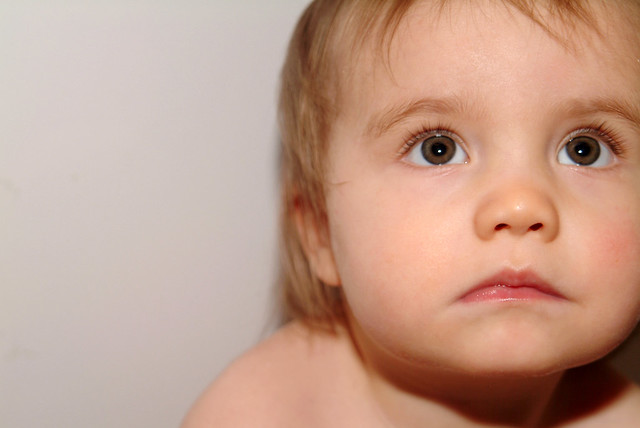
It's a universal thing - people think big eyes are cute.  Babies have 'em.  Lots of people with epicanthal folds pay money to make their eyes "look bigger" - which is simply a more permanent way of accomplishing the same trick as mascara.
But if eyes are TOO big, particularly if they're umoving, that's just plain creepy.  If those wide eyes aren't looking at an external threat - if they're looking at you - that'll make your skin crawl.
There's something attractive about wide-eyes that dote or may be more likely to point themselves at threats.  Wide eyes that are clearly seen but fixated on you are threatening themselves.
With that in mind, read this:
Main Category: Psychology / Psychiatry
Also Included In: Anxiety / Stress
Article Date: 05 May 2013 - 0:00 PDT

Wide-eyed expressions that typically signal fear may enlarge our visual field and mutually enhance others' ability to locate threats, according to new research published in Psychological Science, a journal of the Association for Psychological Science.

The research, conducted by psychology graduate student Daniel Lee of the University of Toronto with advisor Adam Anderson, suggests that wide-eyed expressions of fear are functional in ways that directly benefit both the person who makes the expression and the person who observes it.

The findings show that widened eyes provide a wider visual field, which can help us to locate potential threats in our environment. But these widened eyes also help to send a clearer gaze signal telling observers to "look there," which may enhance their ability to locate the same threat, as well.

"Emotional expressions look the way they do for a reason," says Lee. "They are socially useful now for communicating emotional states, but this new research suggests that they were also useful as raw physical signals."

Lee and colleagues found that participants who made wide-eyed fear expressions were able to discriminate visual patterns farther out in their peripheral vision than were participants who made neutral expressions or expressions of disgust.

Next, they investigated the benefits that wide-eyed expressions might confer to onlookers.

The researchers found that participants were better able to tell which direction a pair of eyes was looking as the eyes became wider. And wider eyes helped participants respond to targets that were located in the direction of the gaze. Importantly, these benefits did not depend on recognizing the eyes as fearful.

So why are wide-eyed expressions so helpful for onlookers?

As eyes become wider, we see more of the whites of the eyes, known as sclera. Lee and colleagues hypothesized that this could increase the contrast with the irises that signal the gaze, making it easier to tell where someone is looking. Indeed, their data revealed that iris display and higher iris-to-sclera contrast were correlated with faster response times.

Lee believes that this research demonstrates just how social we are wired to be:

"Our ability to process other people's eye gaze is already finely-tuned; the fact that this processing is further enhanced by expressive eye widening underscores the importance of our eyes as social signals."

Tuesday, 23 April 2013

The Competitive Edge of Polylingualism

 
Now, just think of the advantages polyculturalism must give us?


Learning to speak was the most remarkable thing you ever did. It wasn’t just the 50,000 words you had to master to become fluent or the fact that for the first six years of your life you learned about three new words per day. It was the tenses and the syntax and the entire scaffolding of grammar, not to mention the metaphors and allusions and the almost-but-not-quite synonyms.
But you accomplished it, and good for you. Now imagine doing it two or three times over — becoming bilingual, trilingual or more. The mind of the polyglot is a very particular thing, and scientists are only beginning to look closely at how acquiring a second language influences learning, behavior and the very structure of the brain itself. At a bilingualism conference last weekend convened by the Lycée Français de New York, where all students learn in both English and French, language experts gathered to explore where the science stands so far and where it’s heading next (disclosure: my children are LFNY students).
Humans are crude linguists from the moment of birth — and perhaps even in the womb — to the extent at least that we can hear spoken sounds and begin to recognize different combinations language sounds. At first, we don’t much care which of these phonemes from which languages we absorb, which makes sense since the brain has to be ready to learn any of the world’s thousands of languages depending on where we’re born.
“Before 9 months of age, a baby produces a babble made up of hundreds of phonemes from hundreds of languages,” said Elisabeth Cros, a speech therapist with the Ecole Internationale de New York. “Parents will react to the phonemes they recognize from their native tongues, which reinforces the baby’s use of those selected ones.”
Doubling down on a pair of languages rather than just one does take extra work, but it’s work young children are generally not aware they’re doing. Bilingual people of all ages are continually addressing what research psychologist Ellen Bialystok of Toronto’s York University calls the dog-chien dilemma, encountering an object, action or concept and instantaneously toggling between two different words to describe it. Such nimble decisionmaking ought to improve on-the-fly problem solving, and studies show that it does.
Language researchers often point to the famed Stroop test, which asks subjects to look at the word red, for example, which is presented in an ink of a different color, say blue. Then they are required to say aloud or identify on a computer the ink color. That requires an additional fraction of a second to accomplish than if both the word and ink color were the same. Everyone experiences that lag, but for bilinguals it’s measurably shorter. “Monolinguals always need more time,” Bialystok says. “It’s a lifelong advantage for bilinguals.”
Excelling on the Stroop test is hardly a marketable skill, but what it suggests about the brain is something else. Sean Lynch, headmaster of the LFNY, previously worked in a multilingual school in France in which all of the students spoke French and at least one of 12 other languages, including Japanese, Russian, Italian and Spanish. As is often the case with well-endowed schools, the students, on average, outperformed their age peers academically, and it’s impossible to determine how much of that is due to native skill and how much to the fact that they simply have access to better teachers, books and other resources. Still, Lynch observed that these students seemed to show a greater facility with skills that relied on interpreting symbolic representations, such as math or music.
Lynch also believes — albeit based primarily on his own observations — that multilingual kids may exhibit social empathy sooner than children who grow up speaking only one language, which makes developmental sense. The theory of mind — understanding that what’s in your head is not the same as what’s in other people’s heads — does not emerge in children until they’re about 3 years old. Prior to that, they assume that if, say, they know a secret you probably do too. There’s a kind of primal narcissism in this — a belief that their worldview is the universal one. Once they learn that’s not the case, self-centeredness falls away — at least a little — and the long process of true socialization begins. There’s nothing that accelerates the acquisition of that kind of other-awareness like the realization that even the very words you use to label the things in your world — dog, tree, banana — are not the same ones everyone uses.
Preliminary imaging work suggests that the roots of this behavior may even be visible in the brain. Some studies, for example, have shown a thickening of the cortex in two brain regions — most importantly the left inferior parietal, which helps code for language and gesturing. Bialystok is not entirely sold on these studies, since she would expect the greatest differences to be in the frontal lobes, where higher functions such as planning, decisionmaking and other aspects of what’s known as executive control take place. Some of her own work has found an increase in white matter — the fatty sheathing that insulates nerves and improves their ability to communicate — in the frontal regions of bilinguals, suggesting denser signaling and complexity of functions in these areas. “Structural differences are where the new science is really unfolding,” she says. “That work will reveal a lot.”
Not every study out there finds benefits to bilingualism. Earlier this year, psychologists at Concordia University in Montreal studied 168 children ages 1 and 2 years old being raised by bilingual parents. In general, they found that the kids in the younger half of that cohort had smaller comprehension vocabularies — the number of words they appeared to understand — than kids being raised monolingual. The older half of the sample group had smaller production vocabularies — or words they could pronounce. This results, the researches believe, from parents mixing their languages when speaking to their kids, choosing the words they feel the children will have an easier time understanding or reproducing. That in turn leads to what linguists call code-switching — a commingling of tongues by the children that produces what Americans call Spanglish or Franglish when Spanish or French melded with English (this particular study produced more complex comminglings, since it included kids speaking German, Japanese and Farsi as well). However, Bialystok agrees that this is a short-term disadvantage of bilingualism, and says in most cases the kids catch up.
And when they do, language skills acquired early can pay late-life dividends. In one study, bilinguals experienced the onset of age-related dementia 4.1 years later than multilinguals, and full-blown Alzheimer’s 5.1 years later. “One school of thought says that any cognitive reserve — education, multilingualism, even playing Sudoku puzzles — strengthens the brain and helps it resist disease,” says Bialystok. “The other says that the brains of multilinguals experience the same level of disease as those of monolinguals, but they cope with it better. They function at a higher level than they would otherwise be able to function.”
In another 2013 study, this one from the University of Kentucky, bilingual and monolingual people in the 60- to 68-year-old age group underwent brain scans while performing a cognitive task that required them to switch back and forth among several different ideas. Both groups performed the task accurately, but bilinguals were faster as well as more metabolically economical in executing the cognitive mission, using less energy in the frontal cortex than the monolinguals.
The very fact that something as simple as working with puzzles or having once got a good education can improve brain function does prove that multilingualism is not the only path to staying cognitively healthy in your dotage. And plenty of monolinguals do perfectly well at acquiring empathy and social skills early in life. Still, there are roughly 6,500 spoken languages in the world. There must be a reason our brains come factory-loaded to learn more than just one.

Thursday, 7 March 2013

Plato's Desktop


Communitech‏@communitech
Heins Q+A: We should not think of mobile computing as a desktop on your tablet. "We've got to think beyond that point."
 
 
Ah yes, that thing that seems like a carriage, but moves on its own internally combusted power - yet whose oomph is still measured in horsepower.
 
The Internet has been a lot like that - it gets used to do old tasks in a different way before digital natives begin to see the Net not through the lens of past usage needs, but that of its potential.
 
It's no big secret why and how this happens - the bulk of our brain is tasked with storing information and filtering new stimuli through the lens of the familiar.  If it looks like a carriage and moves like a carriage, then surely it must be a carriage?  
 
That's why metaphor works - it allows us to fill in the margins of something unknown without the harder task of grasping something new.  The associative process also allows us to use new tools in old ways - if it's heavy like a hammer and solid like a hammer, you can use it as a hammer.
 
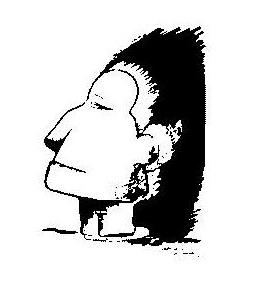
Look at the pictures below - what do you see?


Sometimes a cup is just a cup - would these two folk agree?


Does this face look like an Eskimo - or does the Eskimo look like a face?


If you look, you can see the face of God all around us - but who created who in their own image?


Optical illusions are created by our brain; not by the world around us, but through our interpretation of it.  Stop-motion animation pictures never moved - our brains simply filled in the gap.  This ability to associate the basic characteristics of differing things is extremely useful.  Particularly in life-or-death survival situations there's value in being able to quickly differentiate potential threats from opportunities or what can be used as a tool/weapon, as needed.
 
Innovation, however, isn't about determining the value of what exists already - it's about creating value-add.  It's a more esoteric skill that isn't necessary for bare-bones living, but the ability to create something new out of things that have come before is fundamental to social and technological evolution.  It's the accumulated whys and what ifs that help us understand the potential of a thing and to combine ideas and create something entirely new. 
 
Like using a horse for transport.  Or using wheels and a platform for transport.  Or better yet, using the horse to pull the wheeled platform so that we are free to do something else, or to do more.  Heck, mabye this new contraption could even carry us.  Presto!  You have both the carriage, specialization and the origin of civilization.
 
Until we evolve out of the limbic brain entirely, the challenge of balancing an understanding of things based on what we know versus identifying their potential applications will continue.  We can weigh the consequences of stigmatizing the unfamiliar versus exploring its advantages when we are calm, focused and in balance.  The more we butt heads, so to speak, between these two cognitive functions, the more polarized we become, leading to an expanded gap between our progressive and conservative selves. 
 
When these two halves are in conflict, not balance, it's like gunning the engine of your horseless carriage while the break is still on - you're expending energy just to stay in place


Tuesday, 5 February 2013

Paulo Senra on The Way Forward

 
I've had the privledge of working with a lot of people in politics.
 
One of my favourites is a fella named Paulo Senra, who I had the pleasure of running into tonight at an event.  If you read his post (shamelessly reposted by me) below, you'll see why I think he's awesome.


To fill in your gaps of perception with reality, not confabulation, start by asking and then listening.  Challenging, perhaps, but always more rewarding.
 

Flight 186: New York - Toronto


After five amazing days in New York City, I found myself sitting and reflecting in seat 6D on my Porter flight back home to Toronto. I was sad to be leaving, tired and a little hung over, but mostly a bit anxious as I usually am whenever boarding a plane.
Prior to take off, the woman next to me turned and gently told me: “Just to let you know, I’m not a very good flyer. I get nervous on take offs and landings.” I smiled and responded with: “That’s perfect because I love take offs and landings; the mid-air turbulence is what scares the shit out of me.”
We exchanged smiles and after a few initially awkward and silent moments, we struck up a conversation.
It started with the expected and the usual “Where you from/What do you do?” inquiries, but it quickly grew into something a lot more substantial and controversial.
I blame it on this: “You seem like a nice guy, do you have a girlfriend?”
I thought about lying for a split second, but instead, I respectfully responded with: “No, but that’s because I’m gay.”
For the majority of the flight, I found myself answering questions about my coming out story to my family, my relationship with my parents, my plans to raise children, the state of marriage equality in America and how proud I was to be Canadian.
But it was another topic that really shifted the conversation – religion.
As I was discussing how disappointed and disgusted I was with the Pope’s (and the Catholic Church’s) views on women, homosexuality and marriage, my new friend advised me that she was an Orthodox Jew.
Suddenly, I was the one asking questions.
For the remainder of the flight I got to know a wonderful 52-year woman; born in India; raised in Canada; now living and working just outside the New York City boundaries; married to another Canadian; has four children; still travels on her Canadian passport; thinks the gun culture in America is ridiculous; and, votes Republican because she doesn’t think President Obama likes Israel enough.
I listened, agreed and disagreed, and continued to ask questions.
I learned that my new friend was about to visit her ailing mother, who was on life support in a Toronto hospital. She also admitted to me that she struggles each and every day reconciling her own personal views and the religious beliefs she is told is the correct way forward.
My new friend described to me the wonderful Jewish traditions that her and her family observe during the holidays and Sabbath, but she also explained how at times, she is uncomfortable with the views of her sect of Judaism, and in her opinion, how women are treated as second-class citizens. At one point she exhaled deeply and uttered “It’s a constant challenge, I feel stuck some days.”
I reminded her it wasn’t just Judaism and briefly mentioned examples of how oppressive Islam and Christianity can be towards women (and gays).
The conversation then navigated itself to the topic of the holocaust, where my new friend was surprised to find out that homosexuals, in addition to the millions of Jews, were also camped and exterminated. (Oddly enough, her husband now works for IBM, the same company whose devices were used to identity and classify individuals using the infamous concentration camp punch cards.)
And suddenly, we were wheels down in Toronto. We gathered our belongings and exchanged a few looks. It was as if we had a renewed understanding of what shared oppression and struggle felt and looked like. Considering the intensity of our conversation, the encounter ended in a rather unremarkable manner.
New Friend: “You know, you were the first gay person I’ve ever spoken to. Thank you for that.”
Me: “Really? Well, it was great meeting you. You’ve made me completely re-think how I view and judge Orthodox Jews.”
New Friend: “Well, we are not all the same; some of us struggle and continue to ask questions.”
Me: “Same with us.”
We smiled at each other. She walked on and waved. I leaned back against the cold tunnel walls and waited for my gate-checked luggage.


Friday, 31 August 2012

What Happens When We Don't Think Before We React:


Responsibility is a conscious choice - one that few of us make instinctively.  How can we focus so exclusively on individual ownership when we still have so much work to do on ownership of individual action? 


Eyes on the Brain
A neurobiologist explores the amazing capacity of the brain to rewire itself at any age.

What the Brain Tells the Eye.

 
Do we see what we want to see?
 
 
Have you ever picked up a gallon milk bottle that you thought was full when it was empty instead? You realize your mistake as soon as you begin to lift the bottle because your hand and bottle fly over your head. Your brain assumed that the bottle was heavier than it was and thus instructed your muscles to exert more force than was necessary. Before we make any voluntary movement, a great deal of planning, which is largely unconscious, takes place in our brain.
 
The same is true for perception. Since our eyes sense what is around us, it’s easy to think that our visual system is quiescent unless stimulated by something from the outside. However, what we see is governed to a large extent by what we expect to see. As with our movements, our brain sets us up in advance for what we will see.
 
This idea came home to me one morning when I glanced out my kitchen window at the bird feeder outside. Small woodland birds, such as nuthatches, juncos , and chickadees, were the usual visitors to the feeder. But on this day, I happened to glance up from the kitchen sink and saw five enormous wild turkeys, one male and four females, looking in on me. The male was so tall, he practically looked me in the eye. Despite their large size and distinctive appearance, it took me a full second to figure out what I was seeing. Had I glanced outside and seen the usual juncos and chickadees, I would have recognized and distinguished these birds, despite their small size, in much less time.                  
 
So why did it take so long to see the big wild turkeys? Because I didn’t expect to see them. What we see depends to a large extent upon what we anticipate seeing. The first area of our visual cortex to receive input from our eyes is called the primary visual cortex. It was once thought that neurons in this area respond almost exclusively to stimuli coming from the eyes. But we now know that the activity of these neurons is affected by “higher” brain centers which are involved in prediction and planning.
 
 
When the brain can predict what will be seen, it can prime the appropriate circuits in the primary visual cortex and other regions, allowing us to interpret visual stimuli more quickly. So, when I looked out the kitchen window that morning, my brain may have readied the circuits in my visual cortex for what I expected to see – the usual small birds at the feeder. The image of turkeys threw my visual system into a momentary state of confusion. Some circuits had to be suppressed and others activated in order for me to make sense of the surprising view outside my kitchen window.

Monday, 11 June 2012

Creative Destruction: SciFi Goes Spiritual


 - Morpheus, The Matrix

- Six, Battlestar Galactica


   - James Franco, Huffington Post


  - Jack Sheppard, LOST


 - The Fountain


Our mythologies across time and distance have each discussed the connectedness of all things, the  ouroboros of natural boom and bust cycles.  What has come before shall come again, but what changes?  With each iteration, we human beings gain more individual agency, along a spectrum, in a social context.

And we look for answers.  Is this all I am?  Is there nothing more?  Science Fiction is about who were are, now, but equally, it's about where we have come from and where we're going.  It's a metaphor for unknown realities that lay tantalizingly beyond our perception - for now. 


Cobb: You create the world of the dream. We bring the subject into that dream and fill it with their subconscious.
Ariadne: How could I ever acquire enough detail to make them think that it's reality?
Cobb: Well, dreams, they feel real while we're in them right?
Its only when we wake up then we realize that something was actually strange.

Who we are is not who we feel we should be.  Nor is what it means to be human as distinct as we would like to imagine.  Do we matter?  What happens to us?  If your focus is the individual, we are all doomed to end.  That ending, though, is a beginning - what we leave behind becomes the matrix from which springs new life, both biological and social.  Through this constant genesis, we all matter.  We are what came before, we are what comes next - we are part of the whole.


Wednesday, 30 May 2012

Communication: The Most Human of Challenges


Cara Santa Maria - a brilliant scientist, a brave person facing personal depression, a public figure and a pretty lady.  Which mantle do you think most people dwell on when they look at her, or even speak with her?  How often, I wonder, has she had to scale down her prose, push down the swell of her depression to help people get past the way she looks to see the multi-faceted gem, inclusions and all, that lies within?


Stephen Hawking - a brilliant scientist (who made quantum physics a best seller), a limp body trapping a hyperactive network of cognitive activity, a man with the drives of a man but no way to satiate them.  How often have people, even those cognizant of his genius, treated him like an object rather than a person?


I won't lie; my eyes welled up a bit while I read this piece.  I've faced many a communication challenge in my life.  I have some idea of what it's like to have so much you want to share but for whatever reason, be restrained from doing so.  I know the frustration and stigma a chasm of the personal can cause, for both sides.  Cara Santa Maria beautifully captures the tragic poignancy, the almost-meeting of spirits, if not as much minds, through the relatively short time frame of her encounter with Hawking.

Her writing reminds me of a favourite line from Jack Kerouac's On the Road - "We tiptoed around each other like heartbreaking new friends."

If two minds as beautiful as these can't bridge that simple, human gap, can any of us?


So long as we make the effort, there will always, always be something that's shared - even if it's just a new way of seeing ourselves.

ANOTHER EXAMPLE: Hey Glenn, the kid's a person and he's in the damned room!


Tuesday, 29 May 2012

The World We Know vs The World That Is


Thanks to Vera for twigging me to this brilliant West Wing Video that covers some of the things I love best;

cognition

behaviour

social organization

how linear thinking impacts social equity

maps

This is today's version of heliocentrism.  The world we feel we know, isn't.  This is a concept that goes far further down than you might think.

The world we perecive, thanks to information we take for granted as accurate:


The world as perhaps it is better reflected two-dimensionally:


Of course, the world isn't two-dimensional.  Nothing in our world is, except for the way we perceive it.

Being conscious of this, we can change the world by understanding it better.