Search This Blog

CCE in brief

My photo
Recovering backpacker, Cornwallite at heart, political enthusiast, catalyst, writer, husband, father, community volunteer, unabashedly proud Canadian. Every hyperlink connects to something related directly or thematically to that which is highlighted.
Showing posts with label Toronto Politics. Show all posts

Wednesday, 9 December 2015

Ways to Help Syrian Refugees (by Zareen Muzaffar)


Zareen Muzaffar is a young journalist with a passion for story-telling.  She has become both a partner and an inspiration on the #WelcomeHomeTO project. She's working on a really cool story-compilation project that I know you're going to love!

Here are some tips she has for those looking to welcome Syrian Refugees as new Canadians but not sure where to start:


Wish to help the Syrian refugees?

According to the latest article in Toronto Star, Syrian refugees will begin arriving in Canada by mid-December. The federal government said this week that Canada could welcome as many as 50,000 refugees by the end of 2016, including those who are being privately sponsored.

What can we, as Canadian citizens, do to make the transition easy for the Syrian refugees? What’s required at this time is a better dialogue between the government and settlements agencies. WelcomeHomeTO aims to promote and maintain a culture of openness where the newcomers feel welcome.

Those who wish to assist in helping Syrian refugees can contribute in different ways. Here are some ways you can help make the transition smoother for the refugees arriving in different parts of Canada.

LifeLine Syria: This community engagement initiative plans to actively participate in Canada’s commitment to resettle Syrian refugees. They aim to help recruit, train and assist sponsoring groups over the next two years to welcome and support refugee families during their first year in the GTA. LifeLine Syria also plans to work with the Syrian community in the GTA to ensure that they help shape and participate in this initiative. For more information visit their website or read their plan of action here.

GTA Refugee Assistance Hub: This group was created to help people find/supply donations of clothes, household goods and other immediate needs and required services for Syrian refugee families arriving in Toronto. All members are welcome to post requests/offers for items, questions, offers of time/skills, etc.

In-Kind Donation Collection: Located right by the subway station (Dundas West), this center has 21 Certified Information and Referral Specialists and five Arabic speaking staff members. They hope to receive winter clothing, bedding, kitchen ware, computers among a range of other necessities. For more information, visit their page here.

The Clothing Drive: What started out as a post on Facebook quickly turned into a national campaign for donations. The Clothing Drive collects clothes, organizes them and delivers the packages to the incoming Syrian families. They describe their inititave as, “This drive is a "Room for More" initiative on behalf of several sponsorship groups. The mandate is simple: collect clothes and only clothes for the soon to arrive Syrian Refugees.While the immediate need is for winter clothing and outerwear - we will accept clothing for all seasons”. Join their group on Facebook  here.

Save a Family from Syria: The First Unitarian Congregation of Toronto has partnered with the Muslim Association of Canada(MAC) and specifically their Masjid Toronto to work together to bring families to Toronto and settle them into a new life here in Canada. Volunteers can sign up on the website. You can also read stories on their webpage here.


Horses, Bayonets and Toronto's Taxi Barons


If ever a case was to be made of the desperate need for taxi companies to get with the times, this is it.

Uber is increasingly popular, especially among younger travellers.  Individuals and companies have started to play with Uber's potential value-add - everything from pizza delivery and mail service to increasing mobility for people with mobility issues.  Yes, it's a new model and yes, it requires new regulatory frameworks to support it - but with initiatives like Tim Hudak's Private Member's Bill aim to do just that.

Apart from providing supplementary income, part of the big reason Uber is so increasingly popular is because it is the anti-taxi.  The taxi racket has a bad name in town; drivers rushing corners or cutting off pedestrians, taxi barons gouging their own drivers, etc.  

In the free market, customers are the evolutionary forces that determines what survives, and they tend to favour what is seen to work in their best interests.  Increasingly, the traditional taxi model is becoming the horse and bayonet of commuting options.  It represents a bygone era of service dictators who fought government with the assumption that the public was really a passive third party.

Uber, on the other hand, represents where society is at now - civic engagement, expansion of option, governments looking to support entrepreneurship and co-design services and regulatory environments with the public as well as the usual organizational suspects.  They've hired some smart young policy minds and communicators from Queen's Park (the amazing Susie Heath comes to mind) who know how to engage, not just message, and who better reflect Uber's end-user than old-school taxi company owners.


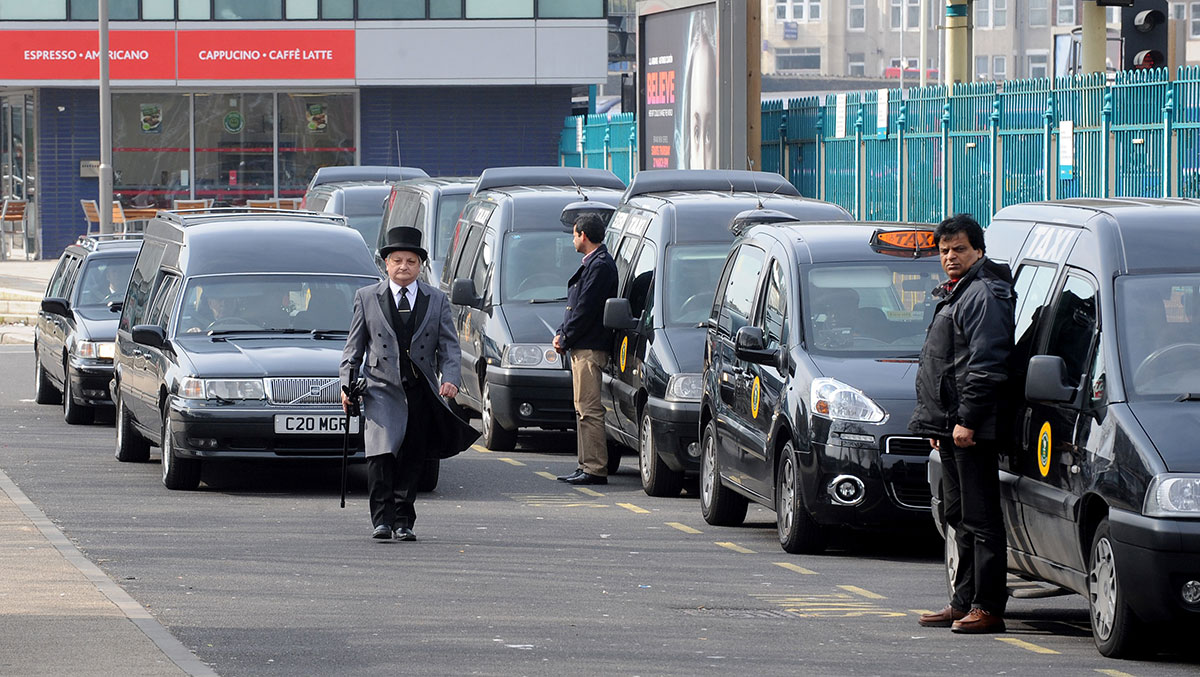
Which brings us to this inane protest which will disrupt traffic, piss off commuters and reinforce all the things people dislike about taxis and the entire taxi industry.  

Why on earth would taxis schedule their own funeral procession?  What can they possibly hope to gain by frustrating the people who ultimately pay their bills - citizens?

Simply, because the taxi industry lives in the past and haven't figured out why they need to change their tactics from what worked a century ago.

The theory here is dominance - flex your muscle, remind people what power you have and then force the powers that be to turn their backs on your competition, leaving you with a non-competitive market.  It's what Steven Harper tried to do as a politician, which ultimately led to his downfall.

Sorry, Taxi barons, but that just isn't the way it works any more.  

Moves like this don't strengthen your cause - they alienate your "base."  And the more young commuters have their experience of taxis tainted with negatives, the less likely they will be to use them - especially when they can turn to friends or try new experiences through organizations like Uber.

By all means, proceed as you feel is right - get your horses and bayonets out and show those politicians who's boss.

It's your funeral.  I just hope you can afford the fare.


Tuesday, 24 March 2015

Designing the Perfect Get-Away Space

Displaying IMG_20150324_094127.jpg


The story of Elton McDonald, the Toronto Tunnel builder, fascinates me.  

Here's a guy that dedicated a massive amount of time learning skills, iterating, experimenting and constantly working to create something unique.  These are all the talents employers theoretically want in employees; it's also the sort of experience a millenials wants in employment - the ability to learn new skills, grow as individuals/professionals and be an active part of building something.

I've been near the centre of a growing number of related conversations over the past couple years on youth employment, youth engagement, civic engagement, open government/data, open data, digital tools and back to youth employment.  The common theme from all these conversations is building something new, building something collaboratively, building something that people feel they have a stake in, but that can benefit others as well.

The CODE Hackathon is a great example of this - so is Ontario's Budget Talks or TGIF Tuesday, a policy hack I did with Toronto Youth Cabinet.  I believe (and I'm not alone in this) that the trend line is this: all these separate acts of engagement, creation, community-building and digital connectivity/tools is laying the groundwork for our next big social revolution, like the Industrial Revolution or the Green Revolution before it.  Change is clearly in the air, as is disruption - the question is #howmightwe move more quickly and productively, plus less painfully, from where we are to where we're going?

At the same time, of course, there are many who are uncomfortable with change and want it to stop. We have politicians who are determined to resurrect the manufacturing economy, employers who insist that traditional top-down hierarchical leadership is the way things should be, parents who reject their kids learning new things and all kinds of people rejecting social changes from empowered women to diversified socio-cultural norms.

Displaying IMG_20150310_221116.jpgIt goes without saying that society is simply busier, too - we're crowded by people, words, images, even when we're in our own homes.  There's real value in having spaces that we have at least co-designed as refuges, places to think, to iterate, to unplug, or process, or discuss.

Every year there's enough snow, I build a quinzee - essentially, an igloo made from piling and digging.  The building of this relaxes me, gives me an outlet for my energy, something to do with my snow, an opportunity to play with my kids outdoors, but it also gives me a quiet space I can hole up in and feel 100% comfortable in, because I made it with that purpose in mind.  

I've similarly built a "me zone" for my wife; it's got a comfy couch, a fireplace, a big-screen TV, a bar and a couple other amenities.  It's out of Lego, so not a physical space she can really retreat into (I don't have enough blocks for that!) but I know the concept will make her happy, feel a swell of gratitude for the effort and that feeling alone will help ease some of her daily stress, even if just for a bit.  Plus, I got to create, and better than that I got to create something that will make someone happy.

Elton McDonald has decided to turn his 15 minutes into an opportunity to empower others - essentially, to create opportunity for his peers.  Rexdale Lab, The Workshop and countless other community-generated initiatives are trying to do the same thing.  Citizens Academy focuses on capacity-building for civic engagement, Techsdale for digital/tech skills to help youth develop the skills they need to succeed in the modern economy, but they're all variations on the same theme - motivated individuals creating spaces that empower people to learn, grow, experiment and develop the tools they need to build themselves.

Kinda like schools.

It's not a coincidence that the TDSB is in conversations about the future of education (what do we want schools to provide for youth, what kinds of abilities do we want youth to have when they emerge?), that John Tory is all about empowering the disenfranchised/harnessing creativity, learning from models like the South by South West festival in Austin, Texas.  It's simply fortuitous that we also have increasing calls for youth-oriented spaces while our student populations are dwindling to the point that schools need to find new purposes.  

So, here's a challenge for you - #howmightwe tie these threads all together, starting small and working big?  Could we have spaceathons that teach youth about the design thinking process, then facilitate discussions on what the perfect youth incubation/thinking space could look like?  How would you mix shared and quiet space?  How would it work time-wise?  What would be security measures, accessibility measures, how would it be accessed, who would it be targeted to?

Then, those spaces could become hubs for the next tier of discussion - how do we design public spaces and services to be more conducive to social business - and what does that business look like?  From there, we can expand to the sorts of conversations happening at global Open Data events or the Americas Forum - what should governance look like?  What should the economy look like?

Co-designed space, tools to build with and mentorship/opportunities to learn how to build with them, breathing room for contemplation and creativity, things to aim for, then ways to connect; that's all it takes.

Perhaps designing the perfect get-away space is where it starts.


Wednesday, 17 December 2014

Has Nick Gone Nice?


This is what Nick Kouvalis is saying today.  And here's what he said November 5th, 2010:
 
 
In the new version, Tory was out anyway - Kouvalis was just playing games to make sure that was true.
 
In the original version, he cleverly boxed Tory out of the race.  If that's folklore, it's folklore he created.
 
I'm less fussed about the fact that he's changing gears - all people do that, all the time.  New positions are regularly defined as refinements of old ones (floor-crossing being my favourite example).  We want to see ourselves in different lights at different points of our lives and can/do interpret the past in ways that are convenient for our present (if not our future, but that's why we have cognitive dissonance and confabulation in the first place).
 
Kouvalis could be reinterpreting his past for public consumption alone - that's what spinsters do - but it's possible he's trying to convince himself as well.
 
What would make me think that?
 
While he still comes off as supremely confident in this interview, his wording borders less on arrogance than we've seen in the past.  Additionally, he's less belligerent and more proactive.
 
 
There may have been faked calls and other shenanigans in this campaign - I've no doubt there was.  What's more interesting is the fact that Kouvalis isn't talking about those things; in fact, this is the most policy-oriented interview he's done that I've read.
 
People age and mature.  They are influenced by the company they keep, and clearly Tory runs a completely different ship than Rob Ford did.  At the same time, some tigers never change their stripes, but recognize the benefit of appearing as though they did.
 
The variant of Nick Kouvalis we see in this interview is not the same one we're used to.  Whether maturity, context or an ability to read the landscape and know what's going to work in one's interest for the foreseeable future, this says something.


Thursday, 11 December 2014

What the TTC should learn from Ferguson


 * Does not reflect TTC Fare inspectors.


Should these situations escalate.  Hopefully they won't and all, but hey - it never hurts to be on the safe side.  Carrying a baton is like carrying an umbrella, right?
 
Wrong.  So wrong.  To plan for violent eventualities - to tell your recruits that hey, is a fight breaks out and if you get attacked, you've got this baton handy - is to frame the fare inspector's thought process in that they're looking for that situation to materialize. 
 
When you go looking for trouble, etc.

Police officers keep watch while demonstrators (not pictured) protest the death of black teenager Michael Brown in Ferguson, Missouri August 12, 2014. (Reuters)
Just look at Ferguson.
 
 
Why, indeed?  Why do local police need to be armed with the equipment used by soldiers in fields of combat? 
 
Of course they don't.  In fact, if public service is equitable and justice is blind, the role of the town policeman should be an easy, even friendly one.
To put such weapons in the hands of police, or transit "fare inspectors" is to beg for their usage.  It's the ultimate marshmallow test - tempting a child with something fun or tasty, telling them not to use it and then walking away.
 
And there's more.
 
The TTC's concern is not enough fares are getting collected.  They need more money and the pressure is to find it internally, but it's hard to keep hiking fares when service keeps faltering.  So how about paying money for fare inspectors to help the cause?
How much of this will be about TTC riders vs existing TTC fare collectors?  Anyone who's ridden the TTC knows that collectors aren't always 100% tuned in to the people passing through their turnstyles.  Sometimes, there's no person there at all.  In some cases, good customer service gets in the way of watching every set of the tens of thousands of hands that pass over deposit boxes, especially over open gates.
 
It's not too hard to picture armed fare inspectors getting it into their head that they are superior to fare collectors and waving their baton around (figuratively speaking, of course) over fare-related matters, even customer service. 
 
All this at an agency that is struggling with service disruptions, delays, etc. 
 
The citizens aren't the problem.  The employees aren't the problem.  People are people - they will react to their environment, whatever it may be.  A poorly designed environment results in poor results.
 
Batons are a terrible addition to an already poorly designed environment.
 
I would suggest Brad Ross stop his Michael Hayden act and start recognizing that if people have concerns, it's probably there's a reason for it.
 
Instead of adding weapons to a volatilte mix, how about better management practices, better training, better service?  You could even use open data and digital tools to empower TTC riders to be part of the structural solution.  Heck, you could use civic fundraising to help address specific transit issues.
 
Let's sort this out before the TTC's baton business gets out of hand, and ends up in the media.

Friday, 14 November 2014

Child Poverty: Why Youth Must Lead


Two headlines from today.  If you commit just a bit of sociology, you might even sense a connection between them:
 
 
Crippling child poverty.  That's a whole generation growing up in tense climates, without proper nutrition, without proper supports.  But clearly, this is someone else's problem, right?  Those parents should be doing more, working harder, hustling for cash, or something.  It's their own fault, right?  Nothing to do with us.
 
So long as governments keep taxes low and especially provide tax breaks to businesses, that'll create jobs - then people just need to hustle to get them and everything else will be fine.
 
On to story number two:
 
 
Guns.  In our schools.  What's behind this?  Are backwoods bigots from Pakistan invading our schools and using their mind control powers to make our kids bring weapons to class instead of pens? Is this a reflection of the erosion of Canadian values, or the Americanization of our culture?
 
Here's an idea:
 
 
There is plenty of money in Canada right now; there are 118,000 millionaires in Toronto alone.  There are plenty of services - public, not-for-profit, corporate social responsibility - that exist, offering an alphabet soup of services.
 
And of course, there's the prevailing wisdom of our laissez-faire model of capitalism; in Canada, it doesn't matter where you come from, what hurdles are in your way, if you push hard enough you too can be one of the 118,000.  You gotta work hard, be willing to start simple, but above all you gotta hustle.
 
The implication, of course, is that if you don't succeed, it's your own damned fault.
 
Here's a term that will be familiar to pretty much anyone in town with responsibility for managing finances - ROI, Return On Investment.  If you can't see a clear, short-term return on whatever your investment might be, you don't do it.  Low-hanging fruit are therefore preferable; the least effort required for decent gains in short time frames.
 
Let's reframe that a little bit so that we're all on the same page:
 
- If you don't have resources - if you're poor, young, accessibility-challenged, whatever, the pressure is on for you to hustle hard over the long-run if you want to get anywhere in life.
 
- on the other hand, if you've had some success in life, long-term investments aren't worth your time; it's all about the quick-wins, the best bang for your buck, the low-hanging fruit.
 
For the haves, it all makes perfect sense - you spend half your life working really hard to gain success, but when you're there, you put the pressure on everyone else and focus on quick wins.
 
Now, picture you're a child who lives in a marginalized neighbourhood.  Maybe your parents were born somewhere else; maybe they grew up marginalized themselves, but in either case, they've invested time and energy - time away from their kids - and have nothing to show for it.  If anything, the amount of energy they've put into trying to get ahead and the frustration they've faced in not succeeding has bled into home life, which isn't great.
 
This is the lesson a youth can easily take away from this - the people with resources will tell you to hustle, but the truth is it won't get you anywhere.  In fact, this whole "you gotta come to me" approach to success is pretty much an excuse for those with power to stick to their low-hanging fruit and not share their millions.
 
What happens when you feel the people who are supposed to be the movers and shakers in town are making excuses to exclude you and our peers?  How much effort are you willing to put into getting an education, working crap jobs if you can find them, if you are never going to get where they are because society's designed to keep you marginalized?
 
 
This is worth pausing on. 
 
Our society is anti-leadership, from the top down.  We have governments cutting programs, cutting taxes and cutting cheques on things like child care and mental health supports for veterans rather than making long-term investments.  We have bosses that are increasingly pressuring employees to be functionaries, content-producers, client-managers and business developers, yet training is not being provided and salaries aren't matching up. 
 
Even in our education system, teachers are being told it's their job to be educator, mediator, psychologist and content-creator to massive classrooms that include children with learning challenges.  Parents are being told to do more, but do they have the resources, time, or cognitive/emotional bandwidth?  Are they too absorbed with work, or too depressed and frustrated from a lack of work to give their kids what they need?

 
help me help you - help me help you  Pleading Tom CruiseWe can look to previous generations and say "they did it, so quit making excuses" - but without asking if it was a good process for them, or how the changing nature of work (who really has a 9 to 5 job anymore?), the rise of mobile comms devices and the soul-sucking challenges of gridlock play a role.
 
There is next to no leadership out there right now.  The people with power and responsibility don't want to be leaders - they don't care about their people's problems.  Sometimes they don't even care about their organizational programs, because they plan to be gone before they blow up (low-hanging fruit, remember)?
 
Or, they don't feel empowered themselves.  This can be justified in many ways (blame being a common one) but the basic fact is that they aren't, in their current condition, up to the challenge of leadership.
 
Some of them actually believe throwing the kids in the deep end is a good strategy, because that's how you identify the strong swimmers.  What happens to everyone else is one of those "not my problem" things.
 
Yet we desperately need leadership right now. 
 
We're hearing the same things from every echelon of society; government is broken.  Infrastructure is screwed.  Organizations are a mess.  Yet those within those institutions will step up to the mic and tell us "everything's fine, we have a bold plan, just trust us and don't mind the man behind the curtain."
 
Back-of-napkin plans are being sold for their commercial value, not because they make sound structural sense.  Marginalized voices are being drowned out with top-down messaging.  Rabble rousers are being silenced through defunding, firing or even eviction.
 
Is it any wonder that youth are taking their cues from the world around them and realizing that if they want to be safe, if they want to have power, they have to be willing to take it through whatever means are available?
 
A kid not investing in schoolwork, being a bully and carrying a weapon aren't defying social rules of engagement - they're picking up on the socio-cultural cues around them responding in kind.
 
This is it; this is where laissez-faire capitalism meets behavioural economics.  In a game of competitive escalation and a reduction in personal investment, it's who's got the biggest stick who wins power and privilege.
 
And as of right now, there is no way, no one who can do anything to stop this trend. 
 
Why?  It's the culture, stupid. 
 
We have a silo-based culture, full stop.  Even those who talk about disrupting silos are really just trying to stuff more stuff into their silos.  Funding is there, but getting it is so competitive that an increasing amount of investment is going into competition, not solutions.  Lost opportunities, duplication, gaps and overlaps are resulting.  There are communities in this city that are glutted with programs and players, and yet the structural issues remain.  Why aren't we learning from this?
 
I question whether the people leading the charge right now are prepared to wrap their heads around the enormity of the challenge.  Even if they do care, the reality they grew up in and are living now is fundamentally different than the one being faced by marginalized youth today.
 
The best champions of any problem are those with lived experience.
 
Which comes to the crux of the matter, the core component of culture change, the disruption that is most difficult but most necessary.
 
The way forward isn't for more downtown adults to impose solutions on youth; if those youth aren't themselves leading the way forward, whatever gets built isn't going to work.
 
This requires a fundamental shift in the way we look at society, at ourselves, and at the role of power.
 
We always look for the best-in-show to invest in; they're most likely to provide the best ROI.  We then take them from wherever they are and put them in environments considered to be good for growth.
 
All of this is backwards.
 
We have to start focusing on those least likely to succeed with minimal effort and put them in the driver's seat.  That means going to their communities, learning to speak their language, taking them serious and treating them seriously.
 
We have to create the best environments where these youth are - in other words, don't bring youth to MaRS, bring MaRS to the youth.  That means more investment of time and interest - which, but its nature, requires motivation to want to make things better, not for a quick ROI, but because it needs done.
 
Which comes to the last, most challenging, most fundamentally important component of our needed culture change.  Right now, we see power as a form of wealth to be accumulated; power is something we want because, when we have it, we can get more through giving less.
 
That stops right now.
 
From this point forward, power isn't something to be obtained; it's blood to be circulated.  The same goes for money.
 
Here is John Tory's challenge - he needs to be the anti-Doug Ford.  He needs to step away from the practices that have brought him success in life, because it's not about him right now.
 
After years of seeking high office of some kind, of being the guy at the top, now is the moment for John Tory to show true leadership by stepping back and becoming a conduit rather than a capstone.
 
The same holds true for every person of influence in this city; councilors, Executive Directors, CEOs and talking heads.  We need to be empowering leaders, not giving orders.  We have to be cultivating solutions from the grassroots rather than imposing infrastructure on top of.
 
This is not a lofty vision, nice words on a page.  It's a fundamental necessity. 
 
Our society is crumbling and the solutions we're coming up with aren't good enough.  We are failing the next generation, and they know it.
 
If we aren't prepared to empower youth to lead, there will come a day not too far from now when they will simply take what they want by force.  That is, after all, the lesson we're teaching them.
 
The choice is ours.  The consequences will be ours.
 
Either way, it will be youth that lead.

Thursday, 30 October 2014

Why @JohnToryTO should hire @MorganBaskinTO


 John Tory is a smart man with a background in managing big organizations.  One of the keys to any form of successful leadership is recognizing one's own strengths and weaknesses and building teams that fill out your capacity.
 
It's clear this is what John Tory has in mind as he builds his team.  It's also clear that he's not slacking off on the political acuity side, as he's made a point of saying he hopes to find ways to include his main rivals for the Mayor's chair, Doug Ford and Olivia Chow.
 
 While John Tory is a good man with right intent, he's decidedly old-school and upper-class.  His approach to management is equally grounded in a old-world, top-town mentality - this was reflected in past comments about the need for women employees to hustle more and his difficulty in accepting the concept of white privilege.
 
These aren't abject human failings on Tory's part so much as they are limitations.  We can't truly know what we can't experience - it's why the smartest urban planners in the world often neglect design-thinking pieces around accessibility, navigability, etc.  It's why we have a representative democracy in the first place.
 
John Tory has done a great deal of good for a great many communities, but he doesn't necessarily understand their day-to-day reality or have the capacity to see the world through their point of view. 
 
This is especially true of millennials. Of course, he's not alone in this - baby boomer managers and employers from every sector are struggling to recruit and retain millenials.
 
The problem they are facing is one of culture change.  Once at the forefront of social change, babyboomers have become the establishment.  They fundamentally don't get the priorities of today's youth; they have trouble seeing the modern forms of interaction and ideation that millenials practice as anything other than a lack of discipline.
 
This shouldn't be a problem for Tory - he's smart enough to recognize what he doesn't know and fill out his team with supportive players.
 
Which is where Morgan Baskin comes in.
 
If you haven't heard of Morgan Baskin, she's the 19 year-old who ran for Mayor.  Put it another way - she's a millennial that understands the motivations of modern youth who was gutsy and tenacious enough to hustle in an old-school way John Tory would be familiar with.  She also happens to be wicked-smart, well-versed on issues and an effective communicator.
 
As a result of having run for office, Morgan has amassed an impressive network of supporters and partners who rightly recognize her as a young leader to watch.  She also has an insider's familiarity with the political process that few youth - including those weaned on partisan politics and youth forums - can match.
 
Right now, Morgan is weighing her options of what to do next, which school to go to, where to dedicate her focus post-election.  Among the options she is considering is study in either public policy or urban studies.  She remains passionately committed to systems change in Toronto. 
 
Who better to lead or at least advise John Tory's youth employment/civic engagement push? 
 
Hiring Morgan in some capacity (ie, a paid position) would be a smart move on the part of Team Tory.  She can do the job, she can communicate Tory's message (and bring the message of youth back to him) and beyond that, it's good optics. 
 
A big challenge old guard employers/policy makers face is that they are seen as tokenizing youth rather than taking them seriously.  Giving a millennial a significant, paid role on his team with a clear mandate is a great way for Tory to send the message to Toronto's youth that he's serious.
 
Would Morgan be interested, though?
 
Morgan's nobody's pasty; she wouldn't take on a token position, nor would she be content to be a one-way messenger.  Morgan is a quintessential millennial; she's diplomatic, but not willing to push messages she doesn't believe in.  Engagement, not sales, is her focus.
  
If Tory were to consider adding Morgan to his team, he'd have to make sure the position offered was one she could relate to, grow in and find fulfilment through.  That's just the way it is with millenials.
 
I think it would be a great match; Tory would gain a fresh face, powerful communicator and a bridge to millenials.  Morgan would have a great opportunity to hone her skills, build her brand and facilitate the kind of change she knows is required. 
 
Plus, doing so would be a clear, early indication that Team Tory is serious about doing a better job engaging the City's youth.  Figuring out how to bring Morgan on to his team would also be a useful exercise in millennial engagement for Tory himself. 
 
Introductions made - I look forward to seeing what happens next.


Wednesday, 29 October 2014

Forward, Toronto


Embedded image permalinkRemember that video Team Doug Ford took from Why Should I Care? wherein Tory talks about road tolls?  When you watch the whole thing, you see that the substance of what he said then mirrors his quote posted above
 
While I question some of the choices he's made and wonder if he fully understands the challenge he's presented for himself, I have no doubt that John Tory's intentions are pure.  Tory is an aspiring post-partisan; he's seen up close and personal the divisions that partisanship can create and the limitations fixed ideologies place on our ability to understand and solve our structural socio-economic woes.
  
Unless you're a die-hard partisan, you want John Tory to succeed as mayor.  This is our city, and he will be our Chief Magistrate.  Holding him, Council and the public service to account is part of our role as people of Toronto, but it doesn't end there - we need to bring our ideas to the table and be a working part of the solution.
 
In that vein, I would encourage Tory to look beyond the sweaters of partisanship and actively wade in to the different communities of the City, too.  He needs to be engaging directly with the people of Etobicoke, and Regent Park, and Alexandra Park in their spaces, in formats comfortable to them.
 
The same goes for the city's social entrepreneurs, CSR leaders, etc.  This doesn't mean the odd powwow with the Ilse Treurnichts or Tonya Surmans of the world (though they're definitely worth engaging with) - it means creating regular opportunities to engage the Andrew Dos, Bianca Wylies and Shilbee Kims of the world as part of the solution-generation process.
 
Tory should also tap into some of the talent and visions of some of the candidates who didn't make it into cabinet.
 
Alex Mazer's work with Better Budget TO is astounding and, with the full partnership of Team Tory, can have an even greater impact.
 
Andray Domise's vision for Techsdale is great and needs to be implemented; it also fits in nicely with the visions of other community leaders for Youth Entrepreneurship hubs possibly based out of underused TCHC/TPL spaces in Toronto's NIAs.  Then, of course, there's Toronto Youth Cabinet's Chloe-Marie Brown and her three big policy ideas for 2015.
 
Alejandra Bravo continues to make a difference among Toronto's New Canadian communities, empowering more civic engagement and literacy.
Removing Barriers for “At-Risk” Youth
 
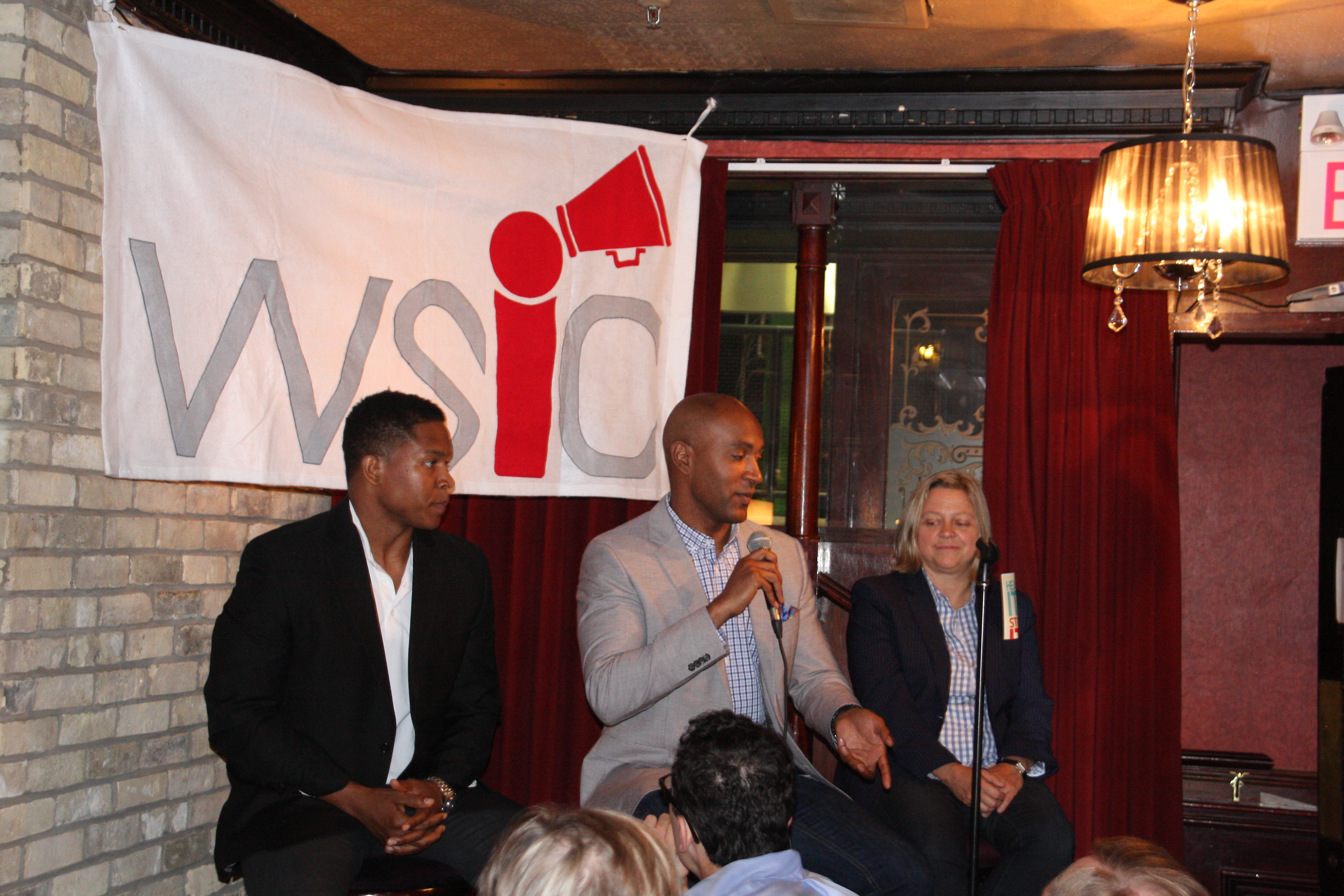
On the civic literacy side, we go full circle back to Why Should I Care?  Terri Chu has done an amazing job developing one of the most important forums for dialogue in the city.  Rather than pitting opposing perspectives against one another, new ideas and information are shared through conversation. Instead of exploring a battleground, common ground emerges.
 
Wouldn't it be great if we had more WSICs throughout the city?  Or if the City (Mayor and Councilors, City Planners, etc.) engaged in regular forums like this to engage, inform and hear from local communities?
 
Getting informed and getting engaged are crucial, but we need to go even further.  To really make a difference, people - all people - need to be an active part of the decision-making process.  That's what Reset Toronto has been hinting at; it's also what Toronto's Open Community, which represents a variety of sectors and communities, has been trying to promote.
 
Last night, I had the privilege to be part of TGIFTuesday, a policy kitchen conversation which brought a mixed group of people together to craft some policy actions to bring to Council.  Partners included Social Innovation Generation, the Centre for Social Innovation, Swerhun and Toronto Youth Cabinet.  The new Council will be getting a white paper based on the ideas generated there and there will also be a video in the near future. 

We're all committed to doing more of these and in more communities throughout town - it would be awesome to hold such events at local entrepreneur centres/community catalyst hubs.
 
All of this is breaking new ground, doing things differently and embracing the idea of iterative development.  In short, it's risky, it's a bit messy - but it's doing exactly what Tory want to see, which is breaking down silos and bringing people together.
 
We all need to take off team sweaters from left to right, but we also need to be comfortable engaging both above and below our social strata.  Tory's political advisors will probably discourage this - it goes against the political mentality of picking fights and reaching strictly for low-hanging fruit - but it's what the city both needs and deserves and, I believe, what John Tory ultimately stands for.
 
The Mayor-elect is welcome to join our conversations, events and hacks whenever he has the time.  We're happy to work with anyone committed to the same cause of building an informed, engaged and empowered society.
 
After all, the only way to move forward is to do it together.