Search This Blog

CCE in brief

My photo
Recovering backpacker, Cornwallite at heart, political enthusiast, catalyst, writer, husband, father, community volunteer, unabashedly proud Canadian. Every hyperlink connects to something related directly or thematically to that which is highlighted.
Showing posts with label Tim Hudak. Show all posts

Wednesday, 18 June 2014

The Post-Hudak PCs and Lessons for #onpoli


On the way home from a chat with some public servants and allies about behavioural economics, employee engagement and how to really motivate innovation in the public sector, I read this:
       
The one and only time Hudak budges; sadly, it has to come at the end.

Some reflections on the Star piece and lessons to be learned by the future PC leader, and their team, and all Political Parties:

Tim Hudak was never going to win.  If it hadn't been his promised job cuts, faulty math or whatnot, it would have been something else.  Good for him for being true to what he believed in, but what he had to offer was never going to be what Ontarians wanted.  Keep that in mind as you vote for your next leader.

Now, from the article itself:


Really?  I can't even begin to count how catastrophically bad an idea that was.

Just joking - of course I can.

Number one - have the Ontario Tories not read up on the Federal Tories' national occupational mental health standard?  Considered the whole OHRC respect for dignity thing?  What about basic behavioural economics and presenteeism?

If you promise to fire a bunch of public servants if you get elected, you send a massive chill throughout the entire public sector.  That's probably what the Tories wanted, but in terms of actual management, they would have killed what little morale was left, crushed what little innovation is already being ignored internally and reduced service quality to minimum.

Why?

It's simple - people who are afraid don't perform well, especially when it comes to customer service. They freeze up, they turn bitter and what they feel gets passed on to the end-user.  This is why smart leaders are taking employee engagement seriously.

Progressive Conservative MPP Randy Hillier, left, said "Every hour that (Tim Hudak) stays on will increase the fractiousness and the divisions between him and his caucus."
Number two - Ontarians would never have thought handing out a swath of pink slips to people for just doing their job was a good thing.  We might want justice when a couple of CEOs expense muffins, but it's an affront to our ethics to cut the livelihood of 200 people and make it a photo-op.  

Especially as a campaign tactic.  The message that gets sent is that with that guy in charge, nobody is safe - and he'll be happily dancing on the grave of each person who gets culled.

I could go on, but we've other pieces to cover.  The key question is - how did Hudak's brain trust ever think stuff like this was a good idea?

They aren't dumb.  This isn't their first kick at the can.  It's not that they don't care, either.  Clearly, they thought such moves were a good idea for a reason.

My guess is that they did one of two things, or possibly a combination of both:

1) they misjudged public opinion because they hadn't really consulted enough.

They wouldn't be alone in this.  Politics isn't about real consultation, after all - it's #DecideSellDefend, not #DiscussDecideDo.  Partisans message, do fundraisers with friendly audiences and above all, gravitate to the opinions that agree with their own.  Then they pick fights with those who disagree with them.

The problem is that when you only read the Sun because you agree with what it says, you start to think everyone else must feel the same way, except for a smattering of partisan opponent die-hards.  When you think most people agree with you, it's easy to dismiss opposition.  

Which is a grave mistake.  We'll come back to this later.

2) Hudak's braintrust built a campaign plan that was reflective of their leader.

This is a variation on the same theme.  Hudak is the poster-child of the audience the Sun wants to appeal to; by creating a campaign that works for him, they were digging their own grave.

Honestly, though, this isn't a bad thing.  Hudak ran a solid campaign that was reflective of his values. We'd all be better off if more political leaders followed his example.  

Call it the political free market - by honestly presenting their authentic vision, leaders and Parties provide voters with a choice.  If the voters don't like one choice, they don't have to pick it.  It's easy.

This is how democracy is supposed to work.

When leaders and Parties put the win before the policy, they bake in poison pills, issue platitudes or make commitments they not only can't deliver on, but aren't reflective of their priorities.  The result is the downward spiral of policy and civic engagement we're just really starting to twig on to now.

Take a look at @TalentCulture and #TChat on twitter for some conversation on why authenticity, engagement and actual communication (which implies listening and empathizing) matter.

With us or against us isn't leadership.  It leads to employees who are more committed to keeping the boss (or shareholders) happy than actually serving the end-users, which is all around a dumb idea.


I couldn't agree more.  This is why I like Wynne; it's why I also feel the time might be right for some of the structural changes that can only be achieved through collaboration.

Hillier, who has no leadership aspirations and isn't backing any challenger, said he and his caucus mates were "completely astonished and bewildered" at Hudak's stubbornness.
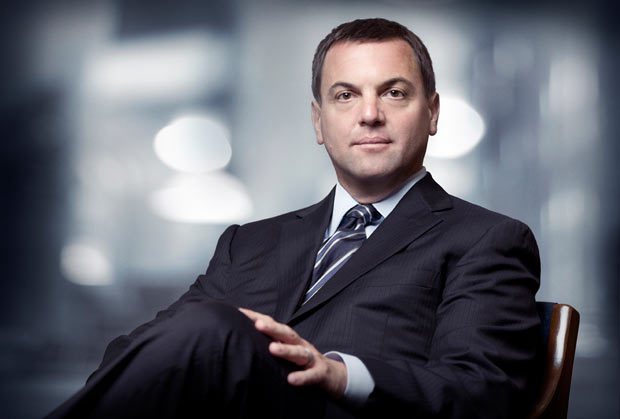
Good lord, why?  This is one of those times I wonder if I'm watching the same movie as everyone else is.  Hudak has always been stubborn; he's always acted in a delusionally confident, boss-like manner.  

If the PC caucus was astonished and bewildered, they shouldn't have been.  Hudak's been remarkably consistent.  

The question, again, is why?  Why did the PC caucus miss the obvious - and how can they avoid doing so again?

There is a way forward for the PCs, which is a good thing - we want as many perspectives in policy-making as possible.  They don't even need to stray from their core values of fiscal responsibility and conservation of resources.  

In fact, by promoting initiatives like open government and, say, district energy systems, they can even be innovative and progressively conservative.

Folks like me can present options and provide advice, but it's up to them to listen.  If they don't, well - they won't be able to blame Hudak any more, will they?

Leadership is about taking ownership - which, ultimately, is a lesson for all of us.

Thursday, 5 June 2014

Hudak's Virtue: At Least He's Consistent


By Wednesday morning, he was speaking with theological certainty: "I stand by my numbers.  It's going to create the jobs that I say."  "I know I am right."


Of course he knows he's right - he feels right.  People who disagree with him make him feel frustrated, angry, agitated.

In the back of his brain, Hudak is certainly wondering why these people don't get it - but doesn't much care, because he feels like a steam-roller, like one of history's actors.

There's no surprise in this - Hudak has always displayed the same functional fixedness, the same animosity towards opposing viewpoints and the same urge to punish those who challenge him.

He's like Rob Ford this way - we know exactly how he'll govern, because he'll govern in the same way he's always operated.  Like a boss.

For this, he is to commended - he's being who he is rather than trying to present himself as something he's not.  Which means, if he's elected Premier and voters have buyer's remorse, they'll have no one to blame but themselves.

Caveat Emptor, folks - be careful what you wish for.


Wednesday, 4 June 2014

Partisan Problems: Hudak's Latest Hypocrisy


I don't imagine many pundits noticed this (and fewer probably care) but it piqued my interests, so here goes.

Then-Minister Kathleen Wynne, along with the whole of former Premier Dalton McGuinty's Liberal Cabinet, signed off on his decision to relocate the gas plants.

Frankly, we have no idea how the discussion around the table went - what we have exposure to is the end product, not the discussion that led up to it.  Maybe Wynne did say no, maybe she didn't - at the end of the day, though, majority ruled on the Premier's decision and the deal was done.

Hudak seems to be suggesting Wynne should have refused, resigned, broke Party ranks and stood by her ethics - or, framed a different way, she should have broken ranks and ignored Party discipline.


Like, say, Dave Brister did.

Dave Brister was the guy who publicly spoke up against Hudak's right-to-work policy as wrong-headed.  For publicly disagreeing with the Party line, Brister was unceremoniously dumped by Hudak.


Brister's comments were unacceptable solely because they broke ranks with Hudak's message.  What he was saying clearly wasn't the problem - after all, the PCs backed down on Right-To-Work in response to the same kind of message Brister brought forward - it was the fact that he, one of their people had said it that was the issue.

That wasn't the first time Hudak has put Party interests above public interests.  When Peter Shurman decided he wanted to run where he now lives - not in his former riding of Thornhill but in Niagara Falls - Hudak explicitly told him he couldn't.  

Why not?  Shurman had a lock on Thornhill that Hudak didn't want to lose.  It didn't matter that his Shurman no longer lived there and was willing to run where he did - it was the seat, not the constituents, that Hudak considered first.

That didn't work out so well for the PC's public image - instead of accepting responsibility for his choices, as leaders do, Hudak fired Shurman, too.


Hudak has played the same sort of game over his on/off dance with Doug Ford.  He doesn't want to alienate Ford's massive base, but he doesn't want to be seen as too close to the toxic politician himself.  
In these matters, it's not Hudak's conscience that drives him - it's that numbers game he's so fond of.

If Hudak had been Premier and made the gas plant call - which, by his own admission, he would have - and one of his Ministers spoke up publicly against the move, he would have turfed them.  More to the point - seeing how focused he has consistently been on his Party's interests, we can pretty much expect similar scenarios to crop up should he become Premier.

Think infrastructure developments like hospitals, schools or roads in friendly ridings when they're needed elsewhere - say, the North.  Think outsourced contracts to Party-friendly consultants without open competition.  Think fights picked with stakeholder groups he knows will never vote for him, because he knows it will mobilize his base.

Hudak has made it clear that, when he's the boss, dissension is not tolerated.

Which is exactly the attitude Ontarian s (and even partisans) are fed up with.


This is no passing thing - look at what's happening with the Federal Parties, or any Party for that matter. Elected Officials that exercise their judgement are punished.

They have no hope of becoming Ministers, Leaders or Premier - that door is only open for those who toe the Party line, no matter how wacky that line is.

Nobody cares about this, of course, and it's impossible for the Liberals to make this argument without being branded as weak or whiners.

But it's true none the less.


Friday, 30 May 2014

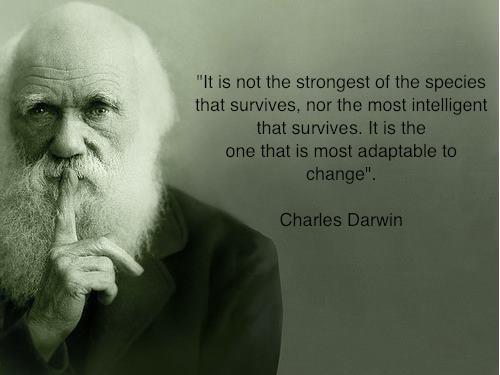
Tim Hudak and Darwin


It's true - Hudak has a long track record of being obstinate.  He's very consistent that way.

Clearly, for him, the strong survive - the strong hit hard, never waver, maintain traditions unbending.

Too bad Hudak's an economist, not a sociologist - were that the case, he might realize that in evolution, intransigence is a weakness.  It's the ability to adapt that leads to survival.  

Life on MaRS 1 - Cheap-Seat Politics


A couple easy questions for Tim Hudak, which he'll be no-doubt happy to answer:

1) Which seat would this save?  I'm pretty sure Glen Murray's riding won't be saved (or lost) by whatever happens with MaRS

2) Is the implication that any cabinet-level transaction should either not happen or happen in real-time transparency in the lead-in to an election (that was triggered by the NDP?) - or is Hudak suggesting that the business of Cabinet should always be real-time transparent?

We haven't heard about #OpenGov yet this campaign - Hudak's opened the door to that.

While both the gas plants and MaRS involve real estate, none of the other details match up.  Hudak is counting on people ignoring this fact and only paying attention to his argument.  It's kinda like how he's still solidly behind his discredited Million Jobs Plan.

Nuance doesn't matter where he's concerned - only messaging does.  Messaging he thinks will help him win.

Whoever he tars and feathers along the way is simply collateral damage.

We can break this down into two sections - one, real estate and two, the "bailout."

BAILOUT

I myself am not opposed to an entity with more resources helping one that's falling through the cracks, be it a school and a student or a province and a community.

When I was working for MPP Jim Brownell, the major city in his riding of Stormont, Dundas and South Glengarry, Cornwall, had lost much of its manufacturing base to emerging economies.  The City itself was suddenly lost significant tax revenue and was in a bit of an identity crisis.  They came to Jim Brownell for help.

Jim arranged for a loan the City had received from the province to be forgiven - but to do that, he had to ensure that the same loan package (for downtown revitalization, issued in 1976) was forgiven for every municipality still owing.


It was a big deal - the Premier came down to announce it himself.  Cornwall breathed a sigh of relief - they had a bit of wiggle-room to help them get back on their feet.  That and the Eastern Ontario Development Fund (EODF, also one of Jim's good deeds) have helped bring some measure of stability and even vitality back to Eastern Ontario.

I'm sure Tim Hudak would call that a seat-saving bailout.  He could even hint at the manipulative back-room dealings of people like Jim and I, working our asses off to advocate on behalf of his constituents.

At the same time, if we take a look at the consulting firms that got contracts - or, should he somehow eke out a win, get contracts while he's in office, it would be unfathomable to suggest that he's favouring partisan stooges with massive contracts.

REAL ESTATE

It's casually hilarious what a big deal the Political Right makes about government owning land.  They seem to feel government should go back to its original size - as in, existing solely in the Legislative Building itself.

That's how it started off - Members didn't have offices, they had closets.  Ministries had minute staffs that filled the elegant but small rooms that are now Member offices at Queen's Park.  The reason for this is that Ontario has grown, as have public expectations.  

Could you imagine the Ministry of Health consisting of ten people squished into a small room with poor heating doing analysis on the potential of new drugs or coordinating service delivery across the province?

As it stands right now, a lot of Ministry offices are located in buildings away from the downtown core of Toronto - primarily because of the effort to find cheaper real estate.  Of course, this means that for meetings, presentations and the like, public servants spend oodles of time in transit on Toronto's clogged roads - using taxi chits, by the way, because it's their job to commute back and forth.  The chits are a necessary tool for them to perform their function.

MaRS is walking distance from Maconald Block, where most Ministries are located, and Queen's Park proper.  If you take the subway, you can even get there underground.

If you can consolidate government offices in one, accessible space, reducing the need to pay rent elsewhere and get rid of all the chit-problems, there could very well be value in this.  I don't know one way or the other what the fine print of the deal or the cost offsets are, because I haven't looked at it.

Neither has Hudak, but that's not stopping him.  He has proven, time and again, that the facts don't matter - only his argument does.


This isn't the first time - not even in this election - that Hudak has jumped on a talking point he feels serves his partisan interests without stopping to check the facts.  When he's proven to be wrong, as happens a lot, he doesn't stop, consider, apologize and adapt - he bristles and attacks.


With so many contentious, even volatile issues emerging in Ontario right now, it doesn't take much to guess what kind of public response his my-way-or-the-highway leadership would have. 

Hudak can keep on tilting at windmills and raging against MaRS - when he comes to his sense, we'll be waiting for him back here on planet earth where real problems still require real solutions and leaders with the common sense to think solutions through.

Thursday, 29 May 2014

What Tim Hudak has in Common with Steve Jobs


Steve Jobs was really good at getting his teams to drink his Kool-Aid.  Whatever the market reality was didn't matter - through charisma, condescension, sheer force of will and whatever other trick he could muster, Jobs got his way.  

It didn't always work in Apple's best interests, which is why he lost the company in 1985.  The devastation of this experience would teach Jobs a valuable lesson, enabling his future return to grace.

Tim Hudak is faced with an interesting challenge; once again, the facts that he's sticking to are being picked apart by professionals as not supporting the policy benefits Hudak's shilling.  

Hudak has built his entire campaign around the Million Jobs Plan - which demonstrably doesn't add up to a million jobs.  It's possible Hudak figures the market will produce that many jobs regardless of what he does, and can claim victory for gravity, but I would suggest Hudak's not quite that cynical (though some on his team definitely are).

When recently asked about the deficit left by the last Conservative government he was a part of, Hudak said it never happened.

When faced with tough questions at his campaign launch, he walked off stage rather than answer them.

What has he ever done when challenged on the veracity or feasibility of his plans?

He's stuck by his messaging, tuned out the questioner and bullied or fired the person challenging him.

For his part, though, Hudak never wavers, never questions himself, never accepts that maybe he's got it wrong.

Which, frankly, is delusional.

Hudak has a distorted view of reality that he demands those around him see, or gets frustrated with when they can't.  He refused to accept Peter Shurman's requests to run where he lives; he canned Dave Brister for criticizing the Right To Work plan, which Team Hudak ended up moving on from anyway.

Before this election, there were many in the PC Party who were waiting for the post-election opportunity to turf Hudak as a liability - much as what happened to Jobs.  Politics tends to be a bit less forgiving than business, though - once gone, it's unlikely Hudak will ever be back.

Give the tightness of the race, I would imagine even those PCs that are fed up with Hudak are holding out hope he can eke them a win - but what then?

Hudak has been dismissive of his own, elected Caucus - he is, after all, the boss.  He's made moves and taken steps that have left egg on their faces unnecessarily, like leaving a Northern candidate to defend Hudak's dismissal of the Northern debate.

What happens if he becomes Premier?  What if it's public servants with facts, experience and expertise who are challenging Hudak on his ideologically-driven policies?  What if it's a First Nations group that gets defensive because Hudak decides to crack down on cigarette smuggling without "committing sociology?"

It took a massive defeat and some damage to the Apple brand for Steve Jobs to burst his bubble of delusion, even to a small degree, and step put into this reality-based world of ours.  

The same will ultimately hold true for Hudak - the only question is how much collateral damage he inflicts before then, and if it will be just the Ontario PCs or the whole province that's on the receiving end.

Wednesday, 28 May 2014

Spin-Based Community: Tim Hudak Cribs Dick Cheney


There's this thing about being focused on the win to the exclusion of all else - the closer you get to it, the more likely you are to dismiss all else.
 
Perhaps this makes sense if you're running a race and are trying to channel your energy towards a finite point in time - but it isn't leadership.
 
Leaders realize the landscape changes and that the people you're at odds with are still going to be there when the race is over. 
 
Tim Hudak, however, is not a leader.  He sees himself as the boss.
 
When you're the boss, you make the rules and write the history books.  You're history's actor; you shoot from the lip.
 
That's how Dick Cheney did it for George W Bush and you know what?  It worked out brilliantly for all concerned, especially the GOP.  It's what Harper is doing with Canada at large, as evidenced by his attacks on facts that disagree with his view of the world.
 
At least now we know why Hudak's such a fan of the manufactured economy.

Sunday, 25 May 2014

Hudak's Priorities


Hudak is fond of saying "if you have 100 priorities, you have no priorities."  He's also said that it's not the role of government to pick favourites in industry through bailouts.  Hudak has also said he's the guy who will show Ontario some tough love and do what needs to be done, cutting this and that, breaking eggs to make omelets.
 
Tim Hudak is also known for being a particularly obstinate partisan.  Between doing what's in the best interest of Ontarians, scoring legislative wins for his Party or poking his finger in the eye of other Parties, 9 times out of 10 he'll choose option 3.
 
He's got it out for teachers, unions, the Working Families Coalition and all kinds of others.  These are the people he defines himself by standing against.  He will fight them, period, because he knows it's good politics, red meat for his base.
 
That's his priority, after all - that's why he wants to be Premier.  He wants to step on his foes and reward his ideological brethren/those who vote or are likely to vote his way.
 
Hudak knows he hasn't a hope in hell of winning a seat in the North and also knows he doesn't need those seats to form government.  Economist that he is, he's simply rationalizing his priorities - he doesn't need the north, so he sees no interest to court them.
 
Should Hudak win, however, he might decide that exploiting the Ring of Fire is in his (the province's) best interests.  A lot of development needs to go in there first, though, and not all of it is development that Northern Ontarians (First Nations included) are all in accordance with.
 
Just as Hudak didn't need to court this vote to win, though, he'll feel they have no business interfering in his priorities as Premier.  If those priorities include aggressive development in the Ring of Fire, well, that's his business - not that of those who live there. 
 
Hudak has been described as to the right of his former mentor and Party leader, Mike Harris.  Harris didn't cut as severely as Hudak wants to; Hudak has taken Harris a step further.
 
 
The ever-obstinate Mike Harris had a plan that was being interfered with by some people who were not part of his coalition and therefore had no business interfering with his decisions as Premier.  He showed them some tough love, too.
 
Which reminds me - has anyone asked Hudak what his team plans to do about Caledonia?
 
Hopefully, that's not one of his priorities.
 

Thursday, 15 May 2014

Hudak's Brushfire


Here's the deal, cabinet - my priority is jobs; your priority is to cut things.  If you don't cut things, you lose money.  So you better be serious about it.

Minister of Community Safety and Correctional Services?  Cut, cut, cut - delay infrastructure repairs, reduce correctional staff, cheaper foods for inmates.  Tough love.

Ministry of Community and Social Services?  Reduce service access points - less footprint, less staff.  If people really need help, after all, they'll make the effort to come all the way to you, right?

Ministry of the Environment?  Studies cost money and besides, you're getting in the way of developing the Ring of Fire.  Do less with less.

Ministry of Infrastructure?  Let's just delay wherever we can, shall we?

Minister of Children and Youth Services?  Actually, why do we need this Ministry at all?  Do youth create jobs?  Duh.

You can see how this works.  It's basic behavioural economics; if you reward people for reduction, reduction will be their focus - not efficiency or sustainability, just cutting.

This will reduce costs in some places, exacerbate them in others and create a growing series of long-term costs as the consequences of thinking small take their toll on our children.

But we're focused on jobs tomorrow - what do we care about the day after?

Like his federal brethren, Hudak aims to implement an ideology he believes in, regardless of what evidence has to say about the infeasibility of that ideology.  It may not be a recipe for disaster, but it's a great way to spark the social brushfire many people think we need.

Personally, I know we don't need to tear the whole thing down - society's not a tower, after all, it's a garden.

But Hudak's not listening to me - or most anyone else, it seems.  I do hear tell he kowtows to one person, though.

It's a pity.  As with all brushfires, though, the catalyst will get consumed and new growth will emerge. 

Call it an evolution.


Wednesday, 14 May 2014

Hudak's Tragic Mental Health Irony


I really think Hudak's heart is in the right place, but it's his head that needs to step up a bit here.  

I'm hoping he's familiar with the federal workplace standards for mental health; a great initiative supported by the federal Conservatives, I might add.  The reason this is such an important undertaking at this point in time is that mental health is a growing cause for disability claims, absenteeism and lost productivity

If you want to talk about cost savings - mental health-related concerns cost the Canadian economy some $50 billion annually.  That's a lot.

The elephant in the room around mental health, though, is that it doesn't work the way we think it does.

For one, conditions like bipolar disorder or schizophrenia are genetic, which means they aren't actually illnesses, but inherited traits, like pigmentation or height.  You can be pale and prone to sunburn or too tall to fit in small cars - they're not considered illnesses, but conditions to be accommodated.  They're also manifested physically and therefore clearly discernible by the general public.  

Life can be harder for left-handed people, but society has become far more accommodating.  When society isn't understanding or accommodating, however, we tend to react to behaviour rather than explore the causes beneath that behaviour.  ADHD kids and adults have greater trouble landing and retaining jobs; some autistic folk will have amazing, never-harnessed skills because of communications challenges that some teachers and employers feel no need to come half-way on.

For people like this, accrued mental illness becomes much more likely.  Common examples of these are forms of anxiety and depression, which are increasingly related with family and work stress.  With the right supports and accommodations, workplaces don't need to be illness-inducing; families can have the supports they need to cope with mental illnesses at home.

You don't need to have extra-normal cognitive function to accrue a mental illness, though, any more than you need to be an albino to get a skin burn.  Every day, people are developing accumulated mental injuries at work in the same way repetitive psychical stresses-related ailments like carpal tunnel syndrome develop.

It makes no sense to tell someone with carpal tunnel to suck it up and exacerbate their injury more; it really makes no sense to pressure mentally injured people to push themselves to the breaking point.  That's in no small part why we've got a mental health crisis in the first place.

Here's where the irony part comes in.

By focusing on economic competitiveness, Hudak is envisioning more sales-focused workers, more laissez-faire employers and more carrot-and-stick discipline for workplace behaviour.  These sorts of conditions have helped foster the rise in occupational mental illness claims we're witnessing.

Are these people faking it?  Are they slacking off, not working hard enough, whatever?  Do they need to get tough to get ahead?  Where does Hudak draw the line between workplace behaviour and mental health? 

There is precedence for this sort of conundrum; unions, oddly enough, arose in response to poor workplace conditions related to physical well-being.  It was due to union engagement that workplace safety standards and things like reasonable work hours and washroom breaks were implemented.  It's because of unions that these things continue to this day.

While there are some smart employers taking behavioural economics to heart and properly designing work, workplaces and management techniques to foster greater productivity and innovation from mentally health (and supported) employees, this is far from the norm.  

Most employers still think the tough-boss model works best.  They also oppose unions who "coddle" employers and reduce a company's ability to cull less-able staff or find efficiencies by getting more for less.  

But this is what unions do.  They're as behind the times on mental fitness as anyone, but they're still best positioned to champion the causes of their members in much the same way a political caucus does.
So here's Hudak's conundrum; it's great that he wants to afford more mental health support for those who need it, but by cutting into the existing, proactive support structures, he's guaranteeing worse mental health outcomes and an increased cost.  

You can't treat mental health supports like a Jenga game, but that's what Hudak is doing.

I applaud his commitment; it's absolutely the right priority for the times.  But his plan not only won't work, it'll make the situation worse.


If not, I know someone else who could be.


Friday, 9 May 2014

Tim Hudak: The Angry Man with a Fanciful Plan


No, he's promising to burn the whole thing down.

You know what promotes job creation?  Stability.  Reliable services.  Solid infrastructure.  That kind of thing.  

Hudak's planning to fire 100,000 Public Service employees.  Which ones?  When will the decision be made, and based on what?

The entire Ontario Public Service will be walking on eggshells, waiting to find out.  Unions will be gunning fro Hudak, trying to defend their members.

Picture strikes - lots of them.  Work-to-rule a-plenty.  With that, we'll see service disruption, delayed projects and countless important projects put on hold.  

This makes for a rather unstable environment.  What's worse, Hudak will be doing to Ontario's public service what Harper is doing to the Canadian Public Service - threatening them, bullying them and making it impossible for them to do their work in an evidence-based way.

Employers aren't going to rush in to embrace Hudak's slashed tax rates - it's in their best interest to plan long-term.  Smart companies will figure Hudak won't last four years and, if he does, the province might not.  They'll stay clear away.

Meanwhile, the covered health-care costs of the OPS sores even higher (count on a ton more anxiety and depression med prescriptions) what will Hudak do, start cutting back on health benefits?

That won't work.  Meanwhile, there's not just going to be two Parties and the Ontario Families Coalition gunning for him - every "special interest" that pays attention to facts that Hudak would rather ignore (including the Canadian Mental Health Commission) will be on his case.  That's before raising unions and regional communities that are going to get pretty mad pretty quickly, too.

What's Hudak going to do when he simply tossing insults across the aisle isn't enough to stop his mounting opposition?

Or when services grind to a halt, employers get even more skittish about hiring and people start getting more and more anxious about their future?

I don't think so, Tim.

Hudak's plan is, unfortunately, a reflection of how he thinks - in sound-bites, not strategy.  He delivers a great alliterative punch line, but that's not leadership.

It's a long campaign yet, but it's pretty clear Ontarians are going to see more of what they've seen before - anger, petulance and a refusal to listen.  

Having watched Toronto go through that with Rob Ford, Ontario will realize it'll only have itself to blame for a Hudak government.

It's about time someone else took the till of the PCs.

Lucky for Hudak, there's always talk radio.