Search This Blog

CCE in brief

My photo
Recovering backpacker, Cornwallite at heart, political enthusiast, catalyst, writer, husband, father, community volunteer, unabashedly proud Canadian. Every hyperlink connects to something related directly or thematically to that which is highlighted.

Thursday, 2 January 2014

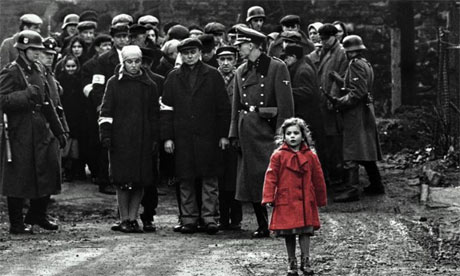
Stephen Harper: The Winter Soldier


It's really hard not to fall into Game of Thrones references these days - they just apply so well to the current political landscape.  We have devious leaders playing selfish, destructive games; we have a society that is beyond frustrated with the failing system in place today and, of course, there's a lingering anger/fear of something bad on the horizon.

But there's something else at play here; something no less uncomfortable, something the same leaders who consider themselves Machiavellian manipulators par excellence are missing - largely because it's almost against their nature to do so.

Our society has been outgrowing the ability of our current systems - educational, healthcare, political, jurisdictional - for a while now.  Without big threats on the horizon, our leaders and their supporters have been focused on consolidating power and bending wills rather than crafting solutions and bringing people together.  Canada has been safe - that's why it's been so resistant to the adaptations other nations have embraced.

Winter has been coming for some time, yet we have sapped ourselves of the will to evolve with the times.  We are woefully unprepared systematically and culturally for what's to come.  

Which is where Stephen Harper comes in.


Harper has been escalating power consolidation, starving government agencies, starving not-for-profits and undermining the very fabric of our democracy.   He plays the divide-and-conquer game; he punishes critical thought from anyone who doesn't reside within his inner circle or otherwise think the way he does.  

Harper has also been shutting himself off from the real world, meaning he's lost touch with the pulse of the nation.  

When you think you're an empire-builder, after all, the reality of the plebes doesn't matter.  You tell them what to think; their job is to fall in line.

History tells us how well that approach works.  There certainly are enough examples to turn to.  They also provide precedents for Harper himself.

While he thinks of himself as a successful politician, a man above, Harper is actually nothing more than a functionary.  If it wasn't him in the role he now plays, it would have been someone else.  In fact, there are many out there right now who are playing the same part.

Our Prime Minister may think he is irrevocably shrinking government and remolding Canada into a permanently conservative country; he's wrong.  Harper is simply serving as political brushfire, clearing out old growth to allow for the emergence of more evolved, more progressive structures and ideas.

In this sense, Harper is the perfect non-leader for our times, a soldier clearing the decks for what's to come next.

After all, winter is invariably followed by spring.


Wednesday, 1 January 2014

Two Converging Trends in Canadian Politics:


The government has facilitated this strategy by allowing departments to criminalize whistle-blowing in their codes of conduct - as the House of Commons just did.  The RCMP, CIDA and the Library and Archives of Canada have all been in the news recently for the same reason.
 
Work in government and have concerns that corruption, unfair practices or even poorly thought-through decisions are being made?  Best not to have an opinion or even think about rocking the boat; your job, even your freedom may be at risk.
 
Of course, this should come as no surprise.  It's getting harder and harder to keep secrets, as political people at all levels are increasingly realizing.  In particular, social media and the digitization of information has made it dirt simple for information to get out both intentionally and accidentally.
 
Faced with this reality, politicians and backroom operators who may cut corners for the good of the realm (i.e., the Party or their own fortunes)  have two options - one is to reform their behaviour so as to be able to withstand scrutiny.  The other is to try and clamp down even harder.  History tells us where the latter path leads, yet that's the road being taken.
 
Canada has an innovation deficit.  Our government is basing policy decisions on weak data and putting ideological pursuits before sustainability.  What impact does this have on the morale and dedication of staff?  What does it do to the ability to recruit and retain talent?  Just as important - what do Canadians themselves think of this trend?
 
 
If you're a political communicator, this is a communications issue; the biased media is out to get you, the pundits are all in the pocket of the other guys, internal people are overstepping their mandate by releasing information in disloyal fashion to the public. 
 
People don't really care about direction, because they don't understand it - only the confidence and message-control of the leader matters.
 
Which leads us back to point #1.
 
Team Harper, as well as other political teams out there, will look for the mud pies to sling - Senate Scandals, poorly-phrased quotes on China, so on and so forth.  They think these headline-making gaffes and failures are enough to sink a government, without as much contextual analysis as is warranted.  Why bother?  We are smart, they are dumb - they won't notice or be able to respond, simply because we are better than they are.
 
When you make the rules, you have all the answers, right?  The trick is to stifle any opposing perspectives.
 
Which is exactly what's happening.  Which is fuelling our winter of discontent.  People don't trust politicians, they don't believe in government and with a growing number of pols flaunting our laws, there's less impetus for average citizens to do anything differently.
 
So - what happens when these two storms converge?

Tuesday, 31 December 2013

The Naming of Things: Owning Free Speech


Criticism is important; without it, poor ideas go unchecked and new opportunities are missed.  If people like Galileo and Newton had never bothered to question accepted wisdom; if inquisitive minds like Sigmund Freud or Alfred Kinsey had not thought to explore taboo topics, we'd all be lesser for it.

There is a huge chasm, however, between criticism and opposition for opposition's sake.

One seeks to move the conversation and with it, understanding forward; the other simply seeks to stop conversation dead in its tracks.  It's why in Politics, the goal of Opposition Parties is to grind government to a halt; it's why violence is the weapon of choice for those who've run out of ideas.

Goldenberg makes some excellent points; online anonymity is a refuge for cowards, though not the last one - merely the latest.  This can be a good thing and a bad thing; whistleblowers fearing for their careers and, in some cases, their life may want to do the right thing but not be prepared for martyrdom.  

At the same time, there are the trolls; these are the people who will say online under pseudonyms what they would never say in person.  These are also the folk who will break a window in a riot because they feel they won't get caught, or will join in a lynching when there's already a crowd with noose in hand.

But these people aren't an isolated demographic, one group that can be singled out - they are people, just as we are.  Therein lies the great irony and the deepest lesson.

We dehumanize people when we take away their names - by calling someone an  infidel, a Jew, a faggot, a bleeding-heart, red-neck, latte-sipping urban elitist, monster or any number of variations, we are removing their individuality to better fit a simple, emotionally satisfying narrative.

It's why, over time, we've feared and loathed the Inscrutable Oriental, the Arab menace, the 1% or the unwashed masses.  It's why the bad guys we dreaded most, be they the zombie apocalypse, the hive-minded aliens, partisans or The Other can always be understood as one homogeneous collective.

When trolls hide behind anonymity, they are equally stripping away their own individuality.  Perhaps the unaccountable attack makes them feel powerful, as does being part of a mob, but the very act of slipping into a pseudonym turns a person into a caricature, interchangeable with any other troll.   When we can and do act without consequence or attack without consideration, we dehumanize ourselves as well.  We trip away the thin veneer of civilization and revert to nothing more than animals.

It's beyond tragic that those who will raise their voices the loudest in defence of individual liberty and free speech as often as not are seeking freedom from everything that makes humanity special.

It's never been freedom and anonymity that has made us distinct, nor isolation or stagnancy; it's ownership, individuality and the ability to become more than what we are.  The flip side of I may disagree with what you say but will defend your right to say it is think before you speak.  

Thinking is not innate.

Which is why this is where I part ways with Adam Goldenberg.  After much study, thought and conversation, I've come to the conclusion that we are all-too often hung up on romantic notions of the superhuman ancestor, the idea that in simpler times we were better people.  I don't see much support for this in history.

As such I don't feel that, with the Internet, our collective decency is at risk.  I don't think there has ever been a collective decency.  In fact, I'd argue that stigma is an evolutionary development that was intended to keep small kinship groups safe from predators, competitors and illness.

The idea of collective decency isn't something we're straying from, but moving towards.  

It's a slow, tedious, painful process with almost as many steps backwards as there are forwards, but such is always the nature of progress.  

We began with the naming of things - ascribing unto them labels and identity born of our own perception.  This is language.

Where we're moving to is understanding the names others give themselves.  By understanding how others view themselves and us, we better understand who we are, as individuals.  Call it an introspective property inspection as well as an exploration of society's holdings.  It's also known as mindfulness or consciousness.

Conscience may make cowards of us all, but consciousness is all about ownership.  And light.


Monday, 30 December 2013

NotifEYE For Missing Persons


Problem solving is a curse.  It doesn't turn off.
 
So, while there are those to turn to hope, or hate, or combatting hate in the light of Christopher Peloso's disappearance, I'm automatically thinking about who can help locate him now and what can be done to provide more rapid, less public assistance for everyone down the road.
 
Here's where I'm at now.
 
The Crime Prevention Association of Toronto (CPAT) has partnered with Guardly, a smart start-up with a Security App that's first in class globally (they're based here in the city, I might ad).  Guardly's basic App helps people in situations of distress (being chased, for instance) to send their geolocation to a set list of friends and security providers, up to but not necessarily including 911.  It's a lot easier to hit a button discrectely then to have to place a dead-giveaway call.
 
CPAT's contribution ups the game significantly.  One of the additions in their NotifEYE App is a push function; say you're a senior in Toronto Public Housing, have health issues but no family or friends who will come and check on you.  Instead of falling, breaking a leg and being found dead a week later because someone complains about the smell, let's say you miss hitting a pop-up you get daily on your phone asking if you're okay.  This sends a warning to a service provider who will place a call and, if there's no answer, ensure someone physically goes to check on you.  Your life could be saved.
 
Could this sort of application be used for people at greater risk of going missing?
 
There are all kinds of privacy and freedom issues that will surely be raised at this point, but read on. 
 
Some seniors have dementia issues.  Some people with depression issues, or schizophrenia or other conditions are more likely to feel the need to extricate themselves from a normal environments.  You could include some youth in this list, too.
 
If the person at risk and their family/caregivers/friends were to discuss such a NotifEYE system at a point where the at-risk individual was in a good headspace, parameters could be set with the goal of creating a clearly understood system, a safety valve that works for everyone.  In the case of pre-established period of time without contact, family/friends/caregivers could send out a simple message that says "are you okay" or something equally innocuous just to know the at-risk individual is okay.  The content and features of the push could be discussed and tailored by everyone concerned; the number of pushes allowed in a day or month could be established in advance.
 
The goal of such a tool wouldn't be supervision, but emergency.  Like any emergency preparedness tool, it ideally would never be used, but you'd be ready when and if the need arises.
 
Thoughts?

Sunday, 29 December 2013

Laying Foundation for 2014


enhanced-buzz-wide-29604-1386361829-9


Now's the time of year where political pundits spill their tea leaves into their coffee cups and see what's in store.  They tend to start with some low-hanging fruit - almost-certain eventualities they can comment on now so as to claim wins later.  From there, they look at the key personalities - leaders, their inner circles, big names on the stage that can sway headlines.  

Pundits will look at the map in terms of electoral districts - the West vs the East, Quebec, the 905, so on and so forth.  By breaking the population up into sub-groups, the theory goes, it's easier to predict what ripples starting where will shape the shore tomorrow.

In this way, they operate in much the same way as Political Parties do; they look for and nurture coalitions, star candidates and the keenest, known-commodity operatives.  From this perspective, it's a clear picture of Power, Party and People, lined up in just that way - if you can own or dangle the promise of power through a Party the better your chances of driving action, dollars and votes - and controlling behaviour - of the people.

19.
But there are other forces at play that the seers at the top tend not to foretell.  As technology and social media connect people from coast to coast and around the world, we have a dynamic that reaches beyond political barriers.  People see the idealized  version of how others are living; they're also seeing that the sufferings they face are shared by many.


Governments of many stripes across the world are caught in an increasingly dissonant drive for #OpenGov, while at the same time the NSA is making headlines for questionable breaches of privacy and Canadian citizens are being turned away at the US border for private health-related matters.  People are paying attention, and they're not impressed.  This is particularly true as, no matter what or when, they are relentlessly bombarded with political messaging that makes to effort to provide answers, vision or even a bit of human connectivity.

People like symbols, protagonists and simple narratives.  It's why we like to tell ourselves individuals shape history for better or worse.  This largely isn't true; leaders are most often products of the mood of the people rather than the Machiavellian manipulators they claim to be.

The truth is, pundits and the people they ponder live in a world apart.  They look at the world through a lens of self-interest that blinds them to many of the deepest realities of the times.  Everyday folk aren't interested in electing one Party or another; they are worried about their future.  

13.
It's not about politics for them - not leaders, not Parties, not occupiers of capitalized residences.  It's about the world they face when they walk out their door and the world their children will inherit.  Far too many parents these days carry the quiet anguish of the subtle realization the world they leave behind won't be as kind to their kids as it was to them, and that's troubling.


These people don't feel there's leadership at the top, so instead are looking laterally.  Social media is increasingly becoming a tool of communication rather than messaging.  Despite the cynicism, service providers including those in uniform are looking to work with each other and the people they interact with; they're recognizing that cooperation is the only sustainable way forward.  

If the people at the top refuse to play along, well, the game gets played without them.  

For this reason I don't think the greatest adventures of 2014 will be tied to Political Parties - in fact, I imagine Parties are going to have to adapt to them.  It'll be the people themselves, online and in person in both proactive and reactive fashion that will be the ones to watch.

Just something to keep in mind - after all, a healthy society is one with the capacity to adapt. This sometimes involves shedding old skins to allow for growth.


24.


Saturday, 28 December 2013

Stephen Maher, Vacuous Celebrities and a Hobbit's Tale


It's not hard to look at the headlines and headline-makers today and despair.  


There are so many narcissistic, vacuous celebrities out there who gain and maintain fame more through notoriety than through talent.  Making history has apparently become about shock value, not something resembling actual contributions of value.


Meanwhile, there is war, destruction and soul-sucking poverty; all avoidable, if people were willing to work together and plan ahead.


There are the preludes to war, leaders ragging the puck and offloading responsibility in ways that inevitably spark fires of social disruption.  We know what to expect, because we've seen it all again and again; it's Groundhog Day, only the loop runs just long enough for new generations to forget or ignore the lessons learned by their ancestors.


If you fear for the future of humanity, you've got just cause to do so.  

By all appearances, we're a petty, vengeful self-absorbed lot more prone to negative reaction that pro-social altruism.  How can we but end up in darkness?

And yet, there's nothing new to this picture - as Warren Kinsella points out, we've been enjoying bloodsports, ignoring the well-being of our neighbours and feeling better about ourselves through putting down others since before the written word.


Thug leaders with neither vision nor foresight like Rob Ford aren't uncommon - in fact, history is full of them.  I've said to many that Ford is like a toned-down version of Saddam Hussein and that, if not for the laws, expectations and culture of Canada, things in Toronto would be a lot worse.  

This can be taken as an insult against Ford, who is but a genetic and experiential product; it can also be taken as a compliment for the rest of us.

There are self-obsessed celebrities like Miley Cyrus, Justin Bieber and Rob Ford, but there are also good ones, people like George Clooney and Angelina Jolie who are equally famous, opt not to take themselves seriously and feel a responsibility to use their fame to further the goal of an equitable society.

More importantly, though, there are those people whose names the world will never know, but that you perhaps might; your neighbour, a teacher who cared, a boss who treated you as an apprentice rather than a resource.  There are also the innovators, the pioneers, the people who have changed the world as much as Johannes Guttenberg but without having their names recorded.  


History is replete with people like this.  In fact, history is a bit like an archaeological record; we will celebrate the names and events that are passed on through tradition, but much of what has shaped the world we live in was never written down; it simply was.


It's easy to look behind and feel frightened for what's to come, but what we see is not the entirety of what is.  The greatest people, the ones who bring promise of brighter days are not on the periphery, nor are they waiting just beyond the horizon.  

They're here, right now, doing what they do best which is not selling brands or making headlines, but doing the little deeds, developing small ideas that will lead to an avalanche of social change for which someone else will gain credit.

Don't feel bad for them, nor bitter - fewer people claim fame than we might think when we focus on those who do.  That, too, is how it has always been.  Our journey may seem like a slow decent into darkness; it isn't.  

We sometimes just need visionaries to remind us of this.


Monday, 23 December 2013

That Which Doesn't Kill Us...


... brings us together. 


In the meantime, Toronto Hydro has asked those who have electricity service to "share the power" and consider inviting neighbours inside.

The Storm is bad, compared to what we're used to.  It's clearly no typhoon, though.

Throughout the hit zone, people are taking pictures, sharing news, sharing tips on how to stay safe or keep warm and are sharing their resources.

The worst is over, though some branches will still come down and there are still many without power  Of course, there are those who go without heat and shelter every day.

Be thankful for what you have, look to your neighbour and plan for the worst.