Search This Blog

CCE in brief

My photo
Recovering backpacker, Cornwallite at heart, political enthusiast, catalyst, writer, husband, father, community volunteer, unabashedly proud Canadian. Every hyperlink connects to something related directly or thematically to that which is highlighted.
Showing posts with label TTC. Show all posts

Thursday, 11 December 2014

What the TTC should learn from Ferguson


 * Does not reflect TTC Fare inspectors.


Should these situations escalate.  Hopefully they won't and all, but hey - it never hurts to be on the safe side.  Carrying a baton is like carrying an umbrella, right?
 
Wrong.  So wrong.  To plan for violent eventualities - to tell your recruits that hey, is a fight breaks out and if you get attacked, you've got this baton handy - is to frame the fare inspector's thought process in that they're looking for that situation to materialize. 
 
When you go looking for trouble, etc.

Police officers keep watch while demonstrators (not pictured) protest the death of black teenager Michael Brown in Ferguson, Missouri August 12, 2014. (Reuters)
Just look at Ferguson.
 
 
Why, indeed?  Why do local police need to be armed with the equipment used by soldiers in fields of combat? 
 
Of course they don't.  In fact, if public service is equitable and justice is blind, the role of the town policeman should be an easy, even friendly one.
To put such weapons in the hands of police, or transit "fare inspectors" is to beg for their usage.  It's the ultimate marshmallow test - tempting a child with something fun or tasty, telling them not to use it and then walking away.
 
And there's more.
 
The TTC's concern is not enough fares are getting collected.  They need more money and the pressure is to find it internally, but it's hard to keep hiking fares when service keeps faltering.  So how about paying money for fare inspectors to help the cause?
How much of this will be about TTC riders vs existing TTC fare collectors?  Anyone who's ridden the TTC knows that collectors aren't always 100% tuned in to the people passing through their turnstyles.  Sometimes, there's no person there at all.  In some cases, good customer service gets in the way of watching every set of the tens of thousands of hands that pass over deposit boxes, especially over open gates.
 
It's not too hard to picture armed fare inspectors getting it into their head that they are superior to fare collectors and waving their baton around (figuratively speaking, of course) over fare-related matters, even customer service. 
 
All this at an agency that is struggling with service disruptions, delays, etc. 
 
The citizens aren't the problem.  The employees aren't the problem.  People are people - they will react to their environment, whatever it may be.  A poorly designed environment results in poor results.
 
Batons are a terrible addition to an already poorly designed environment.
 
I would suggest Brad Ross stop his Michael Hayden act and start recognizing that if people have concerns, it's probably there's a reason for it.
 
Instead of adding weapons to a volatilte mix, how about better management practices, better training, better service?  You could even use open data and digital tools to empower TTC riders to be part of the structural solution.  Heck, you could use civic fundraising to help address specific transit issues.
 
Let's sort this out before the TTC's baton business gets out of hand, and ends up in the media.

Friday, 29 March 2013

The TTC: The Truth Will Set You Free


It's easy to not pay attention, when the consequences aren't looking you in the eye; if you're confident the other guy is passive (or not as aggressive as you are) then you don't need to worry whether you're picking a fight on a streetcar, smoking in a no-smoking, standing at the top of a subway exit or putting your feet up on a seat.  

To some degree, everyone does it; to an even greater degree, we get annoyed when others do it.

But you know what's even easier and provides a sense of gratification?  Posting pics of thee offenders online.

Now, you can question the legalities of this - is it an infringement of one's rights to have your pics posted acting poorly?  But then, wasn't it infringement of someone else's rights that got you in trouble in the first place?

Particularly as we see top dogs getting off with crimes that would put regular people in jail, people are growing frustrated with our justice system.  Fortunately, thanks to modern tech, today's lynch moms are social posters. If there aren't enough police resources to catch minor criminals, there certainly won't be for this kind of infraction - unless, of course, it starts involving enforcement officials themselves.  There's a tricky line there that can shift in some interesting ways.

Social media is helping to bring village-level personal accountability from the individual to the community.  It's not just about what you get out of it, it's the price that access comes with.  This calls upon the individual, at whatever level they're at, to start thinking through the personal consequences they face (like employers being punished for posting drinking pictures on Facebook) but also start to see the value of being recorded by strangers doing things like practical giving up your seat to a pregnant woman or helping a stranger get their stroller down stairs.  

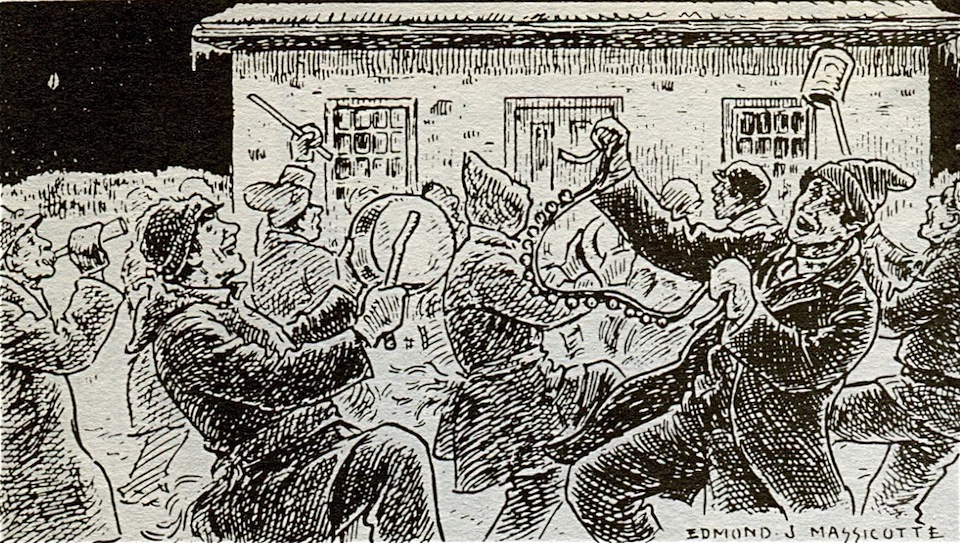
The Objectivists out there will hate this trend, but societies have always involved mechanisms of social control, ranging from the rite of marriage to the shivaree.
Of course, humans are social animals - always have been.  It has only been recently people have forgotten this.  Well, as they say:     The truth will set you free.

Friday, 24 February 2012

Mental Illness Tragedy in Toronto


Today, at around 1:30 pm on the Queen's Park TTC subway platform, I was part of a tragedy.

Sadly, it’s a tragedy that plays itself out every single day.  An older gentleman, gaunt, bald and with a full grey beard was being kicked off the train by its operator.  The why is no surprise - the man was swearing, claiming he was a US Marshall, pointing and being belligerent to the operator.  The operator was not happy; the other passengers were decidedly uncomfortable. 

I'm hardly an expert, but the behaviour this man displayed was indicative of a mental illness.  The operator was in reactive mode; the man was a threat which he wanted to remove.  The other passengers were equally reactive, trying to bundle into themselves as much as possible, not wanting anything to do with what was playing out in front of them.

Me?  I ran through the underlying context in my head – which illness the old man was likely inflicted with (schizophrenia was my guess), the limbic reactions of the passengers and operator, the broader public services that apply to mental health and justice, plus the sad regularity of the scene.  Yet still, I did nothing but watch. 

Since then, I've asked myself why I sat by, passively, when I knew what was going on and could probably have done something to help.  The answer troubles me; despite what I know about behaviour, about TTC operations and about available mental health services in Toronto, I felt helpless, unempowered, to make a difference.  If I stepped up, how would I explain the facts to the operator?  What techniques could I use to reach the old man?  How much time would it take and would, ultimately, I be able to connect the man with the help he needed?  I didn't act; the tragedy unfolded unabated, as it does time and time again.

It's not my fault that the man was sick.  It wasn't my fault that the operator was tired and frustrated.  It wasn't my duty to act - but then, whose duty was it?  Nobody was to blame, but we were all guilty of not trying to help.

We live in a society and, like it or not, we live in it together.  What happens to each individual one of us has an aggregated impact on all of us.  That man might end up sleeping in a police office, or in a hospital, costing the public money and reducing the availability of service to the rest of us.  There’s an unlikely chance he might hurt someone else, reacting to his environment much as the operator did.  Most likely, the man might do something to hurt himself. 

When we let tragedies like this happen, we are all lessened in every way – morally, financially, service-wise.  We are all responsible; abdicating our duty to each other is not enough.  When we look beyond what we see, when we reach past our feelings of discomfort, we empower ourselves to be part of the solution.

The road to empowerment lies through education.  The people we generically label as “crazy” aren’t monsters – they are real people with real families.  They’re just suffering from illnesses, illnesses for which treatment and supports exist.  The person who is sick just needs the chance to be connected with those services. 

Here are some websites you can visit to learn more:


I am advocating for a web system that makes it easy for the average person on the street to take a photo or send a text into an online portal, connecting a situation as it happens with the local service providers who can do something about it.  We already have suicide lines in subway stations; Google Maps lets us find restaurants or theatres and rates them.  A digital mental health service system wouldn’t be much different, wouldn’t cost much to build and it would make it easy for everyone to make a difference without getting directly involved.  Such a system would help police, justice services and mental health service providers connect people with mental illness and their families with the assitance they need.  If you think this is a good idea, drop me a line here on the blog or via Twitter @__cce.  You can help.

There is lots of good work being done right now, partially by the organizations listed above but also by businesses like Great West Life and Bell Canada.  There are many, many politicians who are taking mental health and its impacts seriously – find out who your local representatives are and ask them what you can do to help.

The most important thing we can do is learn – learn about mental health and how it effects not just those with mental illness but each of us in how we live our lives, every day.  This is vital, because it does impact us;
We all pay the costs when we do nothing; by doing something, we can all benefit.

When you’re not part of the problem, you’re part of the solution.  Be part of the solution.