Search This Blog

CCE in brief

My photo
Recovering backpacker, Cornwallite at heart, political enthusiast, catalyst, writer, husband, father, community volunteer, unabashedly proud Canadian. Every hyperlink connects to something related directly or thematically to that which is highlighted.
Showing posts with label Why Should I Care. Show all posts

Wednesday, 29 October 2014

Forward, Toronto


Embedded image permalinkRemember that video Team Doug Ford took from Why Should I Care? wherein Tory talks about road tolls?  When you watch the whole thing, you see that the substance of what he said then mirrors his quote posted above
 
While I question some of the choices he's made and wonder if he fully understands the challenge he's presented for himself, I have no doubt that John Tory's intentions are pure.  Tory is an aspiring post-partisan; he's seen up close and personal the divisions that partisanship can create and the limitations fixed ideologies place on our ability to understand and solve our structural socio-economic woes.
  
Unless you're a die-hard partisan, you want John Tory to succeed as mayor.  This is our city, and he will be our Chief Magistrate.  Holding him, Council and the public service to account is part of our role as people of Toronto, but it doesn't end there - we need to bring our ideas to the table and be a working part of the solution.
 
In that vein, I would encourage Tory to look beyond the sweaters of partisanship and actively wade in to the different communities of the City, too.  He needs to be engaging directly with the people of Etobicoke, and Regent Park, and Alexandra Park in their spaces, in formats comfortable to them.
 
The same goes for the city's social entrepreneurs, CSR leaders, etc.  This doesn't mean the odd powwow with the Ilse Treurnichts or Tonya Surmans of the world (though they're definitely worth engaging with) - it means creating regular opportunities to engage the Andrew Dos, Bianca Wylies and Shilbee Kims of the world as part of the solution-generation process.
 
Tory should also tap into some of the talent and visions of some of the candidates who didn't make it into cabinet.
 
Alex Mazer's work with Better Budget TO is astounding and, with the full partnership of Team Tory, can have an even greater impact.
 
Andray Domise's vision for Techsdale is great and needs to be implemented; it also fits in nicely with the visions of other community leaders for Youth Entrepreneurship hubs possibly based out of underused TCHC/TPL spaces in Toronto's NIAs.  Then, of course, there's Toronto Youth Cabinet's Chloe-Marie Brown and her three big policy ideas for 2015.
 
Alejandra Bravo continues to make a difference among Toronto's New Canadian communities, empowering more civic engagement and literacy.
Removing Barriers for “At-Risk” Youth
 
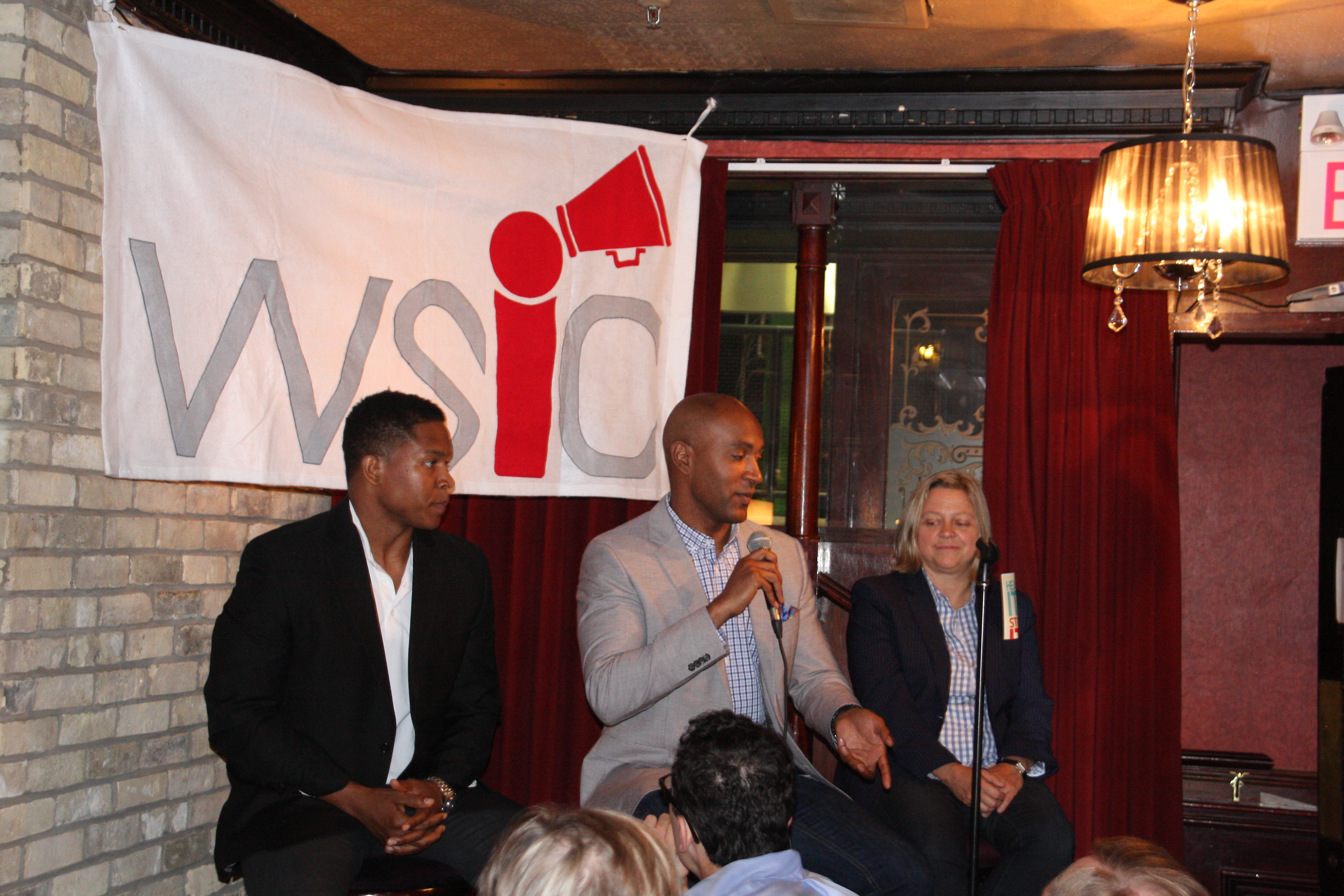
On the civic literacy side, we go full circle back to Why Should I Care?  Terri Chu has done an amazing job developing one of the most important forums for dialogue in the city.  Rather than pitting opposing perspectives against one another, new ideas and information are shared through conversation. Instead of exploring a battleground, common ground emerges.
 
Wouldn't it be great if we had more WSICs throughout the city?  Or if the City (Mayor and Councilors, City Planners, etc.) engaged in regular forums like this to engage, inform and hear from local communities?
 
Getting informed and getting engaged are crucial, but we need to go even further.  To really make a difference, people - all people - need to be an active part of the decision-making process.  That's what Reset Toronto has been hinting at; it's also what Toronto's Open Community, which represents a variety of sectors and communities, has been trying to promote.
 
Last night, I had the privilege to be part of TGIFTuesday, a policy kitchen conversation which brought a mixed group of people together to craft some policy actions to bring to Council.  Partners included Social Innovation Generation, the Centre for Social Innovation, Swerhun and Toronto Youth Cabinet.  The new Council will be getting a white paper based on the ideas generated there and there will also be a video in the near future. 

We're all committed to doing more of these and in more communities throughout town - it would be awesome to hold such events at local entrepreneur centres/community catalyst hubs.
 
All of this is breaking new ground, doing things differently and embracing the idea of iterative development.  In short, it's risky, it's a bit messy - but it's doing exactly what Tory want to see, which is breaking down silos and bringing people together.
 
We all need to take off team sweaters from left to right, but we also need to be comfortable engaging both above and below our social strata.  Tory's political advisors will probably discourage this - it goes against the political mentality of picking fights and reaching strictly for low-hanging fruit - but it's what the city both needs and deserves and, I believe, what John Tory ultimately stands for.
 
The Mayor-elect is welcome to join our conversations, events and hacks whenever he has the time.  We're happy to work with anyone committed to the same cause of building an informed, engaged and empowered society.
 
After all, the only way to move forward is to do it together.
 

Sunday, 19 October 2014

Conserving Progress - Leadership Advice for the PCPO


This isn't the first time I offer some leadership and engagement advice to the PCPO.  Unfortunately, I expect these words of suggestion to be ignored in similar fashion.
 
Here goes anyway.
 
There are two things happening within the PC Party right now; a leadership race, in which contenders want to portray themselves as the best bet to lead the Party to victory and a broader bit of soul-searching as, if they're wise, PC partisans are asking why they've lost traction and what exactly it is they stand for.
If they study the failings of their past two leaders (which I'm sure they're doing) they may have noted that both John Tory and Tim Hudak had a particular fixation with winning.  With winning being the primary objective, everything else was stacked up to deliver a win.
 
Theoretically, this makes sense - it's about the system is supposed to work, right?  Give the people what they want, with a bit of strategically picking fights to mobilize action - that's how winning is done, n'est ce pas?
 
John Tory tried the shiny baubles and put slightly new quotes of paint on old ideas (coal plants).  Tim Hudak picked fights and positioned himself as the voice of righteous anger.  We know how well these approaches worked out, don't we?
 
On the other hand, I imagine they'll be taking a gander at Kathleen Wynne's massive victory, even if secretively, and trying to reverse-engineer her success.
Kathleen Wynne's greatest strength is that she is a facilitator.  She's incredibly engaging - not just charming, but when you speak with her, she listens.  She takes notes.  She follows up - and when she acts, the people know that their ideas and concerns were part of what fed that process.
 
I'd argue Wynne and the Liberals need to do more of this in rural Ontario; I'd argue the reverse for the PCs in urban Ontario.
 
With the process in place right now, contenders for the PC leadership need to sell memberships and have more people to vote them in as leader.  As always, it's a race to the finish line - no time to engage, the rush is to close the deal, period.  When winning is done, consequences can be dealt with later.
 
The problem is, filling bums in leadership convention doesn't necessarily translate into seats in the Legislature.  If the ranks of the PC Party are filled with angry landowners who dislike the notion of culture change, will the Party and leader be beholden to their ideology?  How well will that sort of message resonate in increasingly diverse urban Ontario, especially must-win places like the 905?
 
On Monday, Why Should I Care is having a discussion about Healing Ontario's Rural/Urban divide.  It's a topic that should be incredibly relevant to the PCPO, given that they desperately need inroads into the GTA.  It was in recognition of this twinning of culture challenges (the renewal of the PC Party and the need for renewal in Ontario) that we decided to invite PCPO leadership candidates to attend.
 
WSIC is a well-respected forum that continual draws "top-drawer" speakers while staying true to its purpose of helping everyone, regardless of rank or wealth, to get informed, get engaged and make a difference.  The likes of Art Aggleton and Alan Fotheringham have been known to pop by and listen to the insightful conversations that happen at WSIC.
 
It's also worth noting that WSIC's founder, Terri Chu, is running for Toronto Council in Ward 20, and has a serious chance of winning.  Terri has a strong reputation as a balanced, non-partisan voice that puts evidence over ideology.  From a political positioning angle, it makes good sense to be seen engaging with her.
 
I can only assume the teams of the PC leadership candidates either didn't do their homework or simply couldn't connect why being WSIC speakers would be beneficial for them.
 
One never bothered to answer.  Two agreed to participate quite some time ago, but backed out at the last second (yesterday, in fact) because of concerns they might appear as "lesser-thans" if the star candidate wasn't there.  This may have been the strategic reason why the star's team never made any efforts to participate, either.
While efforts are being made even now to find replacements for the backed-out speakers, the message provided is clear: the Party is saying "civic engagement in the GTA isn't a priority for us" as individual leaders and their teams are saying "our commitments are only so valid as we see their value to our strategic branding, which is focused on headline-status, not grassroots engagement."
 
So here's my word of advice - don't do that.  Don't play the game that has caused so many Ontarians to disengage from politics and with the PCPO in particular.  Things have changed, and this "control the message" model is no longer viable. 
 
Leaders engage; they go among the people, listen to the people and then bring them and their ideas together into a broader framework.  They recognize diversity of ideas and of people as a strength, and nurture them.
 
Going back to the same well of depleted soil that has been homeground for the PCs since the days of Mike Harris is not a great strategy for growth.
 
There may be no immediate wins to be had at urban engagement forums like WSIC, but as with all gardening, you've got to nurture the soil before you can plant seeds, and seeds need to be tended to with care over time.
 
Forget the focus on own land, folks.  It's time to be gardeners.


Wednesday, 8 October 2014

Ari's Why

Ari Goldkind

"Something wrong with your eye, Craig?" Ari Goldkind asked me at the recent campaign office opening for Ward 20 candidate Terri Chu. 
 
I told him he had a good eye, that I'd been putting in a few too many hours at computer screens of late and was suffering some eye strain as a result.
 
Not realizing that the man I was talking to only had one eye.
 
"I tend to notice details," Ari replied.  Which is true.
 
I've gotten to know Ari a bit over the past couple of months, primarily through Why Should I Care, where he has twice been a speaker (once on the issue of police carding, the other in our Mayoralty debate).  He's a thoughtful, informed guy who - true to his message - cuts right through the crap.
 
Police Carding Database Should GoAri is a great communicator - he's got a folksy style of engaging, but what he engages with and over is more about substance than platitudes.
 
One thing Ari isn't great at (and has so observed himself) is the political verbal trickery that helps politicians avoid landmines.  Ari doesn't bridge, he doesn't bait and switch - he doesn't even pontificate which, seeing how he's a defense attorney, is pretty special.
 
Ari doesn't do pretense. 
 
So when he says things like "I realize that, as a driver, I'm more a cause of gridlock than the people on public transit" you know he's not feeding a line; it's true, and he believes it.
 
When he says "I've been lucky in life, I have money, I am totally comfortable with paying a bit more to help others reach the same quality of life", he means it. 
 
I understood all this about him before today - but what I didn't know, what I hadn't heard clearly articulated was his why. 
 
Every person standing for political office needs to have a "why" - a reason why they have chosen to run for office.  Fighting the status quo doesn't cut it - you can do that from the outside more effectively than the inside.  In my experience, most politicians who start with "fighting against" are primarily interested in replacing the incumbent, not changing the status quo.
 
Though Ari has used similar messaging, I could tell that wasn't his core motivation; if it was, he'd have spent more time working on finessing his political presence, on hobnobbing with those who could fund or otherwise support his campaign and would have been more aggressive in his recruitment strategy.
 
So what's his motivation?  Why does he want to be mayor of Toronto?
 
I wonder no longer.
 
 
Ari is a self-made man whose journey has nevertheless been a rough one.  His family has been rocked by mental illness, as so many families have.  I can't say I know many people who've been shot in the face by a camp councilor, though. 
 
Kids are supposed to have the comfort of looking up to parents and persons in position of authority and knowing they are in good hands, safe hands. 
 
Ari learned early and learned hard that such is not always the case.  It's clear he's thought about this a bit and gets the contextual nature of personal misfortune.
 
With true grit, hard work and a fire in his belly, Ari's life has evolved in to a purpose, as is the case with all the best leaders out there.
 
Why is Ari running to be mayor of Toronto?  It's pretty clear to me now - he knows what hardship is like and knows how to come out of it on the other end.  He recognizes that he's pretty lucky to have had that revelation - and now, he feels a responsibility to empower others so that they, too, can move forward.
 
Ari Goldkind has always been one to notice details and look out for others.  He doesn't draw attention to his own challenges, nor do they jump out at the people he engages with - even people like me, who tend to be pretty detail-oriented.  It's never about him with Ari - it's always about his purpose, and that shows.
 
I'm glad to see that he's starting to turn eyes in this mayoralty race.  Whatever happens on the 28th, his purpose won't change, nor will his commitment.
 
That's leadership.

Tuesday, 7 October 2014

Politics Done Different: Why We Should Care


If you live in Toronto, you may be aware that there is a municipal election going on.
 
As candidates for Mayor, Council and Trustee all jockey for position, endorsements and votes, we're being bombarded with soundbites and potshots on the airwaves and via social media.
 
This one stood out for me this morning:
 
Doug Ford Campaign @DougFord2014  ·  12 hours ago
Tonight Mr. Tory said he doesn't support tolls, but in 2013 apologized for fighting against them

While I appreciate Doug Ford's team giving some free promotion for Why Should I Care, the civic engagement group founded by Ward 20 council candidate Terri Chu, I would suggest they missed the point.
 
If you actually listen to the clip, what you hear isn't John Tory talking about road tolls, but rather John Tory talking about the silliness of gotcha-politics and the corners it backs politicians into (which is exactly the stunt Team Ford attempted with their tweet).
 
I was there that night in January, 2012 in my role as a WSIC board member.  I was very impressed with what I was hearing from Tory - a kind of self-reflection that's unfortunately not that common in politics.
 
John Tory took a strong stance against the kind of simplistic populism Doug Ford tends to champion.  Tory admitted to having played the game earlier in his political career, but as he has matured as a public person, he has recognized the destructive and demoralizing nature of crass partisanship.
 
The reason he was there to speak at Why Should I Care wasn't for political gain - he wasn't running for anything at the time - but because he believed in the principle of civic engagement.  Tory candidly recognized that people have lost faith in the political process and suggested that less messaging and more engagement is required.
 
Which, of course, is why Terri Chu founded Why Should I Care, and why it's become such a popular event.  We bring in speakers from across the political divide, from the public service and from the grassroots to discuss the issues rather than pick apart personalities.
 
Turns out there's a healthy appetite for conversation.
 
Busy as we are, as bombarded by data and advertisements and political soundbites as we are, people get that the issues facing society are complex and require complex answers.  A frequent reason given for why people don't vote is because they recognize they aren't as knowledge on issues as they could be and don't want to make ill-informed decisions.
 
The role of leaders isn't to stoke populist emotions and polarize society, but to empower people to get informed, get engaged and be part of the democratic process every day, not just once every four years.
 
I give John Tory props for having the guts to chat directly with people about issues and for bringing an open mind to the table.  He takes the time to understand and communicate context, which shows a level of respect for us "folks" lacking in certain other candidates.  That's the kind of engagement we, as citizens, should be encouraging.
 
We can't solve our current structural problems with the same gotcha politics that landed us here in the first place.  We all need to care enough to get informed, get engaged and make a difference.

"Respect for taxpayers" is a bumper sticker.  Respect for citizens involves engagement.
 
If we want politicians to take their job seriously and move beyond sound-bites, we have to be willing to do the same.
 
"We far too often reject things before we open our minds to consider them."
 
       - John Tory, Toronto mayoralty candidate


Wednesday, 3 September 2014

Open Dialogue: Andrew Leslie and Alexandra Constantinidis Do It Right (UPDATED)


Andrew Leslie is a professional soldier.  War has been his trade.  He understands strategy and tactics, weapon systems and supply chains.

Alexandra Constantinidis is a political aide who's job, in theory, is to help her boss wade through complex policy questions and positions, as the Israel/Hamas conflict is.

Her question was good; it wasn't partisan-skewed, but focused on opinions and evidence.

Leslie's answer was equally thoughtful and based on his professional experience.  He was cautious to provide a frame for his answer - nations have to defend themselves, terrorists must be eliminated, but also that civilian lives shouldn't be fodder.

He made a clear distinction between state and citizen, even further targeting his response to a select group of folk.

In Leslie's considered opinion, "dumb" weapons (as opposed to smart weapons with more sophisticated targeting and impact radius capability) were not the way to go, because they killed more civilians and, as a result, have a negative impact on the PR war as well as the ground war.

This was a great exchange that was focused on evidence and opinion.  This is what we elect our Members of Parliament to do; these are the kinds of questions and conversations, quite frankly, we should be having more often.  Hell, it's what we as citizens should be demanding.

Yet once again, the partisans and media are turning this into a "with us or against us" story, both in terms of sides taken in the middle east and Party solidarity with the Liberals.

Positions are being taken, stories are being spun - hell, I'll bet fundraising letters are being passed around.
 
 
That's what politics in Canada has come down to - black-and-white cat fights and partisans who fiddle while the world burns.

This, they will say, is how politics works.  These are the kinds of fireworks that get people riled up enough to donate or vote for one party or another.


War Rooms lob grenades at each other and hey, sometimes people get hurt.  It's a brutal business, etc.

It's also the kind of childish bullshit that turns people off politics in the first place.  It's what keeps smart and informed people from running - or if they're in office, from commenting candidly on issues.

Aren't we supposed to be having policy discussions and leaving no stone unturned?  Isn't it about shared solutions, not party talking points?  Are we trying to build a strong country or are we trying to eliminate undesirables?

Politics should be about developing democratic solutions, but largely it isn't.  No, politics these days is all about the War Room.

You know where this kind of approach takes us, pushed hard enough?  To where the Middle East is now - war.

When you bring War Rooms into politics, war is what you get.  Those metaphorical grenades become actual grenades; character assassination turns into real assassination and collateral damage involves more than damaged reputations and lost services.


But the War Room folk don't seem to get that.  Too busy being James Bond, I guess.

This is why I'm a fan of initiatives like Open Government and Why Should I Care.  If the partisans are going to circle their wagons and play Hatfields vs. McKoys, it's up to the rest of us to be the adults in the room.
 
 
I commend Alexandra Constantinidis for her question - it was a good one.

I commend Andrew Leslie for his response - it's what we pay him for.

I only which more folk in and out of politics had the wherewithal to be so thoughtful, candidate and forthcoming.

That's how democracy flourishes - not through tribalism.

UPDATE:

The party sent out a fundraising email blast mid-week, slamming Leslie's "stunning lack of awareness of the dangers Israel faces"

Of course they did.  I doubt there was even any consideration on whether the statement was remotely true or responsible.  Who cares?  Politics is war and w need as much money as possible to back their righteous cause, eh?

Just wait 'til they get really clever and realize they can get money from their opponents by letting it be known they have amazing dirt on their people which will be released unless they send money your way.  That'll really teach 'em.

UPDATE-IER:  Had a chat the other day with another OpenGov advocate from Australia; she talked about agonism, the idea of civilized debate that doesn't look to attack and defeat but explore and understand.

Imagine that. 

Friday, 29 August 2014

Please help me set my #OGT14 table! (UPDATED)


Events take place starting at 6:30PM in Jean Pigott Hall at Ottawa City Hall, 110 Laurier Avenue West, Ottawa. The doors will be open at 6PM.

I have to fill a maximum of 8 minutes of speaking time saying something poignant about why you can't have Open Government without a Responsible Society.

What I wasn't counting on was this - I've been assigned a 2 x 6 table that I need to populate with something.  Here are my directions:

Embedded image permalinkRemaining décor is up to your imagination. Bring your own displays, banners, posters, props, pamphlets, swag ... Etc, but be aware that they will need to be free standing or on the table.
Here's where I need your help.

My firm Wakata Inc. is dedicated to public affairs with a social purpose; I like to frame my partner Jen Li and I as the stone in the soup, bringing people and organizations together and facilitating shared solutions.  While I'm going to #OGT14 as me, not as Wakata, I want to hold true to what I believe in.

So - what should I display on my table?  Who can I promote, what shared solutions can I hint at in my space?

M first thoughts were that I'd like to promote the following:

Samara - democracy renewal
Why Should I Care - civic engagement
Exhibit Change - improving communication and comprehension
SoJo - a cool web platform that will create community and help individuals turn ideas into action.
MaRS Solutions Lab - anyone planning policy past the four-year cycle deserves some space!

I would have included Make Web Not War, but I imagine they have their own table, being the patrons of #OGT14 and all.

Those are my first thoughts, though I would need some resources from them to put on my table around the stone I just asked Richard Pietro to pick up for me somewhere between Vancouver and here.

What do you think?  All cool suggestions are welcome - and feel free to share them on Twitter using #OGT14!


UPDATED Sept 2 2014:

And the gold star for first carrot goes to Samara!  Samara has offered materials about their Everyday Political Citizen project for my #OGT14 table.

Samara is a perfect compliment for what OpenGov and Responsible Society are all about - our politics can do better, but not without an informed, engaged public.  Their Everyday Political Citizen project is designed to recognize and celebrate the democratic catalysts in our midst; the people who ask questions, who encourage you to get informed, who believe that it's through direct engagement that we can make a difference.

My #EPCitizen nominee for this year, as it happens, is Richard Pietro.

Richard has picked up a stone out west for me to use as the centrepiece of my table, the thing that brings groups like Samara (and hopefully, SoJo, WSIC, Exhibit Change, MaRS) together.  This is appropriate, because his #OGT14 tour has served the same role this summer - bringing together an incredibly diverse community from across the country around one shared theme:

Open Government.

Richard's brought the stone, Samara the first ingredient - but there's lots of space left!  Who's up next?


Thursday, 17 July 2014

Strange Bedfellows: Sex Work and Politics


As all things sex-trade related have bubbled to the surface as a hot topic in Canadian politics (and features as the subject for next Monday's Why Should I Care) I've found myself thinking about the social views around prostitution.

It's generally accepted that prostitution is not a desirable career, as in no child dreams of growing up and becoming a prostitute like they may a lawyer or a politician.  It's recognized that being a prostitute is a potentially dangerous job, carrying the risk of catching (and transmitting) sexually transmitted diseases, but also the risk of abuse by clients and exposure to seedier elements of society.
 
Are those reasons to stigmatize prostitution as a trade, though? 
 
I don't imagine many kids dream of growing up to clean floors or toilets or collect garbage, but those things get done.  I know in my home town (Cornwall) kids in school would often assume they'd follow in their parents' footsteps and work on a factory assembly line - this wasn't a lofty, aspirational goal, but then work was seen as a way to make a living rather than a focus on personal growth.  Life was what was lived outside of the 9 - 5 workday.
 
At the same time, I know a bunch of kids who paid their way through university by performing as stripper at strip joints frequented by factory workers after that work day ended.
 
Not to diminish STDs, but there are a great number of illnesses that can be contracted on other jobs, ranging from cancer through inhaling chemicals as a firefighter, coming down with PTSD as a police officer or social worker, even carpal tunnel syndrome from too much typing (I fit in this category).  It could be losing a limb on a factory floor, too. 
 
For all these careers, though, government (through fits and starts) tries to create and enforce safety standards so that these vital positions can be carried out with minimal risk to the worker.  Do we penalize the consumer of products developed in unsafe conditions?  I imagine there are a host of kids in Bangladesh who'd disagree with that notion.
 
That leaves the exposure to seedier elements of society and the risk of exposure to drugs, crime, etc.  What we always miss in these sorts of conclusions is the fact that crime breeds where civil society opts not to tread; safe drug injection sites, licensed brothels, transparent government are all ways to cast light into the dark corners of our society and bring them into the mainstream.
 
So, all this aside - why is it that we look down on sex as a trade?  And is it the actually the case that nobody wants to be a prostitute?  I find it hard to believe there aren't some who gain meaning from their profession.
 
The stigma around prostitution has less to do with the logistical nature of the work, I think, and more to do with the cultural associations surrounding it.
 
One - when we think prostitutes, we tend to think women.  Women, in our eyes, are mothers; each should be Gaia - nurturing, loving, child-focused and family-oriented.  Sex is a means to create babies which women nurture into adults who repeat the cycle.  For a woman to sell sex is somehow a betrayal of this unspoken (and unagreed upon) social contract.


Two - sex is power.  Men the world over like to feel strong and in charge, yet are fearful of the power women have over them (Oscar Pistorius or Boko Haram, for instance).  For alpha males that like to feel they're in charge, there must be something disconcerting about women having ownership over their own sexual relations and not needing to be property of any one man.
 
Three - sex is a biological act that, at its core, is about reproduction.  Human babies are totally helpless, requiring a certain level of parental commitment for those children (our future) to survive.  A kid you can buy at the corner store will have less value and, theoretically, receive less attachment than a child conceived through intimate acts between committed individuals.
 
Of course, sex is more than that - the sexual drive to reproduce is more deeply engrained in our cognitive matrix than is the urge to commit sociology.  Even if we don't always act on sexual urges, we experience them; the hot guy or girl on the subway or in a TV ad may have us feeling lusty; attraction is, after all, why we pursue intimate encounters in the first place.
 
Where sex is a service, though, the intimacy is gone.  The entire mythos around sex is gone.  It becomes a transactional enterprise, something that could be bought and sold on the market.


Now, theoretically, you'd think the Conservatives would be all for promoting a money-generating enterprise, especially one as lucrative as sex.  Imagine Canada having the best modern Geishas in the world, creating a regulated sex holiday sector that would draw in cash from all over the world.  You could attract the best sex talent from around the world, creating a powerful industry - and then tax it.
 
But that's economics, not social conservatism, which brings us back to the Gaia complex.  Prostitution is not a noble profession; no one with an ounce of nobility or integrity should want to take part it in, either as a provider or a consumer.  In fact, folk like Peter MacKay seem convinced no prostitute wants to remain a prostitute and is just hankering to get out of the dirty business.
 
Which is a really interesting position to take, given the fact that MacKay is a politician.
 
MacKay, who I think it's fair to say had some tumbles in the hay with a couple of women prior to getting married and having a kid, is an expert at contorting himself into partisan knots and slips.  He spins, deflected, misleads, obfuscates and is hypocritical.  He's a great partisan politician in that it's easy for him to do whatever benefits his Party without any thought as to the ethical implications.
 
His boss, Stephen Harper, is even worse.  We can't limit ourselves to just the Conservatives, though - through all Parties are Members who will spout rhetoric they don't believe in because it helps further their political career, will ignore issues of relevance because they can't be bothered and will generally twist the purpose of being a representative of the people for personal gain through partisan gain.
 
There are many elected officials with integrity, but there are plenty of partisan whores out there, too.  Just as their are lawyers who will defend clients they know to be guilty or support insurance claims they know are fraudulent, because it pays their bills.

Such abuses of power and public interest are at least as "dirty" as sex with strangers, yet how many kids want to grow up to have powerful positions like this?  How many politicians and their supporters like being in the ethical quagmire of politics?
 
It really doesn't seem that surprising that politicians and prostitutes should find themselves bedfellows. 
 
Which is why sex as work is such an interesting, challenging topic.  One the one hand, there are real risks that could be mitigated - that's logistics.  There are financial gains to be had and capitalized on - that's economics.  Then, there's all the social and biological baggage around sex.
 
So what are we to do?
 
There are solutions to be had, behaviours to be corrected and stigmas to be addressed - there always are.  For any solution involving sex workers to work and be sustainable, though, here's an unavoidable truth -
 
Solutions can't be conceived on high and seeded among prostitutes; they have to be agents and drivers in the social/structural changes that will make them safe and empower them to make the choices that are in their best interests.
 
The next time we see changes to prostitution laws, it shouldn't be a frat boy like Peter MacKay leading the charge - it should be sex workers themselves.  The role of the Minister should be to listen, empathize, facilitate, understand and serve as a conduit for solution.
 
Surely, Peter MacKay doesn't think that's women's work, does he?


Friday, 4 April 2014

2014: The Year of Open Data and Responsible Citizens

 image


Which Political Leader is the only one who can beat the other guy and single-handedly heal our community?  Exactly - but that's how we're sold our politicians, isn't it?  More and more resources are being spent in promoting people at the top of a given silo while at the same time, competing organizations keep taking pot-shots at each other's foundations.  Meanwhile, closed internal cultures are coming into conflict with social media and the emergence of Open Data and a newfound appetite for real accountability.
 
The Star's idea isn't new.  Versions of it have already manifested with Samara's Everyday political citizen project; from a different angle, organizations like Maytree with their non-partisan GOTV training and civic engagement groups like Why Should I Care are seeking to open up information, access and the confidence to reach out and lead from the front within non-traditional political/policy actors.
 
In other words, empowering everyday citizens to become hidden experts. 
 
These are exactly the sorts of people the catalysts of the Open Government/Open Data movement are looking to partner with and co-design processes and platforms with, using techniques and methodologies like those of Swerhun and Exhibit Change.
 
Open Data for a Responsible Society consisting of engaged citizens.  There isn't anything revolutionary about this idea, but it is good to hear it coming around again.