Search This Blog

CCE in brief

My photo
Recovering backpacker, Cornwallite at heart, political enthusiast, catalyst, writer, husband, father, community volunteer, unabashedly proud Canadian. Every hyperlink connects to something related directly or thematically to that which is highlighted.
Showing posts with label Plato's Desktop. Show all posts

Wednesday, 9 December 2015

Horses, Bayonets and Toronto's Taxi Barons


If ever a case was to be made of the desperate need for taxi companies to get with the times, this is it.

Uber is increasingly popular, especially among younger travellers.  Individuals and companies have started to play with Uber's potential value-add - everything from pizza delivery and mail service to increasing mobility for people with mobility issues.  Yes, it's a new model and yes, it requires new regulatory frameworks to support it - but with initiatives like Tim Hudak's Private Member's Bill aim to do just that.

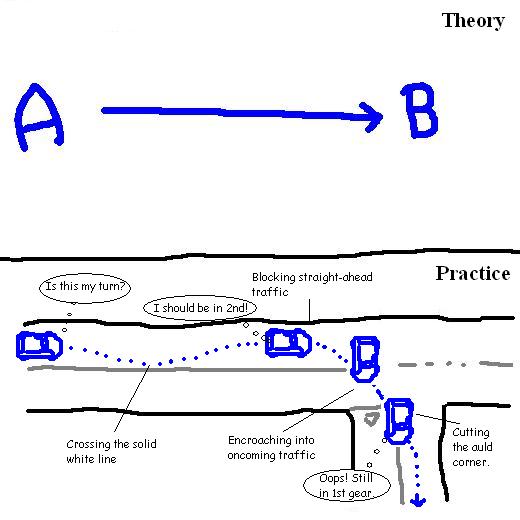
Apart from providing supplementary income, part of the big reason Uber is so increasingly popular is because it is the anti-taxi.  The taxi racket has a bad name in town; drivers rushing corners or cutting off pedestrians, taxi barons gouging their own drivers, etc.  

In the free market, customers are the evolutionary forces that determines what survives, and they tend to favour what is seen to work in their best interests.  Increasingly, the traditional taxi model is becoming the horse and bayonet of commuting options.  It represents a bygone era of service dictators who fought government with the assumption that the public was really a passive third party.

Uber, on the other hand, represents where society is at now - civic engagement, expansion of option, governments looking to support entrepreneurship and co-design services and regulatory environments with the public as well as the usual organizational suspects.  They've hired some smart young policy minds and communicators from Queen's Park (the amazing Susie Heath comes to mind) who know how to engage, not just message, and who better reflect Uber's end-user than old-school taxi company owners.


Which brings us to this inane protest which will disrupt traffic, piss off commuters and reinforce all the things people dislike about taxis and the entire taxi industry.  

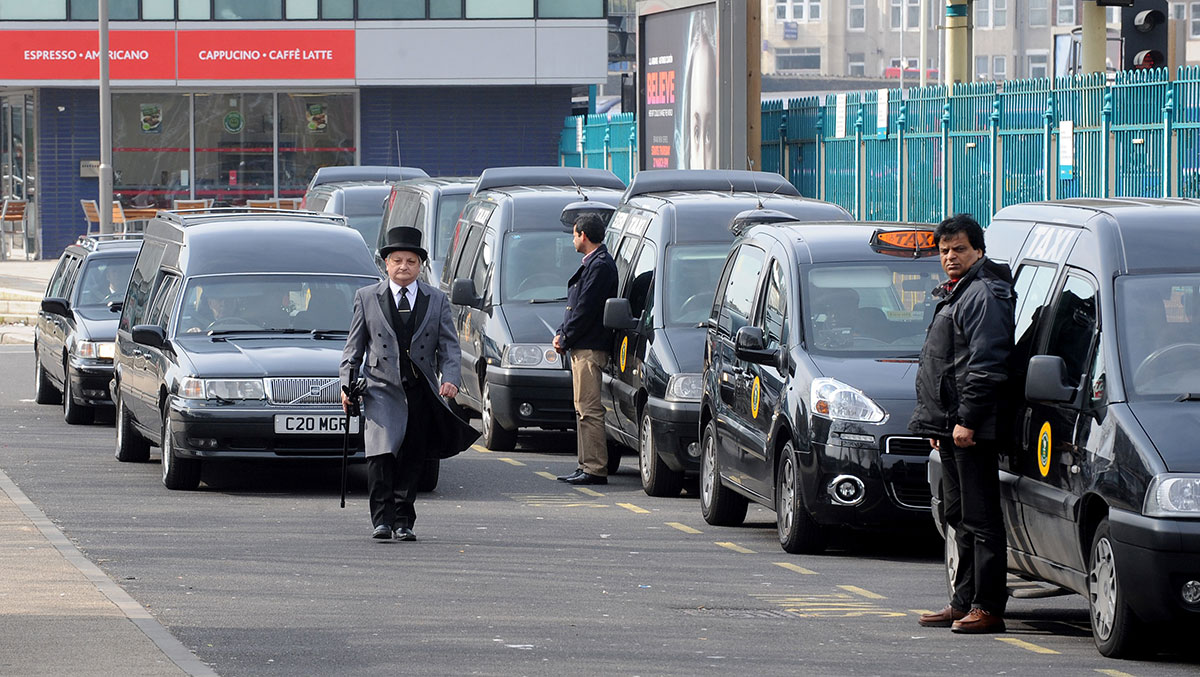
Why on earth would taxis schedule their own funeral procession?  What can they possibly hope to gain by frustrating the people who ultimately pay their bills - citizens?

Simply, because the taxi industry lives in the past and haven't figured out why they need to change their tactics from what worked a century ago.

The theory here is dominance - flex your muscle, remind people what power you have and then force the powers that be to turn their backs on your competition, leaving you with a non-competitive market.  It's what Steven Harper tried to do as a politician, which ultimately led to his downfall.

Sorry, Taxi barons, but that just isn't the way it works any more.  

Moves like this don't strengthen your cause - they alienate your "base."  And the more young commuters have their experience of taxis tainted with negatives, the less likely they will be to use them - especially when they can turn to friends or try new experiences through organizations like Uber.

By all means, proceed as you feel is right - get your horses and bayonets out and show those politicians who's boss.

It's your funeral.  I just hope you can afford the fare.


Thursday, 20 February 2014

Horse Drivers and Outlaws: Politics IS Tribalism


I'm not sure Kate Heartfield would have written this piece were she not an editorialist in need of attention-getting opinions to present.  I would hope she realizes that politics doesn't run on intelligence, at all.  Good guys and bad guys, scapegoats, countless dollars donated to Parties that are telling us we don't have enough money in our pockets to function?  

Partisan framing tugs at emotions.  It concocts coalitions to deliver wins.  Then it looks at policy.  It's audience, issue, emotion and then, at the tail end, appeals to our self-delusions of being rational actors.

Partisan politics is tribal.  It is anything but rational.  And until we consciously accept that our strings are being pulled by vested interests who are just as trapped using Plato's Desktop as they try to develop a newer, tablet-y version of politics, it'll stay this way. 


Friday, 17 January 2014

When Your Only Tool Is a Hammer...


What's the key part of this statement?  

From where I'm sitting, it's the "take seriously criticism" part.  Team Harper has a long trend of not taking seriously criticism, period - on environmental policy, on economic policy, on the way they treat veterans, on a national healthcare strategy, on how they treat scientists.  They have criticized and disparaged pretty much everyone who disagrees with them; it doesn't matter whether it's their own staff, well-respected NGOs or even foreign associations and dignitaries.

If you don't share their point of view you are dangerous, dumb or devious and quite likely all three. 
Harper's CPC feels it's their duty to point this out through attacks in the House, on the hustings and of course, through paid and social media.

There's a psychology behind this, but it starts with bitter partisanship, something we've seen a steady increase in from all Parties, at all levels.  Rob Ford is as much a product of this tragedy of the political commons as is the Senate Scandal.

Harper's not the first to put going for an opponent's jugular at the top of his to-do list, but he's the most egregious to date.  In this country, anyway - there are obviously worse examples in Russia, Greece and Syria.

But therein lies the problem; when it becomes about winning, not achieving, you stop building.  You stop using all the tools - outreach, consultation, diplomacy, transparency - that bring the pieces together to make something greater than what you have.

Instead, you focus on removing the obstacles around you that may keep you from finishing first.  It's a self-reinforcing habit, this; it may start with leadership rivals, then Opposition Parties, but left unchecked this inclination to tear down turns to your own team, potential allies, even unbiased stakeholders.

It's like the shrinking of the middle-class; the more you undercut the unaligned, the longer becomes your list of enemies.  That's fine, if you plan to destroy them all, but in a practical sense you can't.  We all know what happens when you try.

The solution, as always, is to look forward and put achievement first.  To build, you need additional tools and more diverse resources.  You might even want to get second opinions and accept as valid constructive criticism, which you will actively encourage.  Above all, though, you need to know where you're going rather than focusing on how you'll end.

It's not too late for Harper to alter his approach and start doing what he needs to.  There are even some big, structural wins he could tackle that would facilitate this new approach and help him build the credibility he needs to be taken seriously as a nation builder.

But of course, we all know he won't.  After all, doing this his way has got him this far, right?


Friday, 10 January 2014

The Divine Right of Politicians


I find this whole exercise fascinating.

Political people, many of whom make a living setting agendas and pushing narratives through advocacy/Government Relations work, are always getting their knickers in a bunch over which candidate to support for leader.

They should know better.  In fact, they do know better.  Look at where Rob Ford is at right now - he's Mayor, but has been sidelined by Council.  He's only got one vote - it's not the fact that he's Mayor, but his ability to build coalitions around issues that could set him above.  


The Prime Minister is just that - first among equals.  If it weren't for the tough, Machiavellian manipulations of the back-office teams PMs or Premiers put in place, that primacy would actually function the way it was intended to, with agendas needing the confidence of individual Members of the House to gain traction.


We have a reality where the inner court of leaders are to an increasing degree reinforcing the notion that The Leader Is Always Right - the buck stops with them, yet when something goes wrong it's always someone else who goes under the bus.

Sadly, we've got some leaders that have actually started taking this sycophanthy to heart; Stephen Harper truly believe he can do no wrong.  Rob Ford actually believes he's the best Mayor since Salvor Hardin.  These sorts of leaders are increasingly demanding unquestioning loyalty and falling in to the Imperial Trap:


When you feel holding office means that you are the only legitimate voice, the only rightful decision maker, we have a problem. 

The backroom operators who look to play King maker don't really believe that any one leader is the infallible, though that's the image they will try to present when they pick their horse.  Often for them, it's the ability to pull the strings of an unquestioned leader that motivates them.  


These sorts of mandarins are insisting that the leader is right in all things, that loyalty is owed by the Party faithful to the leader without question and that, as the leader is of such importance, it would be selfish of volunteers to expect any of their time.  One does not expect God to appear before them, nor question the divine plan; one's role is to pay, pray and spread the word without question.

In the mix may be a desire to have a leader who shares their vision, but frankly, if more attention was spent educating voters on the issues and working to engage people to a higher degree, it would matter less who was in charge; the people would know what they want and be able to contextualize it.  They'd also be capable of justifying their demands through evidence-based arguments and feel confident in bringing their voice forward.

Which, after all, is how our democracy is supposed to work.

Instead we have increasingly powerful leaders supported by increasingly manipulative power-brokers creating niche-solutions for core constituencies while the majority of Canadians increasingly wash their hands of the whole affair.  Loyalty has ceased to be for the cause, has migrated through The Party and is now being walled up inside the PMO or the Party Office.

Politics isn't supposed to be about beating the opposition; it's supposed to be about winning the support of the people.

It's time our leaders - all of them - start being a bit more cautious about the tailors they surround themselves with and a bit more critical of their own opinions and the choices they make.  Through social media and citizen journalism, the veil of secrecy they used to wrap themselves in is becoming transparent and the people don't like what they see.

Open Government couldn't be coming at a better time.

Monday, 16 December 2013

A Filmed Life: James Moore Does A Vic Toews


  1. @Carolyn_Bennett @JamesMoore_org well that says it all. The conservatives see no such thing as moral responsibility
@newbetweeter @Carolyn_Bennett The headline is neither a quote, nor accurate of anything I've ever said. Quite ridiculous in fact


That is, he was denying he said it - fighting back on Twitter while deleting his own trails - until such time as it became clear that there was, surprise surprise in this day of recorded everything, evidence to the contrary.  

Does this sound familiar?  Well, if you live in Toronto, you hear regular variations on this "I didn't say what you're saying I said, but I apologize if you heard it the wrong way" theme all the time from our Mayor.  But then again, Rob Ford's a special case.

No, I'm looking back to Vic Toews who point-blank told Don Martin that he never said "you're with us or with the child pornographers" - until he couldn't get away with his back-peddling any more.

Of course we also have the ongoing Senate Scandals with our Prime Minister finding his current statements increasingly in contradictory conflict with what he's said in the past.  He's getting snippier with his message points, getting mad at the people who dare to question him.  

Why?  Why do these tough-talking leaders keep painting themselves into corners they can't tough-talk or spin their way out of?  Do they even realize how ridiculous and cynical they come across?  Yes, you can always turn to your base for defense, but your base cares less about you and more about attacking opponents - they could really care less what you do, so long as they see you as a validating champion.

It's a Plato's Desktop thing - tough, aggressive, message-and-attack oriented political people are counting one what worked before to work again.  They're assuming that the "admit to being human but always learning" approach Justin Trudeau is taking will fall flat, because people will see his occasional bit of bafflegab as creating a pattern of poor choices. 

But we're also seeing a pattern of poor choices coming out of the message-people; when they get called on it and rhyme off talking points, they sound like they're completely out of touch with reality.  Which is more disconcerting? 

Here's the modern reality - everything you say can and will be used against you in the court of public opinion.  What's more, your conflicting statements will be parodied.  If you don't take open and transparent communication seriously, people aren't going to take you seriously. 

You can opt to say nothing or stick to soundbites, but then you just look silly and unable to adapt.  You can say whatever pops into your head and then double-down when called on it - that's what Rob Ford is doing.

Or, you can actually think before you speak and be aware of what comes out of your mouth.  You can think about what other people say to you and how it makes you feel/want to respond.  You can even ask what was meant by something someone else said to establish clarity.

It's tiring and tough, I know, to be consciously in control all the time.  Consideration is not inauthentic, though - it's simply good planning.

'Cause there's this other thing about dancing like everyone is watching - when you're doing something right, it gets recognized, too.  And when you're willing to give others the benefit of the doubt, compliment others when they do well and do your best to be pro-social all the time, people will respond in kind.


Do unto others as you'd have them to do, etc.

You never know when disease or accidents may take you, or when disaster may strike.  You never know when it is that you'll need your neighbour's help.  But should you expect it to be there in lean times if you weren't willing to make an effort in times of plenty?

Altruism is selfishness that plans ahead - which, of course, is what committing sociology is all about.

Saturday, 9 November 2013

Team Harper Using Plato's Desktop


If true, this wouldn't surprise me a titch.  Unlike Kinsella, though, I don't see a CPC attempted comparison of crack to pot as insane; instead, I see it as reflective of the creative limitations we've seen expressed by Team Harper time and time again.

I call it Plato's Desktop - the tendency to use new tools in traditional ways, rather than adapting your own capacity to the potential of the new thing or approach.  Using a laptop strictly as a word processor would be an example, as would using social media strictly to send out messaging.  

This has been a consistent theme for Team Harper throughout it's various iterations (which should be rather telling); they've gotten louder, they've periodically been highly organized, but they've never done innovative well.


POLICY

Stephen Harper has had a very narrow focus during his tenor as Prime Minister:

1) Removing any decision-making power that involves actual problem solving as far away from his office as possible;
 
2) Tough On Crime - increase the number of legal offences, increase the penalties for them and create more institutions to get undesirables off the streets.  Dickens couldn't have done better;

3) Natural Resource Extraction/platitudes about traditional manufacturing - now, I won't hold this entirely against Harper, as Canada on the whole has been lazy on the innovation front.  But seriously - we live in an age where highschool kids are becoming billionaires off of innovative, social-media based content and Harper's Conservatives want the nation to limit itself to hewing wood and hauling water? 
 
Advanced manufacturing is turning last century's Third World Countries into powerhouses, and they want to lower labour costs to compete for widget-making positions with Bangladesh?

Despite having access to all kinds of internal (i.e. public servant), national (science, innovation hubs, lateral think-tanks) and extra-national (hi, Brazil!) information, Team Harper have been impotent to do anything creative with it.  Even borrowed speeches have been cribbed line-for-line.  While the rest of the world sprints ahead, Canada under Harper keeps backing in to the future.

The areas where Harper can claim credit for some kind of sustainability or breakthrough?  There's the economy, which every speaker at the recent Economic Forum of the Americas credited to work done long before Harper was even leader of the Reform Party.  Then, there's CETA which is not only less exciting (and beneficial) than Team Harper contends, but it also was the work of negotiators not of their partisan ranks.

The things Harper claims credit for?  He didn't built that - he's merely basking in the light of others.

COMMUNICATIONS
 

Harper was going to lead us towards a new frontier in accountability and transparency.  Whether he was insincere from the get-go, realized that he couldn't handle that level of scrutiny or perhaps never understood the meaning of the terms in the first place, he's been a bust on all fronts.

But when has Harper's CPC ever tackled an issue head-on, as in really addressing a concern in substantial ways?  Yes, they've increased penalties or reduced regulations, but what have they actually solved?  We get bullet-point messaging that ignores the intent of questions or bait-and-switch attacks, but solutions?  Not so much.  

Yes, this is the way politics has been done, but Harper promised to do politics differently, just as he promised to reform the Senate.  

He made a lot of big-picture promises that have never come to fruition, largely because they involve consensus-building and innovative solution-framing.

Strategically, Harper planned to make Canada more Conservative, i.e. think the way he did; instead of pushing from the Right and throwing crumbs to the centrists, he's been governing from the Centre and has failed to throw any substantial red meat to his base.

People who hold the terms "senior" and "communications" in their titles will state with (perhaps grudging) admiration that Stephen Harper is a first-rate communicator, which is false; communication doesn't mean what they think it means.  Harper is pretty good at messaging, which is what they're actually referring to.  He can spin a yarn when he has to, though one gets the sense he'd prefer to do something else.  

It's hard to throw Harper off-message (or even off tone, really - the man's a machine when it comes to delivery), but it's even harder to have a meaningful dialogue with him.  

Then, there's the simplistic, white-hat/black-hat messaging favoured by today's Political Right (and far too often the Left).  "With us or with child pornographers" is kind of a "he dies or I die, brother" way of framing the world.  Lefties are bad, SoCons are good.  

Entitlement is bad, passing the buck is pathetic and contemplation (i.e. "committing sociology" is ineptitude.  Corruption is a fatal sin.  Like a nation saying it has no gay people, the Tories claim with ignorant vanity that all sins rest on the opposite side of the political divide, intentionally avoiding their own cognitive dissonance until it smacks them in the face.  

Then, the people who were the faces of their movement are suddenly not Tories.  Until, at least, the folk casting stones realize they live in glass houses, at which point entitlement, passing the buck and asking for consideration of contextual, personal concerns becomes standard operating procedure.

PARTISAN ATTACKS


Harper has been hailed as a master of the partisan attack; his foresight is uncanny, his cool unshakable and his ability to fragment his opposition is legendary.  It's a myth, irony of irony, concocted by political people looking for complex "plays" where, in fact, there was simply an inability to do anything else.

Team Harper is a one-trick pony that we've convinced ourselves is the best act in town.

They demonize each opponent in exactly the same way - they are unCanadian, unmanly, unfit to lead.  Never have the Tories gone toe-to-toe with anyone; instead, they stand atop their walls, farting in the general direction of all comers, English pig-dogs and kniggets alike.

It's unfair to say the Langevin Block Boys are comparing apples to oranges, as their shtick is really much simpler.  They find the worst possible denominator and compare their opponents to that without worrying about how much sense it makes ('cause that's a sociology think to worry about).  

In this case, note that it's their former ally Rob Ford they're tossing under the messaging bus.  That's what happens when you live behind a firewall - you eventually run out of anyone else to throw at the barbarians.

It's not that Team Harper feels superior in their positions; rather, they just have a harder time walking in anyone else's shoes.

And finally...


THE UNSHAKABLE LEADER

Harper has never strategically weathered a storm; he has consistently pushed off addressing a problem for as long as possible, and when time came to own up passed the buck.  His distancing himself from responsibility over the Senate Scandal is really no different than his visit to Rideau Hall in 2008.  At the very least, Harper has owned up a little; back then, he projected his own feelings when he said Canadians didn't care about how Parliament worked.  At least now Harper's admitting it's really him that doesn't care what others say.

His legendary self-discipline?  When you have the exact same presentation whether you're dropping your kid off at school, in Parliament or giving a speech (or, truly, with no variation between speeches) this is not discipline; it's functional fixedness.

There's nothing crazy about the current CPC approach - that would imply the ability to surprise us with the unexpected.  If anything, Team Harper has been totally consistent.  Alas, an inability to evolve isn't a strategy - at best, it's delaying the inevitable.

Wednesday, 4 September 2013

From Product to Experience to Relationship: Where @thejohnrobson is Stuck in the Past


@thejohnrobson is an historian - as the child of two historians, I can understand what informs his perspective.  When you have immersed yourself in the past and studied the thoughts, actions and results of those who shaped the past, it's natural to feel you've got a pretty solid understanding of how the world works.


The problem is that the world keeps changing; demographics, technology, urban density, cultural diversity and countless other factors become more complex and tweak the modern context.  A feudal lord in 13th Century France could not have predicted The French Revolution any more than South African Doppers in the 1850s could have forseen the impact of Twitter on social communication and accountability.

As a student of history, though, I'm sure Robson is aware that "these kids just don't get it" is a theme that repeats regularly.  In fact, it's often uttered by those folk clinging to a societal/economic model that's in the process of being replaced.  It's a message that has been passed on to colonials (the Tea Party) women (Suffrage), African Americans (Civil Rights) and countless other groups since the discovery of the written word.

While there are certain realities that don't change, there are plenty that do.  Booker T. Washington may have advised Presidents, but he could never have been one.  Today, an African American does sit in the Oval Office.  A century ago, it would have been impossible for Steven Fletcher to be an MP.  It would equally have been impossible for deaf children to hear, women with fertility problems to have children, etc. etc.  

Yes, many of the innovations that have facilitated social progression were discovered - but it took individuals with direction, the ability to connect the dots and the audacity of dreaming big to harness those fortuitous accidents and create opportunities (though perhaps he feels that Sun News was an accidental discovery).

Which is why I singled out Robson's quote about employees proving themselves to customers  via management in particular.  It's quite telling that, in using the burger joint as an example, Robson focuses on a product experience; customers want what they've ordered and expect their meal to taste good.  Fast food joints are built on the mass production model - create lots of the same thing at a predictable level of quality and sameness using an assembly-line model of production.  Theoretically, you should be able to get the exact same burger experience at a Harvey's in downtown Toronto as you do in Montreal or St. John's.

Under this model, it is indeed management that designs the process and the product; the role of employees is simply to follow the instructions, like an IKEA furniture kit.  Whether you're making cars or t-shirts or burgers, the process is the same; employees are meant to fill functions, not add value. 

Missing from this equation, of course, is customer experience.


In the Mass Production model, the actual producers (front line staff) weren't meant to interact with customers; the results of their labour was transferred to customers via management or sales teams.  This is still often the case with rapid-turnaround burger joints; you don't go for the conversation, you go for the convenience.  If there's a problem with anything, you ask to speak to the manager.


If you're looking for an experience, you'd go to a Starbucks.


Starbucks, that nesting ground for liberal arts types, maintains a focus on quality product (coffee) but has enhanced their model to provide a customer experience.  It's the same with the Indigo/Chapters model - the instore experience is designed to encourage customers to linger, to see outlets as places to be as well as to buy.  Part of this model has been to turn front-line staff functionaries into customer service agents; instead of proving themselves to customers via management, these staff are instead proving themselves to management via customers.  

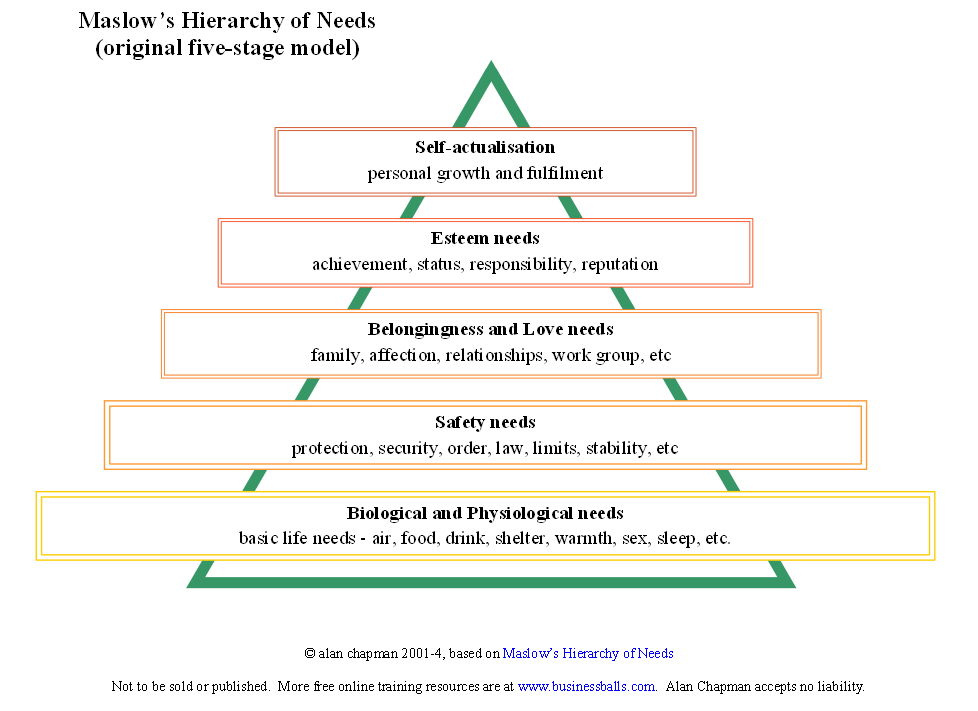
maslow's hierarchy of needs diagram
Sales agents still want to rack up their numbers, but there is no denying the promotional value of positive customer feedback to the boss.  As there is so much more variety of product out there these days there's real value for a customer in communicating with front-line staff who can offer suggestions on choice, be it a burger, a coffee or a book.  You can't communicate what you don't know - there's increased pressure on front-line staff to be well-rounded, to know how to read their customers and offer informed opinions.

But even this doesn't bring us up to the present, where employers are increasingly demanding their employees develop products and services, identify markets, make the sale and maintain the relationship.  There's more to CRM, after all, than database management.  When your frontline is constantly engaging with your customers, you need them to be in the right frame of mind, which is hard to maintain when you're treated like a widget or constantly in fear of reprimand.

Then there's the marketing side of the equation.

We've heard about employees fired for griping about work via social media - smart managers have twigged to the fact that happy, socially engaged employees are a fantastic source of free advertising.  Promoting your employees over their social networks is also a quick and easy way to expand your reach and build brand loyalty in the most organic of ways.

There's a whole trend emerging of employers who have recognized the financial value of respecting and even empowering employees; it's good for them, for the customers they build relationships with and, as a result, for the company's bottom line.


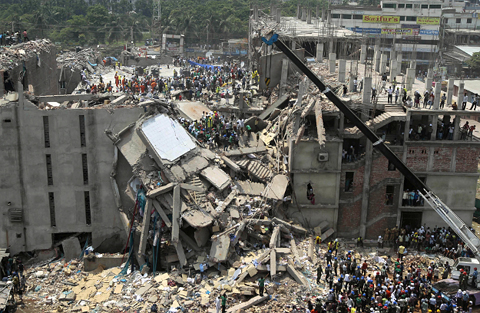
Like it or not, that's where the trend lines are pointing.  You can gripe that too many kids are being hand-held through education and are emerging with unrealistic expectations, but the fact is those expectations are increasingly being met, although admittedly not in every sector.  In areas like manufacturing, you're still expected to take what you get and like it - just ask Wal-Mart employees in Bangladesh.

For an historian like Robson, though, none of this should really come as a surprise.  As he points out, there was a time where very few citizens had the privilege (or wealth) to go to university; the same applies to education at large.  As society grows more dense and the demands of an increasingly specialized and integrated economy grow more refined, we have a growing need for greater education and greater social awareness.  You can't get a job anywhere in Canada if you have zero education, or secondary education - post-secondary education is just the latest addition.

If anything, the lesson history seems to be teaching us is that liberal arts are going to more, not less useful as we progress into the future.

UPDATE: I've already written on how cutting-edge companies like Environics are raising the bar in terms of work and workplace design; I came across this lovely promo video by H&K Toronto that provides another example.  Employers that are relying on their employees to develop relations and create solutions rather than build widgets or serve burgers should pay attention - this is what the future looks like.

Saturday, 20 July 2013

Harper's Inbox

Sigh!
It's definitely not positive that Team Harper is keeping an enemies list, for all the reasons Kinsella describes.  It'll be interesting to see whose names have made it on to that list - will a lot of random blogs with little traction find themselves under the watchful eye of the PMO, or will a lot of folk who fancy themselves as worthy enemies of the state be disappointed that they don't merit a mention?  Probably a bit of both.  If there has been illegal activity engaged by this government to suppress its perceived opponents, justice should be served for all parties.
But it's not the fact that a list exists that makes me shake my head in dismay so much as the sheer, ignorant overconfidence on the part of the PMO that made them think they could compile such a list in this day and age without it leaking out.
The risks of sending something to the wrong inbox are huge and well documented - how many people did Team Harper plan to send this out to?  More than that, what if anyone on the recipient list had a personal connection to one of these enemies?  Might they not have felt compelled to send it to that person as a warning?  What are the odds that one of the staff on the receiving end could be thrown under the bus and decide to leak this in revenge?  What if a recipient feels at some point that the Conservative Ship is going down and decides to use the leaking of the list as their saving grace? 
What if, horror of horrors, one of the recipients had a conscience and questioned themselves whether it was appropriate at all for a Political Party to keep a hit list?
It is exasperating how short-sighted this all is, as was the Senate shenanigans, the Committee Disruption Manual, the Cadman Affair, etc, etc.  There's a small cadre of hyper-confident and marginally oblivious crew of insiders somewhere, chuckling to themselves about how in control of everything they are.  They think people won't notice, won't care or that there's always an underling to throw under the bus or a distraction they can throw out to keep the consequences of their actions at bay.
I have written at length about the fallacy of overconfidence, the illusion of conscious control, how the assumption of success leads to sloppiness and of the importance of looking at the entire map of potential consequences rather than assuming "we are smart, they are dumb."
I've also laid down a suggestion as to why this kind of thing keeps happening; players of old have mental models of what they used to be able to get away with and keep trying to recycle - the horses and bayonets of political tricks.  Or, aggressive but not overly creative newbies look for tricks that have worked before without considering how changes in media might have altered the playing field.  Of course, I'm a back-of-the-class kid, so why should any of the really successful people - like Mike Duffy, Nigel Wright and Stephen Harper - pay attention to me?
The fact is, I'll bet dollars to Tim Horton's doughnuts that if the PMO actually got to know some of these enemies of theirs, they'd learn something beneficial.  Maybe even make some allies or pick up on some policy ideas to crib that could even help keep them in power.
Here's the thing, though - to correct destructive behaviours and evolve as an individual means accepting it isn't about us and them and realizing it's not such a bad thing to commit sociology.
What can I say - the truth hurts.